DH: Hygiene Theory
 Call Kai
 Learn
Learn Practice Test
 Spaced Repetition
 Match
Match Flashcards
 Knowt Play
1/56

Earn XP
Description and Tags
Lecture 1
Name | Mastery | Learn | Test | Matching | Spaced | Call with Kai | Chat |
|---|
No analytics yet
Send a link to your students to track their progress
57 Terms
What is ergonomics?
The science of designing the workplace, equipment, and work practices to fit the clinician, improving efficiency and reducing the risk of injury.
what are the major components of a dental hygiene area?
dental chair
dental unit
operation light
air-water syringe
scaler
ultrasonic scaler
high and low speed hand piece
HVE (High Volume ejector)
Saliva ejector (LVE( Low Volume Ejector)
clinician’s chair
HVE
propose: removes aerosol, water, blood, debris
Infection control
Used: during ultrasonic scaling, polishing
LVE
aka salive ejector
small, straw like evacuation system
purpose: removes saliva, for comfort of patient, maintains a dry working feild during short procurers
Cannot be used for aerosol control
Compare High Volume Ejector (HVE) vs Low Volume Ejector (LVE).
HVE is high power suction, must be use in presence of aerosol
LVE is low power suction, more for comfort of client, does not reduce aerosol
What is the purpose of protective barriers?
Prevent cross-contamination of surfaces that cannot be sterilized
eg: chair controls, operation light, computer keys and mouse
what are the three uses of air-water syringe?
delivers stream of air and/or water, or combination of both
positing of operation light?
must be shone on the clients chest first
should be at arms length away form the hygienist while seated
have barriers on handles for infectious control
Define neutral positioning.
A balanced body posture where muscles and joints are under minimal stress.
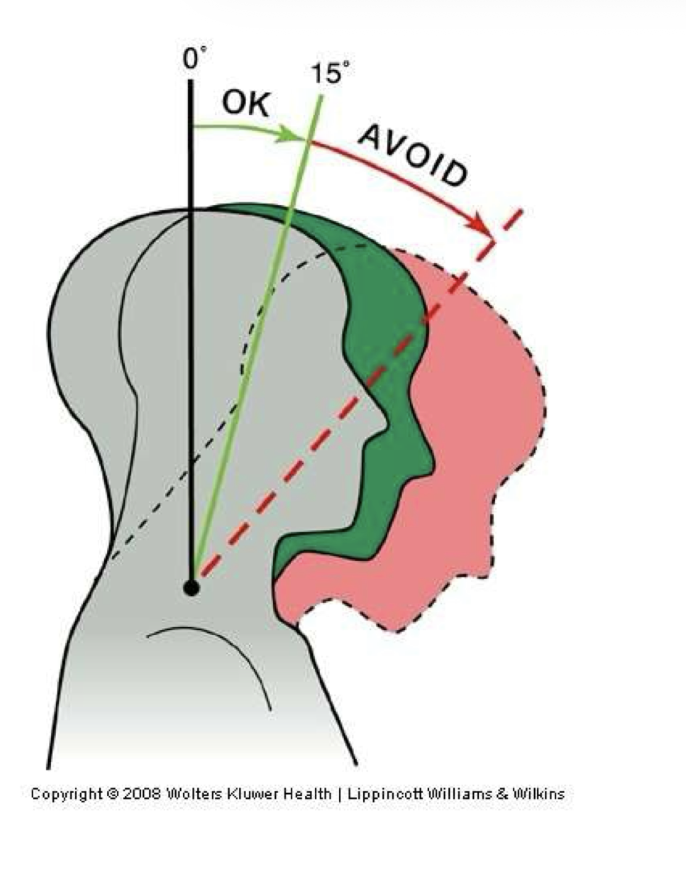
neutral neck position
Goal: head tilt of 0-15 degrees
Natural Back
Goal: slightly forward form the waist of hip
AVIOD: curved back
Neutral Arm/ Elbow
Goal: elbows at waist level sightly away form body
AVOID: elbows held high above the waist line
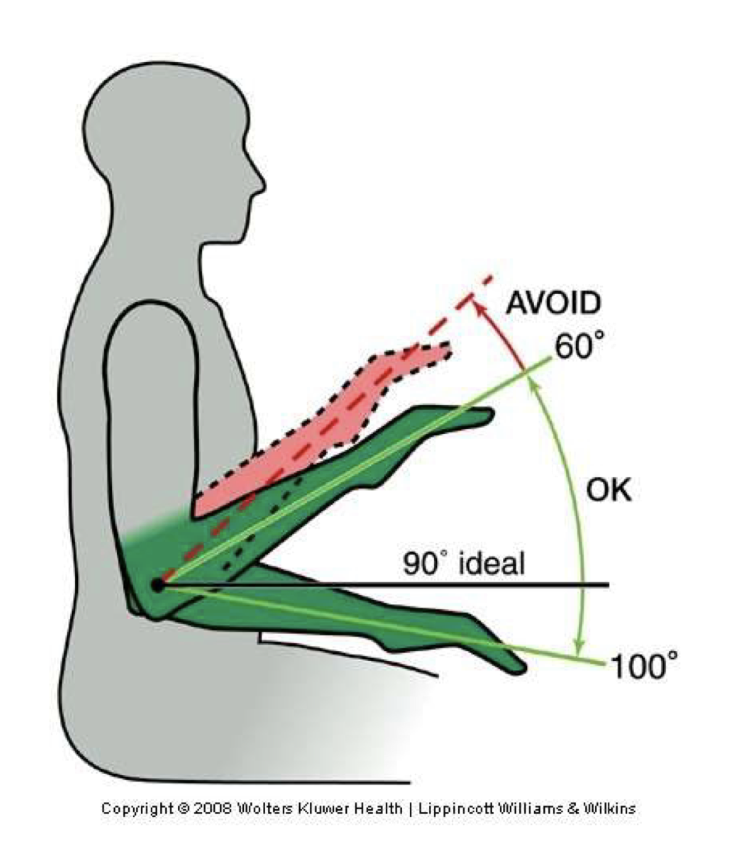
Neutral forearm
GOAL: parallel to the floor (90 degree )
Neutral seated rules …
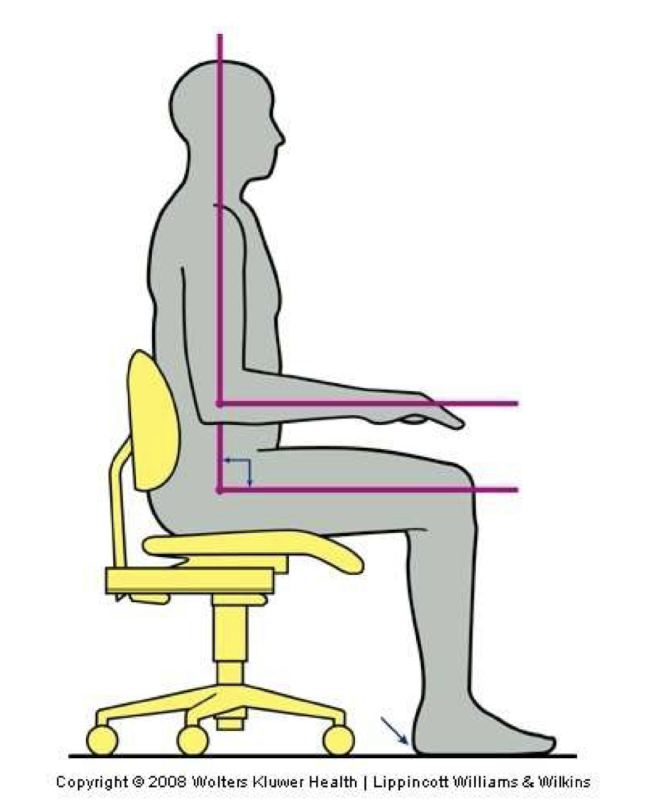
back straight
weight evenly distributed (avoid sitting on edge of chair)
head tilt between 0-15 degree
shoulders relaxed with elbows close to body
thighs parallel to the floor
feet flat on the floor
hips at 90 degree
what is RSI?
repetitive strain injury
Damage cause by repeated movement, force, awkward position or overuse.
ex:
carpal tunnel syndrome
tendonitis
What is WMSD?
Work-Related Musculoskeletal Disorder
Any injury affecting muscles, tendons, joints or severs caused by work activities
Dental Hygiene commonly experience:
neck, shoulder, wrist and lower back pain
When is the Client Position upright?
when greeting, reviewing medical history, discussing, greeting and if difficult with breathing
when is Semi-supine used for client positioning?
for most mandibular treatment
when is supine used for client positioning?
for most maxillary treatment
is terms surface towards or away used in reference to?
anterior (front) teeth
canine to canine for both mandibular and maxillary
what is mesial ?
side or surface closest to the midline
what is distal?
the surface that is away from the midline
what is apical?
toward the apex (tip of root) of the tooth
what is coronal?
towards the crown of the tooth
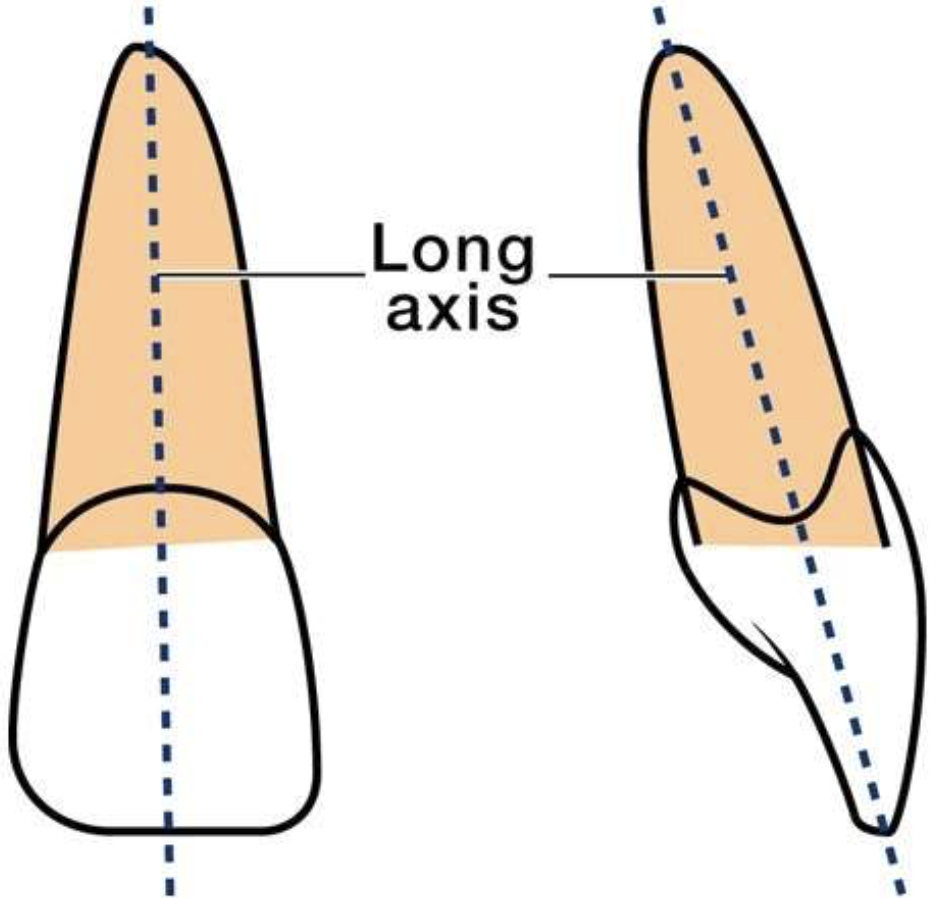
long axis
imaginary line thought the centre of the tooth form crown to root
vertical storke
toward the crown (surface on anterior teeth or inter proximal of posterior teeth)
oblique stroke
diagonal stroke between the line angles of the tooth
horizontal stroke
horizontal strokes, going toward on line angel of the tooth
Line angle (only for posterior teeth)
imaginary line where tow tooth surface meet
each posterior has 4 line Angeles
Facial
Towards the face
buccal
toward the cheek (posterior teeth)
labial
toward the lips (anterior teeth)
lingual
towards the tongue
palatal
towards the pallet (maxillary teeth)
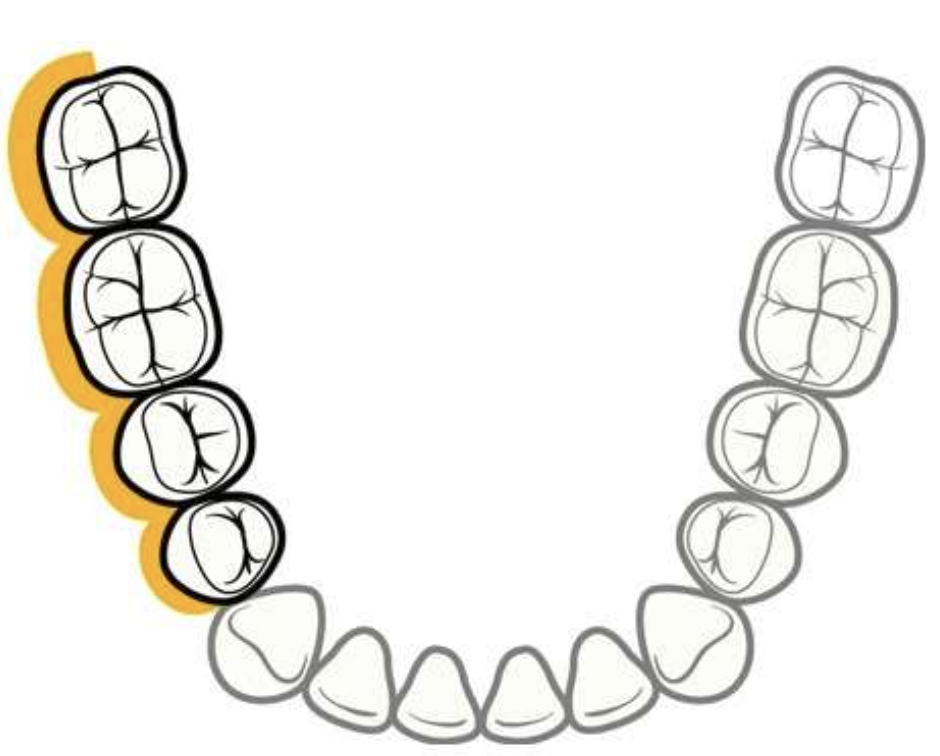
Which aspect is this image highlighting?
facial aspect of the mandibular right posterior sextant
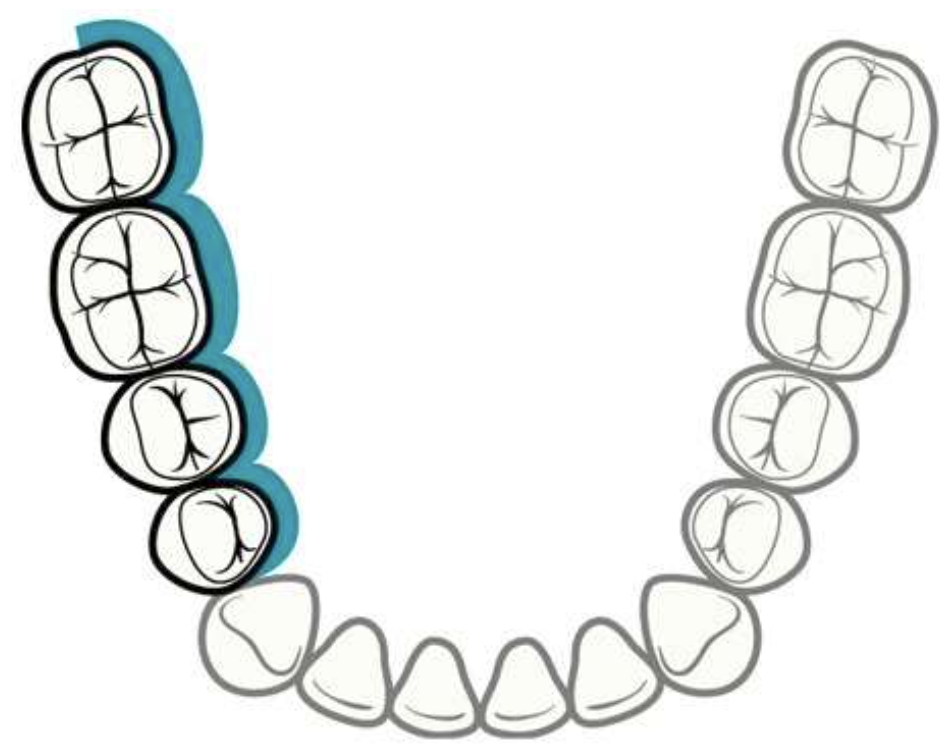
Which aspect is this image highlighting?
Lingual aspect of the mandibular right posterior sextant
what are the two different aspects?
facial and lingual
what is the terms of two halves of anterior teeth surface when viewed at 8:00?
surface toward and surface away
surface towards
half of the anterior tooth surface that is toward the clinician when stated at 8:00
surface away
the other half of the anterior tooth surface that is away the clinician when stated at 8:00
although surface away is identified at 8:00, cleaning is performed at 12:00 for surface away
aspect towards
the half of the posterior teeth aspect that is towards the clinician when stated at 9:00
cleaning is performed at 9:00 for aspects towards
aspect away
the other half of the posterior teeth that is aspects away from the clinician when stated at 9:00
although aspects away is identified at 9:00, cleaning is performed at 10/11:00 for aspects away
use of mirror is required
what is ideal scaling angulation?
70 degrees
Three parts of a periodontal instrument.
handle
shank
working end
what is the correct angulation for instruments?
60-80 degrees
70 degrees being ideal
what are some concerns with too open angulation (>90)
Tissue trauma
Reduced control
what are some concerns with too closed angulation (>45)
Burnishes calculus
Ineffective removal
Why is modified pen grasp preferred?
Better stable and strong grasp
Better tactile sensitivity
Less fatigue
how do the thumb and index finger work when holding instruments?
help with rolling of instrument with each stroke
maintain adaptation of leading third of the working end
what is the middle finger places on the shank?
to allow the clinician to fell vibrations transmitted form the working end
tactile sensitivity
what are the three mirror types?
front surface (most common)
plane
concave
compare the three mirror types
Front-surface
best images no distortion
Plane
double image
Concave
magnifies image
distrots image
Four functions of the dental mirror.
Indirect vision
Retraction
Indirect illumination
Transillumination
Direct vs indirect vision.
Direct:
View tooth directly.
Indirect:
View tooth through mirror.
Difficult to see areas
Define retraction.
Moving cheeks, lips or tongue away for better access.
move soft tissue
Define indirect illumination.
Reflecting light into areas where direct light cannot reach.
Improve lighting
Define transillumination.
directing light off the mirror surface and through the anterior teeth.
Passing light through tooth structure to detect cracks, caries or fractures.
can only be done on anterior teeth