5.5 - Anaerobic respiration
 Call Kai
 Learn
Learn Practice Test
 Spaced Repetition
 Match
Match Flashcards
 Knowt Play
1/10

There's no tags or description
Looks like no tags are added yet.
Name | Mastery | Learn | Test | Matching | Spaced | Call with Kai | Chat |
|---|
No analytics yet
Send a link to your students to track their progress
11 Terms
Other than glucose, what are the two other respiratory substrates that can be oxidised to release energy?
Lipids:
fats provide a store of energy which can be drawn upon when carbohydrate levels are low
fat releases more than twice as much energy as carbohydrates
Proteins:
only used in cases of starvation
Why does the respiration of lipids generate more ATP than the respiration of carbohydrates?
A lipid molecule contains a higher proportion of hydrogen than a carbohydrate molecule, therefore more NADH & FADH
More H+ ions accumulate in the inter-membrane space to produce a proton gradient to pass through ATP synthase channels for oxidative phosphorylation
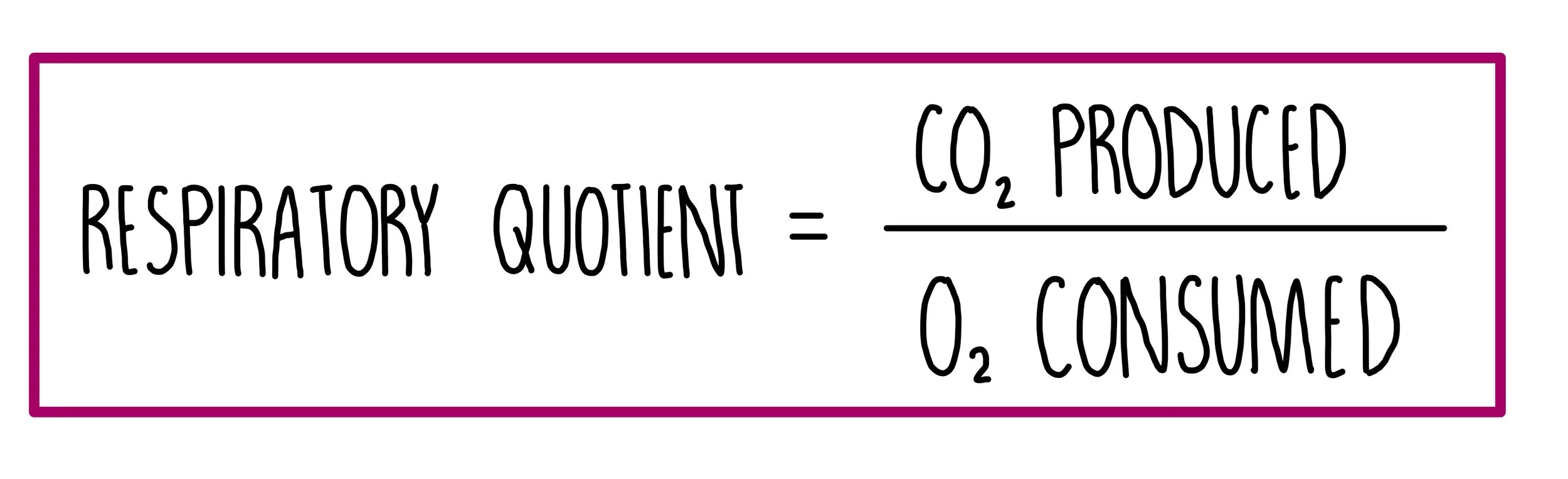
What is the respiratory quotient?
The ratio of carbon dioxide molecules produced to oxygen molecules taken in during respiration
What is the respiratory quotient for carbohydrates & why?
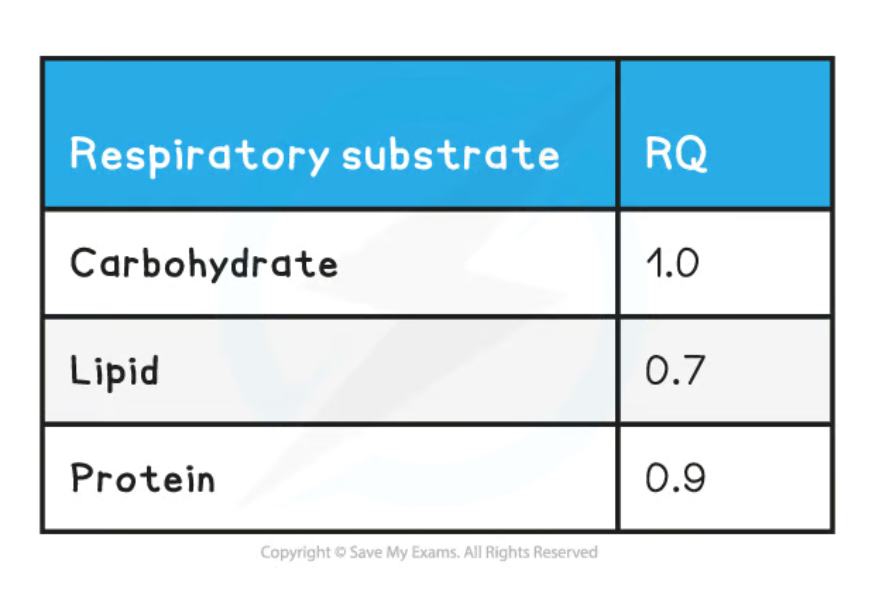
1.0 → when glucose is aerobically respired, equal amounts of carbon dioxide are produced to oxygen taken in

What is the respiratory quotient for fats & proteins?
Fats = 0.7 (more oxygen is needed for complete oxidation)
Proteins = 0.9
What is anaerobic respiration?
Occurs when oxygen is not available:
begins with glycolysis (occurs in both aerobic & anaerobic respiration), but is then followed by different pathways depending on the organism
What is the first stage of anaerobic respiration?
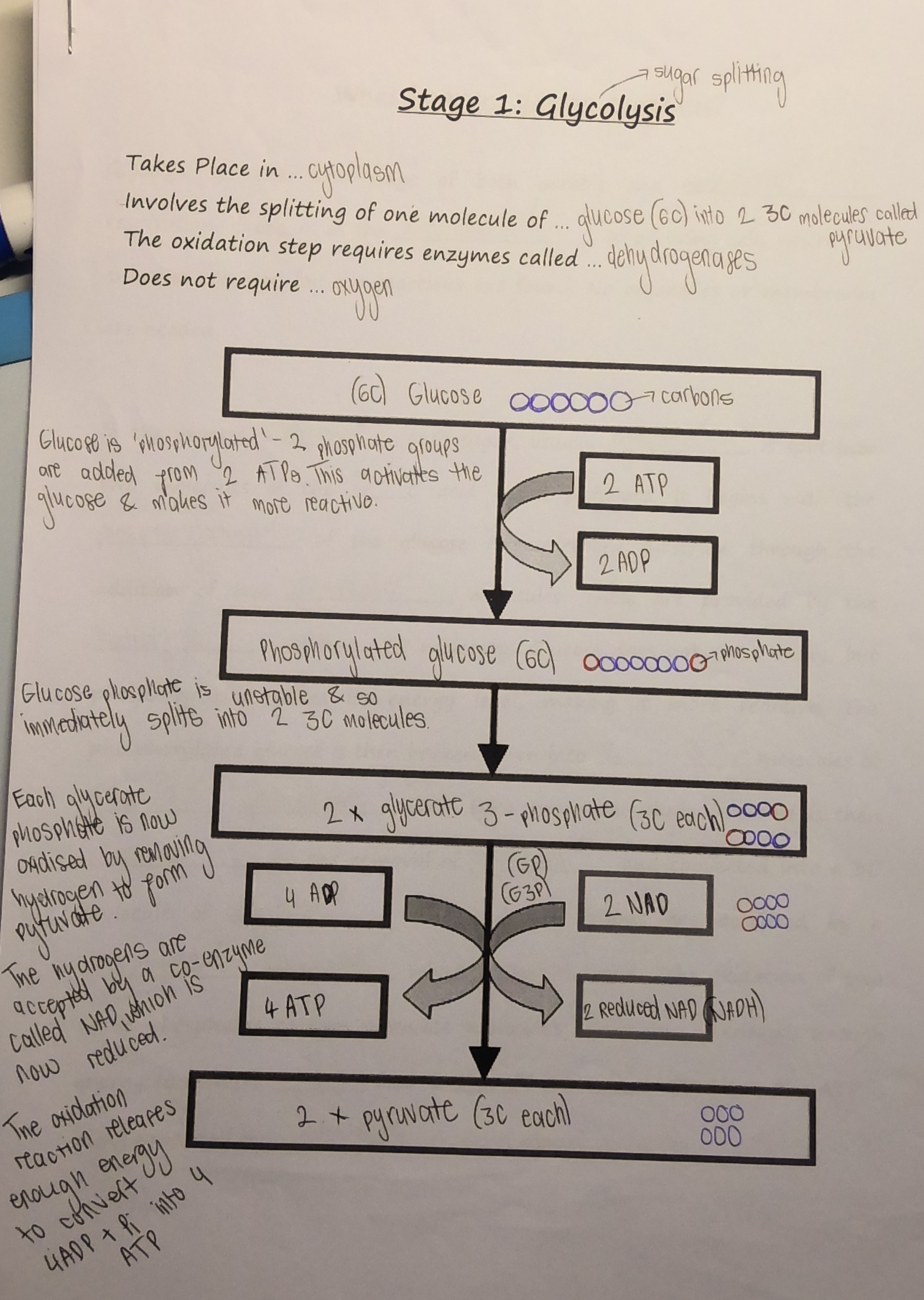
Glycolysis:
Glucose is phosphorylated, meaning 2 phosphate groups are added from 2 ATP molecules (2 ATP → 2 ADP). This activates the glucose, making it more reactive
Phosphorylated glucose is unstable & immediately splits into 2 3C molecules of glycerate phosphate (GP)
Each GP is oxidised by removing hydrogen to form pyruvate (3C)
The hydrogens are accepted by the NAD co-enzyme, which is now reduced (2 NAD → 2 NADH)
The oxidation reaction releases enough energy to convert 4 ADP into 4 ATP
What would happen without oxygen as the terminal electron acceptor in the electron transport chain?
Without oxygen as the terminal electron acceptor, electrons cannot pass along the ETC
NADH & FADH cannot be oxidised, so NAD & FAD are not regenerated & the Krebs cycle stops
No proton gradient is formed, so ATP synthase cannot produce ATP → oxidative phosphorylation stops
Only glycolysis continues (producing 2 ATP per glucose)
Outline happens during anaerobic respiration in animals
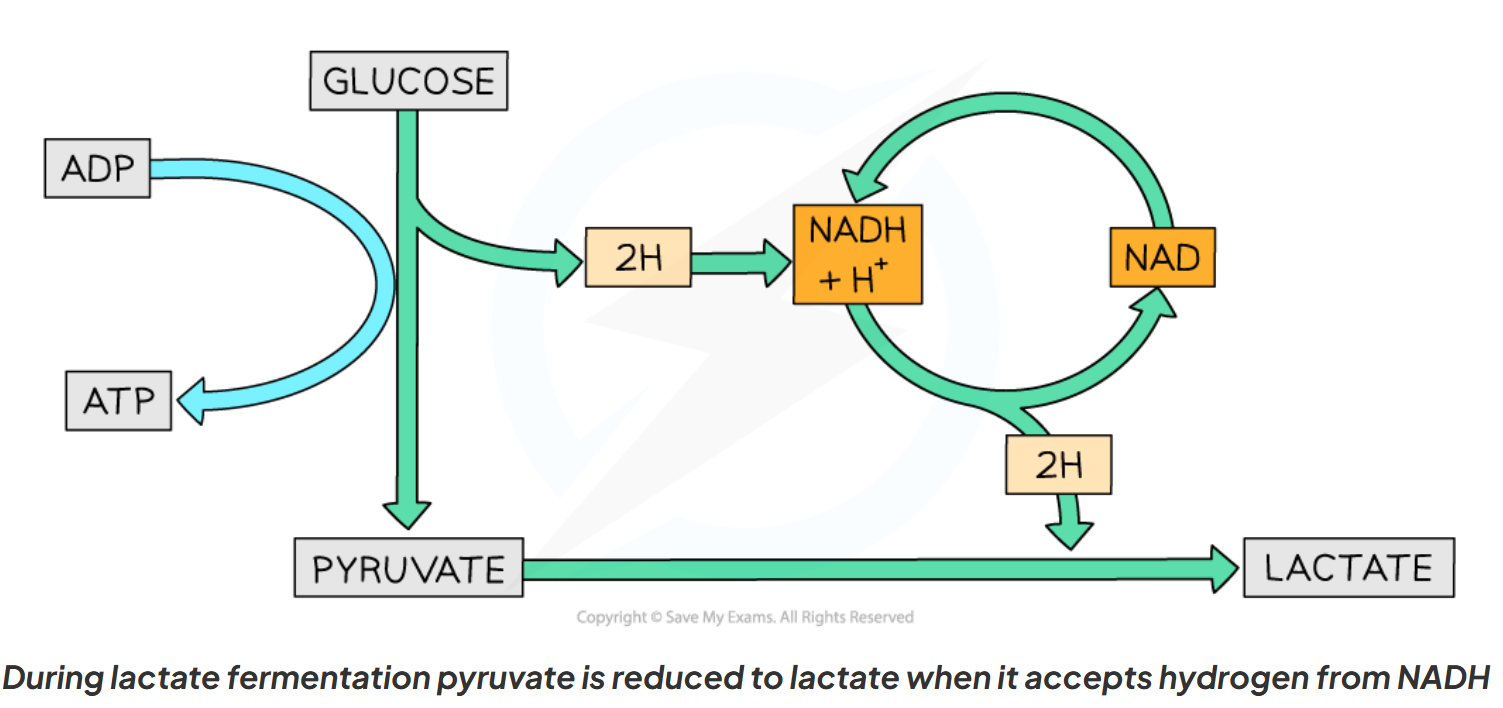
Pyruvate is converted into lactic acid:
pyruvate is reduced (gains hydrogen from NADH) which regenerates NAD, allowing glycolysis & ATP production to continue in the absence of oxygen
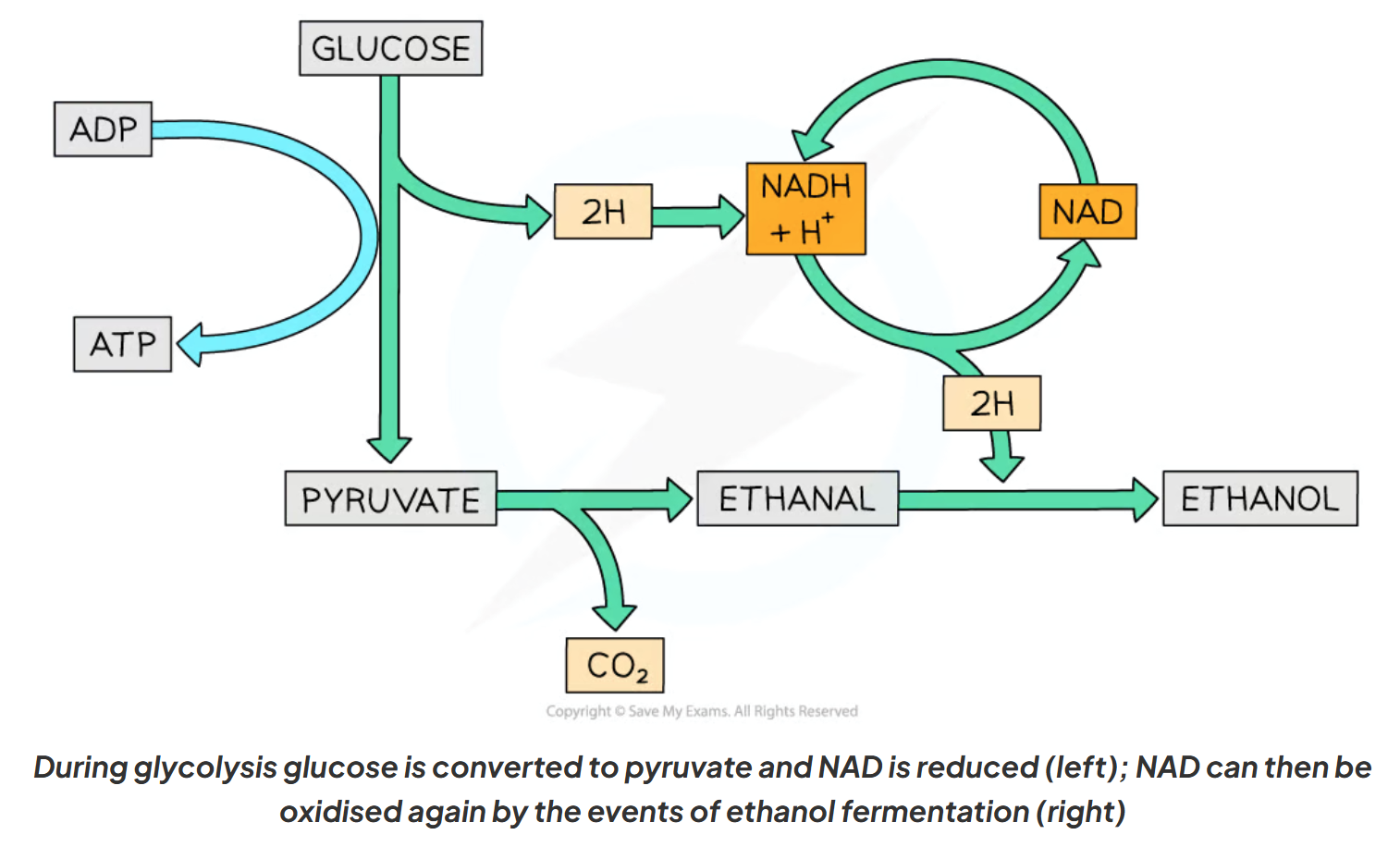
Outline happens during anaerobic respiration in plants & yeast
Pyruvate is converted into ethanol & carbon dioxide:
pyruvate is decarboxylated (removal of CO2) & then reduced (gains hydrogen from NADH)
NAD is regenerated, allowing glycolysis & ATP production to continue in the absence of oxygen
How many ATP is produced during anaerobic respiration?
Only the net gain of 2 ATP from glycolysis during anaerobic respiration