Section 1: Review - FNH 350
 Call Kai
 Learn
Learn Practice Test
 Spaced Repetition
 Match
Match Flashcards
 Knowt Play
1/15

There's no tags or description
Looks like no tags are added yet.
Name | Mastery | Learn | Test | Matching | Spaced | Call with Kai | Chat |
|---|
No analytics yet
Send a link to your students to track their progress
16 Terms
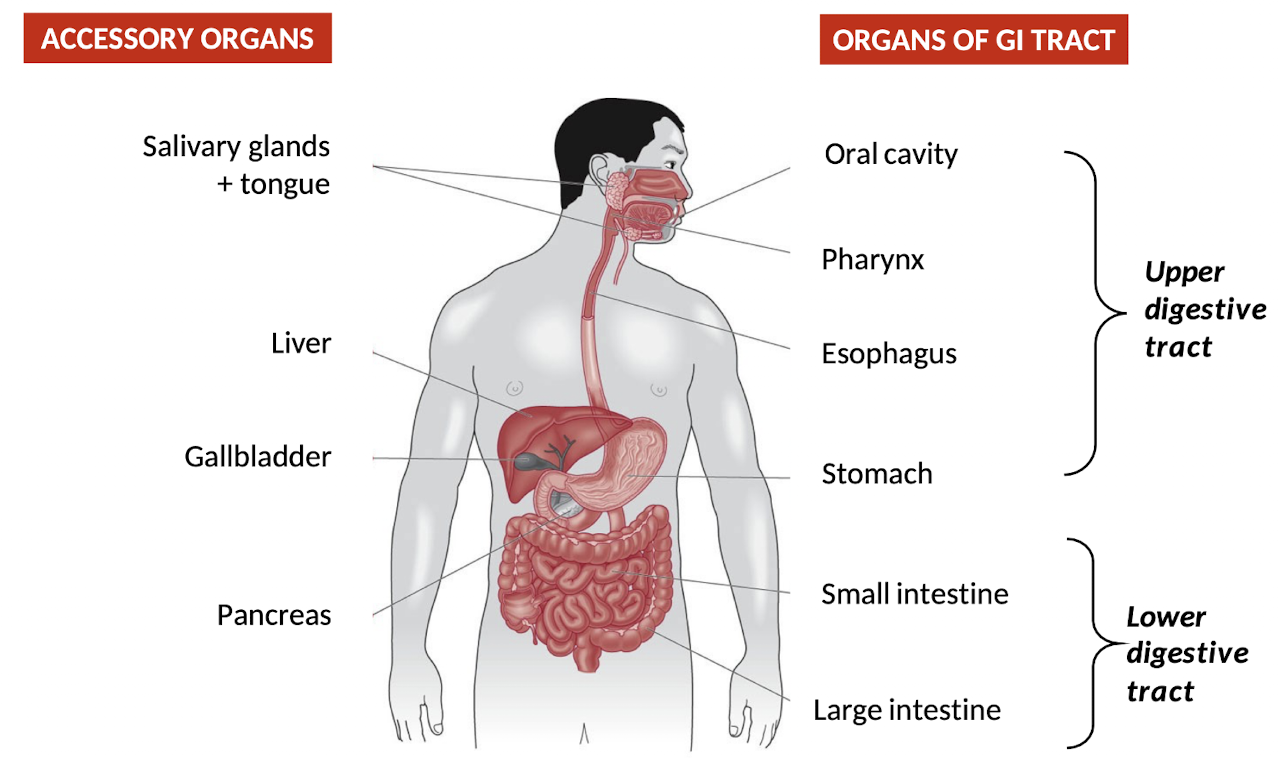
List the participating and accessory organs involved in digestion and absorption
Accessory organs
Salivary glands + tongue
Parotid
Sublingual
Submandibular/submacillary
Liver
Gallbladder
Pancreas
Organs of GI tract
Oral cavity
Pharynx
Esophagus
Stomach
Small intestine
Large intestine

Fill in the blanks
Structure and function of the esophagus
Structure
25 cm
Function
Moves bolus oral cavity → stomach
Swallowing: voluntary, pharyngeal, esophageal
Peristalsis: moving bolus with wavelike motions
Structure and function of the stomach
Structure
Flexible - rugae can let stomach expand (50 mL → 1-1.5 L)
4 regions
1. Cardia
2. Fundus
3. Body
Function: Passive breakdown
Gastric juices
Mix bolus with circular, longitudinal and diagonal smooth muscles
4. Antrum
Function: Active breakdown
Grinds food and mix with gastric juices → chyme
Strong peristalsis for emptying

Label the stomach

What are the types of cells in the stomach and what do they secrete?
Neck cells - mucus
Chief cells - enzymes
Parietal cells - HCl; IF
Denature proteins
Activates pepsinogen to pepsin
Release nutrients from organic complexes
Antibacterial
G-cells - gastrin
Somatostatin released to signal to empty
Structure and function of the small intestine
Structure:
300 m^2
Duodenum
Secrete products
Jejunum
Ileum
Function:
Primary site for nutrient digestion and absorption
High surface area to increase contact with chyme
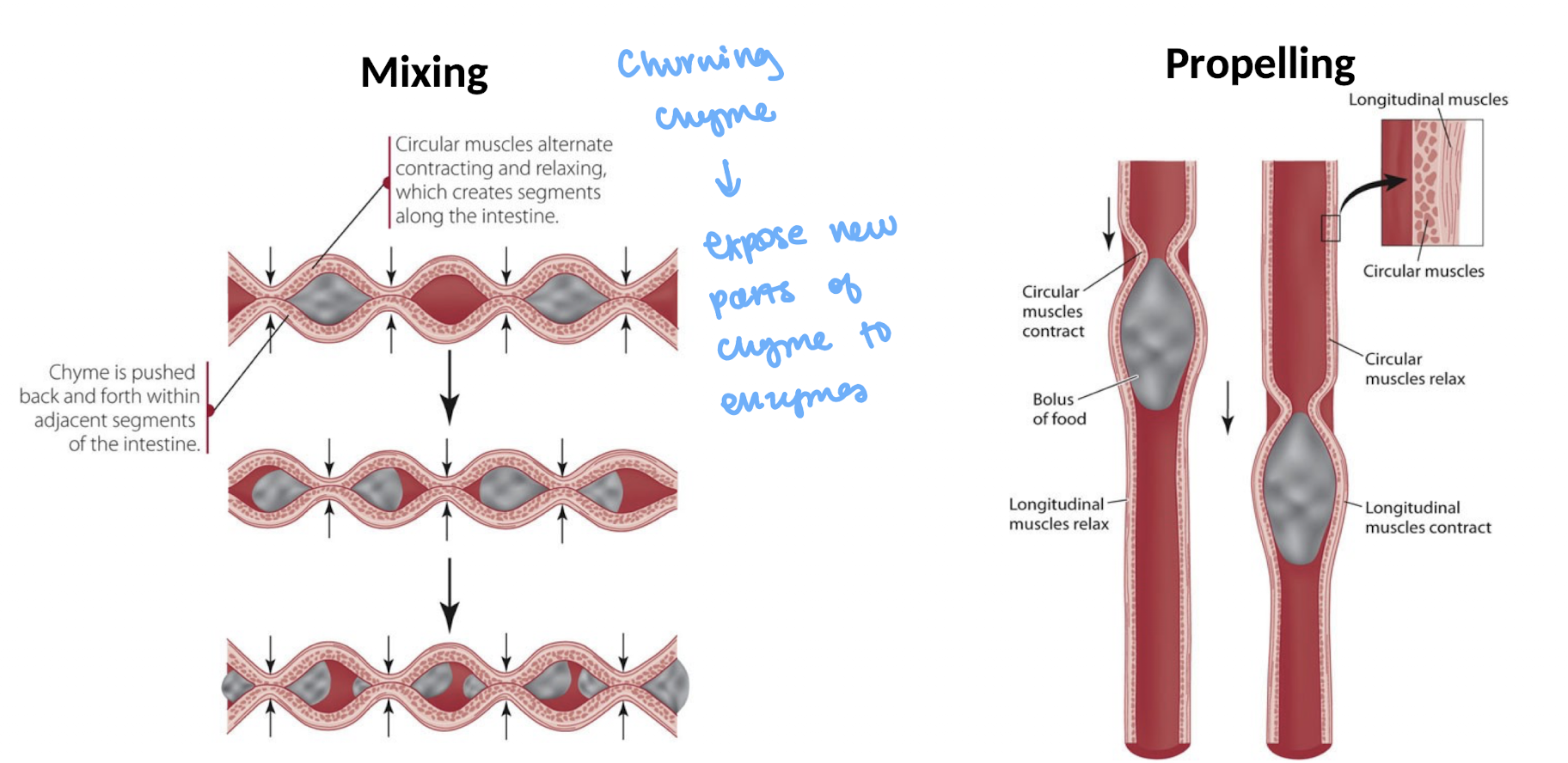
Mixing
Church chyme to expose chyme to enzymes
Propelling
What are the secretory products in the duodenum?
Secretory products:
Alkaline and viscous mucus - protect mucosa from damage + neutralize acidic chyme
Secretin (hormone) - inhibit gastric secretions + stimulate pancreas and gallbladder secretions
Somatostatin (hormone) - released by D-cells, pancreas and antrum of the stomach + diminish secretion by stomach cells
What are the two movements of the small intestine?
Mixing
Propelling
Where does nutrient absorption occur in the small intestine?
in the brush border
some in the cytoplasm of enterocytes
What are the two types of active cells in the pancreas? What are they stimulated by?
Duct cells + Acinar cells
Secretin
What is the function of the gallbladder?
concentrates
stores
secretes bile
What is bile? what is it for? where is it made and stored?
green-yellow fluid
bile acids and salts
emulsify lipids
made in the liver, stored in the gallbladder
What is the function of the large intestine?
absorb water
What are the nutrient absorption mechanisms?
diffusion
facilitated diffusion
active transport
pinocytosis
What is the order of food from the oral cavity to the large intestine?
oral cavity → esophagus → gastroesophageal sphincter → stomach → pyloric sphincter → duodenum → jejunum → ileum → large intestine