Study Guide 4 (Chapter 7) Gardners Art Through The Ages
 Studied by 0 people
 Call Kai
 Learn
Learn Practice Test
 Spaced Repetition
 Match
Match Flashcards
 Knowt Play
1/132

There's no tags or description
Looks like no tags are added yet.
Name | Mastery | Learn | Test | Matching | Spaced |
|---|
No study sessions yet.
133 Terms
which of the following structural materials allowed the architect of the Sanctuary of Fortuna Primigenia to raise such a grand and eloquent expression of Roman power?
Concrete
Which of the following was the first to break with tradition and use his portrait on Roman coinage?
Julius Caesar
Which of the following would be located in a forum and would house the law court for the city?
The basilica
The palace at Tivoli was constructed for which of the following emperors?
Hadrian
_____ established the tetrarchy and adopted the title of Augustus in 293.
Diocletian
The figures from the frieze of the Villa of Mysteries are thought to depict an intiation into which of the following?
Dionysian Mysteries. A cult in which young women were united in marriage with Dionysos.
Emulating Ariadne, the daughter of King Minos who helped Theseus.
______ suddenly erupts and buried the city of Pompeii and towns around the Bay of Naples in a single day.
Mount Vesuvius
Which of the following best describes and distinguishes the “First Style” of Roman painting?
Masonry style: Intention was to imitate costly marble panels using painted stucco relief
Which of the following best describes and distinguishes the “Fourth Style” of Roman painting?
Intricate style, mixes all previous styles. Late Fourth Style murals are often multicolored, crowded, and confused compositions with a mixture of architectural views, framed mythological panels, and First and Third Style motifs. Many unrelated panels.
Constantine’s Aula Palatina basilica used a system of _______ to divide the main hall from the semicircular apse.
Chancel arches
Christianity was recognized as the official religion of Rome in the early fourth century CE by which of the following?
Constantine or the emperor Theodosius I
In second style wall paintings such as Cubiculum M from the Villa of Publius Fannius Synistor, Roman architects used ____ to convincingly portray depth.
Linear perspective with a Vanishing point or atmospheric perspective (blurring further away objects)
A large palace/fort was built at Split in Yugoslavia by _______
Diocletian
In portraying the personality of the emperor, and, in particular his sense of concern about the weakened state of the empire, the portraits of _____ began a new trend in portraiture.
Marcus Aurelius
This emperor founded “New Rome” at Byzantium (modern Istanbul, Turkey)
Constantine I
In the 1st century A.D. Rome, the _____ was the greatest in a long line of bathing and recreational complexes.
The Baths of Caracalla (or the baths of titus (81AD)
Roman’s super realistic portraits was all so-called ______.
Veristic
In contrast to a Greek temple. Roman temples usually were ______.
Concrete/Pseudo-peripteral.
Elevated on a high podium with a single frontal staircase
Which style of wall painting was least characteristic of Roman wall painting?
First style (or mathematical linear perspective)
Which of the following describes the Temple of “Fortuna Virilis”, Rome?
Pseudo-peripteral
The Emperor Trajan commissioned which of the following?
The Forum of Trajan.
The Column of Trajan (a narrative relief column)
The arch of Trajan,
The markets of Trajan
Timgad, a new colony for army veterans,
The remodeling of the Circus Maximus
The most pronounced influence of Greek Classical art on Roman art could be seen in work done for which of the following?
The emperor Augustus or the roman republic
Under the emperor Hadrian, he commissioned the largest concrete building in the world _____.
The Pantheon
The Sanctuary of Fortuna Primigenia was characterized by which of the following?
The most impressive use of concrete during the republic. Used concrete barrel vaults. Had terraces, ramps, shops, and porticos spread out over several levels and a tholos temple crowned the complex.
The _____ of pompeian painting, people adorned walls with delicate linear fantasies sketched on predominantly backgrounds.
Third style
He was a great Roman general and became the first Roman emperor.
Augustus
One of the devices used in the Spoils from Jerusalem from the Arch of Titus that was used to create the illusion of depth was _____.
Varying the depth of carving of foreground and background figures
The markets of Trajan construction used the basic unit of _____, a single-room shop covered by a barrel vault.
Taberna
The Roman Republic vestedf power mainly in a senate and in two elected _______.
Consuls
In ancient Rome 70-80 CE, ______ was the largest and most important amphitheater in the world.
Colosseum (Flavian amphitheater)
Freed slaves often ordered portrait reliefs for their tombs. Which of the following is the best reason for this?
To commemorate their new status as roman citizens
Where would an oculus be found?
The apex of a dome
The arch of Titus shows the military triumphs of Titus, returning after the successful conclusion of the Jewish Wars in 70 CE. Which of the following was also included in the sculptural program for the Arch of Titus?
Depictions of the Roman sack of Jerusalem
Titus in his triumphal chariot, the first known instance of divine beings interacting with humans on an official roman historical relief in a celebration of imperial virtues.
The Arch of Titus also included a panel depicting the apotheosis of Titus (his ascent to the heavens as a deified emperor).
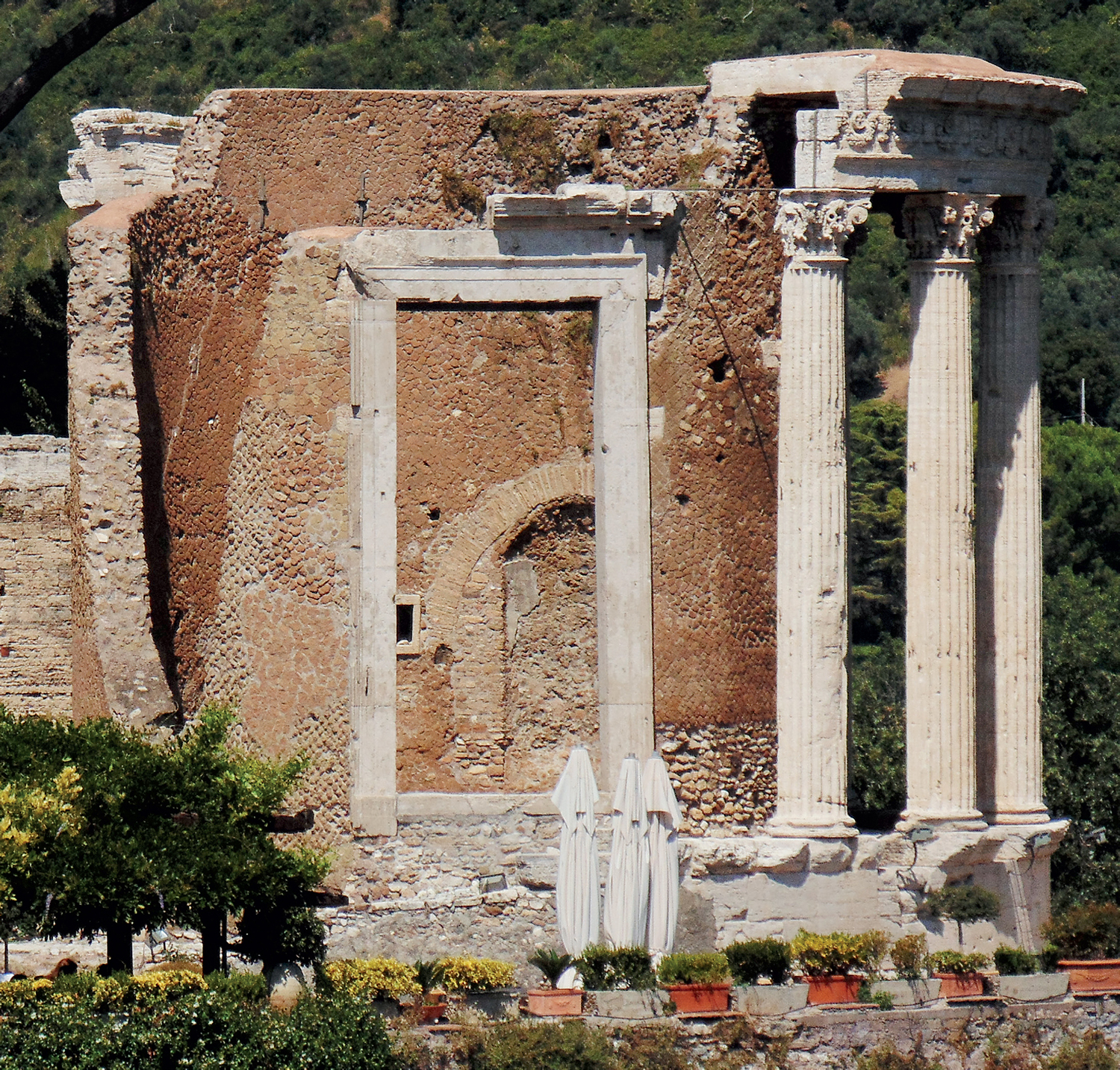
Who
The Greeks
Temple of Vesta
Tivoli, Italy
Roman Republic
The round temple type is uncommon in Etruria.
Concrete
What
The Greeks
Temple of Vesta
Tivoli, Italy
Roman Republic
The round temple type is uncommon in Etruria.
Concrete
Where
The Greeks
Temple of Vesta
Tivoli, Italy
Roman Republic
The round temple type is uncommon in Etruria.
Concrete
When
The Greeks
Temple of Vesta
Tivoli, Italy
Roman Republic
The round temple type is uncommon in Etruria.
Concrete
Why
The Greeks
Temple of Vesta
Tivoli, Italy
Roman Republic
The round temple type is uncommon in Etruria.
Concrete
What material
The Greeks
Temple of Vesta
Tivoli, Italy
Roman Republic
The round temple type is uncommon in Etruria.
Concrete
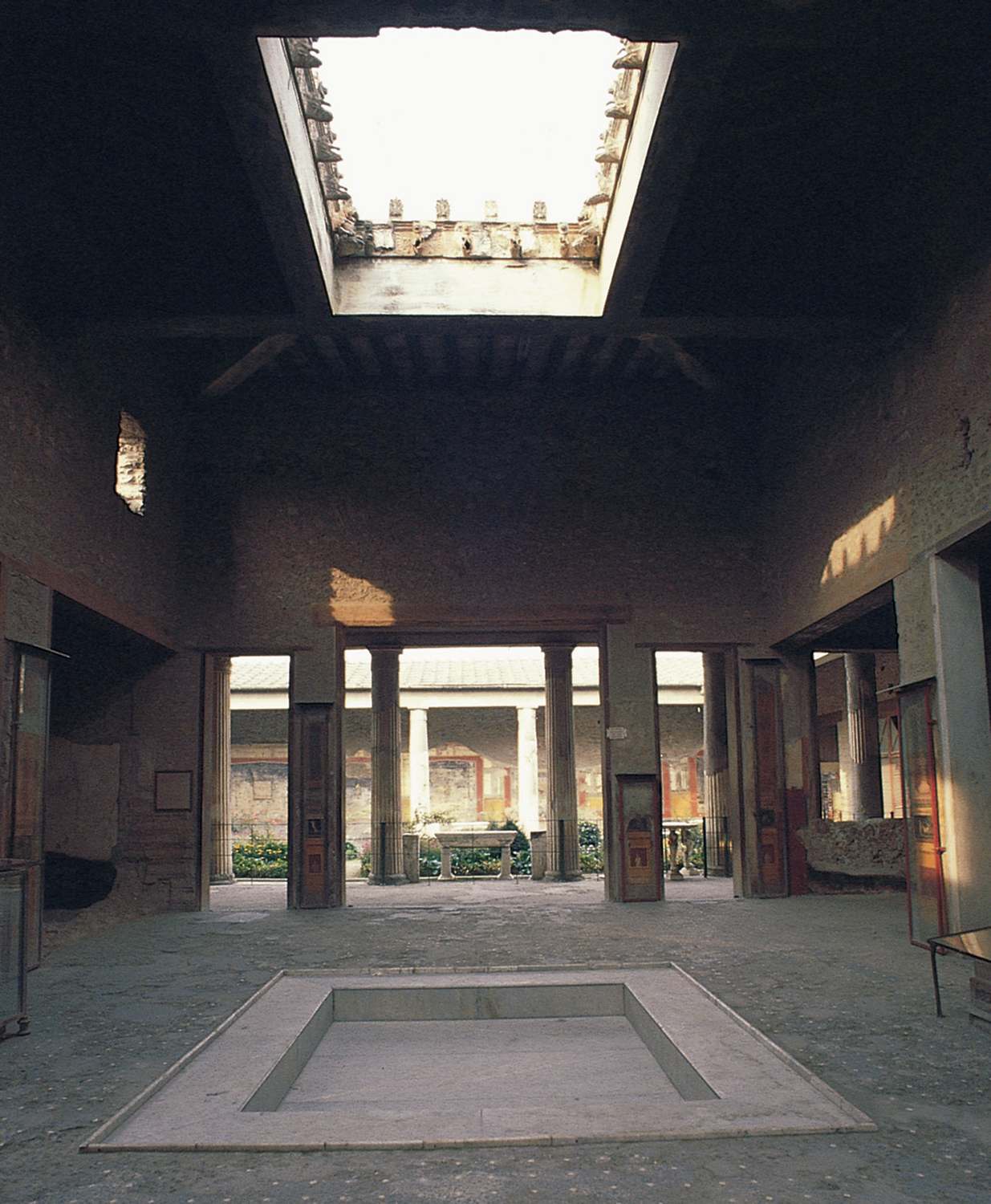
Who
Vettius brothers
Atrium of the House of the Vettii
Pompeii, Italy
Pompeii
The atrium was the center of the residence. This resembles the plan of the typical Etruscan and Roman house.
What
Vettius brothers
Atrium of the House of the Vettii
Pompeii, Italy
Pompeii
The atrium was the center of the residence. This resembles the plan of the typical Etruscan and Roman house.
Where
Vettius brothers
Atrium of the House of the Vettii
Pompeii, Italy
Pompeii
The atrium was the center of the residence. This resembles the plan of the typical Etruscan and Roman house.
When
Vettius brothers
Atrium of the House of the Vettii
Pompeii, Italy
Pompeii
The atrium was the center of the residence. This resembles the plan of the typical Etruscan and Roman house.
Why
Vettius brothers
Atrium of the House of the Vettii
Pompeii, Italy
Pompeii
The atrium was the center of the residence. This resembles the plan of the typical Etruscan and Roman house.
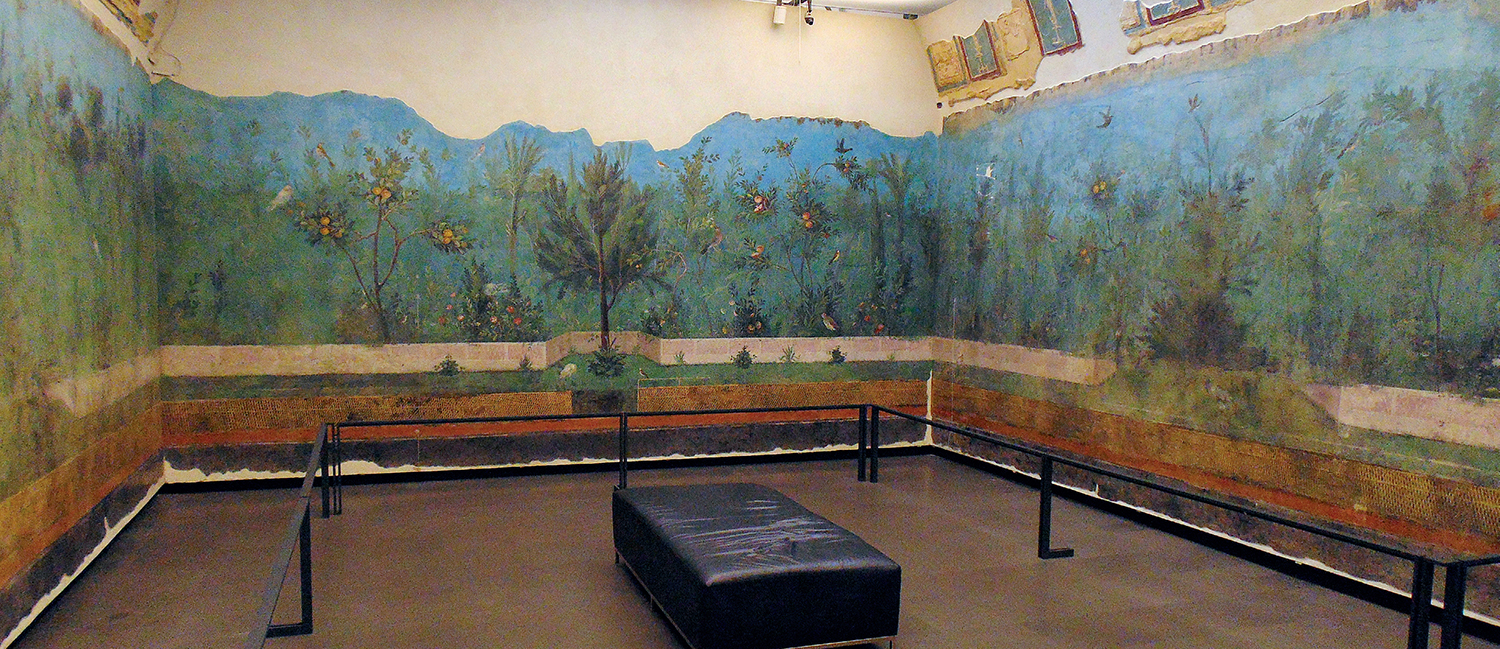
Who
Pompeians
Second style wall paintings from the summer triclinium of the Villa of Livia
Primaporta, Italy
Pompeii
To suggest recession, the painter used atmospheric perspective, blurring the distant forms.
Fresco
What
Pompeians
Second style wall paintings from the summer triclinium of the Villa of Livia
Primaporta, Italy
Pompeii
To suggest recession, the painter used atmospheric perspective, blurring the distant forms.
Fresco
Where
Pompeians
Second style wall paintings from the summer triclinium of the Villa of Livia
Primaporta, Italy
Pompeii
To suggest recession, the painter used atmospheric perspective, blurring the distant forms.
Fresco
When
Pompeians
Second style wall paintings from the summer triclinium of the Villa of Livia
Primaporta, Italy
Pompeii
To suggest recession, the painter used atmospheric perspective, blurring the distant forms.
Fresco
Why
Pompeians
Second style wall paintings from the summer triclinium of the Villa of Livia
Primaporta, Italy
Pompeii
To suggest recession, the painter used atmospheric perspective, blurring the distant forms.
Fresco
What material
Pompeians
Second style wall paintings from the summer triclinium of the Villa of Livia
Primaporta, Italy
Pompeii
To suggest recession, the painter used atmospheric perspective, blurring the distant forms.
Fresco

Who
Augustus
Portrait of Augustus
Primaporta, Italy
Early Empire
Modeled from Classical greek statues, the portraits of Augustus depict him as a never-aging youth. The portrait presents him in his role as a general.
Marble (Copy of bronze original)
What
Augustus
Portrait of Augustus
Primaporta, Italy
Early Empire
Modeled from Classical greek statues, the portraits of Augustus depict him as a never-aging youth. The portrait presents him in his role as a general.
Marble (Copy of bronze original)
Where
Augustus
Portrait of Augustus
Primaporta, Italy
Early Empire
Modeled from Classical greek statues, the portraits of Augustus depict him as a never-aging youth. The portrait presents him in his role as a general.
Marble (Copy of bronze original)
When
Augustus
Portrait of Augustus
Primaporta, Italy
Early Empire
Modeled from Classical greek statues, the portraits of Augustus depict him as a never-aging youth. The portrait presents him in his role as a general.
Marble (Copy of bronze original)
Why
Augustus
Portrait of Augustus
Primaporta, Italy
Early Empire
Modeled from Classical greek statues, the portraits of Augustus depict him as a never-aging youth. The portrait presents him in his role as a general.
Marble (Copy of bronze original)
What material
Augustus
Portrait of Augustus
Primaporta, Italy
Early Empire
Modeled from Classical greek statues, the portraits of Augustus depict him as a never-aging youth. The portrait presents him in his role as a general.
Marble (Copy of bronze original)
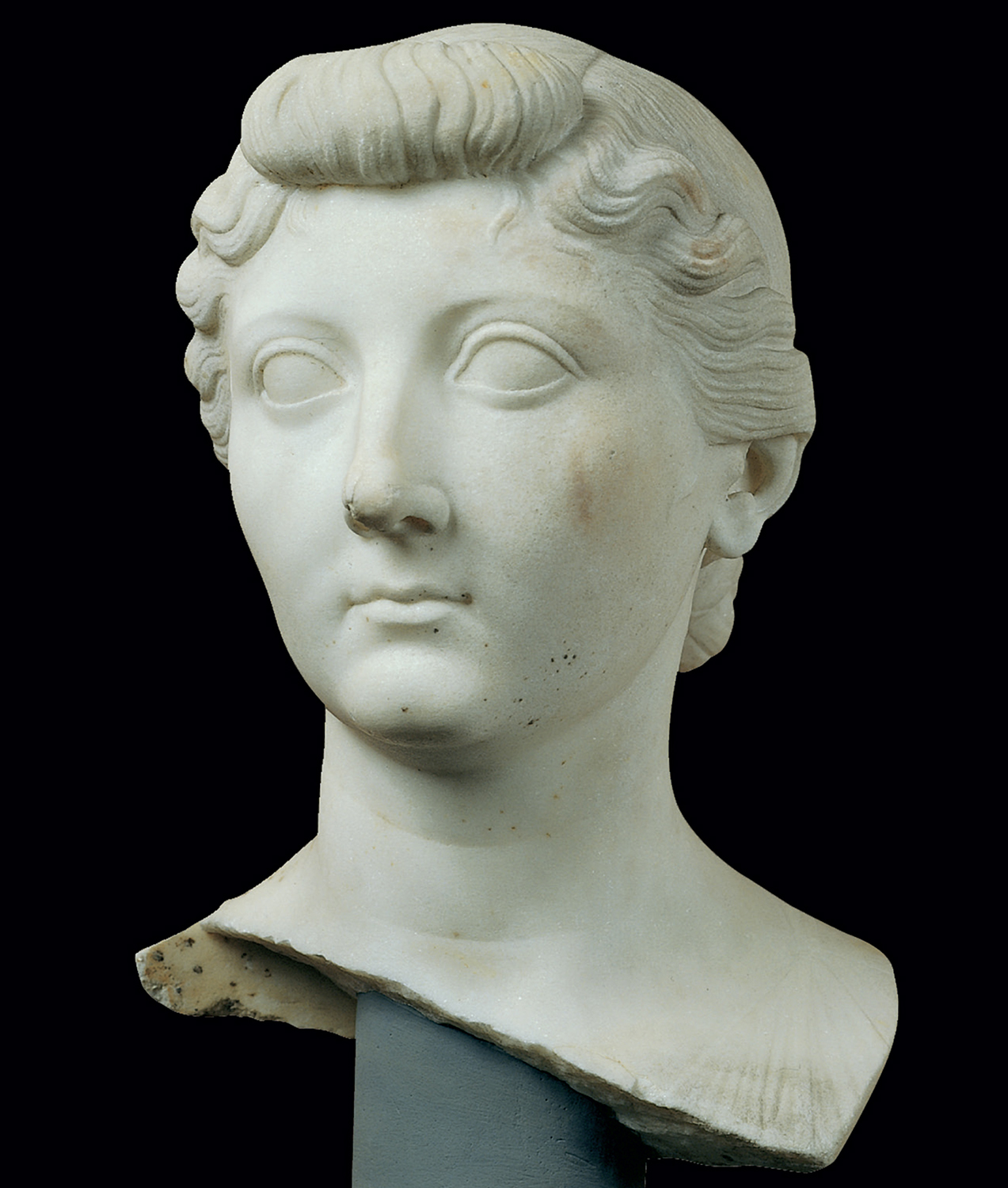
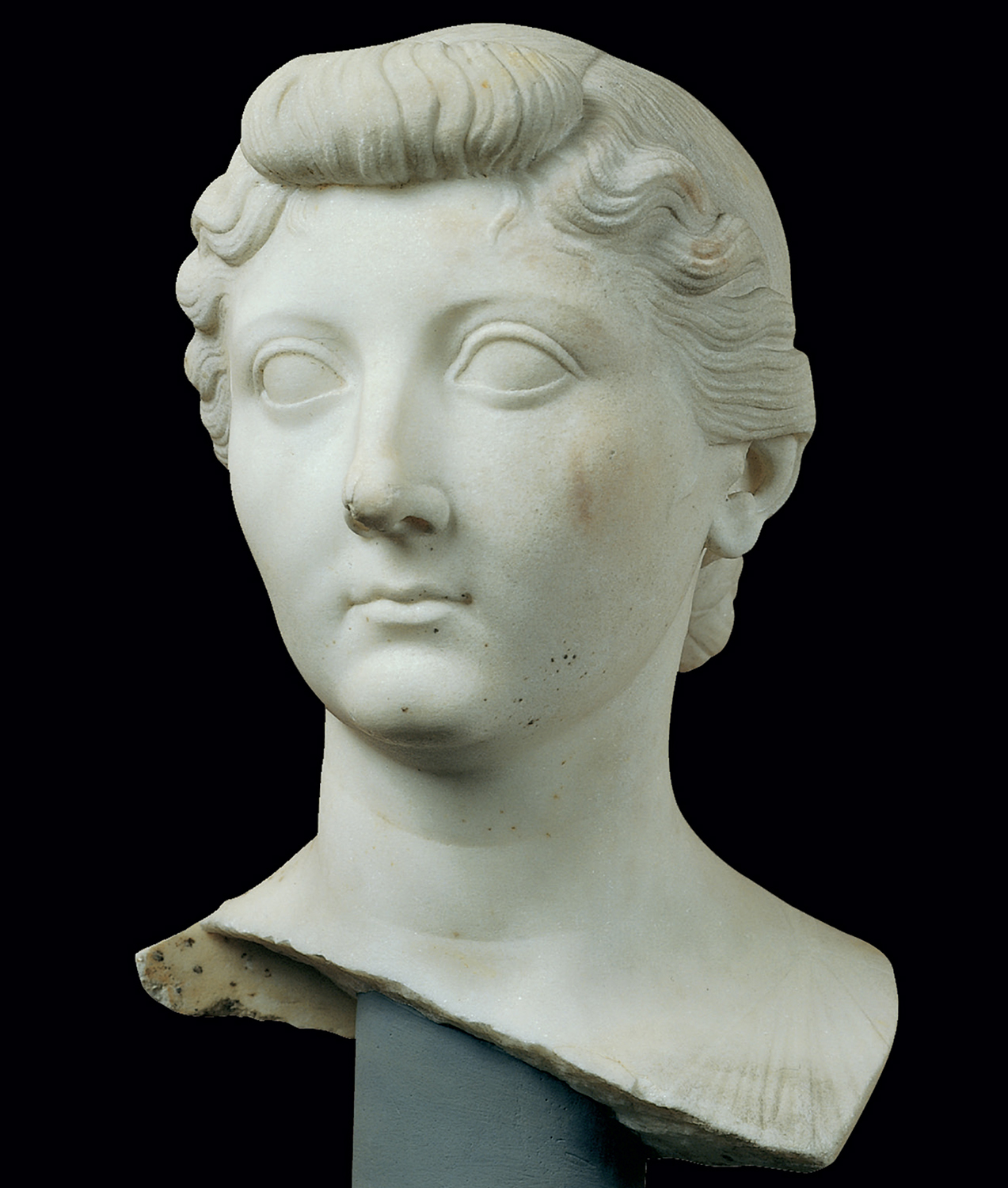
Who
Livia
Portrait bust of Livia
Arsinoe, Egypt
Early Empire
Livia’s portraits never aged, even though she died at 87.
Marble
What
Livia
Portrait bust of Livia
Arsinoe, Egypt
Early Empire
Livia’s portraits never aged, even though she died at 87.
Marble
Where
Livia
Portrait bust of Livia
Arsinoe, Egypt
Early Empire
Livia’s portraits never aged, even though she died at 87.
Marble
When
Livia
Portrait bust of Livia
Arsinoe, Egypt
Early Empire
Livia’s portraits never aged, even though she died at 87.
Marble
Why
Livia
Portrait bust of Livia
Arsinoe, Egypt
Early Empire
Livia’s portraits never aged, even though she died at 87.
Marble
What material
Livia
Portrait bust of Livia
Arsinoe, Egypt
Early Empire
Livia’s portraits never aged, even though she died at 87.
Marble
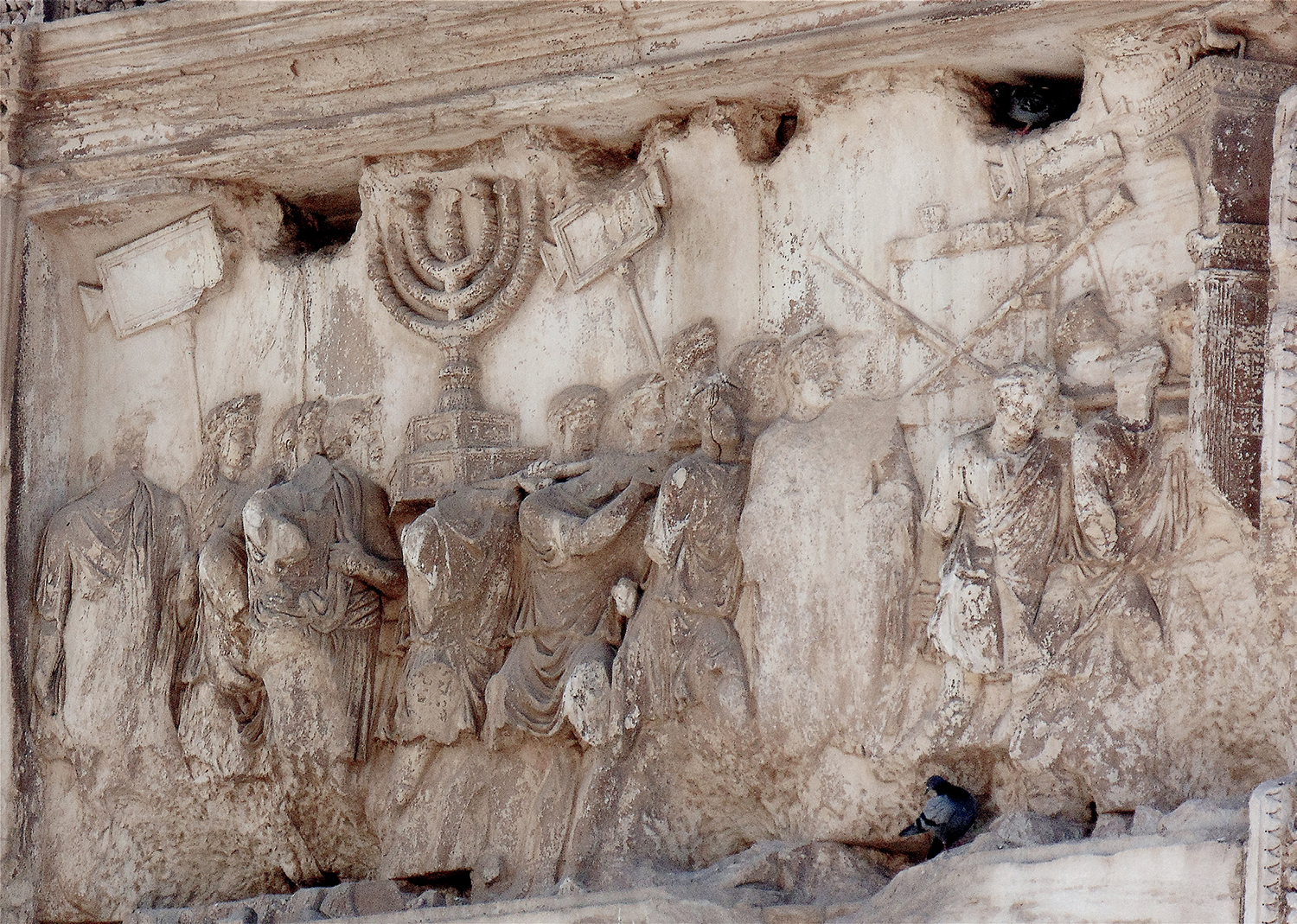
Who
Titus (The Flavians)
Spoils of Jerusalem, relief panel in the passageway of the Arch of Titus
Rome, Italy
Early Empire
Commemorate the emperor’s conquest of Judaea. Depicts Roman soldiers carrying the spoils of Jerusalem.
Marble
What
Titus (The Flavians)
Spoils of Jerusalem, relief panel in the passageway of the Arch of Titus
Rome, Italy
Early Empire
Commemorate the emperor’s conquest of Judaea. Depicts Roman soldiers carrying the spoils of Jerusalem.
Marble
Where
Titus (The Flavians)
Spoils of Jerusalem, relief panel in the passageway of the Arch of Titus
Rome, Italy
Early Empire
Commemorate the emperor’s conquest of Judaea. Depicts Roman soldiers carrying the spoils of Jerusalem.
Marble
When
Titus (The Flavians)
Spoils of Jerusalem, relief panel in the passageway of the Arch of Titus
Rome, Italy
Early Empire
Commemorate the emperor’s conquest of Judaea. Depicts Roman soldiers carrying the spoils of Jerusalem.
Marble
Why
Titus (The Flavians)
Spoils of Jerusalem, relief panel in the passageway of the Arch of Titus
Rome, Italy
Early Empire
Commemorate the emperor’s conquest of Judaea. Depicts Roman soldiers carrying the spoils of Jerusalem.
Marble
What material
Titus (The Flavians)
Spoils of Jerusalem, relief panel in the passageway of the Arch of Titus
Rome, Italy
Early Empire
Commemorate the emperor’s conquest of Judaea. Depicts Roman soldiers carrying the spoils of Jerusalem.
Marble
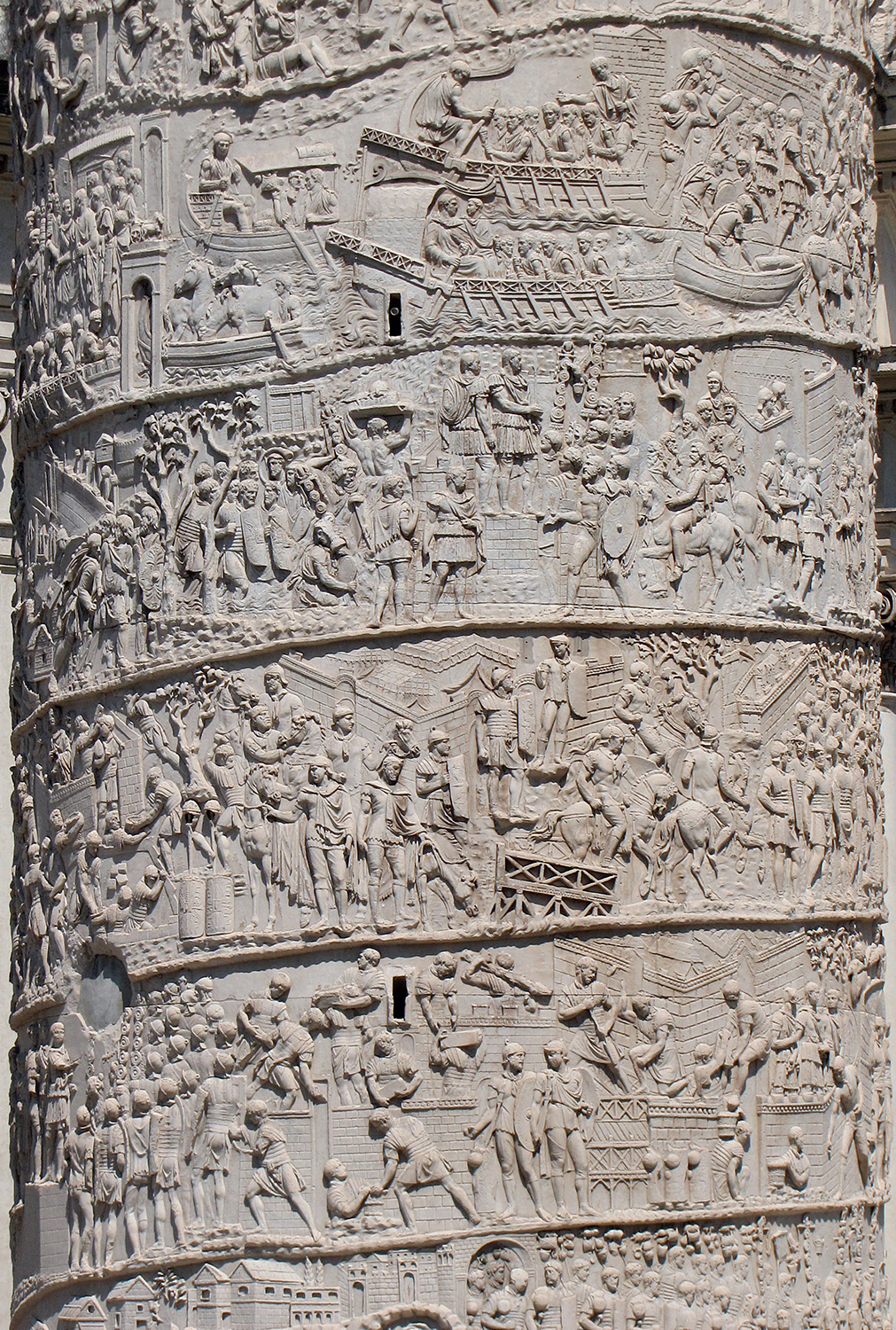
Who
Trajan
Detail of the spiral frieze of the Column of Trajan
Forum of Trajan, Rome, Italy
High Empire
Tells the story of the Dacian wars in 150 episodes.
Marble
What
Trajan
Detail of the spiral frieze of the Column of Trajan
Forum of Trajan, Rome, Italy
High Empire
Tells the story of the Dacian wars in 150 episodes.
Marble
Where
Trajan
Detail of the spiral frieze of the Column of Trajan
Forum of Trajan, Rome, Italy
High Empire
Tells the story of the Dacian wars in 150 episodes.
Marble
When
Trajan
Detail of the spiral frieze of the Column of Trajan
Forum of Trajan, Rome, Italy
High Empire
Tells the story of the Dacian wars in 150 episodes.
Marble
Why
Trajan
Detail of the spiral frieze of the Column of Trajan
Forum of Trajan, Rome, Italy
High Empire
Tells the story of the Dacian wars in 150 episodes.
Marble
What material
Trajan
Detail of the spiral frieze of the Column of Trajan
Forum of Trajan, Rome, Italy
High Empire
Tells the story of the Dacian wars in 150 episodes.
Marble
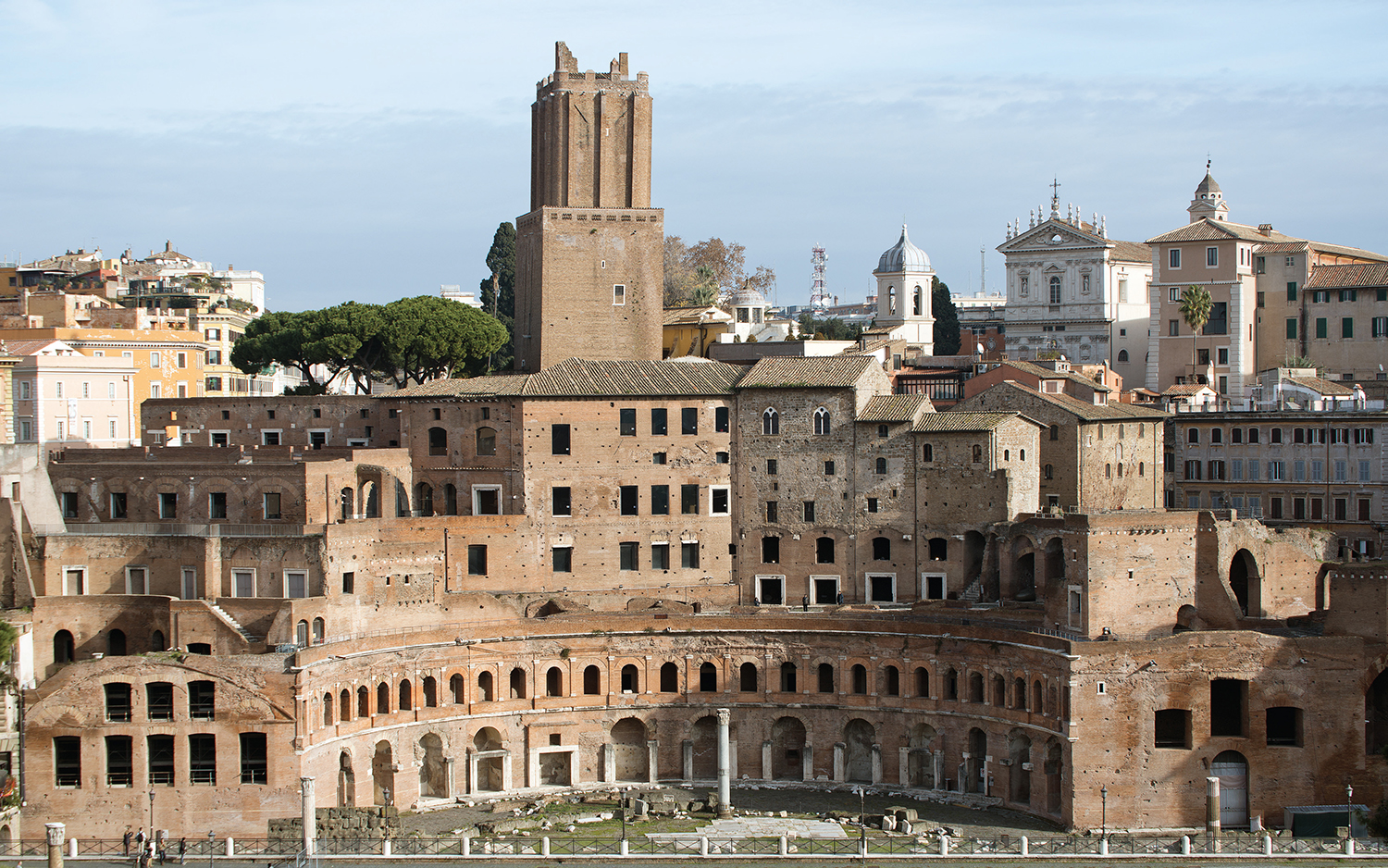
Who
Apollodorus of damascus (Trajan)
Markets of Trajan
Rome, Italy
High Empire
Apollodorus of Damascus used brick-faced concrete to transform the Quirinal Hill overlooking Trajan’s forum into a vast multilevel complex of barrel-vaulted shops and administrative offices.
Brick-faced concrete
What
Apollodorus of damascus (Trajan)
Markets of Trajan
Rome, Italy
High Empire
Apollodorus of Damascus used brick-faced concrete to transform the Quirinal Hill overlooking Trajan’s forum into a vast multilevel complex of barrel-vaulted shops and administrative offices.
Brick-faced concrete
Where
Apollodorus of damascus (Trajan)
Markets of Trajan
Rome, Italy
High Empire
Apollodorus of Damascus used brick-faced concrete to transform the Quirinal Hill overlooking Trajan’s forum into a vast multilevel complex of barrel-vaulted shops and administrative offices.
Brick-faced concrete
When
Apollodorus of damascus (Trajan)
Markets of Trajan
Rome, Italy
High Empire
Apollodorus of Damascus used brick-faced concrete to transform the Quirinal Hill overlooking Trajan’s forum into a vast multilevel complex of barrel-vaulted shops and administrative offices.
Brick-faced concrete
Why
Apollodorus of damascus (Trajan)
Markets of Trajan
Rome, Italy
High Empire
Apollodorus of Damascus used brick-faced concrete to transform the Quirinal Hill overlooking Trajan’s forum into a vast multilevel complex of barrel-vaulted shops and administrative offices.
Brick-faced concrete
What material
Apollodorus of damascus (Trajan)
Markets of Trajan
Rome, Italy
High Empire
Apollodorus of Damascus used brick-faced concrete to transform the Quirinal Hill overlooking Trajan’s forum into a vast multilevel complex of barrel-vaulted shops and administrative offices.
Brick-faced concrete

Who
Hadrian
Portrait bust of Hadrian
Rome, Italy
High Empire
Was the first Roman emperor to wear a beard. His artists modeled his idealizing official portraits on Classical Greek statues.
Marble
What
Hadrian
Portrait bust of Hadrian
Rome, Italy
High Empire
Was the first Roman emperor to wear a beard. His artists modeled his idealizing official portraits on Classical Greek statues.
Marble
Where
Hadrian
Portrait bust of Hadrian
Rome, Italy
High Empire
Was the first Roman emperor to wear a beard. His artists modeled his idealizing official portraits on Classical Greek statues.
Marble
When
Hadrian
Portrait bust of Hadrian
Rome, Italy
High Empire
Was the first Roman emperor to wear a beard. His artists modeled his idealizing official portraits on Classical Greek statues.
Marble
Why
Hadrian
Portrait bust of Hadrian
Rome, Italy
High Empire
Was the first Roman emperor to wear a beard. His artists modeled his idealizing official portraits on Classical Greek statues.
Marble
What material
Hadrian
Portrait bust of Hadrian
Rome, Italy
High Empire
Was the first Roman emperor to wear a beard. His artists modeled his idealizing official portraits on Classical Greek statues.
Marble
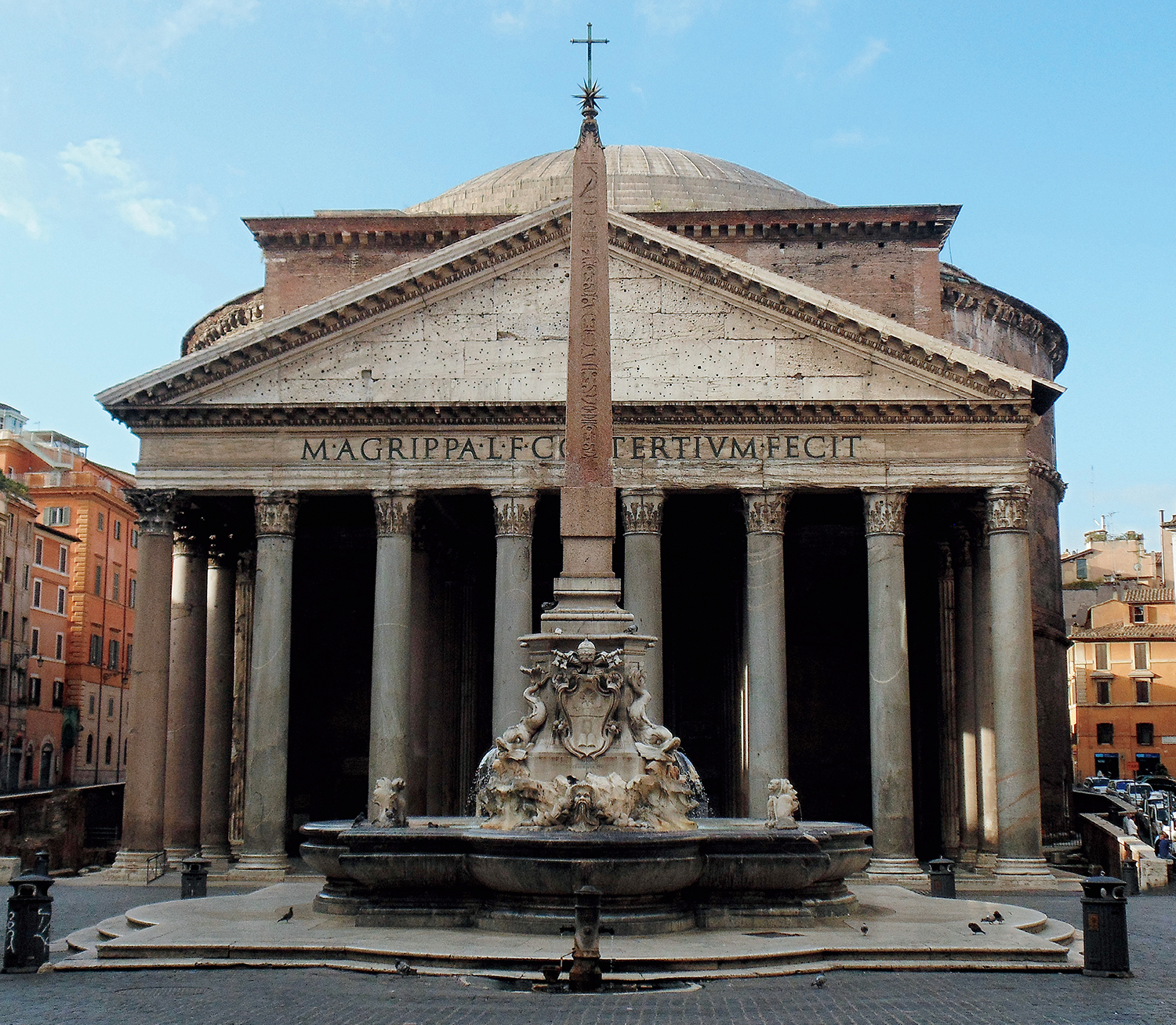
Who
Hadrian (dedicated in the name of Marcus Agrippa)
Pantheon
Rome, Italy
High Empire
One of the best-preserved buildings of antiquity, and also one of the most influential designs in architectural history. It is the largest unsupported concrete dome in history.
Concrete
What
Hadrian (dedicated in the name of Marcus Agrippa)
Pantheon
Rome, Italy
High Empire
One of the best-preserved buildings of antiquity, and also one of the most influential designs in architectural history. It is the largest unsupported concrete dome in history.
Concrete
Where
Hadrian (dedicated in the name of Marcus Agrippa)
Pantheon
Rome, Italy
High Empire
One of the best-preserved buildings of antiquity, and also one of the most influential designs in architectural history. It is the largest unsupported concrete dome in history.
Concrete
When
Hadrian (dedicated in the name of Marcus Agrippa)
Pantheon
Rome, Italy
High Empire
One of the best-preserved buildings of antiquity, and also one of the most influential designs in architectural history. It is the largest unsupported concrete dome in history.
Concrete
Why
Hadrian (dedicated in the name of Marcus Agrippa)
Pantheon
Rome, Italy
High Empire
One of the best-preserved buildings of antiquity, and also one of the most influential designs in architectural history. It is the largest unsupported concrete dome in history.
Concrete
What material
Hadrian (dedicated in the name of Marcus Agrippa)
Pantheon
Rome, Italy
High Empire
One of the best-preserved buildings of antiquity, and also one of the most influential designs in architectural history. It is the largest unsupported concrete dome in history.
Concrete
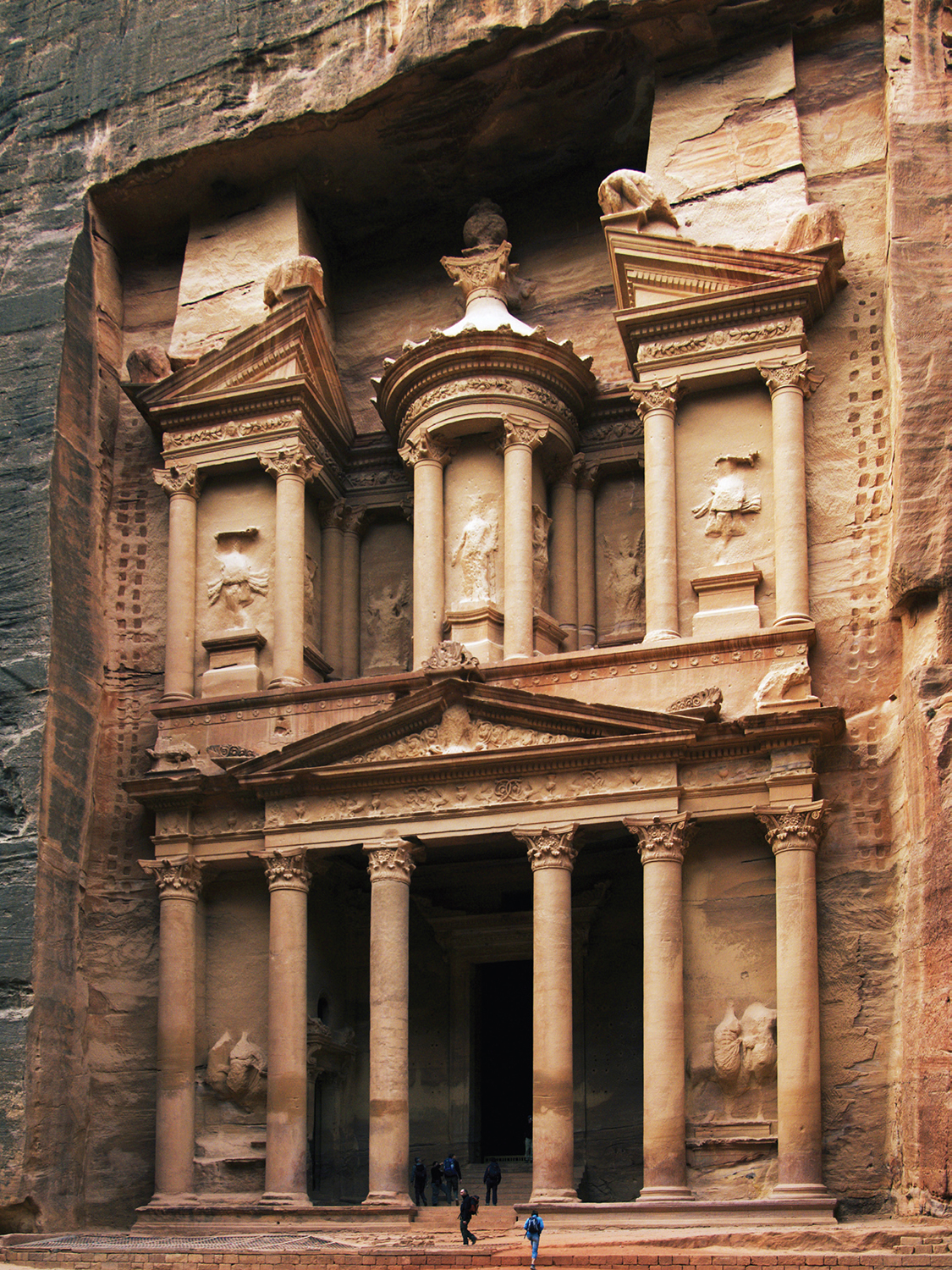
Who
Hadrian
Al-Khazneh (Treasury)
Petra, Jordan
High Empire
Prime example of Roman “baroque” architecture. The designer used Greek architectural elements in a purely ornamental fashion and with a disregard for Classical rules.
What
Hadrian
Al-Khazneh (Treasury)
Petra, Jordan
High Empire
Prime example of Roman “baroque” architecture. The designer used Greek architectural elements in a purely ornamental fashion and with a disregard for Classical rules.
Where
Hadrian
Al-Khazneh (Treasury)
Petra, Jordan
High Empire
Prime example of Roman “baroque” architecture. The designer used Greek architectural elements in a purely ornamental fashion and with a disregard for Classical rules.
When
Hadrian
Al-Khazneh (Treasury)
Petra, Jordan
High Empire
Prime example of Roman “baroque” architecture. The designer used Greek architectural elements in a purely ornamental fashion and with a disregard for Classical rules.
Why
Hadrian
Al-Khazneh (Treasury)
Petra, Jordan
High Empire
Prime example of Roman “baroque” architecture. The designer used Greek architectural elements in a purely ornamental fashion and with a disregard for Classical rules.
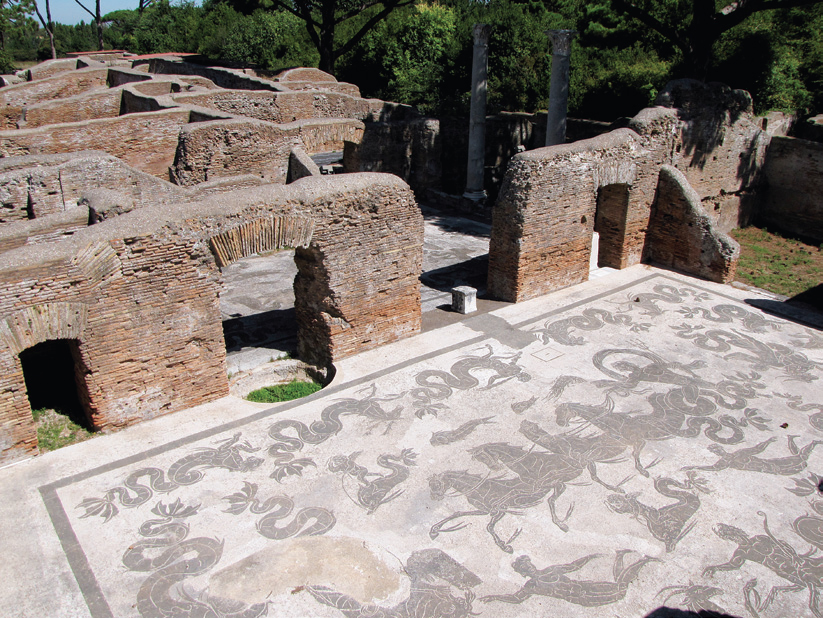
Who
Romans
Floor mosaic in the Baths of Neptune
Ostia, Italy
High Empire
Black and white floor mosaics were popular during the second and third centuries. The artists conceived them as surface decorations, not as illusionistic compositions meant to rival paintings.
Mosaic
What
Romans
Floor mosaic in the Baths of Neptune
Ostia, Italy
High Empire
Black and white floor mosaics were popular during the second and third centuries. The artists conceived them as surface decorations, not as illusionistic compositions meant to rival paintings.
Mosaic