biology exam period 2
 Studied by 8 people
 Call Kai
 Learn
Learn Practice Test
 Spaced Repetition
 Match
Match Flashcards
 Knowt Play
1/68

Earn XP
Description and Tags
Name | Mastery | Learn | Test | Matching | Spaced |
|---|
No study sessions yet.
69 Terms
Antigen
Any molecule bound to pathogen that triggers an immune response, discovered by APC and B-cells.
Antigen receptors
Membrane-bound proteins on immune cells that detect antigens
Antibodies
Soluble versions of B-cell receptors that circulate freely to detect pathogens
pathogens
any microorganism that can cause disease in its host.
what do antibodies bind to? what does this signal?
Antibodies bind to antigens, a molecular structure on the surface of a pathogen. This signals the immune system to neutralize the threat.
Why can't the antibodies produced from this viral infection fight an infection caused by a different pathogen?
Antibodies are highly specific—they bind only to the unique antigens of the virus they were made for. A different pathogen has different antigens, so those antibodies won’t recognize or neutralize it.
When do you have more antibodies in your body, during a primary or secondary immune response? Why?
secondary immune response because memory B cells quickly recognize the pathogen and produce antibodies faster
How might a pathogen enter your body without having to pass through your skin?
Through the respiratory tract (e.g. inhaling airborne viruses)
Via the digestive system (e.g. contaminated food or water)
Through mucous membranes (e.g. eyes, nose, mouth, or genitals)
What are three nonspecific immune strategies?
Skin and mucous membranes – physical barriers
Inflammation – increases blood flow and immune cell activity
Phagocytosis – cells like macrophages engulf and destroy invaders
What is the difference between non-specific and specific defence
Non-Specific: Protects against all pathogens
Specific: Targets particular pathogens using specific responses
What enzyme is released by active cytotoxic T-cells?
Granzymes- enzymes that enter infected cells and trigger apoptosis
What do helper T-cells do?
Coordinate the immune response by releasing cytokines that activate other immune cells.
What do B-cells form?
Plasma cells: Produce antibodies that bind to antigens
Helper B cells: Helps the body respond faster during infections
What types of cells destroy infected body cells?
Cytoxic T cells: kill infected or cancerous cells
Natural killer (NK): Destroy abnormal cells without needing prior experience
What type of cells has a memory?
Memory B+T cell
3 areas of the body where lymph nodes are found
Neck
Armpit
Groin
Cell
A basic unit of life
Organelles
Specialized structures within a cell that perform distinct processes.
Nucleus
Controls cell activities and contains DNA
Mitochondria
The powerhouse of the cell
Ribosomes
Make protein
Endoplasmic Reticulum (Rough & Smooth
Transports materials within the cell.
Golgi Apparatus
Packages proteins for transport.
Lysosomes
Breaks down waste materials.
Human Tissues (types)
Epithelial Tissue, Connective tissue, muscle tissue, nervous tissue
Muscles (types)
Voluntary, Involuntary
Organ systems (types)
Circulatory, Respiratory, reproductive, cardiovascular, nervous, muscular, skeletal, digestive, excretory, integumentary system
Connective tissue
Supports, connects and binds other tissues
Nervous tissue
Transmits electrical signals though out the body.
Epithelial tissue
Covers body surfaces, lines internal organs, protects from the environment
Muscle tissue
Contracts to produce movement
Skeletal
Smooth
Cardiac
Lungs
Provide oxygen and release CO2, a crucial part of cellular respiration.
Skin
Made from epithelial tissue, covers the entire body and protects it from the environment
Liver
Filters blood, produces bile, regulates blood sugar and clotting
Kidneys
Filter blood, remove waste, regulate fluid and electrolyte balance.
Reproductive organs
Produce gametes (sperm/eggs) and hormones; enable reproduction.
What is the structure of the skin?
The skin has three main layers: the epidermis (outer protective layer), the dermis (middle supportive layer with blood vessels, nerves, and glands), and the hypodermis (deep layer of fat and connective tissue that insulates and cushions the body)
How does the skin function?
The skin functions as the body’s largest organ, acting as a protective barrier, regulating temperature and hydration, enabling sensation, supporting immune defence, and even helping with vitamin D production
What are bones made of?
Collagen, minerals, bone cells, bone marrow, water.
Main parts of bones
Periosteum, spongy bone, endosteum, compact bone, bone marrow, epiphysis, diaphysis
How to keep bones strong?
a combination of nutrients (calcium, vitamin D, protein), regular weight-bearing exercise
10 bones
Clavicle, sternum, ulna, radius, humorous, femur, tibia, fibula, mandible, cranium
Why do I need muscles?
to move, maintain posture, generate body heat, protect joints, and support vital organs
How Do Muscles Work?
By contracting and relaxing in response to signals from the nervous system.
Why do I need to train muscles?
It keeps muscles strong, healthy and flexible. Strong muscles stabilize joints and increase muscle mass and power.
What is an open circulatory system?
the circulatory fluid, called hemolymph, is not confined to blood vessels. Instead, it flows freely through body cavities (hemocoel), bathing organs directly
What is a closed circulatory system?
blood is contained entirely within blood vessels (arteries, veins, and capillaries), allowing for efficient transport of oxygen, nutrients, and waste products.
Which kind of circulatory system is in humans?
Closed circulatory system.
What makes different blood types?
Different blood types are determined by the antigens present on the surface of red blood cells and the antibodies in plasma. The two main systems are the ABO system (A, B, AB, O) and the Rh factor (positive or negative).
How does blood get Oxygen?
Oxygen enters blood in the lungs via alveoli.
Haemoglobins from red blood cells are the main carriers of oxygen. They carry it though arteries.
Pulmonary circulation ensures oxygen-rich blood is delivered to the body.
The deoxygenated blood gets carried back to the heart by the veins which carry the blood to the right atrium via superior and inferior vena cava.
Why should blood get oxygen?
To perform cellular respiration to produce ATP.
What are the functions of the circulatory system?
transport oxygen and nutrients, remove waste products, regulate body temperature, and protect the body through immune responses.
Name 3 different blood vessels and explain their functions and difference
Capillaries- Allow the exchange of oxygen, nutrients and waste between blood and tissues.
Arteries- carry blood away from the heart (oxygenated)
Veins- Carry blood to the heart (deoxygenated)
How does blood circulate between heart and body? name all blood vessels and involve heart parts.
1. Deoxygenated Blood (from body → heart → lungs)
Veins from body:
Superior vena cava → brings blood from the upper body.
Inferior vena cava → brings blood from the lower body.
Heart chamber:
Blood enters the right atrium.
Passes through the tricuspid valve into the right ventricle.
Pulmonary artery:
The pulmonary trunk splits into right and left pulmonary arteries, carrying deoxygenated blood to the lungs.
2. Oxygenation in Lungs
In the lungs, blood releases carbon dioxide and picks up oxygen through the alveoli-capillary exchange.
3. Oxygenated Blood (from lungs → heart → body)
Pulmonary veins:
Four pulmonary veins (two from each lung) carry oxygen-rich blood back to the heart.
Heart chamber:
Blood enters the left atrium.
Passes through the mitral (bicuspid) valve into the left ventricle.
Aorta:
The left ventricle pumps blood into the aorta, the largest artery, which distributes oxygenated blood throughout the body.
What is a valve? (+3 major ones)
A valve is a structure that ensures fluid flows in one direction
Tricuspid valve- Prevents backflow of blood into the right atrium when the right ventricle contracts
Mitral valve- Prevents backflow into the left atrium when the left ventricle contracts
Aortic valve- Stops blood from flowing back into the left ventricle after it has been pumped into the aorta (largest artery)
Why do we need a cardiovascular system?
Body’s transport network, delivers oxygen and nutrients to cells, removes CO2 and waste, distributes hormones, regulates temperature and supports immune defence.
What is interferon?
Signalling proteins produced by cells in response to viruses and other pathogens.
What happens to bacteria after entering the body?
When bacteria enter the body, they may take over tissues, multiply, and release toxins, while the immune system immediately responds to detect, attack, and eliminate them.
What is a vaccine? How does it work?
A vaccine is a controlled dose of weakened pathogens. A vaccine is a biological preparation that trains your immune system to recognize and fight specific pathogens (viruses or bacteria) without causing the actual disease. works by exposing the body to harmless parts of the pathogen (proteins, weakened, killed forms or genetic instructions), prompting the immune system to build memory defences for future protection
What is heart attack? How can it be treated/prevented?
A heart attack happens when blood flow to part of the heart muscle is blocked, usually by a blood clot forming on a ruptured plaque in the coronary arteries. Without oxygen, heart muscle cells begin to die. Treatment focuses on restoring blood flow quickly, while prevention relies on healthy lifestyle choices and managing risk factors
What is the chemical reaction for cellular respiration?

How different organ systems are working together in our body. Explain your answer by an example.
Circulatory system: Transports oxygen, nutrients, hormones, and waste products.
Respiratory system: Supplies oxygen and removes carbon dioxide.
Digestive system: Breaks down food into nutrients that enter the blood.
Muscular & skeletal systems: Enable movement and protect organs.
Nervous system: Coordinates and controls actions, sending signals to other systems.
Excretory system (kidneys, liver): Removes waste and maintains fluid balance.
Immune system: Defends against infections.
running requires the respiratory system to supply oxygen, the circulatory system to deliver it, the muscular system to use it, and the nervous system to coordinate everything.
What are the different parts for air in our respiratory system?
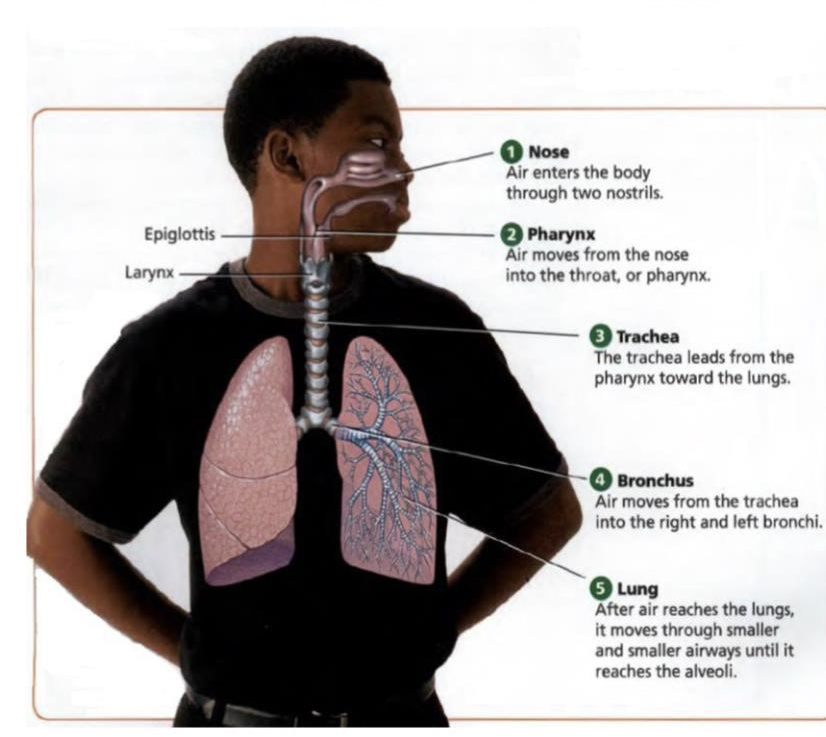
What are the most important parts of the respiratory system?
nose and mouth, pharynx, larynx, trachea, bronchi, lungs, bronchioles, alveoli, and diaphragm. Together, they allow oxygen to enter the body, carbon dioxide to leave, and breathing to occur efficiently.
How can we keep our bones healthy?
ensuring adequate calcium and vitamin D intake, regular weight-bearing exercise, avoiding smoking and excessive alcohol, and maintaining a balanced lifestyle
How can a problem in the respiratory system make a problem in muscles?
Reduced oxygen supply
Energy deficiency in muscles
Poor waste removal
Reduced physical performance
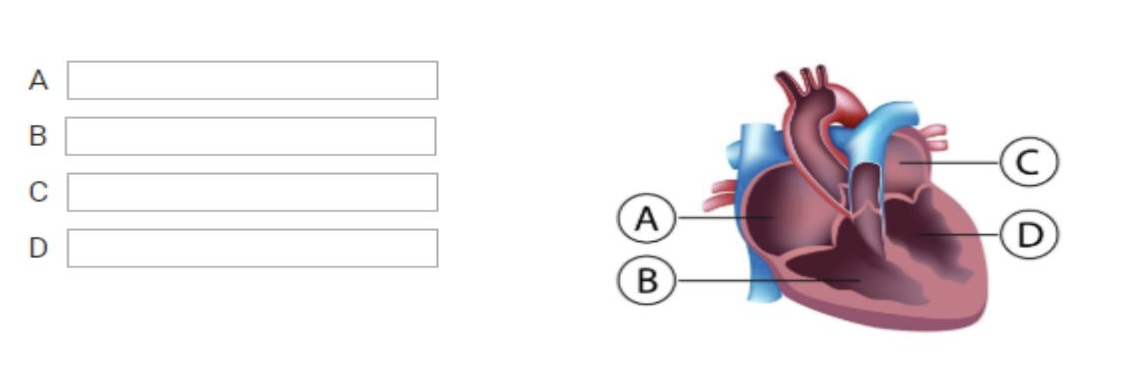
A- Right Atrium
B- Right Ventricle
C- Left Atrium
D- Left Ventricle
T-cell
a type of white blood cell that plays a central role in the body’s adaptive immune system, helping to recognize and fight specific pathogens like viruses, bacteria, and even cancer cells.
B-cell
a type of white blood cell that protects you from infection by producing antibodies. These antibodies specifically target and neutralize harmful invaders like viruses, bacteria, and parasite