phys u2
 Call Kai
 Learn
Learn Practice Test
 Spaced Repetition
 Match
Match Flashcards
 Knowt Play
1/150

There's no tags or description
Looks like no tags are added yet.
Name | Mastery | Learn | Test | Matching | Spaced | Call with Kai | Chat |
|---|
No analytics yet
Send a link to your students to track their progress
151 Terms
Current
Rate of flow of charge
Current symbol
I
Current formula
I=ΔQ/Δt
Q=It
I = Q/t
Current SI (base) unit
A
Current: base quantity or derived quantity
Base quantity
Current:scalar or vector
Scalar quantity
Charge-time graph (Q-t) : gradient
Current —> I
Charge formula
Charge = current x time
Q = It
Charge: Si base unit
As
Charge SI unit
C
Charge: scalar or vector
Scalar quantity
Charge base or derived quantity
Derived
Area under I-t graph
—> charge
Quantisation of charge formula
Q= Ne
Q - total charge
N - no. of free electrons
e - charge of 1 e− e =0 1.6x10^-19C (basic charge)
Electrical component - cell
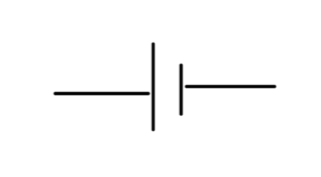
Electrical component - Battery
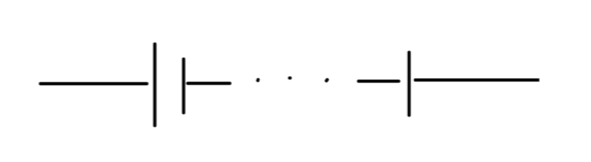
Electrical component - Dc power supply

Electrical component - Ac power supply

Electrical component - Variable power supply
Electrical component - Ammeter

Electrical component - Voltmeter

Electrical component - Ohmmeter
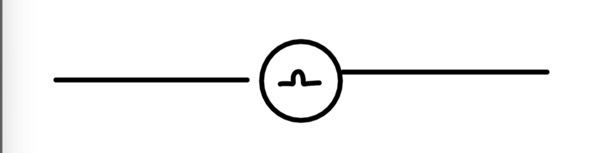
Electrical component - Variable resistor

Electrical component - LDR

Electrical component - Diode

Electrical component - LED

Electrical component - Fuse

Electrical component - Thermistor
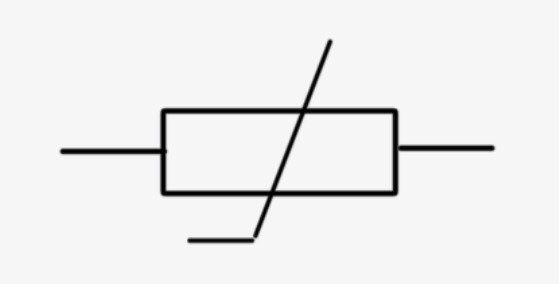
Electrical component - Filament lamp

Electrical component - heater

Electrical component - One way switch

Electrical component - Two way switch

Electrical component - Potential divider

Potential difference
Work done per unit charge
Potential difference formula
V = w/Q
Potential difference SI unit
V (volt)
Potential difference SI base unit
Kgm^2s^-3A^-1
Potential difference scalar or vector quantity
Scalar
Potential difference base or derived quantity
Derived
Ohm’s law
Current through a metallic conductor is directly proportional to potential difference applied across it provided temperature and all the other physical quantities remain constant
Resistance definition
Ratio between voltage and current
Resistance formula
V=IR
R=V/I
R -> resistance
V -> voltage
I -> current
Resistance SI unit
Ω
Resistance scalar or vector
Scalar
Resistance base or derived
Derived
V-I graph gradient
R
I-v graph gradient
Gradient = 1/R
R = 1/gradient
Ohmic conductors and non-ohmic conductors: ohm’s law
Ohmic conductors: obeys ohm’s law
non-ohmic conductors: does not obey ohm’s law
Ohmic conductors and non-ohmic conductors: directly proportional or not proportional
Ohmic conductors: directly proportional
non-ohmic conductors: not directly proportional
Ohmic conductors and non-ohmic conductors: r constant or varies
Ohmic conductors: constant
non-ohmic conductors: varies
Ohmic conductors and non-ohmic conductors: I-v graph straight line or not straight line
Ohmic conductors: I-v graph is a straight line through origin
non-ohmic conductors: not a straight line
Ohmic conductors and non-ohmic conductors: Examples
Ohmic conductors: resistor
Metal wire at low temperature
non-ohmic conductor:
1. lamp
2. Thermistor
3. LDR
4. Diode
5. LED
Charge carrier density symbol
n
Charge carrier density formula
n = N/v
Charge carrier density unit:
m^-3
Charge carrier density: N
No. of free electrons
Charge carrier density: v
Volume
Charge carrier density
No. of free electrons per unit volume
Drift velocity symbol:
V
Drift velocity
Average/mean velocity of free e^- in a conductor when a p.d is applied across it
Drift veolcity si unit
Ms^-1
Drift velocity formula
V = I/naq
Kirchhoff’s 1st law/current law/Junction law
Sum of currents entering a junction is equal to the sum of currents leaving out
Net current at junction je zero
Conservation of charge
Kirchhoff’s 2nd law
supply voltage is equal to sum of individual voltage
Net voltage around a close loop is zero
Conservation of energy
Resistivity formula
𝜌 = RA/L
𝜌 - resistivity
R - resistance
A - cross sectional area
L - length
Resistivity si unit
Ωm
Resistivity
The resistance of a conductor/material of unit length of unit cross-sectional area of constant temp
I-v characteristics: resistor
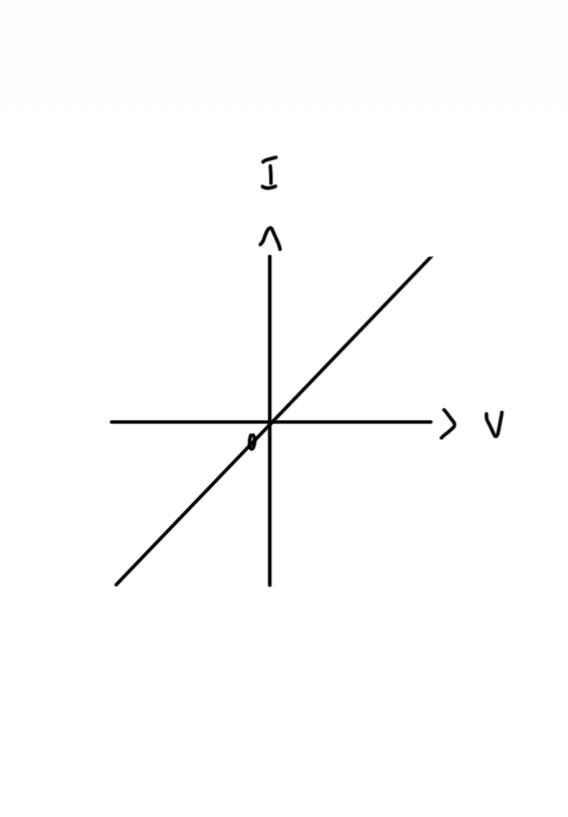
I-v characteristics: Filament lamp

I-v characteristics: NTC thermistor

I-v characteristics: LDR
I-v characteristics: Diode or LED
emf formula
ε = v + Ir
ε in emf formula
emf
V in emf formula
Terminal p.d
Ir in emf formula
Lost volts
Emf
Work done in moving a charge around a circuit
Internal resistance
The resistance within the cell which opposed
Wave definition
Means of transferring energy
Type of waves
Mechanical waves
Electromagnetic waves
Mechanical and EM waves: medium
Mechanical: need medium
EM waves: do not need medium
Mechanical and EM waves: v
Mechanical: v varies
EM waves: v is constant
3x10^8
Mechanical and EM waves: eg
Mechanical: water waves, sound waves, waves along string, waves along spring
EM waves: radio, micro, light
Medium of propogration
Waves:
Transverse
Longitudinal
Transverse waves
Waves in which particles in the medium vibrate perpendicular to the direction of wave travel
Transverse eg
Waves along string
Surface water waves
Longitudinal waves
Waves in which particles in the medium vibrate parallel to the direction of wave travel
Longitudinal eg
Sound waves
Water waves beneath surface
Formula
V=f λ
Electromagnetic waves
Electromagnetic waves transfer energy through oscillations of electric and magnetic fields in perpendicular direction
Displacement-distance diagram
Displacement-time diagram
Em spectrum
Good eXplorers Underwater View Island Marine Reefs
EM spectrum: gamma
10^-12
EM spectrum: x-rays
10^-10
EM spectrum: UV
10^-8
EM spectrum: visible
10^-7
EM spectrum: IR
10^-6
EM spectrum: micro
10^-3/10^-2
Cooking/communication
EM spectrum: radio
1m -> 1km