1) Physiology of the Digestive System: PCF
 Call Kai
 Learn
Learn Practice Test
 Spaced Repetition
 Match
Match Flashcards
 Knowt Play
1/66

There's no tags or description
Looks like no tags are added yet.
Name | Mastery | Learn | Test | Matching | Spaced | Call with Kai | Chat |
|---|
No analytics yet
Send a link to your students to track their progress
67 Terms
The gastrointestinal tract is a flexible musuclar tube; “outside” the body. What are the 9 main GI organs?
Mouth/oral cavity
Pharynx
Esophagus,
Stomach,
Small intestine,
Large intestine
Rectum,
Anus
What are the 4 accesssory organs of GI organs?
Salivary glands
Pancreas
Liver
Gallbladder

What are the three main functions of the GI tract?
Digest and absorb ingested (and endogenous) materials
Excretion of waste
Serves as a primary site of immune defense
What are the Basic Structure of the Alimentary Canal Wall from most inner to outer?
Mucosa → epithelium, lamina propria, muscularis mucosa
Submucosa → houses a portion of the enteric nervous system know as Meissner’s submucosal plexus
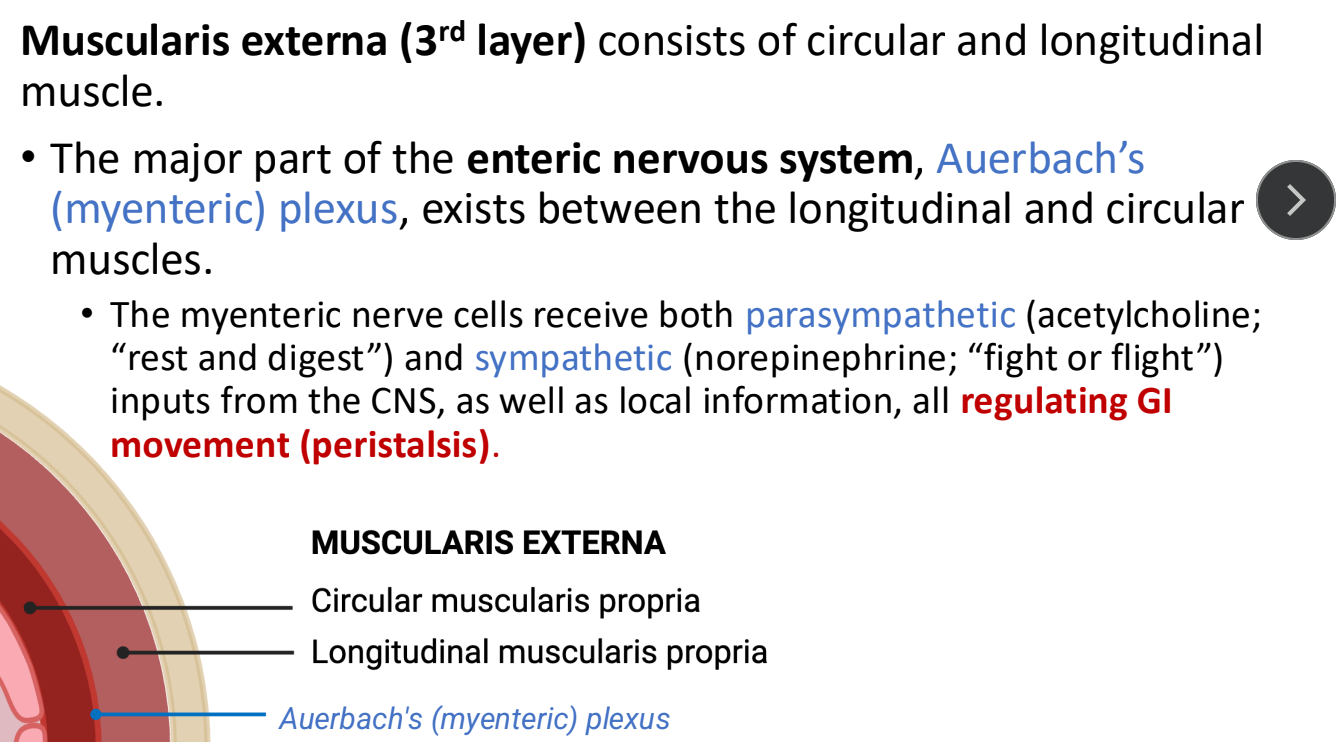
Muscularis externa → major part of the enteric nervous system, Auerbach’s (myenteric) plexus, exists between the longitudinal and circular muscles.
Serosa → epithelium & connective tisssue
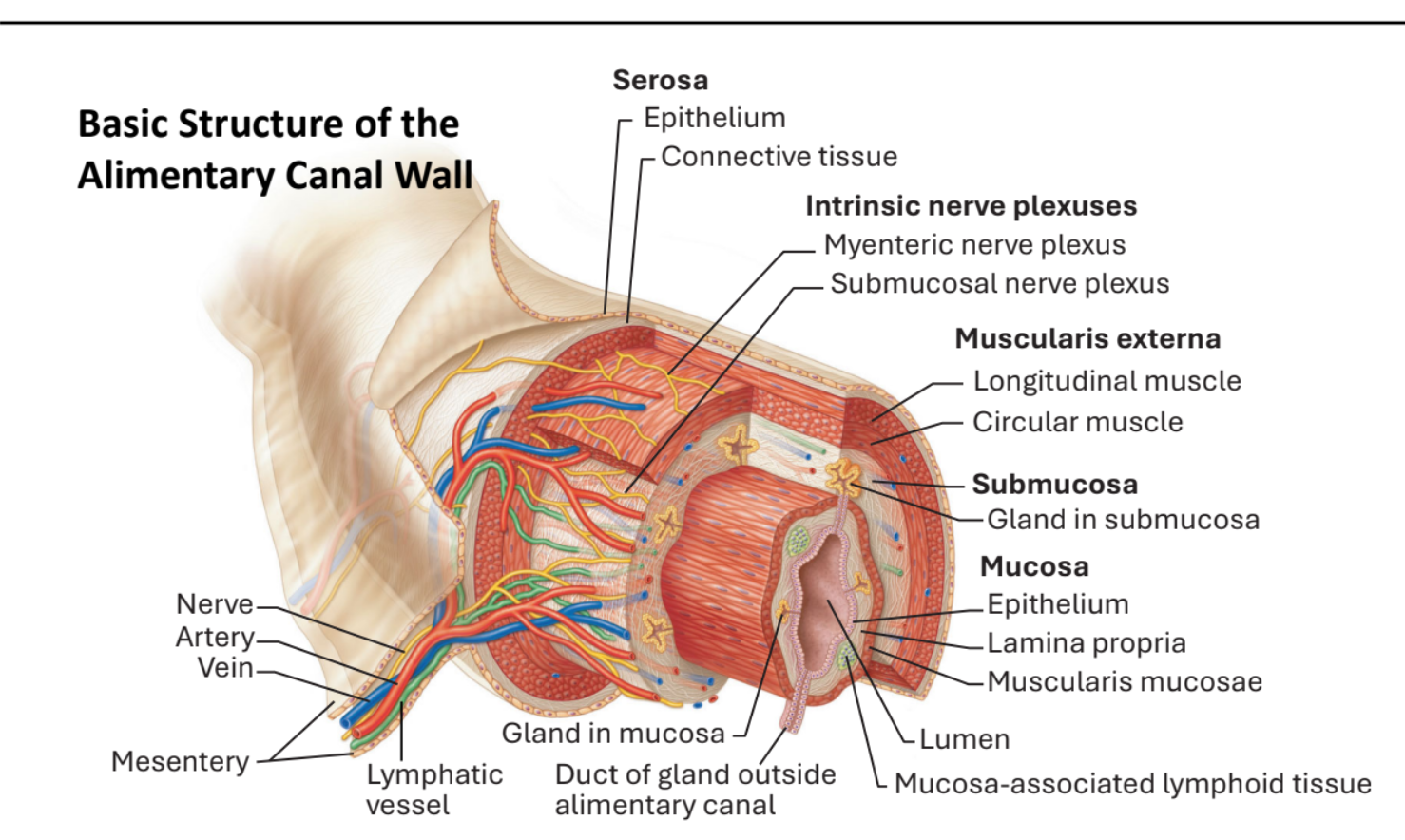

Refresher from Medina’s class

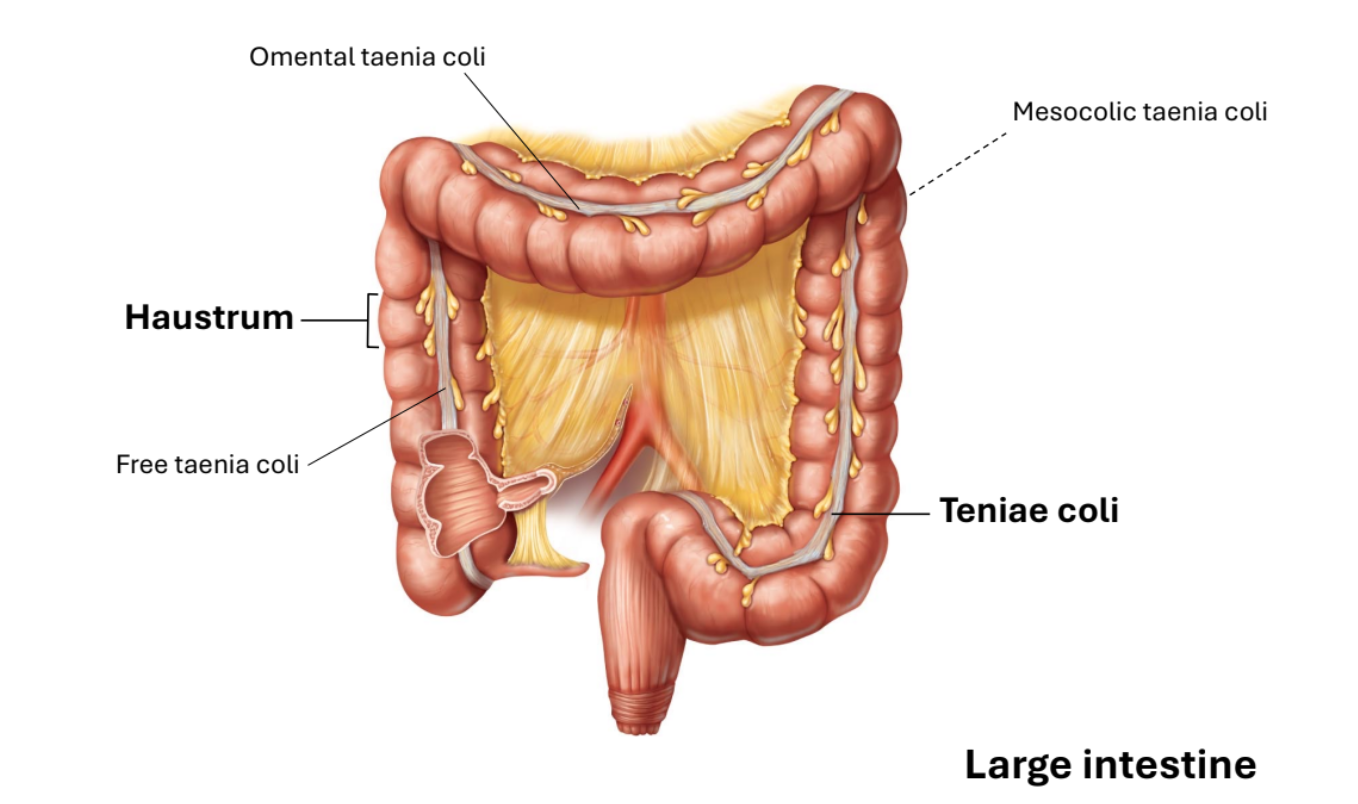
Anatomy of Large intestine
Free taenia coli
Haustrum
Omental taenia coli
Mesocolic taenia coli
Teniae coli
The Digestive Process: The gastrointestinal (GI) tract sustains the body through the coordinated processes of
motility, secretion, digestion, and absorption
The digestive process begins in the oral cavity and proceeds through the esophagus, stomach, small intestine and the large intestine
The digestive process consists of three interlockiong control systems. What are they?
A myogenic rhythm intrinsic to GI smooth muscle
Enteric and autonomic nervous systems capable of both local reflex control and central integration
GI is a large endocrine system; gut is the body’s largest hormone producing organ; lots of hormone-producing cells that are spread throughout the digestive tract.

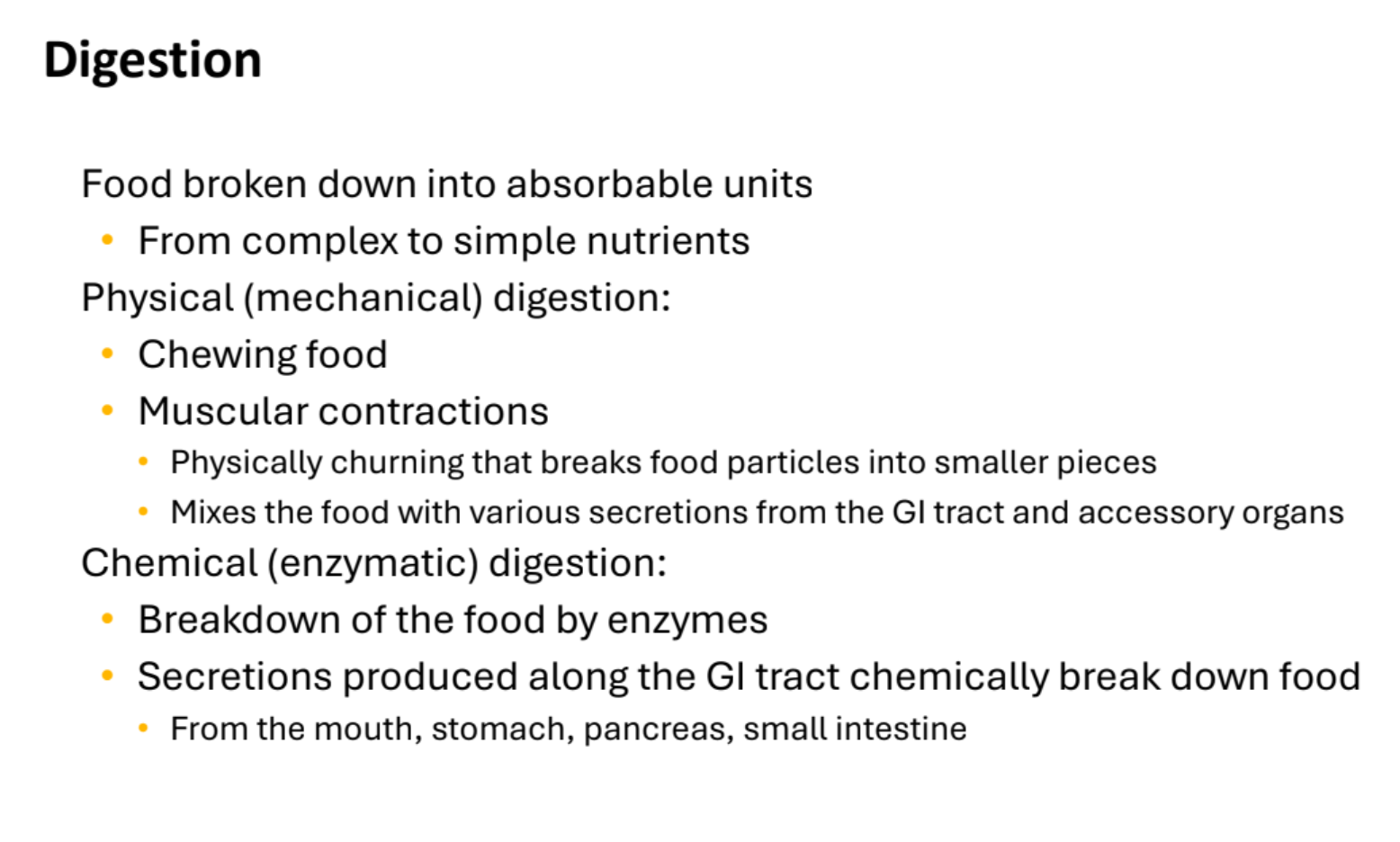
Digestion: Chemical digestion: Secretions from what 4 areas are produced along the GI tract chemically break down food
Mouth → Salivary a-amylase; lingual lipase
Stomach → pepsinogen/pepsin; gastric lipase
Pancreas
SI

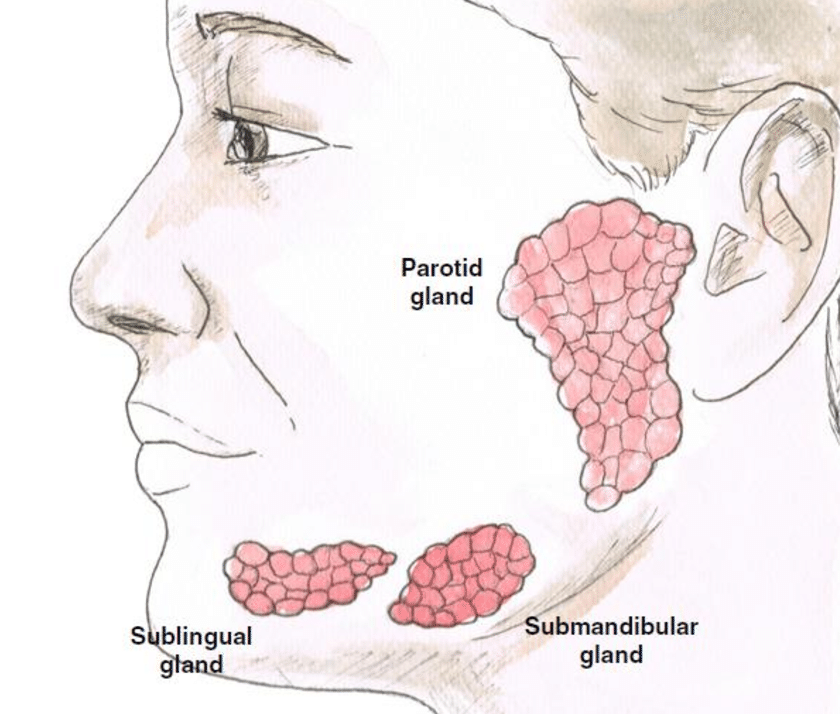
What are the 3 parts of the extrinsic salivary glands?
Parotid
Submandibular
Sublingual
What are the 2 enzymes that participate in the oral cavity?
What organ helps participate in swallowing?
Salivary amylase – breaks α-(1-4) bonds in starch
Lingual lipase
Pharynx
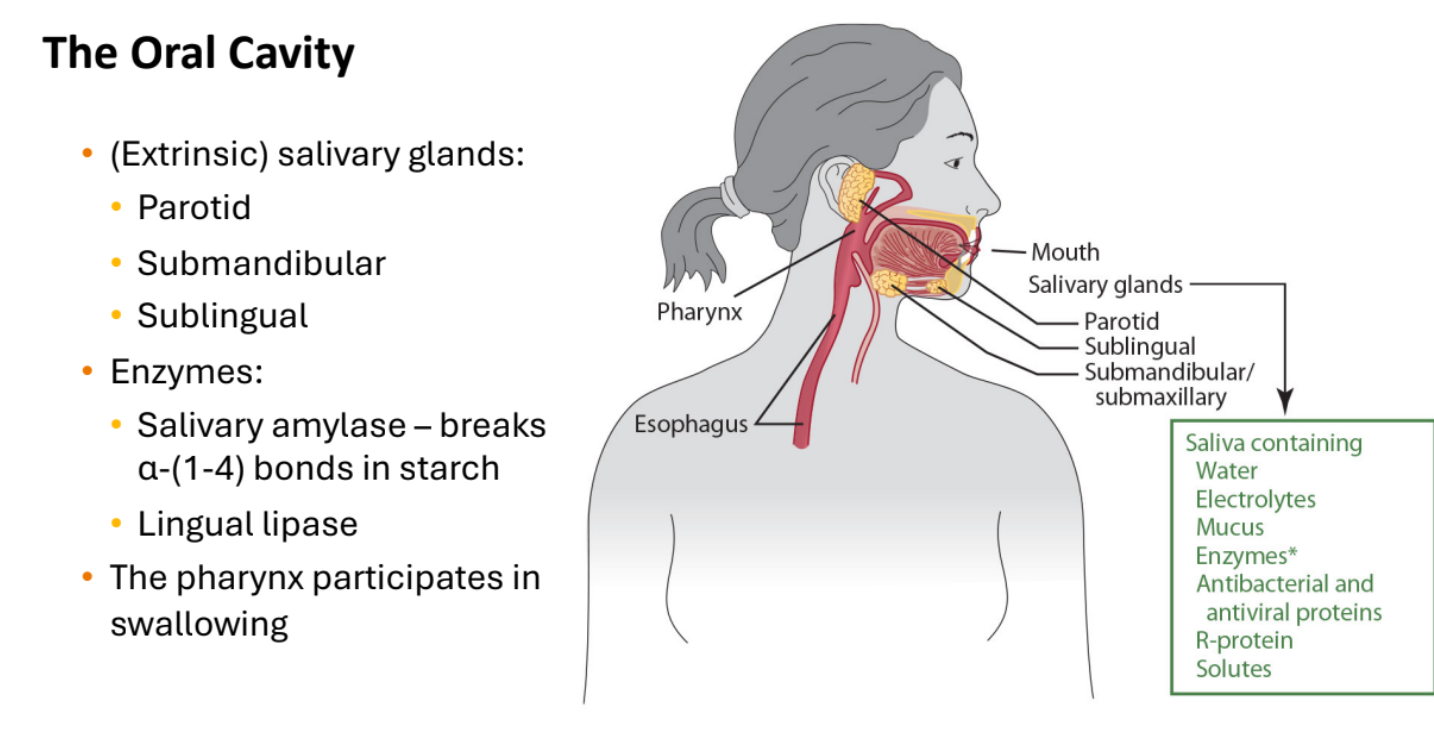
Chewing involves cutting and grinding of food by teeth into smaller particles and mixing of saliva.
What are the 4 functions of saliva?
Partial digestion of starch (salivary amylase)
Lubrication of food to facilitate swallowing
Moistening of mouth to facilitate speech and swallowing
Antibacterial activity

The esophagus moves bolus from ___ to ____
oral cavity; stomach
Swallowing is voluntary where? involuntary/automatic where?
Voluntary → pharynx
Involuntary → esophagus
Esophagus uses ___ to push food down;
What does the esophagus have to open to let food enter the stomach and then closes to prevent stomach contents and acid from coming back up.
What is a disorder of the esophagus?
peristalsis
Gastroesophageal sphincter (lower esophageal sphincter/LES)
GERD

The stomach is an asymmteric organ (pouch like shape) with foru main regions which are?
Cardia → section that connects the stomach to the esophagus Cardiac sphincter
Fundus: upper end of the stomach that lies above the cardia and the opening of the esophagus
Body → largest part of the stomach, extending from the cardia to the pylorus
Pylorus: Made of 3 parts → antrum, canal, and sphincter

Gastric mucosa: simple columnar epithelium; many deep glands made of what 4 types of cells?
Chief
Parietal
Mucous
Enteroendocrine cells
What 2 things do Chief cells make?
pepsinogen
Gastric lipase
What two things do parietal cells make?
HCl
intrinsic factor
What two things do mucous cells make?
Bicarbonate
Mucous
to protect stomach from acid damage
What 4 things do enteroendocrine cells make?
Gastrin → produced by G cells and stimulates Hcl secretion by stimulating histamine release from ECL cells
Ghrelin → stimulates appetite and is released when stomach is empty
Histamine → binds H2 receptors of pariteal cells to stimulate Hcl secretion
Serotonin

GI Tract: Stomach
The stomach stores food and liquid until passed to the ?
The stomach mixes with gastric secretions to form?
The stomach begins digestions of ____ and some ____
intestine
chyme
proteins; lipids

Stimulation of gastric secretions depends on what 3 mechanisms
Neural
paracrine
endocrine
The the context of regulation of HCl production the neural mechanism is that ____ is released from the vagus nerve and directly stimulates _____ to produce HCl and chief cells to produce ____
acetylcholine; parietal cells; pepsinogen
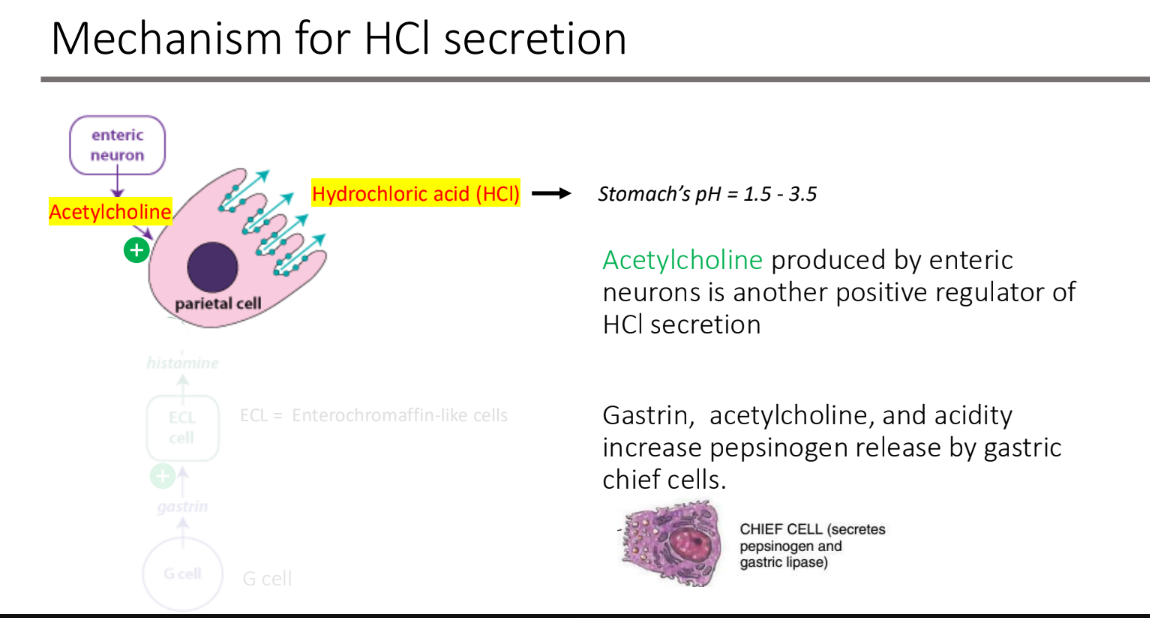
The the context of regulation of HCl production the paracrine mechanism is that ____ is released from enterochromaffin-like (ECL) cells and directly stimulates ____ to produce?
histamine; parietal cells; HCl

The the context of regulation of HCl production the horomal mechanism is that distension of stomach and food in stomach stimulates release of?
this stimulates parietal cells to secrete?
and the ECl cells to release?
it also promotes gastric emptying
gastrin
Hcl
histamine


Explain the mechanism of HCl secretion
Gastrin, histamine, and acetylcholine stimulate parietal cells.
Inside the cell, CO₂ + H₂O form H⁺ and HCO₃⁻.
H⁺ is pumped into the stomach by the H⁺/K⁺ ATPase, while Cl⁻ also enters the stomach.
H⁺ + Cl⁻ form HCl.
Regulation of Gastric Motility and Gastric Emptying: What are the 3 types of motility involved in regulating gastric motility and gastric emptying?
Peristalsis
Basic electrical rhythm
Retropulsion
Gastric emptying is affected by factors in stomach and duodenum. What are 3 ways emptying increases?
Increase in gastric volume →increase gastric distension
Increase in gastrin release
Increase in fluidity of gastric contents
What intake can INHIBIT gastric emptying
dietary fat
HCl Hypersecretion: Excessive secretion of stomach acid can lead to the formation of peptic ulcers
Peptic ulcers can lead to excessive bleeding due to erosion through a blood vessel
What are the two main drugs used to prevent excessive acid formation?
H2 antagonists (famotidine, Pepcid)
Proton pump inhibitors (PPIs, omeprazole, Prilosec)
H2 antagonists (famotidine, Pepcid) bind to the? which prevents the binding of ____ and reduces?
H2 receptors; histamine; acid secretion
The other two pathways for stomach acid secretion still operate, so acid secretion is only reduced and not completely inhibited

Proton pump inhibitors (PPIs, omeprazole, Prilosec) bind to the ____, preventing the transport of ___ into the?
H+/K+ATPase; H+; stomach lumen
PPIs completely prevent stomach acid formation

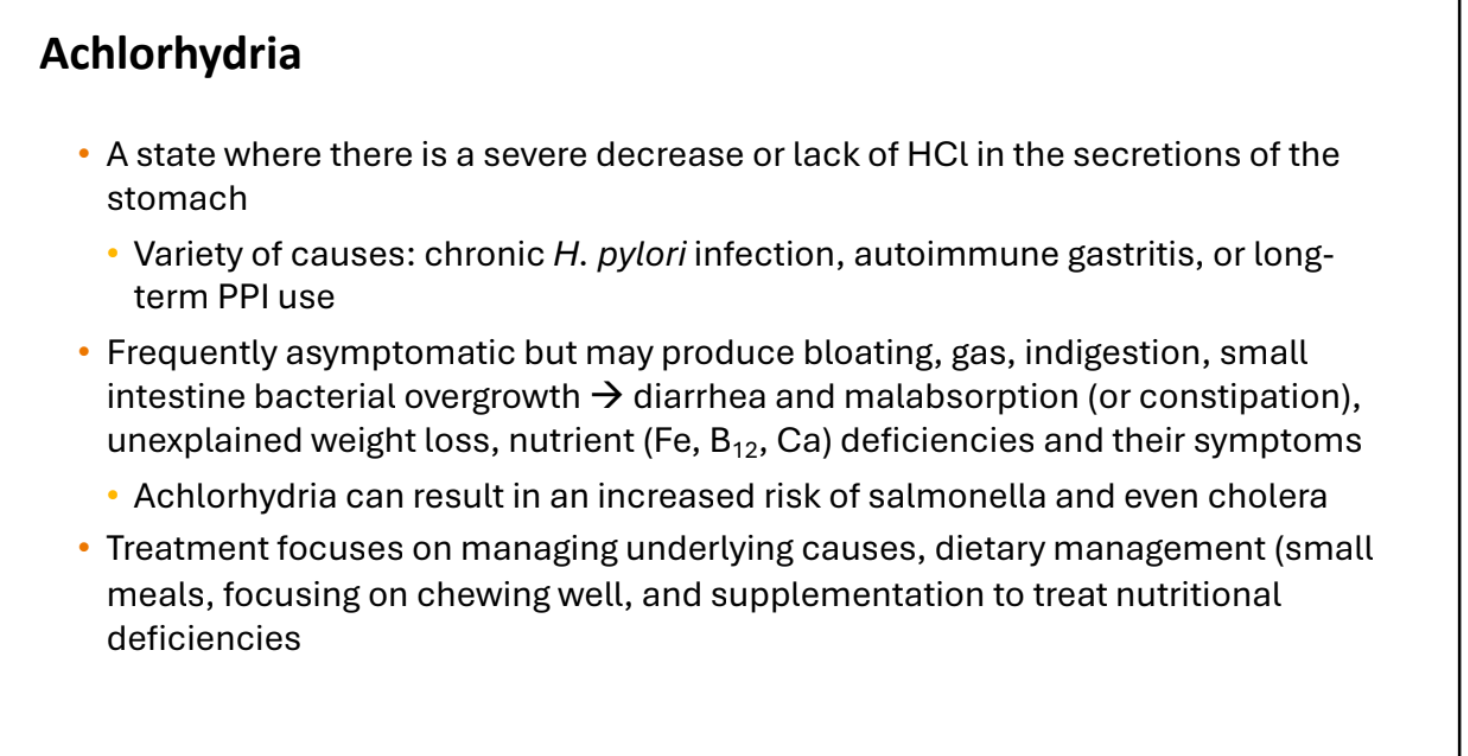
Achlorhydria is a state where there is a severe decrease or lack of HCl in the secretions of the stomach. What are 3 causes of it?
chronic H. pylori infection
autoimmune gastritis
long- term PPI use
Frequently achlorhydria is asymptomatic but may produce bloating, gas, indigestion,
small intestine bacterial overgrowth → diarrhea and malabsorption (or constipation)
unexplained weight loss,
and what type of nurtient deficiencies can occur?
(Fe, B12, Ca) deficiencies and their symptoms
Achlorhydria can result in an increased risk of ___ and even ___?
salmonella; cholera
Treatment of achlorhydria focuses on what 3 things?
Managing underlying causes,
Dietary management (small meals, focusing on chewing well,)
Supplementation to treat nutritional deficiencies
The pancreas is a dual-function gland. What do the ductless endocrine cells do?
secrete hormones into the blood
The pancreas is a dual-function gland. What do acinar exocrine cells do?
produce digestive enzymes that are released through the pancreatic ducts into the lumen of the small intestine

What 4 things do pancreatic juice contain?
Water
Electrolytes
Bicarbonate
Pancreatic digestive enzymes
The liver consists of of lobes made of lobules. It has portal circulation. What does that mean?
carries nutrient-rich blood from the digestive organs to the liver so the liver can process and store nutrients before the blood enters general circulation.

Bile canaliculi of the liver are microscopic, thin channels formed by grooves in the cell membranes of hepatocytes that?
collect and transport bile
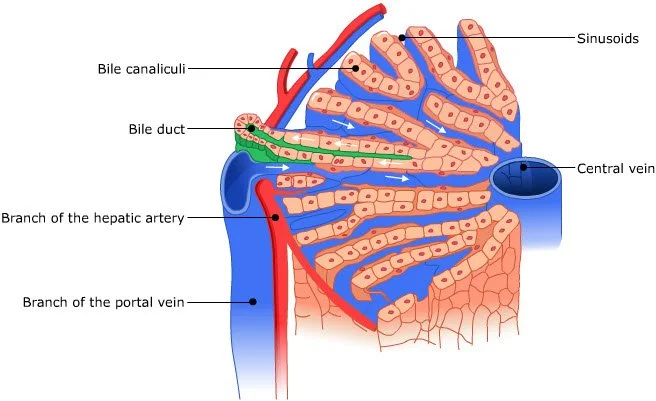
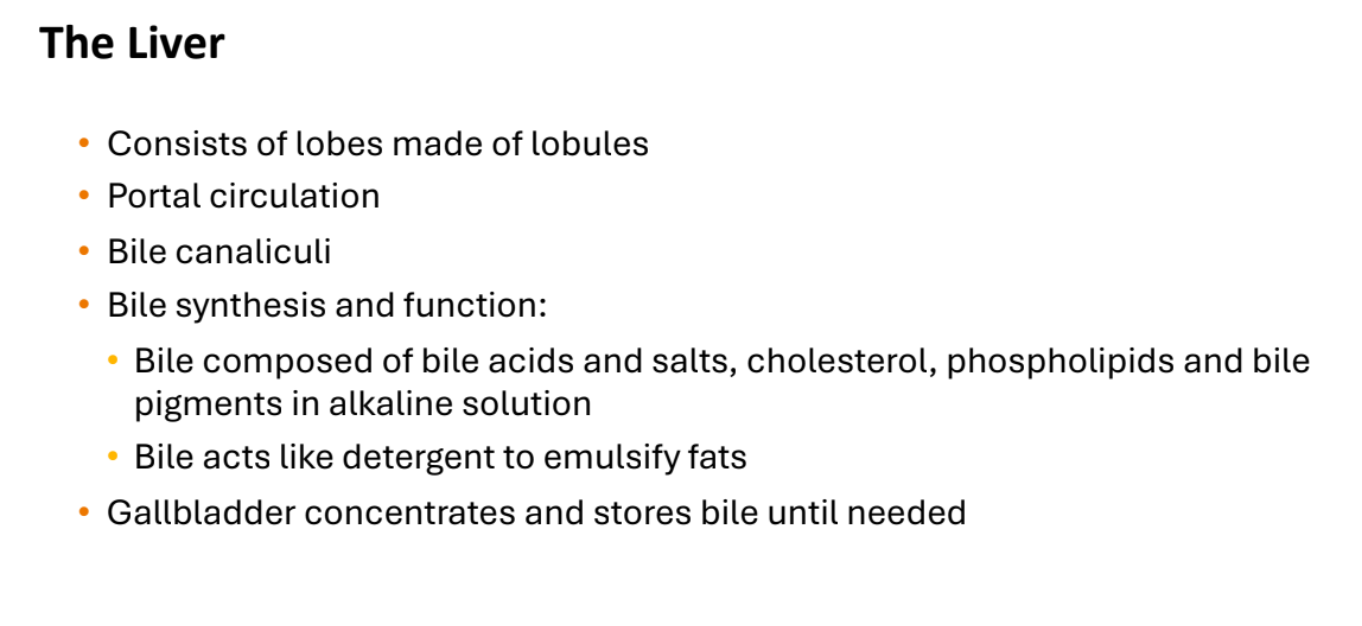
The liver synthesis biles. What 4 things are bile composed of?
Bile acids and salts,
Cholesterol
phospholipids
bile pigments in alkaline solution
Bile acts like detergent to?
What concerates and stores bile until needed?
Emulsify fats
Gallbladder
Gallbladder, Pancreas, and Duodenum

The Three Parts of the Small Intestine

What is segementation
mixes food in the GI tract by moving the food mass back and forth. The circular muscles contract and relax, which creates a “chopping” motion.
What is peristalsis?
series of wave-like rhythmic contractions and relaxation involving the muscles of the gastrointestinal tract.
This action propels food forward through the GI tract.

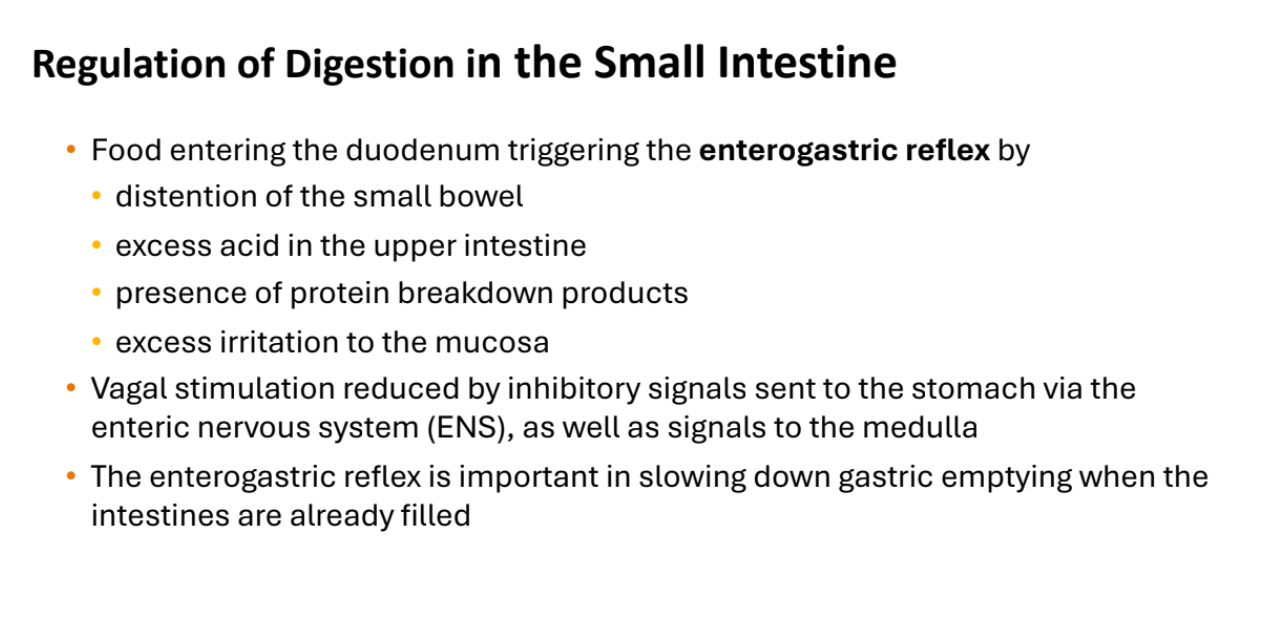
Regulation of Digestion in the Small Intestine: Food entering the duodenum triggering the enterogastric reflex by what 4 ways?
Distention of the small bowel
Excess acid in the upper intestine
Presence of protein breakdown products
Excess irritation to the mucosa
Regulation of Digestion in the Small Intestine: The small intestine sends inhibitory signals through what two locations?, which reduces _____ to the stomach and slows stomach activity and emptying.
ENS;
medulla;
vagal stimulation
The enterogastric reflex is important in slowing down gastric emptying when?
intestine are already filled
Regulation of Digestion in the Small Intestine: Presence of peptides and fat in _____ stimulates duodenum ______ cells to increase ____ secretion
duodenum; enteroendocrine cells; CCK secretion
Regulation of Digestion in the Small Intestine: Duodenum distention due to chyme increases the secretion of what two hormones?
secretin
CCK
CCK and secretin decrease the secretion of? and slows?
hcl; slows gastric emptying
CCK increases the secretion of?
bile & pancreatic enzymes;
Bile secretion is also stimulated by what two things in the duodenum?
protein & fat
CCK decreases as nutrients?
move on and are absorbed
Secretin increase what secretion?
pancreatic juice; including bicarbonate
A decrease in chyme in the stomach leads to the secretion of?
This decreases the secretion of what two things?
Overall it decreases?
Somatostatin;
HCl
Gastrin
decreases gastrointestinal motility


The Colon (Large Intestine) contracts to mix materials; Proximal colonic mucosal cells absorbs? What is this influenced by?
sodium and water
Influenced by hormones (ADH,
cortisol, aldosterone)
What are two types of colonic secretions?
Goblet cells → mucus
Bicarbonate

The colon: Passage takes 10-72 h; materials dehydrated
For each 500 mL to 1 L that enter large intestine each day → ~150–200 g defecated material (75% water, 25% solids)
Fecal solids usually include what 5 things?
Sloughed gastrointestinal cells
Digestive juice constituents
Fiber
Small amounts of unabsorbed fat and bile
Bacteria (~30% of dry fecal weight)

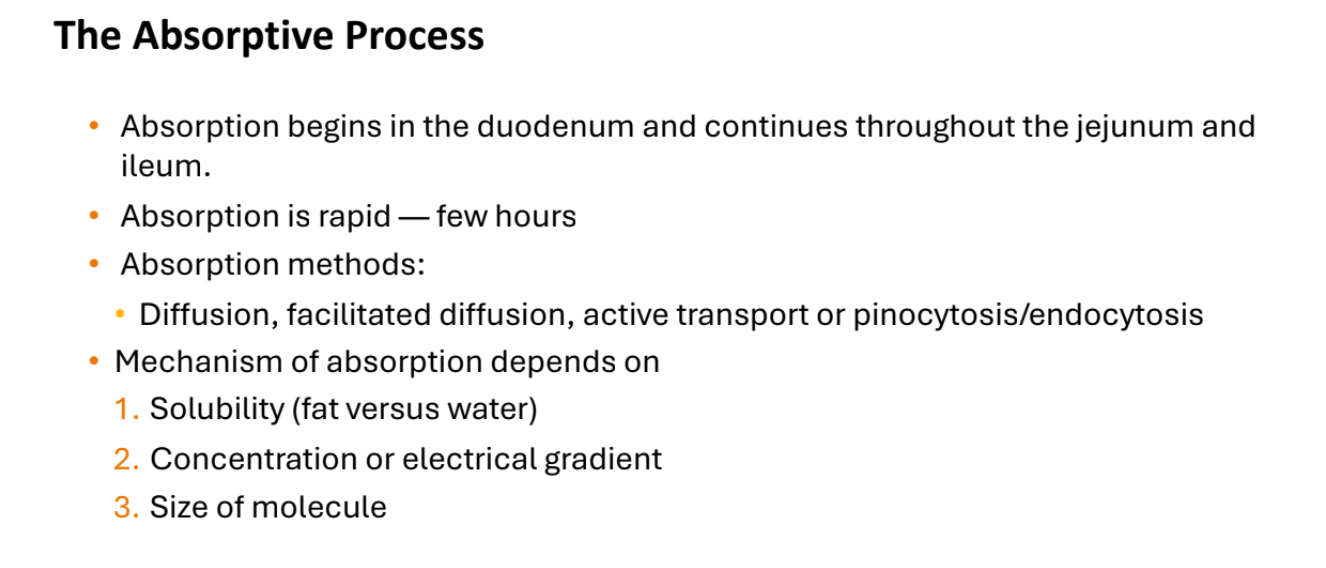
The Absorptive Process: Absorption begins in the duodenum and continues throughout the jejunum and ileum. Absorption is rapid — few hours
What are the 4 types of absorption methods
Diffusion
Faciliated diffusion
Active transport
Pinocytosis/endocytosis
Mechanism of absorption depends on what 3 factors?
Solubility (fat vs water)
Concentration or electrical gradient
Size of molecule
Enterohepatic circulation of bile: continuous recycling pathway where bile acids travel from the liver into the small intestine and back to the liver
