perio tri 2
 Call Kai
 Learn
Learn Practice Test
 Spaced Repetition
 Match
Match Flashcards
 Knowt Play
1/102

There's no tags or description
Looks like no tags are added yet.
Name | Mastery | Learn | Test | Matching | Spaced | Call with Kai | Chat |
|---|
No analytics yet
Send a link to your students to track their progress
103 Terms
list some differences between a periodontal pocket and a sulcus in health
plaque and biofilm more subgingival
apical migration of junctional ep.
sulcular epithelium turns to pocket epithelium (often ulcerated)
lower collagen in region and higher inflamm cells
apical movement of bone
what is biological width?
the length of JE and connective tissue attachment
aka the bare min length btwn bone and sulcus
average is ~1mm
why do we have an average biological width?
without this, it will move apically until it has enough room to attach.
alv bone resorbs to give room for JE and connective tissue
OR
it wont’t resorb and has constant inflamm/irritation (local chronic gingivitis)
why is biological width important in respect to crowns?
easy to just electrosurge gums (stops bleeding then crown prep)
but, if width impeded, prep is done subging
2 outcomes
inflamed, hypertrophic, irritated gums (ugly)
recession unaccounted for as bio. width reestablished itself and crown and tooth margins can be seen
what are the histological features of periodontal pockets?
epithelium has loads of immune cells and is degenerated/necrosed
increase in blood vessel size and number
apical movement of ep. into connective tissue
degeneration of sulcus ep into pocket ep
ulceration, bleeding, suppuration (histologically)
what are the histological contents of a periodontal pocket?
debris
bacteria
bacterial products
calculus
food
GCF products
leukocytes
pus
what are the five zones of the periodontal pocket?
cementum covered by calc (tissue changes occuring)
attached plaque (over calc, extends apically)
unattached plaque (surrounds att. plaque and extends apically)
JE reduced attachment in disease (autoimmune)
JE attached to tooth - reduced in disease
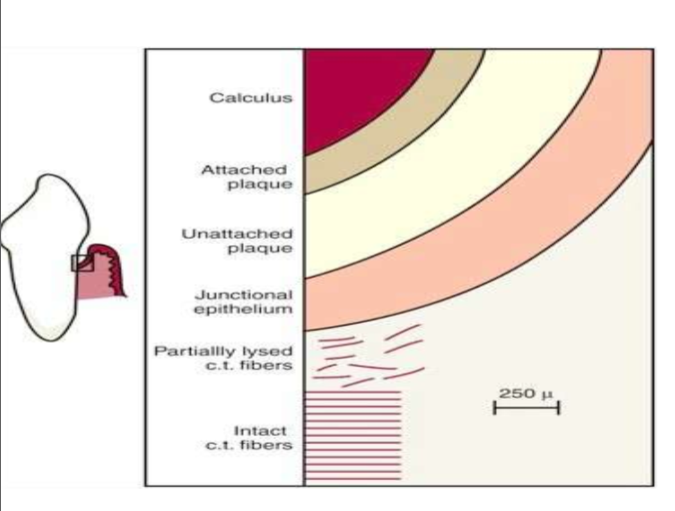
clinical features of periodontal pockets
foul taste
urge to dig
hot and cold sensitivity
localised pain/pressure
is pus related to peridontal disease severity? why/why not?
not related to it
reflects nature of inflammatory changes in pocket wall
pockets can be firm and fibrotic w little BOP and still have inflamm changes occuring (eg smokers)
doesnt necessarily mean pocket is getting worse
what are some factors affecting probing depth?
operator (pressure, angle, mood, sensitive pt)
instruments (shape/size, type)
pt (inflamm, calc, touchy)
bone loss should be seen as a _____ of the balance of bone turnover
decoupling
why is decoupling important?
susceptible pts will have cytokines and prostoglandins which will affect OPG and RANKL ratio, (change in how stimulated osteoblasts and clasts are, causing resorption)
state the radius of action for plaque
1.5-2.5mm for plaque
after 2.5mm - no effect on bone
why would you get supra and infrabony pockets in different regions?
there is a limited distance of inflammatory diffusion
eg if 1mm bone - all will go
but if 5mm, infrabony will lose 1.5-3mm
list the different types of periodontal pockets
suprabony pocket
base of pocket coronal to bone crest
horizontal bone loss
horizontal arrangement of transeptal fibres
infrabony
base of pocket apical to bone crest
vertical (angular) bone loss
oblique arrangement of transeptal fibres
angular pattern of bony architecture
classified by walls remaining and angle of bone loss (in context of radiographs)
flip over for walls diagram
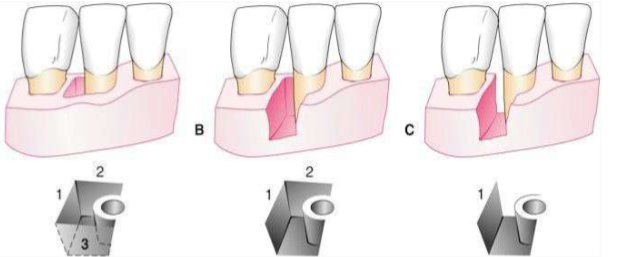
furcations are a local anatomical complication which can lead to…
excessive localised bone loss
furcation grade is related to increased prognosis. elaborate.
grade 1) furcation plasty
grade 2) may try to regenerate bone
grade 3) root sectional tunnel prep
all can be non surgical
bone loss vs age calculation
% bone loss / age
eg 20mm root with 10mm bone los is 50%. in 50 yr old would be BL/age = 1
can also estimate from radiograph
explain about past bone loss being used as a prognostic indicator for a tooth
used to be a prog. indicator ab whether the tooth can be saved but its not that accurate
you can tell past damage and may show speed and risk the pt is at, but not entirely reliable
so, dont just extract it if its poor prog, may still have 50% chance lol
prog also tends to improve as its treated
infrabony pockets has been used in the past but not commonly used to determine prog, instead to dictate different tx plans
tx options for horizontal bone loss/shallow bone loss
non surgical debridement, open flap debridement with or without minor osseous ressective surgeries
tx options for vertical bone loss/shallow bone loss
non surgical debridement (finer tips required)
open flap debridement w regen technqieu like GTR
ressective (drill away bone loss to remove pocket) would result in massssive recession and loss of perio tissues
what is NSPT
part of perio tx that consists of:
plaque removal
plaque control
supra and sub and root debridement
adjunctive use of chemical agents
difference between historical and contemporary concepts in NST
historically, root planing removed the diseased cementum and dentin to restore biocompatibility of perio diseased root (i/e get a smooth root)
nowadays perio debridement gives minimal iatrogenic damage to the soft tissues and cementum
its instrumentation to disrupt and remove biofilm
no intentional cementum removal as LPS don’t adhere to cementum
surface irregularities should be removed if possible but not aggressively
rationale of NST
perio associated w biofilm on root. to control need to disrupt subging biofilm so the immune response can overcome the bacterial challenge/invasion
even with meticulous scaling you cant remove all deposits from pockets/roots
individual threshold of bacterial load. if below, host can cope
goal is to disrupt and modify subging biofilm to reach below threshold load for all tooth sites
must address host related and mod factors (eg diabetes, stress, smoking)
aims of perio therapy
control bacterial infection
arrest/slow perio disease prog
return tissue to non inflamed state thats manageable by pt
changing disease prognosis
decreasing signs/symptoms of disease
what happens if the working end angle is too obtuse/acute in subging scaling?
OBTUSE
cratering/consequent roughening of the root
ACUTE
ineffective removal and burnishing of subging calc
give details about ablative laser devices
bactericidal detoxification effects
can remove biofilm and calc with really low mechanical stress and no formation of a smear layer on root
can remove epithelium lining and inflamed tissue within perio pocket
common type) Er:YAG
pros and cons of mechanical instrumentation
PROS
easy to use/less learning curve
reduced instrumentation time
acoustic turbulence/cavitation
fluid lavage
access to deep sites
preferred by some
CONS
communicable disease can be disseminated by aerosols (hep, flu, resp infections)
resp dise pts with difficulty breathing
types of cardiac arrest
young growing tissues, wide plural chamber
high suscep to opportunistic infections that may be transmitted by contaminated dental unit water/aerosols
anatomical and host response factors that can limit the effectiveness of debridement
ANATOMICAL
deep probing depths
root concav
furcation
HOST
diabetes
pregnancy
stress
immunodeficiency
blood dyscrasias
3 approaches to subgingival debridement
full mouth instrumentation - two sessions of SRP within 24 hours, each covering ½ dentition.
full mouth disinfection - full mouth SRP and extensive microbial regimen with CHX. rinse mouth and spray tonsils 2/xday with this after SRP
conventional staged quadrant-wise SRP in weekly intervals (one week inbetween appts. one Q at a time)
chemical plaque control agents mechanism of action
prevent bacterial adhesion
avoiding bacterial growth and/or co-aggregation
eliminating an already established biofilm
altering pathogenicity of biofilm
goals of NST
full mouth BOP score and PI <25%
PD <4mm
furc involv <grade 2
pink and firm gingival tissue
decreased mobility of teeth
pt satisfaction
outcomes of NST (clinical)
inc recession
reduction of PD
less BOP
full mouth plaque score reduced
outcomes of NST (general)
molars generally less improvement than single rooted teeth
smoking can -vely affect outcome of all modalities of perio therapy
around 50% pockets with initial probing depth of >=7mm will remain as non successful sites
after re-tx, probability of pocket closure is around 45%
<6mm PPD, ~12% will be unsuccessful
poor response after repeated re-eval may need other tx like antimicrobials, open flap and surgical pocket reduction
what is in cigarette smoke?
over 4000 chemicals
gases (carbon monoxide, nitrogen oxides)
liquid vapours (formaldehyde, methane)
tiny solid particles (phenols, nicotine)
metals and radioactive compounds
which substances in cigarettes contribute to causing disease the most?
tar
nicotine
carbon monoxide
give details about tar (cigarettes)
solid particles inhaled
large variety of organic and inorganic chemicals and carcinogens
can vary in ratio of carcinogens and other substances
stains lung tissue
average 15-20 a day smoker has a full mug of tar in their lungs every year
give details about nicotine (cigarettes)
drug that causes addiction
affects body quickly once inhaled. once it reaches the brain, releases dopamine
changes brain structure and working - leading and maintaining addiction
raises heart rate, bp, hormones affected CNS, constricts blood vessels
highly toxic and manufacture, use and sale is under control of State Poisons Acts, except when in tobacco
give details about carbon monoxide (cigarettes)
competes with oxygen in blood
affinity for CO is approx 210x stronger than O on hemoglobin
large quantities is fatal rapidly
smokers can have 10x the amount of CO in bloodstream compared to nonsmokers
give details about smoking related deaths
2/3 lifetime smokers will die from smoking caused disease
remains leading cause of death in aus
1/6 men and 1/8 women still smoke
sequelae of tobacco caused death and disease will remain for decades to come
list some diseases and/or health problems caused by smoking
CANCERS
lung, throat, mouth, oesophagus, pancreas, stomach, liver, kidney
smoking related cancers was 20-30% of all cancer deaths in 2010
HEART DISEASE
1/3rd of all cases under 65 are due to smoking
COPD
includes emphysema and small airways disease
emphysema rare in non-smokers
CHRONIC BRONCHITIS
occurs in ½ of heavy smokers
recurring cough and increased phlegm
STROKE
under 65 yrs 3x more likely to have one
PERIPHERAL VASCULAR DISEASE
narrowing of leg arteries that can lead to blockage and in some cases amputation
smoking is main risk factor
oral problems caused by smoking
cancers
periodontal diseases
periodontitis
necrotising gingivitis/periodontitis
impaired surgical wound healing
give details about the link between smoking and oral cancer
more than 80% of oral cancer occur in people who smoke
longer and more you smoke, greater the risk
someone who has ever smoked up to 9x more likely than non smoker to develop oral cancer
1 pack a day smokers 16x more likely than non smokers to develop larynx cancer
smoking and periodontal disease
analysis of epidemiologic studies implicating smokign as a risk factor for perio disease is supported by:
consistency of results across many studies
dose-response of association
temporal sequence (happenings in a space of time)
biologic plausibility (method of reasoning - cause and effect relationship btwn biologic factor and disease/adverse event)
smoking and perio disease
major risk factor
severity directly related to…
clinical presentation
current/former smoking
both no. cigarettes smoked/day and no. years pt has smoked
ging bleeding and inflamm. more pockets in maxillary quadrants
impairment of local neutrophil function
affects healing ability
smokers lose more perio bone than non
smoking and necrotising gingivitis/periodontitis
involves bacteria (treponema, fusobacteria, gram - anaerobes)
almost all pts smoke even though stress, fatigue, lack of sleep, poor OH are all factors
effect of smoking on periodontal tissues
reduction of blood flow and vascularity 9reduced ging bleeding)
more perio pathogens
-ve effects on cytokine and growth factor production
inc. expression of cytokines involved in perio destruction
acrolein and acetaldehyde inhibit gingival fibroblasts
-ve effects on polymorphonuclear leukocytes causing abnormal phagocytosis
impact of smoking on therapeutic outcomes
scaling/debridement (50-75% improvement)
antimicrobial therapy (adjunctive)
antimicrobial doxycycline therapy (brings response to that of non smokers)
site development and implants (2x failure rate)
role of dental professionals in smoking cessation
key to prevention and control of perio disease (bc it affects bacterial and host etiological components in disease process)
need to increase involvement of dental professionals in management of pts who smoke
less than 20% clinicians felt confident in ability to provide cessation counselling
comprehensive intervention programs
health belief model application to smoking cessation
perceived susceptibility) personalise risk based on person’s features or behaviour
perceived severity) specify consequences of risk and condition
perceived benefits) identify and reduce barriers through reassurance, incentives, assistance
cues to action) how to info, awareness, reminders
self-efficacy) training, guidance in performing action
stages of change model application to smoking cessation
pre-contemplation) increase awareness of need for change, personalise info on risk and benefits
contemplation) motivate, encourage
prep) assist in making concrete plans, gradual goals
action) feedback, problem solving, social support
maintenance) assist in coping, finding alternatives, avoiding relapse if possible
5 A’s of smoking cessation
ask
ab smoking in each appt
system for recording can help them stop bc it implies its important
assess
the pt’s willingness to quit
asking ‘how do you feel ab smoking atm’ is enough
also assess level of nicotine dependence
advise
and educate pt on quitting benefits
should be done in supportive, unambiguous, clear way
can link to pt’s health concerns
assist
pt with developing quit plan
eg concrete help from GP, other staff or referral to quitline
arrange follow up visits
helps keep them on track
phone call/appt after 1 week and 1 month can help encourage, give advice etc
at future consults, should congratulate quitted pts and encourage pts who relapsed with the 5 A’s
RULE and smoking cessation
Resist righting reflex
Understand pt’s own motivations
Listen with empathy
Empower the pt
5 R’s and smoking cessation
Relevance: help pt identify why quitting is relevant
Risk: encourage pt to verbalise negative outcomes of tobacco use
Rewards: help pt identify benefits of quitting
Roadblocks: help pt identify possible roadblocks, incl from past quit attempts
Repetition: might take more than one brief intervention
____ ____ is an important determinant of disease susceptibility
host response
what does the variability in periodontal disease expression derive from?
the variations in the host response to subgingival microbiota
4 parts of host modulation
anti-inflammatory drugs
anti-cytokine and biological therapies
matrix metalloproteinase inhibitors (MMP in)
lipid mediators
non steroidal anti-inflammatory drugs and host response
selective cyclo oxygenase-2 inhibitors modifies prostaglandin production in perio tissues and potentially enhanced clinical tx outcomes
NSAID’s have been extremely investigated for adjunct anti-inflammatory treatments for periodontitis
do NSAID’s have any clinical benefits?
limited benefits
this with a real risk of serious unwanted effects, precludes their use as drug tx for perio
what is anticytokine/biological therapy?
range of drugs that are used particularly in tx of rheumatoid arthritis
some also used in other chronic inflamm/autoimmune diseases like crohn’s disease (IBD), psoriasis and ulcerative colitis
anticytokine/biological therapy and perio
no studies have evaluated its effects for perio specific tx
but perio status has been evaluated in pts before and 6months after commencing therapy for management of rheumatoid arthritis
in this study, perio paramters (plaque, bleeding, depths, AL) didnt vary that much from before to 6 months later with the anticytokine drugs
matrix metalloproteinase inhibitors (MMI’s)
doxycycline, inhibits MMPs
MMPs = zinc dependent enzymes that degrade a variety of extracellular matrix proteins, incl collagens
MMPS fundamental in perio tissue breakdown
MMP secreted by resident and infiltrating cell types in periodontium (incl neutrophils, macrophages, keratinocytes, fibroblasts, osteoclasts, endothelial cells)
what is the predominant MMP associated with periodontitis collagen breakdown? (+doxycycline effect)
MMP-8 and MMP-9
secreted by high no’s of infiltrating neutrophils that are recruited to inflamed perio tissue
doxycycline identified to be more effective inhibitor of MMP-8 than MMP-1
doxycycline could be useful for…
reducing pathologically elevated MMP levels without interfering w normal connective tissue turnover
so these findings led to intro of low dose of doxy (20mg 2x/day) - first host response modulation drug licensed for perio treatment (called ‘submicrobial’)
shown to be safe and result in ++ clinical outcomes when used as adjunct to NSPT in controlled clinical trials
called Periostat
lipid mediators (PUFAS)
fatty acids naturally occuring dietary constituents that have extensive metabolic, structural and functional roles in the body
important for energy and present in cell membranes
few studies done to investigate impact on perio, so its a developing area of research
two main PUFAs: omega-6 and omega-3
cant be made in the body and have to be taken thru diet (fish, nuts etc)
most important long chain (LC) PUFAs are d-3 derivatives - DHA, EPA and DPA and n-6 derivative AA
d-3 main one, AA less important
clinical fish oil studies (lipid mediators)
used diet supplements (w fish oil and low dose aspirin) as adjunct to conventional NSPT
greater probing depth reduction and greater reductions in salivary RANKL levels and MMP-* were noted in pts receiving the adjunct compared to controls (who just had NSPT)
RANKL - osteoclast generation
why don’t we use NSAID’s as drug therapy? what is the only drug therapy for perio disease licensed for use?
risks far outweigh benefits in terms of reduction of alveolar bone resorption
20mg doxycycline 2x/day for 3 months only available host mod agent available for perio tx
_________________ appear to offer the best potential for the development of a new class of drug therapies that could be used as adjunctive host mod therapies in perio
pro-resolving lipid mediators
main benefit: physiological resolution agonists that are produced exogenously as part of normal response to inflammation, as opposed to being inflamm. inhibitors that could compromise host defences
what is the main goals of periodontal therapy?
prevention of tooth loss
no BOP (resolution of lesion)
pocket closure (<4mm)
NSPT is effective in lowering BOP and PD mostly. but sometimes it can be persistent
can you treat 6-8mm pockets with NSPT?
traditionally thought >6mm could only be surgical
but studies say that good OH, good debridement and maintenance, NSPT can be successful
furcations, premolar grooves, and inaccessible anterior sites may not respond well to just scaling tho
these places should be re-evaluated at review and surgery considered for non-responding sites
surgery vs non surgery outcomes
surgery = ++ short term PD reduction than non. but adv is lost over time
shallow pockets) surg = greater AL than non
no long term differences in mean AL change between surg and non-surg
why don’t we do surgical tx right after the periodontal examination?
don’t know pt compliance
don’t know pts subjective needs for corrective phase
inflamed tissues are challenging to manage surgically
NST gives opportunity to eval tissue response and reinforce home care
when should surgery be considered/is appropriate?
on the bases on its ability to facilitate subging plaque removal and enhance long term preservation on perio tissues
2 purposes: control of disease, perio plastic surgery
main objective of surg therapy
improve prognosis of the tooth by one or more of the following:
allow access for effective root surface debridement
improve gingival or tooth morphology to facilitate pts self care
regenerate lost periodontal attachment
examples of when surgical treatment is appropriate
when intraosseous defects limit access for root surface debridement
correction of gingiva-alveolar mucosal problem
aesthetic improvement
perio plastic surgery - eg crown lengthening
case selection of perio surgery
subject, tooth and site specific factors have to be considered, pts may need to be referred to specialist
compliance, pts with poor plaque control, poor commitment to tx, poor response to initial therapy = NOT GOOD CANDIDATES LOL - surg without maintenance may inc risk of progression
uncontrolled diabetes, smoking/stress may affect tx response
furcation + location, malposition/root proximity, occlusal factors - tooth factors
site factors - root morphology, pocket depth, bone/soft tissue anatomy may also influence healing potential
medical contraindication
medical contraindications and surgical therapy
blood disorders like haemophilia
anticoagulant where INR is high
uncontrolled diabetes
uncontrolled hypertension
immunocompromised pts (blood disorder, immunosuppressive drugs)
surgical approaches
types of approach) conserative to preserve tissues, resective to remove tissues, or reconstructive to regenerate tissue
choice will vary according to factors)
anatomy of residual pocket
anatomy of tooth
position of tooth in dental arch
complexity and predictability of the technique in different case scenarios (eg pt and operator factors)
type of surgical techniques
pocket reduction procedures
open flap debridement
modified widman flap
pocket elimination procedures
soft tissue
gingivectomy
apically reposition flap
hard tissue
osseous surgery
resective procedures of furcation involved teeth
regenerative procedures
guided tissue regeneration (GTR)
root surface modification
open flap debridement
reduced flap/access flap aka
main goal to improve visibility + access for subging instrumentation of both soft + hard root surface deposits which couldnt be removed by non-surgical methods
open flap debridement techniques
intra-sulcular incisions and full thickness mucoperiosteal flaps
removal of granulation tissue
thorough root surface debridement
replacement of flap margins to og position and held w sutures
outcomes of open flap
not intended but some pocket reduction can happen, depending on soft tissue phenotype (thin/thick) and morphology of underying bone lesions (supra/infra bony)
gingival recession can be minimised by microsurgical techniques and minimally invasive surgical approach
modified widman flap objective
historically designed as an access flap with removal of the inflamed pocket epithelium
aim to remove marginal tissue cuff to achieve direct post op pocket depth reduction
mod widman flap technique
initial scalloped inversed bevel incision 1mm from gingival margin and parallel to long axis of tooth
mucoperiosteal flaps within within attached gingiva
second incision to bone crest to separate tissue collar from root surface
remove soft tissue collar
removal of granulation tissue, mechanical instrumentation of the root surface and replacement of the flap
outcomes of mod widman flap
greater pocket depth reduction than open flap bc of ++ potential for post op gingival recession
more technically demanding than open flap tho
gingivectomy objective
remove soft tissue wall of perio pocket to achieve pocket elimination
surgically manage gingival overgrowth (hyperplasia) where its larger without apical migration of junctional epithelium (pseudopocketing)
causative factors should be controlled before surgical tx
gingivectomy technique
identify base of pocket w probe
mark outer aspect of gingiva with bleeding point
first incision is scalloped external bevel incision 45 deg to long axis of roots apical to bleeding points so incision is at level slightly apical to pocket base
removal of detached gingiva
gingivoplasty to create better aesthetic contour
gingivectomy outcomes
exposed tissue will heal by secondary intention
perio dressing can be used to cover exposed area to reduce post op discomfort and bleeding
when limited attach gingiva, mod widman flap might be better
apically repositioned flap objective
reduce pocket, maintain adequate zone of attached gingiva by displacing flap of gingiva and mucosa in apical direction
palatal surface of upper jaw - lack of mucosa to allow apical displacement of flap, or when sufficient attached gingiva, purely resective technique (inverse bevel incision) can be used
apically repositioned flap outcomes
pocket reduction should be achieved in areas where soft tissue has apically displaced, however may be residual pocketing in areas of greater bone loss
osseous surgery objectives
final position of ging margin following any periodontal surgical technique determined by anatomy of underlying bone
aim = establish physiological anatomy of the alveolar bone at more apical level
removal of tooth supported bone to be avoided
osseous surgery commonly used in conjunction with apically repositioned flap and resective surgery but also can be used with pocket reduction flap techniques
osseous surgery techniques
osteoplasty
removal of non supporting bone to facilitate flap adaptation
often used in
elimination/reduction of shallow intrabony defects
reduction of thickness of buccal/lingual bone at interdental areas
ostectomy
intentional removal of supporting bone to correct osseous defects when significant discrepancies in bone height remain following osteoplasty around teeth with sufficient perio support
commonly used in
elimination of small peaks of bone that often remain in the line angles
correction of reversed osseous architecture
surgical treatment of furcation-involved multi-rooted teeth
molars that exposed furcation area due to perio breakdown respond less favourably to non-surgical perio therapy
earlier studies suggest that molars may have reduced prognosis, but more recent studies suggest that when managed properly and maintained, molars my survive for ages
surgical treatment of furcation-involved multi-rooted teeth - surgical treatment options
resective surgery
furcation plasty
root separation or root resection
regenerative surgery
furcation plasty
diagnosing, txing and managing furcation areas, and predicting their prognosis are difficult due to variation in anatomy of multi rooted teeth
perio pocket in furcation lesion is affected by the soft tissue phenotype (thin/thick), bone defect (horizontal/angular) and inter-radicular anatomy of the tooth
objective of furcation plasty
enhance probability of pocket furcation closure following open flap
odontoplasty (reshaping tooth), osteoplasty (reshaping bone), gingivoplasty (reshaping the gingiva) may be used
furcation plasty technique
open flap in inter-radicular area
odontoplasty to reduce the horizontal component of defect and widen the furcation entrance
osteoplasty - reduce vertical component (get rid of intra-bony lesion) and horizontal component of defect (thickness of bone get rid of)
position flap at level of alveolar bone crest
outcomes of furcation plasty
improved access of furcation area for self care and professional supportive care
aggressive odontoplasty should be avoided on vital teeth bc of hypersensitivity risk