Diabetes and Obesity
 Call Kai
 Learn
Learn Practice Test
 Spaced Repetition
 Match
Match Flashcards
 Knowt Play
1/34

There's no tags or description
Looks like no tags are added yet.
Name | Mastery | Learn | Test | Matching | Spaced | Call with Kai | Chat |
|---|
No analytics yet
Send a link to your students to track their progress
35 Terms
What are the two metabolic states?
Absorptive: after a meal, absorping nutrients from a diet, excess nutrenients stored in body
Postabsorptive: Between meals, stored nutrients are mobilised for energy use
Constant concentration of nutrients remains stable
How can the body/brain get ATP?
most tissues can generate ATP from fatty acids, then amino acids if starving
The brain can only get ATP from glucose, so concentration needs to remain stable
Where is glucose stored?
In the liver as glycogen
Glycogen can be broken down into glucose
What is glycogenesis?
Building glycogen from glucose
What is glycogenolysis?
Break down glycogen to release glucose
What is gluconeogenesis?
Making new glucose molecules from amino acids
What is an exocrine function in the pancreas?
A gland that secretes substances through ducts to the external environment or onto a surface
What hormones are produced by the pancreas?
Insulin (beta cells) and glucagon (alpha cells) in the islets of Langerhans
These hormones control blood glucose
What does insulin do?
Decrease blood levels of glucose, fatty acids and amino acids.
Favours the uptake and storage of glucose
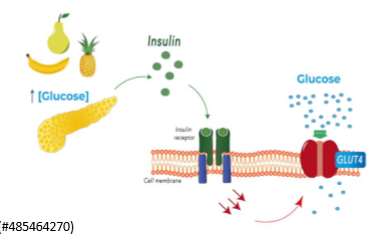
How does insulin take up glucose?
Insulin binds to a receptor on the surface of the target cell
Makes GLUT4 in cell mebrane
GLUT4 transports glucose into the cells
What is important about glucose independent cells?
They are most at risk during diabetes
Function of glucagon?
Increase blood levels of glucose, fatty acids and amino acids
Stimulating glycogenolysis, inhibits glycogenesis all in the liver to release glucose into the blood
When are the hormones of the pancreas released?
Insulin: released during the absorptive state when blood glucose is increased
Glucagon: released during postabsorptive state when blood glucose is decreased
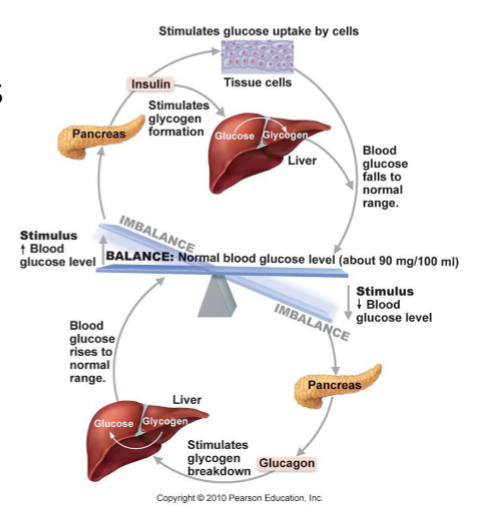
Glucose homeostasis
What is diabetes mellitus?
Impaired ability to utilise blood glucose
Characterised by hyperglycaemia (issue with glucose uptake)
How is type 1 diabetes classified?
10-15% of cases
Juvenile onset
Cause: genetic predisposition paired with environmental trigger (infection)
Autoimmune destruction of beta cells (inability to produce insulin)
Type 2 diabetes classification
85-90% of cases
Age of onset usually over 35
Cause: genetic predisposition, ethnic background, environmental factors (obesit, poor diet, lack of exercise)
Often associated with hypertension and hyperlipidaemia
Type 2 diabetes pathophysiology
Insulin resistance: insulin is produced but receptors are unresponsive or insufficient. Pancreas compensates by increasing insulin
Decreased production of insulin: beta cells become fatigued resulting in hyperglycaemia
Inappropriate glucose production: liver releases glucose when not needed
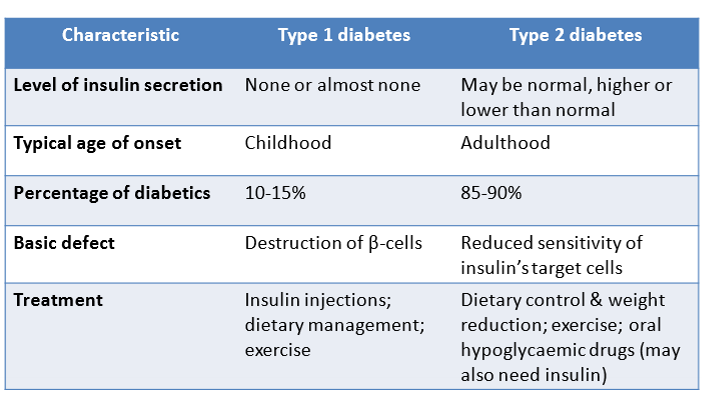
Type 1 v Type 2
How is diabetes diagnosed?
Fasting plasma glucose greater than or equal to 7 mmol/L
Two hour oral glucse tolerant test: plasma glucose greater than or equal to 11.1 mmol/L
Random plasma glucose: greather than or equal to 11.1 mmol/L (if you have diabetes symptoms)
What is the oral glucose tolerant test?
Measuring fasting plasma glucose, then measuring plasma glucose after 75g ingested
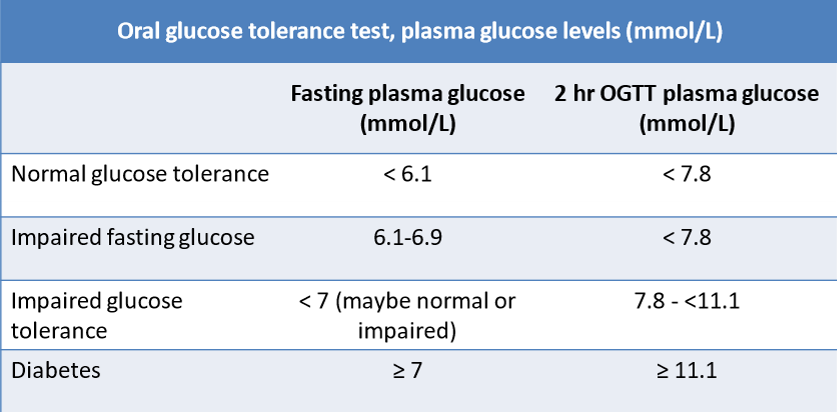
oral glucose tolerance test plasma levels
What are the types of prediabetes?
Impaired fasting glucose
OR impaired glucose tolerance
What consequences occur because of hyperglycaemia?
Glycosuria (glucose in the urine)
Polyuria (excessive urination)
Polydipsia (excessive thirst)
What other acute consequences of diabetes?
Polyphagia (excessive hunger)
Weight loss
Fatigue
Diabetic acidosis (can cause coma and death)
What chronic complications of hyperglycaemia?
Damage to blood vessels: endothelial cells ( can lead to microvascular and macrovascular disease)
What is microvascular disease - retinopathy?
Damage to blood vessels from hyperglycaemia causing damage to retina and impacting vision
What is microvascular disease nephropathy?
Damage to small blood vessels in the kidney - can cause increased blood pressure and fluid retention
What are macrovascular diseases?
Most common cause of death in type 2 diabetes, can cause:
coronary artey disease
stroke
peripheral vascular disease
What are the neuropathies from diabetes?
Sensory neuropathy - change or loss in sensation
Autonomic neuropathy - faecal incontinence, urine retention, delayed gastic emptying, erectile dysfunction
What is diabetic foot?
Vascular disease causing poor blood flow and slow wound healing.
Sensory neuropathy means you cant feel it, and susceptibility to infection. Can lead to amputation!
What are adipokines?
Hormone produced by adipose cells.
Leptin: supresses appetitie
Adiponectin: increases sensistivity to insulin
Resistin: increases resistance to insulin
What does ghrelin do in short-term energy control?
Stimulates appetite before a meal by inhibiting PPY pathway. CCK & stomach distension after a meal stimulate satiety
Ghrelin controls appetite in the short-term, whereas leptin controls appetite in the long term.
True - ghrelin question
What are the limitations of BMI?
BMI does not distinguish between lean mass and fat mass
Overestimates body fat if body builder or broad frame
Underestimates body fat if elderly or muscle wasting