Lab 7
 Call Kai
 Learn
Learn Practice Test
 Spaced Repetition
 Match
Match Flashcards
 Knowt Play
1/82

There's no tags or description
Looks like no tags are added yet.
Name | Mastery | Learn | Test | Matching | Spaced | Call with Kai | Chat |
|---|
No analytics yet
Send a link to your students to track their progress
83 Terms
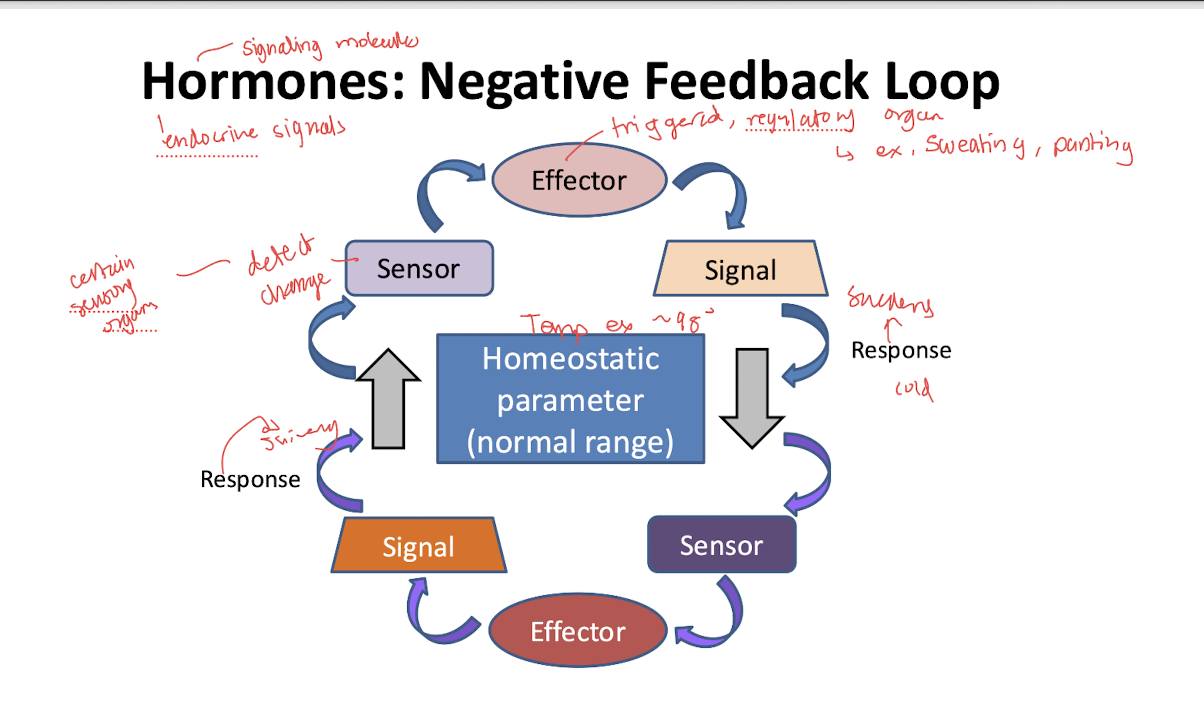
What is a negative feedback loop?
A system where the response reduces or inhibits the original stimulus, helping maintain a homeostatic parameter within a normal range.
What is the general sequence of a negative feedback pathway?
Stimulus/change in a homeostatic parameter → sensor/regulatory organ detects it → signal → effector responds → response reduces the original stimulus.
What are hormones?
Signaling molecules involved in endocrine communication.
In a hormone feedback pathway, what does the hypothalamus generally do?
Releases a releasing hormone that stimulates the anterior pituitary.
What does the anterior pituitary generally do in these pathways?
Releases a hormone that stimulates a peripheral endocrine gland or organ.
What does the final endocrine gland/organ produce?
The final hormone that produces effects in the body and provides negative feedback.
What is the general pattern of a negative feedback pathway?
Hypothalamus → anterior pituitary → endocrine gland/organ → final hormone → negative feedback to the hypothalamus and anterior pituitary.
What does the negative sign (−) mean in a hormone feedback diagram?
Inhibition
What does the positive sign (+) mean in a hormone feedback diagram?
Stimulation
What is the hypothalamus connected to in the endocrine system?
connected to the pituitary gland!
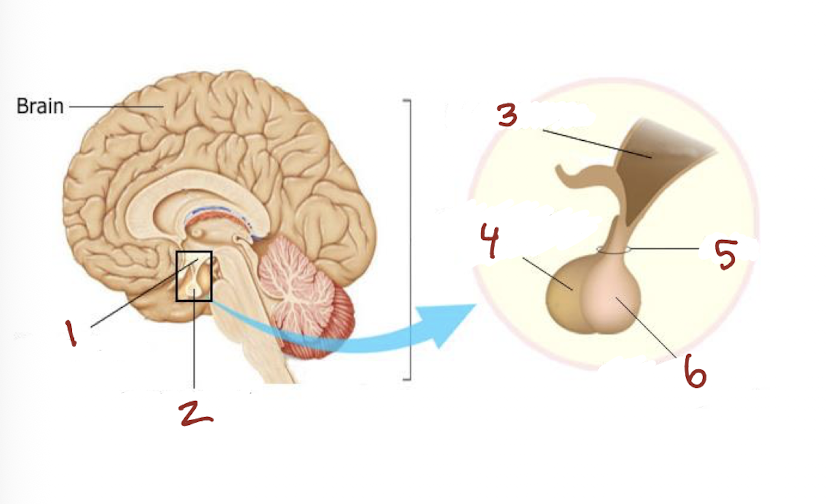
What is number 1?
Hypothalamus
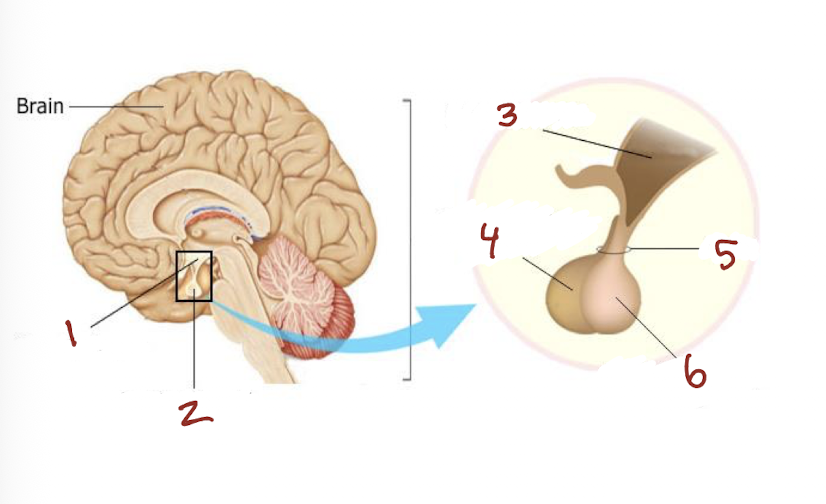
What is number 2?
Pituitary Gland
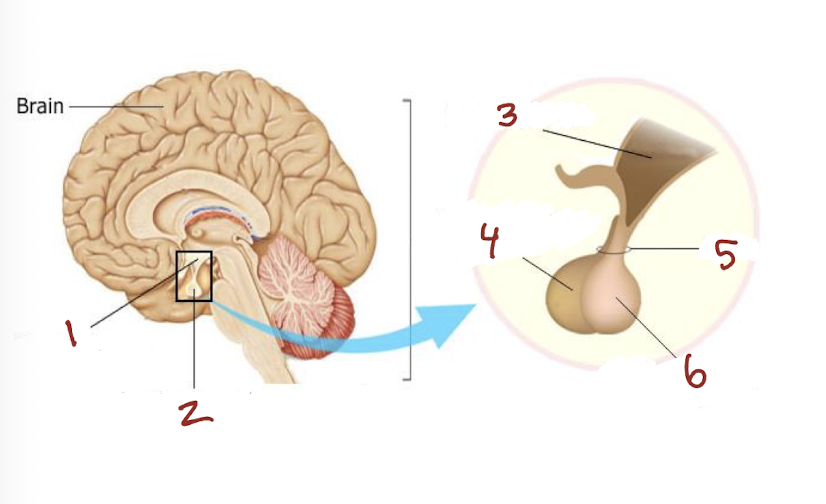
What is number 3?*
Hypothalamus*
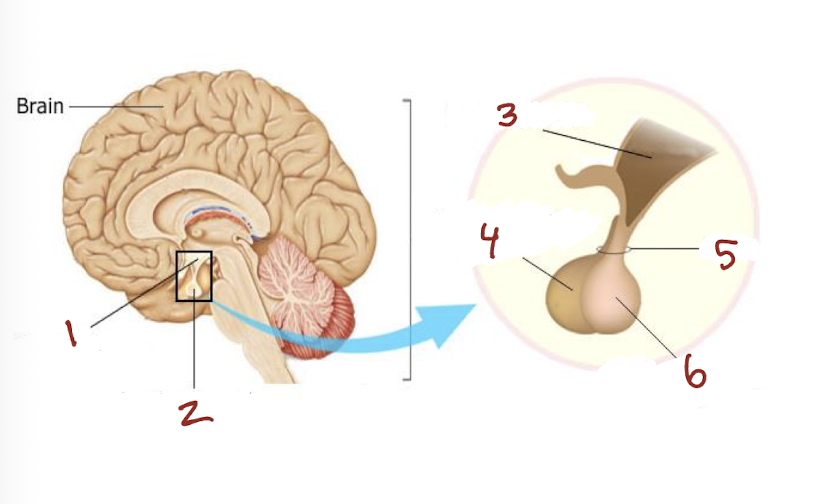
What is number 4?
Anterior Posterior Lobe
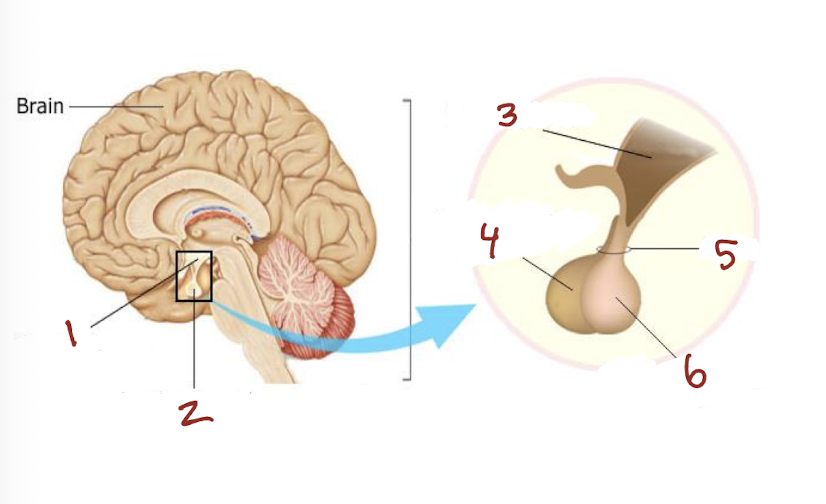
What is number 5?
Stalk
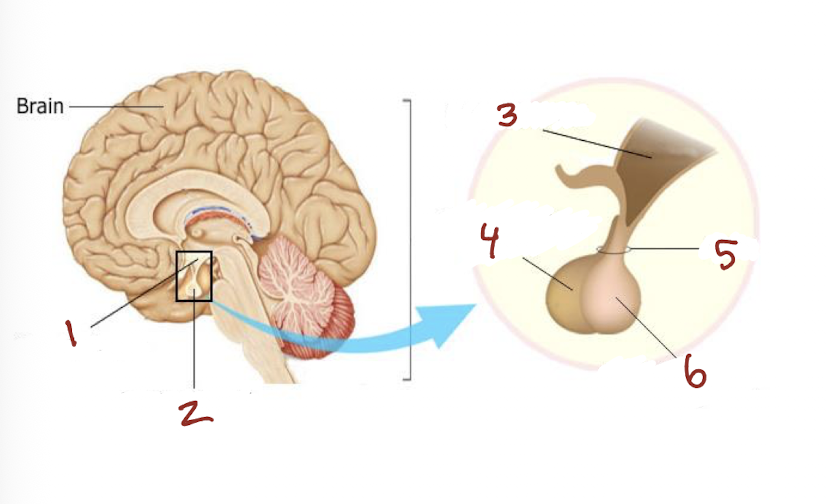
What is number 6?
Posterior Pituitary Lobe
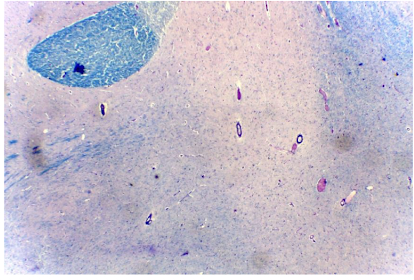
What is this an image of?
Hypothalamus Tissue
neural tissue
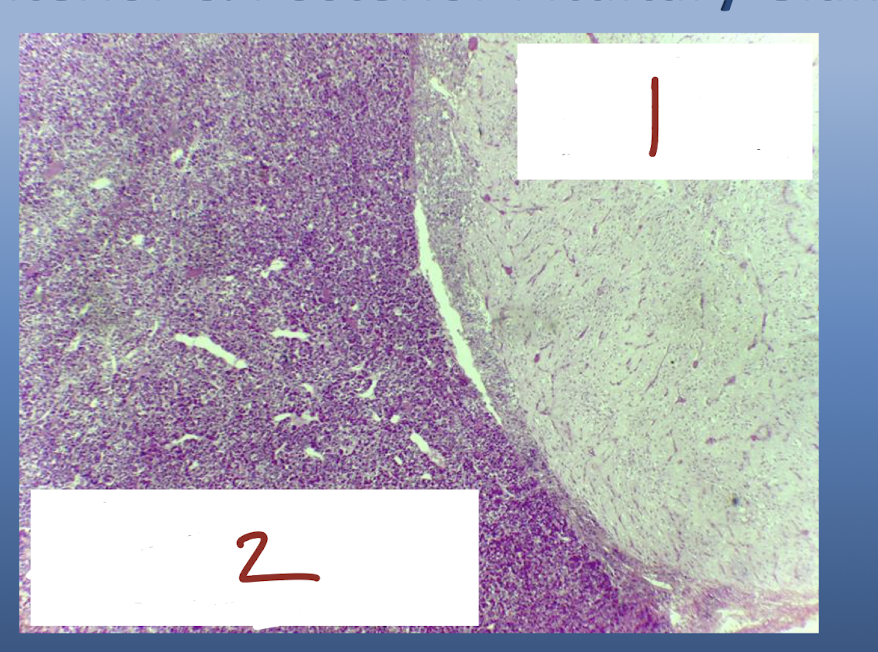
What is number 1?*
Posterior Pituitary *
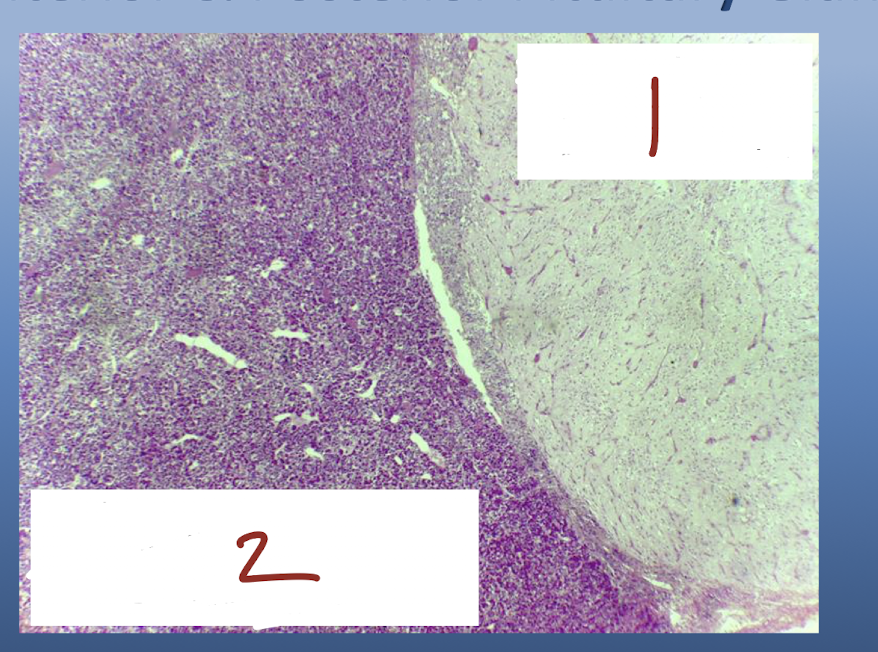
What is number 2?
Anterior Pituitary*
What type of tissue is the anterior pituitary?
Endocrine tissue
responsible for endocrine function (ie. secreting hormones)
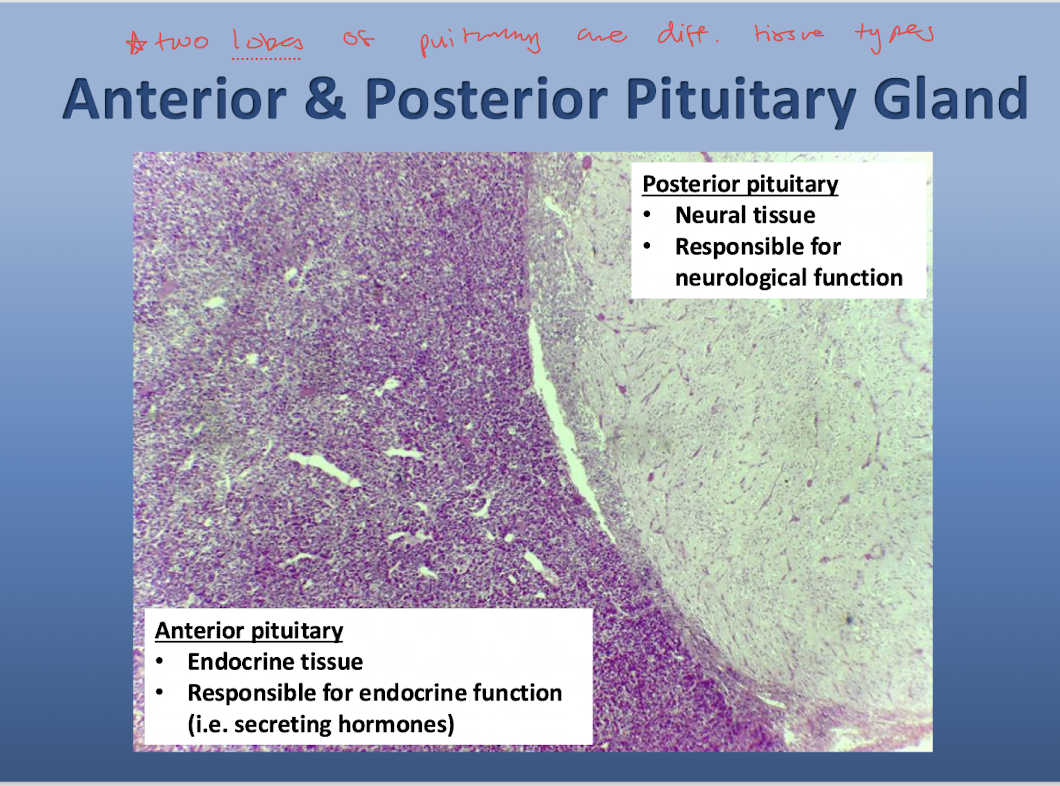
What type of tissue is the posterior pituitary?
Neural tissue
responsible for neurological function
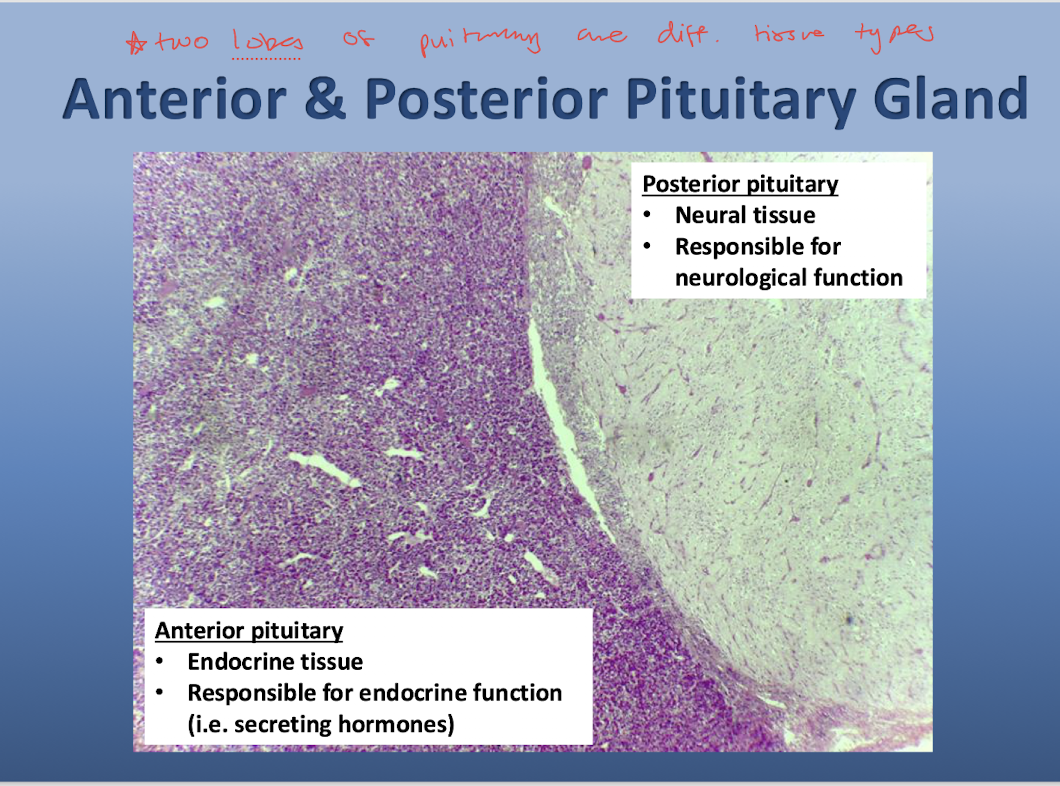
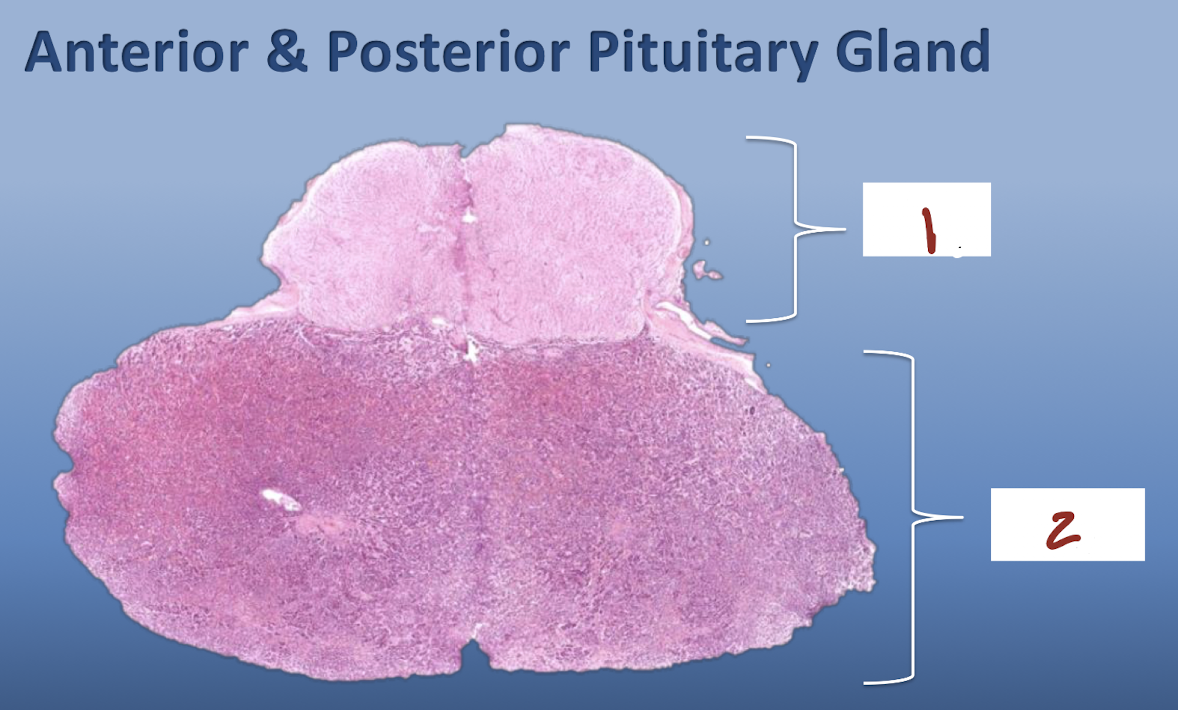
What is number 1?**
Posterior pituitary **
neural tissue
lighter
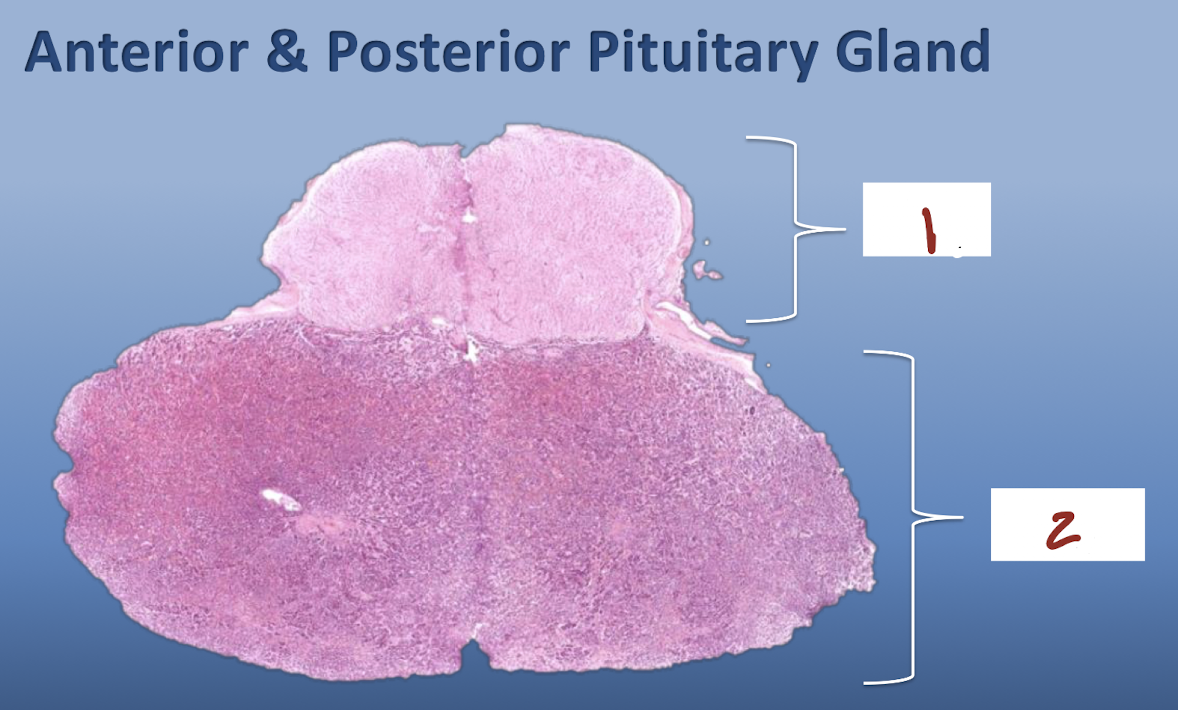
What is number 2?**
Anterior Pituitary **
endocrine tissue
darker
What are three hypothalamic releasing hormones specifically shown in lab?
CRH, GnRH, and TRH.
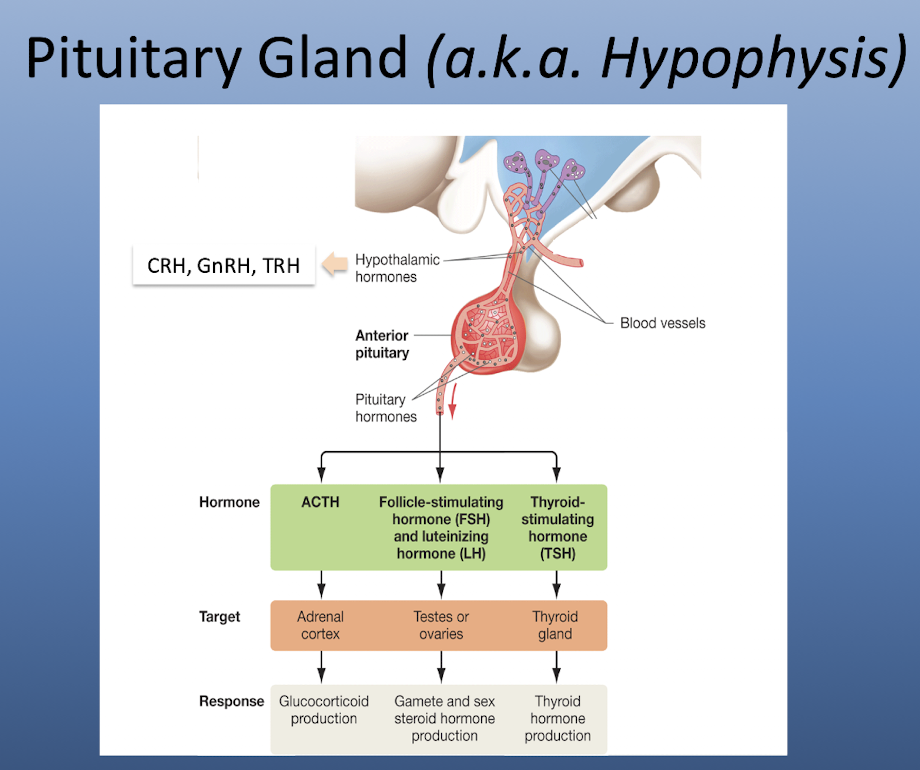
What does CRH stand for?
Corticotropin-releasing hormone.
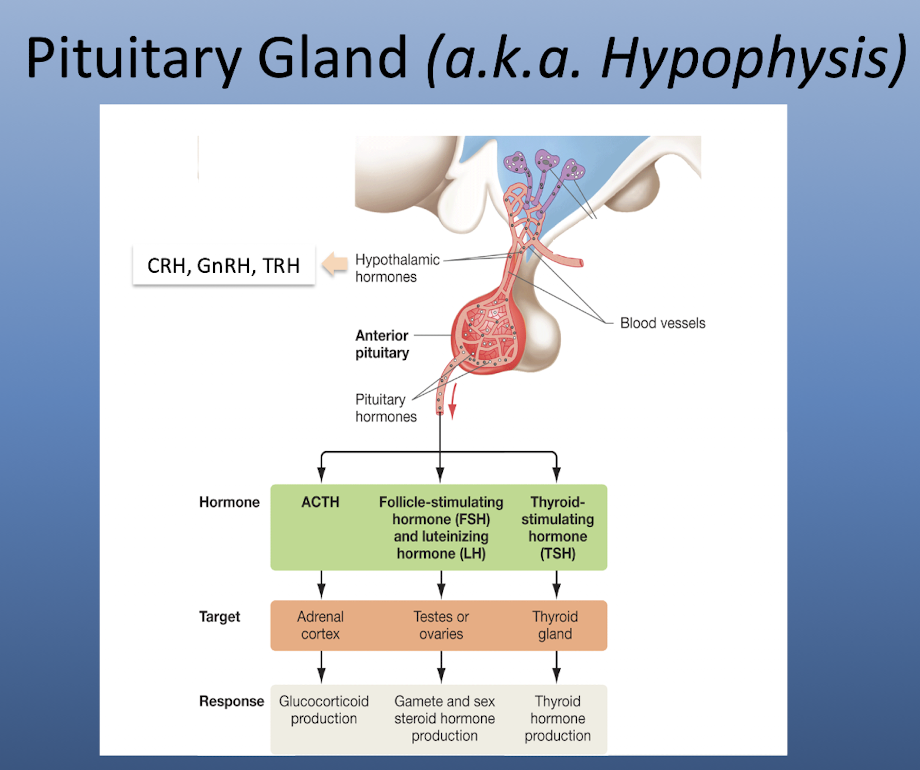
What does TRH stand for?
Thyrotropin-releasing hormone.
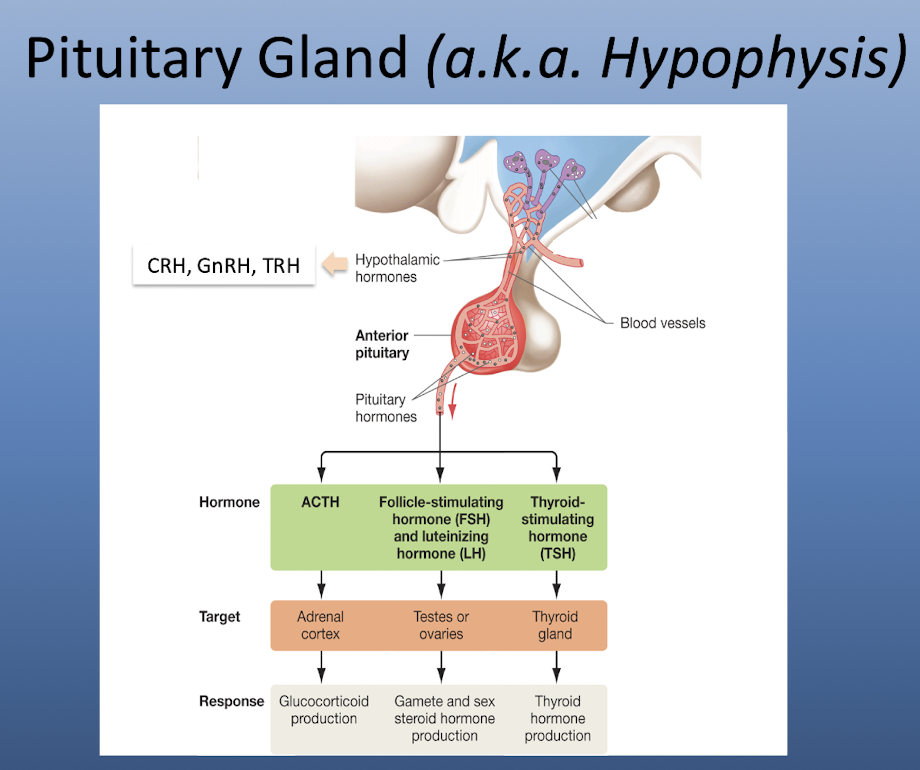
What does GnRH stand for?
Gonadotropin-releasing hormone.
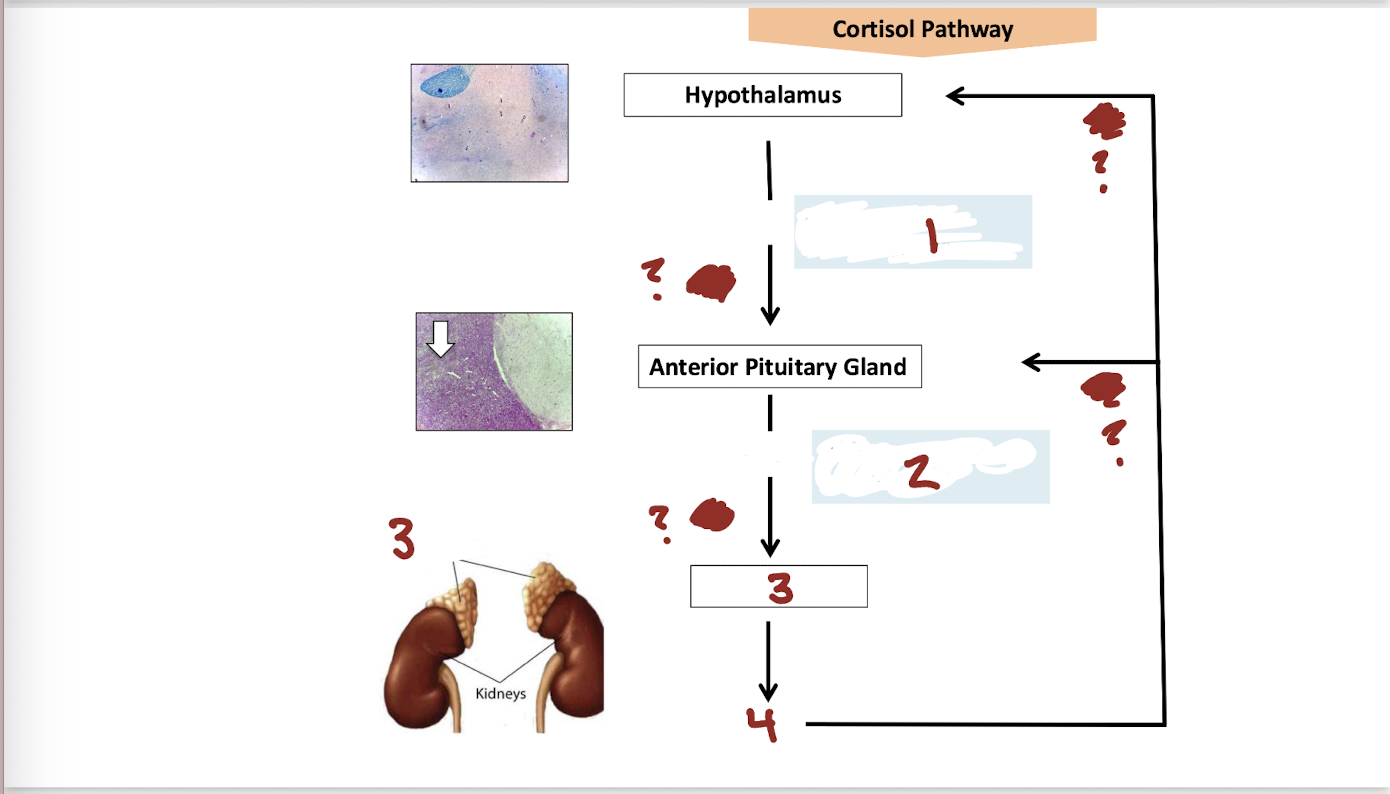
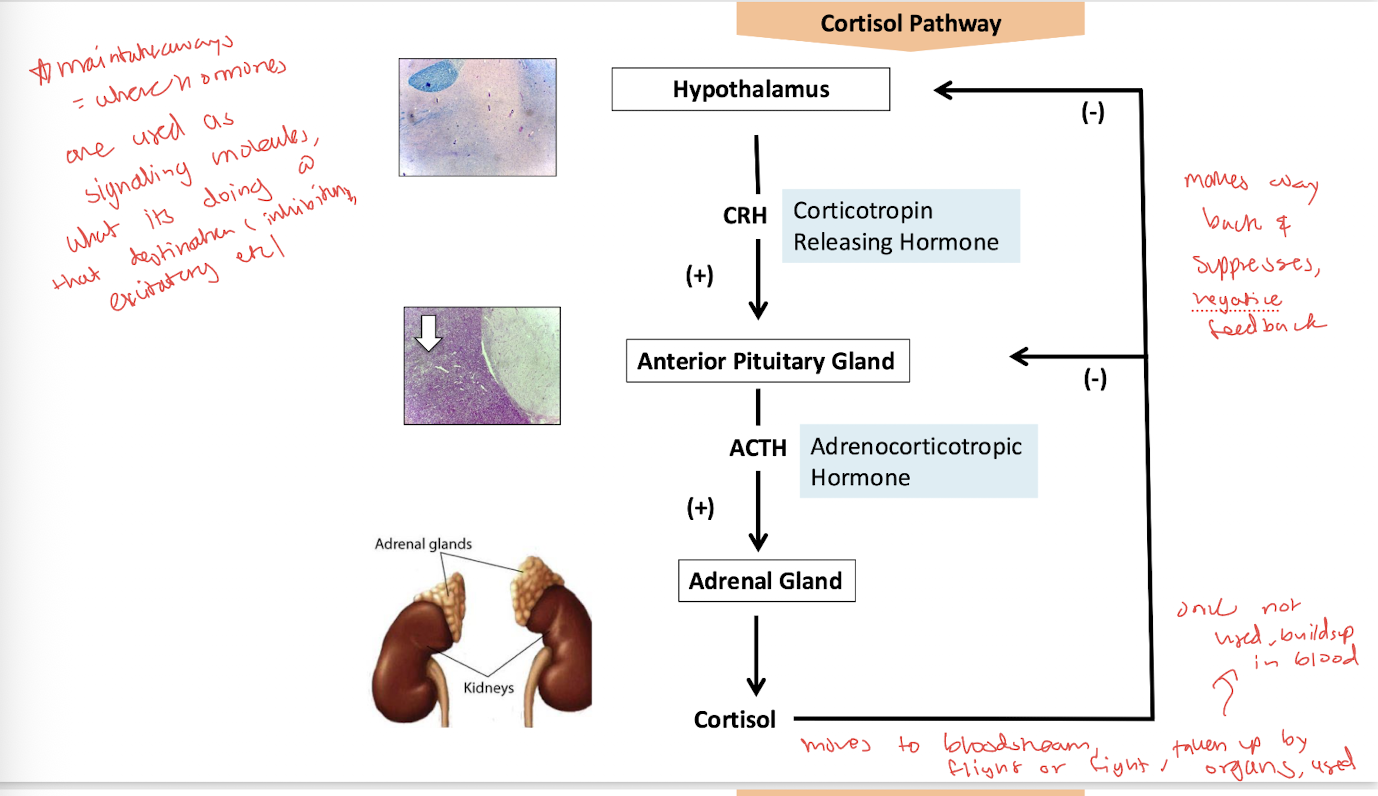
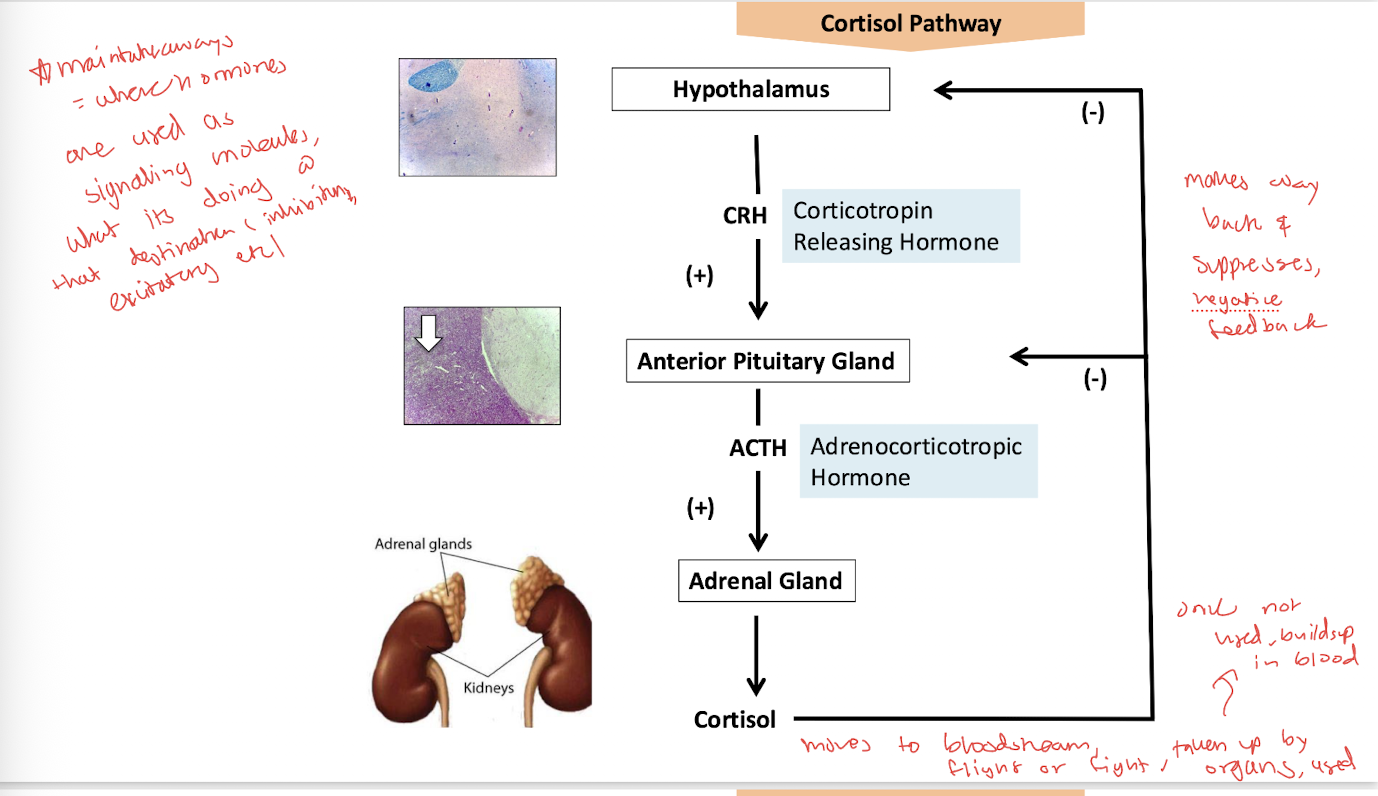
In the Cortisol Pathway, What is number 1? (from Hypothalamus)
CRH → Corticotropin Releasing Hormone
stimulates Anterior Pituitary Gland!
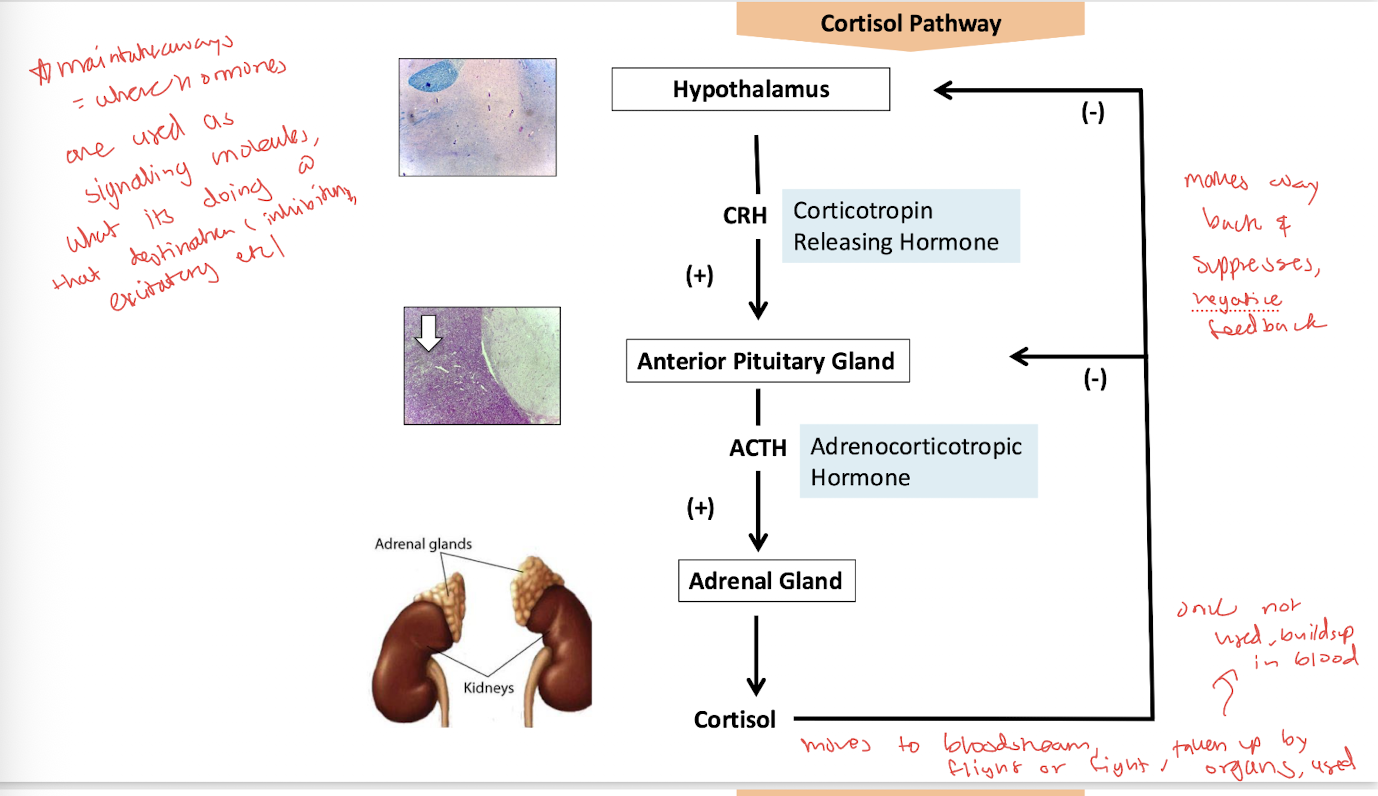
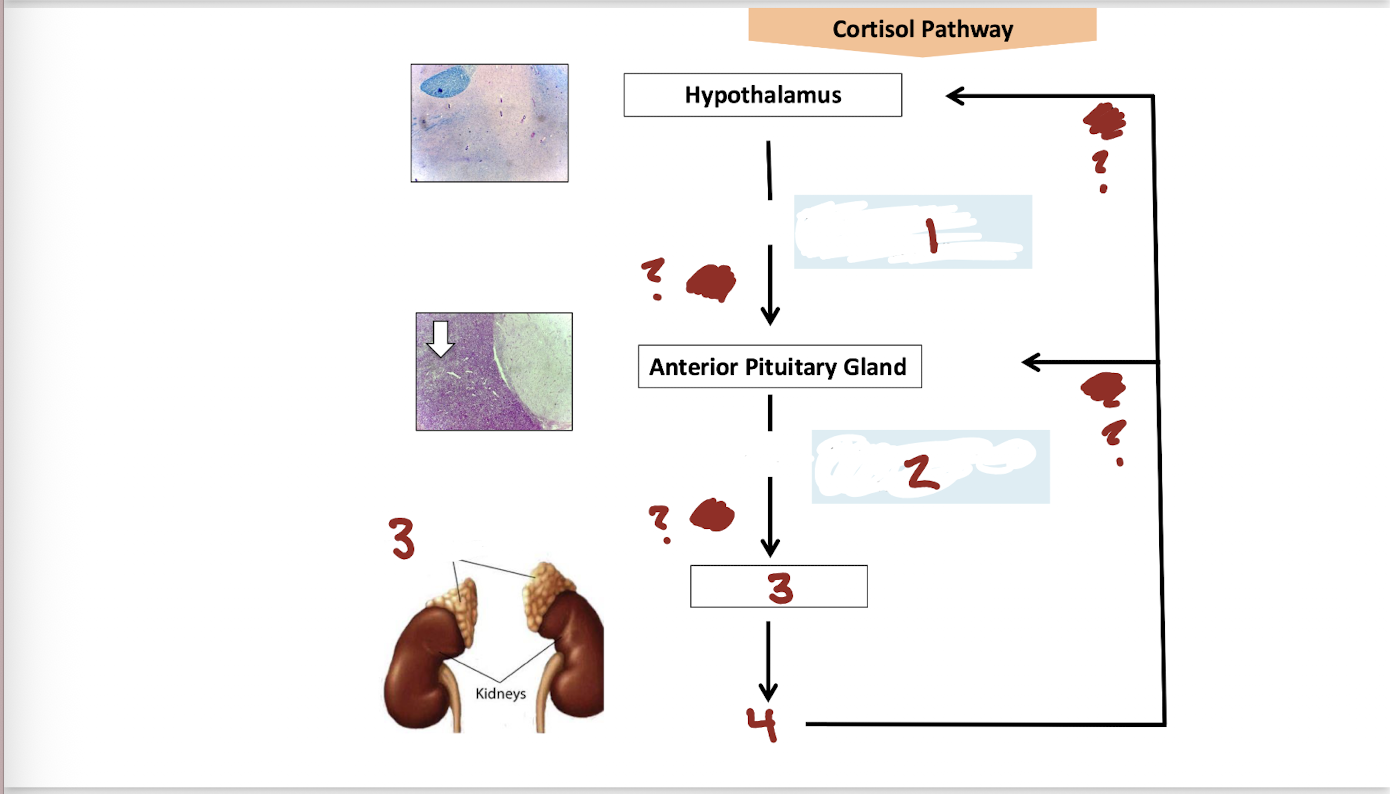
In the Cortisol Pathway, What is number 2? (from Anterior Pituitary Gland)
ACTH → Adrenocorticotropic Hormone
stimulates Adrenal Gland!
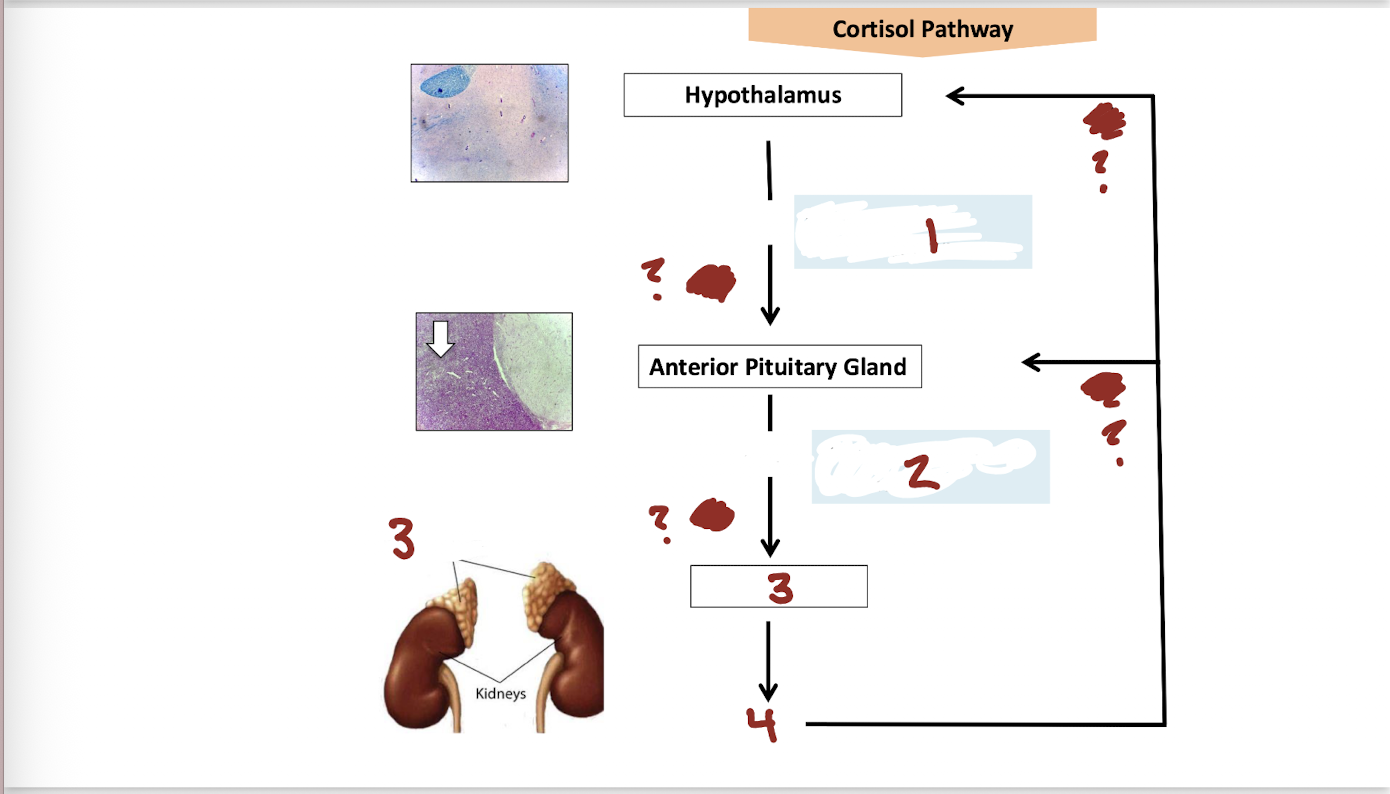
In the Cortisol Pathway, What is number 3? (The organ targeted by hormone released by anterior pituitary gland)
Adrenal Gland! (stimulated)
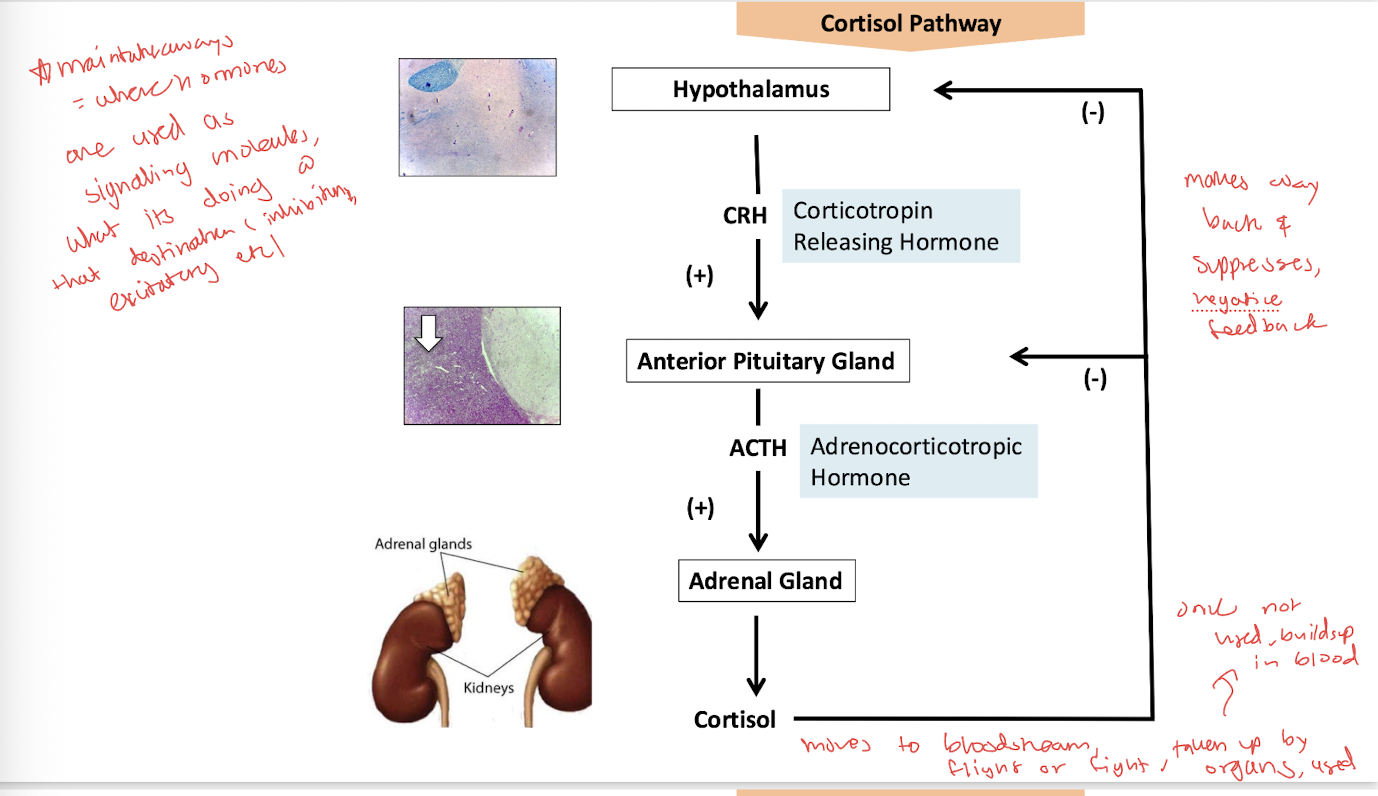
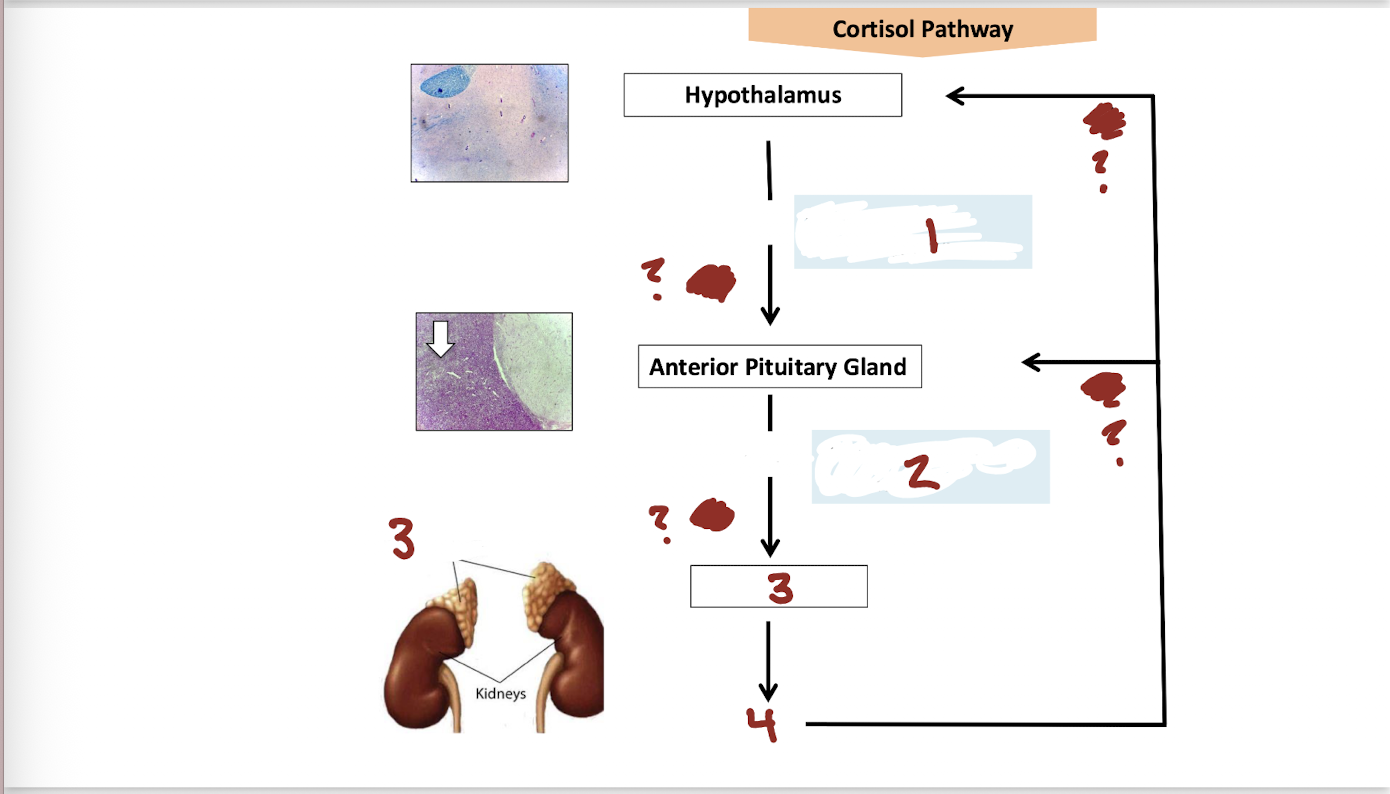
In the Cortisol Pathway, What is number 4? (released by 3)
Cortisol !!
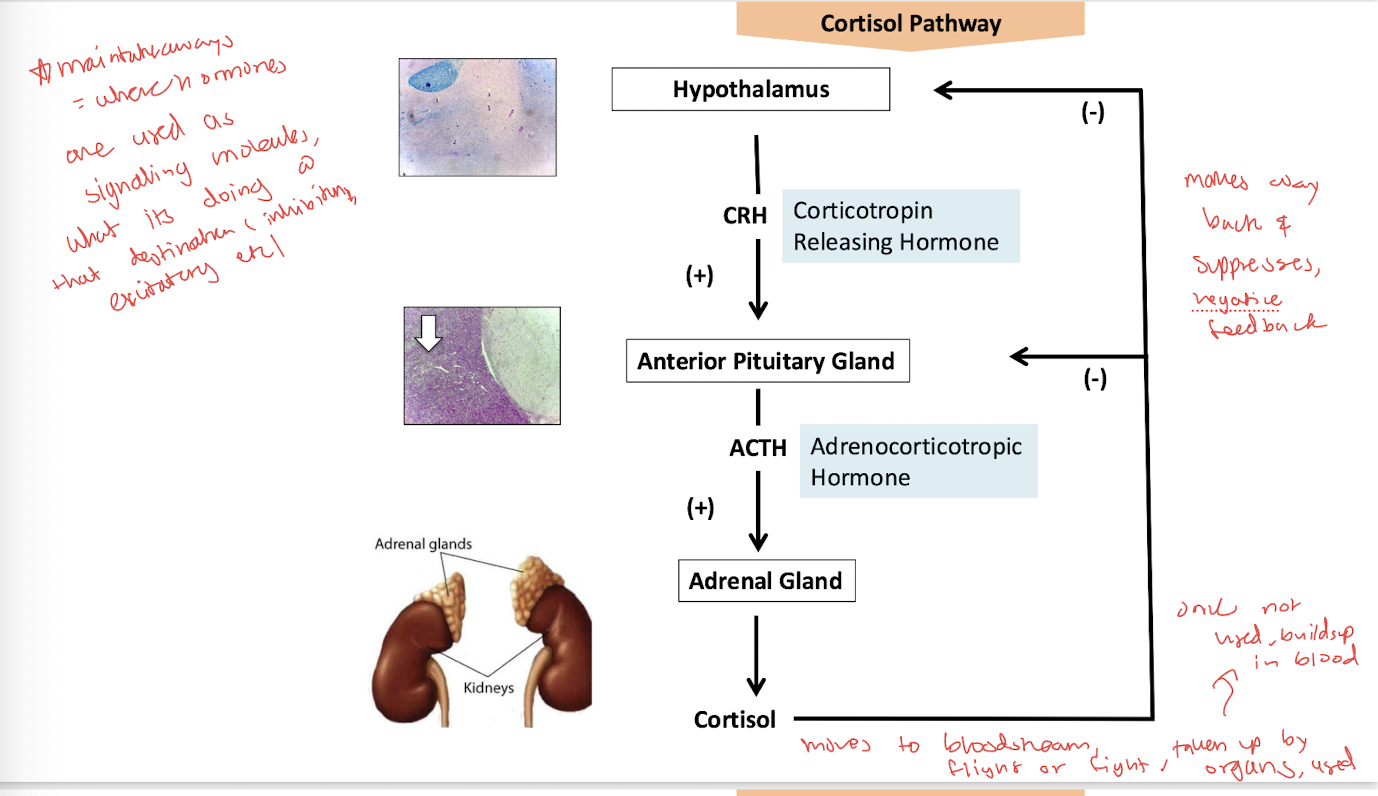
What is the feedback effect of cortisol on the hypothalamus and anterior pituitary?
Cortisol provides negative feedback, inhibiting CRH and ACTH release.
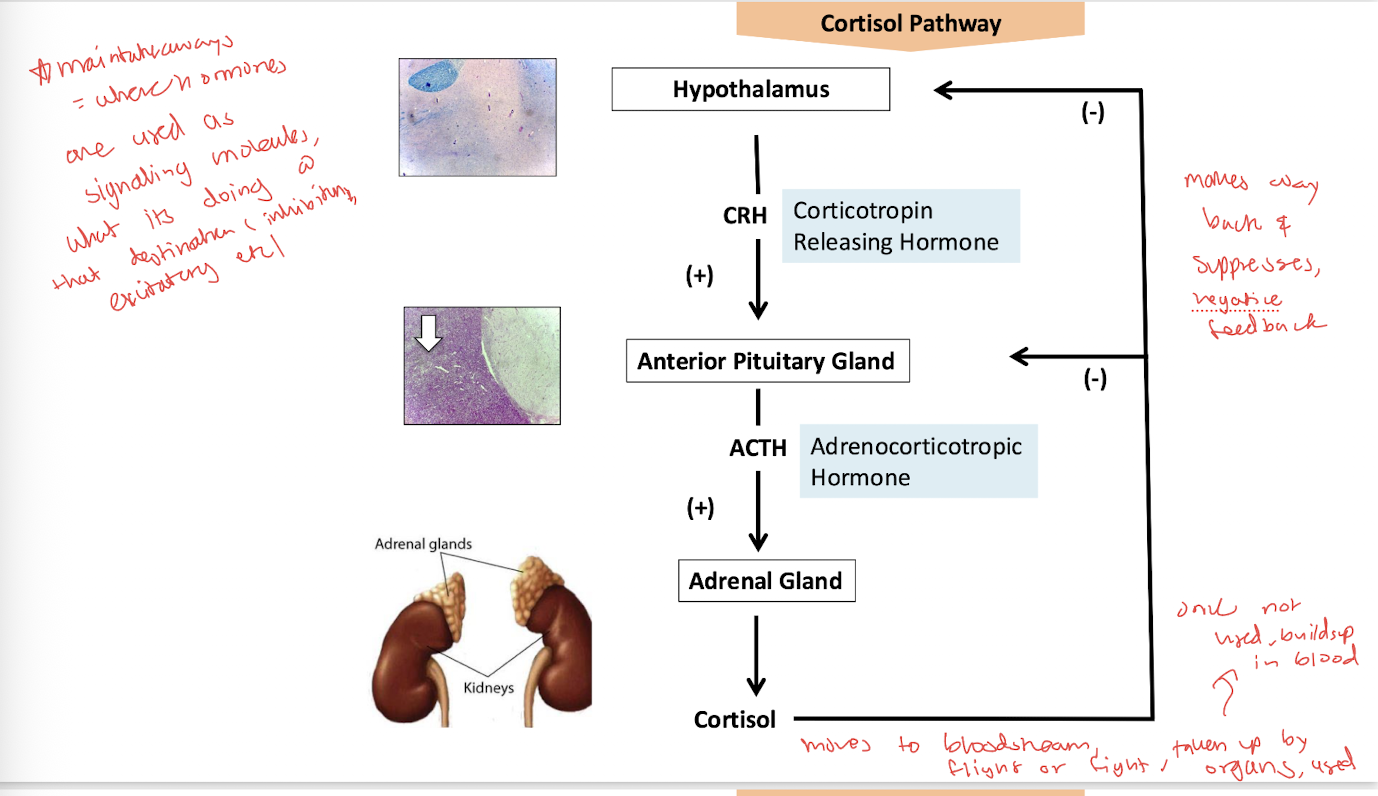
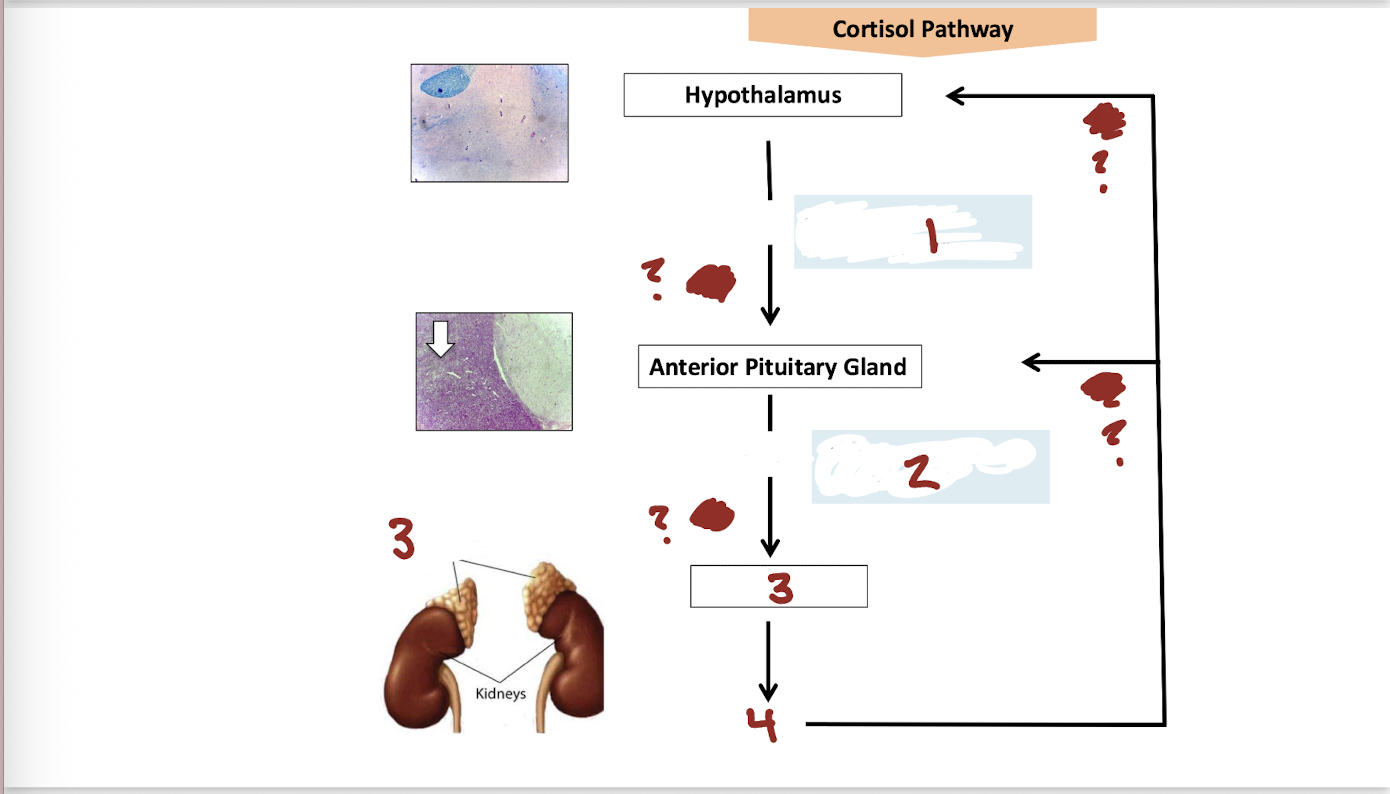
Why is the cortisol pathway a negative feedback loop?
As cortisol levels increase, cortisol inhibits the hypothalamus and anterior pituitary, reducing CRH and ACTH and therefore reducing further cortisol production.
see image
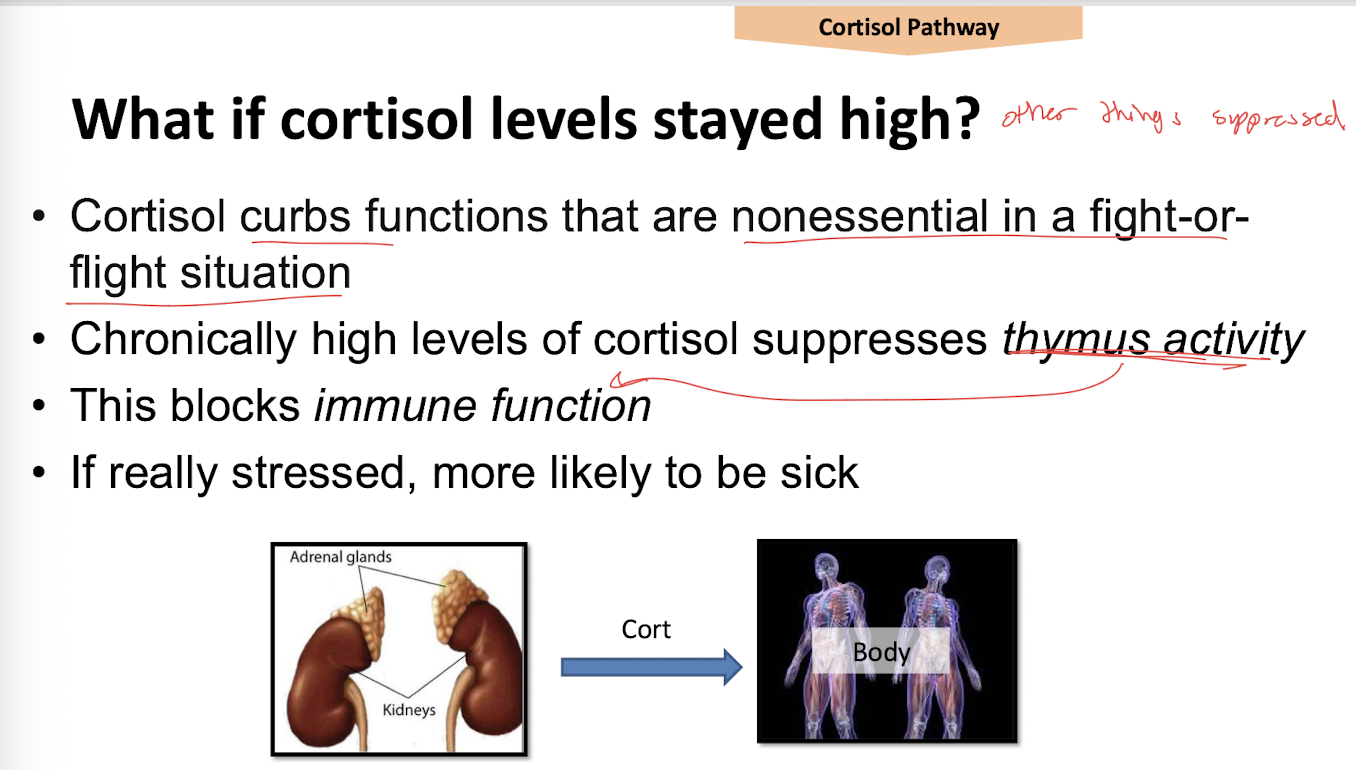
What happens if cortisol levels stay high?
cortisol curbs functions that are nonessential in a fight or flight situation
suppresses thymus activity
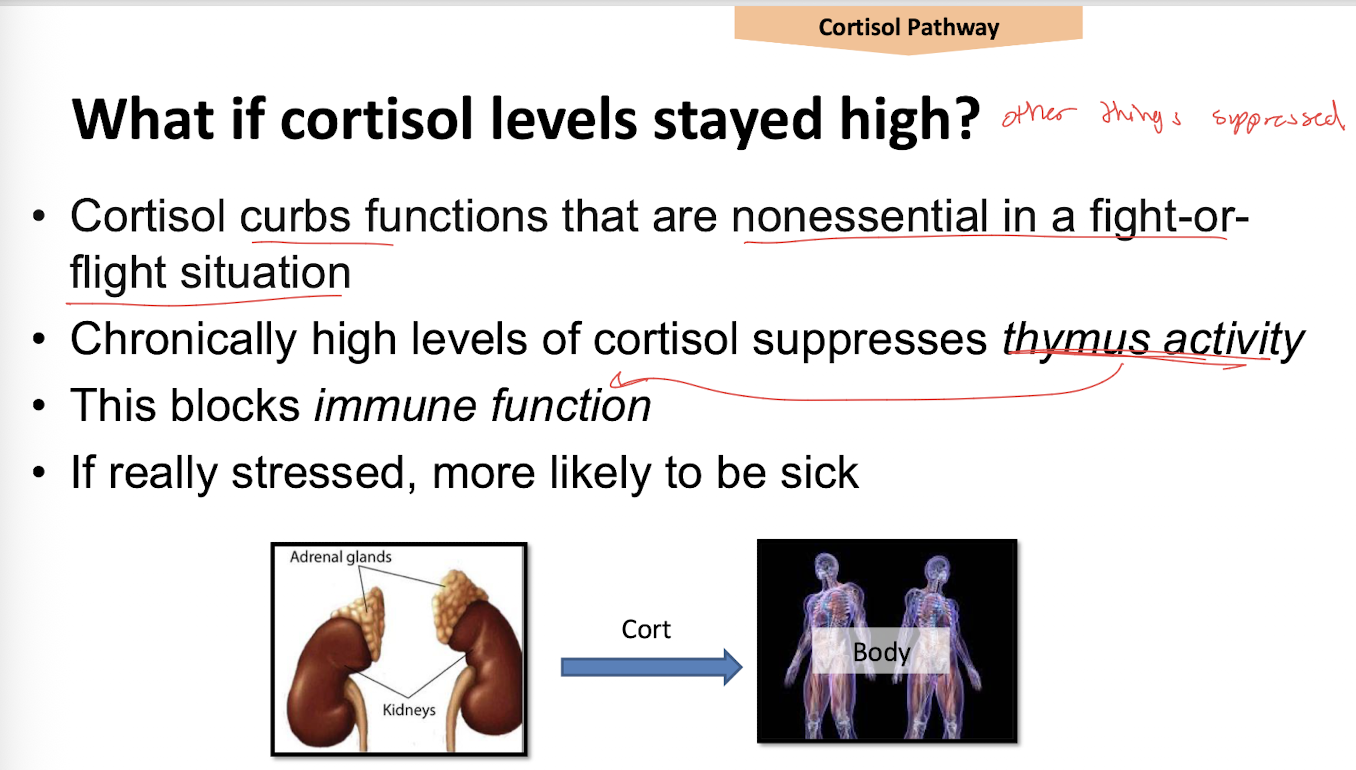
Since chronically high levels of cortisol suppress thymus activity, what results?
blocking of immune function
really stressed = more likely to be sick
Why might chronically stressed animals be more likely to get sick?
Chronically high cortisol suppresses immune function, weakening the immune response.
Cortisol levels are very high, but the hypothalamus and anterior pituitary are no longer responding to cortisol's negative feedback. What happens?
CRH and ACTH may remain elevated, so cortisol levels can stay high.
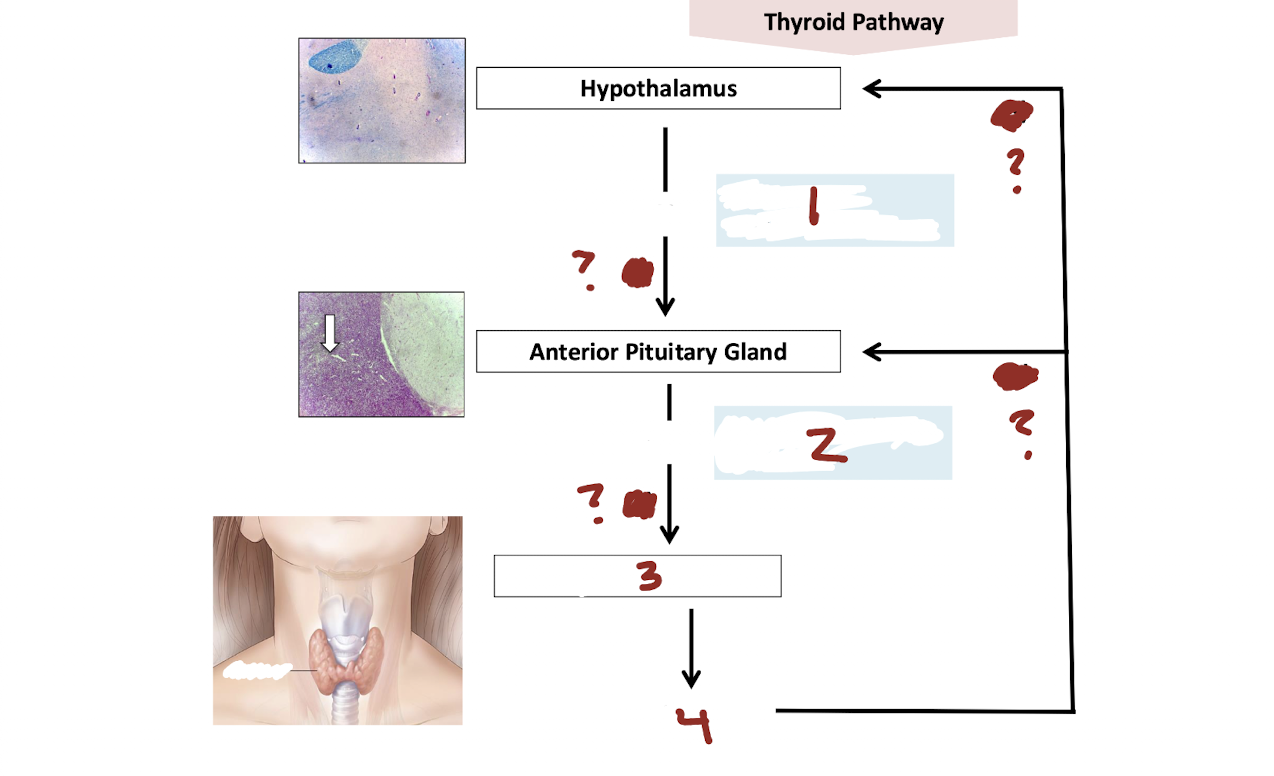
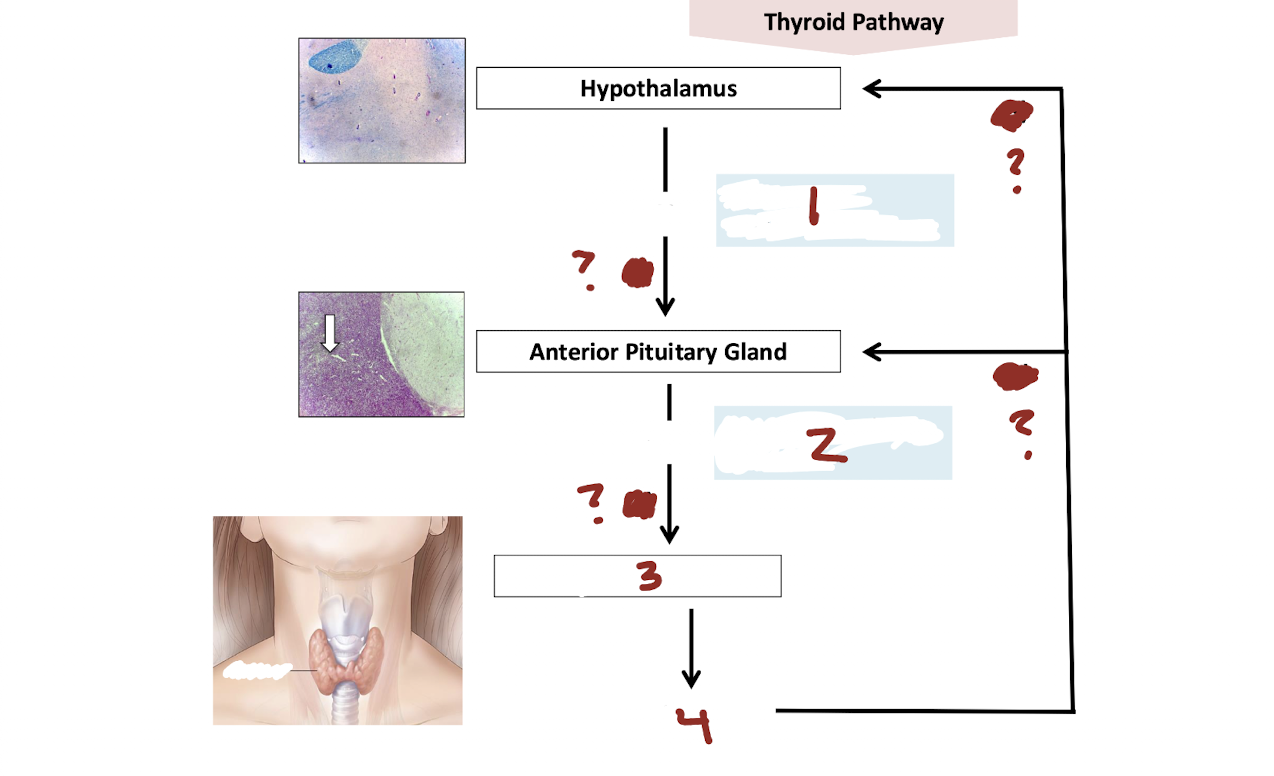
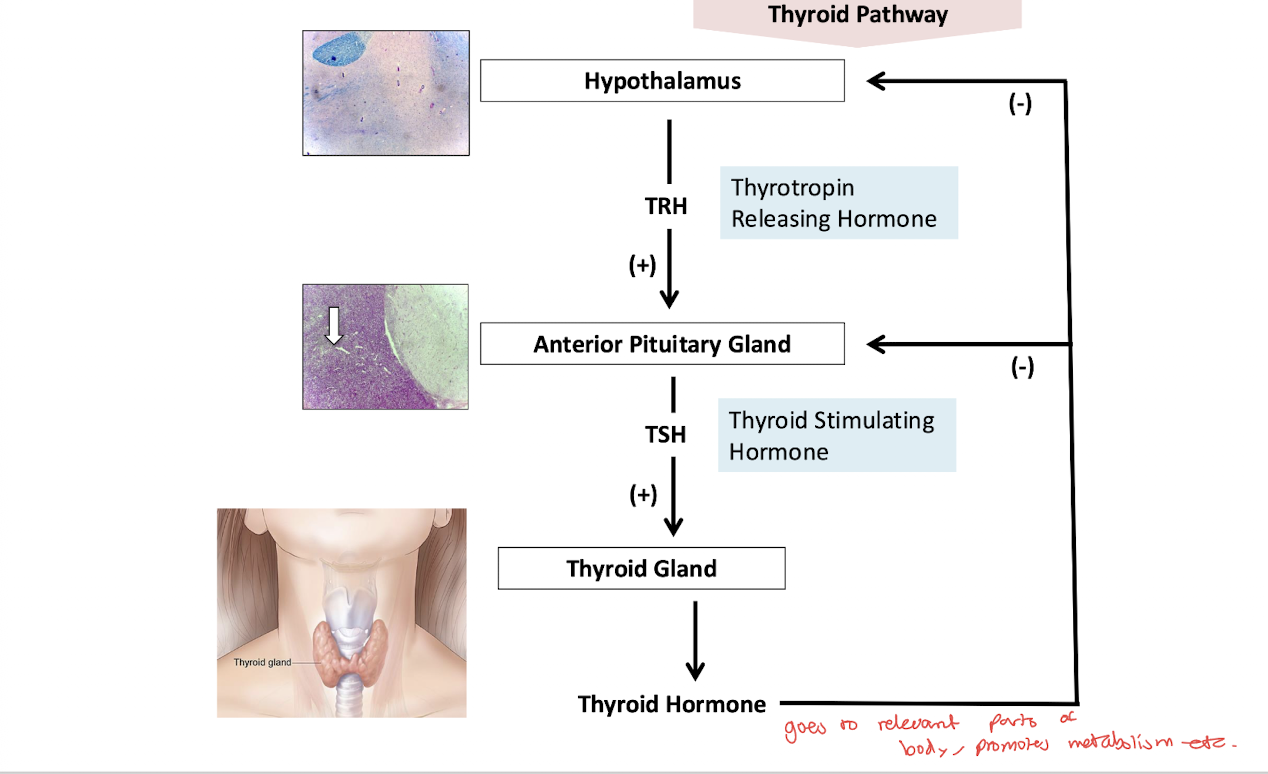
In the Thyroid Pathway, What is number 1? (from Hypothalamus)
TRH → Thyrotropin Releasing Hormone
stimulates anterior pituitary gland
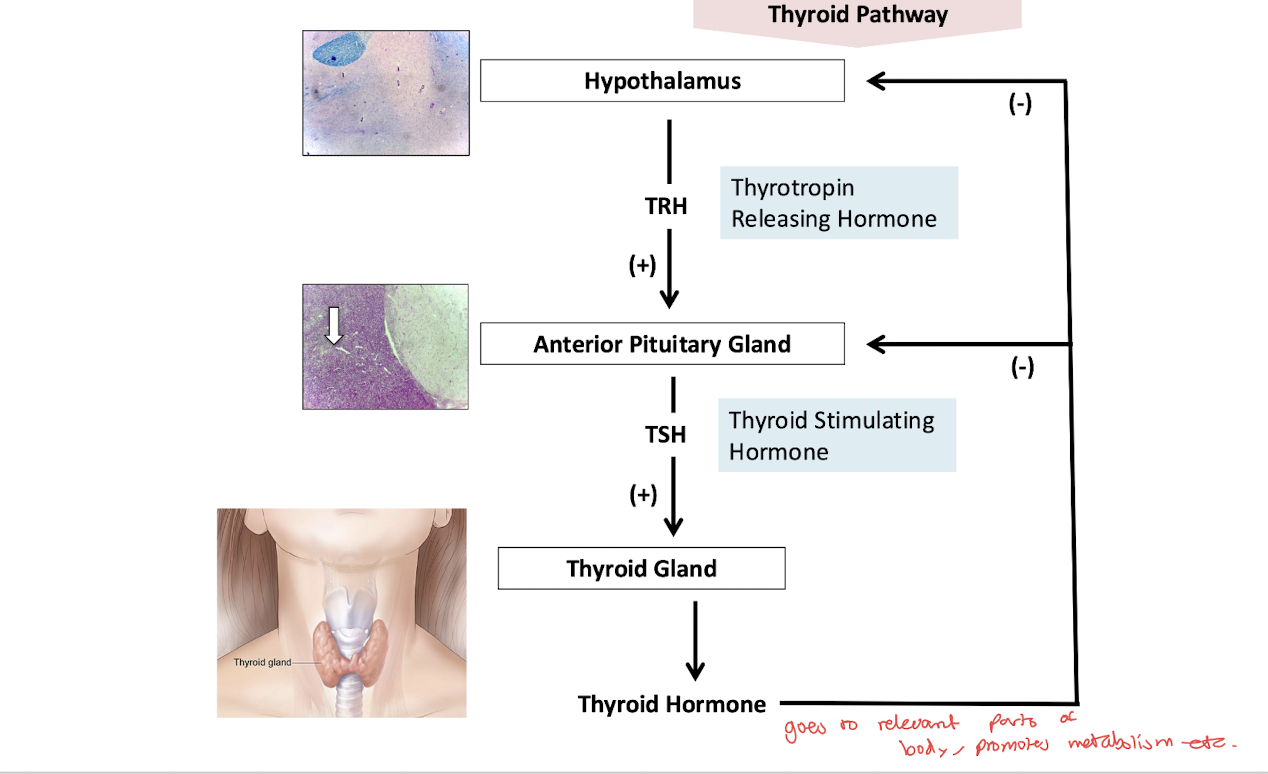
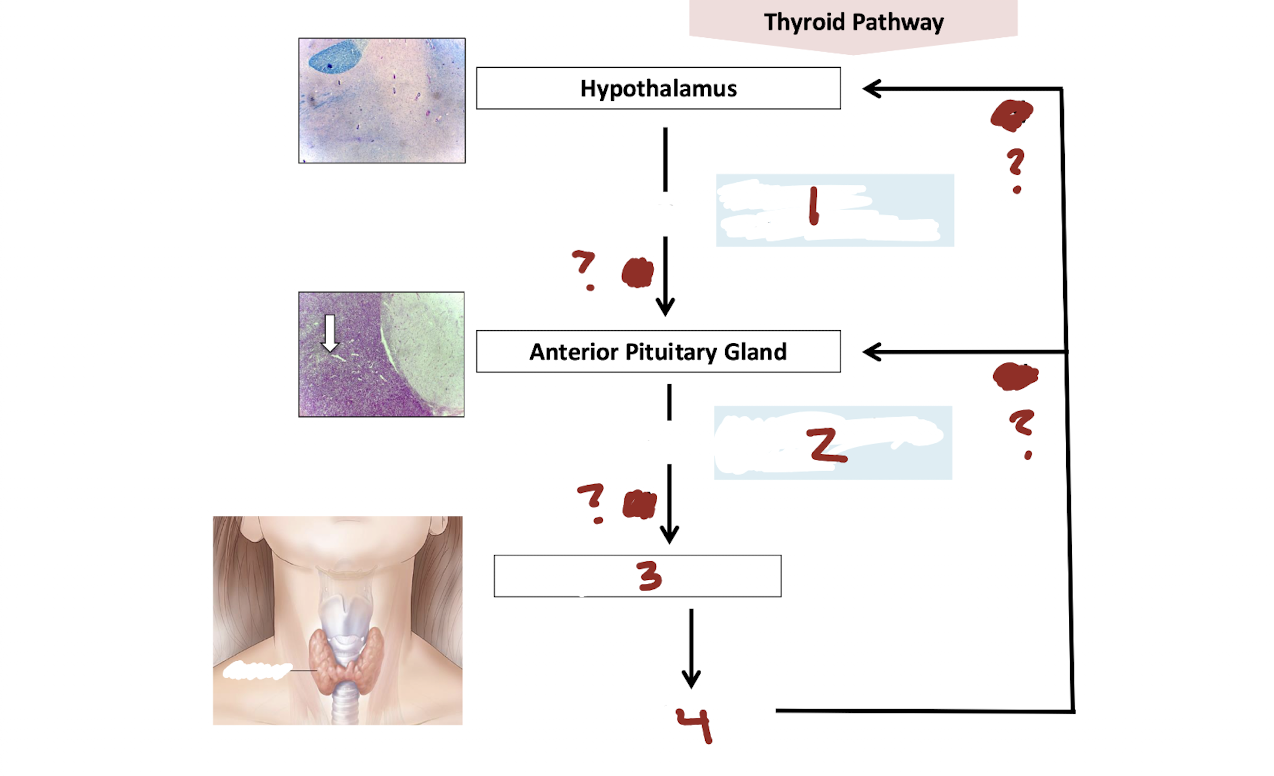
In the Thyroid Pathway, What is number 2? (from Anterior Pituitary Gland)
TSH → Thyroid Stimulating Hormone
stimulates the thyroid gland
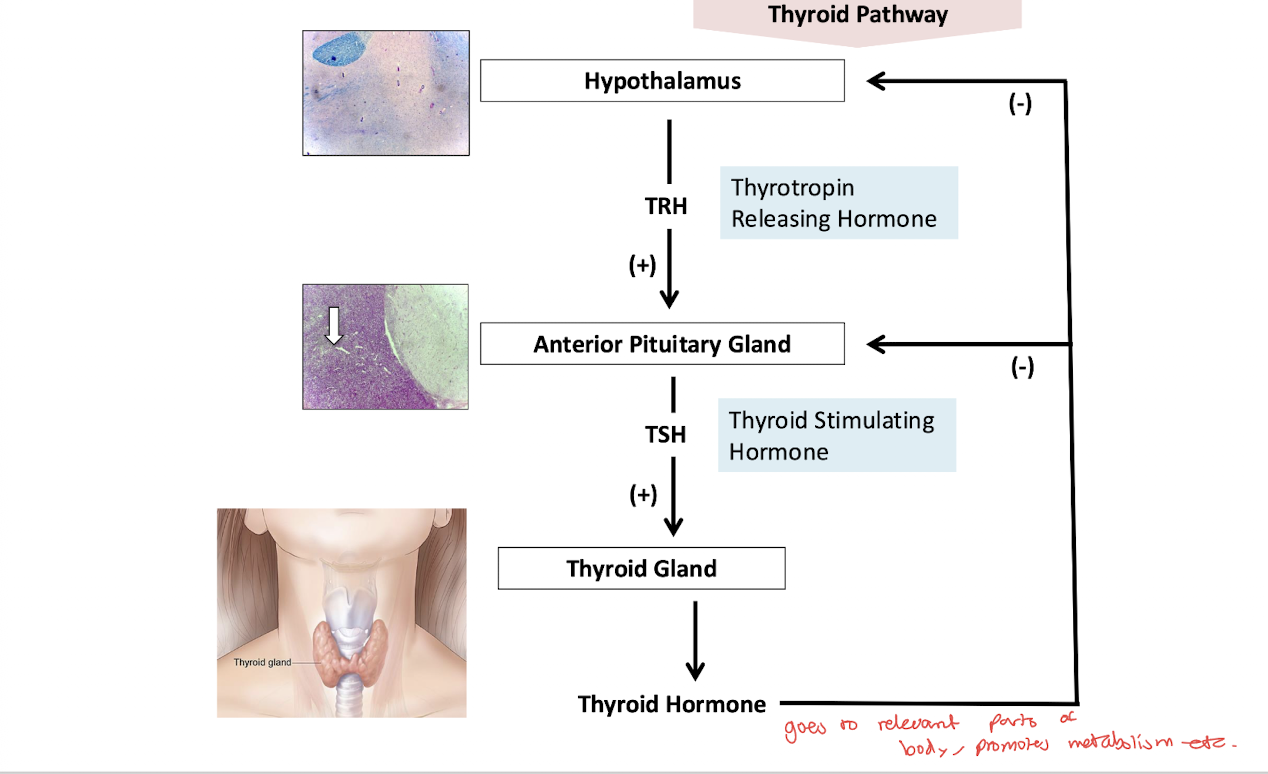
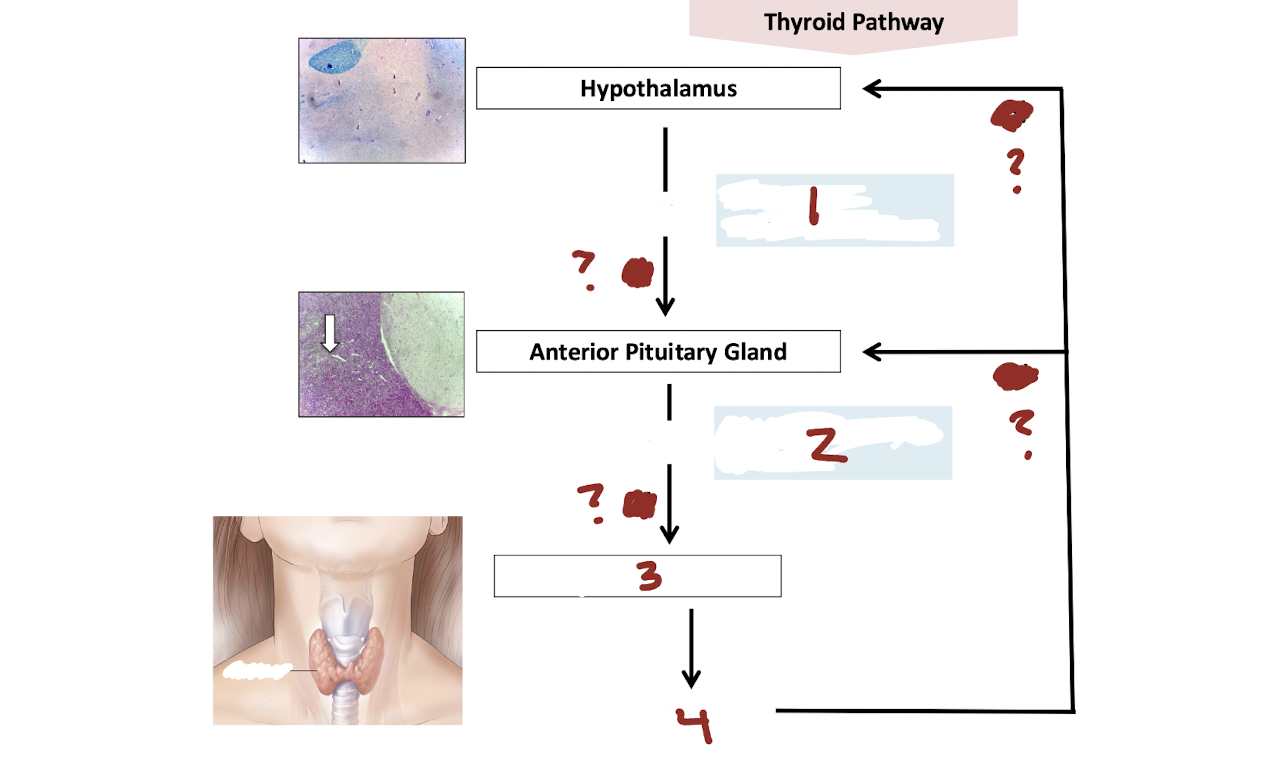
In the Thyroid Pathway, What is number 3? (The organ targeted by hormone released by anterior pituitary gland)
Thyroid Gland
stimulated
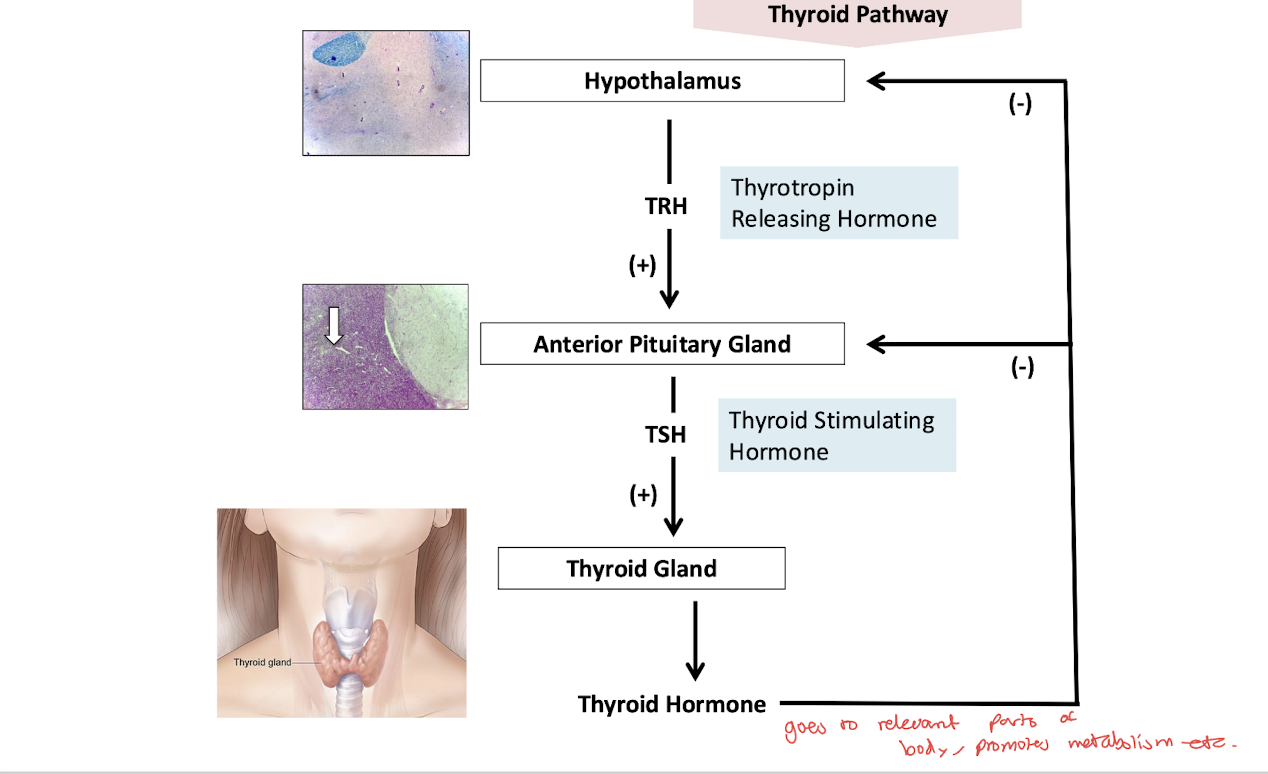
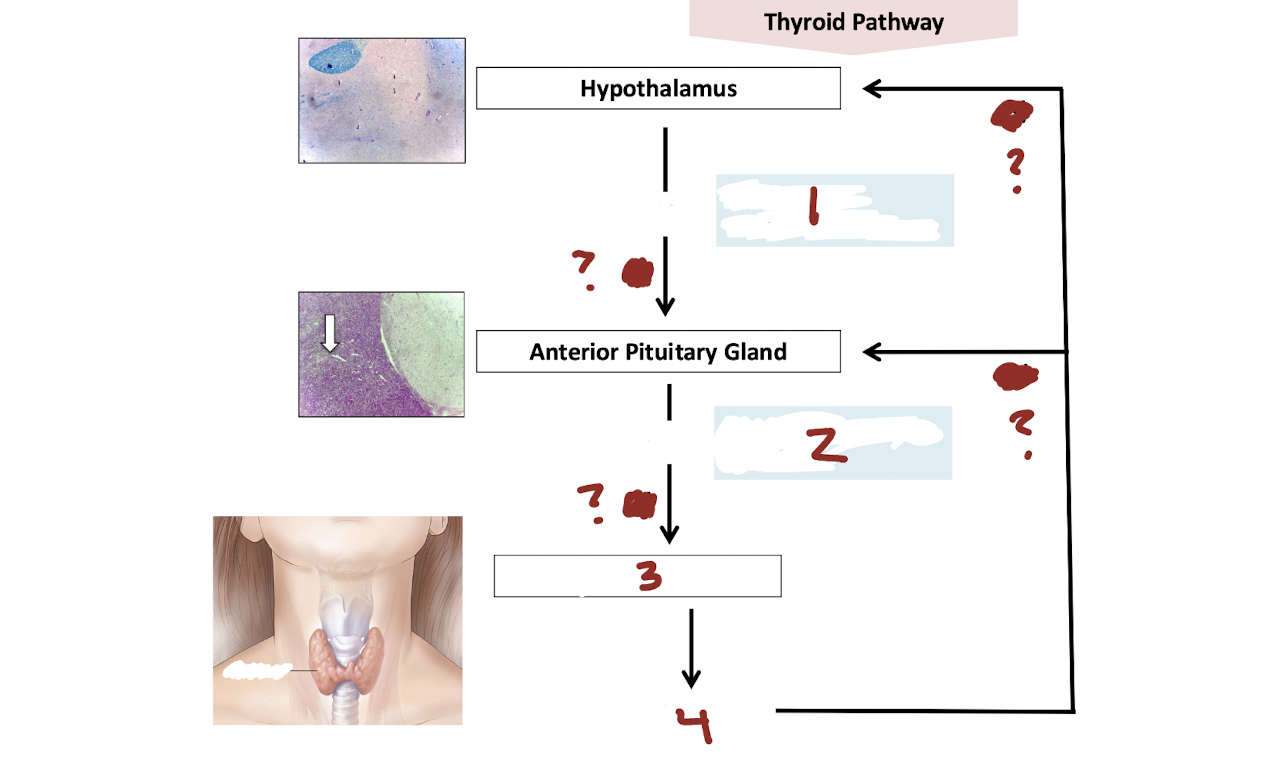
In the Thyroid Pathway, What is number 4? (released by 3)
Thyroid Hormone
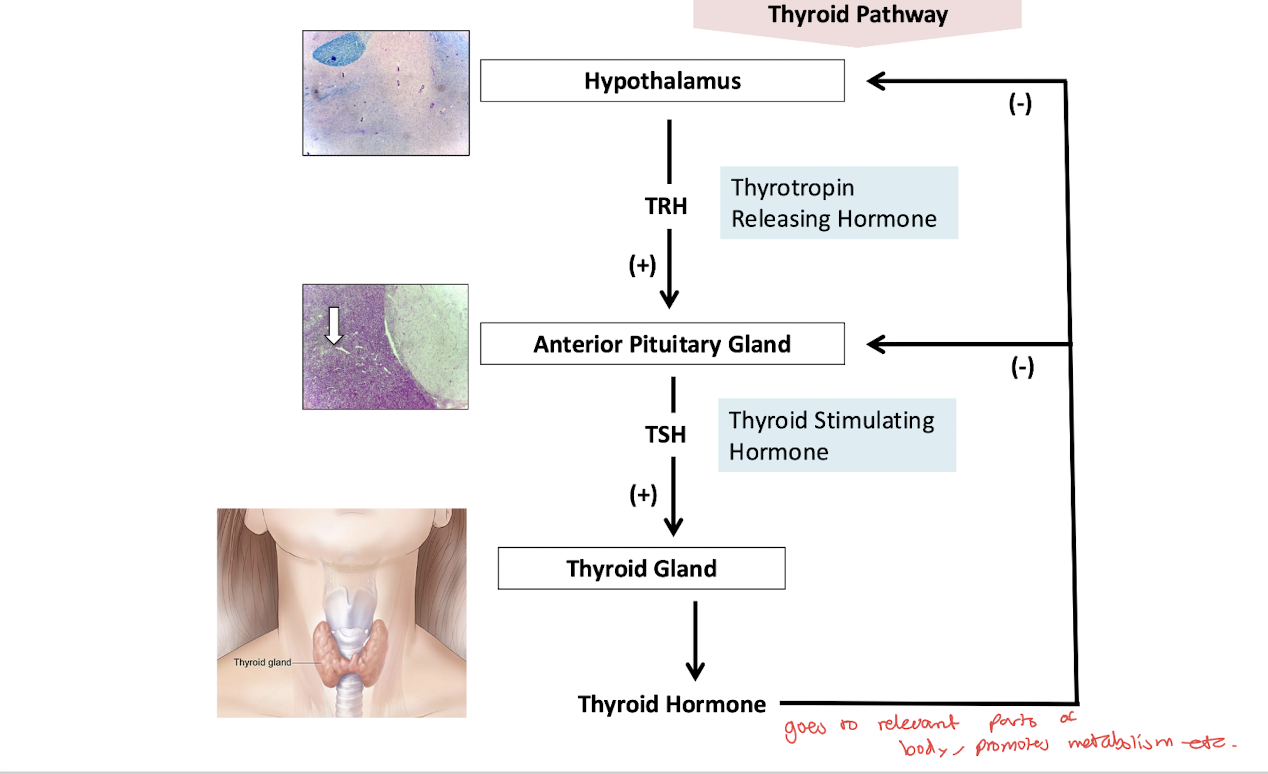
What is thyroid hormone associated with?
Growth and metabolism
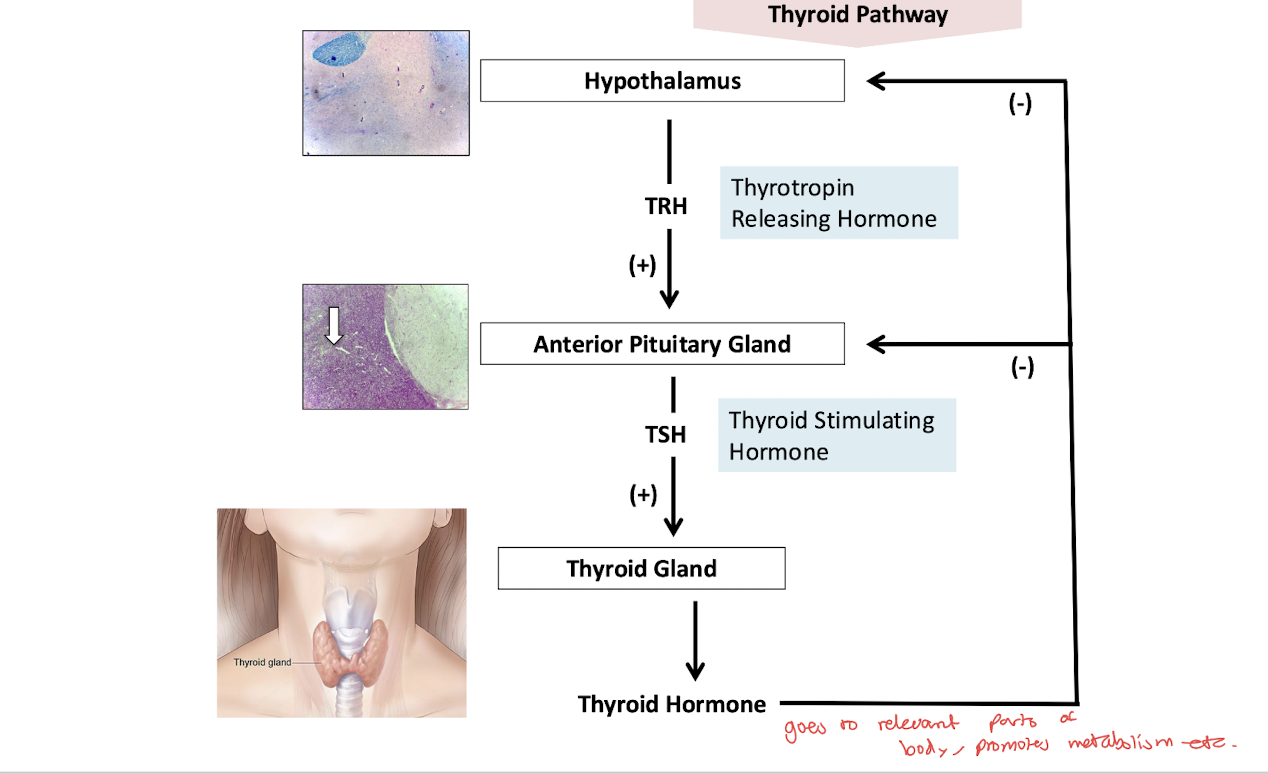
How does thyroid hormone participate in negative feedback?
High thyroid hormone inhibits the hypothalamus and anterior pituitary, reducing TRH and TSH.
If thyroid hormone levels increase, what happens to TRH and TSH?
They decrease because of negative feedback
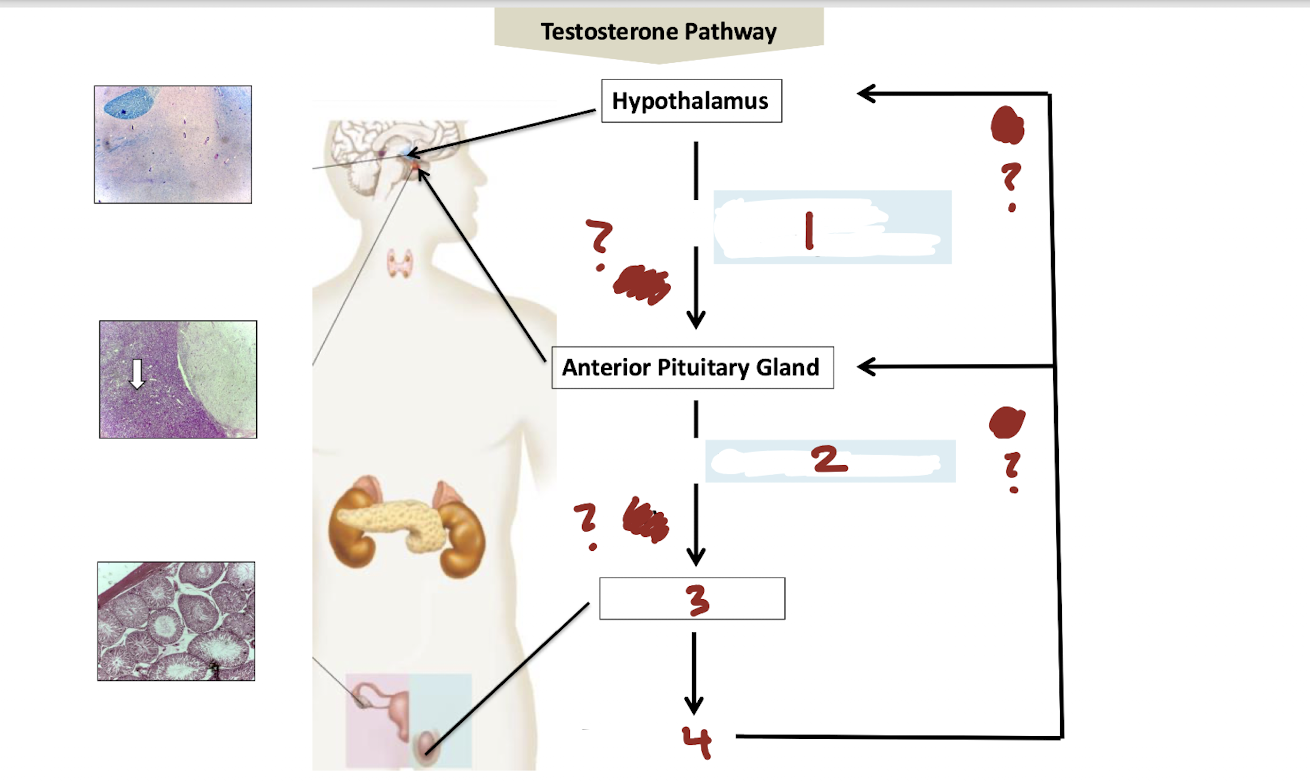
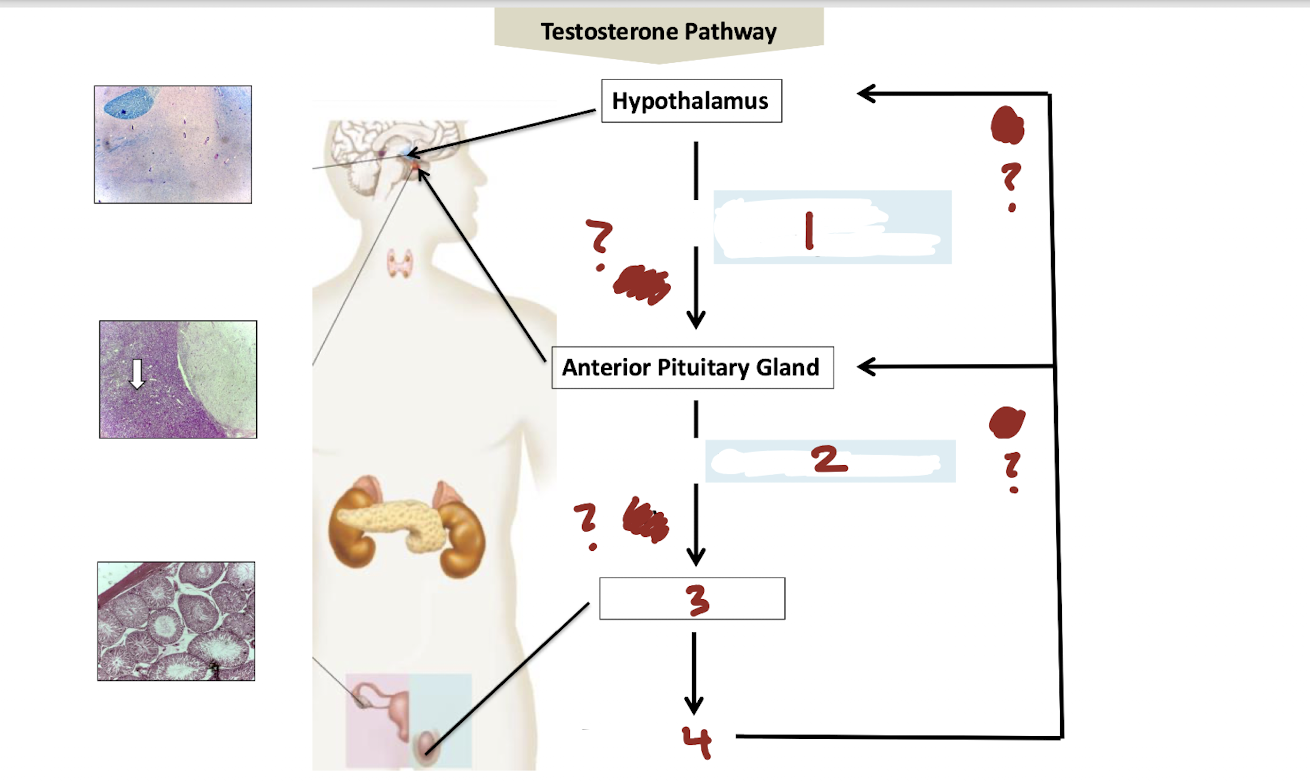
In the Testosterone Pathway, What is number 1? (from Hypothalamus)
GnRH → Gonadotropin Releasing Hormone
stimulates the anterior pituitary gland
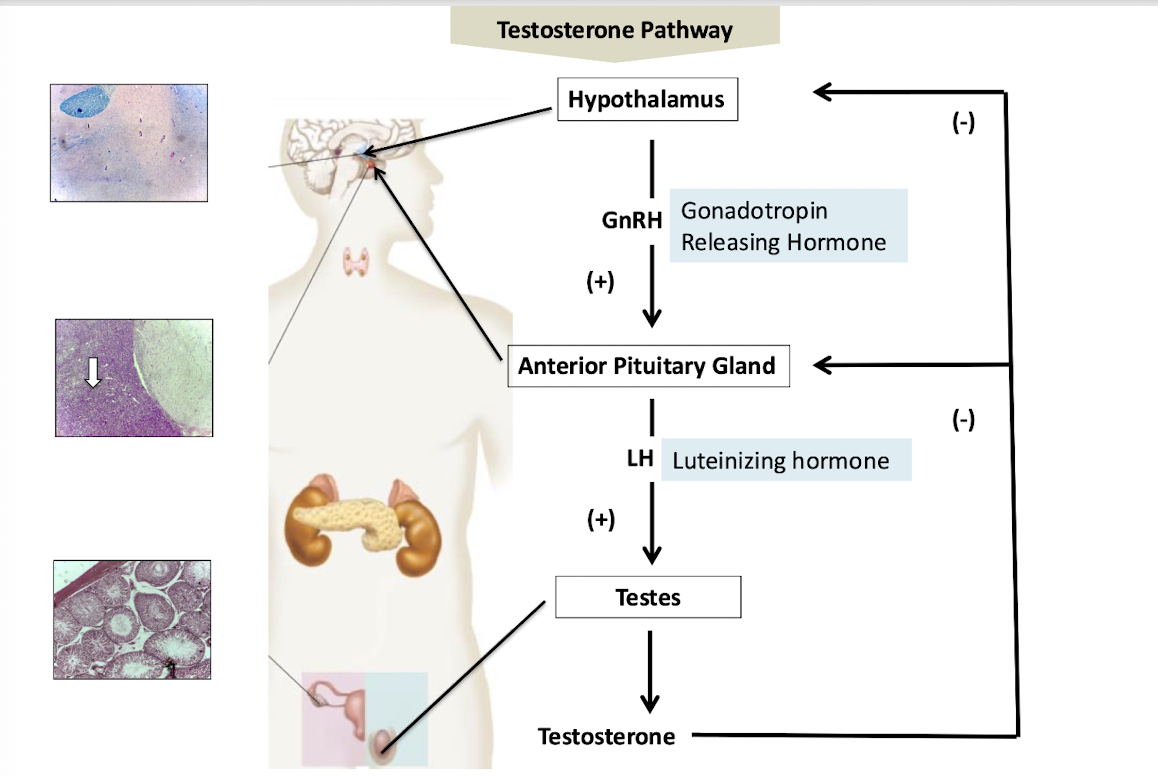
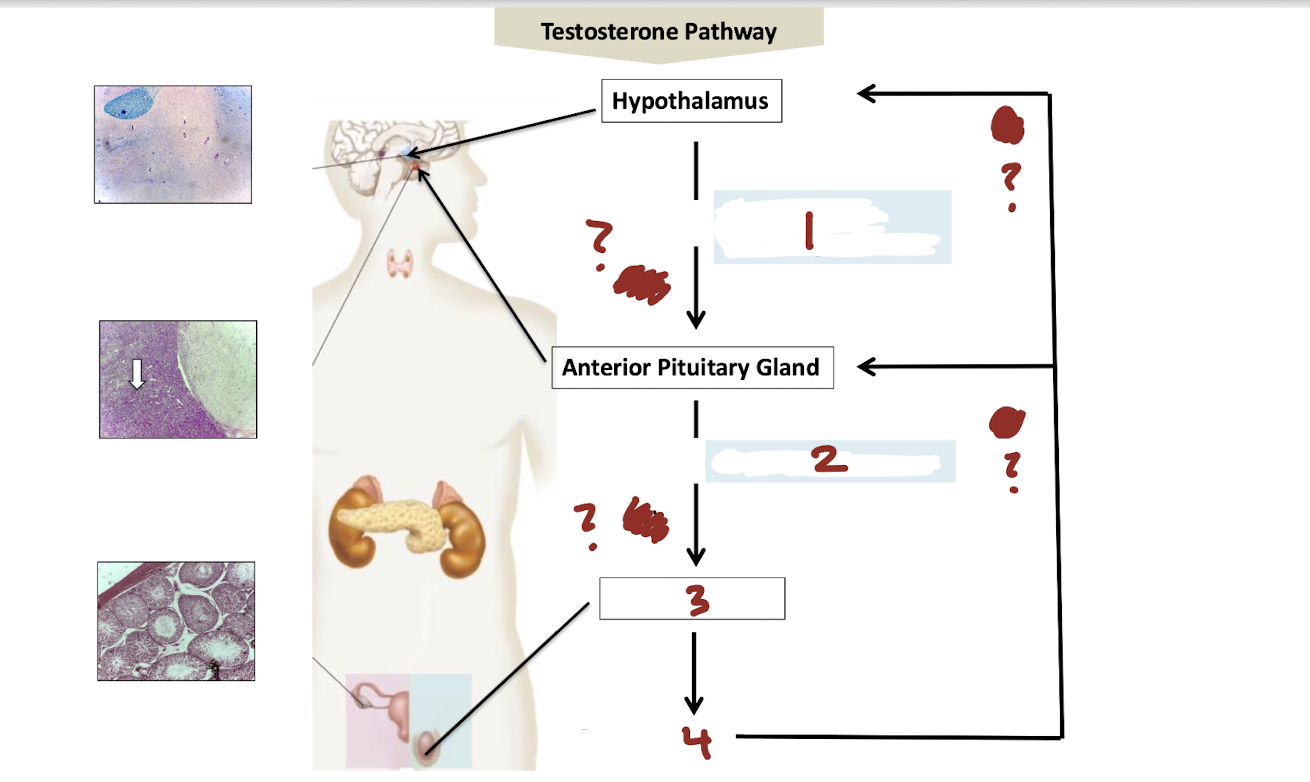
In the Testosterone Pathway, What is number 2? (from Anterior Pituitary Gland)
LH → Luteinizing Hormone
stimulates the testes
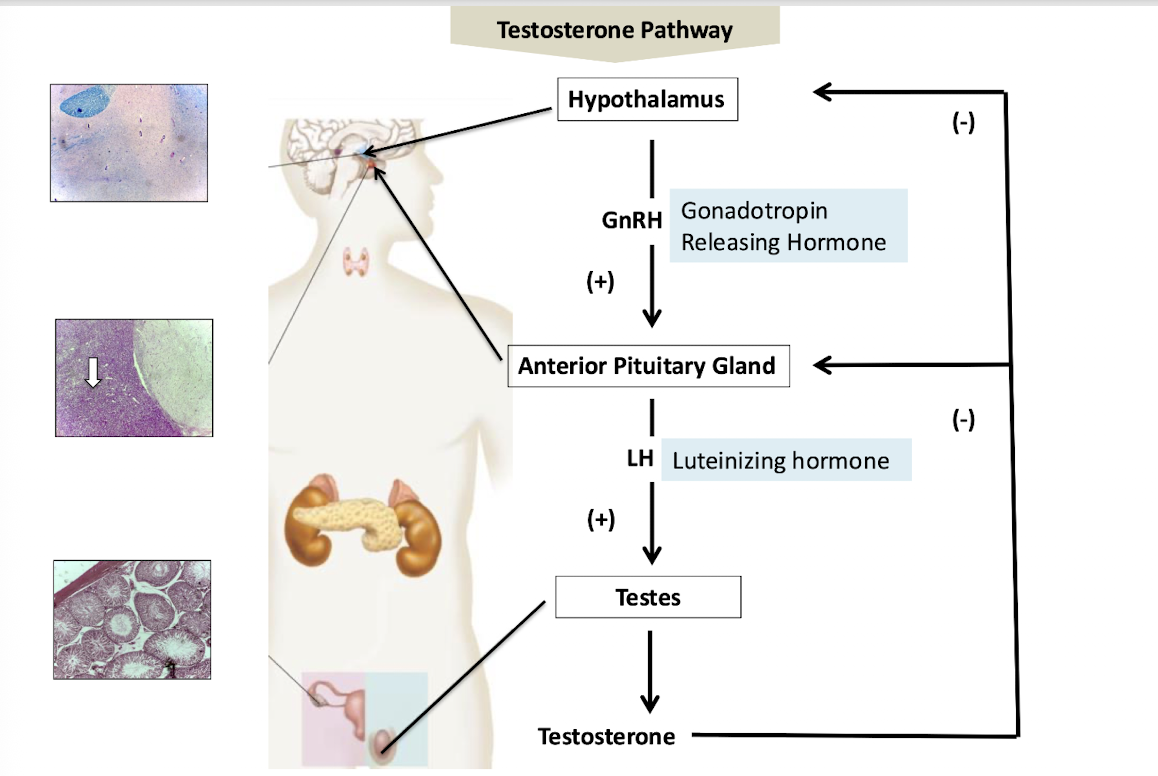
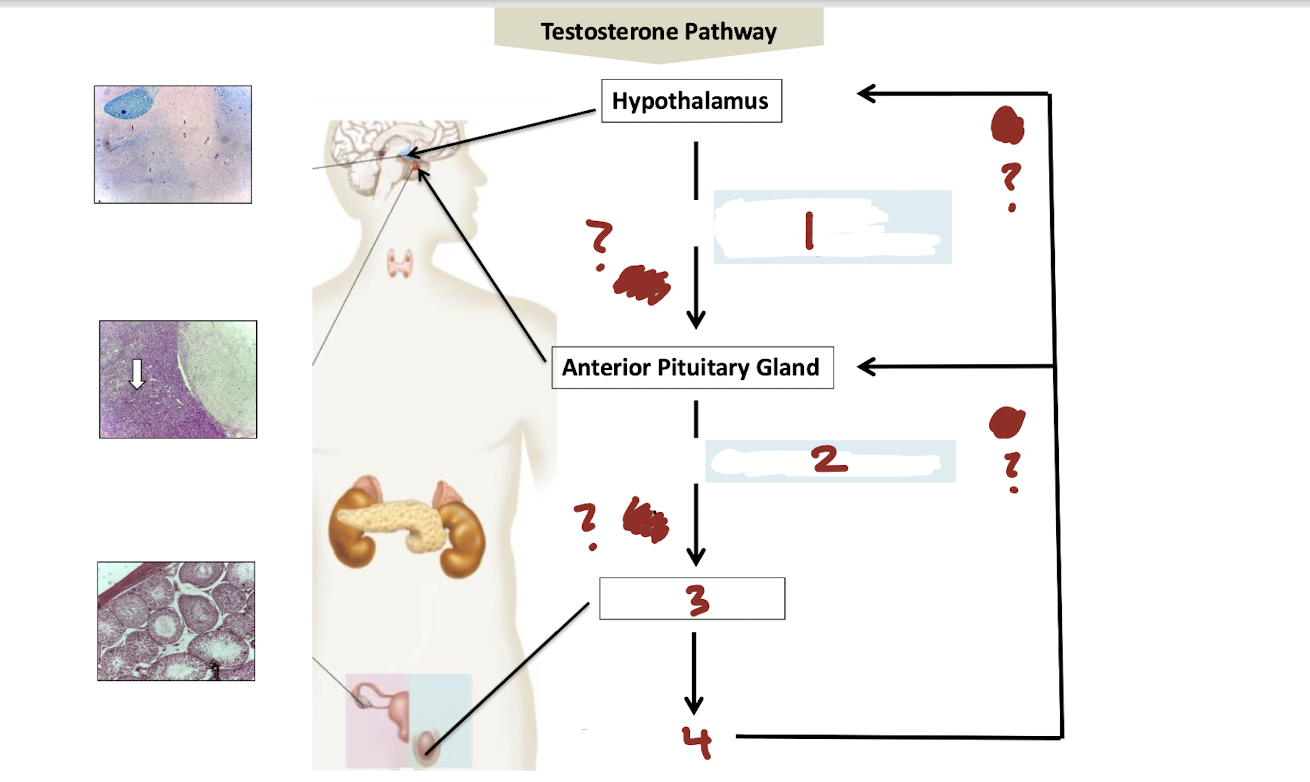
In the Testosterone Pathway, What is number 3? (The organ targeted by hormone released by anterior pituitary gland)
Testes
stimulated
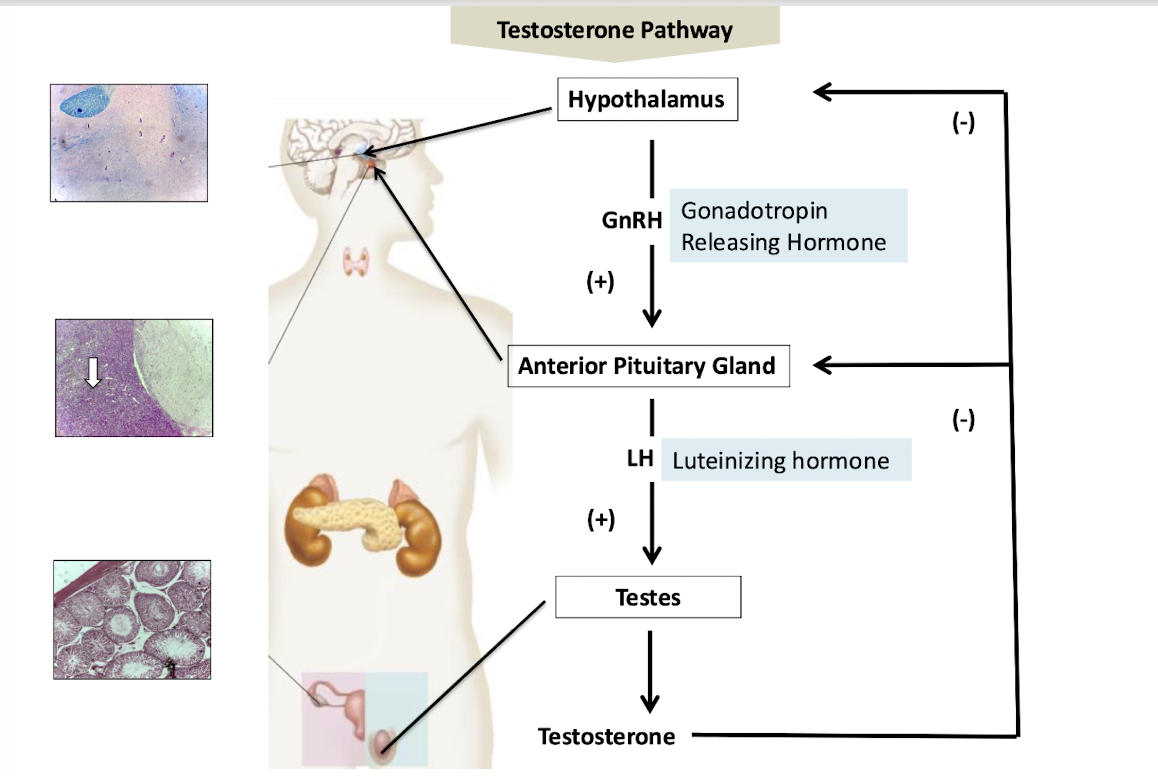
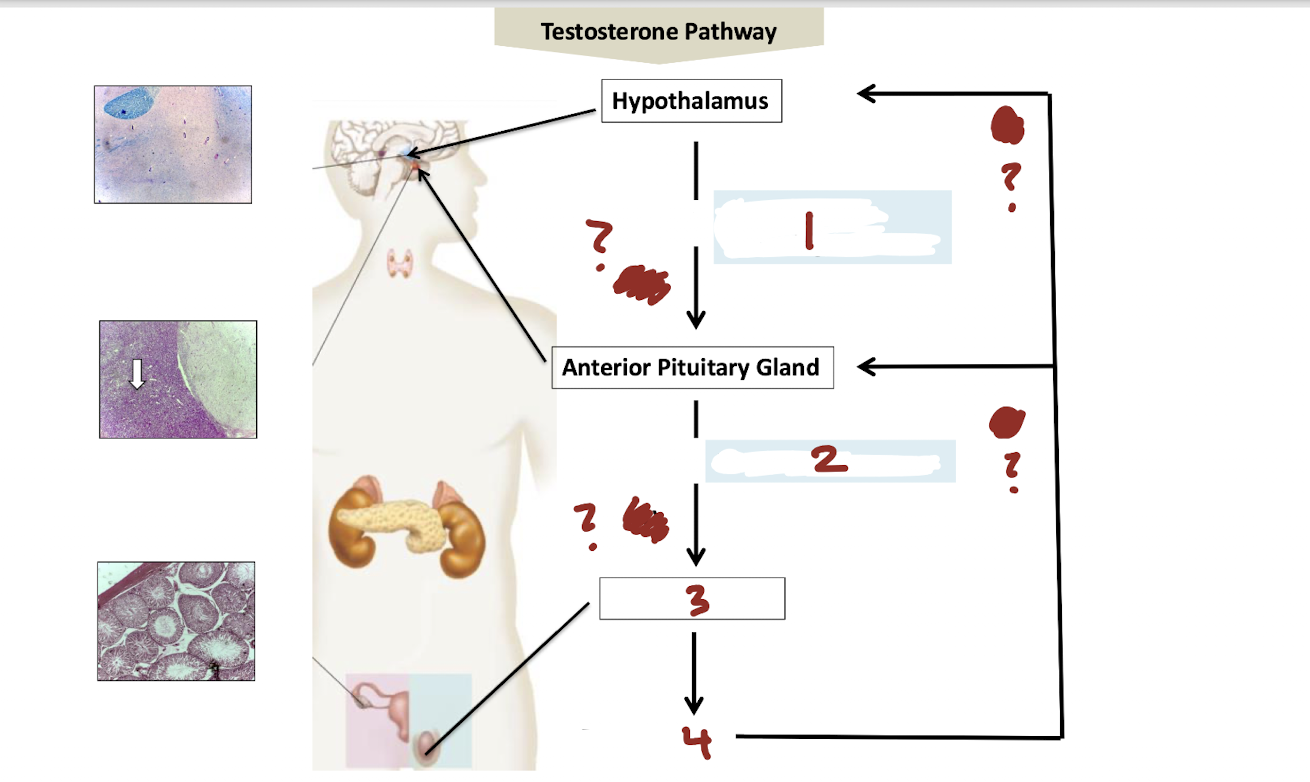
In the Testes Pathway, What is number 4? (released by 3)
Testosterone!
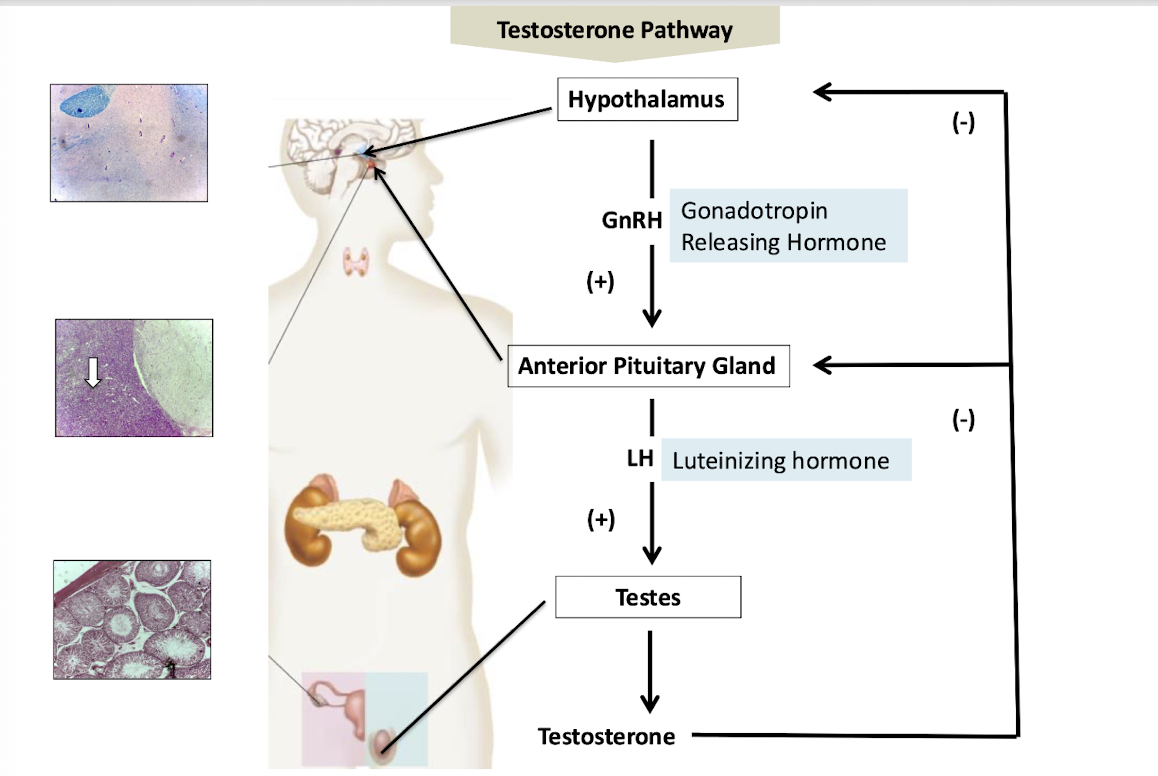
How does testosterone participate in negative feedback?
Testosterone inhibits the hypothalamus and anterior pituitary, reducing GnRH and LH.
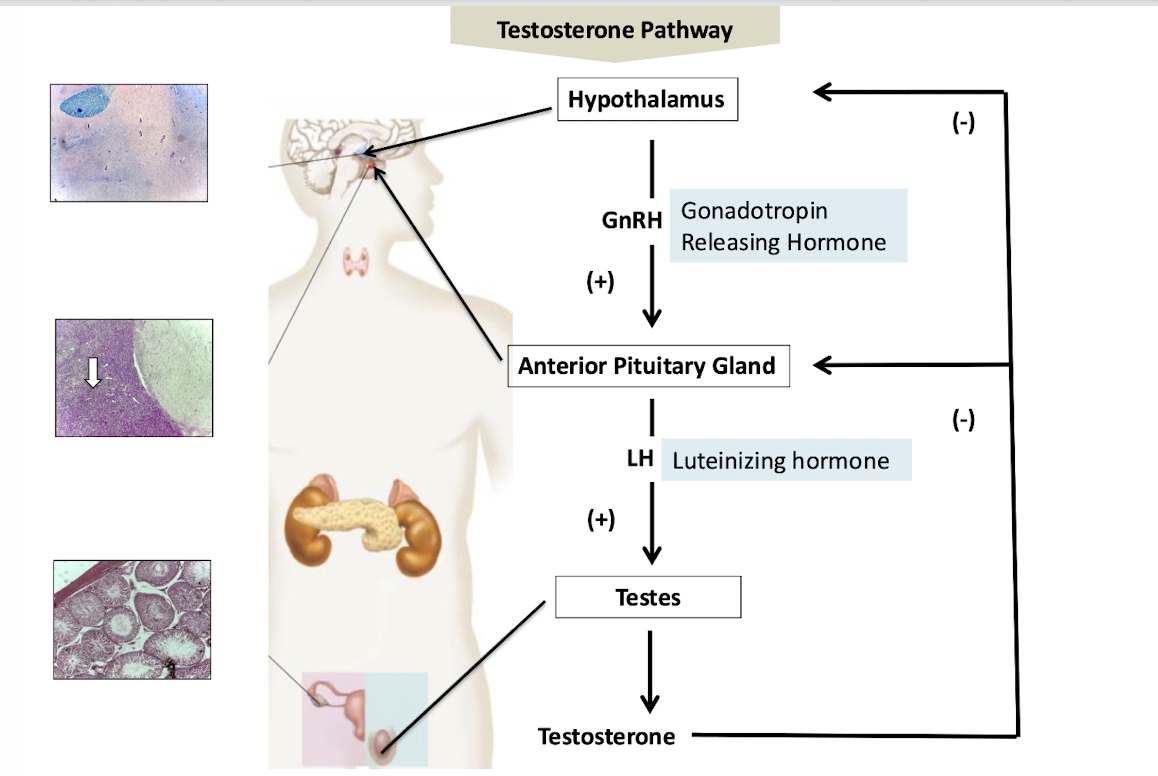
If testosterone levels increase, what happens to GnRH and LH?
They decrease!!
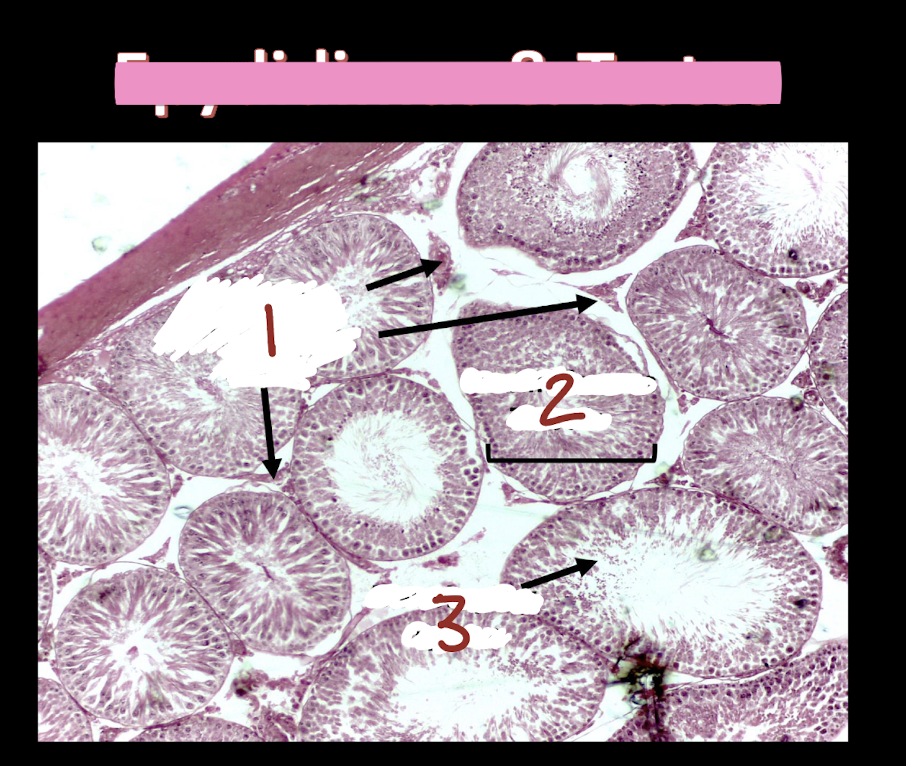
What kind of tissue is this?
Epydidimis & Testes
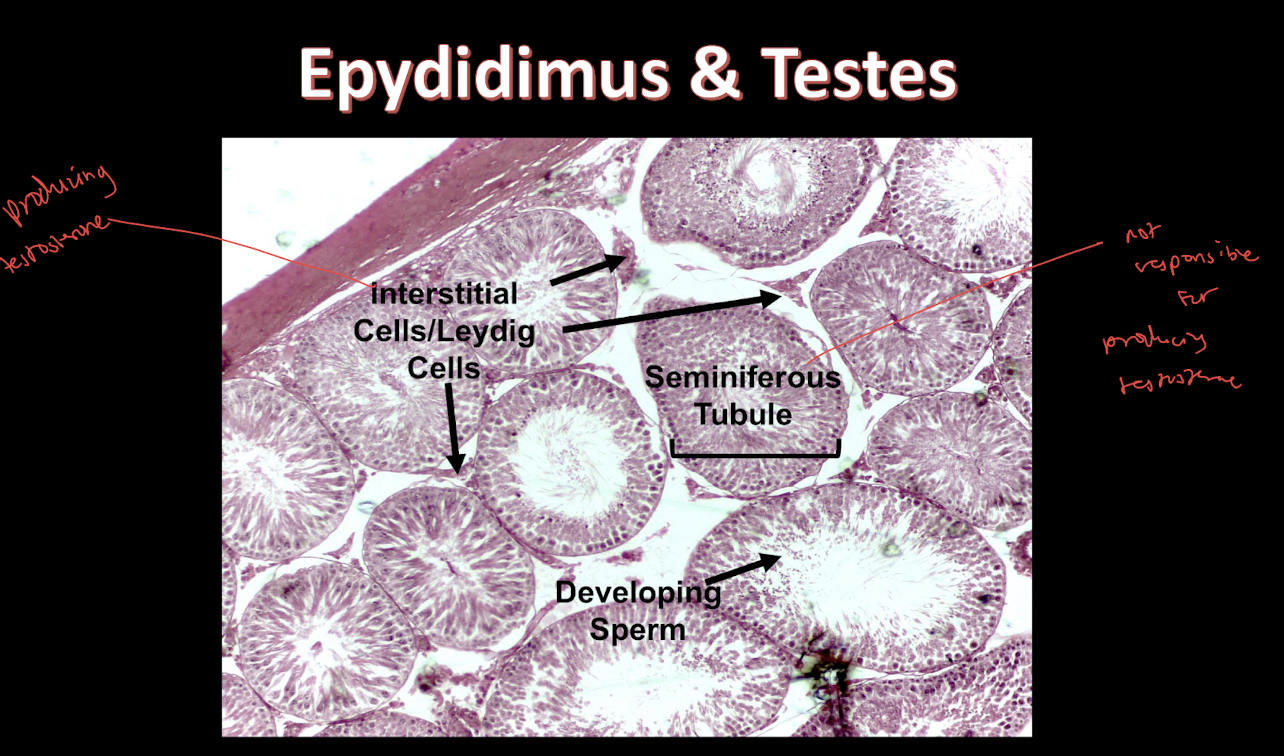
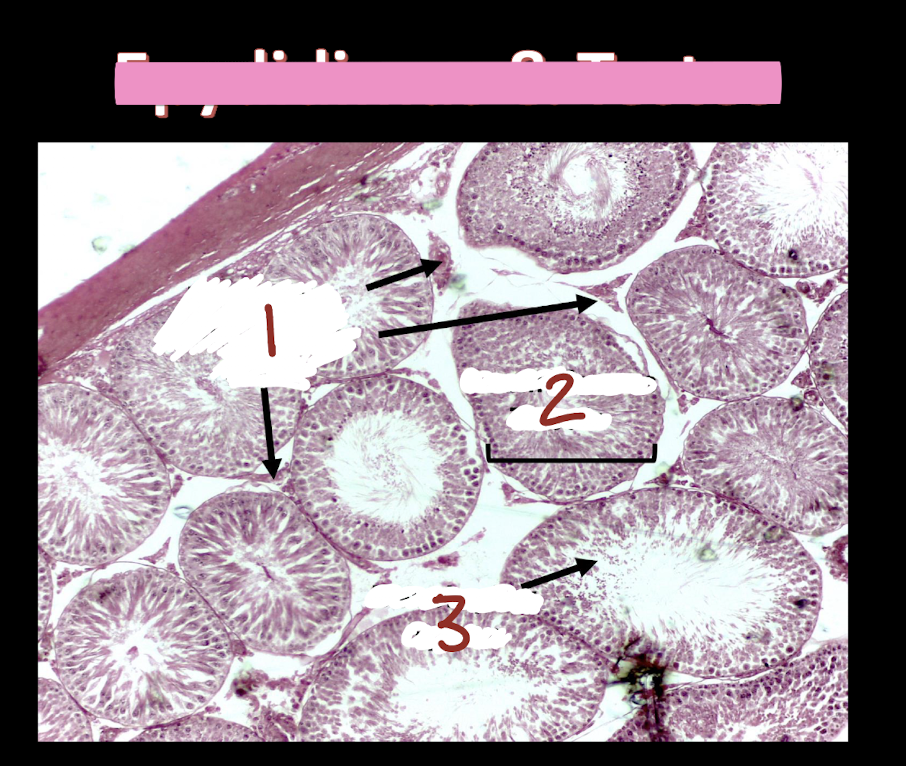
What is number 1?
Interstitial/Leydig Cells
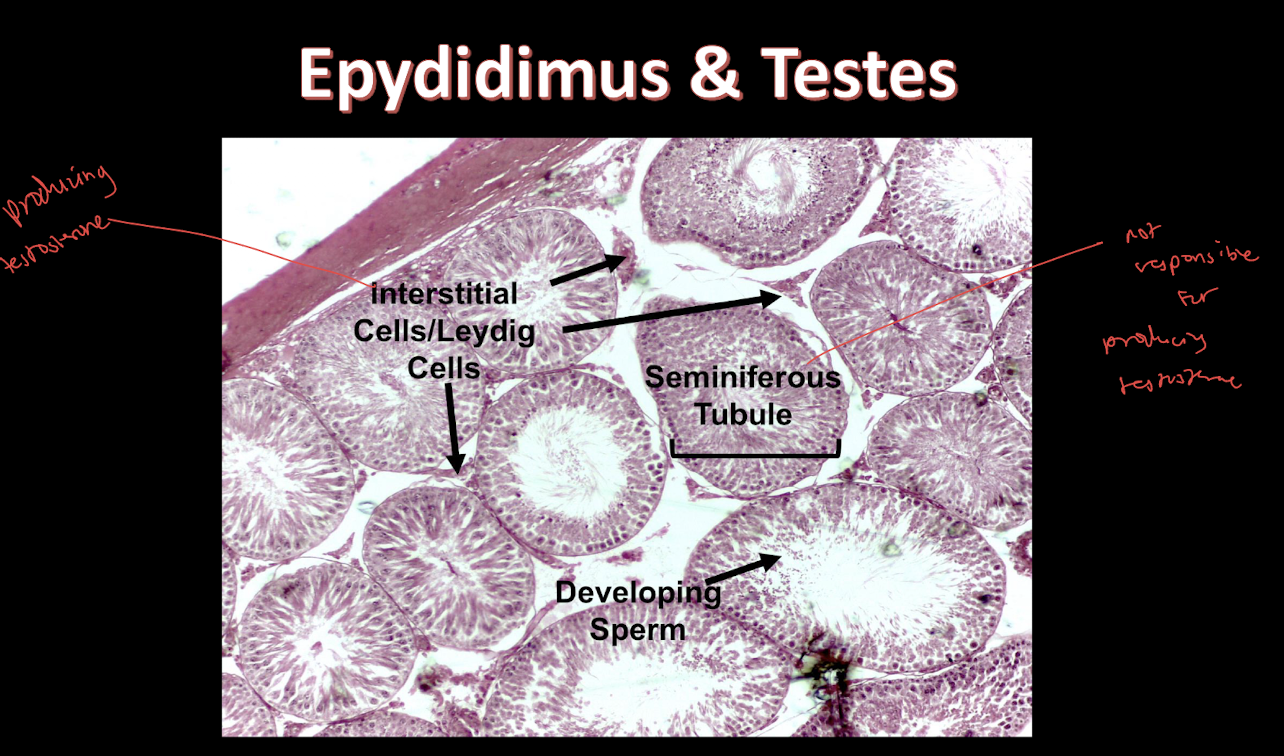
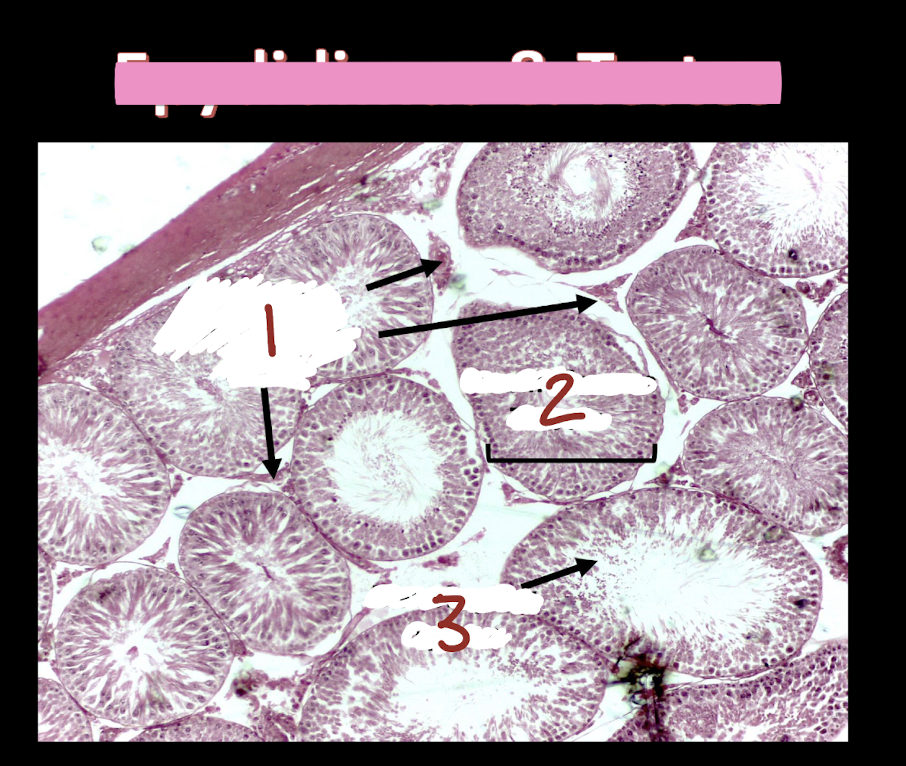
What is number 2?
Seminiforuous Tubule
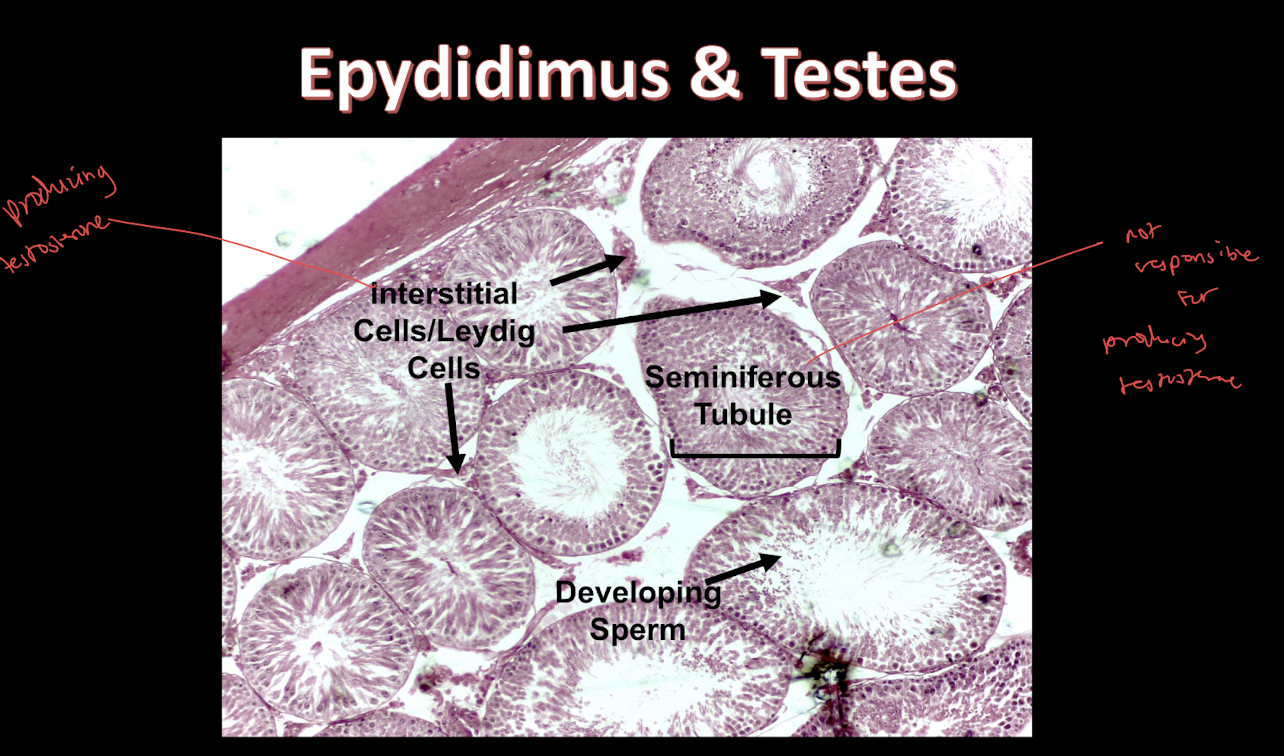
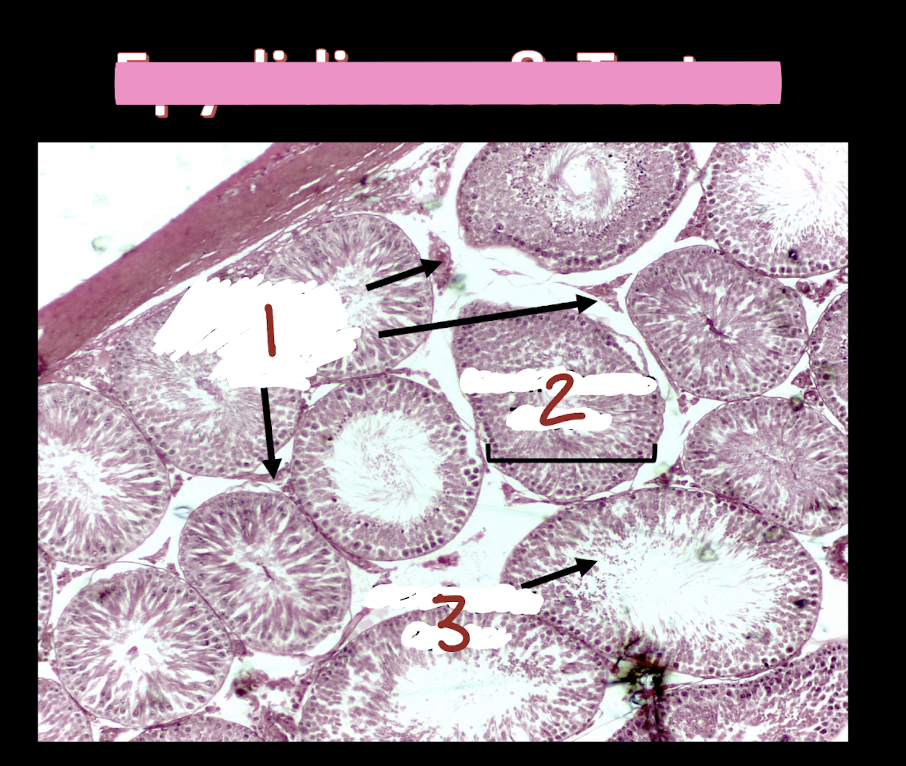
What can be seen with number 3?
Developing Sperm
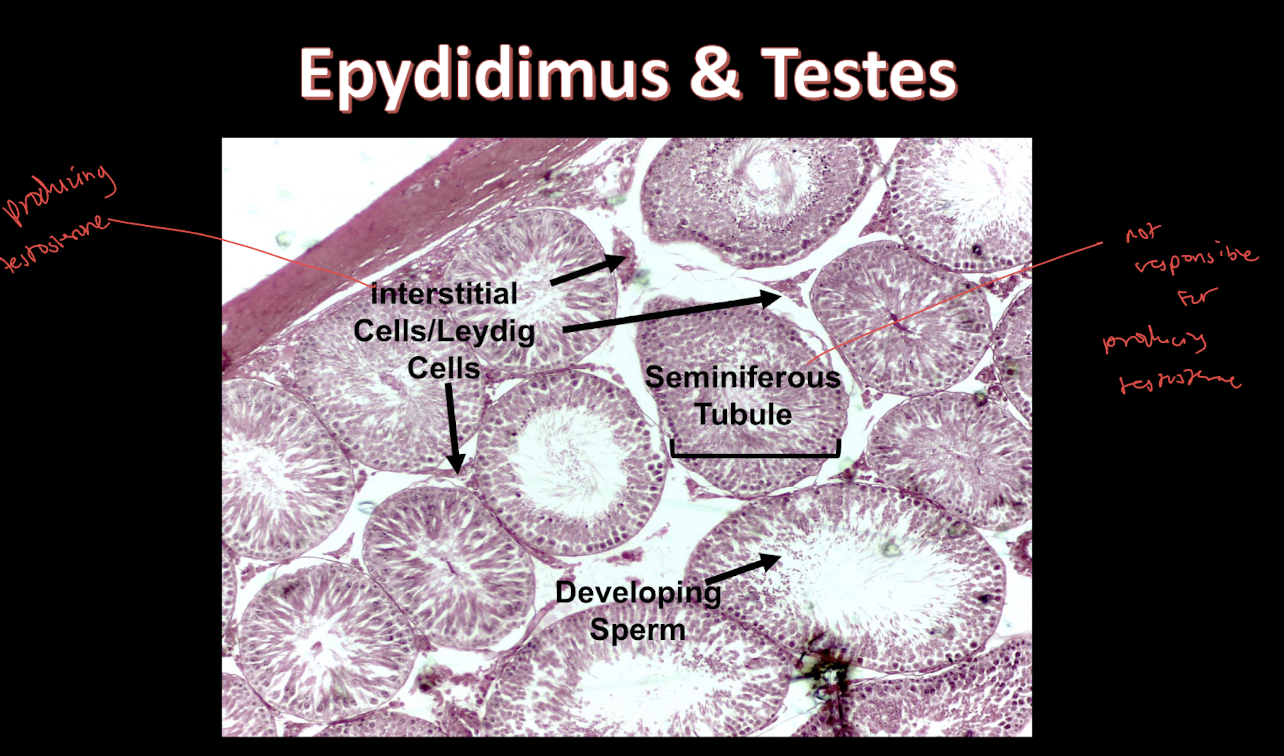
Testes: Developing Sperm
Interstitial cells produce testosterone which is required in large, localized concentrations for normal sperm development
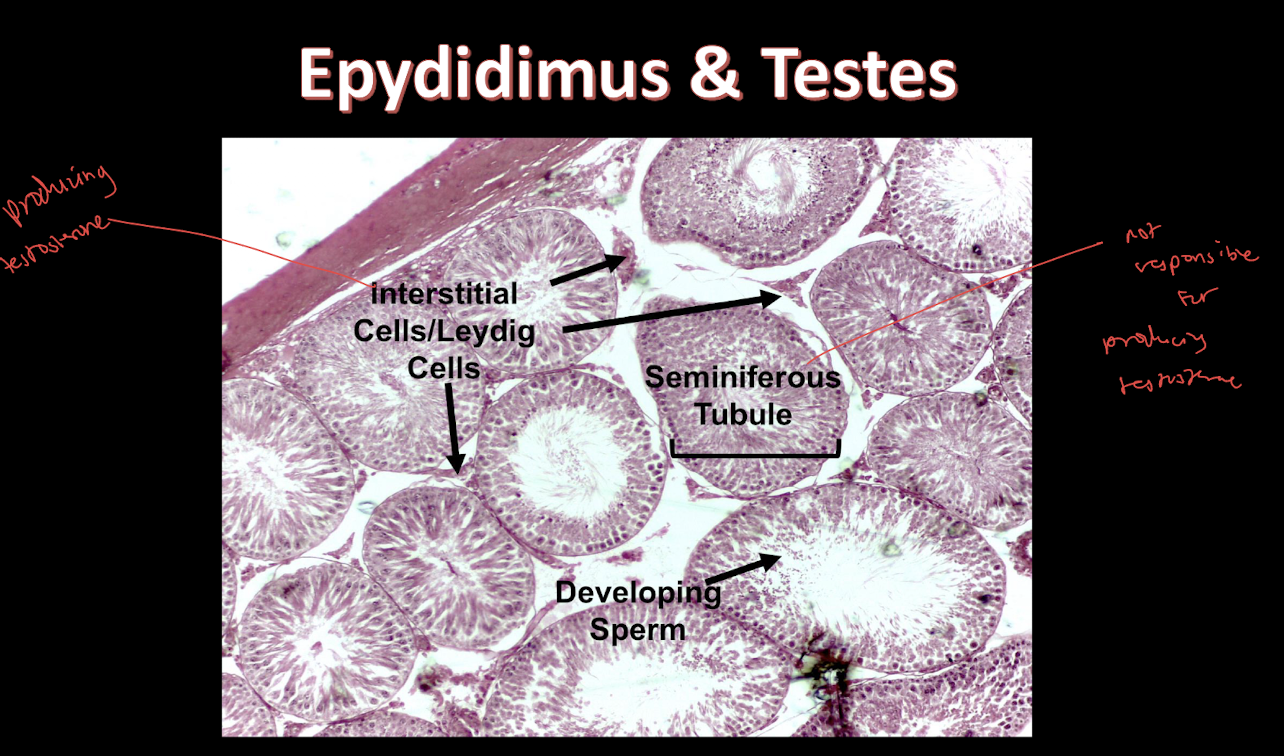
If interstitial cells produce less testosterone, what would you expect to happen to sperm development?
Sperm development would be impaired/reduced.
What is the main function of developing sperm cells?
They are developing male gametes that will eventually become mature sperm.
Discussion: Why would anabolic steroid/testosterone abuse cause the testes to shrink?
High external testosterone causes negative feedback on the hypothalamus and anterior pituitary → decreased GnRH and LH → reduced stimulation of the testes → reduced normal testicular activity and testicular shrinkage.
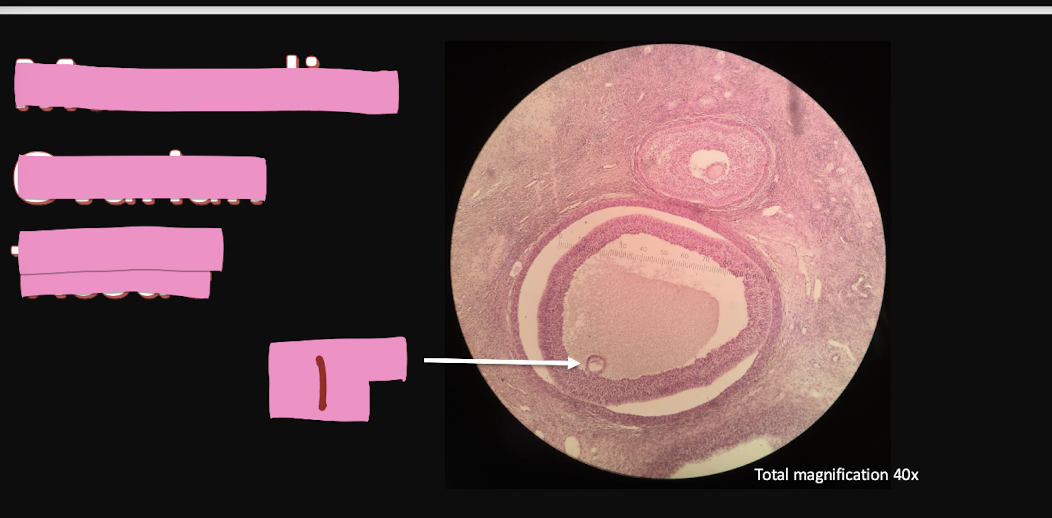
What is this an image of?
Mammalian Ovarian Tissue
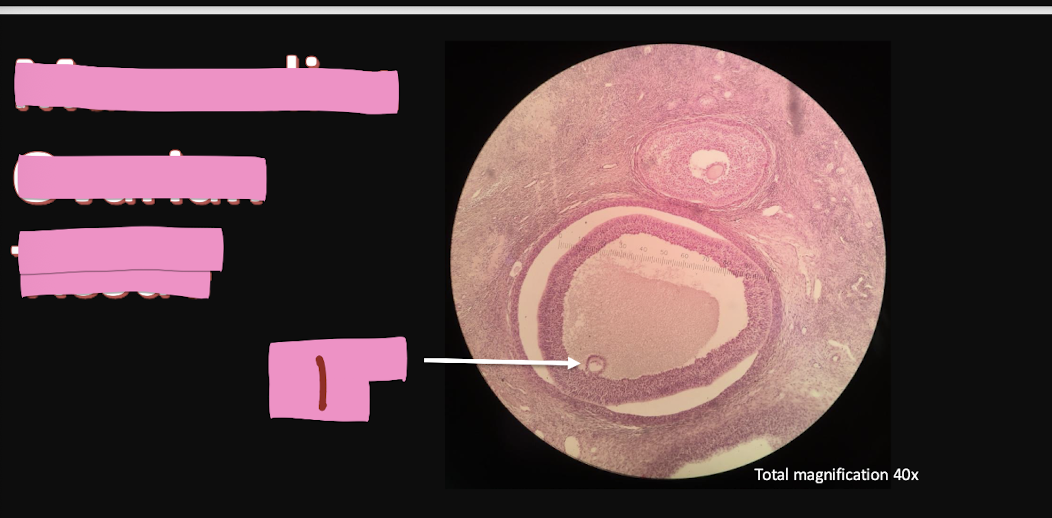
What is number 1?
A developing oocyte.
within an ovarian follicle
What is the function of a follicle?
It surrounds and supports a developing oocyte.
What does HPO axis stand for?
Hypothalamus–Pituitary–Ovary axis.
What hormones are involved in the HPO axis?
GnRH, FSH, LH, estrogen, and progesterone.
What does the hypothalamus release in the menstrual cycle?
GnRH
What does GnRH stimulate the anterior pituitary to release?
FSH and LH.
What do FSH and LH act on?
The ovaries.
What hormones are produced by the ovaries?
Estrogen and progesterone.
During most of the menstrual cycle, what type of feedback occurs?
Negative feedback.
During ovulation, what type of feedback occurs?
Positive feedback.
What is the major difference between feedback during ovulation and the rest of the cycle?
During most of the cycle, ovarian hormones inhibit the hypothalamus/pituitary (negative feedback). Near ovulation, high estrogen stimulates the hypothalamus and pituitary (positive feedback), producing the LH surge.
What happens during positive feedback leading to ovulation?
High estrogen stimulates the hypothalamus/pituitary → increased GnRH/LH signaling → a large LH surge → ovulation
What was the purpose of the rat hormone experiment?
To identify which unknown hormone each rat was treated with using changes in organ weights.
How many treatments were included in the rat experiment?
7 total: 1 control and 6 hormone injections.
What six hormones were used as treatments?
TRH, TSH, ACTH, cortisol, testosterone, and LH.
Why is the control rat important?
It provides the normal baseline organ weights for comparison.
Why were both normal and castrated rats used?
To help distinguish hormone effects involving the testes/testosterone pathway.
What general pattern would suggest an unknown hormone is ACTH?
Increased adrenal gland size/weight, because ACTH stimulates the adrenal glands.
What general pattern would suggest an unknown hormone is TSH?
Increased thyroid gland size/weight, because TSH stimulates the thyroid gland.
What general pattern would suggest an unknown hormone is LH?
Increased effects associated with testicular stimulation, especially in an intact rat.
What general pattern would suggest an unknown hormone is testosterone?
Increased male reproductive effects, but negative feedback may reduce pituitary stimulation.
What general pattern would suggest an unknown hormone is cortisol?
Reduced thymus size/activity, because chronically elevated cortisol suppresses thymus activity and immune function.
What general pattern would suggest an unknown hormone is TRH?
Increased thyroid-pathway stimulation because TRH stimulates the anterior pituitary to release TSH.
If a hormone causes major reproductive-organ changes in an intact rat but those effects are absent in a castrated rat, what does that suggest?
The hormone's effects likely depend on the testes and/or testosterone.