Oxygen therapy - Skills module
 Call Kai
 Learn
Learn Practice Test
 Spaced Repetition
 Match
Match Flashcards
 Knowt Play
1/57

There's no tags or description
Looks like no tags are added yet.
Name | Mastery | Learn | Test | Matching | Spaced | Call with Kai | Chat |
|---|
No analytics yet
Send a link to your students to track their progress
58 Terms
What does ADPIE stand for?
A = Assessment
D = Diagnosis
P = Planning
Implementation
E = Evaluation
Assessment phase of the nursing process?
During the assessment phase, the nurse collects and verifies data to formulate a database reflecting the client's problems and concerns.
Diagnosis phase of the nursing process?
During the diagnosis phase, the nurse analyzes and interprets data gathered from the nursing assessment to formulate a nursing diagnosis, which in this case is impaired gas exchange.
Planning phase of the nursing process?
During the planning phase, the nurse determines client outcomes, establishes priorities, and identifies nursing interventions.
Implementation phase of the nursing process?
During the implementation phase, the nurse carries out the identified nursing interventions.
Evaluation phase of the nursing process?
During the evaluation phase, the nurse determines whether the planned client outcomes have been met and revises the plan of care if indicated.
When is oxygen therapy indicated
When patients are at risk of developing hypoxia such as having low blood oxygen levels (hypoxemia)
patients with cardiac conditions
respiratory illness
patients in pain or sedation following surgery
Hypoxia symptoms
Vary depending patient’s health & health history, age, current disease process but may include the following:
Symptoms of early stages of hypoxia
restlessness
anxiety,
confusion
increased heart rate,
elevated blood pressure
increased respiratory rate
Dyspnea / shallow breathing
Symptoms of late stages of hypoxia
decreased activity level
decreased level of consciousness
hypotension
bradycardia
metabolic acidosis
cyanosis (bluish discoloration of the skin)
what are the symptoms in the chronic stage of hypoxia
clubbing of fingers and toes
peripheral adema
right-sided heart failure
oxygen saturation below 87%
respiratory acidosis
can oxygen help resolve dyspnea?
dyspnea is most often associated with other factors such as muscular issues affecting breathing. These must be addressed before jumping onto oxygen therapy.
How often should water be replaced in an oxygen nebulizer?
follow facility protocol, but usually when water is low or at least every 24 hrs
sterile water is best
What is hyperbaric oxygen therapy?
delivery of 100% oxygen using a pressurized chamber that allows increased oxygen absorption in the body up to 20 times the normal concentration
when is hyperbaric oxygen therapy usually indicated?
It is usually indicated for conditions like
carbon monoxide poisoning
decompression sickness,
severe tissue infection,
acute ischemia.
cerebral arterial gas embolus
radiation tissue damage
decompression sickness
osteoradionecrosis
necrotizing infections
crush injuries
complex wounds
Hyperbaric oxygen therapy promotes enhanced healing and recovery in these situations.
What assessment findings would indicate oxygen therapy is effective?
pulse oximetry
arterial blood gas analysis
pulmonary function test
ECG tracings
physical examination findings
functional status
MAY NOT be too effective when treating COPD exercise tolerance
may help exercise duration and performance when involving cystic fibrosis
Signs of oxygen toxicity
Affects the central nervous system (CNS) and pulmonary system.
Pallor (paleness)
anxiety
sweating
nausea
vomiting
seizures
muscle twitching
vertigo
tinnitus
hallucinations
visual changes
respiratory changes
decreased consciousness
what would indicate the use of humidification in oxygen therapy?
flow rate equal to or more that 4 L/minute
(replace sterile waster every 24 hrs)
equipment for oxygen therapy
oxygen output/source/outlet (on the wall)
flow meter (attaches to oxygen source to control flow)
extension tubing
oxygen delivery device
how would you position the ball inside the oxygen flow meter when setting flow
align the middle of the ball with the corresponding line for the desired amount of oxygen
What goes into account when choosing an oxygen delivery device?
reason for the need of oxygen therapy
flow rate prescribed
length of treatment
what is FiO₂
fraction of inspired oxygen→ what the patient breathes in
oxygen concentration (%) per litter
1 L of oxygen (flow rate) = 24% oxygen concentration (FiO₂ )
to calculate FiO₂ you multiply the flow rate in liters by 4 and add 20
- example: 6 L x 4 + 20 = 44% FiO₂ =]
This is under normal circumstance. patient’s breathing depth and rate must also be considered, as they can affect the actual FiO₂ delivered to the patient.
Nasal Cannula oxygen range of flow rate
1- 6 L
most often used
usually 7- 14 feet long
has two small prongs that fit into the nostrils
variable sizes for various age groups

When is nasal cannula usually used
when treating patients with minor/non critical breathing problems or those not tolerating a mask
doesn’t require humidification unless flow rate exceeds 4 L

Simple face mask
holes allow for 75% of inspired air to come from outside the mask
used for moderate flow rate in a short period of time
NOT be used with rates lower than 5 L due to carbon dioxide build-up.
consider humidification
simple face mask range of oxygen flow rate
5-10 L of oxygen per minute

nonrebreather mask
Mask fitted with one-way inhalation and exhalation valves so that al exhaled gas is vented out and inhaled gas comes only from a reservoir connected to the mask
used to deliver high flow rates & high oxygen concentration
typically used in emergencies
has vents on each side covered by flaps to prevent breathing in room air
reservoir bag is inflated with pure oxygen (nearly 100%)
do not allow bag to deflate. risks patient breathing in carbon dioxide
Non-breather face mask flow rate
10-15 L
maintaining reservoir bag 2/3 full
(80-95% FiO₂)
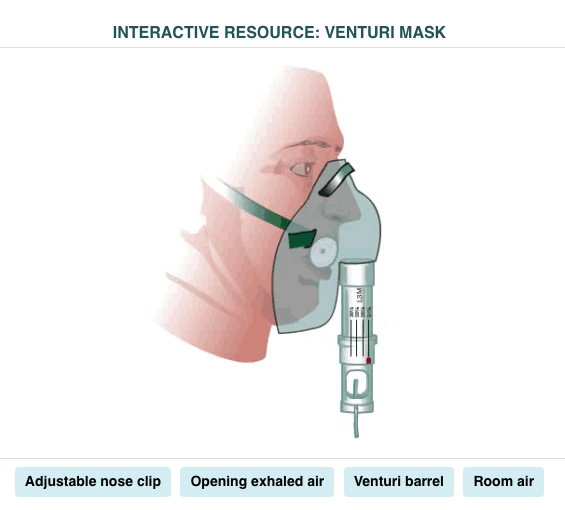
Venturi Mask
used for the critically ill
most commonly used for COPD patients
MOST ACCURATE FORM OF OXYGEN DELIVERY
require specific concentrations of oxygen
has holes on side of mask to allow exhaled air to escape
CO2 build-up is minimal
interferes with eating (nasal cannula can be used temporarily to allow patients to eat )
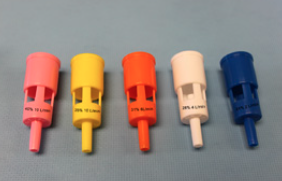
Venturi mask flow rate range
4-15 L of oxygen per minute,
delivering precise concentrations of oxygen.

Face tent
alternative for claustrophobic patients who cannot tolerate a standard mask.
often used after nasal and oral surgery
difficult to control precise FiO₂ levels.
flow rate of oxygen for a face tent
at least 10 L of oxygen per min

Oxygen hood
Canopy that provides control of temp, humidity, and oxygen concentration
for pediatric patients (usually)
treat airway inflammation, infection and croup
ensure enough open space around neck to allow carbon dioxide to escape
range of oxygen flow rate for Oxygen hood
10-15 L / min

Manual resuscitation bag
used to provide high concentration of oxygen through oxygen port
use prior to a procedure (suctioning, intubating)
during respiratory or cardiac arrest, or when having trouble breathing
inflates from ambient air/oxygen source only
range of oxygen flow rate for manual resuscitation bag
10-15 L per min

tracheostomy mask (or collar)
fits into the tracheostomy opening to deliver oxygen directly
neck straps secure mask in place
requires continuous humidification because it bypasses upper respiratory tract
T-tube (t-piece)
t-shaped adapter used to provide air or supplemental oxygen to an endotracheal or tracheostomy tube.
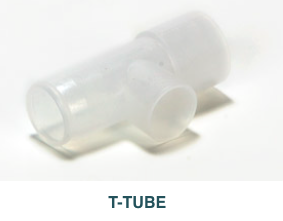
oxygen flow rate for a tracheostomy mask (collar)
& t-piece
10 L per min
Mechanical ventilation
Use of a ventilator to assist or replace spontaneous breathing by delivering positive-pressure breaths to the lungs. (negative pressure included but uncommon)
noninvasive ventilation
used to maintain positive airway pressure and to improve alveolar ventilation without the need of an artificial airway. the two types are
CPAP - one consistent pressure
BiPAP - 2 different pressures: higher during inhalation & lower during exhalation
CPAP
positive airway pressure device used often to treat sleep apnea preventing upper airway from collapsing
same pressure for both inspirations and expirations
water pressure 5-20 cm of water
BiPAP
provides two levels of pressure
higher pressure during inspiration
lower pressure during expiration
increase in the amount of air at the end of a normal expiration (FRC-functional residual capacity)
reduce airway closure and improved oxygenation
helps maintain airway/alveolar pressure

Compressed oxygen system
sometimes used in a home
supplied in nonliquid gas cylinder stored under high pressure measured in lbs per square inch (psi)

bulk liquid oxygen system
usually used in a hospital
stored outside the building at precise temperature
delivered as gas through wall outlets in patient rooms
Oxygen cylinders use
Cylinder key - used for opening and closing (or tightening neck)
regulator
pressure gauge (part of regulator) - indicates amount of oxygen left in tank(psi). red = empty
flow meter (part of regulator) - used to control flow rate (L per min) -lefty loosey (opens) —> righty tighty (closes)
oxygen delivery device -
available in different sizes and pressure capacities. Sizes come in form of letters and E is the most common for home use
safe use of oxygen tank
keep away from fire/heat source or potential for sparks
caution while using faulty electrical equipment (radios & electric razors)
no use of electric or friction toys with kids
display oxygen in use signs on doors
notify family memebers
keep tanks upright and secured with chain/appropriate holder
avoid tank falls or falls with tank lol
alway turn off tank after use
keep an eye on levels to ensure adequate amount remaining
keep tank in well ventilated area
in area free of clutter
NO SMOKING near
hypercapnia
a condition characterized by elevated levels of arterial carbon dioxide (CO₂) in the bloodstream, often resulting from inadequate ventilation. Symptoms may include headache, confusion, and shortness of breath.
hypoxemia
decreased levels of arterial oxygen saturation
-heart rate increases and arterial oxygen saturation falls below 94%
COPD oxygen therapy
NEVER GIVE HIGH OXYGEN - risk of respiratory depression and increased carbon dioxide retention.
placing patient in semi-fowler or high-fowler position helps facilitate lung expansion
keep SPO2 between 90-93% on the lower flow rate possible
high risk of hypoxemia, hypercapnia, and
turning, repositioning, coughing, and deep breathing will promote ventilation
what to do first of oxygen therapy does’t seem to be improving patient
check to make sure equipment is functioning properly, correct oxygen delivery device, and make sure flow rate is set correctly.
What to assess for while providing oxygen therapy
vitals including oxygen saturation
skin color
level of consciousness,
assess skin of skin breakdown or irritation of nose, ears, and under chin
consider padding pressure area to avoid skin problems
when is oxygen required at home
when patients cannot maintain oxygen saturation 88% or grater
COPD (emphysema or chronic bronchitis)
COPD
It is a chronic lung disease that causes persistent airflow obstruction, making it difficult to move air out of the lungs.
two main types are chronic bronchitis and emphysema.
emphysema (a type of COPD)
In emphysema, the walls between alveoli are destroyed & disappear, causing neighboring alveoli to merge into larger, abnormal air spaces.
Alveolar wall destruction → larger air spaces → less surface area for gas exchange (walls) → air trapping
Patient has difficulty getting air out
Chronic Bronchitis (a COPD condition)
A type of COPD characterized by a chronic productive cough for at least three months in two consecutive years. It involves inflammation of the bronchial tubes, leading to increased mucus production and airway obstruction.
Chronic bronchitis: excess mucus + airway inflammation → airways become narrowed/obstructed → difficult to move air out.
three types of oxygen therapy delivery systems for home use
compressed gas cylinders or tanks - 15 L/min (inexpensive)
liquid oxygen systems - 6 L/min (expensive) - need refill by patient
oxygen concentrators - 4-5 L/min (least expensive)
oxygen concentrators
takes room air and removes nitrogen, water, vapor, and hydrocarbons out of room air causing oxygen to concentrate.
concentration of oxygen decreases as flow rate increases (going too fast to concentrate)
require electricity outlet - plan for backup incase of outage
alarm goes off until the desired inside pressure is reached