Fall Finals Set-B: Revolution in Thought
0.0(0)
Studied by 12 people0%Exam Mastery
Build your Mastery score
 AP Practice
Supplemental Materials Call Kai
Call KaiCard Sorting
1/9

Earn XP
Description and Tags
Last updated 4:34 PM on 12/14/22
Name | Mastery | Learn | Test | Matching | Spaced | Call with Kai | Chat |
|---|
No analytics yet
Send a link to your students to track their progress
10 Terms
1
New cards
Confucius
* “Master Philosopher Kong” - Chinese
* Very strong willed in every day life as well as principles
* Compilation of his work in *Analects* influenced Chinese culture
* Didn’t dabble in religious ideology or concern himself with the structure of government
* Wanted to fill government with **Junzi** (superior individuals)
* People who were very educated and morally right
* Zhou dynasty literary works became center of Chinese education
* Very strong willed in every day life as well as principles
* Compilation of his work in *Analects* influenced Chinese culture
* Didn’t dabble in religious ideology or concern himself with the structure of government
* Wanted to fill government with **Junzi** (superior individuals)
* People who were very educated and morally right
* Zhou dynasty literary works became center of Chinese education
2
New cards
Confucian Values
* Developed during **Warring States** period in China
* People who possessed these traits would lead China by example (Junzi):
* Ren: Sense of humanity
* Li: Treating people but especially elders with respect
* Xiao: Respect, remembrance, & value of family
* “Five principle relationships”
* Mencius thought people were inherently good & needed policies that would allow them to be so
* Xunzi thought that people were inherently selfish & “bad” people could be transformed to be useful to society
* Women submit to their fathers and husbands
* Expected to manage the household
* People who possessed these traits would lead China by example (Junzi):
* Ren: Sense of humanity
* Li: Treating people but especially elders with respect
* Xiao: Respect, remembrance, & value of family
* “Five principle relationships”
* Mencius thought people were inherently good & needed policies that would allow them to be so
* Xunzi thought that people were inherently selfish & “bad” people could be transformed to be useful to society
* Women submit to their fathers and husbands
* Expected to manage the household
3
New cards
Daoism
* Developed during **Warring States** period in China; criticized Confucianism
* Created by Laozi who made the Daodejing
* Believed that by putting energy towards introspection & understanding nature society would eventually flow
* Dao: “the way of the cosmos”; not particularly positive or negative; what governs the world
* Wuwei: Disengagement from the affairs of world & living simply with nature
* No large form of government or kingdoms
* Created by Laozi who made the Daodejing
* Believed that by putting energy towards introspection & understanding nature society would eventually flow
* Dao: “the way of the cosmos”; not particularly positive or negative; what governs the world
* Wuwei: Disengagement from the affairs of world & living simply with nature
* No large form of government or kingdoms
4
New cards
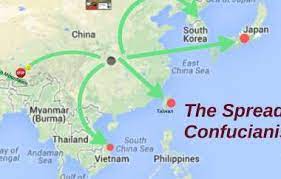
Neo-Confucianism
* **Song** **dynasty** supported Neo-Confucianism and tradition
* Took inspiration from **Buddhist** themes as well as original Confucianism
* Ex: Concept of the soul and connection to universe
* Zhu Xi created *Family Rituals* for specifics on proper personal and social harmony
* Women were contained to the domestic sphere & not allowed to remarry
* Shaped thought in east Asia as well as Korea, Vietnam, and Japan
* Took inspiration from **Buddhist** themes as well as original Confucianism
* Ex: Concept of the soul and connection to universe
* Zhu Xi created *Family Rituals* for specifics on proper personal and social harmony
* Women were contained to the domestic sphere & not allowed to remarry
* Shaped thought in east Asia as well as Korea, Vietnam, and Japan
5
New cards
Buddhism Beginning & Principles
* Siddhartha Gautama left his high military class (kshatriya in **India**) & life to search for holiness. After sitting under a bo tree for 49 days he became enlightened
* Became the Buddha (“the enlightened one'“)
* Preached that anyone could become enlightened - egalitarian
* Four Noble Truths:
1. Life is full of suffering
2. Suffering is caused by desire
3. To get rid of suffering you must get rid of desire
4. To eliminate desire you must follow the Noble Eightfold Path
1. This will lead to Nirvana
* Buddhism was popular with those in lower caste systems (Jati)
* Also due to use of vernacular tongues which increased accessibility
* Supported by Mauryan dynasty (Ashoka & supernatural conversion)
* Became the Buddha (“the enlightened one'“)
* Preached that anyone could become enlightened - egalitarian
* Four Noble Truths:
1. Life is full of suffering
2. Suffering is caused by desire
3. To get rid of suffering you must get rid of desire
4. To eliminate desire you must follow the Noble Eightfold Path
1. This will lead to Nirvana
* Buddhism was popular with those in lower caste systems (Jati)
* Also due to use of vernacular tongues which increased accessibility
* Supported by Mauryan dynasty (Ashoka & supernatural conversion)
6
New cards
Mahayana Buddhism
* Attracted artisans, **merchants**, & others in low Indian classes
* Bodhisattva (“an enlightened being”) helped others become enlightened
* Spread quickly through India to central Asia (China, Japan, & Korea), & southeast Asia (Burma & Thailand)
* Bodhisattva (“an enlightened being”) helped others become enlightened
* Spread quickly through India to central Asia (China, Japan, & Korea), & southeast Asia (Burma & Thailand)
7
New cards
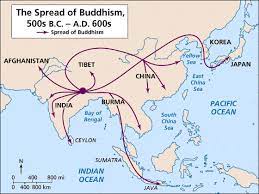
Spread of Buddhism
* Buddhism established first in oasis towns (rest stops) along the Silk Road from Buddhist merchants
* Han dynasty allowed foreign merchants (Indian & Parthian) to practice in China
* Took a hold in southeast Asia through merchants traveling sea lanes through the Indian Ocean
* Han dynasty allowed foreign merchants (Indian & Parthian) to practice in China
* Took a hold in southeast Asia through merchants traveling sea lanes through the Indian Ocean
8
New cards
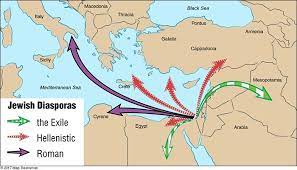
Judaism
* Abrahamic religion
* Messiah has yet to come
* Old Testament (Torah)
* Remained steadfast in their faith through all imperial regimes whether or not they were told to worship their emperors
* Women had to defer to their husbands, had more rights than most other women, & had an obligation to the home
* Jewish were exiled from Israel by Babylonians & moved to Roman Empire (around Mediterranean Sea)
* Messiah has yet to come
* Old Testament (Torah)
* Remained steadfast in their faith through all imperial regimes whether or not they were told to worship their emperors
* Women had to defer to their husbands, had more rights than most other women, & had an obligation to the home
* Jewish were exiled from Israel by Babylonians & moved to Roman Empire (around Mediterranean Sea)
9
New cards
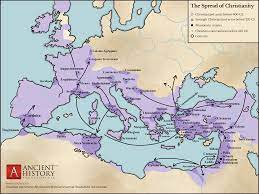
Christianity
* Abrahamic religion
* New Testament
* Women are made to be a helper to their husbands
* Appealing to oppressed people - semi egalitarianism
* Jesus of Nazareth (Christ) was their savior & who was executed by the Romans
* Paul of Tarsus spread the faith through the Roman Empire and Mediterranean basic
* Christianity migrated to Europe, northern Africa & Southwest Asia
* New Testament
* Women are made to be a helper to their husbands
* Appealing to oppressed people - semi egalitarianism
* Jesus of Nazareth (Christ) was their savior & who was executed by the Romans
* Paul of Tarsus spread the faith through the Roman Empire and Mediterranean basic
* Christianity migrated to Europe, northern Africa & Southwest Asia
10
New cards
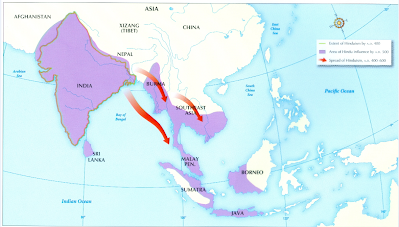
Hinduism
* Buddhism was declining in **India** because of persecution from Muslims which helped the spread of Hinduism
* The Veda is their holy text
* Main Beliefs:
* Polytheistic deities - Vishnu & Shiva
* Samsara: Reincarnation
* Karma: Universal law of cause and effect
* Everyone’s atman (“soul”) is part of a universal soul
* Women are respected but expected to take care of the household and uphold the religious beliefs
* Hinduism migrated to southeast Asia from sailors across the Indian Ocean
* The Veda is their holy text
* Main Beliefs:
* Polytheistic deities - Vishnu & Shiva
* Samsara: Reincarnation
* Karma: Universal law of cause and effect
* Everyone’s atman (“soul”) is part of a universal soul
* Women are respected but expected to take care of the household and uphold the religious beliefs
* Hinduism migrated to southeast Asia from sailors across the Indian Ocean