Geo 005 UCR Exam 2 review
 Call Kai
 Learn
Learn Practice Test
 Spaced Repetition
 Match
Match Flashcards
 Knowt Play
1/53

Earn XP
Description and Tags
Name | Mastery | Learn | Test | Matching | Spaced | Call with Kai | Chat |
|---|
No analytics yet
Send a link to your students to track their progress
54 Terms
the process by which subduction zone earthquakes cause tsunamis
An earthquake along a subduction zone happens when the leading edge of the overriding plate breaks free and springs seaward, raising the sea floor and the water above it. This uplift starts a tsunami.
how tsunami and wind-blown waves differ
Tsunami waves can have similar heights to large wind blown waves, but they carry a much larger volume of water, have much longer wavelength (distance from crest to crest), and travel much further inland.
what can causes a tsunami?
anything that displaces water
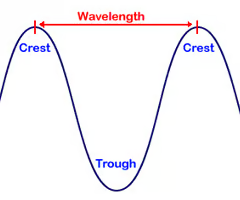
wavelength
can be defined as the distance between two successive crests or troughs of wave ; it is measured in the direction of the wave
----Distance between two crests
frequency
number of wave crests passing point A or point B each second
the characteristics of a tsunami wave in deep water and how it changes when it hits shallow water
In deep water, tsunami waves have long wavelengths (distance from crest to crest), low wave heights, and great speed (jetliner speed). When waves approach shore they slow down (car driving through campus speed), which causes back of waves to catch up the front, reducing wavelength, but increasing wave height.
when water waves will typically break
Tsunami waves (like all water waves) break when the wave height is about equal to the water depth
which types of earthquakes generally will and will not cause tsunamis
Distant earthquakes, local earthquakes, landslides, volcanic eruptions, asteroid impact will all cause tsunamis.
Earthquakes at transform faults will not cause tsunamis.
why being a good swimmer is probably not going to save you from a tsunami
One of the major hazards of a tsunami is the tremendous amount of debris the water picks up and carries inland, meaning you cannot swim though all the debris
how we know about past tsunamis in Japan and along the Washington/Oregon coast
Dozens of Tsunami Stones along the coast of Japan warn residents not to build below them. Some are more than 600 years old.
Our own tsunami stones are written in sand deposits along the entire coast of the Pacific Northwest
warning signs of a tsunami
1. Significant seismic shaking near the shore:
---20-40 min before tsunami hits -> head to high ground
2. The tide appears to go out very fast and far:
---5-10 min before the tsunami hits: get to higher ground fast
---Tsunami waves are often preceded by coastal waters being dragged out when the trough arrives before the crest
---The retreat should occur over about a 10 minute interval (wrong on San Andreas movie)
3. Massive white water heading toward you
----seconds before the tsunami hits: run!... and maybe look for shelter on a higher floor (but choose your building wisely)
4. Tsunami consists of 3-10 waves, and often the 2nd or 3rd wave is the largest — don't go back to the shore until you know for sure that no other waves are coming
----Hilo, Hawaii was destroyed by the third tsunami wave generated by the 1960 great M9.5 Chilean earthquake 6,500 miles away
---Second tsunami wave strokes following the 2011 Japan earthquake - you can notice the water from the first wave heading back to sea
about how many total people have been killed by tsunamis in the past 1000 years
several hundred thousand
what it might mean if you feel shaking near the shore in terms of tsunami potential
a tsunami could occur, but there is just not enough information to make that claim
---maybe 20-40 min away
why the sea level sometimes drops before a tsunami arrives
Tsunami waves are often preceded by coastal waters being dragged out when the trough arrives before the crest
why it is dangerous to return to the shore after a tsunami wave
Tsunami consists of 3-10 waves, and often the 2nd or 3rd wave is the largest — don't go back to the shore until you know for sure that no other waves are coming
reasons why so many people died around the Indian ocean due to the 2004 tsunami
It took many hours for the 2004 Sumatra tsunami to reach far shores. So why did so many people on those shores die?
1. Lack of education about tsunamis
2. Lack of an early warning system to detect tsunami
3. Lack of a system to alert the public if a tsunami is suspected or observed
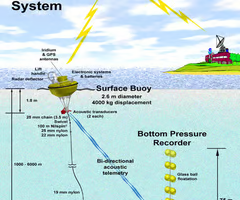
how the DART tsunami early warning system works
-The DART early warning system can send out tsunami warnings in as little as 15 minutes after an earthquake, including path and size estimates.
-The key is the pressure sensor on the seafloor.
----when its detected, the signal is sent to a body, which is sent to a satellite, which is sent to a data center
which process has the potential to cause the largest tsunamis
Asteroid Impact. biggest tsunami out of all of the possible causes
how the Hawaiian Islands generate tsunamis
Underwater landslides on the islands of Hawaii have caused numerous tsunamis
the most likely cause of a tsunami in the Atlantic ocean
underwater landslides in Canary Islands
what caused the largest tsunami runup in the past 100 years
Landslide avalanche in Lituya Bay, Alaska 1958 caused the highest tsunami run up ever recorded
the tectonic settings where the different types of volcanism are found
1. Mid-ocean ridges (include rifting process)
2. Subduction zones
3. Hot spots (like Hawaii)
----Often found far from plate boundaries
the mantle is not a subsurface ocean of magma
the mantle is hot, but not melted
what process will cause already hot, but not yet melted rocks, to melt
As pressure increases, the melting temperature increases. Decompression melting is when a decrease in pressure causes melting in very hot rocks. Pressure prevents melting.
what causes hot rocks to melt at each of the tectonic settings where volcanoes are found
subduction zones:
-As a subducting plate subducts, water also subducts, decreasing melting temp of mantle material just above the plate, causing it to melt, then magma rises, and eruption occurs
why hotspot volcanism leads to a chain of volcanoes
As the tectonic plate moves over the stationary hot spot, the volcanoes are rafted away and new ones form in their place. This results in chains of volcanoes, such as the Hawaiian Islands.
what the Ring of Fire refers to
An area around the Pacific Ocean where volcanoes sit on subduction zones
---Subduction zone volcanism occurs everywhere plates are subducted, causing the ring of fire around the pacific ocean
what viscosity is a measure of
how easily a fluid flows
low viscosity -> the pressure will push the lava through cracks and ooze out
High viscosity -> gas bubbles get trapped under surface and cause it to explode
how stratovolcanoes form
Stratovolcanoes are midsized volcanoes that form due to alternating layers of pyroclastic flows (explosive) and lava flows (effusive)
which combinations of magma viscosity and gas content lead to effusive and explosive eruptions
Viscosity/Gas Content LOW = effusive eruptions
Viscosity/Gas Content HIGH= explosive eruptions
what happens to dissolved gas when it rises near the surface
Pressure in surrounding rock is falling allowing gas to come out as bubbles
the four main types of eruptions and their relative explosiveness
least to greatest:
Hawaiian
Strombolian
vulcanian
pillian
about how many volcano-related deaths have occurred in the past 500 years
more than 250,000
the basic characteristics of the various volcanic hazards and which ones cause the most and least fatalities near and far from a volcano
Volcanic Ash
Pyroclastic Flow (most dangerous)
Lahars (mudflows)
Lava (least)
some of the basics about volcanic ash
Shards of volcanic glass left over from magma gas bubbles. Smaller than sand grains
Hard, abrasive, corrosive, electrical conducting, and does not dissolve in water
5 cm can kill crops
what a pyroclastic flow is
the heavier parts of an explosive eruption that run down the flank of a volcano at up to 200 mph, powered by expanding hot gases at over 1000 °C.
what a lahar is
(mudflows) are avalanches of ash, soil, rock, and water that can occur days or even months after an eruption
whether volcanic eruptions can be predicted? what are the precursors?
yes, but not straightforward
through...
• Earthquake frequency increases
• Harmonic Tremors
• Gas release (sulfur or carbon dioxide) or shuts off
• Rapid ground deformation (uplift or tilt)
• Surface temperature increase
what harmonic tremors are
A continuous release of seismic energy typically associate with the underground movement of magma
---Very different than earthquake
why the destruction of Pompeii in 79 AD is so interesting
• 2,000 people were killed.
• A description of the eruption was written down by Pliny the Younger.
• Pompeii was buried under more than 30 feet of ash and lost from history for 1500 years, but was preserved by the ash and dug out.
• The ash preserved the forms of the dead.
what Pliny the Younger was famous for
Pilian eruption a named after Pliny the Younger, who wrote down an unbelievable account of the eruption of mount vesuvius and the destruction of pompeii
what a volcano can and cannot look like before an explosive eruption
Cannot build up pressure with lava exposed at the surface
what the Volcano Explosivity Index (VEI) scale is a measure of
Based on ash and other rock ejected
the relative difference in size of eruptions at different VEI levels
Order of levels like earthquakes, small starts at 0-1, moderate 2-3, large 4-5, very large 6-7, super is 8
why geysers erupt but hot springs do not
geysers have chambers that build up pressure then erupt
how we know Yellowstone is a hotspot
By the trail of extinct volcanoes that lead up to it
many large explosive eruptions have occurred at Yellowstone in the last 2.1 million years
Yellowstone has had three extremely large eruptions in the past 2.1 million years, ranging from 280 to 2500 times bigger than the 1980 mt st helens eruption
- 2 were super eruptions
the evidence that indicates past large explosive volcanic eruptions in Yellowstone
size of the calderas, big pyroclastic flow, and the fact that ash covered a large part of the us from the eruptions
about how much of the United States was covered by ash from Yellowstone super-eruptions
50%
how the current size of the magma chamber under Yellowstone is measured
seismic network and seismicity
---When an earthquakes occur, seismic shock waves move slower through molten rock to find when and how much magma is there
how we monitor pressure changes in a magma chamber
Ground Deformation Monitoring:Instruments like GPS and tiltmeters measure ground deformation caused by magma movement beneath the surface. Swelling or deformation of the volcano can be an indicator of increased pressure from rising magma.
the global consequences of large explosive volcanic eruptions
Aside from significant ash fallout, the other major danger of large explosive volcanic eruptions is global cooling
---Explosive eruptions emit large amounts of ash and SO2
----SO2 reacts with oxygen and water vapor to create sulfuric acid droplets
----The ash and sulfuric acid droplets block sunlight (aerosols), causing global cooling (sulfuric acid droplets actually stay aloft longer)
can cause:
-triggering a significantly cooler cummerand a short growing season
-Starvation and disease from pyroclastic flows and ash fallout
-Observation from ice cores suggest ash caused a 6-10 year cooling of 3-5 C which may have triggered a 1000 year long ice age
---The ice age reduced the human population significantly
the global consequences of giant flood basalts
Super-eruptions are not the only global volcanic danger: giant floods basalts may have been responsible for mass extinctions
-Lava flows with volumes of 1000s time those of ordinary eruptions
-A single flow of over 1000 km 3 can occur of a period of a few years
-For comparison: Kilauea on Hawaii has produced just 1.5 km 3 in 16 years
-Many mass extinctions occurred about the times of the latest flood basalts
-Flood basalts often correspond with major extinction events
---Giant flood basalts might cause mass extinction because they can release large amounts of greenhouse gasses that can lead to global warming and acid rain
Tectonic settings where diff types of volcanoes are found
(1) mid-ocean ridges: shield volcanoes -> divergent
(2) subduction zones: stratovolcanoes -> convergent; oceanic & ocean plate creates an island arc, oceanic & continental plate creates an continental volcanic belt
(3) hotspots: continental caldera -> shield volcanoes