ANAT025 Unit 1 Lab List 2a (Cells)
 Call Kai
 Learn
Learn Practice Test
 Spaced Repetition
 Match
Match Flashcards
 Knowt Play
1/19

There's no tags or description
Looks like no tags are added yet.
Name | Mastery | Learn | Test | Matching | Spaced | Call with Kai |
|---|
No analytics yet
Send a link to your students to track their progress
20 Terms
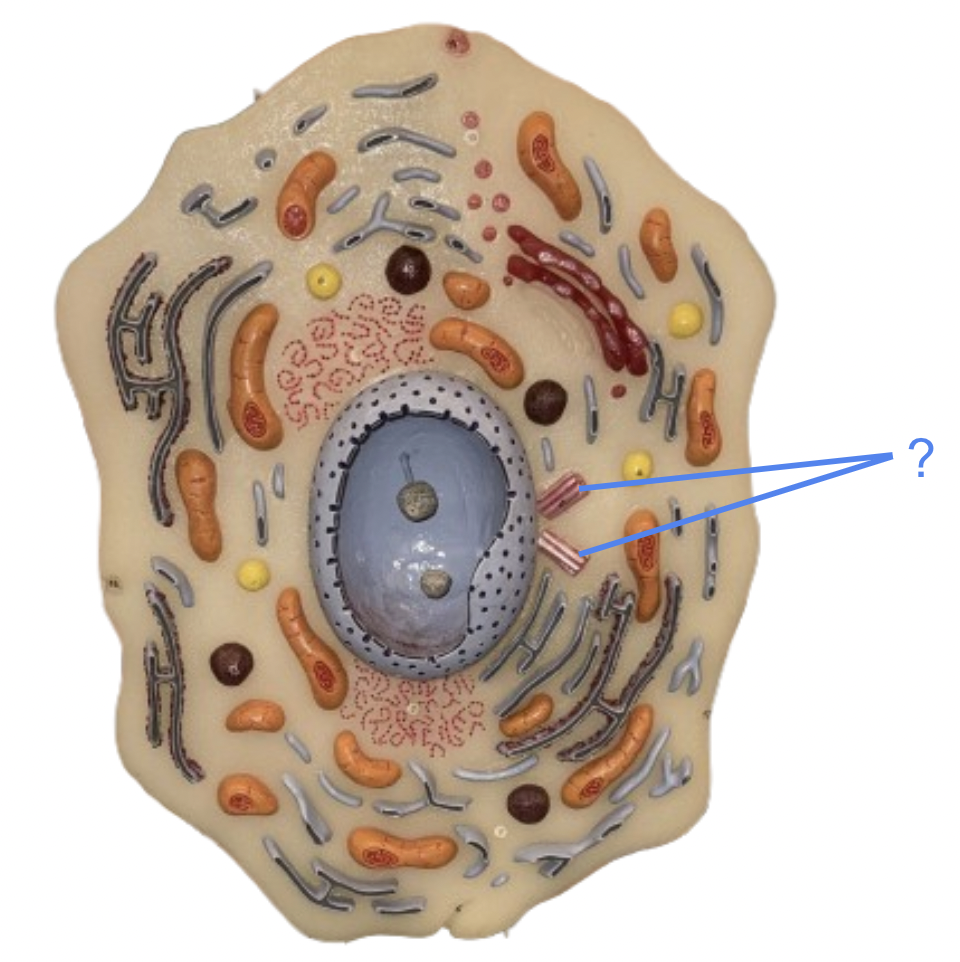
centrioles
can serve as the cellular origin point for microtubules extending outward as cilia or flagella or can assist with the separation of DNA during cell division
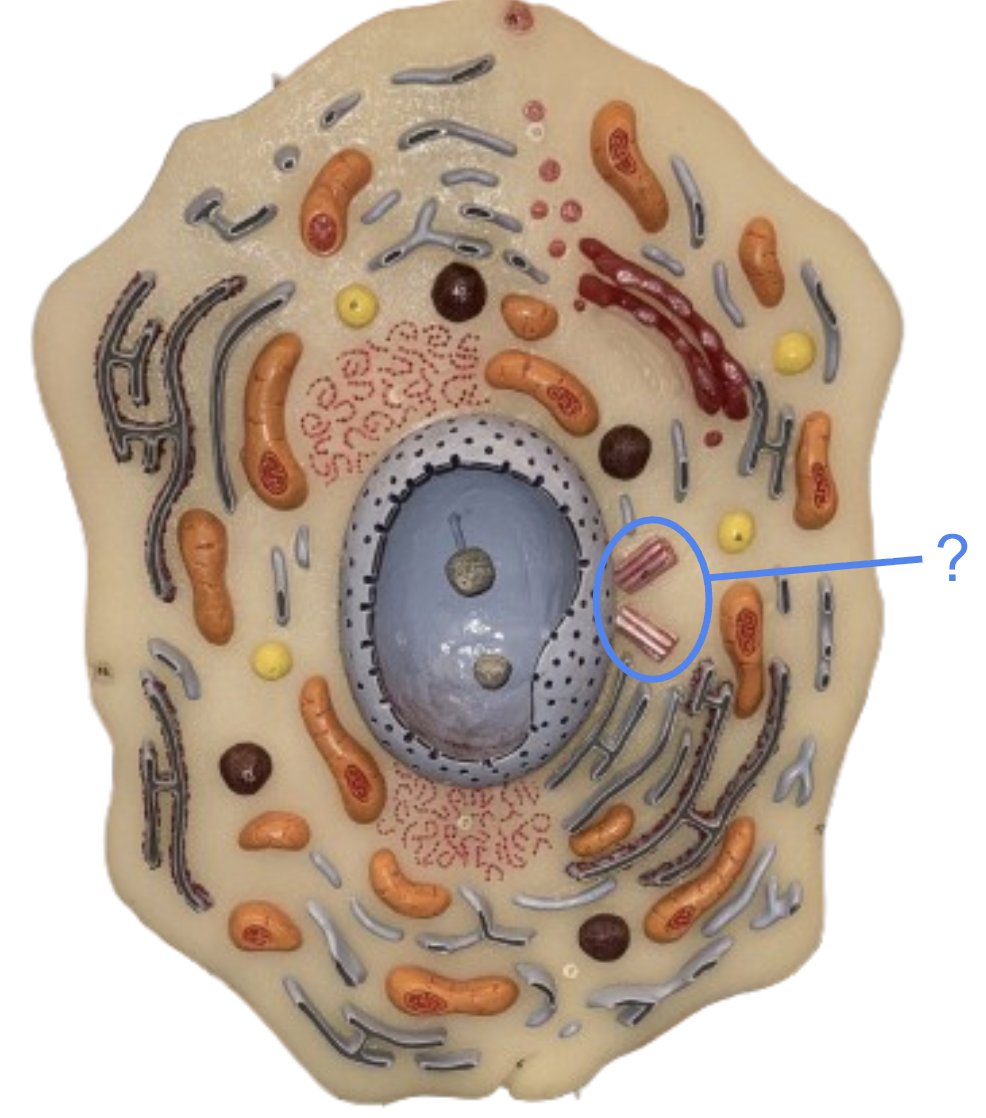
centrosome
a pair of centrioles together, which plays an important role in mitosis (cell division)
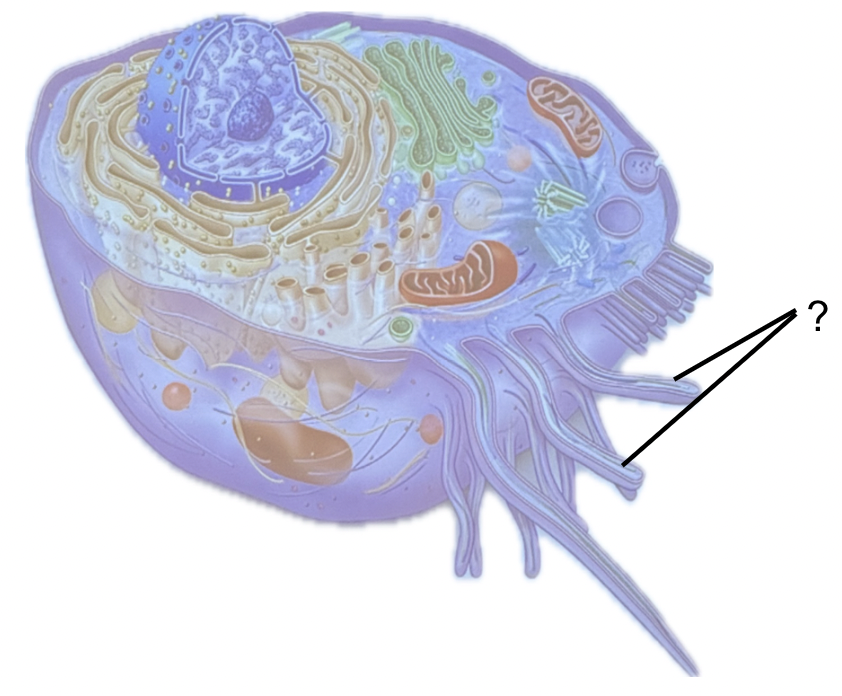
cilia
one of the hair-like appendages found on certain cells
they move rhythmically; they beat constantly, moving waste materials such as dust, mucus, and bacteria upward through the airways, away from the lungs and toward the mouth.
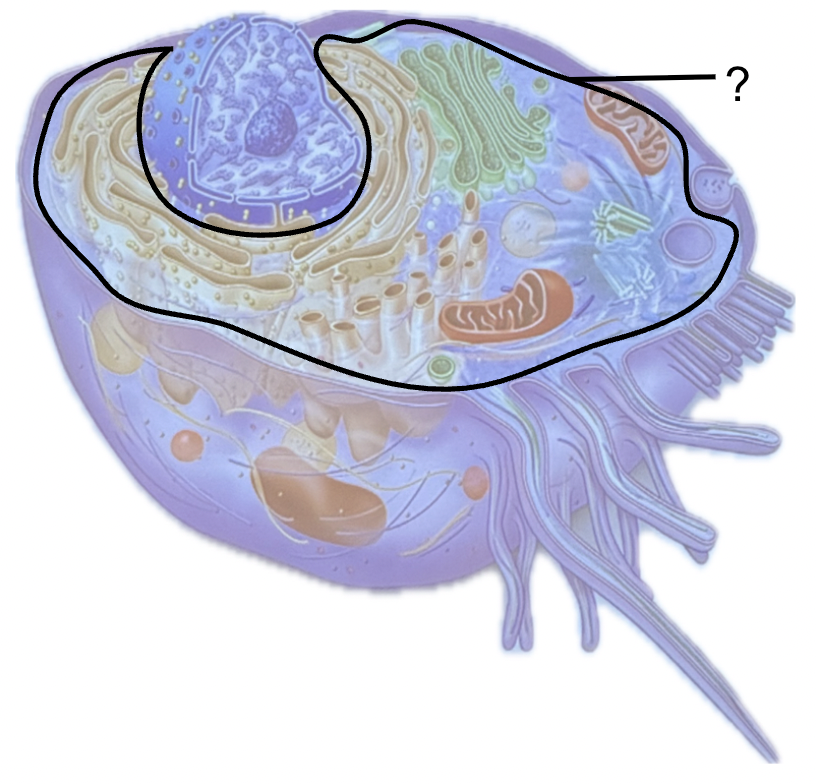
cytoplasm
everything inside the plasma membrane except for the nucleus
a water-based cellular fluid together with a variety of tiny functioning units called organelles (except nucleus)
The organelles and cytosol taken together, compose the cell’s cytoplasm
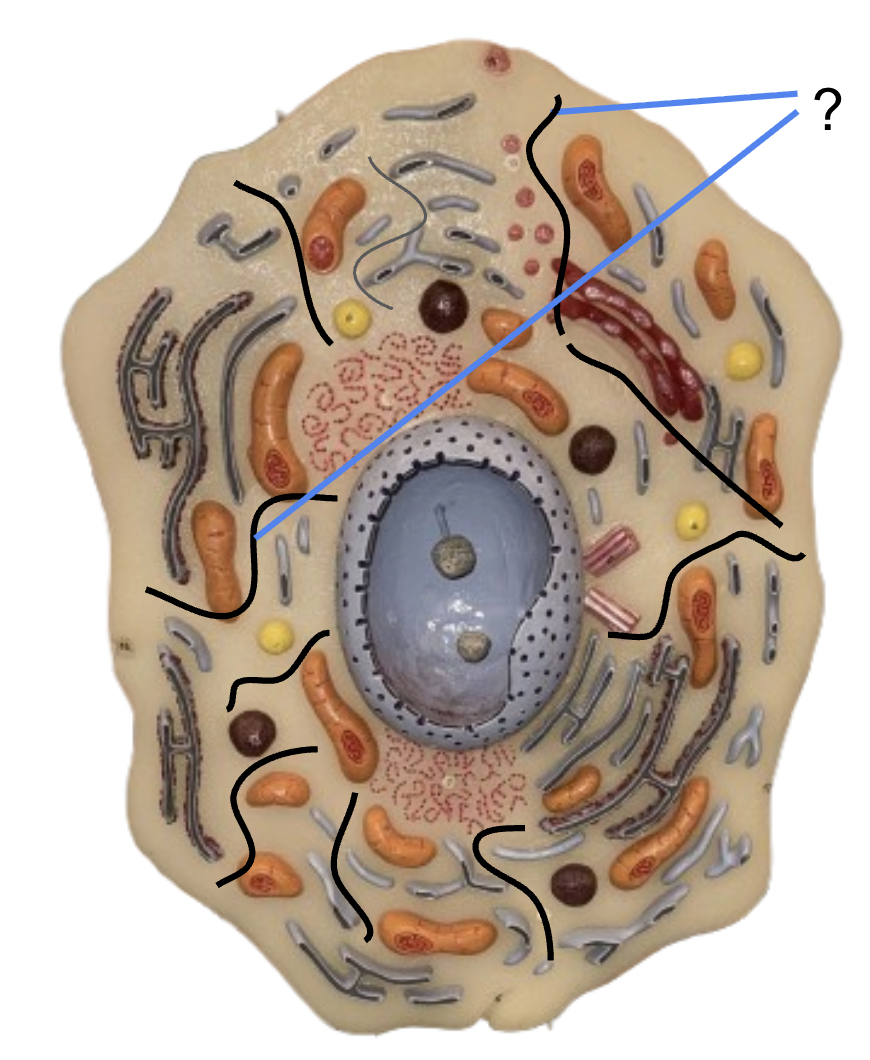
cytoskeleton
“skeleton” of a cell; formed by rod-like proteins that support the cell’s shape and provide, among other functions, locomotive abilities
many different shapes like microtubules, microfilaments, etc
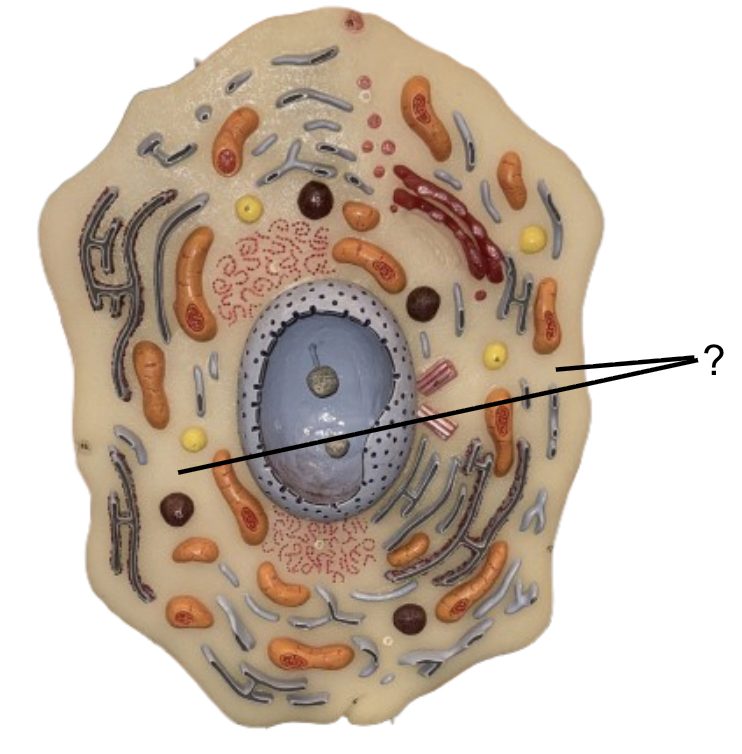
cytosol
fluid that makes up the space in the cell
the jelly-like substance within the cell, provides the fluid medium necessary for biochemical reactions
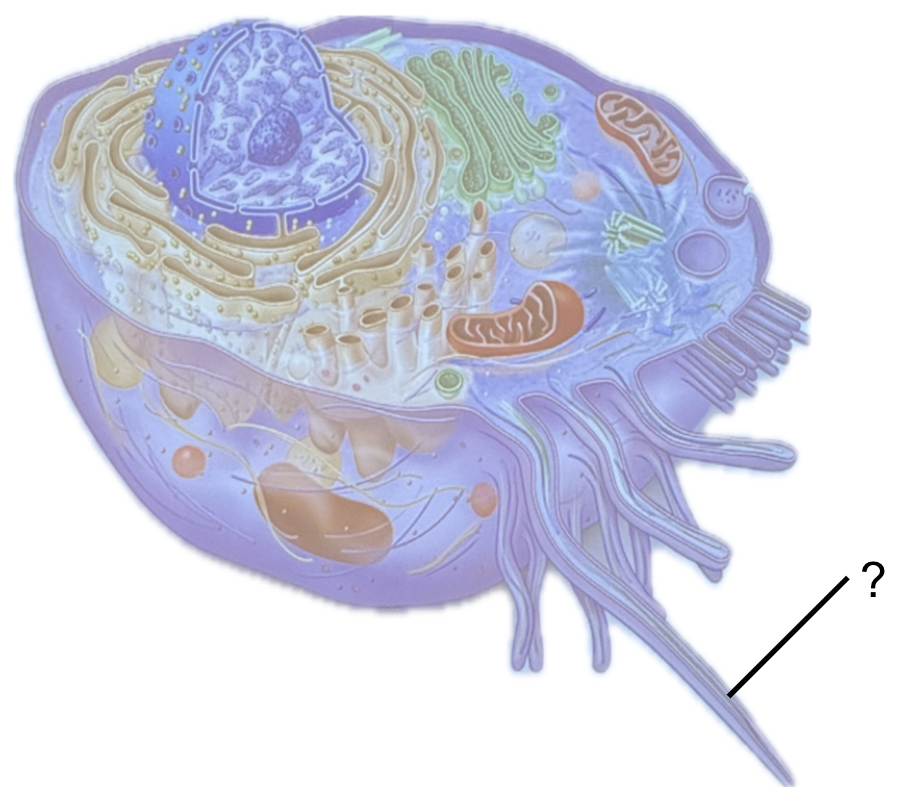
flagellum
an appendage larger than a cilium and specialized for cell locomotion. The only flagellated cell in humans is the sperm cell that must propel itself towards female egg cells
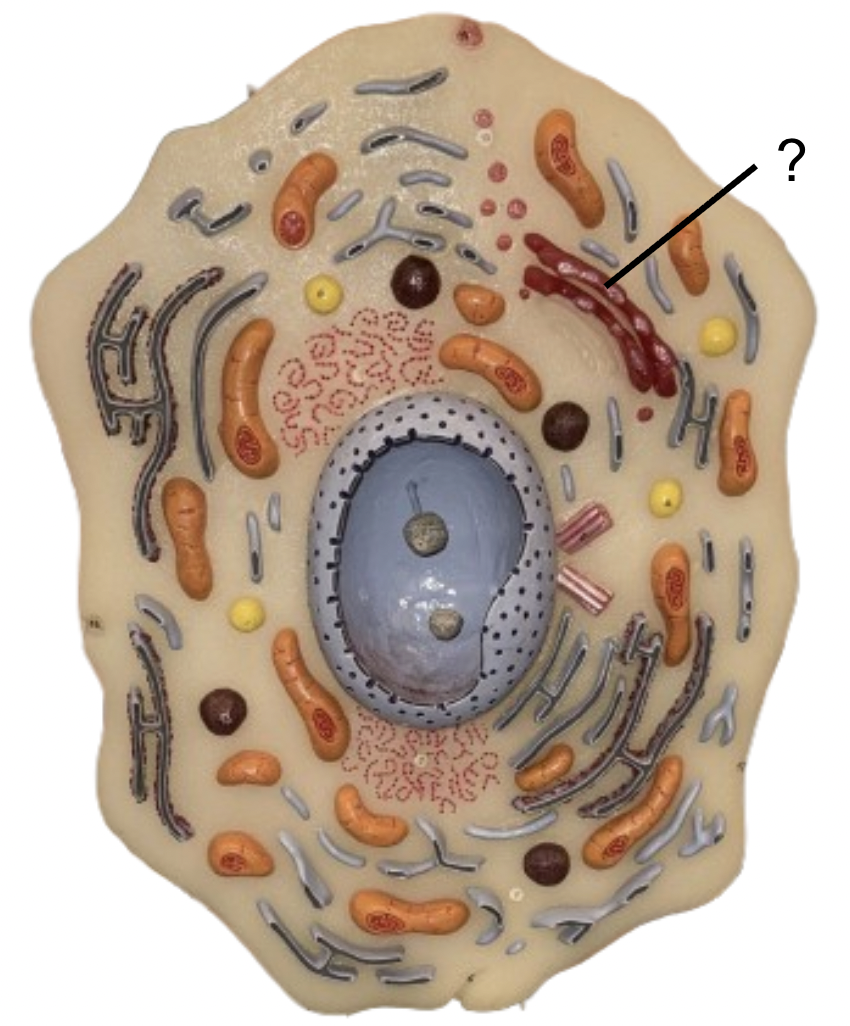
golgi apparatus
shipping center of the cell; if something made in the cell needs to get out of the cell, this organelle does that by wrapping a membrane around it to form a vesicle
cellular organelle formed by a series of flattened, membrane-bound sacs that functions in protein modification, tagging, packaging, and transport
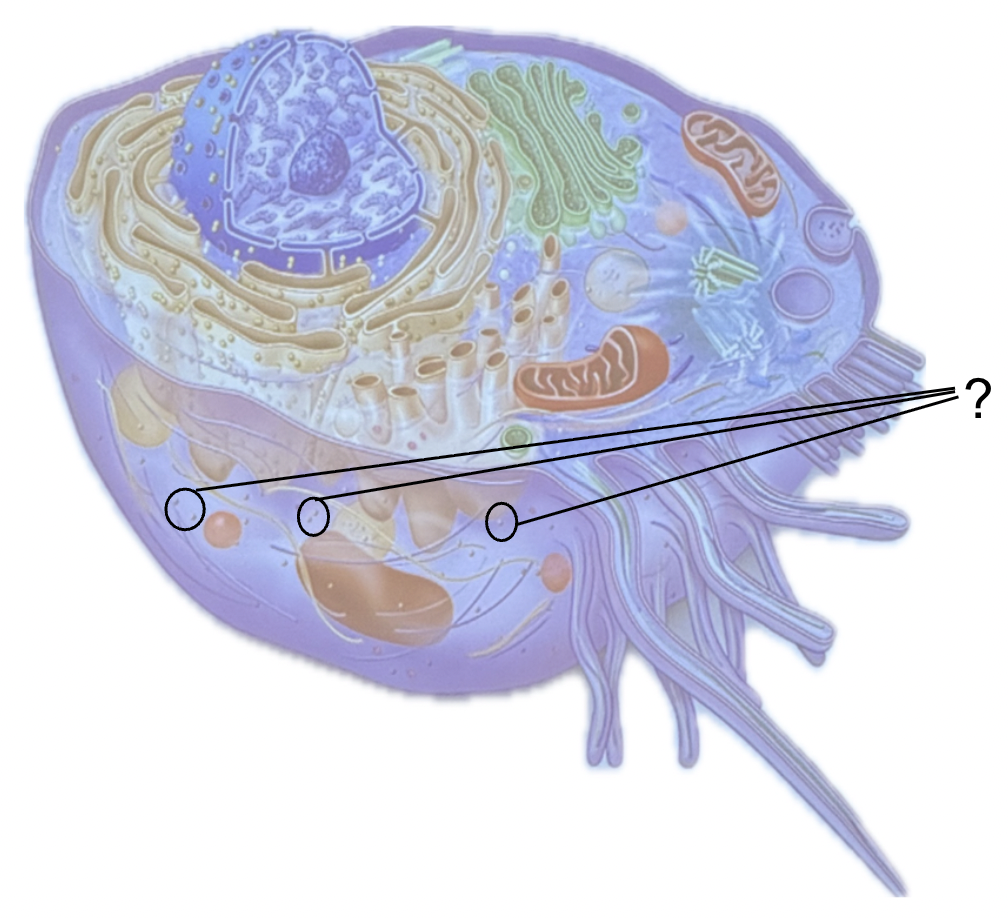
inclusions
chemicals dissolved in the cytosol like sugar, oxygen, gases, etc
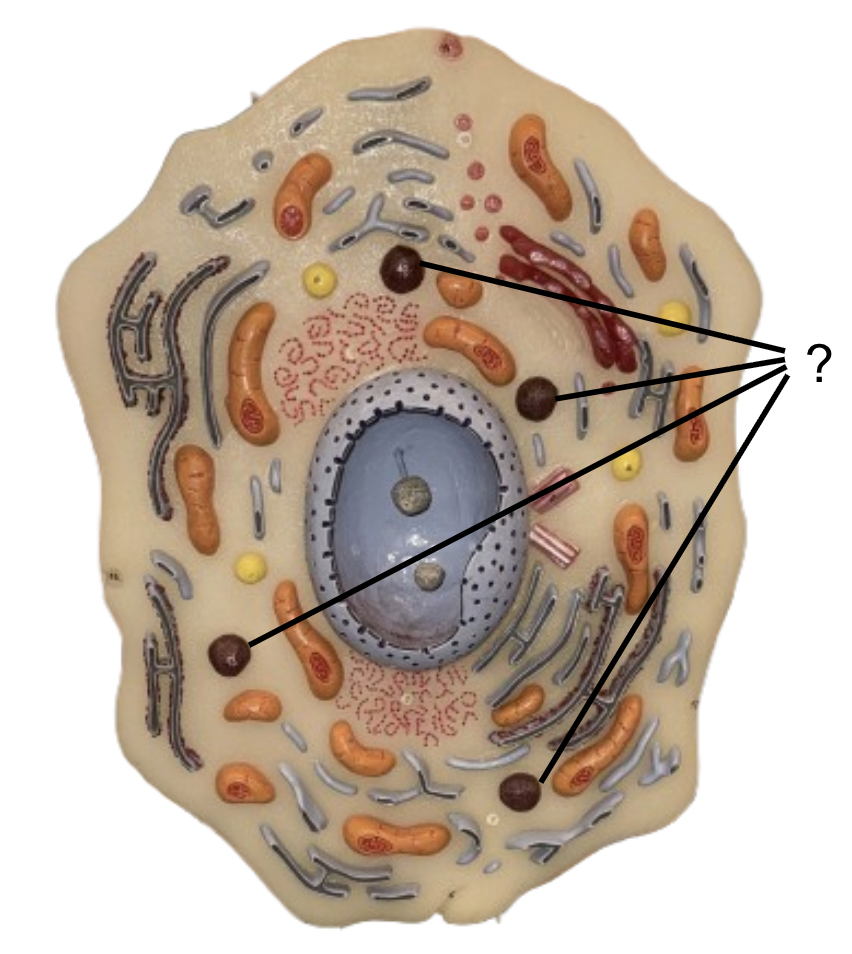
lysosome
breaks down subcellular materials
membrane-bound cellular organelle originating from the Golgi apparatus and containing digestive enzymes
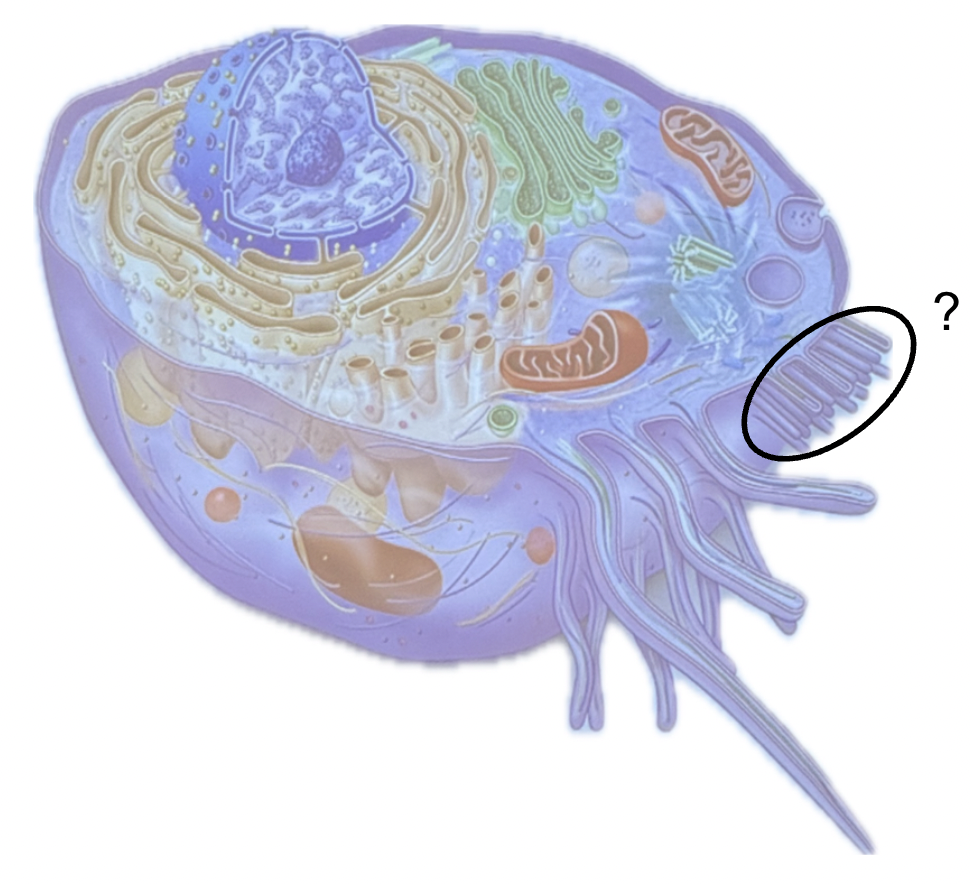
microvilli (sing. microvillum)
small projection of the plasma membrane of the absorptive cells of the small intestinal mucosa
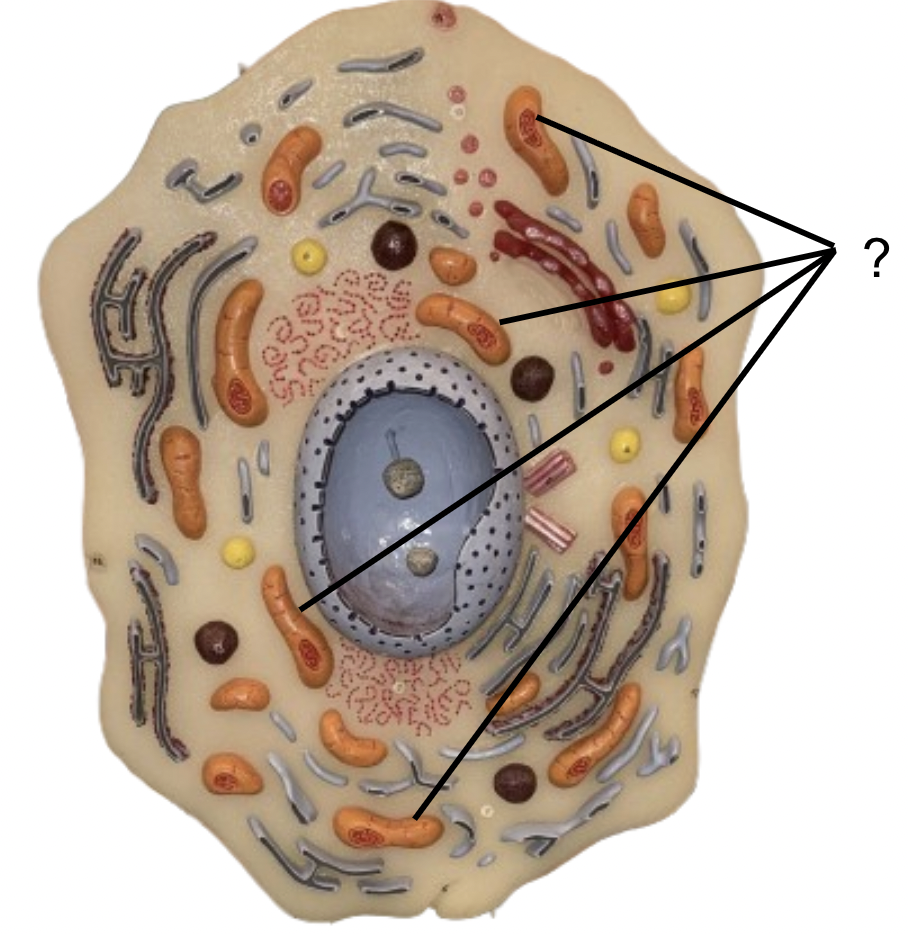
mitochondria (sing. mitochondrion)
one of the cellular organelles bound by a double lipid bilayer that function primarily in the production of cellular energy (ATP), which powers the activities that the cell needs to perform
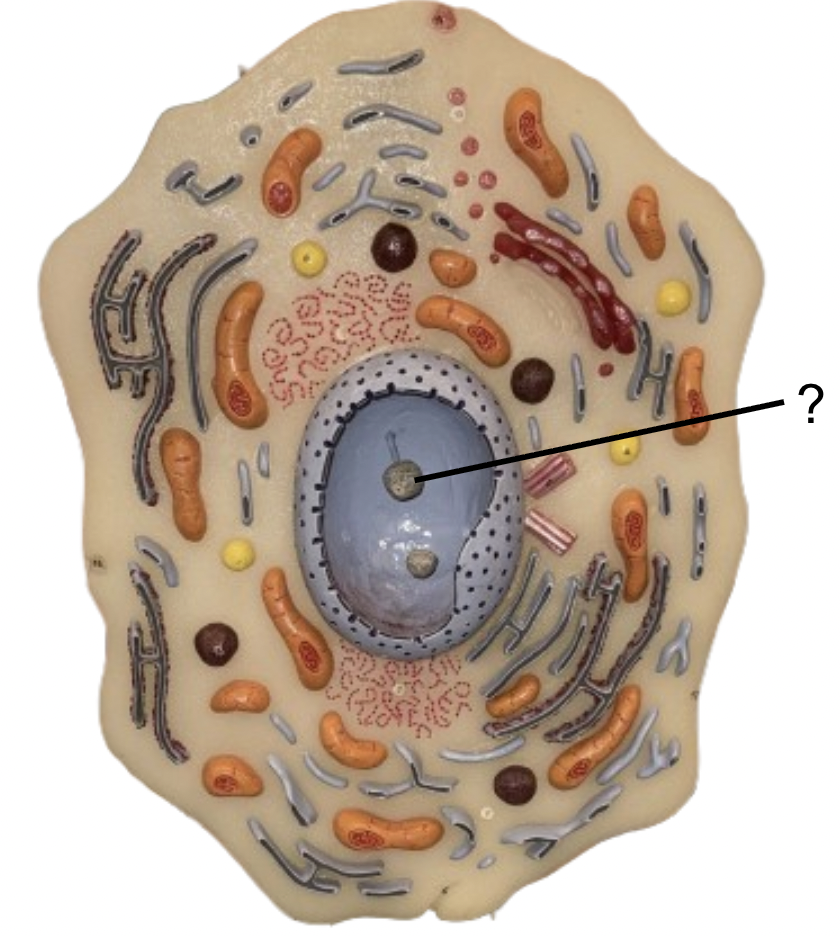
nucleolus
small region of the nucleus that functions in ribosome synthesis
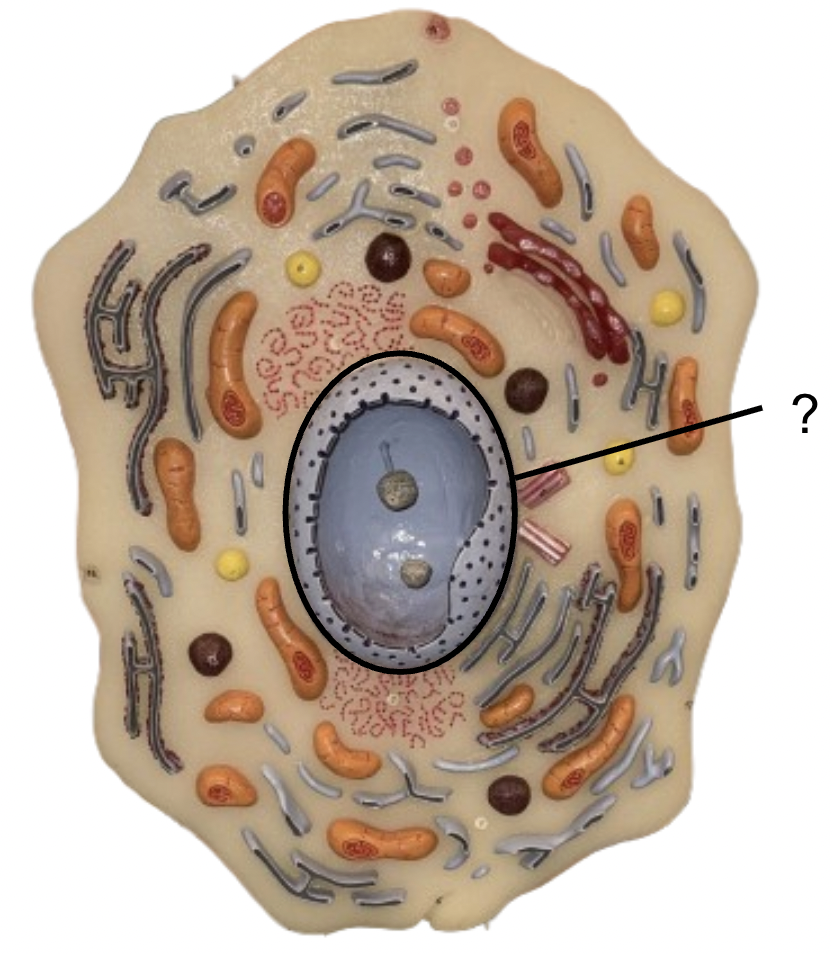
nucleus
cell’s central organelle; contains the cell’s DNA
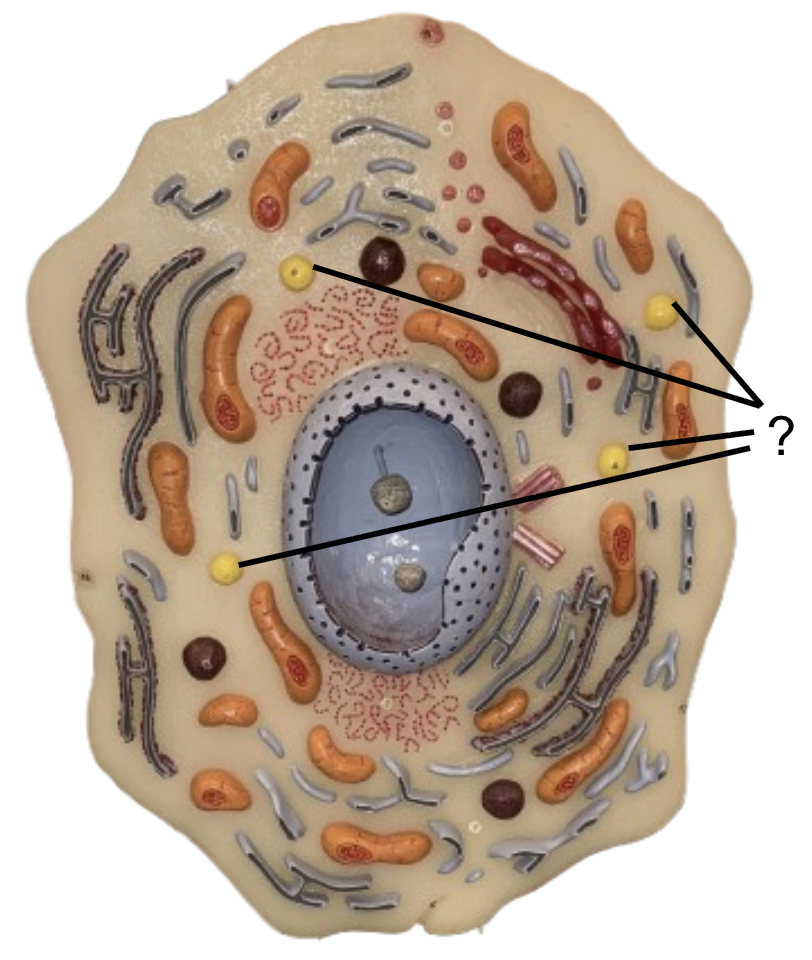
peroxisome
membrane-bound organelle that contains enzymes primarily responsible for detoxifying harmful substances
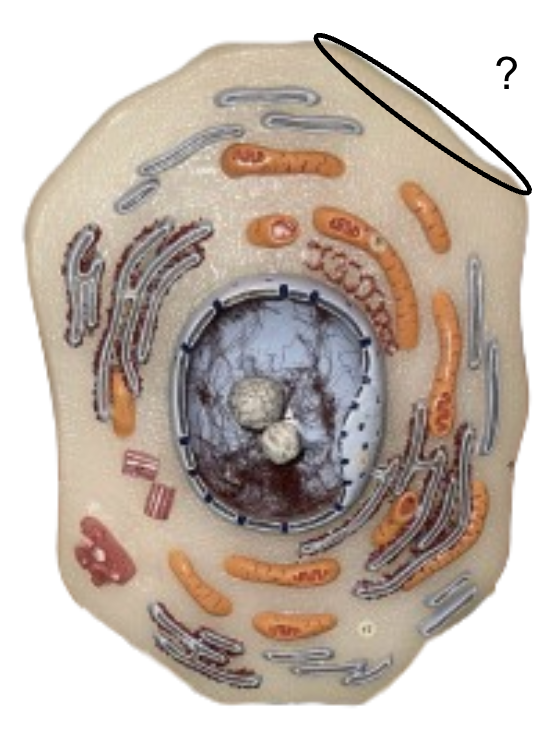
plasma membrane (aka phospholipid bilayer)
keeps the intracellular environment—the fluids and organelles—separate from the extracellular environment.
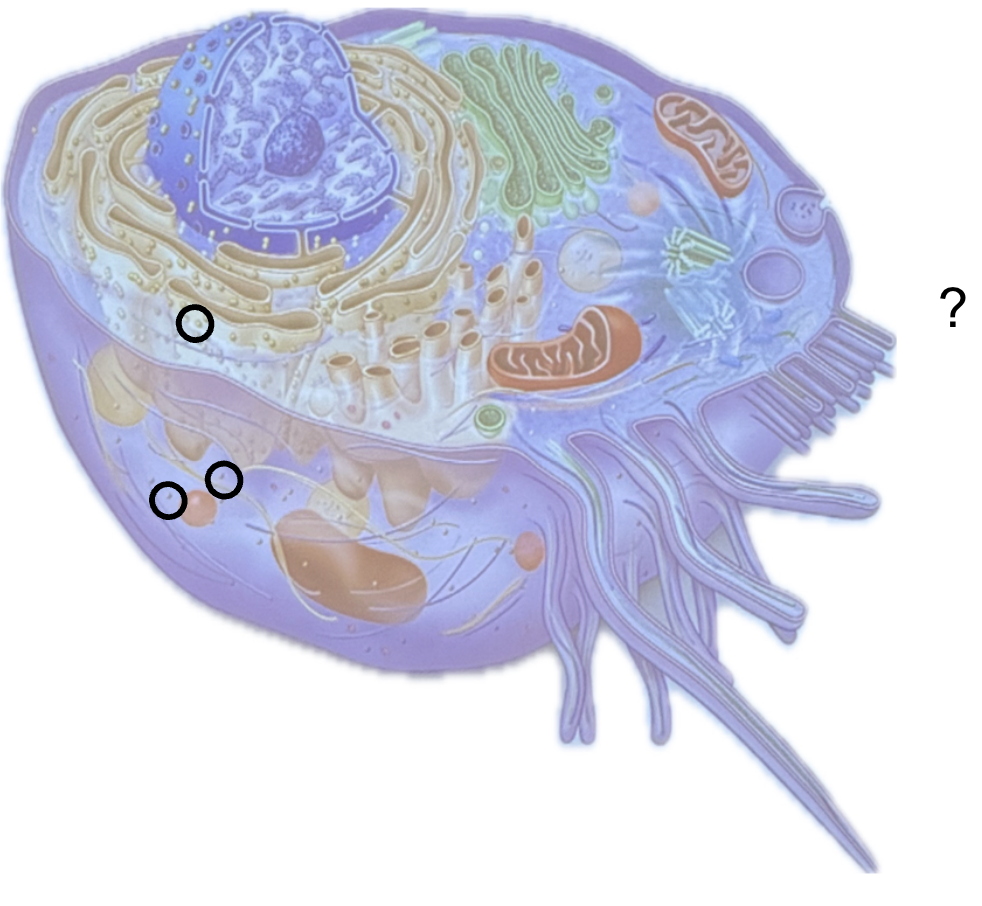
ribosomes (both fixed and free)
fixed = stud the rough endoplasmic reticulum
free = floating in cytosol
organelle that functions in protein synthesis
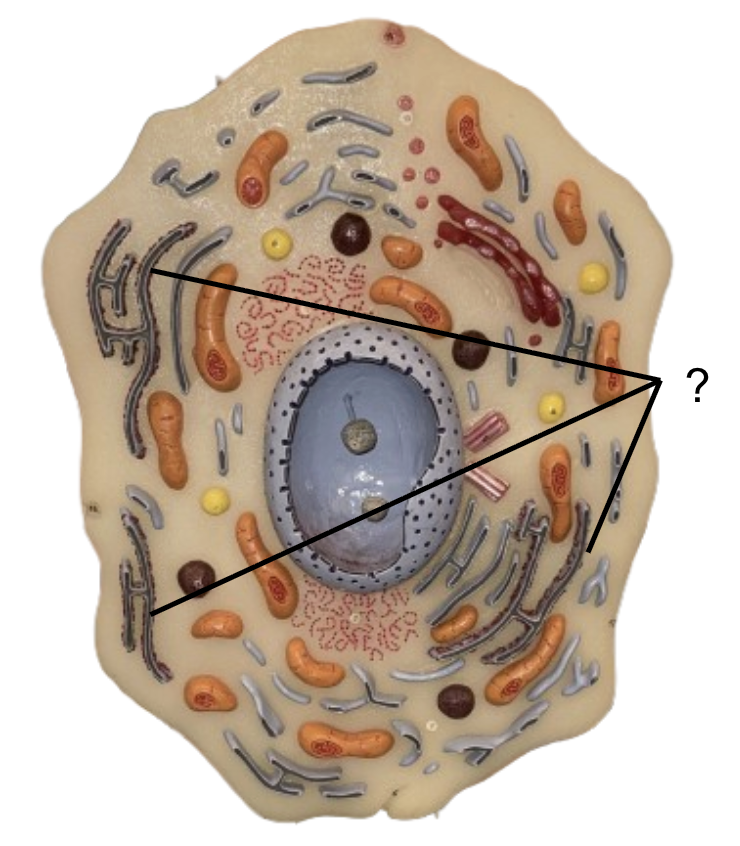
rough endoplasmic reticulum
responsible for helping the body make proteins, called rough because has ribosomes attached to it; is membrane-bound
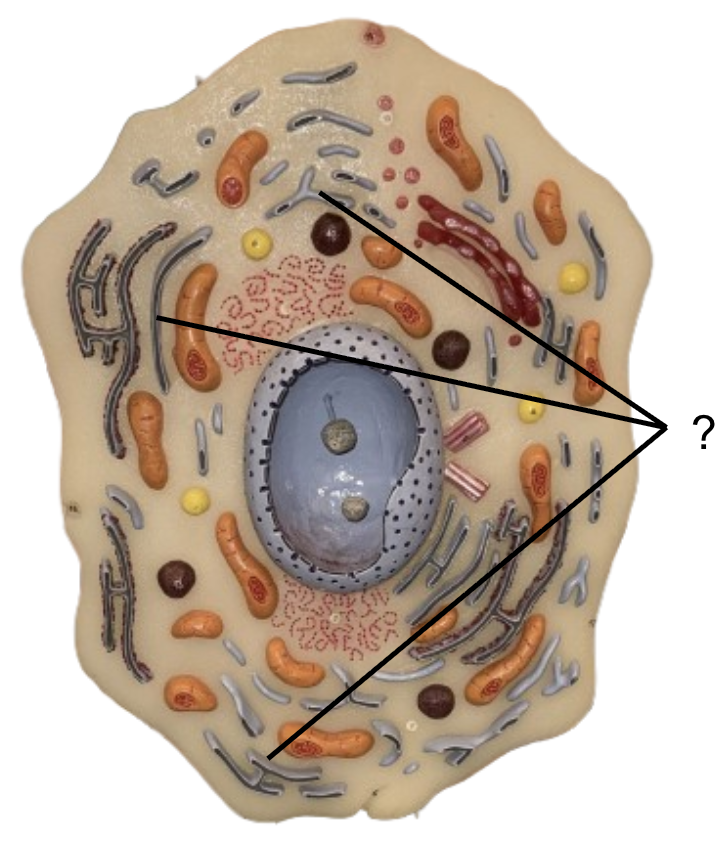
smooth endoplasmic reticulum
responsible for making fats (synthesis of lipids)
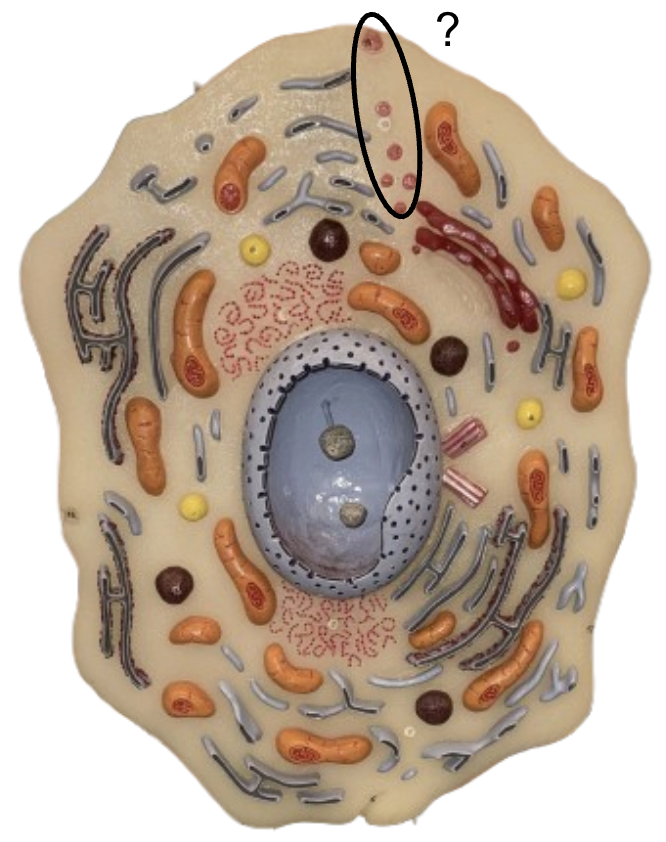
vesicles
comes from golgi apparatus; moves toward the plasma membrane of the cell, then forms together with the plasma membrane, then opens to release what was contained inside
membrane-bound structure that contains materials within or outside of the cell

