ANS 231 Module 1
 Call Kai
 Learn
Learn Practice Test
 Spaced Repetition
 Match
Match Flashcards
 Knowt Play
1/34

There's no tags or description
Looks like no tags are added yet.
Name | Mastery | Learn | Test | Matching | Spaced | Call with Kai | Chat |
|---|
No analytics yet
Send a link to your students to track their progress
35 Terms
What is proximate analysis
General series of analyses that relates to the classes of nutrition
Used 100 years ago and today
Set of terms related to proximate analysis
Crude protein
Crude fat
Crude fiber
Crude ash
What is crude protein
Measure of N content of a feed ingredient multiplied by 6.25
Approximates amount of protein in a sample
What is crude fat
Measure of components in a feed sample that can be extracted with an organic solvent like diethyl ether
Approximates fat content in a sample
What is crude fiber
Estimate of fiber content (includes only some fiber components)
What is crude ash
Material remaining when a feed sample is completely oxidized in a muffle furnace
Contains the mineral component of sample
What is another common analysis
Detergent analysis system
What is the detergent analysis system
Describes the fibrous components of the plant more completely than crude fiber
2 main fractions of detergent analysis system
Neutral detergent fiber
Acid detergent fiber
What is neutral detergent fiber (NDF)
Portion of fiber insoluble in neutral detergent (roughly equivalent to cell wall fraction)
Includes cellulose, hemicellulose, and lignin
What is acid detergent fiber (ADF)
Portion of fiber that is insoluble in acid detergent
Includes cellulose and lignin (hemicellulose is soluble in acid detergent)
What set of terms describe energy value of a feed? Where do the values come from
Gross energy (GE): measured in lab
Digestible energy (DE): from studies with animals
Metabolizable energy (ME): from studies with animals
What is gross energy
Total potential energy in feed ingredient
What is digestible energy
Energy remaining after energy excreted in feces subtracted from gross energy
Gives an idea of how much energy animal absorbs from feed
What is metabolizable energy
Energy remaining after energy excreted in feces, urine, and gas (methane)
2 major components to divide materials into
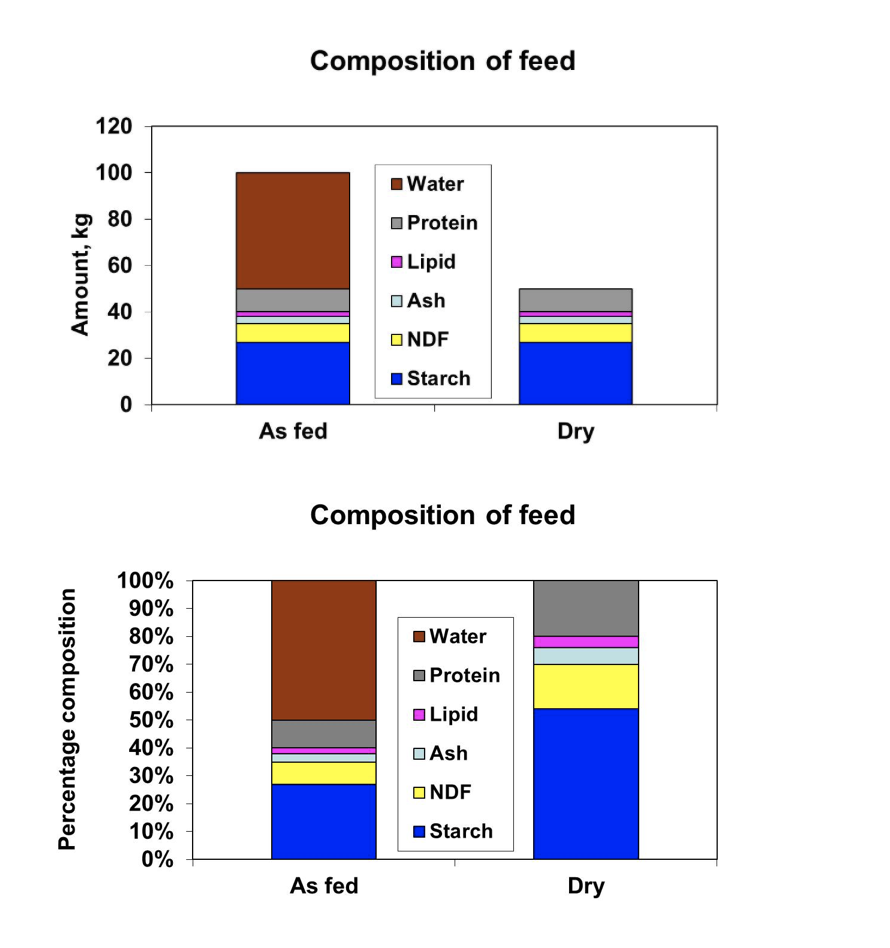
As fed (AF) basis: the feed as it is fed to the animal (dry matter + water)
100% dry matter (DM) basis: the feed not including the water, includes all the nutrients in the dry matter
Calculation for dry matter percentage
(weight of dry sample/weight of As fed sample) x 100
Is the amount of feed greater in dry matter or as fed
As fed because it includes water
Is nutrient concentration greater in dry matter or as fed
Concentration of a nutrient is greater when expressed on a dry matter basis. This is because the water has been removed but the amount of the nutrient is the same. Therefore, it is concentrated in the dry matter and is a greater percentage of the total
Can you compare nutrient concentration of feedstuffs on dry matter basis
Yes if percent DM is the same
Feed composition graphs for reference

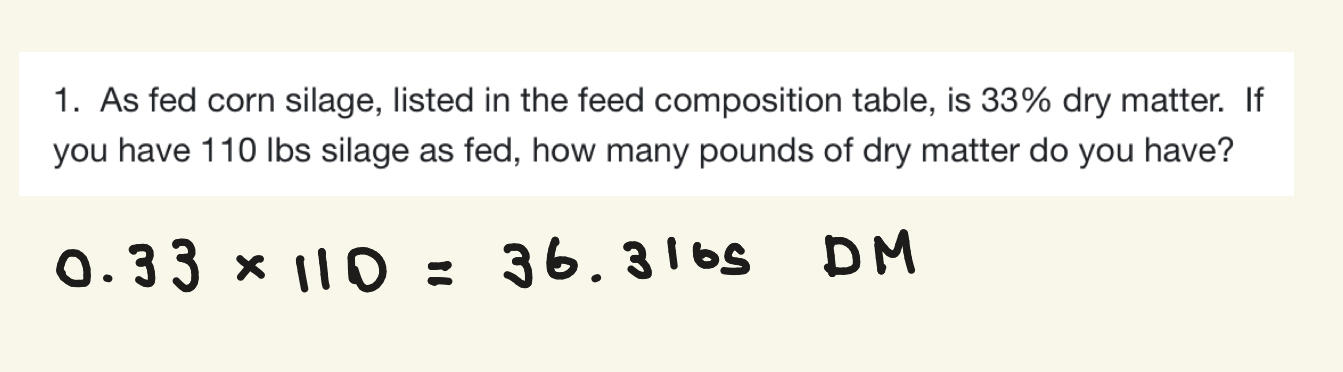

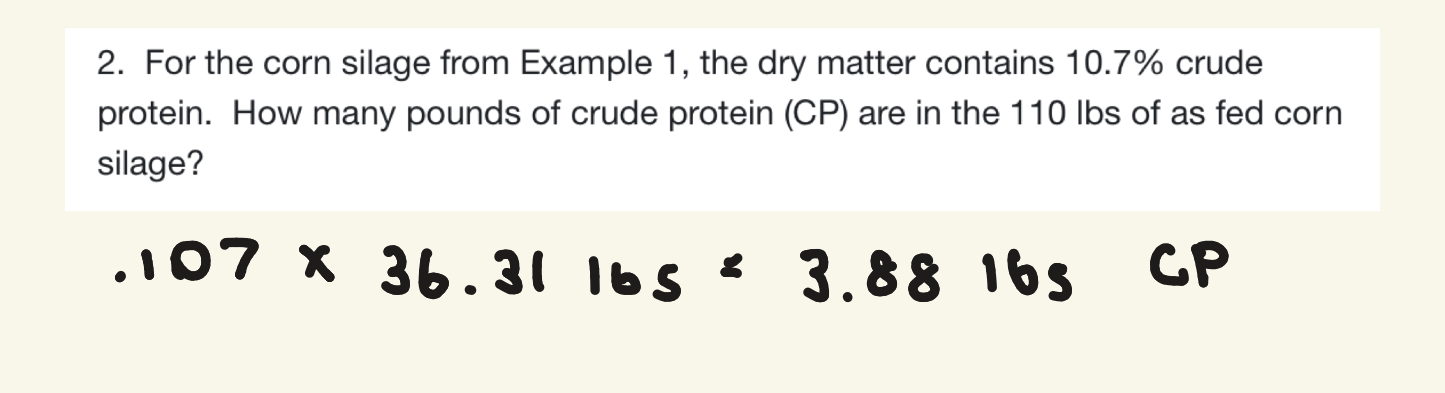



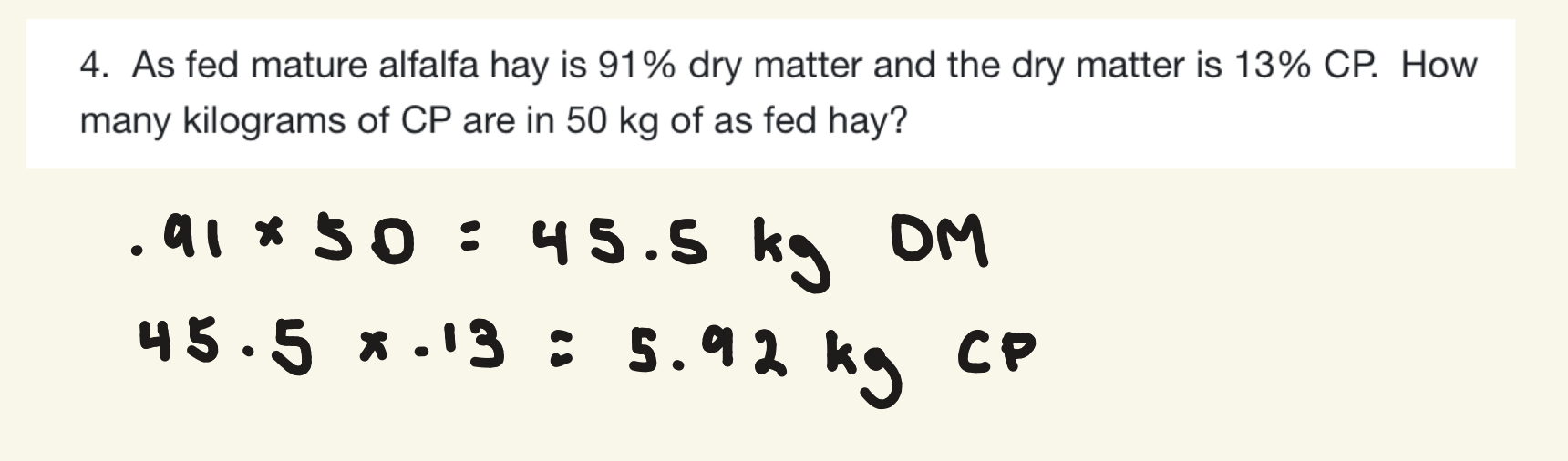

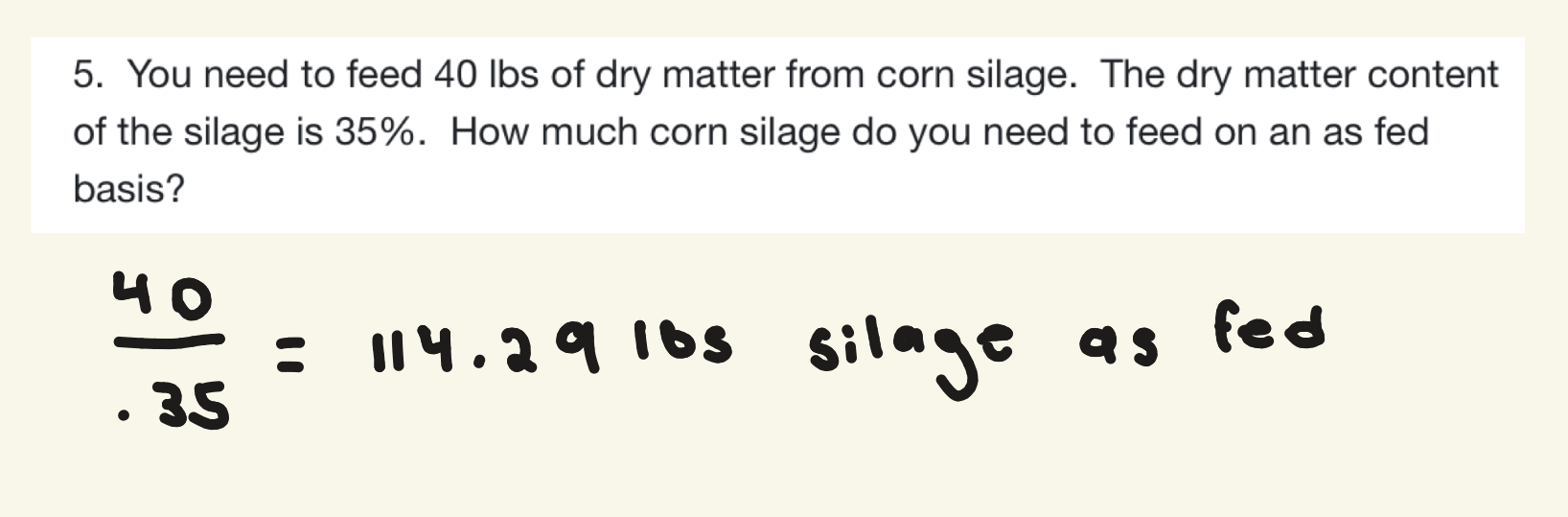

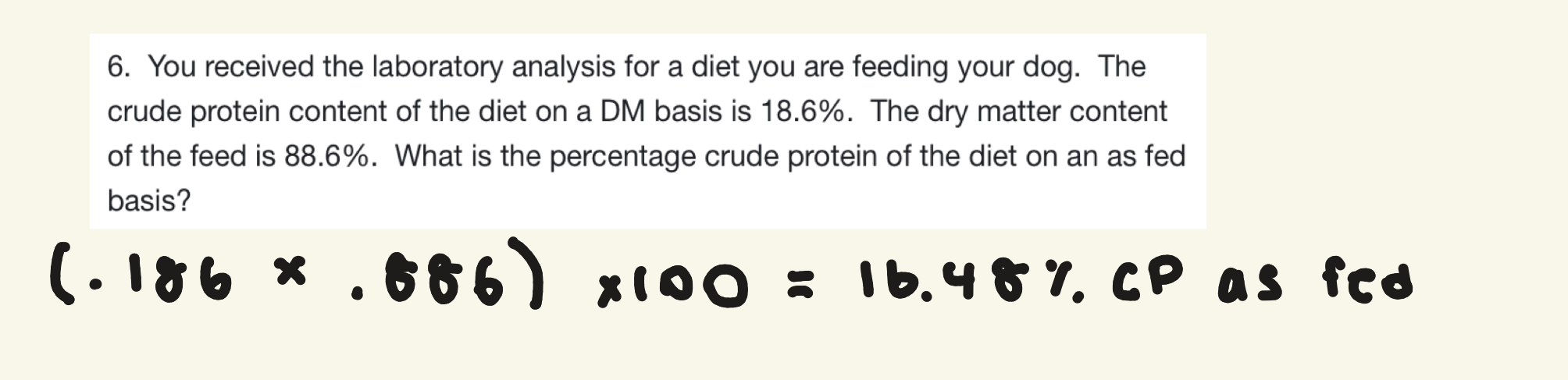

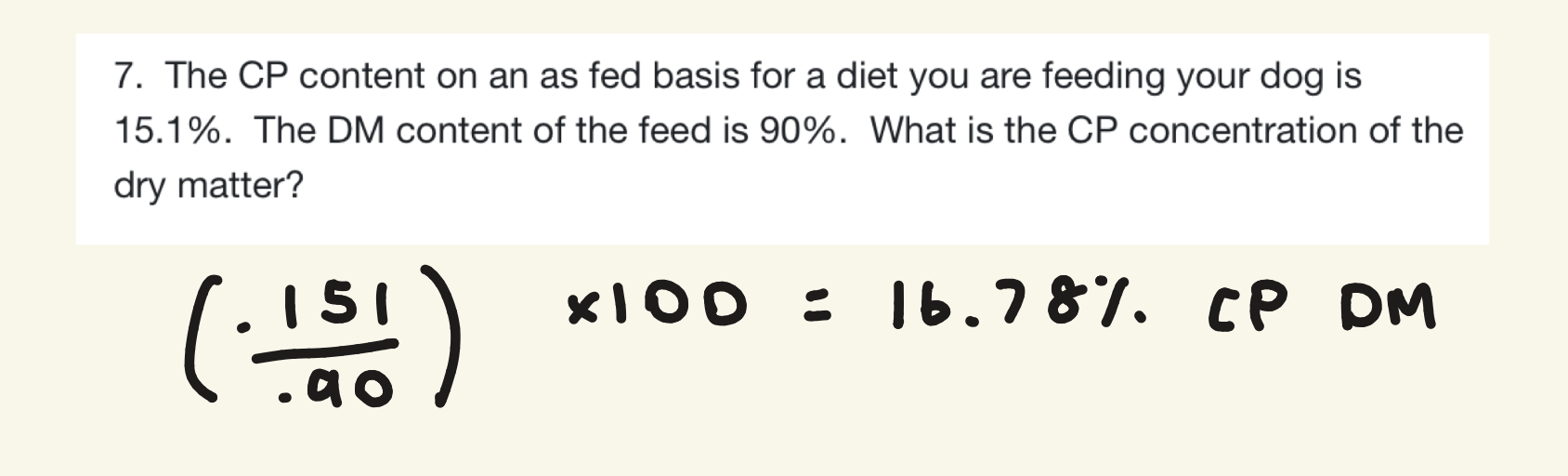
Have to know these conversions
1 kg = 2.2 lbs
1 kg = 1,000 g
1 ton = 2,000 lbs
1 metric ton = 1,000 kg
1 lb = 0.454 kg
1 lb = 454 g
1 lb = 16 oz
1 kcal = 1000 calories
1 Mcal = 1,000 kilocalories