All Reactions
 Call Kai
 Learn
Learn Practice Test
 Spaced Repetition
 Match
Match Flashcards
 Knowt Play
1/140

There's no tags or description
Looks like no tags are added yet.
Name | Mastery | Learn | Test | Matching | Spaced | Call with Kai | Chat |
|---|
No analytics yet
Send a link to your students to track their progress
141 Terms
SN2 reagent, solvent, other
strong nucleophile, polar aprotic, inversion of sterochemistry
SN1 reagent, solvent, other
weak nucleophile, polar protic, rearrangements possible
E2 reagent, solvent, other
strong base, polar protic + heat, antiperiplanar required, Zaitsev or Hofmann product
E1 reagent, solvent, other
weak base, polar protic solvent + heat, rearrangements possible, Zaitsev product
Polar protic solvents
H2O, ROH, NH3
Polar aprotic solvents
DMSO, acetone, THF
Weak nucleophile
H2O, ROH
Strong nucleophile
N3-, CN- , HO-, RO-
Strong bases
HO-, RO-, H2N-, R2N-
Weak bases
H2O, ROH
Big bulky base
E2 favoured
t-buOK, DBU, DBN, LDA, NaH, triethylamine
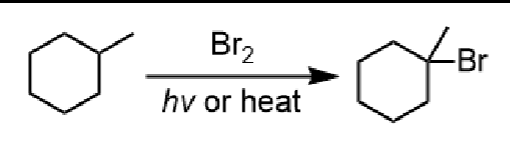
Br2/
hv or heat
to alkene
Br added to most substituted H
Regioselective
Cl2/
hv or heat
to alkene
adds Cl where there's an available H
not regioselective

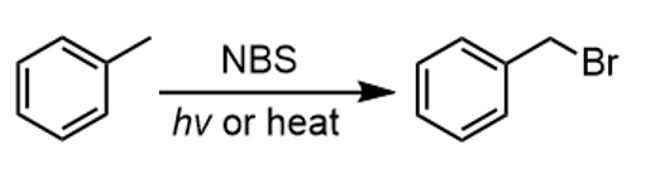
NBS/
hv or heat
to benzene w/ methyl
replaces benzylic H with Br
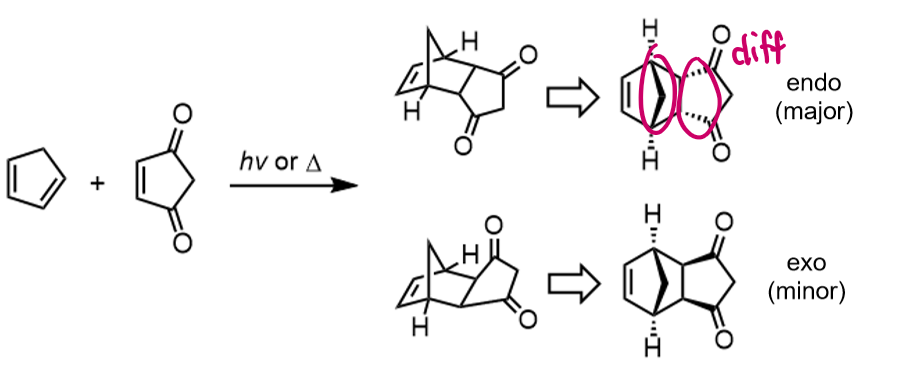
hv or heat
to ring diene and ring dienophile
two ring structure formed
endo and exo products
NBS/
hv or heat
to alkene
replaces allylic H with Br
can have multiple products (major product most substituted)

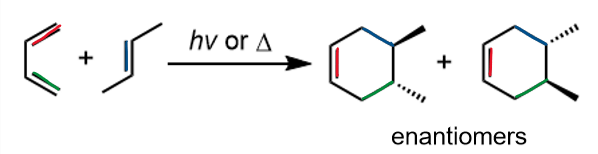
hv or heat
to diene and trans dienophile
two products formed
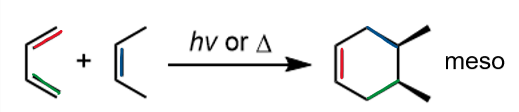
hv or heat
to diene and cis dienophile
meso product formed
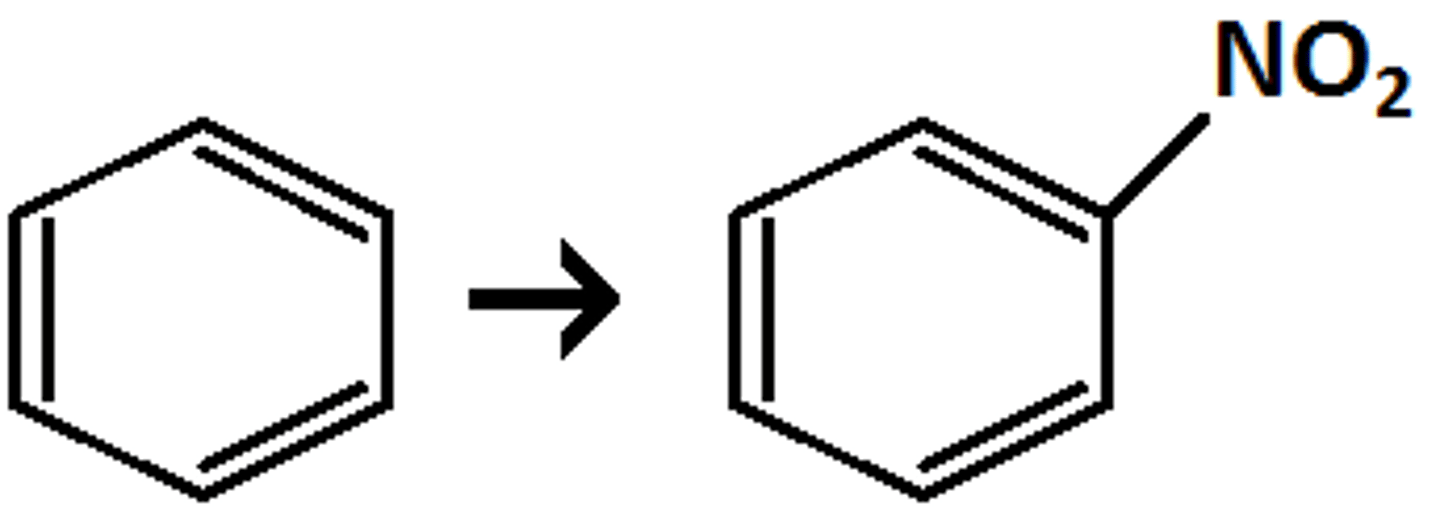
HNO3/
H2SO4
to benzene ring
attaches -NO2 to benzene
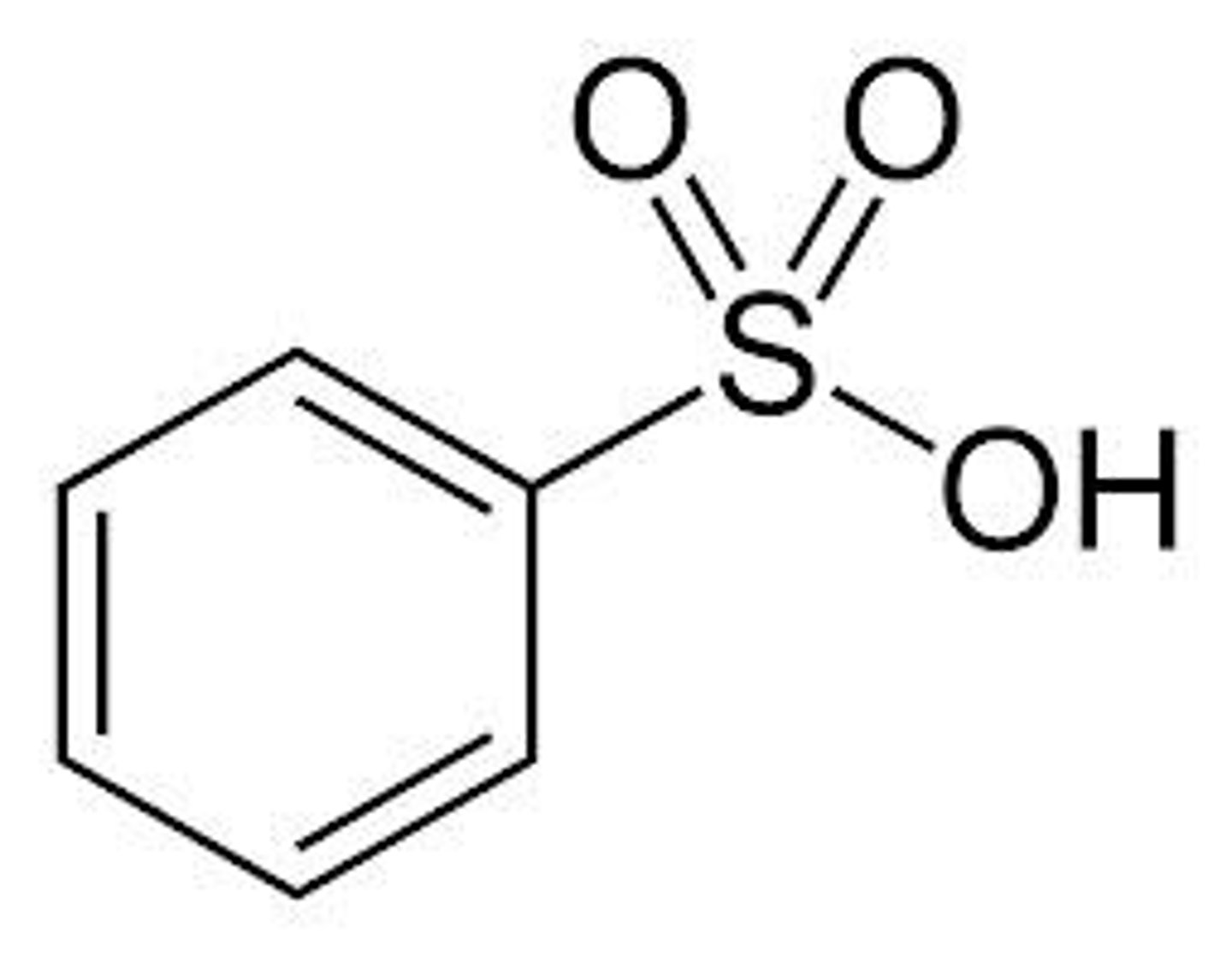
SO3/
H2SO4
to benzene ring
adds -SO3H to benzene
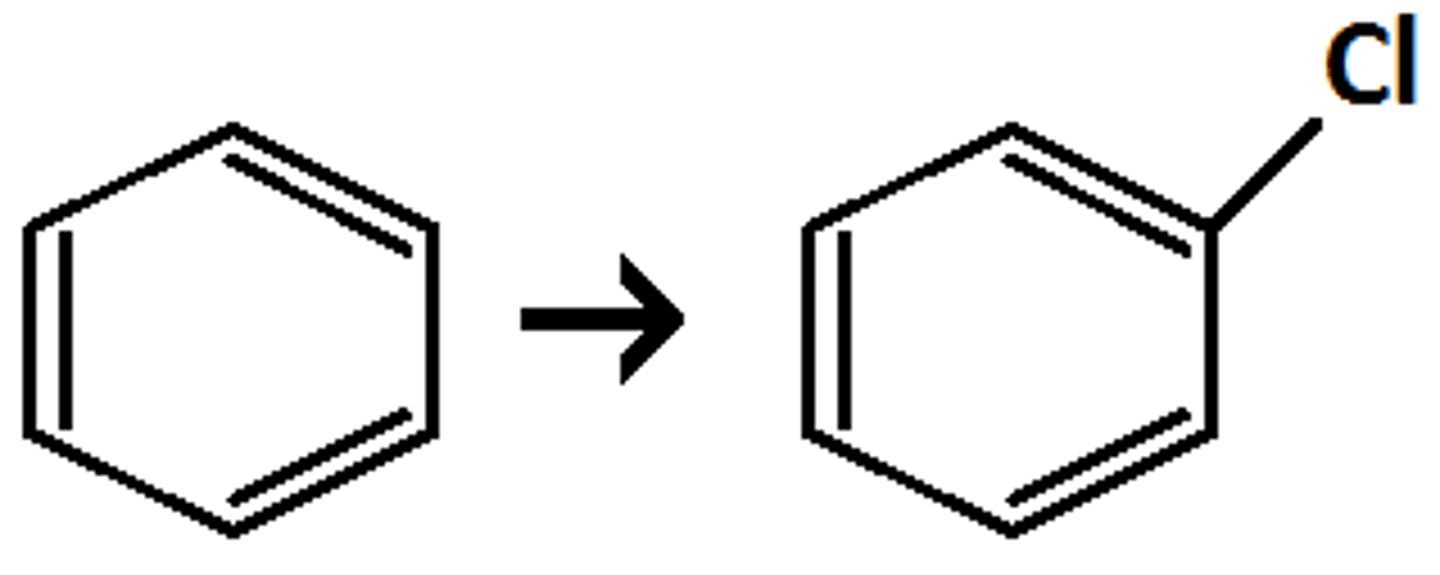
Cl2/
AlCl3
to benzene
add Cl to aromatic ring
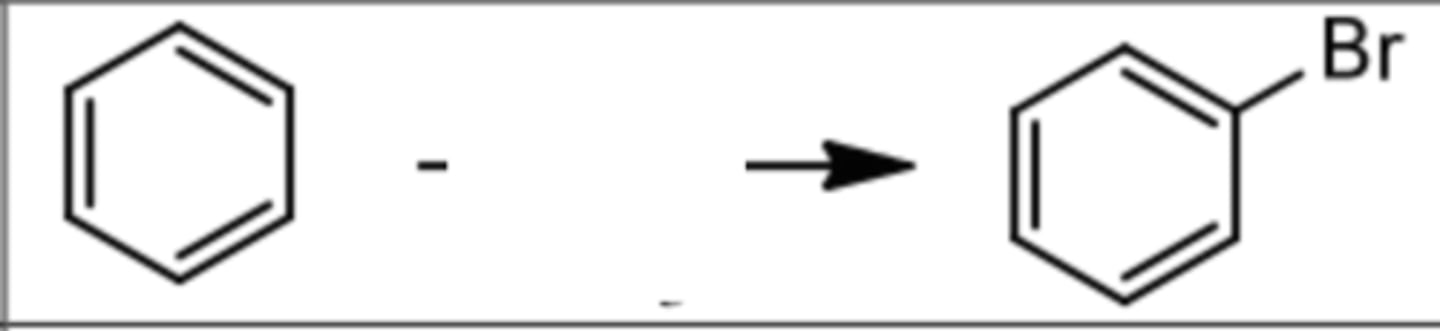
Br2/
FeBr3
to benzene ring
adds Br to benzene
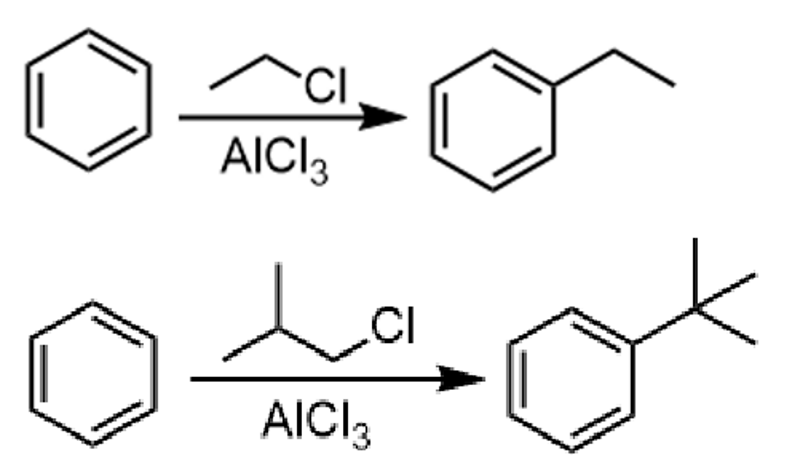
R-X/
AlCl3
to benzene ring
adds -R to aromatic ring
*can rearrange
ortho/meta/para reagents
Br2/Cl2
AlCl3/FeBr3
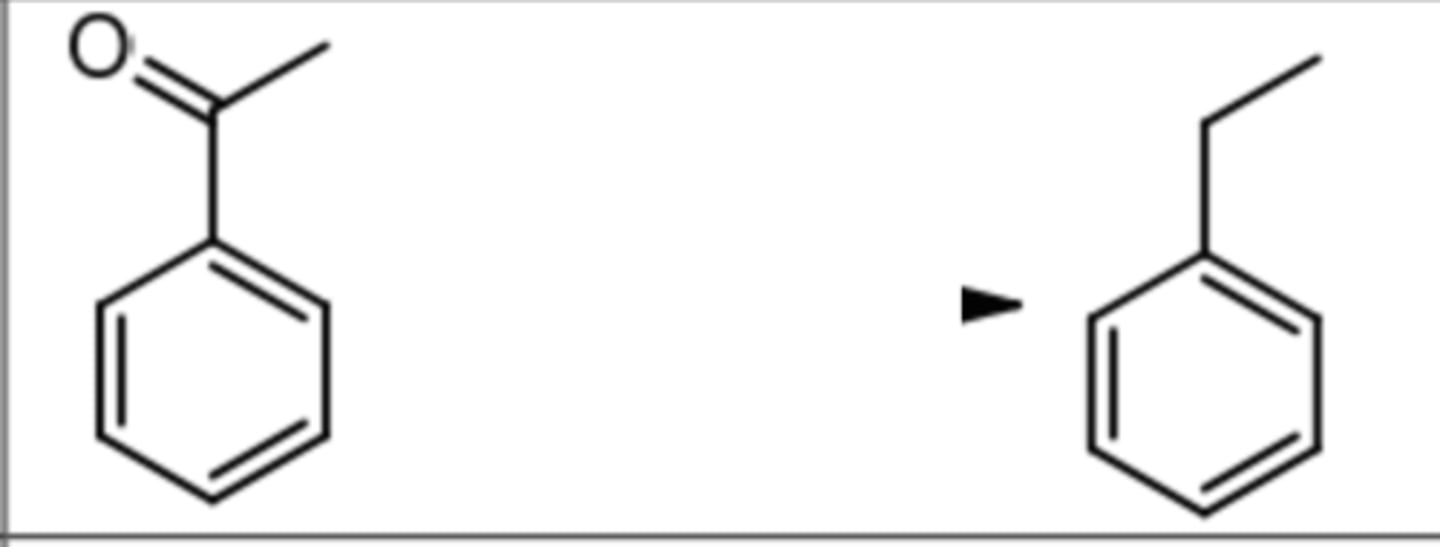
Zn/Hg,
HCl, heat
to ketone
Carbonyl to alkane
Clemmenson Reduction
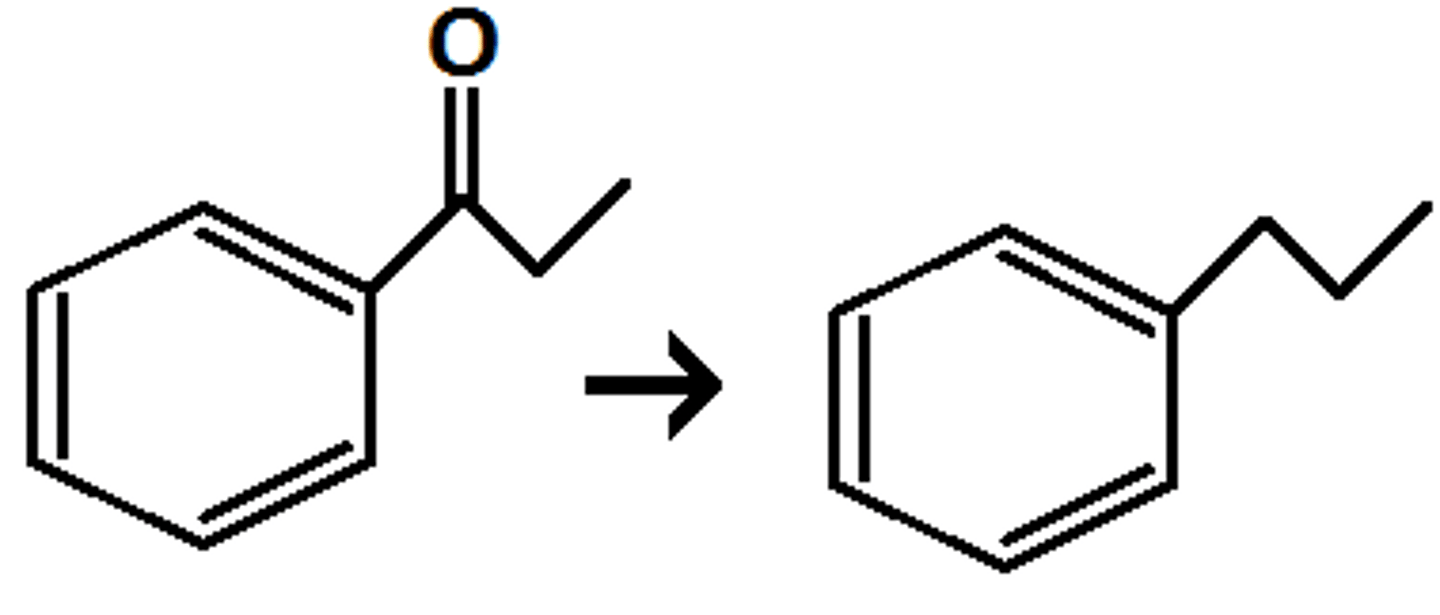
H2NNH2,
-OH, heat
to ketone
Carbonyl to alkane
Wolff-Kishner Reduction
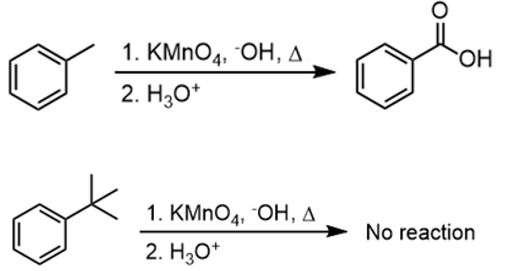
1) KMnO4, OH-, heat
2) H3O+
benzene w/ benzylic hydrogen
adds carboxylic acid at benzylic position, cuts off the rest
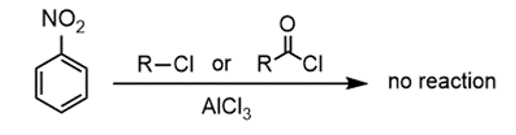
R-X/
AlCl3
to benzene w/ NO2
No reaction!
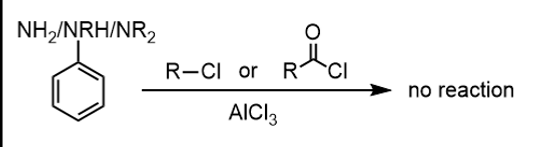
R-X/
AlCl3
to benzene w/ amine
No reaction!
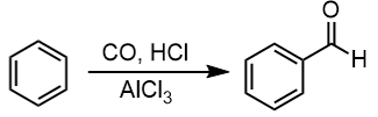
CO, HCl/
AlCl3
to benzene
adds aldehyde to benzene
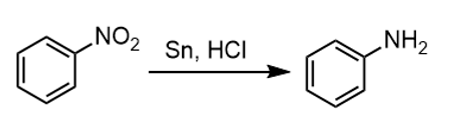
Sn, HCl
to benzene w/ NO2
replace NO2 with NH2
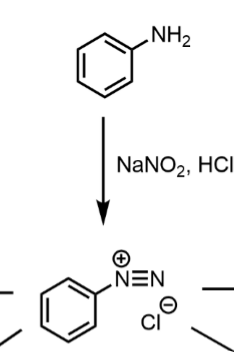
NaNO2, HCl
benzene w/ NH2
Diazonium formation to make something else!
H3PO2
to diazonium
replaces ion with H
KI
to diazonium
replaces ion with I
HBF4
heat
to diazonium
replaces ion with F
H2SO4/
H2O, heat
replaces ion with -OH
CuCN or CuBr or CuCl
to diazonium
replace ion with CN, Br, Cl
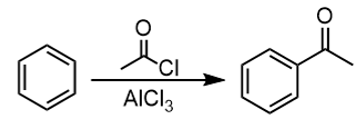
acid chloride/
AlCl3
to benzene
adds ketone to benzene (no Cl)
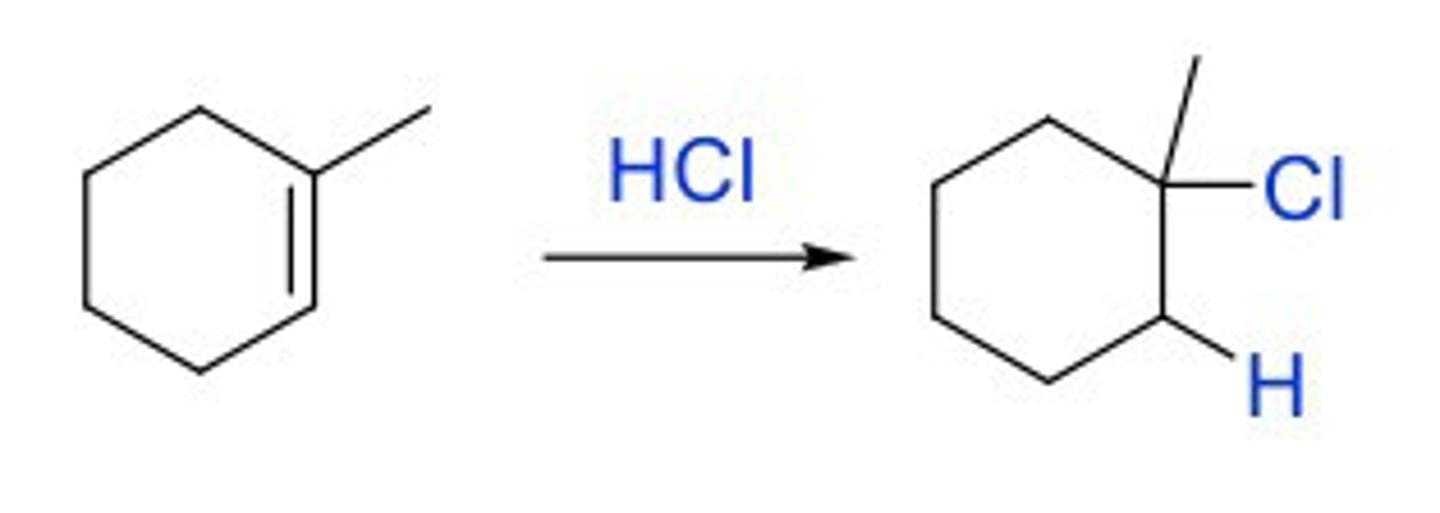
HBr (or HCl, HI)
to alkene
add Br and H (Br more sub)
Rearrangements possible
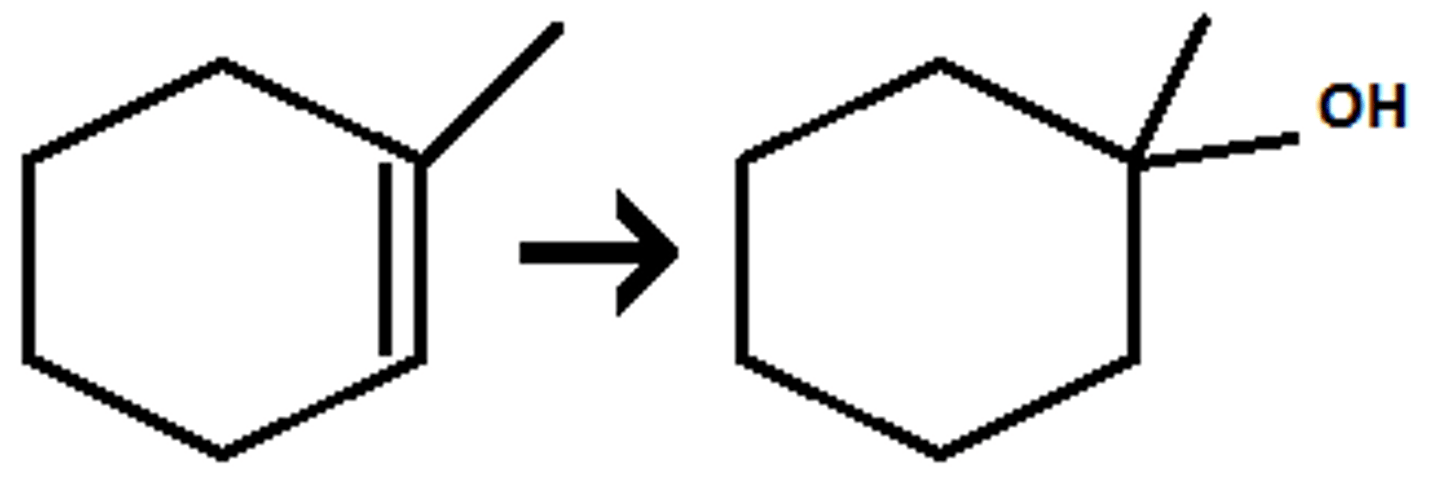
H3O+
to alkene
add -OH* and H (-OH more sub)
Rearrangements possible
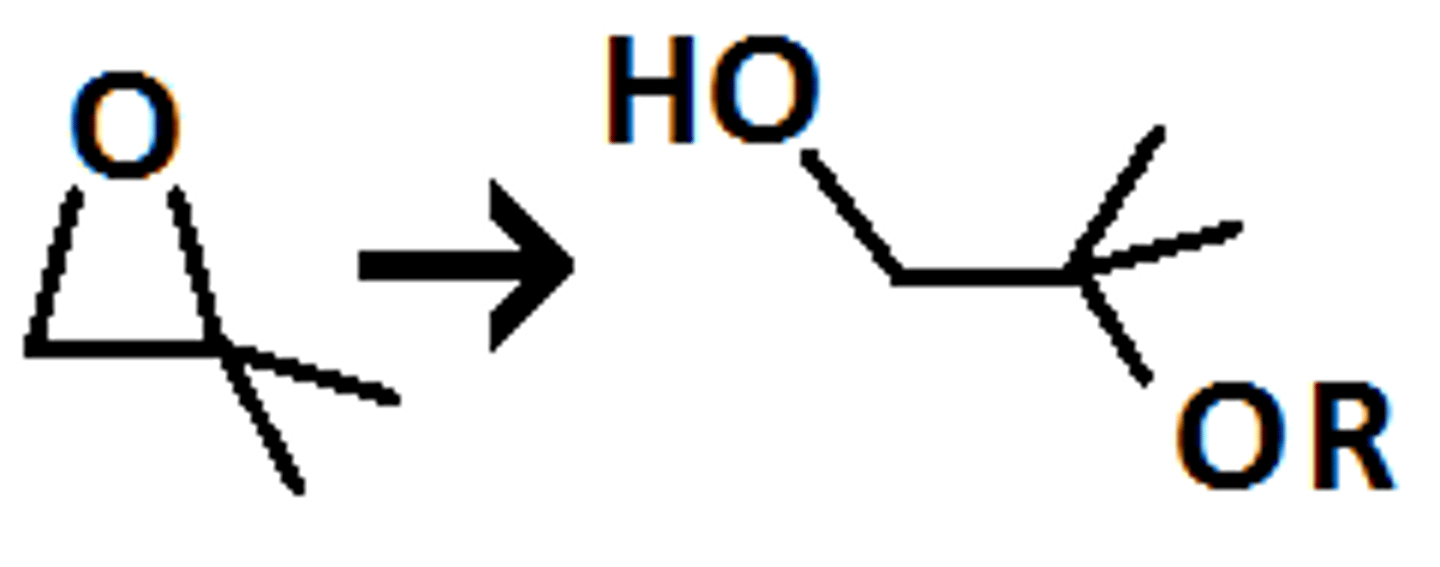
H+, ROH
to epoxide
add -OR* and H (to the O, so makes -OH)
Rearrangements possible
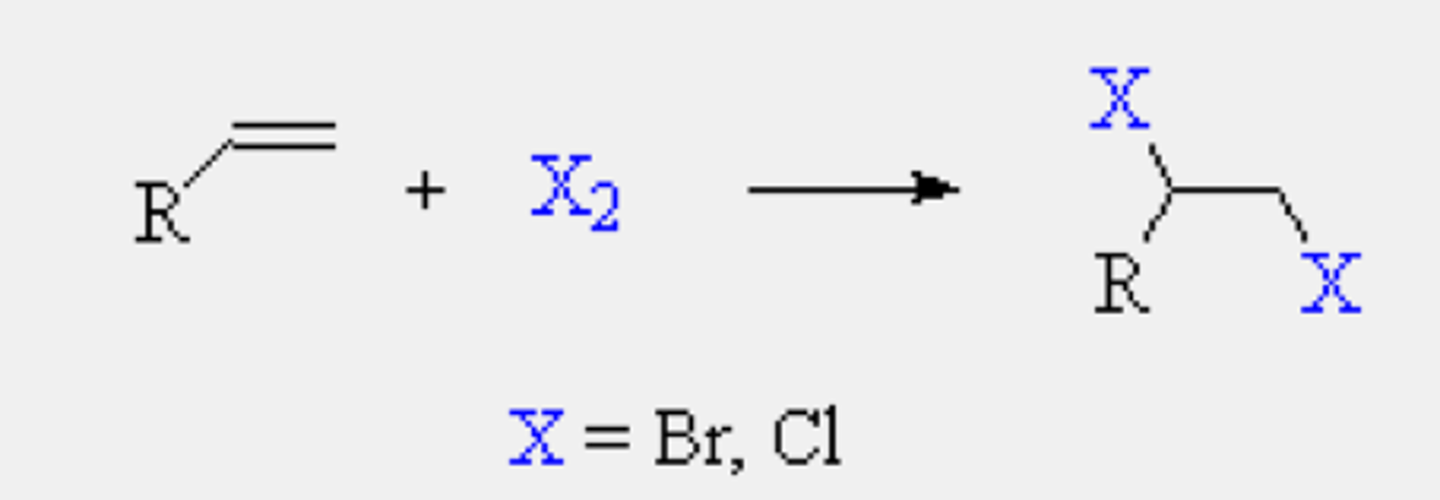
Br2 or Cl2/
CCl4
to alkene
Add 2 Br
Anti
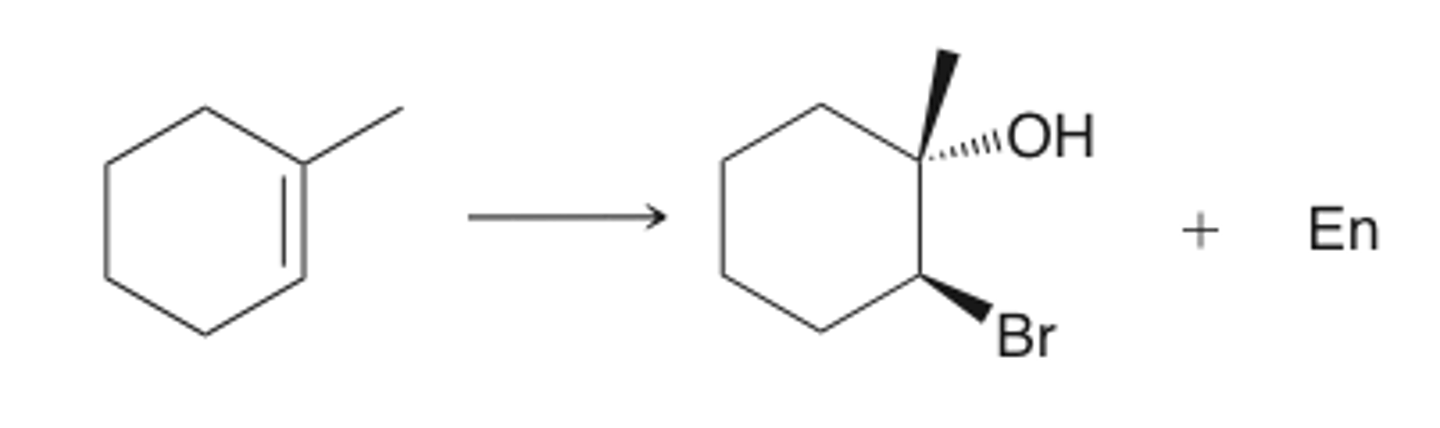
Br2 or Cl2/
H2O
to alkene
add Br and -OH*
Anti, + En
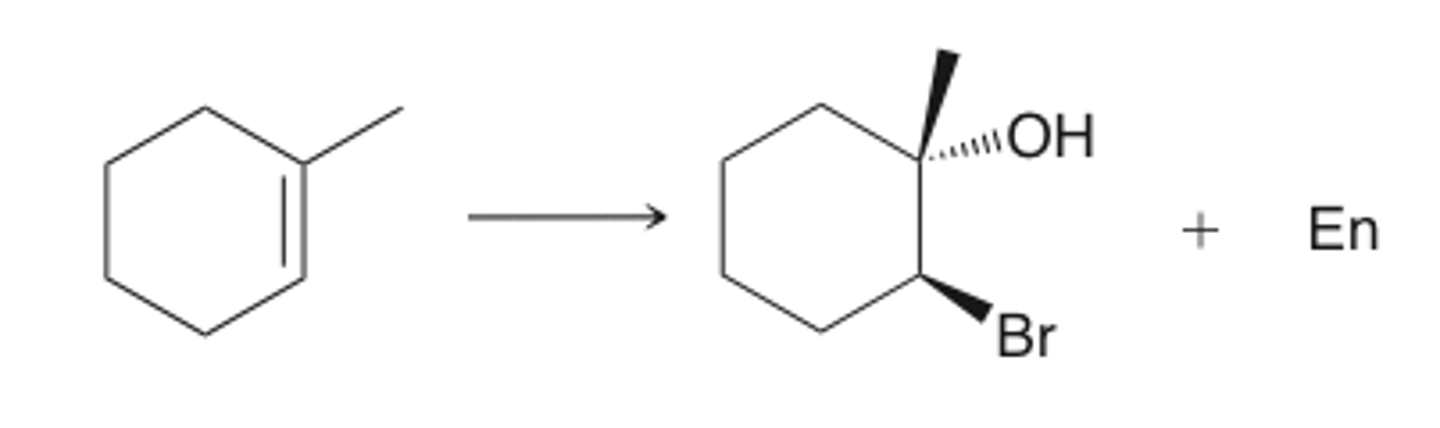
Br2 or Cl2/
ROH
to alkene
add Br and -OR*
Anti, + En
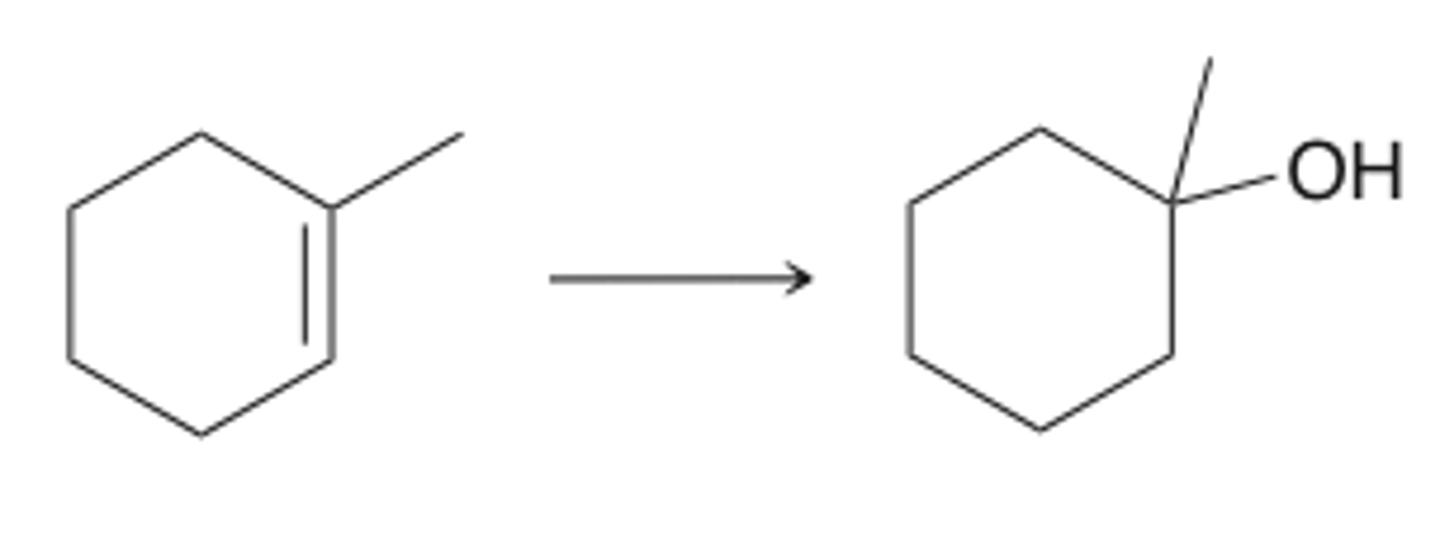
1) Hg(OAc)2, H2O
2) NaBH4
to alkene
Add H and -OH*
Anti, + En
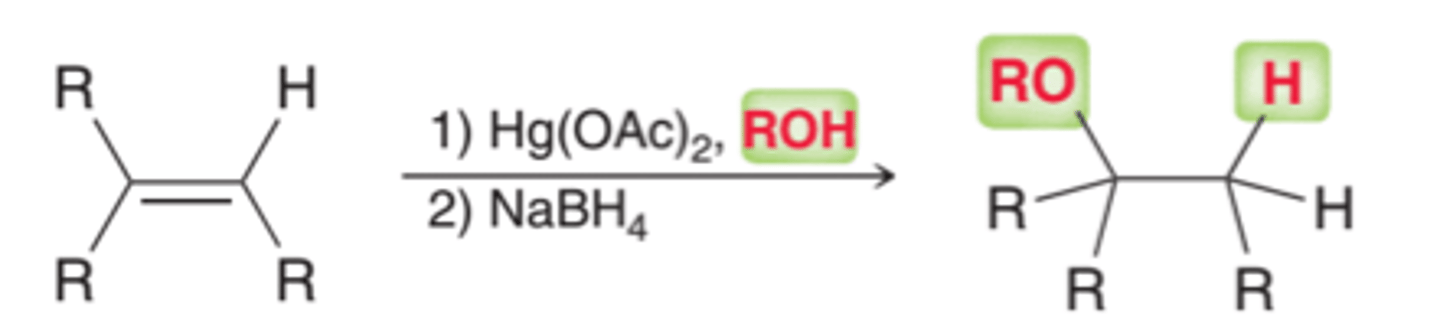
1) Hg(OAc)2, ROH
2) NaBH4
to alkene
add H and -OR*
Anti
1) BH3 • THF
2) H2O2, -OH, H2O
to alkene
add -H* and -OH
Syn
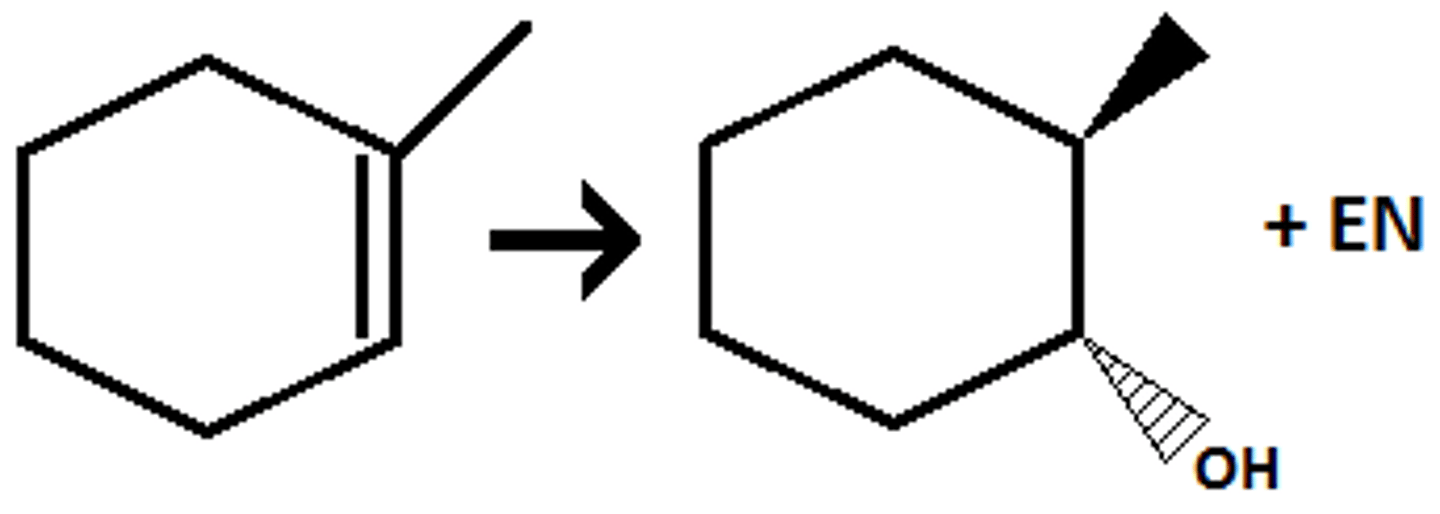
H2,
Pd/C or Pt/C
to alkyne, alkene
adds 2 H, syn
Alkene → Alkane
Alkyne → Alkane

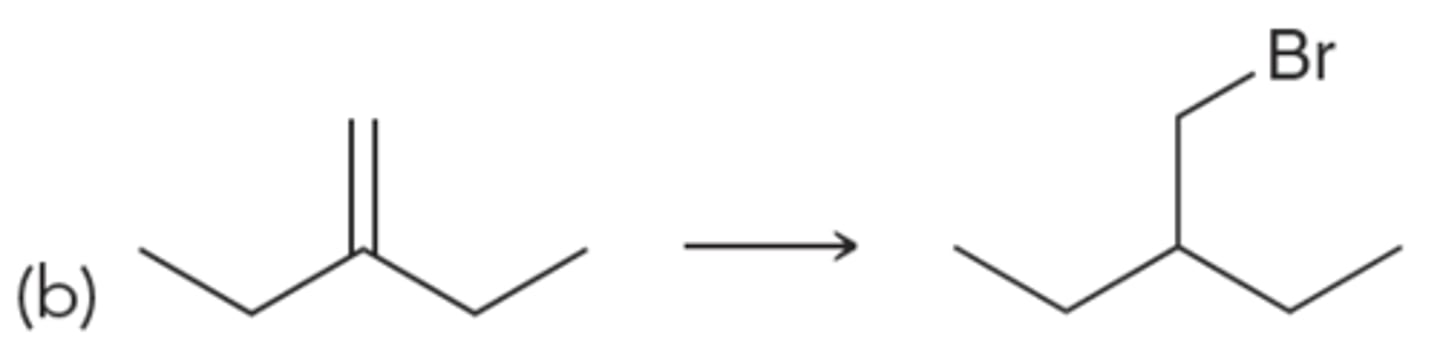
HBr/
ROOR (peroxide)
to alkene
adds H* and Br
mCPBA or RCO3H
to alkene
adds syn epoxide ring across double bond

1. RCO3H (MCPBA)
2. H3O+
to alkene
Adds 2 -OH
Anti
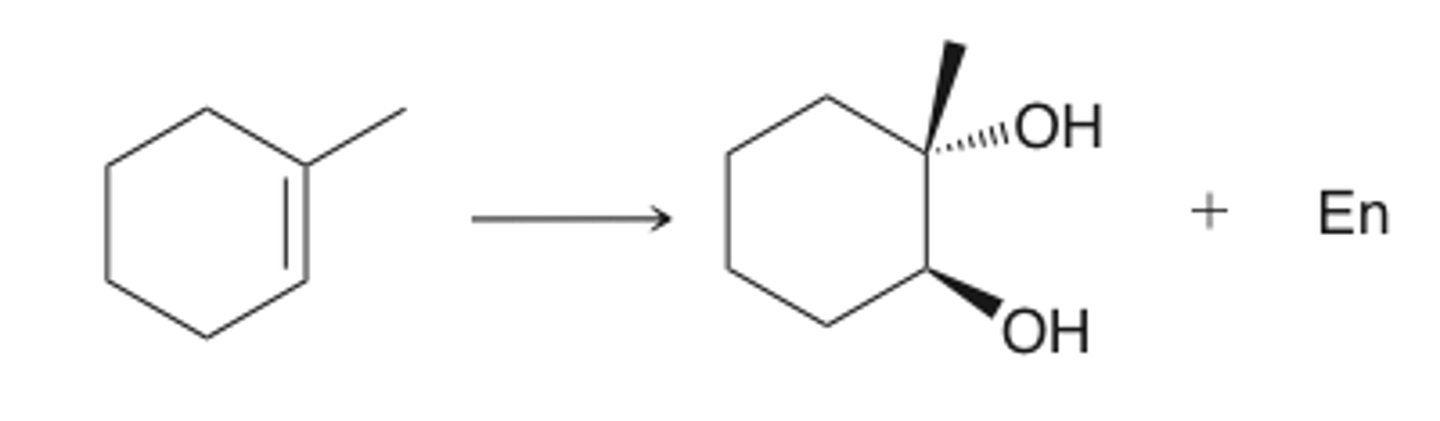
1) OsO4
2) H2O2
to alkene
Adds 2 -OH across alkene
Syn

KMnO4 (cold, dilute)
alkene
Adds 2 -OH across alkene
Syn

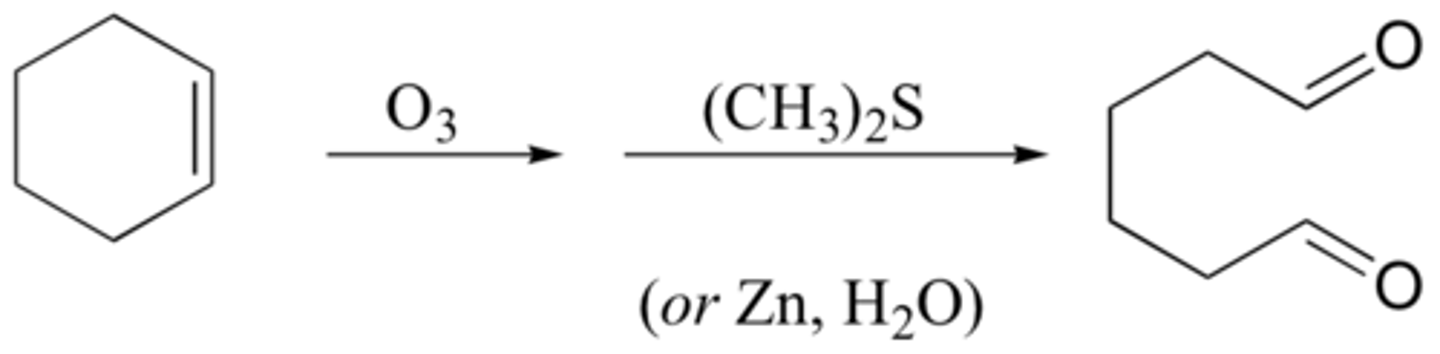
1. O3
2. (CH3)2S or Zn/H2O
to alkene
cleaves alkene =
1º -> aldehyde
2º -> ketone
Reducing cond.
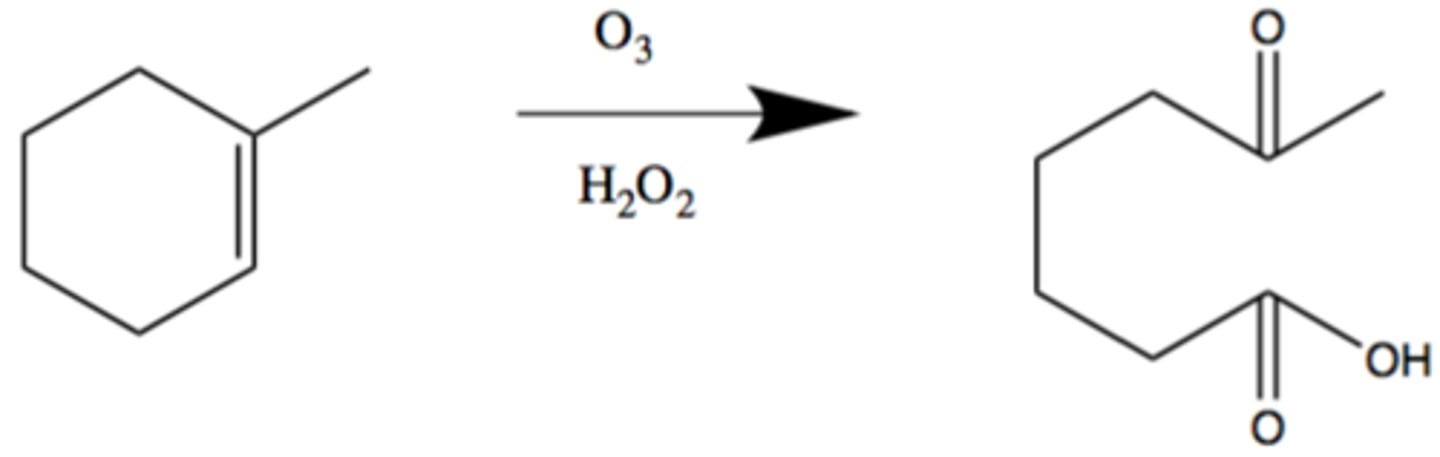
1) O3
2) H2O2
to alkene
cleaves alkene =
1º carboxylic acid
2º ketone
Oxidizing cond.
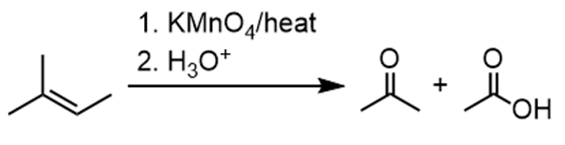
KMnO4 (hot, concentrated)/
H3O+
to alkene
cleaves alkene =
1º carboxylic acid
2º ketone
Oxidizing cond.
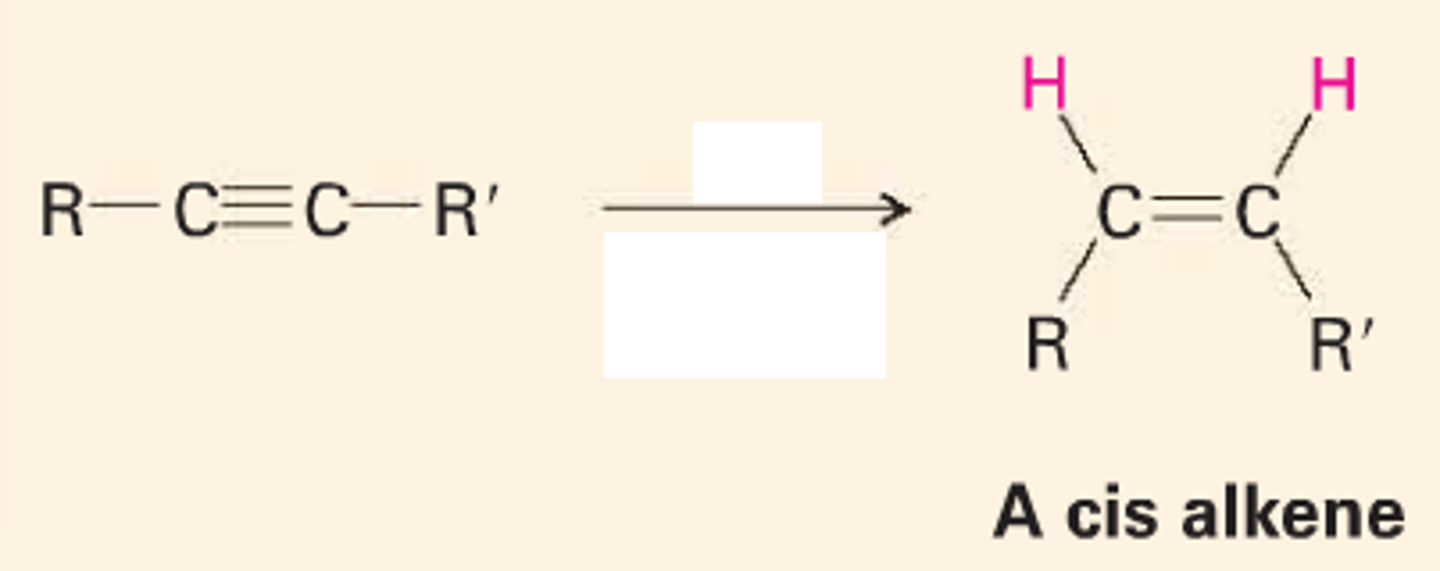
H2,
Lindlar's catalyst
to alkyne
Cis-alkene
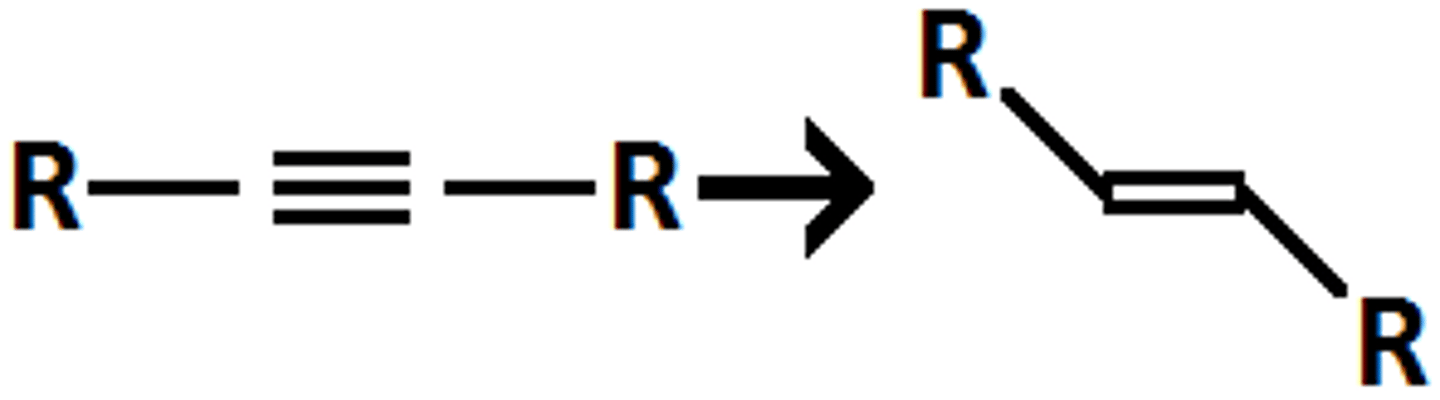
Na or Li,
NH3 (l)
to alkyne
Trans-alkene
1) Sia2BH THF
2) H2O2, OH-, H2O
to terminal alkyne
Aldehyde terminal C (Less sub)

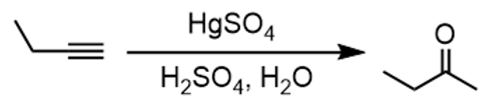
HgSO4/
H2SO4, H2O
to internal alkyne
2 products: Ketones added to each alkyne carbon

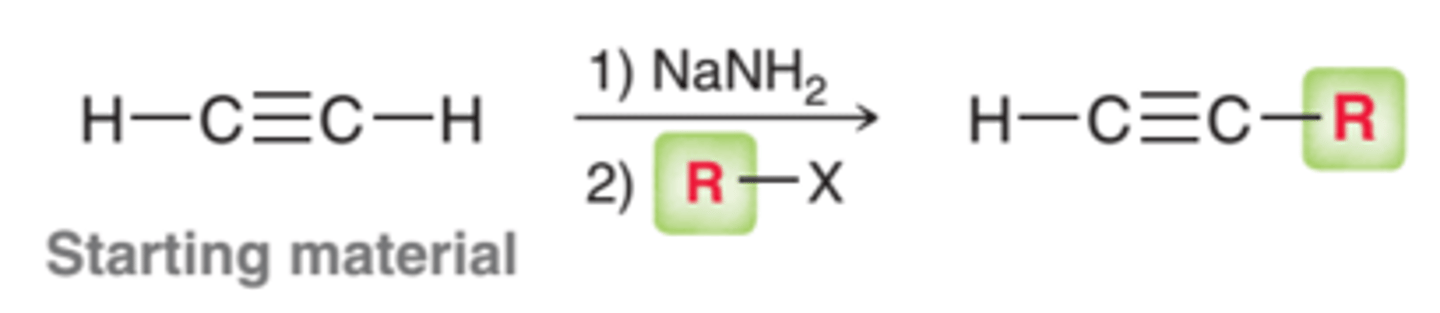
1. NaNH2,
2. R-X
to alkyne
Adds alkyl chains
SN2
1. NaNH2,
2. Ketone, H3O+
to alkyne
Adds to tertiary side -OH + 2 CH3
SN2

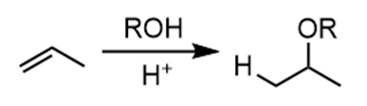
ROH/
H+
to alkene
Add -OR* and -H
Rearrangement possible
HgSO4/
H2SO4, H2O
to terminal alkyne
Adds ketone to more sub
HBr
to terminal alkyne
1 equiv: Br more sub alkene
2 equiv/xs: 2 Br more sub alkane

HBr
to internal alkyne
1 equiv: Br to either side of alkene
2 equiv/xs: 2 Br to either side (they just have to be together)

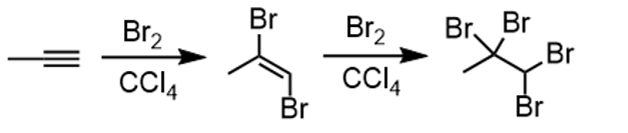
Br2/
CCl4
to alkyne
1 equiv: 2 Br to each side of alkene
2 equiv/xs: 4 Br everywhere
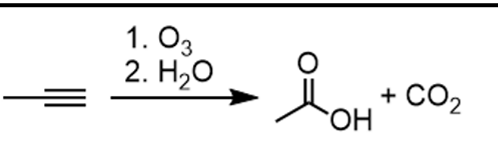
O3
H2O
to terminal alkyne
1 carboxylic acid and 1 CO2
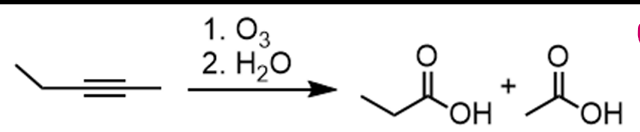
O3
H2O
to internal alkyne
Two carboxylic acids (same product if symmetrical)
Zn/Hg, HCl/
heat
to ketone
Remove carbonyl
Clemmenson Reduction
H2NNH2, OH-/
heat
to ketone
Removes carbonyl
Wolff-Kishner Reduction
Na2Cr2O7 or H2CrO4 or KMnO4
CrO3/H2SO4
to alcohol, aldehyde
Makes carboxylic acids when it can or ketones
1º alcohol -> carboxylic acid
aldehyde -> carboxylic acid
2º alcohol -> ketone
NEVER 3º
strong oxidizer

PCC or 1. DMCO, (COCl2) 2. NEt3
to alcohol
turns -OH to carbonyl
1º alcohol -> aldehyde
2º alcohol -> ketone
NEVER 3º
weak oxidizers
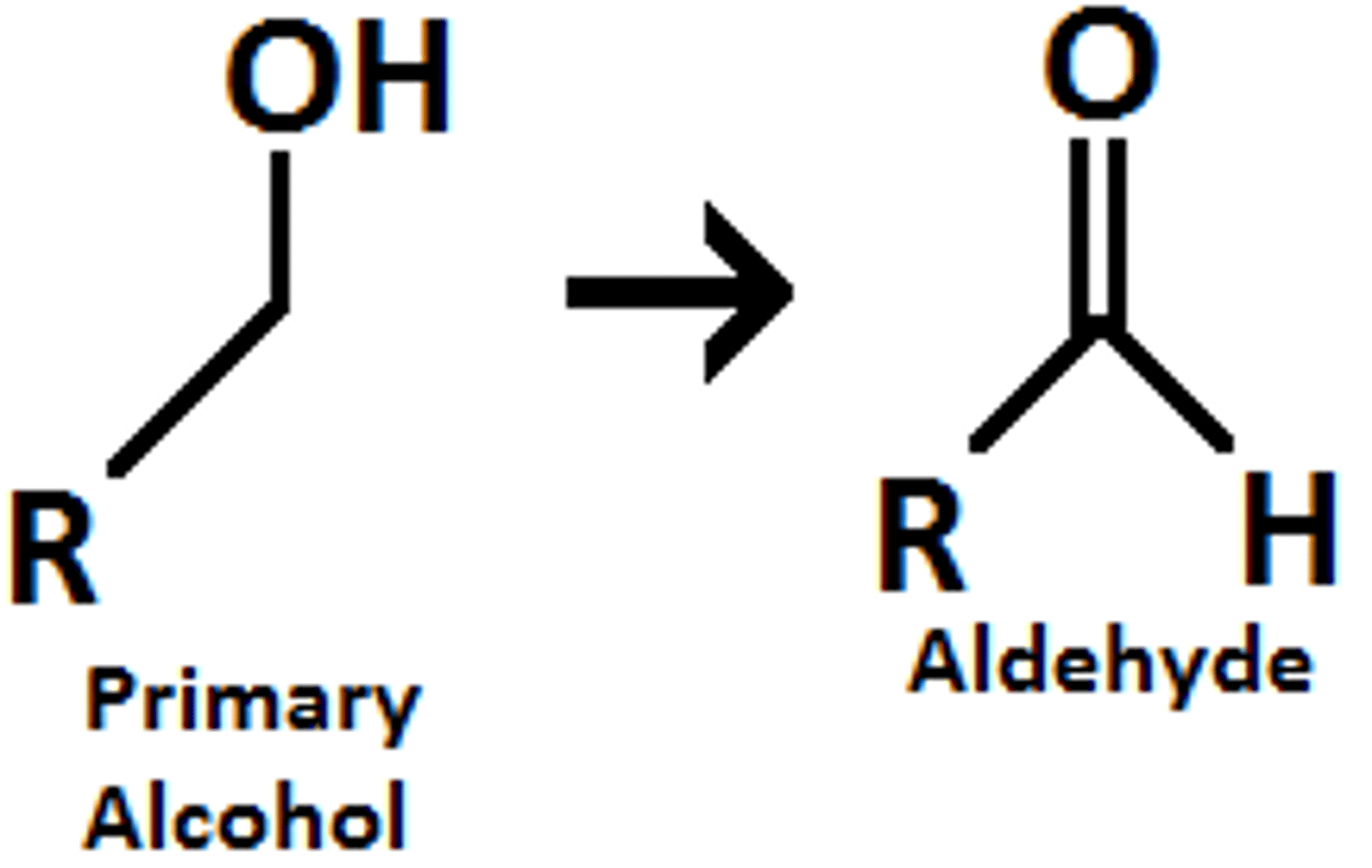
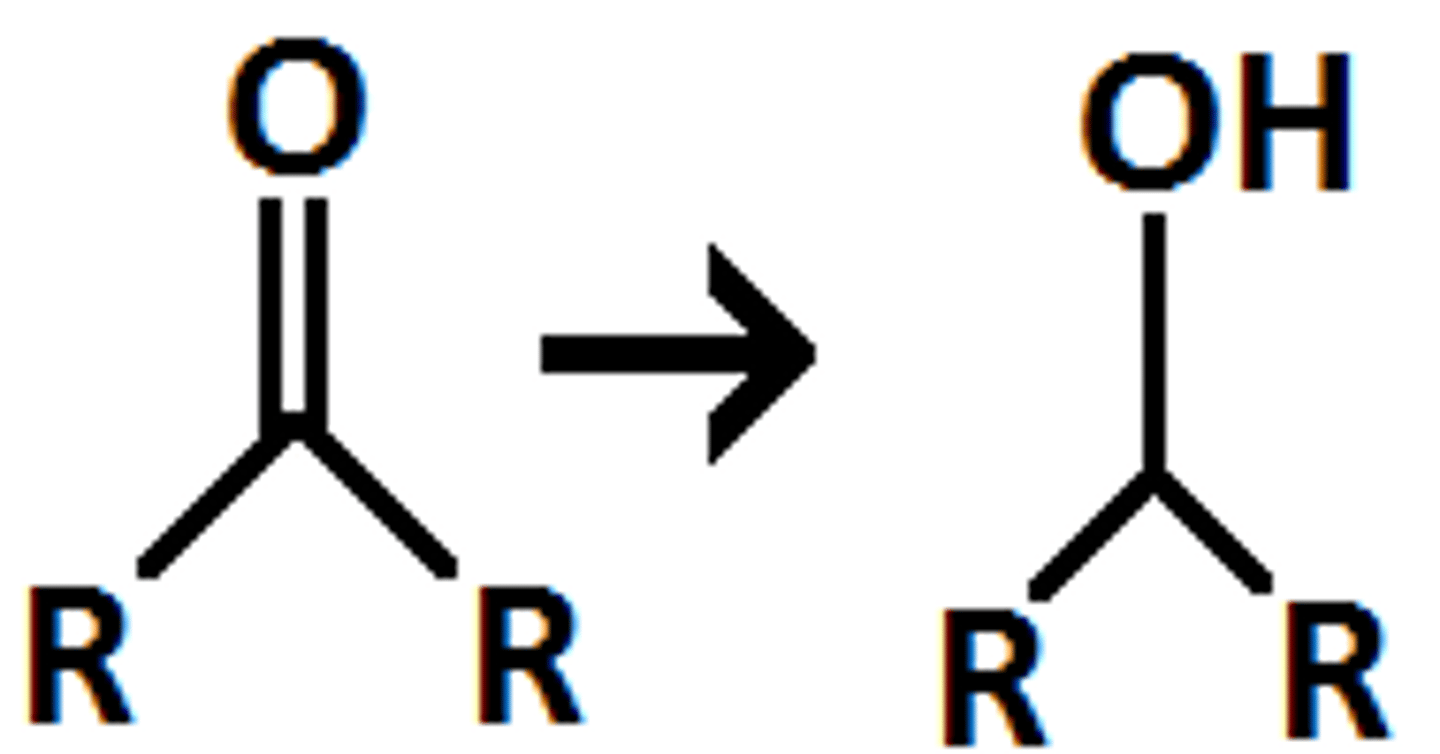
NaBH4/
EtOH/MeOH/H2O
to ketone, aldehyde
ketone → 2º alcohol
aldehyde → 1º alcohol
weak reducer
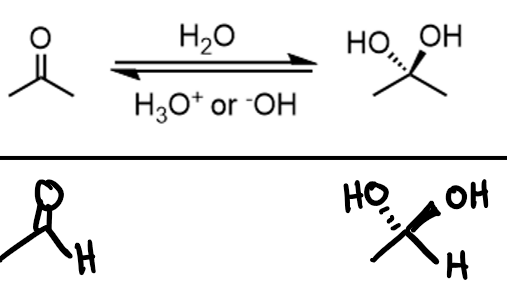
H2O/
H3O+ or OH-
to ketone, aldehyde
ketone -> geminal diol
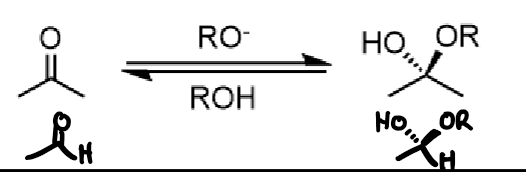
RO-
ROH
to ketone, aldehyde
makes hemi acetal/ketal
basic conditions
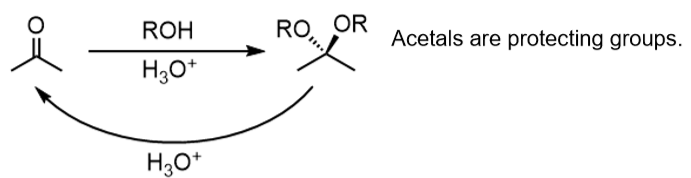
ROH
H+ or acid catylst
to ketone, aldehyde
reverse it?
makes acetal/ketal
acidic conditions
H3O+ is used to reverse
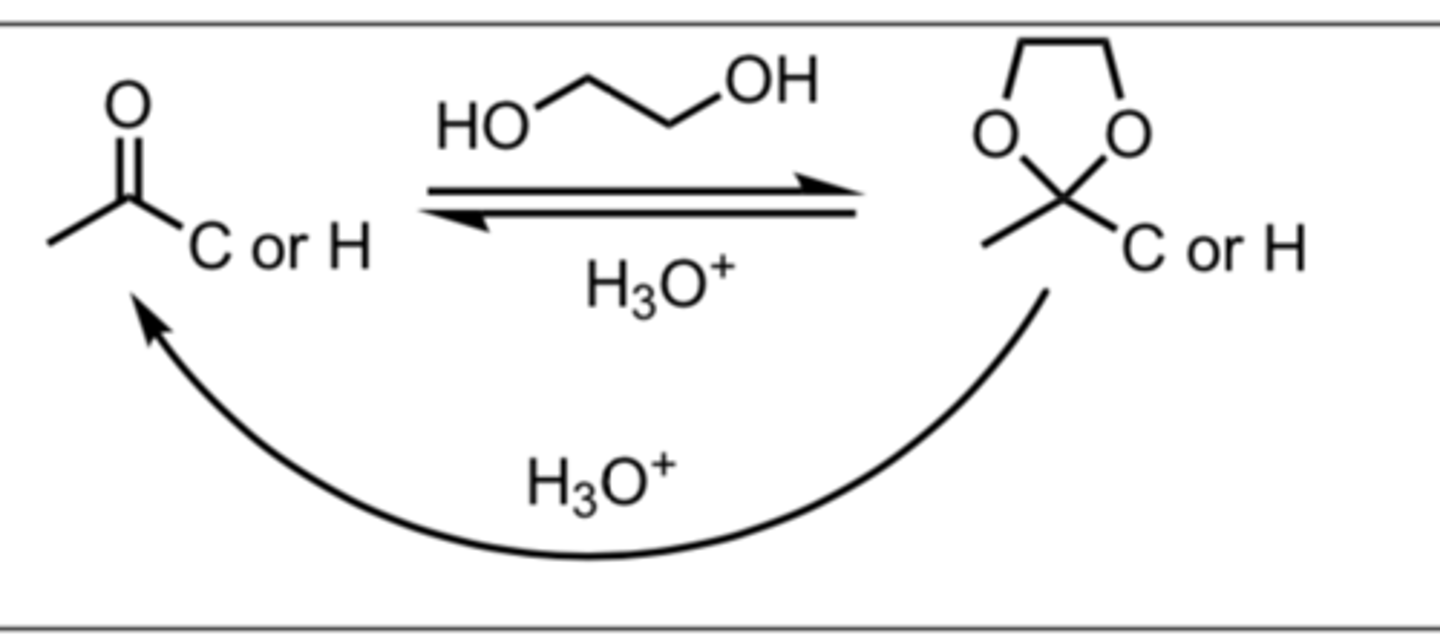
ethylene glycol
to ketone, aldehyde
reverse it?
ketone/aldehyde -> cyclic ketal/acetal
functions as a protecting group for ketones and aldehydes
H3O+ is used to reverse
RNH2/
H3O+
to ketone, aldehyde
reverse it?
makes imine via 1º amine
H3O+ is used to reverse
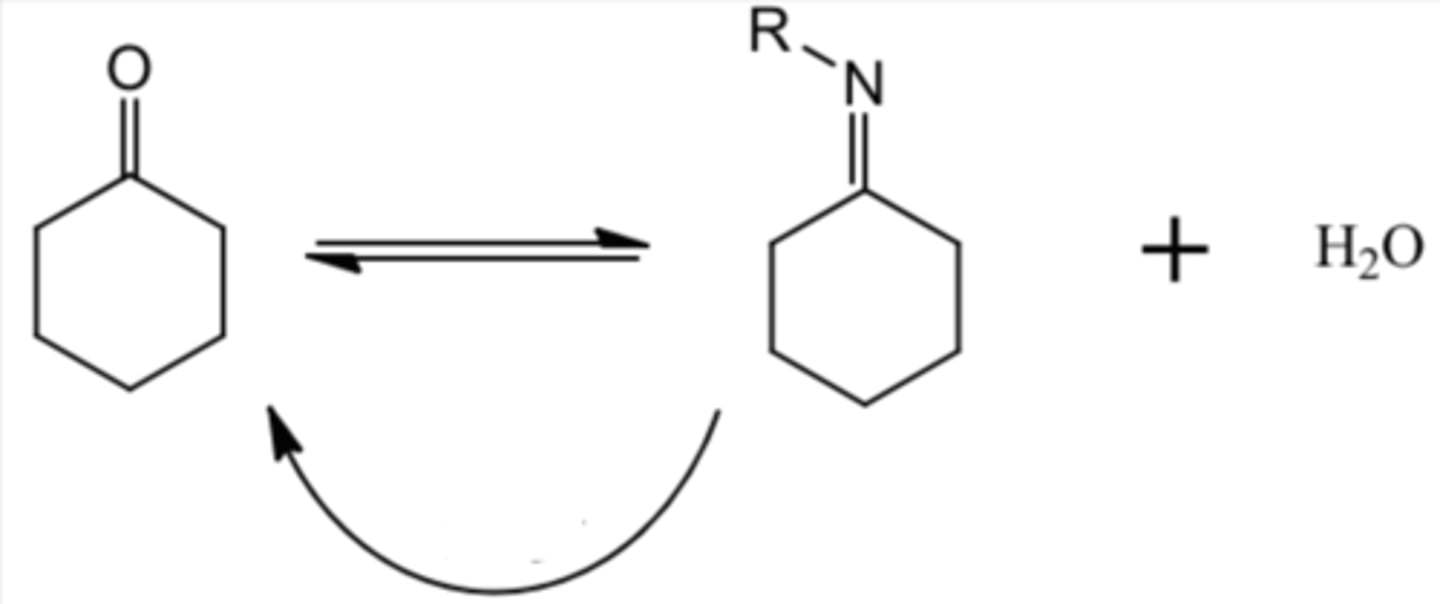
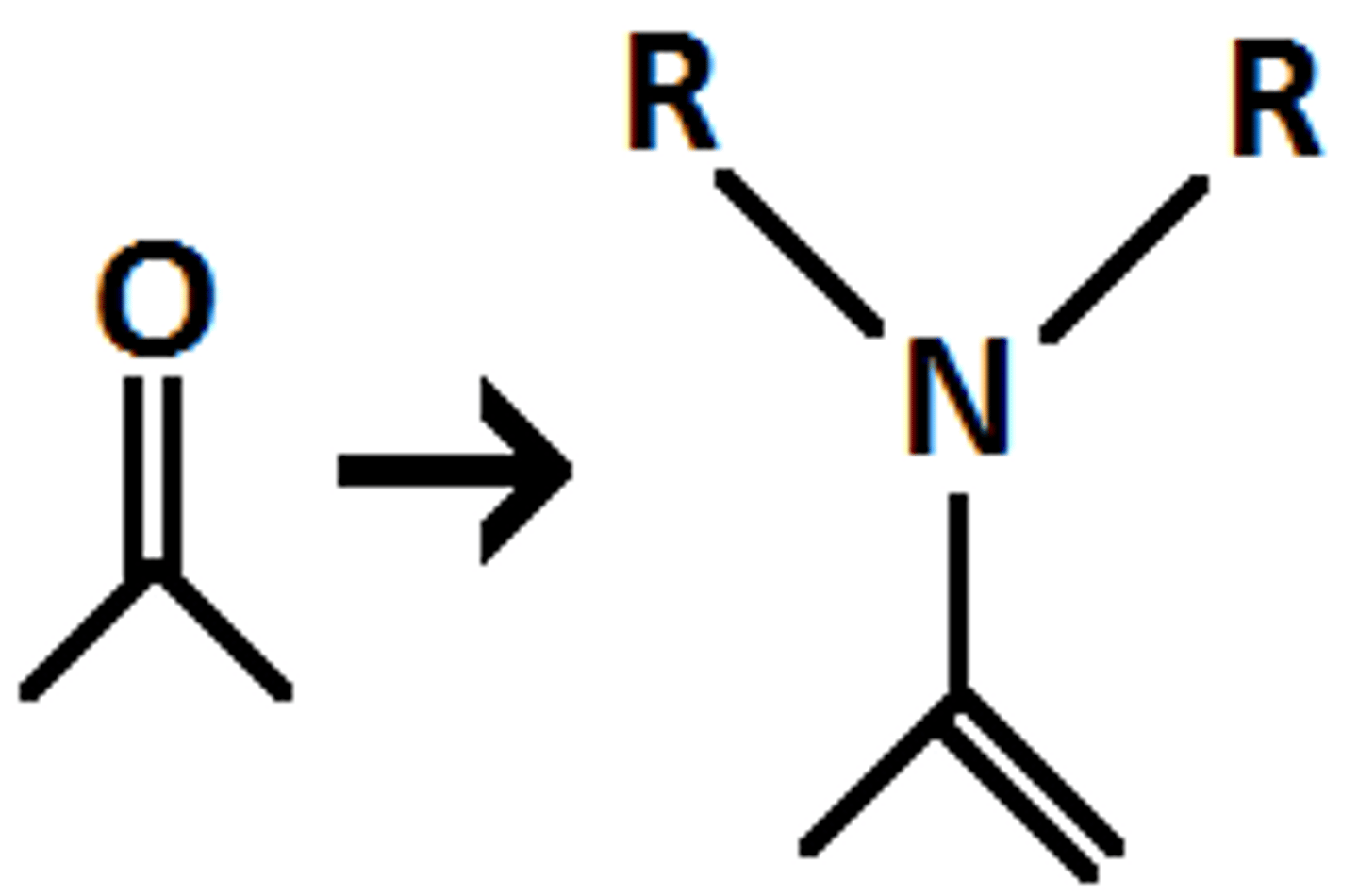
R2NH/
H3O+
to ketone, aldehyde
reverse it?
makes enamine via 2º amine
forms double bond on less sub if applicable
H3O+ is used to reverse+
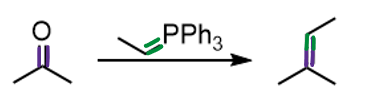
R=PPh3 (phosphylide)/
nBuLi
to ketone, aldehyde
C=O bond --> C=C-R bond
Wittig Reaction
weak reducing agent
NaBH4
Can only reduce aldehydes and ketones to alcohols
strong reducing agent
LiAlH4
strong oxidizing agents
Na2Cr2O7 or H2CrO4 or KMnO4
CrO3/H2SO4
weak oxidizing agents
PCC or 1. DMCO, (COCl2) 2. NEt3
Can only oxidize alcohols (1º and 2º) to aldehydes and ketones
1) LiAlH4
2) H3O+
to ketone, aldehyde
ketone → 2º alcohol
aldehyde → 1º alcohol
strong reducer
R-MgX, Et2O
H3O+
to aldehyde
Makes 2° alcohol


R-MgX, Et2O
H3O+
to ketone
Makes 3° alcohol
2 eq. R-MgX, Et2O
H3O+
to ester
Makes 3° alcohol @ carbonyl, other O disappears

2 eq. R-MgX, Et2O
H3O+
to acyl chloride
Makes 3° alcohol @ carbonyl, Cl replaced with R

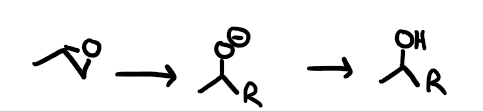
R-MgX, Et2O
H3O+
to epoxide
R adds to less sub
CO2, Et2O
H3O+
to Grignard reagent
Makes carboxylic acid

(CH3)2CuLi
H3O+

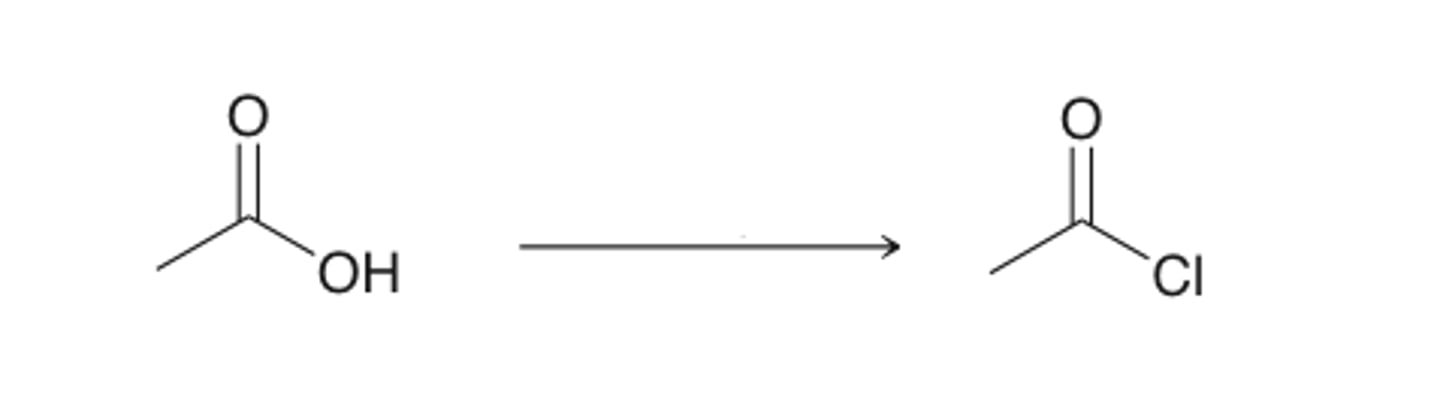
SOCl2/
PCl3 or (COCl)2
to carboxylic acid
makes acid chloride
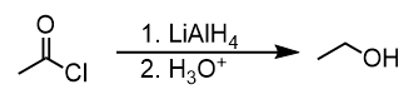
1) LiAlH4
2) H3O+
to acid chloride
Makes 1° alcohol
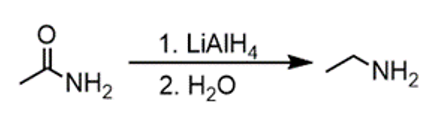
1) LiAlH4
2) H3O+
to amide
Removes carbonyl, C conserved
Strong reducer
1. DIBAL-H, -70ºC
2. H2O
to ester
Cleaves ester to aldehyde

LTBA or LiAlH[O(CH3)3]3
H2O
to acid chloride
Cl to H (aldehyde)
Reduction

Br2
OH-
to amide
amide -> amine (with loss of a C)
Hoffman Rearrangement
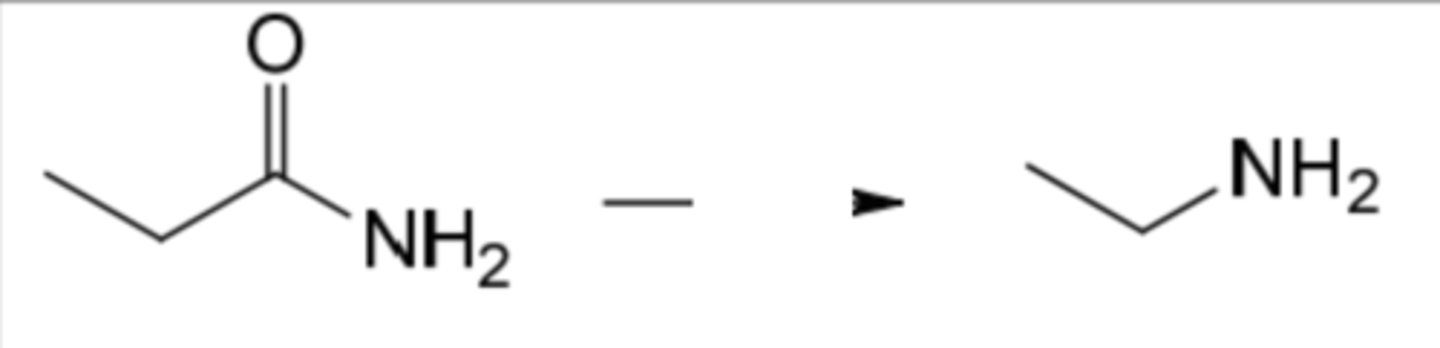
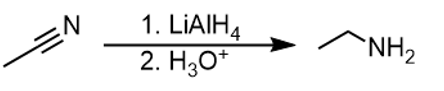
1) LiAlH4
2) H3O+
to nitrile
Adds NH2
Carbon conserved, keep track of it
Strong reducer