Health Assessment Exam 2
 Call Kai
 Learn
Learn Practice Test
 Spaced Repetition
 Match
Match Flashcards
 Knowt Play
1/151

There's no tags or description
Looks like no tags are added yet.
Name | Mastery | Learn | Test | Matching | Spaced | Call with Kai | Chat |
|---|
No analytics yet
Send a link to your students to track their progress
152 Terms
What should you ask when obtaining present medical history of the abdomen?
Do you have any chronic conditions that affect the GI system such as diabetes, hepatitis, or cirrhosis?
What should you ask regarding abdominal distention?
Have you noticed any abdominal distention? If yes, how long has it been distended? What makes it better or worse?
What questions should be asked about digestion problems?
Have you had any problems with the digestion process, such as heartburn, indigestion, nausea, or vomiting? If yes, what makes the symptoms better or worse?
What should you inquire about traveling or exposure to diseases?
Have you been traveling? Have you been exposed to infectious disease or unsanitary water or food preparation?
What details should be gathered for vomiting?
For vomiting, describe the color texture and whether it contains blood or undigested food particles.
What should you ask regarding the color and consistency of the stool?
Describe the color and consistency of the stool.
What should you ask about changes in appetite?
Have you noticed any changes in your appetite? If yes, have you noticed any changes in your weight? Can you describe what you ate in the last 24 hours?
What is the order the abdomen should be assessed?
Inspect, Ausculatate, Palpate
How should the client be positioned when their abdomen is about to be assessed?
Supine with their head on a pillow and knees slightly bent to help the muscles relax
True or False: The genital and thoracic area should be covered for privacy and comfort when assessing the abdomen?
True
Skin tone an appearance findings when assessing the abdomen?
Abdominal skin should be smooth and dry. Even in tone or lighter than the client’s sun exposed areas
Expected variations of the skin when assessing the abdomen?
Moles, healed scars, and striae. Ask the client about their origin. Document locations, measurement, and characteristics
Unexpected skin findings when assessing the abdomen?
Lesions, bruising, dilated veins, purple striae, rashes, jaundice
Expected findings for abdominal symmetry
Symmetry of abdominal movement associated with breathing without any bulges or masses
Unexpected findings for abdominal symmetry
Localized bulging, visible mass, or asymmetry of movement and visible intense pulsations
Expected finding of the umbilicus
Inverted and abdominal midline
True or False: When auscultating the abdomen, start in the lower right quadrant at the ileocecal valve with a gentle touch and proceed in a clockwise direction?
True
How many bowel sounds should be heard when auscultating the abdomen?
5 and 34 times per minute
Borborygmus bowel sounds
Hyperactive, rumbling or growling sound that may be heard with or without a stethoscope
Hyperactive bowel sounds
Louder and more intense than expected because of increased motility or peristalsis, possibly due to diarrhea
Hypoactive bowel sounds
Diminished, soft sounds that occur less than one minute and may also be related to impaired mobility. This may be due to medications, anesthesia, constipation, or bowel obstruction
Absent bowel sounds may be related to what?
Intestinal obstruction
What should the nurse do if a patient’s bowel sounds are absent?
Listen for 5 minutes in each quadrant to determine absence
Vascular or swishing sounds in the bowel may suggest what?
Blood vessel of liver disorder
What must a nurse NOT do is vascular or swishing sounds are heard in the bowel?
Do not Palpate
Should a nurse palpate painful areas of the abdomen first or last?
Last
How can you palpate a patient’s abdomen if they are ticklish?
Put their hand under your hand
Unexpected findings when palpating the abdomen?
Tenderness, masses, involuntary rigidity or muscle guarding
Bristol Stool Chart: Type 1
Separate, hard lumps
Bristol Stool Chart: Type 2
Solid, lumpy
Bristol Stool Chart: Type 3
Solid, smooth with cracks
Bristol Stool Chart: Type 4
Soft, snake like
Bristol Stool Chart: Type 5
Soft blobs, clear edges
Bristol Stool Chart: Type 6
Mushy Fluffy Pieces
Bristol Stool Chart: Type 7
Watery, no solid pieces
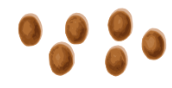
Rate this on the bristol stool chart
Type 1
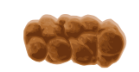
Rate this on the bristol stool chart
Type 2
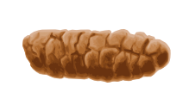
Rate this on the bristol stool chart
Type 3
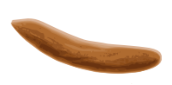
Rate this on the bristol stool chart
Type 4
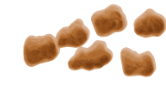
Rate this on the bristol stool chart
Type 5
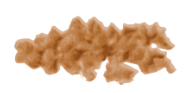
Rate this on the bristol stool chart
Type 6
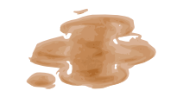
Rate this on the bristol stool chart
Type 7
Rebound tenderness “Blumberg’s Sign”
Nurse palpates the abdomen away from the source of the pain
Rebound tenderness may be a sign of…?
Appendicitis or peritonitis
McBurney’s Point
1/3 the distance from the umbilicus to the right iliac crest
Pain at McBurney’s point may indicate…?
Appendicitis
Murphy’s Sign
Nurse pushes on the right costal margin and asks the patient to inhale
Pain from a positive Murphy’s Sign may indicate…?
Possible Cholecystitis
Costovertebral Angle Tenderness
The nurse places one hand over the costovertebral angle and gently strikes the hand with the ulnar side of the closed fist of the other hand
A positive Cosotovertebral Angle Tenderness may indicate…?
Kidney inflammation or infection
What places paitents at risk for GI conditions like constipation?
Sedentary lifestyle
Health promotion of the abdomen with testing
CDC recommends regular screenings over the age of 45 years
What is the formula to calculate the number of pack years a person has smoked?
Packs per day * # of years smoked
If a patient smoked 2 packs of cigs a day for the last 30 years, what is their total pack-years?
60 Pack-Years
Eupnea
12-20 breaths per minute
Bradypnea
<12 breaths per minute
Tachypnea
>20 breaths per minute
What is the optimal position for breathing?
Tripod position
If a patient is anxious of confused, it could be a sign of…?
Acute hypoxia
Signs of respiratory distress
Tachypnea, Sweating, Tachycardia, Tripod position, Intercostal muscle retractions
Signs of Respiratroy Arrest
Not breathing
Assessment of chronic hypoxia may show…?
Barrel Chest, Clubbed Fingers, lower Sp02
Where should you assess breath sounds?
In the intercostal spaces
To determine equal expansion of the lungs, where should you place your fingers?
T9 or T10
Hypoventilation
Shallow breaths that may be irregular
Hyperventilation
Deep breathing that is often rapid
Cheyne-Stokes Breathing
Breathing patterns of cycles that begin with rapid, shallow breaths, increase to deep breaths, ending with periods of apnea
Ataxic Breathing
Very irregular with varying depths of respiration and periods of apnea
Tracheal Breath Sounds
High ptich, very loud and harsh
Where are tracheal breath sounds heard?
Over the trachea
Bronchial Breath Sounds
Relatively loud, high pitch
Where are bronchial breath sounds heard?
Around the trachea and larynx
Bronchovesicular Breath Sounds
Intermediate sound level and reside over sternum and upper vertebra
Vesicular breath sounds
Heard over majority of the peripheral lungs and are soft intensity and lower pitch
Stridor
High pitch crowing sound. Upper airway obstruction or foreign body
Pleural Friction Rub
Low pitch, coarse, grating sound, may indicate pleural inflammation
Crackles
Crackling, Grating, Popping, Bubbling
True or False: Crackles are not cleared by a cough
True
Wheeze
High-pitch whistling sound through narrowed passages
Rhonchi
Low pitched, snoring sound. Fluid, mucus, or growth
Where do you listen for the aortic valve?
2nd ICS right of the sternal border
Where do you listen for the pulmonic valve?
2nd ICS left of the sternal boarder
Where do you listen for the Erbs Point?
3rd ICS left of the sternal border
Where do you listen for the Tricuspid Valve?
4th ICS left of the sternal boarder
Point of maximal impulse
Left MCL 4th to 5th ICS
S1
Lub, dull, low pitched sound
S2
Dub, Higher pitched sound
Systole
Silent period between S1 and S2
Diastole
Silent period between S2 and the next S1
S3 or S4 may indicate what?
Presence of heart disease
True or False: S3 in an adolescent is NOT a normal finding?
False
A lack of hair or thicky shiny skin or the presence of ulcers may indicate what?
Decreased circulation
Lordosis is most common in which population?
Obese, pregnant, and toddlers
Kyphosis is most common in which population?
Older Adults
Which neruological structure is most important for maintaining balance or coordination
Cerebellum
What type of footwear should someone with a high fall risk use when walking on carpet?
Leather footwear
Stereognosis test
Ask the patient to close their eyes while you place a common, small object in their hand
Graphesthesia test
Measures brain ability to recognize letters or numbers drawn on your skin using only the sensation of touch
Two-point discrimination test
Neurological assessment that measures tactile spatial acuity and nerve density
Dysethesia
Neurological condition cuasing abnormal, unpleasant sensations like burning, tingling, or eletric shocks, that occur without an obvious trigger or in response to a mild touch