chapter 7 moles
 Call Kai
 Learn
Learn Practice Test
 Spaced Repetition
 Match
Match Flashcards
 Knowt Play
1/7

There's no tags or description
Looks like no tags are added yet.
Name | Mastery | Learn | Test | Matching | Spaced | Call with Kai | Chat |
|---|
No analytics yet
Send a link to your students to track their progress
8 Terms
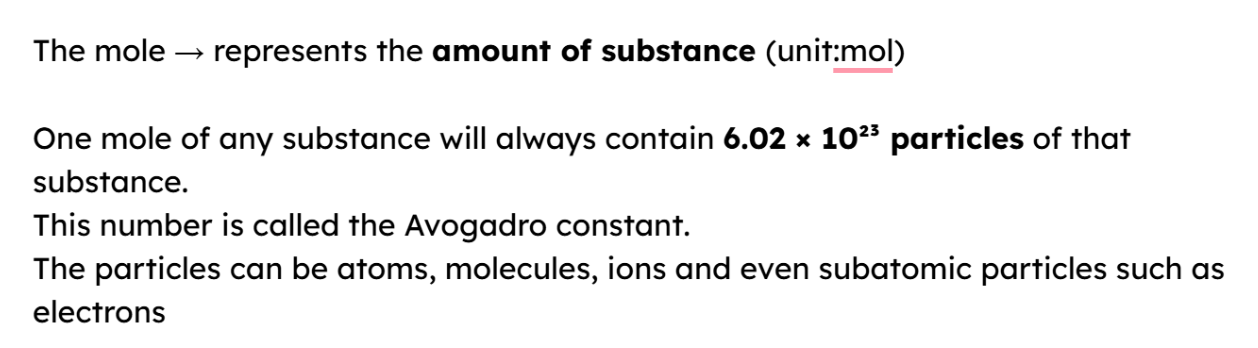
what is a mole?
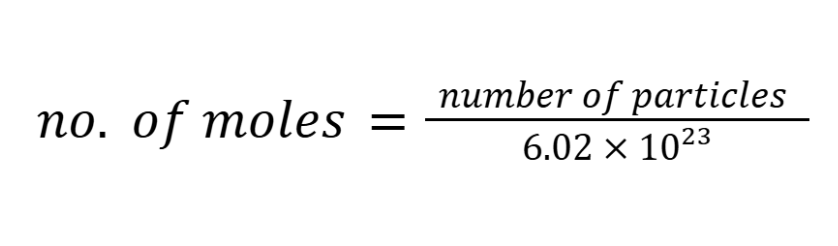
number of moles formula (particles)
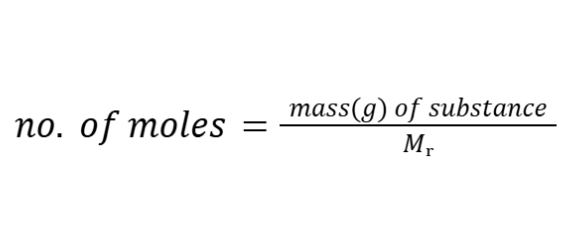
Aᵣ and Mᵣ
One mole of any substance has a mass equal to its relative atomic mass(for elements) (Aᵣ), relative molecular mass (for molecules) or relative formula mass (for iconic compounds)
This mass is the molar mass (g/mol) of the substance.
average mass is relative to 1/12 the mass of an atom of carbon-12
Mᵣ of a substance can be calculated by adding together the Aᵣ of all the atoms in its chemical formula
** Molar mass = Aᵣ/Mᵣ -> the only difference is that molar mass has units
number of moles involving Mᵣ/Aᵣ
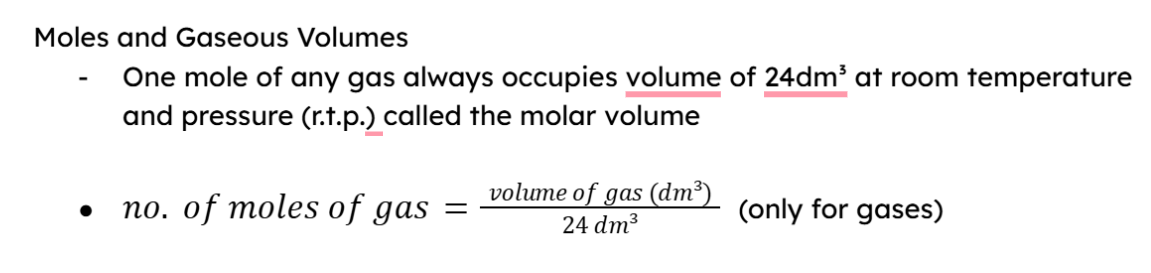
moles and gaseous volumes
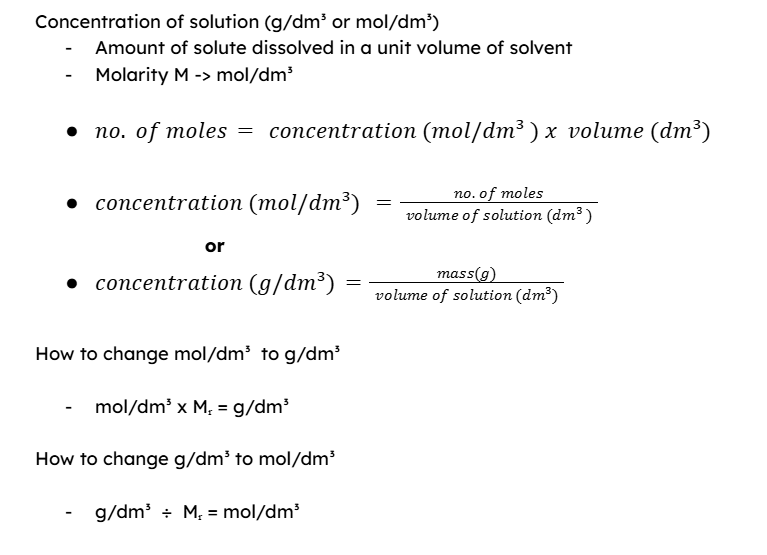
concentration
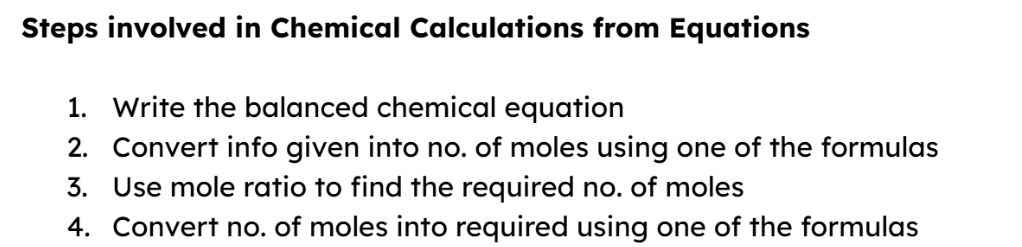
chemical calculations from equations
** If the given and required is gas to gas then we can use a shortcut
Do not need to do mole ratio, so don’t need to find no. of moles
Just do volume ratio as mole of gas always occupy the same volume
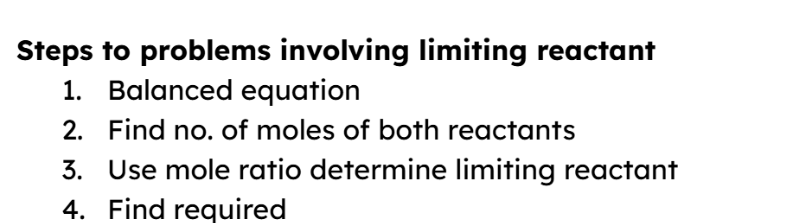
limiting reactants
** The amount of product formed depends on the amount of limiting reactant present (start with limiting reactant on left in mole ratio)
what is left behind is products formed + reactants in excess