Exam 3 - ATS 700
 Call Kai
 Learn
Learn Practice Test
 Spaced Repetition
 Match
Match Flashcards
 Knowt Play
1/89

Earn XP
Description and Tags
Therapeutic exercise, nomenclature, ergo-dynamics, equipment fitting
Name | Mastery | Learn | Test | Matching | Spaced | Call with Kai | Chat |
|---|
No analytics yet
Send a link to your students to track their progress
90 Terms
open kinetic chain exercises
extremity is not in contact with anything
closed kinetic chain exercises
extremity is in contact with the ground/surface
Archimedes principle
the upward force that is exerted on a body immersed in fluid is equal to the weight of the fluid displaces
compare assisted, supported, and resisted buoyancy
assisted: buoyancy is helping the body motion
supported: activity takes place in the plane of the water
resisted: buoyancy is directly opposed to the body motion
pascal’s law
at any given depth, liquid is exerting equal pressure on all surfaces
weight bearing percentages and anatomical landmarks for neck, torso, and hips
seventh cervical vertebrae: 8%
xiphoid process: males - 35%, females - 28%
ASIS: males - 54%, females - 47%
viscosity
the amount of internal friction of a fluid (how thick the fluid is)
laminar vs. turbulent flow
laminar - smooth, all molecules flowing in the same direction
turbulent flow: interrupted, positive pressure on anterior side and negative pressure on posterior side
factors that contribute to ROM limitations
joint capsule tightness
ligamentous adhesions
muscular tightness/spasm
myofascial tightness
pain/joint effusion
bony blocks
muscle spindles vs. golgi tendon organs
muscle spindles: react to sudden stretch
GTOs: detect tension over time (tell muscles to relax after 6 seconds)
autogenic inhibition
reflexive relaxation that allows tissues to continue to stretch (the point where GTOs overtake muscle spindles)
reciprocal inhibition
contracting the agonist to force antagonist to relax
PNF meaning
proprioceptive neuromuscular facilitation
contraindications to stretching (full list in slides)
limitation of joint motion by bony block
recent fx
inflammation or infection around joints
hematoma or other tissue trauma
sharp, acute pain with joint movement
PNF stretching techniques
contract-relax: stretch passively, isotonic contraction of agonist, then stretching further
hold-relax: stretch passively, isometric contraction of agonist
slow reversal hold-relax: passive stretch first, contract in antagonist pattern before contracting agonist (similar to contract relax but with an added contraction of the agonist)
joint mobilization purposes
help with lost accessory motion (!)
facilitate healing
reduce disability
relieve pain
restore full ROM
3 accessory motions
rolling: multiple surfaces of bone hitting multiple surfaces of another bone
spinning: multiple surfaces of the first bone hitting one surface of the second
gliding: one surface of the first bone hitting multiple surfaces of the second
grade 1 joint mob
small movements at the beginning of the ROM
grade 2 joint mob
large movements within the midrange of motion
grade 3 joint mob
large movement up to the pathological limit of ROM
grade 4 joint mob
small movements at the very end of ROM
grade 5 joint mob (and its caveat)
quick thrust delivered at the end of the ROM and usually accompanied by a popping sound
(this is typically not legal for ATs to perform)
primary purpose for each grade of joint mob
grades 1 & 2: decreasing pain
grades 3 and 4: increasing mobility
open vs. closed packed position
open: joint is going to be the loosest (usually mid-range)
closed: joint is the tightest (usually at end range)
convex-concave rule
if concave is stationary and convex is mobilized, move in the opposite direction of the limitation
if convex is stationary and concave is mobilized, move in the same direction of the limitation
ex: if shoulder flexion is limited, since the scapula is concave and the humerus is convex then the joint should be mobilized posteriorly
ex: if knee flexion is limited, since the femur is convex and the tibia is concave then the joint should be mobilized anteriorly
how are we trying to present information about injuries?
PRECISE and CONCISE (!)
use specific information in as few words as possible
give as much quantitative info as possible
examples of what we use grades for
sprains
strains
examples of what we use levels for
trauma centers
spinal cord injuries
examples of what we use types for
growth plate injuries
acromion process shapes
fractures
tensile forces
pulling or traction on a tissue
compression
pressing down on a tissue
(ex. contusion, lumbar spine discs)
shear forces
forces in 2 opposite directions
(ex. secondary concussive injury)
torsion
twisting
(ex. knee getting twisted and causing torn ligaments)
direct blow
direct hit to a specific area
common tissues that can get injured
skin, muscle, tendon, fascia, joint capsules
ligament, bursae, cartilage (CT), nervous tissue
tendinitis vs. tendinosis vs. tendosynovitis
tendinitis: more acute pain/inflammation
tendinosis: more chronic, moving past the subacute phase of tissue repair
tenosynovitis: synovial membrane (tendon sheath) is inflamed
break down heterotopic ossification
hetero: other or different
topic: position or place
ossification: bone development
ecchymosis
coloration of tissue (skin)
callus vs. corn
callus: thickening of the tissue from repetitive force
corn: focal hyper-keratinization of skin (can present like a deeper callus)
hard corn vs. soft corn
hard: tough, pokey, feels like glass
soft (heloma molle): looks/feels like rotten tissue, most often an interdigit lesion (have to change mechanism or else it will come back)
what does sprain mean (think word/country of origin)
to press out
clinically defined as a traumatic twisting of a joint resulting in a stretching or total tearing or the stabilizing connective tissues
dislocation vs. subluxation
dislocation: joint is forced completely out of its normal and proper alignment (must be reduced)
subluxation: partial dislocation (bone goes back into place after)
osteochondral dissecans (OCD)
delamination of cartilage and bone underneath (both begin to break loose)
open vs. closed fracture (fx)
open: skin is broken
closed: skin is in tact
avulsion fx
tissue separates from the bone
comminuted fx
crushed
greenstick fx
bone is compressed on one side and breaks on the other (common in adolescents)
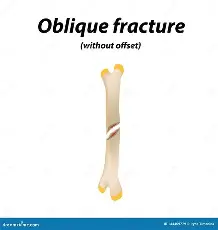
oblique fx
angular
transverse fx
fracture in the transverse plane
spiral fx
damage to a bone around an axis
compression fx
same as force, pressing down on a bone (like landing hard on feet)
epiphyseal fx
fracture at the growth plate (common in adolescents)
stress fx
fracture from overuse, chronic injury (like shin splints)
diaphysis
main shaft of the bone
epiphysis
growth plate, joint surfaces covered with a layer of articular cartilage
located at the end of long bones
periosteum
dense, white, fibrous membrane, covers long bones except at joint surfaces
contains osteoblasts and blood vessels
concomitant
injury that occurs along with a primary injury
ex. proximal fibula fx in addition to ankle sprain
apophysitis
growth plate irritations from tensile forces
often a precursor to an avulsion fx
hypothesia
diminished sense of feeling
hyperthesia
increased sense of feelings such as pain or touch
paresthesia
numbness, pricking, or tingling
may occur from a direct blow or stretch to an area
neurapraxia
trauma directly affecting nerves
often called a burner or stinger
entrapment
nerve gets pinched within other tissue structures
ex. carpal tunnel
stretch injuries (3)
neurapraxia - contusion
axonotmesis - crushing
neurotmesis - transection
load
external force acting on tissues that causes internal reaction within the tissues
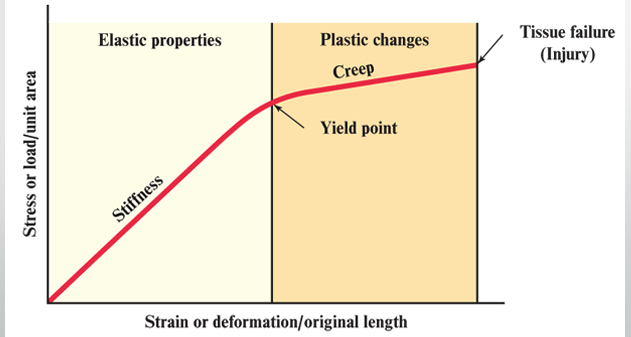
stiffness
relative ability of a tissue to resist a particular load
(more stiffness = more load it can withstand
stress
internal resistance of tissues to an external load
(think wall pillars)
strain
extent of the deformation of tissue when it is loaded
elasticity
property of human tissue that allows a tissue to return to normal following deformation
yield point
when tissue is deformed to the point it no longer reacts elastically
plastic changes
when deformation persists after the load is removed and permanent changes remain
creep
deformation in the shape and/or properties of a tissue that occurs if load stays constant over time
(the point where elasticity changes to plasticity)
mechanical failure
ability of tissue to withstand stress and strain is exceeded
(spot at the end of the chart; where injury occurs)
types of tissue loading that cause strain
compression
tension
shearing
bending
torsion
NOCSAE and what they do
National Operating Committee on Standards for Athletic Equipment
tests and establishes minimal safety requirements
also sets standard for materials and the quality of these materials for safety equipment
certifying bodies for ice hockey helmets
Canadian Standards Association (CSA)
Hockey Equipment Certification Council (HECC)
types of face protection
full face guard (cages)
throat guards
mouth guards
ear guards
eye protection
types of eye protection
protective sport goggles
sunglasses
contact lenses
eye shields
purpose of trunk and thorax protection
to protect against regions that are exposed to the impact of forces
ex. external genitalia, bony protuberances, shoulders, ribs, and spine
2 types of football shoulder pads
cantilevered - bulkier for blocking and tackling
non-cantilevered - does not restrict motion
what is the purpose of socks as protective equipment
to help absorb and distribute shock
(poorly fit socks can cause abnormal stress on the foot)
best practices for socks as protective equipment
clean, dry, and without holes
cotton/polyester blend for less weight and and faster drying
when should shoes be fitted
at the end of the day
(due to gradual increase in volume from weight bearing)
other consideration for shoe selection
toe box
sole/heel
arch support
playing surfaces
mechanism of activities
foot orthotics
assisted devices for ambulation
(inserts are a type of orthotic)
prophylactic definition and which brace its typically used for
preventative
used for knee braces
types of knee braces
rehabilitative
functional
neoprene (with medial and lateral support)
purpose of casting (ISP)
immobilize
stabilize
protect
casting materials
plaster
fiberglass (!)
plastics
what are we checking for after casting (FACTS)
functionality
arterial pulse
capillary refill
temperature
sensation