Described the Modes of Inhibition
 Call Kai
 Learn
Learn Practice Test
 Spaced Repetition
 Match
Match Flashcards
 Knowt Play
1/7

There's no tags or description
Looks like no tags are added yet.
Name | Mastery | Learn | Test | Matching | Spaced | Call with Kai | Chat |
|---|
No analytics yet
Send a link to your students to track their progress
8 Terms
Describe Competitive Inhibition
Reversible
Binds at Catalytic Site but NOT CATALYZED
Looks like substrate
Can be reversed by increasing [Substrate]
Km Increases, Vmax stays the same
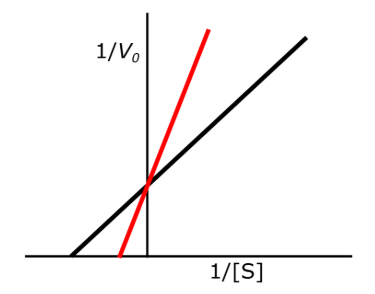
What form of Inhibition does this Graph Represent? What is Changing?
Competitive.
Km is increasing. Vmax stays the same.
Describe Noncompetitive Inhibition
Allosteric
Inhibitor binds to Allosteric site (not catalytic site)
Has no effect on Substrate binding
Prevents Catalysis by altering catalytic site
Km stays the same, Vmax decreases
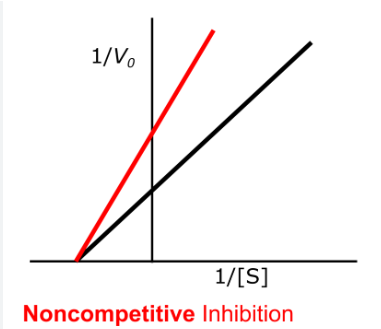
What form of Inhibition does this Graph Represent? What is Changing?
Noncompetitive.
Km stays the same, Vmax decreases
Describe Uncompetitive Inhibitors
Doesn’t bind to enzyme until substrate binds first
Binds to enzyme-substrate complex (pseudo binding site)
Prevents catalysis
Km decreases, Vmax decreases
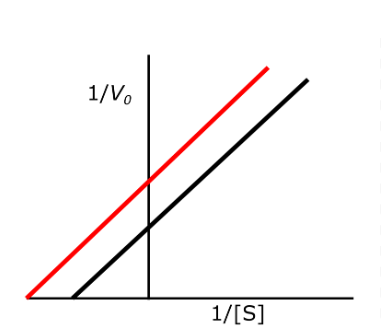
What form of Inhibition does this Graph Represent? What is Changing?
Uncompetitive
Km and Vmax decrease
Describe Transition State inhibitors
Inhibitor mimics the transition State of the substrate to lock enzyme in transition State (most stable)
IRREVERSIBLE
Binds to catalytic site and creates enzyme + inhibitor complex
Increasing substrate doesn’t reverse inhibition
Describe Suicide Inhibition
Binds to catalytic site and is catalyzed
Becomes COVALENTLY BOUND
Less potent that transition State inhibitors
Single use
Mimics substrate and won’t leave catalytic site
IRREVERSIBLE
Time dependent