Comprehensive Guide to Architectural Acoustics: History, Design, and Applications
 Call Kai
 Learn
Learn Practice Test
 Spaced Repetition
 Match
Match Flashcards
 Knowt Play
1/140

There's no tags or description
Looks like no tags are added yet.
Name | Mastery | Learn | Test | Matching | Spaced | Call with Kai | Chat |
|---|
No analytics yet
Send a link to your students to track their progress
141 Terms
Architectural Acoustics
The acoustics of the built environment, defined as the study of sound in buildings and the design of structures for optimal acoustic performance, including control of sound transmission throughout the building, maintaining conditions for good speech intelligibility, and maintaining sound isolation for speech privacy.
Acoustics
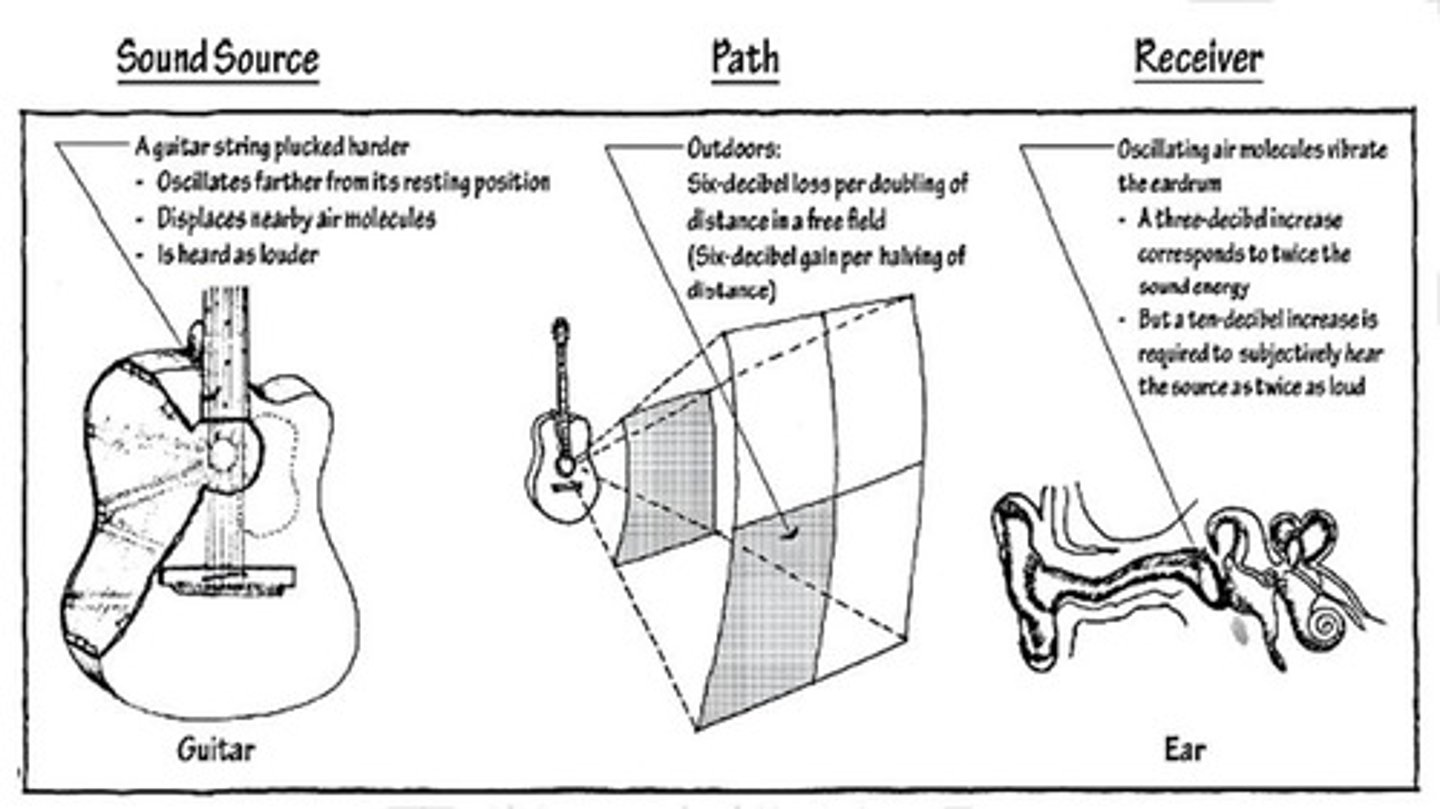
The science of sound that deals with production of sound, propagation of sound from the source to the receiver, and detection and perception of sound by the receiver.
Room Acoustics
The qualities or characteristics of a room, auditorium or concert hall that determine the audibility of speech or fidelity of musical sound in it.
Environmental Acoustics
Involves the control of noise pollution, environmental noise which includes all motor vehicles such as automobiles, aircraft, industrial plant and construction heavy equipment.
Physical Acoustics
Encompasses propagation and absorption of sound at all frequencies in air and other gases, liquids, semi-solids and solids. It deals with airborne, audible sound, infrasound and ultrasound.
Engineering Acoustics
Deals with the development of devices to generate (loudspeakers), record (microphones) and analyze (frequency analyzers) sound of all kinds.
Structural Acoustics
Field of Physics that deals with the sound emitted by vibrating structures.
Musical Acoustics
Deals with the physics of musical instruments and the interaction of musicians, instruments, listeners and performance spaces.
Underwater Acoustics
Deals with all aspects of the sound of the sea and its use for detection of vessels and the exploration of the seabed.
Physiological Acoustics
Deals with models and theories of the operation of the ear and its anatomy, including cochlear mechanics and the physiology of hair cells.
Psychological Acoustics
Studies the brain's signal-processing function, which takes nerve signals and processes them.
Acoustical Design
The planning, shaping, finishing and furnishing of an enclosed space to establish the acoustical environment necessary for distinct hearing.
Acoustical Treatment
The application of absorbent or reflecting materials to the wall, ceilings and floor of an enclosed space to alter or improve its acoustic properties.
Sound Transmission
The process by which sound waves travel through a medium from one location to another.
Speech Intelligibility
The clarity with which speech can be understood in a given environment.
Sound Isolation
The ability of a structure to prevent sound from entering or leaving a space.
Noise Pollution
Unwanted or harmful sound that disrupts the normal acoustic environment.
Audibility
The ability to hear sounds clearly.
Fidelity of Musical Sound
The accuracy with which musical sounds are reproduced in a given space.
Acoustic Properties
Characteristics of a space that affect how sound behaves within it.
Mechanical Waves
Waves that require a medium to travel through, including sound, ultrasound, and infrasound.
Sound Waves
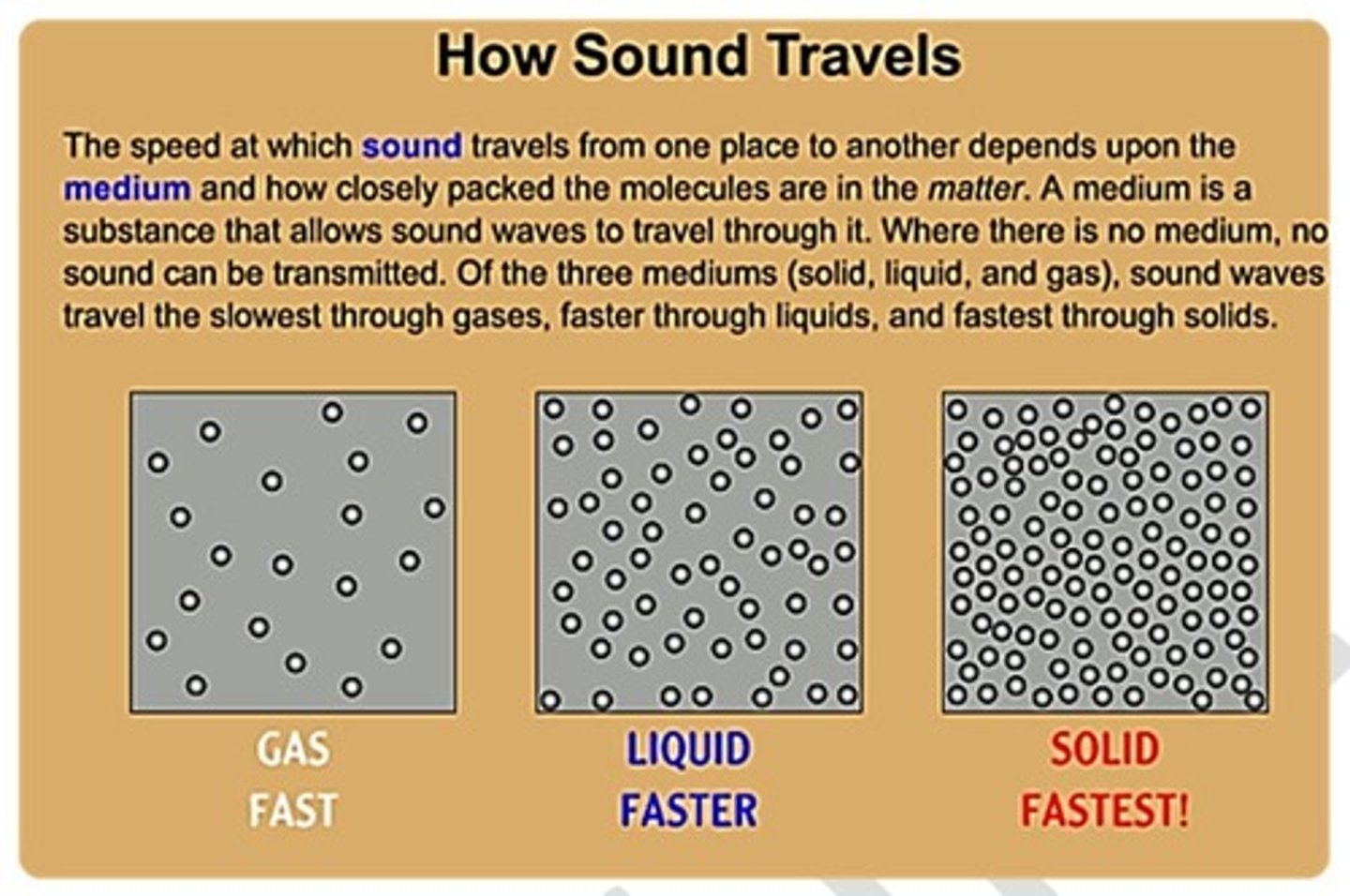
Vibrations that travel through air, water, or solid materials and can be heard when they reach a person's or animal's ear.
Acoustic Environment
The overall sound characteristics of a space, influenced by its design and materials.
Vibrating Structures
Structures that emit sound due to vibrations caused by external forces or internal mechanisms.
Environmental noise
Sounds from pumps, generators, compressors, fans, automobiles, trains, airplanes and the like.
Archeoacoustics
A sub-field of archaeology and acoustics which studies the relationship between people and sound throughout history.
Aeroacoustics
The study of noise generated by air movement, for instance via turbulence and the movement of sound through the fluid air.
Bioacoustics
Studies all aspects of acoustic behavior in animals and biological media in general.
Speech and Communication Acoustics
Considers the production and transmission of speech.
Acoustics of Vibration
Study of how mechanical systems vibrate and interact with their surroundings.
Sound
An auditory sensation in the ear or a disturbance in a medium that can cause sensation.
Health and Safety
Hearing loss is the most common occupational hazard; excessive noise exposure can cause hearing disability.
Tinnitus
Characterized by a constant ringing, hissing or other sound in the ears or head when no external sound is present.
Productivity
The effectiveness of productive effort is measured in terms of the rate of output per unit input.
Concentration recovery time
It takes an average of 15 minutes to regain concentration after being distracted.
Common sources of noise in the workplace
Ventilation, colleagues talking on the phone, sounds from teams working further away, talking, laughing people close/far in the same room.
Effects of noise on health
Unwanted noise can be linked to headaches, stress, digestive issues, heart problems, ulcers, respiratory ailments, and high blood pressure.
Acoustic design importance
Factors that architects need to consider aside from aesthetic include health and safety, productivity, and comfort.
Ground vibrations
Vibrations from railways that require vibration isolation to reduce vibration in operating theatres.
Vibration control
Protecting a building from earthquakes or measuring how structure-borne sound moves through buildings.
Sound production by animals
A topic within bioacoustics that studies how animals produce sound.
Biosonar
A topic within bioacoustics that refers to the biological sonar used by animals.
Sound reception by animals
A topic within bioacoustics that studies how animals perceive sound.
Medical diagnostics using acoustics
Utilizing acoustics, especially ultrasonics, for medical diagnostics.
Acoustics of archaeological sites
Involves studying the acoustics of archaeological sites and artefacts.
Noise exposure effects
Excessive noise exposure can lead to various health issues beyond hearing loss.
Comfort and Human Factors
Noise can cause irritating, uncomfortable, or oppressive environments.
Annoying sounds
Sounds with approximately the same loudness that are considered annoying, such as an irritating hiss, whistle, rumble, or roar.
Noise
An essential factor for occupant comfort, alongside temperature and air quality.
Acoustic product installation
Beneficial for the amount of noise mitigation in a space.
Functionality
The principle that buildings and/or spaces should be designed based solely on its purpose and function.
QUIET spaces
Spaces where silence is a necessity, such as libraries, museums, and health care facilities.
UNDERSTANDING OF SPEECH spaces
Spaces where understanding speech is vital, including classrooms, boardrooms, lecture halls, and courtrooms.
BUZZ spaces
Spaces where noise should not be overwhelming, such as restaurants, lobbies, food courts, and malls.
PUBLIC ANNOUNCEMENT audibility spaces
Spaces that require clear public announcements, like airports, educational facilities, government facilities, and public spaces.
SPEECH PRIVACY spaces
Spaces where confidentiality in conversation is important, such as open offices, call centers, and meeting rooms.
MUSIC ENHANCEMENT spaces
Spaces where enhancing music quality is crucial, including recording studios, concert halls, and performance spaces.
CONFIDENTIALITY spaces
Spaces where confidentiality is essential, such as doctors' clinics, human resources offices, and counseling offices.
SPEECH AND MUSIC consideration spaces
Spaces where both speech and music must be considered, including worship centers, ballrooms, theaters, and multi-purpose halls.
Advantages of acoustics in design
Includes reduced project cost, maintained aesthetics, limited designer's liability, and client protection.
Acoustics origin
The scientific study of sound is generally considered to have its origin in ancient Greece.
Greek word akouein
The origin of the word acoustics, pertaining to hearing.
Concentric circle
A design introduced by the Greeks to accommodate large groups for gatherings.
Pythagoras
An ancient Greek philosopher who studied musical intervals and their numerical ratios.
Aristotle's understanding of sound
Described sound as contractions and expansions of air, illustrating wave motion.
Harmonics
The science explaining the pitch of notes and intervals in the Greek musical scale.
Sound in auditorium
The concept of sound pitches traveling from stage to audience ears by a direct route.
Site of a Theatre
Must be chosen to avoid echo and reflections that interfere with sound clarity.
Marcus Vitruvius Pollio
A Roman architect who emphasized the importance of sound in his work 'De Architectura'.
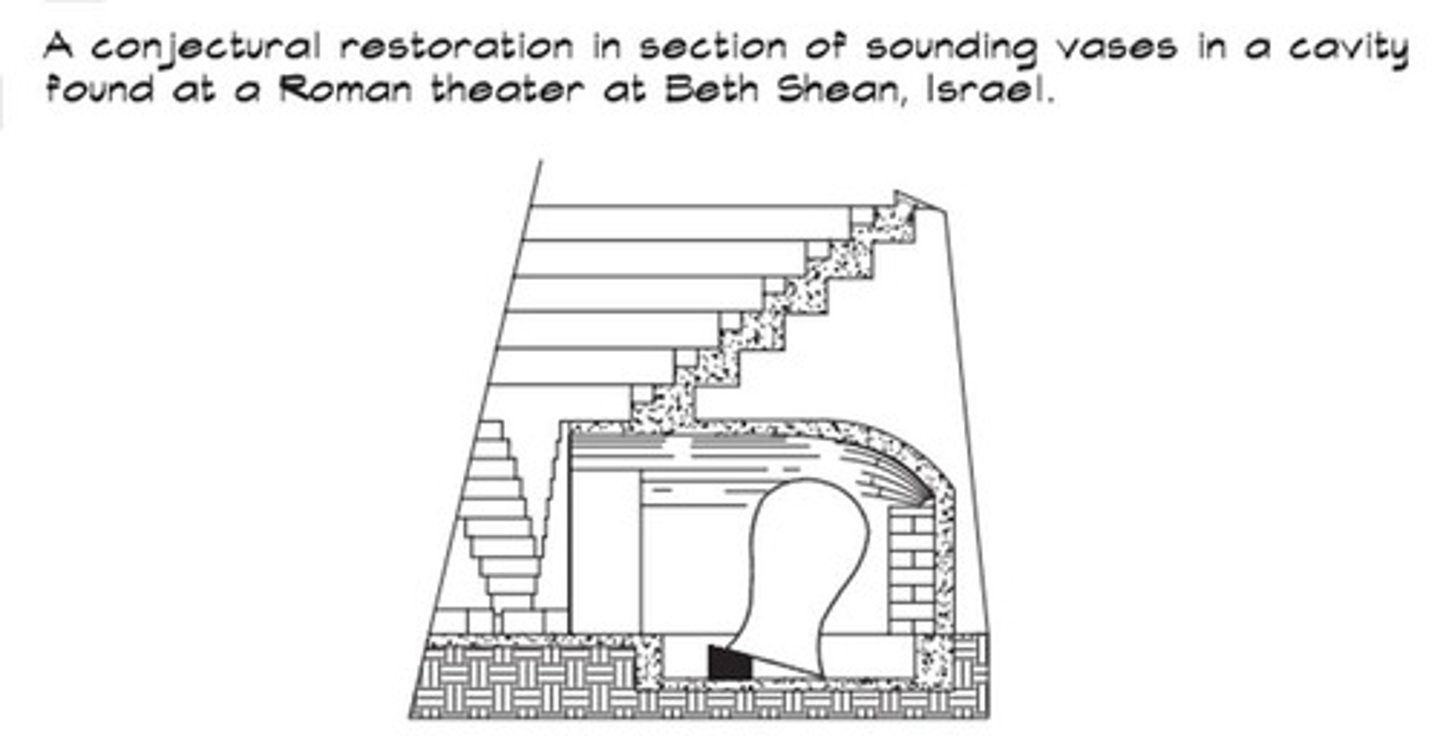
Sounding vessels
Enclosed volumes of air that resonate at a single frequency, similar to Helmholtz resonators.
Timber panels
Used to resonate and improve intelligibility in acoustics.
Building height recommendation
Should be half the width of the building, with cornices made of woodwork or stucco.
Early Christian period architecture
Dominated by the church, primarily using flat brick and marble as decorative façade.
Basilican churches
Early basilican churches were highly reverberant, even with open windows, requiring church music to adjust to the architecture to be understood.
Vitruvius' Building Design
Theatres should be located away from winds and from marshy districts and other unwholesome quarters.
Sabbioneta Theater
The semi-elliptical plan was pushed back into a U-shape, with a small seating capacity and little acoustical support from reflections off the beamed ceiling.
Baroque Period
Both music and architecture were highly ornamented, creating localized reverberant fields that supported the placement of two or three ensembles of voices and instruments.
Romanesque Period
Characterized by rounded arches and dome ceilings, Romanesque structures remained massive until the introduction of buttresses, allowing walls to be lightened.
Gregorian chant
Music developed as part of the worship in the 8th and 9th centuries, associated with the Romanesque Period.
Gothic cathedrals
Massive structures that served as focal points for worship and repositories for religious relics, suited for plain chant music.
Renaissance Period Acoustics
Favors instruments with gradual and sustaining notes, with speech generally unintelligible at any distance.
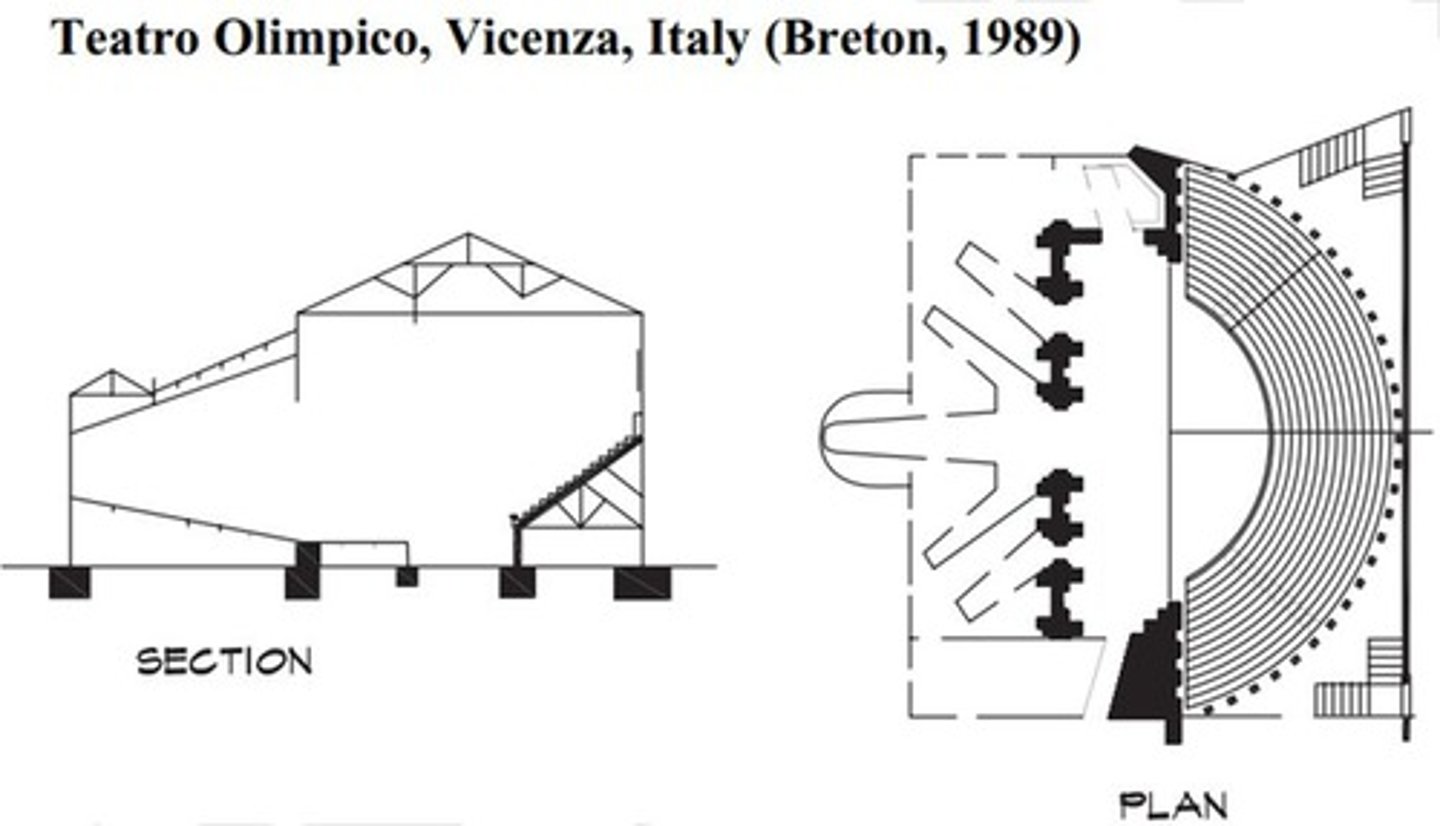
Teatro Olimpico
The first built permanent theater with a semi-elliptical seating plan and adequate acoustics due to beneficial early reflections.
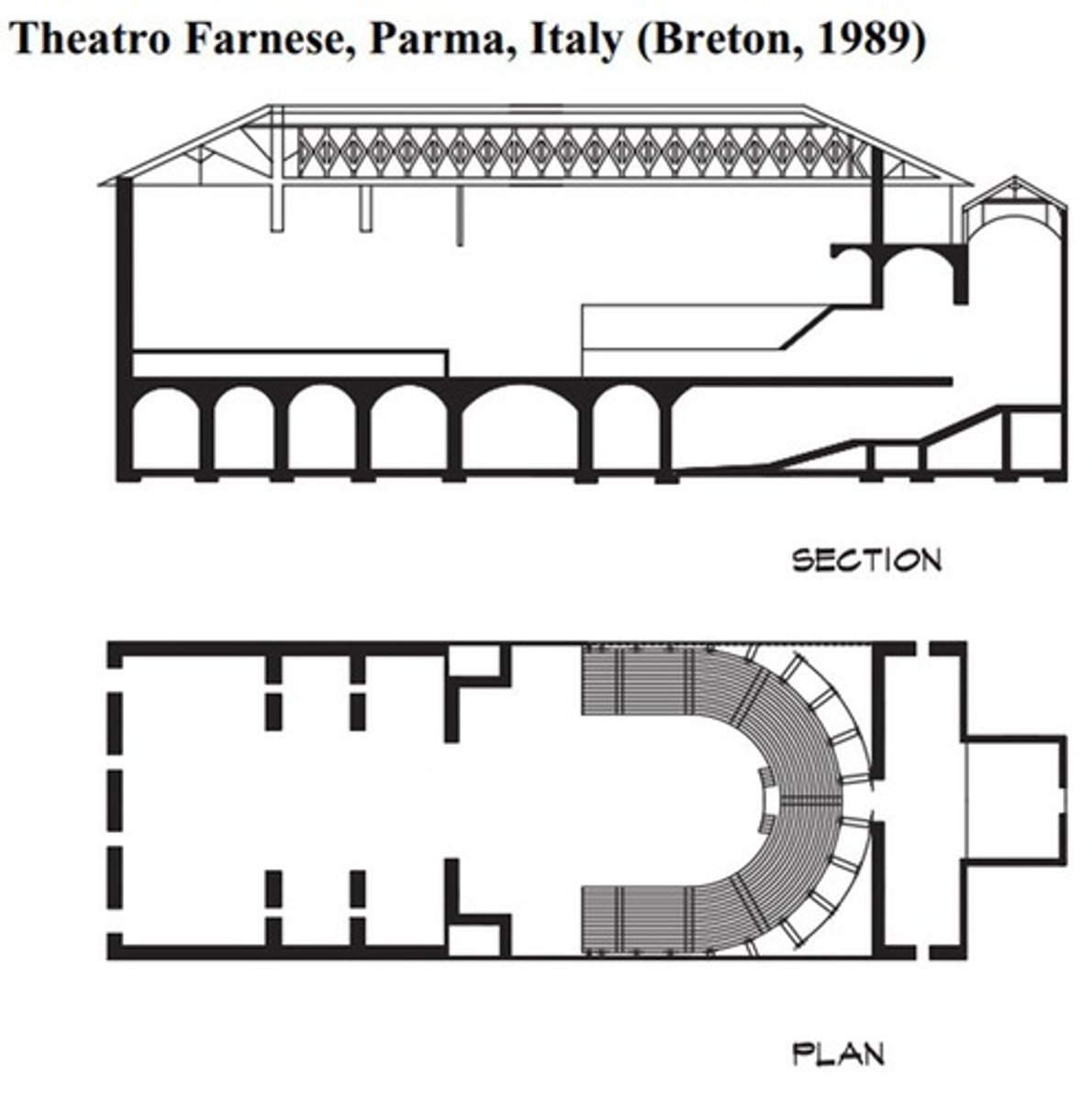
Theatro Farnese
Constructed between 1618 and 1628, featuring horizontal set pieces and a U-shaped seating arrangement for optimal viewing.
Public opera house
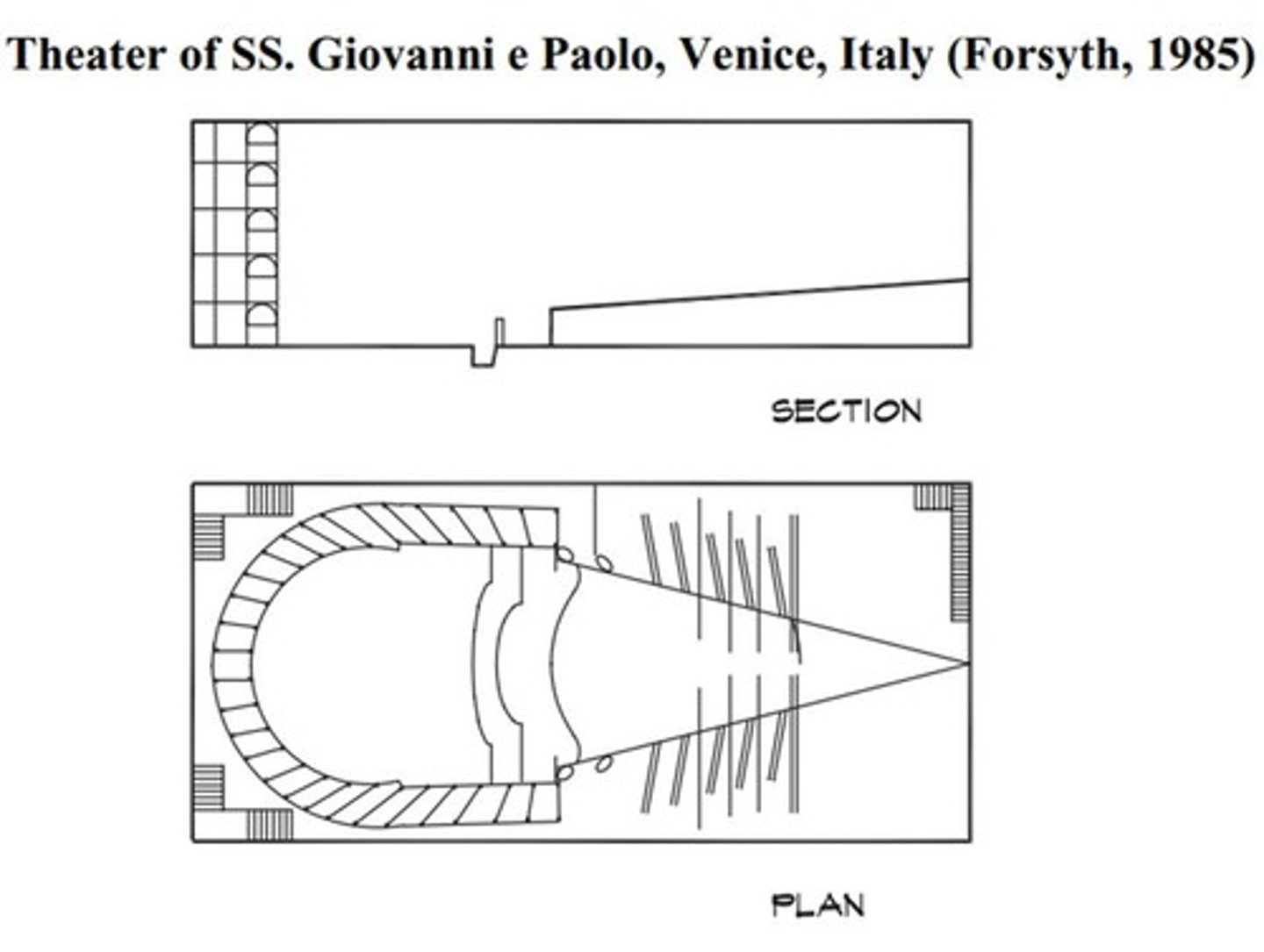
The first public opera house was built in Venice, evolving from a U-shaped seating arrangement to a truncated elliptical shape.
Acoustical behavior of rooms
Many rooms were successful in empirical acoustical design, though larger rooms faced challenges with excessive reverberation and long delayed reflections.
Cruciform shape
The floor plans of churches in the Romanesque Period began to take on this shape.
Buttresses
Introduced in the Romanesque Period, they allowed walls of churches to be lightened.
Chant
Plain chant was the music of the religious orders, suited perfectly to the large reverberant cathedrals.
Empirical acoustical design
Refers to the practical application of acoustics in room design, leading to successful or unsuccessful outcomes.
U-shaped seating arrangement
A layout used in theaters and opera houses that provides a view of the stage and other focal points.
Truncated elliptical shape
An evolved seating layout in opera houses that replaced the earlier U shape.
Reverberant spaces
Spaces that enhance the blending of sounds, creating a hauntingly beautiful auditory experience.
Acoustical support
Refers to the reflections and sound qualities that enhance the auditory experience in a space.
Sound blending
The phenomenon where multiple sounds combine in reverberant spaces, contributing to the overall auditory experience.
Sightlines
The lines of sight from the audience to the stage, which are crucial for visual engagement in theaters.
Orchestra and proscenium configuration
The arrangement of the stage and audience areas in theaters, similar to Roman theaters.
Orchestra
A group of musicians playing together, typically in a theater or concert hall.
Baroque Italian opera house
A standard model of opera house replicated throughout Europe for 200 years, characterized by specific architectural features.
Wagner's opera house
The Festspielhaus in Bayreuth, Germany, built in 1876, designed to achieve specific acoustical and social goals.
Acoustical goals
Objectives related to sound quality and distribution within a performance space.