Kine 266 L3
 Call Kai
 Learn
Learn Practice Test
 Spaced Repetition
 Match
Match Flashcards
 Knowt Play
1/54

There's no tags or description
Looks like no tags are added yet.
Name | Mastery | Learn | Test | Matching | Spaced | Call with Kai | Chat |
|---|
No analytics yet
Send a link to your students to track their progress
55 Terms
What is personality?
A system of conscious + unconscious processes
interactions Leads to predictable patterns of thoughts, feelings, behaviors
Personality Triangle
Role Related behavior (top)
Typical responses(Middle)
Psychological Core(Bottom)
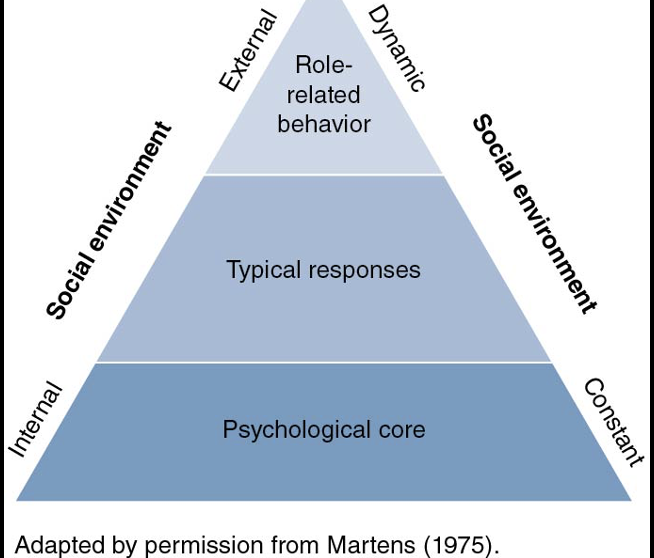
Personality Triangle: Bottom
Psychological Core
True self (values, beliefs)
Stable/Constant + internal
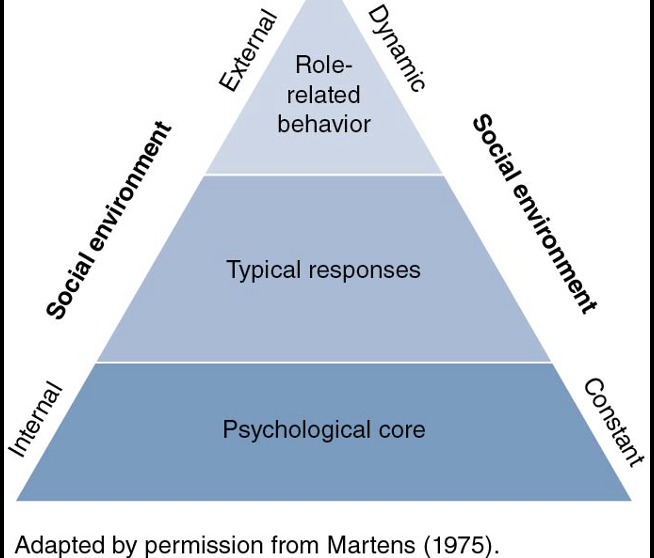
Personality Triangle: Middle
Typical Responses
How you usually respond to environment
Influenced by social situations
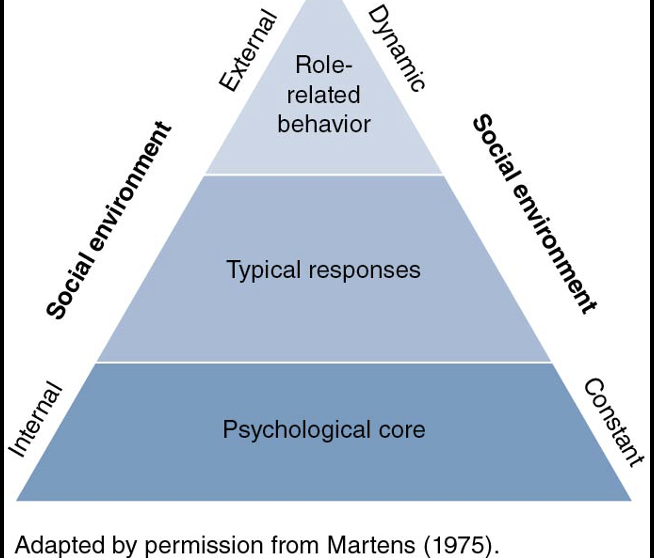
Personality Triangle: Top
Role-Related Behavior
How you act in specific roles (athlete, student, etc.)
Most changeable + external + dynamic
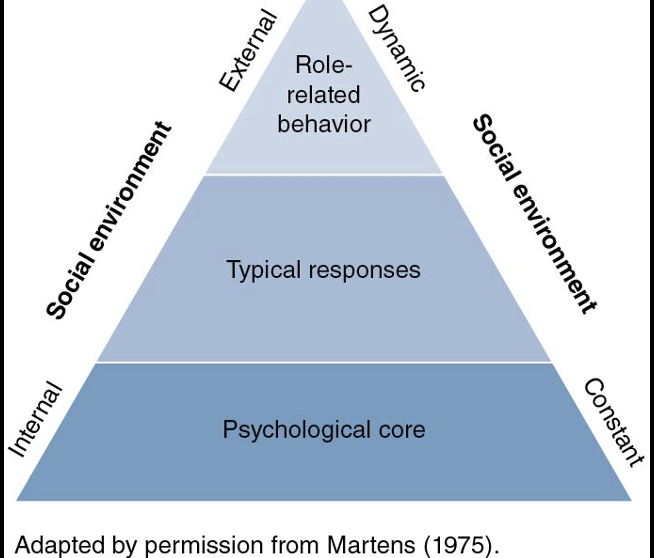
Key Ideas of Personality Triangle
Behavior can change, core is more stable
Personality ≠ fixed, but relatively consistent
Personality Does NOT predict sport choice
Personality DOES influence sport experience
Personality Research
the study of how & why individuals think, act, feel & react as they do
How does a particular athlete function? —> can help coach maximize performance
General Characteristics of Personality:
Relatively stable set of personal characteristics: traits, motives, needs, dispositions, or cognitions
NOT set in stone
Personality structure =
relatively consistent
develops through interacts w/social world & individual make up
Explanations for why people act the way they do
Six Categories:
Psychodynamic Approach
Dispositional/Personality - Trait
Environmental/Learning – Situation
Interactional Approach
Cognitive Model – Phenomenological
Integrated - Biopsychosocial
Approaches to Studying Personality: Psychodynamic Approach
Personality is dynamic set of processes always in motion & often in conflict
Struggle between unconscious & conscious
Approaches to Studying Personality: Psychodynamic Approach: Cause of behavior
internal conflict, forces & urges wanting to “get out”
Approaches to Studying Personality: Dispositional/Personality Trait Approach
Personality = stable traits —> outlook is stable
People fall on continua (e.g., competitive ↔ non-competitive) —> disposition is on continuum
⚠ Limitation: ignores environment
Approaches to Studying Personality: Dispositional/Personality Trait Approach: Outlook
Outlook —> life is a competition
Approaches to Studying Personality: Dispositional/Personality Trait Approach: Disposition
Disposition - her disposition is always sunny
Approaches to Studying Personality: Environmental/Learning Situation Approach
Behavior shaped by environment + reinforcement
Based on modeling/observational learning & reinforcement shaping behaviors
⚠ Limitation: too extreme (environment ≠ everything)
Approaches to Studying Personality: Interactional Approach
(MOST accepted)
Behavior = Person × Situation
Must consider both traits + environment
Approaches to Studying Personality: Phenomenological (Cognitive) Approach
Focus on how people interpret situations
“Subjective reality” = key
Approaches to Studying Personality: Integrative/Biopsychosocial approach
“Whole person” approach:
Biological
Psychological
Social
People create their own “self-story”
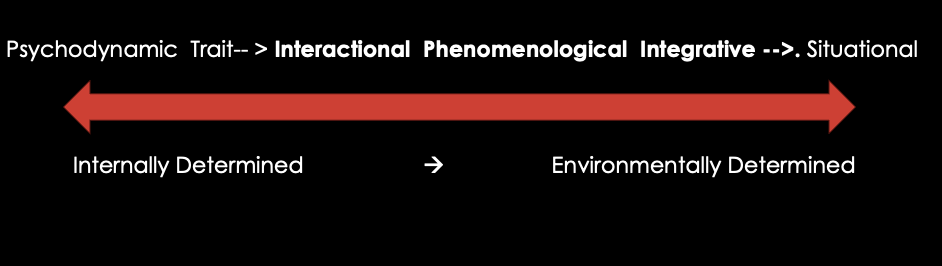
Continuum of Behavioral Determination
Behavior ranges from:
Internally driven → Environmentally driven
(psychodynamic trait —> interactional phenomenological integrative —> situational)
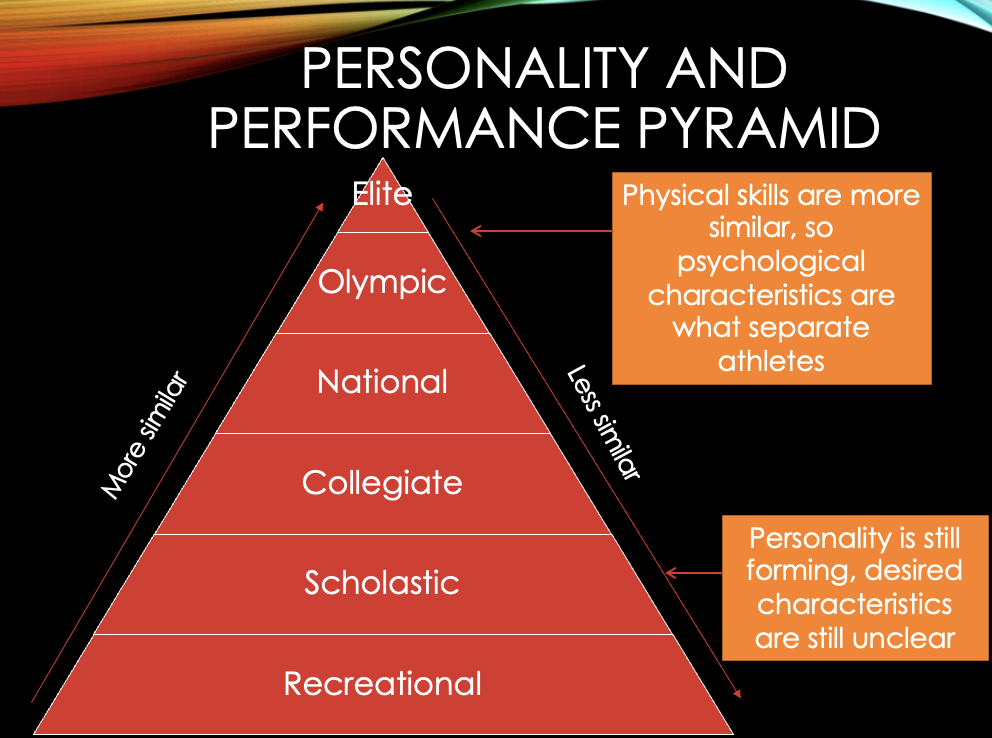
Personality & Performance Pyramid
As skill level increases:
Physical ability = similar
Psychological traits = difference-maker
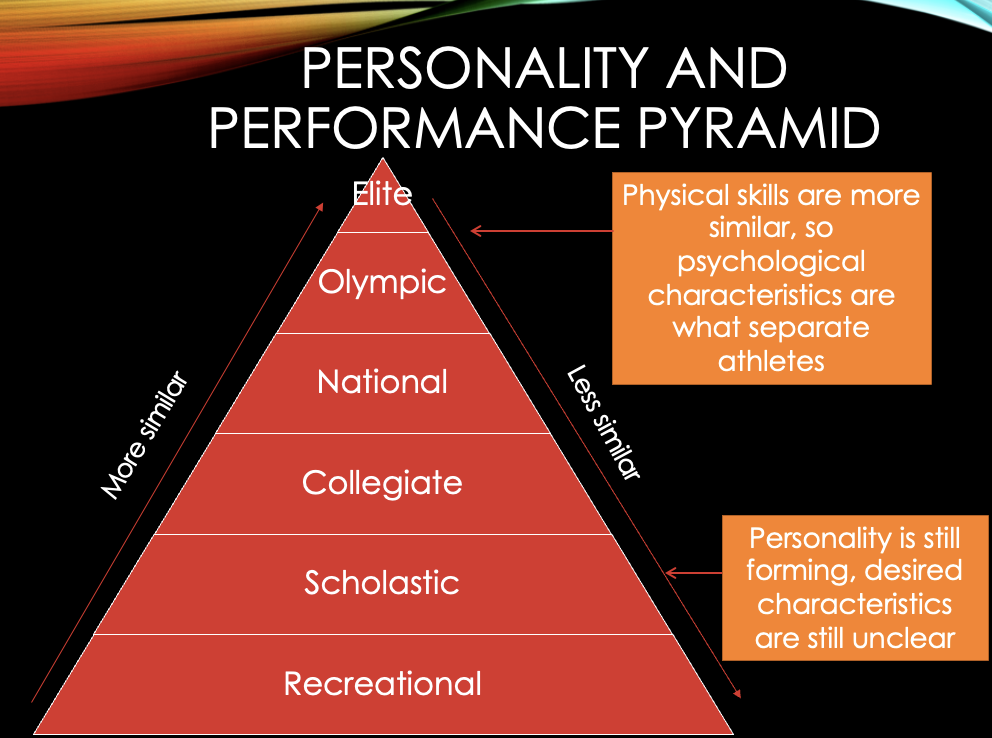
Personality & Performance Pyramid: How it works
Physical Skills are more similar so psychological characteristics are what separate athletes (elite level)
Scholastic level: Personality is still forming, desired characteristics still unclear
Key Point: How Personality Impacts Performance
No single “athletic personality”
But adaptive traits help performance
Personality Measures
Trait
State
“Big Five” Model of personality
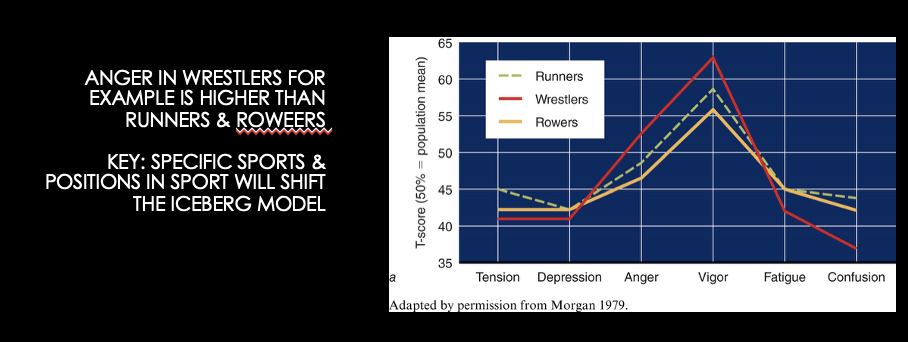
Profile of Mood States (POMS) —> iceberg visualization
Personality Measure: Trait vs State
Trait: most of the time, constant variables (personality)
State: temporary (mood right now, at this point in time)
Personality Measure: General vs. Situational
General = across all sports
Situational = sport-specific
“Big Five” Model of Personality
Big Five Traits
Openness (curious, creative)
Conscientiousness (organized, disciplined)
Extraversion (social, energetic)
Agreeableness (kind, cooperative)
Neuroticism (anxious, unstable)
“Big Five” Model of Personality: Openness
defined by curiosity, embrace change, looking for new ways ti do thigns
“Big Five” Model of Personality: Conscientiousness
self discipline, organization, high achievement, strategizing
“Big Five” Model of Personality: Extroversion
very big, very social, likes bigger groups
“Big Five” Model of Personality: Agreeableness
pleasant, selfless
“Big Five” Model of Personality: Neuroticism
anxiety, preoccupation w/worry, emotional instability
Some big 5 personality trait researsch
Extroversion & Conscientiousness: positively correlated to physical activity levels
Neuroticism: negatively related to physical activity levels
Some research on personality traits show that
Personality may be related to long-term athletic success (again depends on how we define personality, doesn’t mean that cannot be shaped)
High risk sport athletes may be higher in extroversion and lower in conscientiousness
Traits have some…
utility in predicting behavior
Profile of Mood States (POMS) measures…
Tension (Anxiety)
Depression
Anger
Vigor
Fatigue
Confusion
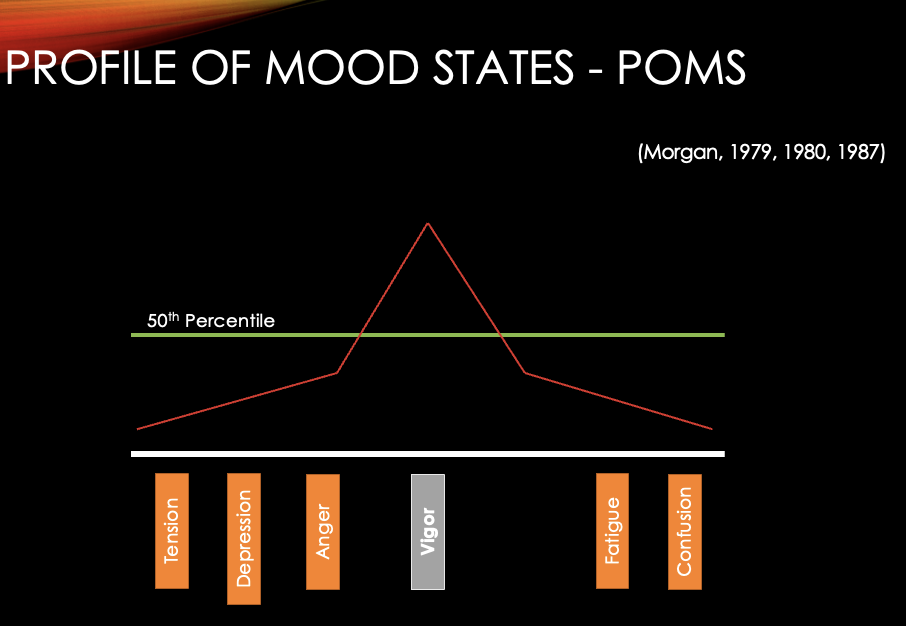
Vigor (POMS)
physiological arousal needed for physical task going to be performed
Iceberg Profile (ideal pattern)
High vigor
Low all negative moods
⚠ Varies by sport!
Precompetitive Affect: Adaptive Profile
(HELPFUL)
Tension (Anxiety) Down = Competitive focus up
Depression down = More Strive for success
Anger Down = more present focus
Fatigue Down = more energy/decision making
Confusion Down = more confidence in decision making & expectations UP
Vigor UP
Precompetitive Affect: Maladaptive Profile
Tension Up = negative thoughts/feelings up, anxiety up
Depression Up = more distractions, less physical energy
Anger Up = more focus on source of anger, less on task
Fatigue Up = energy down, decision making down & reaction time down
Confusion Up = confidence & expectations down
Vigor down
Other Trait Approach research: Perfectionism
Perfectionism Types:
Self-oriented
Socially prescribed
Other-oriented
Perfectionism: Self Oriented
comes from you
Perfectionism: socially prescribed
you think other people have very high expectations of you
Perfectionism: other oriented
you project other high expectations onto other people (like teammates)
Perfectionist striving
(GOOD)
—> better performance
Perfectionist Concerns
(BAD)
—> anxiety, worse outcomes
Other personality traits studies in Sports & Exercise Psychology
•Emotional control
•Emotional stability
•Self-discipline
•Trait anxiety
•Organizational ability
Emotional Control
How would you respond/react?
Do you control your emotions, or do they control you?
affects reactions in competition
Emotional Stability
Ability to recover from success or failure quickly
Perspective allows preparation for the next competition
Emotional instability —> “emotional roller coaster”
Self-Discipline
Discipline vs Self-Discipline: want to create an environment that promotes self discipline
Self-discipline is positively associated w/achievement
Trait Anxiety
High trait anxiety (carry all the time): tend to maintain past & future-tense mindset
Low Trait anxiety: tend to me more present minded
Critical response time has been found to be faster in athletes with..
lower trait anxiety
affects ability to make decisions, execute functions
Organizational Ability
ability to balance all aspects one one’s life
closely related to self discipline (have a lot of balance, organization ability is holistic, in multiple aspects not just sport)
There is no distinguishable “athletic personality” bc..
Success in sport is facilitated by positive mental health & self-perception, but is not caused by it
Personality measurements can be helpful, but must be used accurately
Take home message
Personality measurement should not be used to select athletes