Philosophical Principles: Matter, Form, and the Human Person
 Call Kai
 Learn
Learn Practice Test
 Spaced Repetition
 Match
Match Flashcards
 Knowt Play
1/27

Earn XP
Description and Tags
GCHS lacoy
Name | Mastery | Learn | Test | Matching | Spaced | Call with Kai | Chat |
|---|
No analytics yet
Send a link to your students to track their progress
28 Terms
What is the definition of philosophy?
The love of wisdom through the study of reason.
What are the two principles that every physical thing is a union of?
Matter and Form.

What does 'form' refer to in philosophy?
The essence of a thing, answering the question 'what IS something'.
What does 'matter' refer to in philosophy?
The tangible substance out of which a thing comes to be.
What is the relationship between matter and form?
Matter is for the form; to understand why a certain matter is the way it is, we must look to its form.
What is 'potency' in philosophical terms?
The potential to exist or become an act.
What is 'act' in philosophical terms?
Something that truly exists.
What does change represent in the context of potency and act?
Change is a movement from potency to act.
What distinguishes an accident from a substance?
An accident exists only in another, while a substance exists in and for itself.
What is a substantial form?
The form of a substance that makes it exist on its own.
What is an accidental form?
The form of an accident that makes a substance exist in a particular manner.
What is the difference between accidental change and substantial change?
Accidental change is non-essential; substantial change alters the substance itself.
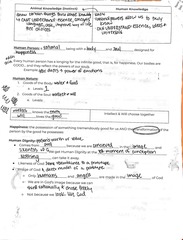
What is the nature of the human person according to philosophy?
The human person is a body/soul unity.

What are the spiritual powers that make humans in the image of God?
Intellect and will.
What is the State of Original Justice?
A state where the first human beings were subject to God, with reason subordinated to God.
What gifts were included in the Original State of humanity?
Grace, integral nature, immortality, and impassibility.
What is the significance of the hidden desire for a deeper order in humans?
It reflects the promise of grace, immortality, and resurrection.
What distinguishes humans from angels in terms of creation?
Humans have a body and a spiritual soul, while angels are pure intelligence without a body.
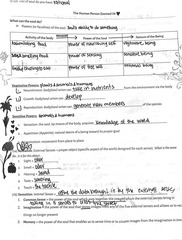
What are the powers of the soul in humans?
Intellect (rational) and will (rational).
What is the role of the intellect in human beings?
To know truth and God.
What is the role of the will in human beings?
To choose the good.
What is human dignity based on?
The worth or value that comes from being conceived in the image and likeness of God.
What is the relationship between the body and soul in humans?
The body expresses the soul and they exist in a unity.
What are the vegetative powers of the soul?
Nourishment, growth, and reproduction.
What are the sensitive powers of the soul?
Sensation and appetition (natural desires).
What is the concupiscible appetite?
The ability to respond to easy goods and evils.
What is the irascible appetite?
The ability to respond to difficult goods and evils.
How do emotions relate to the powers of the soul?
Emotions can be influenced by the intellect and will, guiding responses rather than reactions.