TEAS 7 - Immune & Lymphatic System
 Call Kai
 Learn
Learn Practice Test
 Spaced Repetition
 Match
Match Flashcards
 Knowt Play
1/33

There's no tags or description
Looks like no tags are added yet.
Name | Mastery | Learn | Test | Matching | Spaced | Call with Kai | Chat |
|---|
No analytics yet
Send a link to your students to track their progress
34 Terms
Innate immunity is ______________ to pathogens
Non-specific,
*you're born with it
First line barriers to infection
-functions as physical and chemical barriers to invading pathogens
-skin and mucous membranes
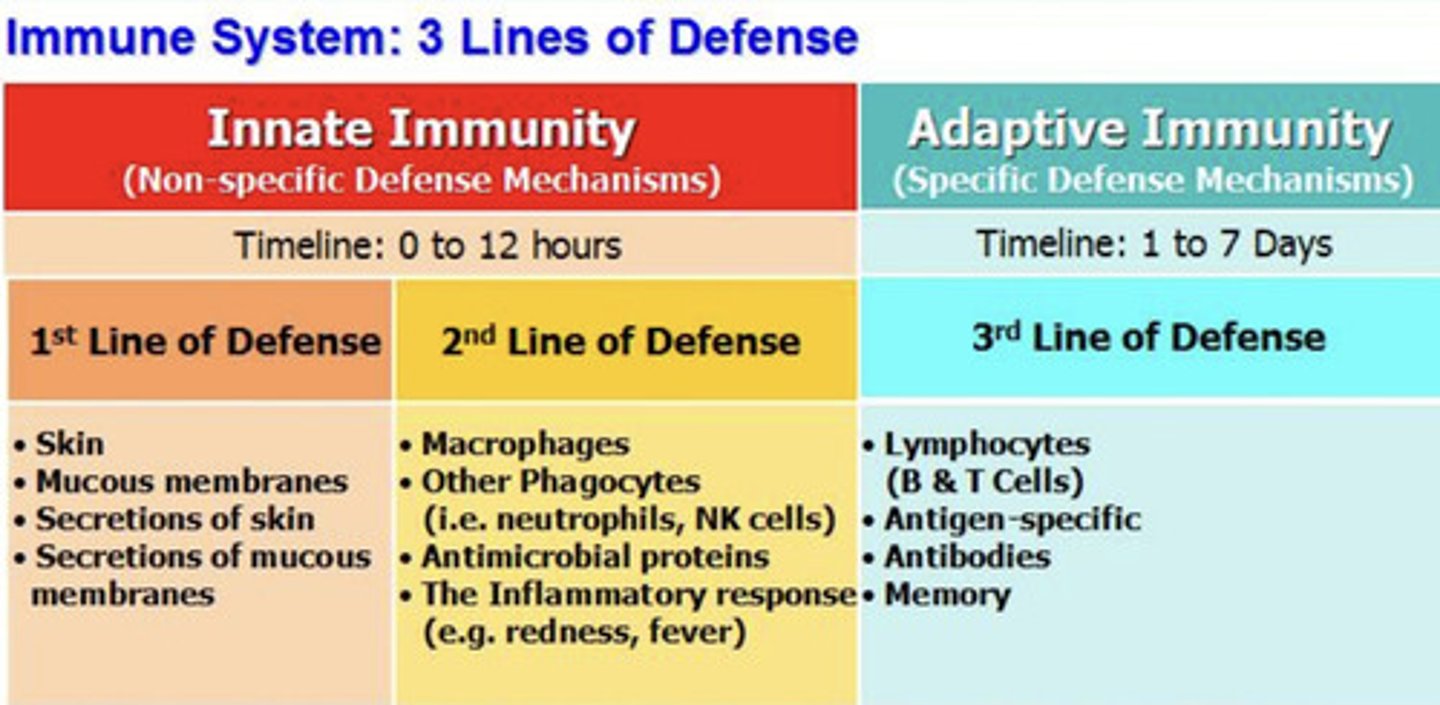
Second-line barriers of innate immunity
Stop the spread of pathogens once they have gained entry, including phagocytic cells, natural killer cells, and inflammation
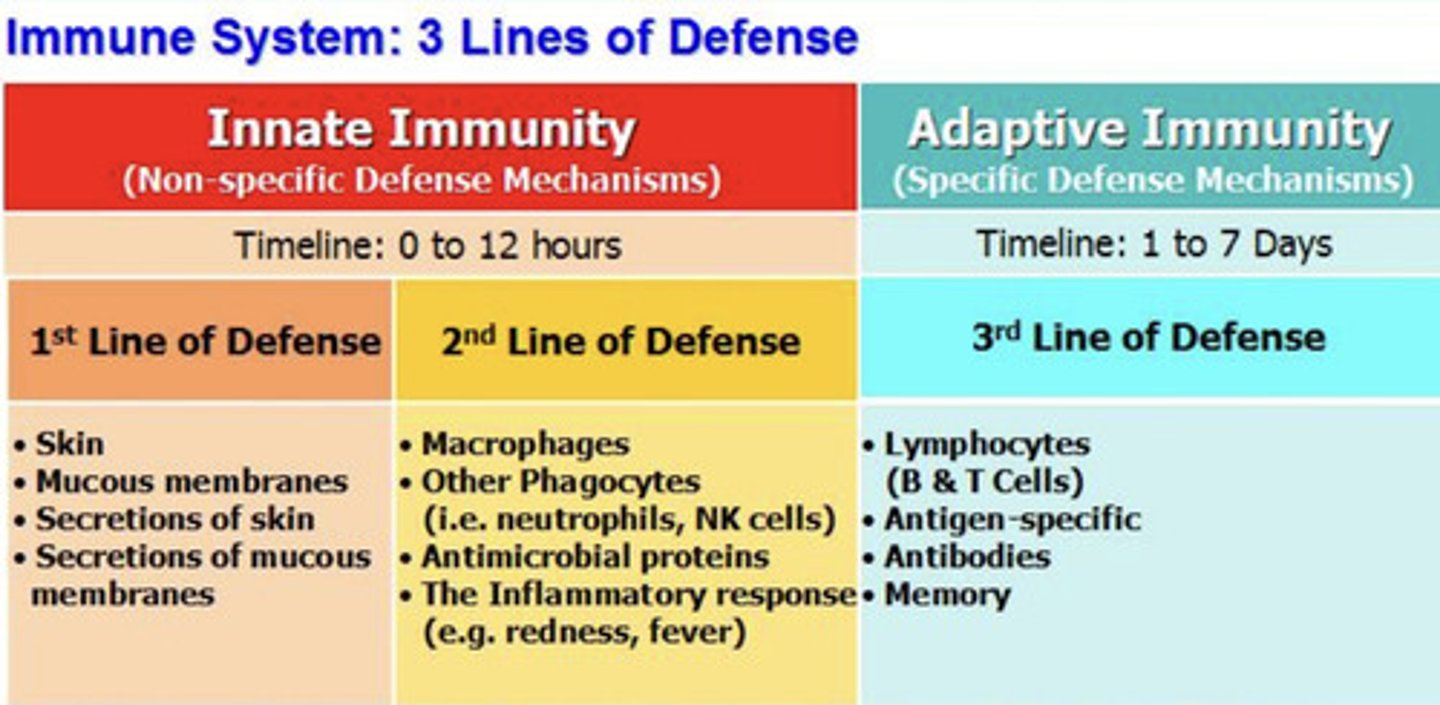
Third line of defense (specific)
B lymphocytes and T lymphocytes
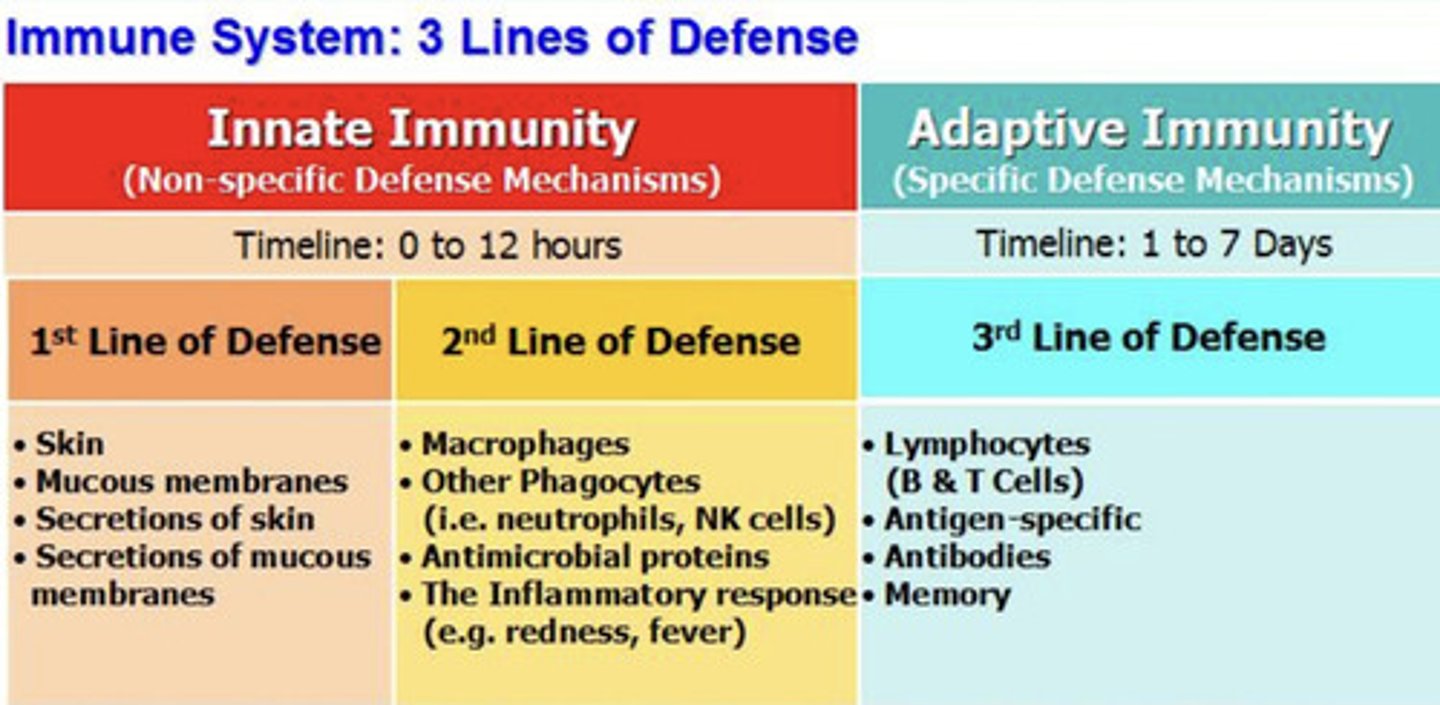
Adaptive immunity is ____________ to the particular pathogen that induce them.
Highly specific, develops over time after exposures
What are the 2 responses to pathogens and what do they do?
1. Cellular Response: destroys infected cell
2. Humoral Response: destroys pathogens found in body fluids using antibodies
Antigen
A protein that, when introduced in the blood, triggers the production of an antibody
Antigen-presenting cells (APCs)
cells that process protein antigens and present them on their surface in a form that can be recognized by lymphocytes (white blood cells)
Lymphocytes:
The two types of white blood cells that are part of the body's immune system:
1. B-lymphocytes form in the bone marrow and release antibodies that fight bacterial infections
2. T-lymphocytes form in the thymus and other lymphatic tissue and attack cancer cells, viruses, and foreign substances.
What are the 2 types of Acquired Immunity?
1. Active: (natural: antibodies after exposure / artificial: vax)
2. Passive: (natural: breast milk / artificial: antib from imm serum med)
Helper T cells
Produce cytokines and activate B cells to produce antibodies
4 types of T cells
1. Cytotoxic: kill abnormal cells (ex: cancer)
2. Helper: secrete cytokines
3. Memory: make memory cells
4. Regulatory: "suppressor" stop the immune response from continuing
Cytokines
proteins secreted by cytotoxic T cells to aid in antigen destruction
Iow: call other WBC to help destroy pathogen
memory cells and plasma cells
Activated B lymphocytes differentiate into these two types of cells
Later (second exposure), memory cells will recognize pathogen and react faster
Phagocytes: Macrophages
Cells that recognize "non-self" antigens and ingest antigen-presenting cells through endocytosis, derive from monocytes
neutrophils, eosinophils, basophils: What do each do?
Neutrophils: in blood stream, first to arrive to site of infection
Eosinophils: regulate inflammatory response
Basophils: release histamine to tissues
Natural killer Cells
A type of white blood cell that can kill tumor cells and virus-infected cells; an important component of innate immunity.
Bone marrow produces _________.
- Hematopoietic stem cells that give rise to all blood cells.
- site of B cell differentiation
The thymus is the site of what?
T cell maturation
spleen function
the largest lymphatic organ in the body; serves as a blood reservoir, disintegrates old red blood cells, and produces lymphocytes and plasmids
lymph nodes function and location
function as a filter with white blood cells for pathogens, enriched areas are seen in oral nasal and genital regions
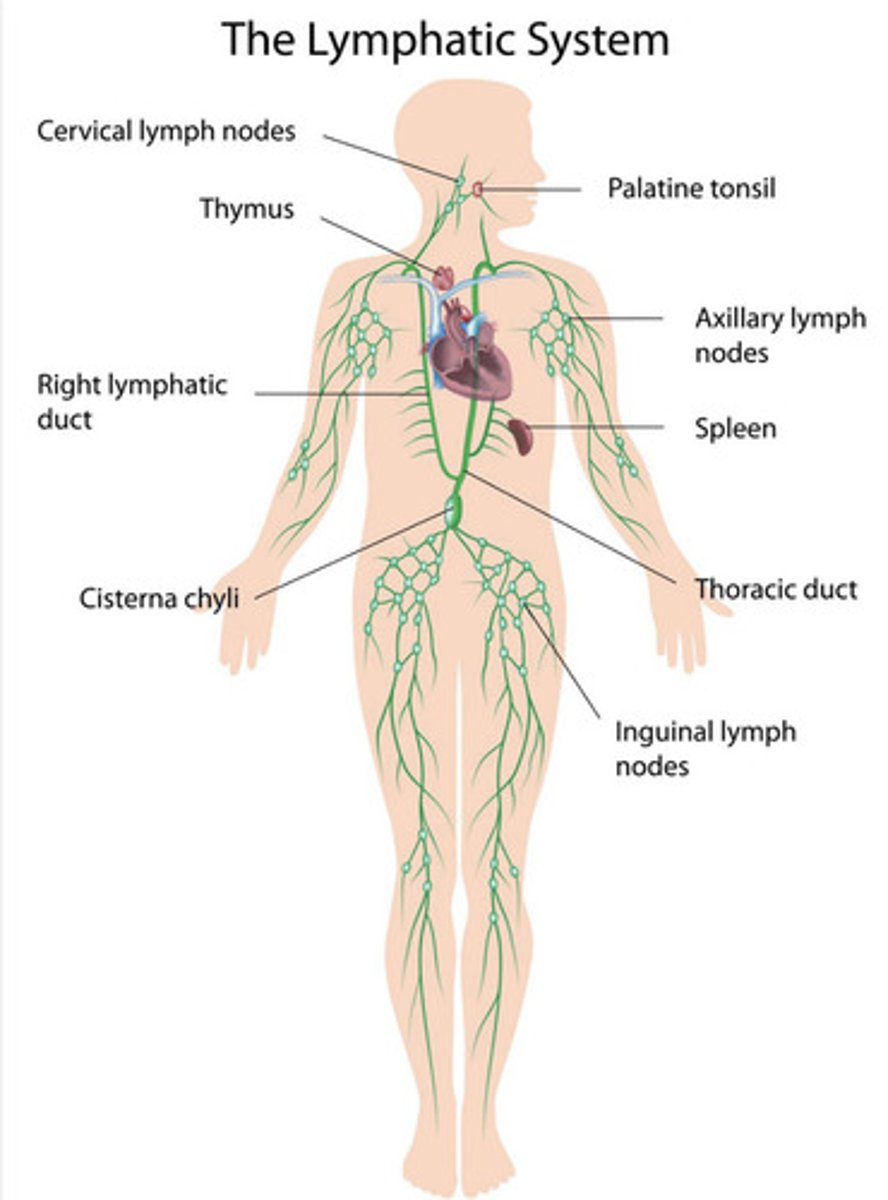
MALT stands for _________ and are found where in the body?
mucosa-associated lymphoid tissue
Found in tonsils, appendix, Peyer's patches in small intestine.
Primary organs of lymphatic system are the____________, and produce ____________.
bone marrow and thymus
Mature lymphocytes
Secondary organs of lymphatic system are the ______________, and they _________ lymphocytes.
lymph nodes, spleen, tonsils etc
House/hold
Foreign vs Self Antigens
Foreign: originate outside the body (bacteria, virus, fungi, pollen etc)
Self: produced by body, usually elicit not immune response but can cause rejection of transplants
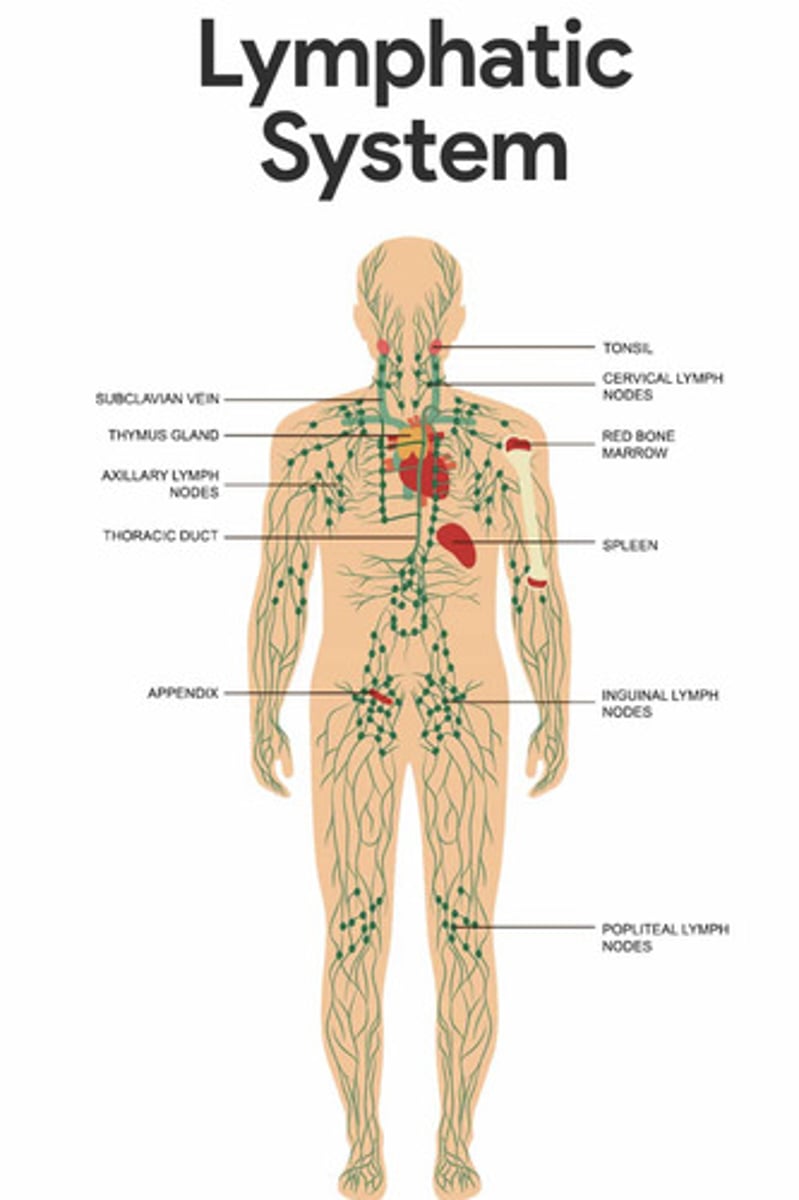
The Lymphatic System includes:
lymphatic vessels, lymph nodes, thymus, spleen, bone marrow, tonsils, lymph
Antibodies are also known as:
immunoglobulins (Ig) - B cells
Complement antibodies
either IgG or IgM antibodies may trigger activation of the complement system. using the example of inflammation, one aspect of it is that it will often cause microbes in the inflamed area to become coated with specific proteins. This leads the the attachment to the microbe of an antibody-complement complex. This complex lyses the microbe, which them attracts phagocytes and other defensive immune system cells to the area.
Opsonization and phagocytosis
"butters" microbial cells with C3b to which phagocytes can bind
What do lymph nodes do?
They filter lymph & trap bacteria and foreign bodies and destroy them
Autoimmune disorders are
Chronic conditions that develop from the immune system attacking healthy self-tissues that should normally be left alone
Ex: lupus, psoriasis, multiple sclerosis etc
Allergy
abnormal hypersensitivity acquired by exposure to an antigen
HIV
Human Immunodeficiency Virus: A virus that attacks and destroys the human immune system (kills helper T cells), causing person to get AIDS
AIDS
Acquired Immune Deficiency Syndrome: lowers cell immunity which allows infection to overrun body w/ being stopped.