The five kingdoms + phylogeny
 Call Kai
 Learn
Learn Practice Test
 Spaced Repetition
 Match
Match Flashcards
 Knowt Play
1/18

There's no tags or description
Looks like no tags are added yet.
Name | Mastery | Learn | Test | Matching | Spaced | Call with Kai | Chat |
|---|
No analytics yet
Send a link to your students to track their progress
19 Terms
the five kingdoms - why?
more species were discovered
more was being discovered about organisms
it became increasingly difficult to divide living organisms into just two kingdoms
development of microscopes meant better observation of cellular structures, identifying the significant cellular differences in bacteria from other organisms
What are the 5 kingdoms?
Prokaryotae
Protoctista
Fungi
Plantae
Animalia
Prokaryotae - features
unicellular
no nucleus
no membrane bound organelles
small ribosomes
ring of naked dna
no visible feeding mechanisms - nutrients are absorbed through the cell wall or produced internally by photosynthesis
e.g E.coli
protoctista - features
mainly unicellular
nucleus and other membrane bound organelles
some have chloroplasts
some are sessile or move using cilia, flagella or amoebic mechanisms
nutrients are acquired through photosynthesis ( autotrophic feeders ) or ingest other organisms (heterotrophic feeders) - some are parasitic
e.g amoeba
fungi - features
unicellular or multicellular
nucleus, other membrane-bound organelles, and a cell wall mainly composed of chitin
no chloroplasts
no mechanisms for locomotion
most have a body or mycellium made of threads or hyphae
nutrients are acquired through absorption - mainly decaying material (saphotrophic feeders) - some are parasitic
most store their food as glycogen
plantae - general features
multicellular
other membrane-bound organelles, including chloroplasts, and a cell wall mainly composed of cellulose
all contain chlorophyll
most are immobile but some gametes travel using cilia or flagella
nutrients are acquired by photosynthesis - autotrophic
store food as starch
animalia - features
multicellular
no chloroplasts
nucleus and other membrane-bound organelles
move with aid of cilia, flagella, and contractile proteins, sometimes in the form of muscular organs
nutrients are acquired by ingestion - heterotrophic
food stored as glycogen
Scientists are now able to study the evolutionary links between organisms due to…
study of genetics and biological molecules
also comparing the similarities in DNA and proteins of different species so that they can discover evolutionary relationships between them
Woese’s system groups organisms using…
differences in the sequence of nucleotides in the cells’ ribosomal RNA (rRNA) as well as the cells’ membrane lipid structure and their sensitivity to antibiotics
Eukarya - ribosomes and form of rRNA
80s ribosomes
RNA polymerase
contains 12 proteins
Archaea - ribosomes and form of rRNA
70s ribosomes
RNA polymerase of different organisms contain 8 - 10 proteins
very similar to eukaryotic ribosomes
Bacteria - ribosomes and form of rRNA
70s ribosomes
RNA polymerase contains five proteins
Archaebacteria
can live in extreme temperatures
hot thermal vents
anaerobic conditions
highly acidic conditions
e.g methanogens live in anaerobic sewage treatment plants and make methane
Eubacteria
found in all environments - most bacteria in the eubacteria kingdom
Eubacteria and Archaebacteria are classified as their own kingdoms because…
they have different chemical makeup for e.g peptydoglycan is in the cell wall of eaubacteria whereas in archaebacteria it is not
Woese’s six kingdom system
Eubacteria
Archaebacteria
Protoctista
Fungi
Plantae
Animalia
phylogeny
evolutionary relationships between organisms
Advantages of phylogeny
Shows evolutionary relationships
Shows evolutionary timeline
Is continuous whereas classification requires discrete taxonomical groups so it doesn’t force any organisms into specific unfit groups
Hierachal nature of linnaean classification implies that different groups within the same ranks are equivalent e.g orchids and cats are in the same family but orchids have existed over 100 million years whereas cats are 30 million which implies that they are the same
certain groups could have longer histories or different levels of diversity
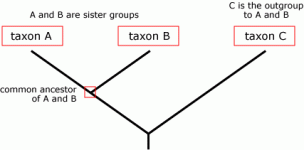
explain phylogeny tree