Vital Signs
 Call Kai
 Learn
Learn Practice Test
 Spaced Repetition
 Match
Match Flashcards
 Knowt Play
1/29

There's no tags or description
Looks like no tags are added yet.
Name | Mastery | Learn | Test | Matching | Spaced | Call with Kai | Chat |
|---|
No analytics yet
Send a link to your students to track their progress
30 Terms
List the 5 common vital signs
Temperature
Pulse Rate (HR)
Blood Pressure (BP)
Respiratory Rate (RR)
Pain scale
What part of the brain regulates temperature?
Hypothalamus
What is the average temperature in Fahrenheit and Celsius?
98.6 degrees Fahrenheit and 37 degrees Celsius
1. Give the term for elevated temperature
2. What can cause this?
3. How does this effect metabolism?
1. Hyperthermia (aka fever)
2. Infection
3. Increases metabolic rate
1. Give the term for a below average temperature
2. What can cause this?
3. How does this effect metabolism?
1. Hypothermia
2. Trauma; cold exposure
3. Decreases metabolism
Name 5 common temperature sites
Oral cavity
Axillary (armpit)
Rectal
Temporal (forehead)
Tympanic (eardrum)
For every 1 degree Celsius increase in temperature, what happens to O2 and CO2?
O2 consumption and CO2 production rise 10%
What is the most accurate site for measuring temperature?
Rectal
What is the limitation for taking temperature orally?
Delay reading for 10-15 minutes if patient has been smoking or drinkingliquids
What is the body's primary method for increasing cardiac output?
Increasing heart rate
CO= HR x SV
Heart rate sites
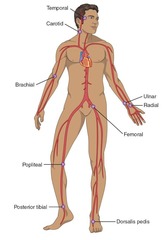
What is the range for normal heart rate?
60-100 bpm
1. What is tachycardia?
2. What are some causes of tachycardia?
1. Elevated heart rate greater than or equal to 100 bpm
2. Exercise, fear, anxiety, low BP, anemia,fever, medications, reduced arterial blood oxygen levels
1. What is bardycardia?
2. What are some causes of bradycardia?
1. Below average heart rate; 60 bpm or less
2. Hypothermia, medications, arrhythmias, athletes
What is thrills/bruits?
Palpable or auscultated vibrations in the pulse
1. What is Pulsus Alternans?
2. What is this indicative of?
1. Alternating succession of strong/weak pulses
2. Left sided heart failure
1. What is Pulsus Paradoxus?
2. How is it quantified?
3. What is this indicative of?
1. A significant decrease in pulse strength during spontaneous inspiration
2. Quantified with BP a fall of systolic blood pressure of >10mmHg
3. Indicates severe obstructive disease (asthma), pericarditis, cardiac tamponade
What is the range for normal respiration rate?
adult normal is 12-20 breaths/min
1. What is the term for a RR above 20?
2. What are some causes for this?
1. Tachypnea
2. Exertion/exercise, fever, hypoxemia, pain, metabolic acidosis, anxiety, atelectasis
1. What is the term for a RR below 12?
2. What are some causes of this?
1. Bradypnea
2. Head injuries, hypothermia, narcotics, drug OD
Define blood pressure
Systemic Blood Pressure is the force against the arterial vessel walls as blood moves through them
1. What is systolic pressure measuring?
2. What is diastolic pressure measuring?
1. Peak force exerted during
contraction of the left ventricle (avg. 90-140 torr)
2. Force remaining during relaxation of the left ventricle (avg. 60-90 torr)
1. What is pulse pressure?
2. What is mean BP?
1. The difference between systolic and diastolic pressure (avg. 30-40 torr)
2. The average
What is blood pressure determined by?
BP determined by the force of left ventricular contraction, blood volume, and systemic vascular resistance
1. What is considered hypertension?
2. Causes?
3. Symptoms?
1. 140/90 or greater
2. High systemic vascular resistance is the most common cause of high BP- leads to headaches, blurred vision, strokes, renal failure, congestive heart failure
3. Flushing of the skin, headache, SOB, chest pain/tightness, nosebleeds
1. What is considered hypotension?
2. Causes?
3. Complications?
1. Low BP of < 95/60
2. LV failure, low blood volume, low SVR
3. Organs may not get adequate blood flow, can lead to tissue hypoxia
an abrupt fall in BP when a person sits or stands - hypovolemia
Postural hypotension
Which vital sign provides an estimation of arterial blood oxyhemoglobin saturation levels?
Pulse oximetry value
1. How is Pulse Oximetry value recorded?
2. What are considered normal values?
1. Recorded as SpO2
2. SpO2 should be greater than 92% in most adults
What is considered the 5th vital sign and is subjective?
Pain scale