PSYC 102 Textbook (Ch 1, 2, 12, 15)
 Call Kai
 Learn
Learn Practice Test
 Spaced Repetition
 Match
Match Flashcards
 Knowt Play
1/295

Earn XP
Description and Tags
Ch.1 , 2, 12, 15
Name | Mastery | Learn | Test | Matching | Spaced | Call with Kai |
|---|
No analytics yet
Send a link to your students to track their progress
296 Terms
what perspectives explain broader patterns of behaviour
evolutionary & cultural perspective
evolutionary perspective
Identifies aspects of behaviour that are the result of evolutionary adaptations
cultural perspective
Investigates how cultural context affects people’s thoughts and preferences
which perspectives help understand current thoughts and feelings
cognitive and emotional perspective
cognitive perspective
Studies the mental processes that underlie perception, thought, learning, memory, language, and creativity
emotional perspective
Examines how the human capacity to feel, express, and perceive emotions plays an important role in decision making, behaviour, and social relationships
what perspective is used for identifying the roles of the body and the brain
biological-neuroscience perspective
biological-neuroscience perspective
studies the biological underpinnings of how we think, act and behave
what perspectives acknowledge both stability and change in behaviour across time and situation
developmental, personality, social, and clinical
some psychologists note that much of existing knowledge in psychology is based on WEIRD samples. What does WEIRD stand for
research participants from Western, Educated, Industrialized, Rich, and Democratic background
What are some drawbacks of the Western legacy in psychology?
many psychology studies have relied on research participant pools that are largely composed of White, North American, and university-educated people. However, these research participants are not representative of the wider human community
Ethnocentric trap
an attempt to understand other cultures thorugh the lens of one’s own cultural ideals and concepts
Etuaptmumk
2 eyed seeing = Indigenous concept that the best of western and indigenous knowledge systems can work in harmony
Can Etuaptmumk result in improved treatment outcomes
Yes
Psychology is summative
it rests on a body of knowledge that is continuously growing
overconfidence effect
tendency to be overly sure of what we know, making us unreasonably confident that our own intuitions are more correct than consistent results from numerous research studies
confirmation bias
tendency to seek out, pay attention to, and believe only evidence that supports what we already are confident we know
seeking out news analysis from media sources that do not share your political leanings - is an example of countering what?
how can one counter their own confirmation biases
when to be skeptical about information in newspapers & magazines
article refers to a “specialist” without the person’s name or credentials
a company spokesperson is quoted - that person may be motivated by profit and not scientific truth
survey results presented without information about the number of people surveyed
when to be skeptical about information in self-assessments or quizzes
assessment doesn’t offer info about the psychological research that informed the creation of the quiz
doesn’t offer information that supports reliability and validity of the results
when to be skeptical about information of self-help books
taking advice of “experts” without credentials or cite valid academic research
drawing conclusions from case histories - every person is different and case histories don’t illustrate one person’s experience
when to be skeptical about information of social media
reading tweets by people/organizations with known bias or agenda
reposting info that can’t be verified through a neutral fact checking organization
when to be skeptical about information from tv news or talk shows
listening to the opinions presented - may be biased
when to be skeptical about information from websites
website sponsor not identified in “about” sectin
article authors not identified
writer’s biographies do not include info about their expertise
check the writer’s affiliation to determine their organization or bias towards political agenda
how to find reliable sources of scientific information
published in well-known and respected academic journals
reputable publishing houses
provide detailed descriptions of experimental m methods used
What psychologist was awarded the Nobel Prize in economics for discovering biases in the way that humans reason?
Daniel Kahneman
open science
practices that emphasize the transparency of research so that findings can be more easily shared and tested
social sciences research council of Canada
government agency that provides funds for psychological research in Canada
what were the 2 main branches of psychology during the early development of the field?
Who pioneered the branches and what do these branches look like today?
scientific and clinical branches
Wundt and James pioneered the scientific branch of psychology
Freud pioneered the clinical branch afterwards
Today, the branches have merged —> scientific research informs clinical treatment
animal magnetism
property of the animal body that makes it susceptible to the influence of celestial bodies and the reciprocal action of those around it
psuedoscience
collection of beliefs or practices mistakenly thought to be based on valid science
empirical (evidence)
based on astute observation and accurate measurement
herd immunity
what type of thinking is Purposeful, reasoned, and goal-directed? what does it seek to do?
critical thinking
seeks to examine evidence, evaluate conclusions, solve problems, make decisions, formulate reasonable conclusions
what are the 3 key critical-thinking questions
what scientific evidence supports this claim
has this topic been studied empiricaly
am I listening to / reading someone’s opinion or is the information factual and accepted by unbiased experts
cultural universals
unite all humans
examples of human universals
ability to “read” emotions
preference for fairness
capacity for language
capacity for love in romantic relationships Sheil
love and relationships from an evolutionary perspective - what do psychologists suggest about humans motivation
evolved innate motivations not only for their self protection and survival but also for seeking out and maintaining successful relationship with mate to pass on genes for future generations
Sheila is interested in studying the causes of obesity. which psychological should she use? Why?
evolutionary & cultural perspectives
Combine research on human survival instincts & current cultural norms about eating more to fully investigate obesity causes
True or false: Sometimes our conscious choices get in the way of unconscious preferences that are better at knowing what we want
true
which of the following research questions is best studied with the cognitive perspective?
a) Which drug is the most effective anxiety treatment?
b) Why do people remember some events but not others?
c) Why do we feel surprise in some situations and fear in others?
d) What accounts for music preferences in diff countries?
b). Why do people rememebr some events but not others
the cognitive perspective focuses in part on the mental processes responsible for memory
what are the 9 psychological perspectives?
evolutionary
cultural
emotional
cognitive
biological-neuroscience
developmental
clinical
personality
social
which research tool is best suited to biological-neuroscience perspective?
brain imaging techniques
developmental perspective
study how people change physically, cognitively, socially, and emotionally as they age
personality perspective
seeks to understand aspects of human behaviour that are relatively stable over time and situation.
social perspective
studies the ways in which immediate social contexts influence thoughts, feelings, and behaviours, independent of personality.
clinical perspective
focus on the causes and treatment of psychological disorders, with the goal of improving human wellbeing, daily functioning, and social relationships
Do people with positive relationships with their parents often expect to have positive and healthy relationships with their romantic partners?
yes
What type of psychologist might ask this question:
“Do you possess traits that make you more socially skilled”?
vs.
“Are you more socially skilled in some situations than in others”?
Personality psychologist
vs.
Social psychologist
True or false: People tend to behave more socially skilled with people who seem similar to themselves
true (think about how I’m more chatty with people with lots of similarities to me)
growth mindset
belief that human personality and behaviour and personality can be changed
Cyrus is running a study on whether people perform better on a task with complete strangers or with recent acquaintances. Which of these psychological perspective is he most likely using?
a) Clinical perspective
b) Personality perspective
c) Developmental perspective
d) Social perspective
d) Social perspective
social perspective generally focuses on how social contexts, such as working with strangers or acquaintances- influence behaviour
positive psychology
study of the factors that make people happy, keep them healthy, and help them manage stress
scientific study of important human experiences like hope, faith, courage, and creativity
3 components of happiness (positive psychology)
positive emotion & pleasure
engagement with life
living a meaningful life with good relationships and history of accomplishment
True or false: Indigenous children are more likely to be removed from their families into foster care, Indigenous women are disproportionately impacted by gender-based violence
true
What is the role of psychology in supporting Indigenous cultural resurgence and healing?
Canada’s truth & reconciliation commission was established to hear out testimonies of survivors - give them a platform for their voices
Calls to action (part of the 94 calls to action) examples in health care
call to create Indigeous healing centres
a call to increase the number of Indigenous health professionals
call to provide Indigenous health courses in health care
How did the Canadian Psychological Association (CPA) respond to the Truth & Reconciliation Commission (TRC)?
a) CPA published a journal article outlining the historic trauma faced by Indigenous people in Canada
b) CPA did not respond to the TRC
c) CPA merely acknowledged the TRC
d) CPA formed a task force that published a report which recognized and apologized for the failings of Canadian psychologists when treating Indigenous people
d) CPA ormed a task force that published a report which recognized and apologized for the failings of Canadian psychologists when treating Indigenous people
Scope of practice for psychology and what mode they use
clinical psychology
Scientist-practitioner model = use empirical research that informs their clinical practice and their experience during clinical practice inform their research questions
counselling psychology
practitioner-scholar model
psychiatry
prescribe medications
other professions working directly in mental health (i.e. RNs)
“I’ve been driving and using my phone since I first got my license! It’s ok!”
Is this experience or intuition?
Experience: You’ve never been in an accident when using your phone, but it still happens
“Hands'-free driving is the way to go! As long as my hands are on the wheel and eyes on the road, you’ll be fine”
Is this experience or intuition?
Intuition: A subjective feeling about what makes sense
When our intuition is faulty, we still tend to believe it is correct. What are we demonstrating?
Bias blind spot
Theory-data cycle & order
Involves developing a theory about what people do and collecting data that are compared with the theory - the data either confirm or disconfirm the theory
Theory
research questions
research design
Pre-registration
Data collection —> Supporting & nonsupporting data
theory
set of propositions about what people do and why
prediction about what will happen based on the theory is called what
hypothesis
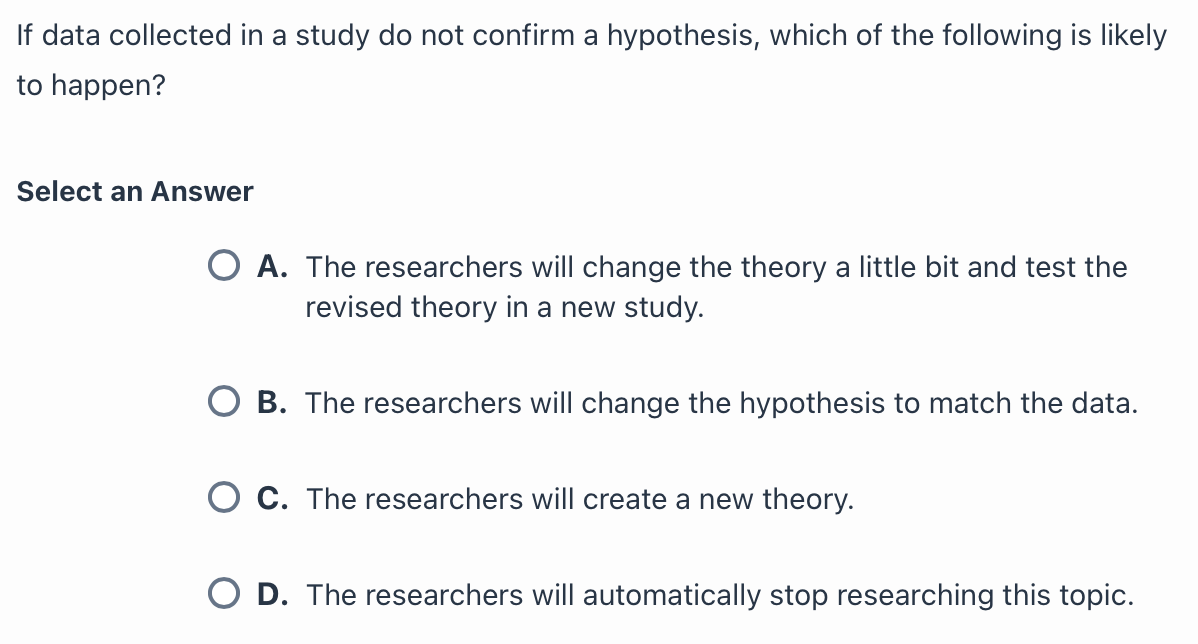
a) Researchers will change the theory a little bit and test the revised theory in a new study
Manipulated variable
variable the researcher controls by assigning different participants to different levels of that variable
e.g. study of alcohol . . . manipulate the degree of intoxication by assigning some people to drink alcohol and others to drink non-alcoholic beverages
Gender, depression, ethnicity, etc. is always a measured variable. Why?
People report these about themselves, but researcher cannot manipulate these ethically.
(creating) operational definitions
specific ways of measuring the exact process for determine levels or values of each variables
Operationalizing a measured variable
turning a variable into a number, so researchers can statically analyze data and evaluate strength of evidence for a hypothesis
Ways to operationalize measured variables?
Self-report questions, quantify a variable, relying on technology (e.g. blood sample of one’s intoxication levels)
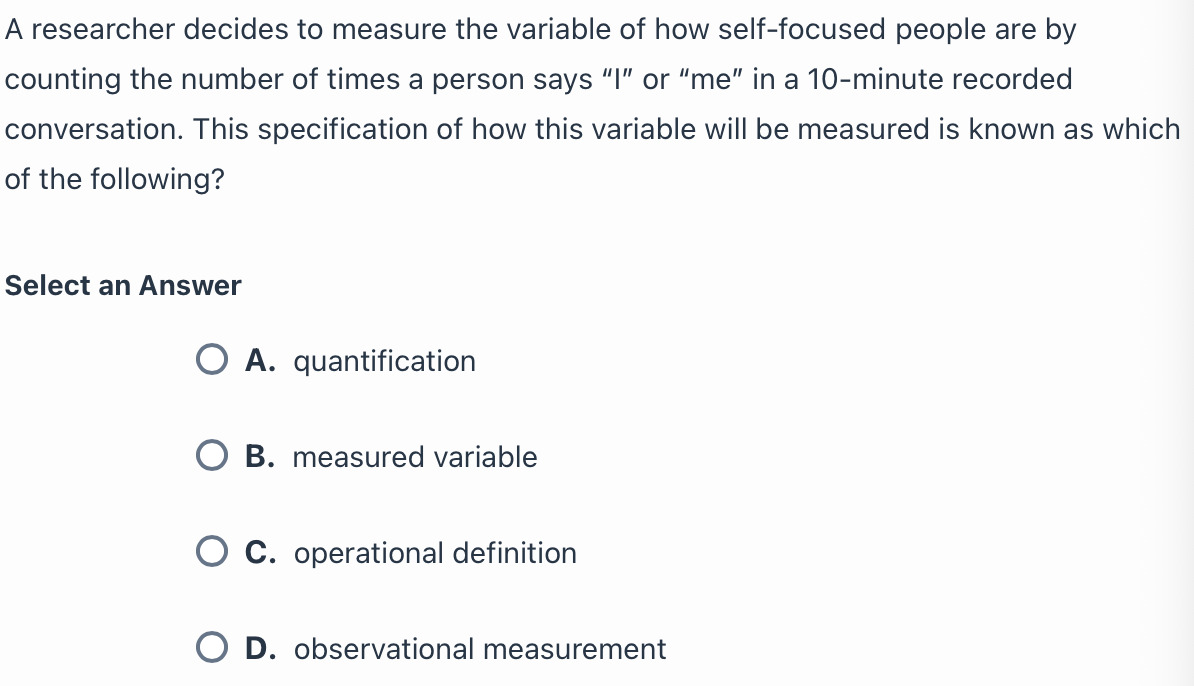
c) Operational defintion
An operational definition is how a researcher specifies the process for determining the levels or values of each variable. For this variable, the researcher counts the number of times “I” and “me” are said.
Descriptive research and goal of it
type of study where researchers focus on one measured variable at a time
Goal: To describe what is typical
What type of research provides concise summaries of lots of people?
Survey research
The smaller group of people within a larger group that participated in a research study is called?
Sample
Larger group that participates in the research is called?
Population of interest
Dialling random digits on a phone or pulling names out of hat to select population for research
random sampling
selecting easy to reach, opinionated, motivated members of the population for research
biased sampling
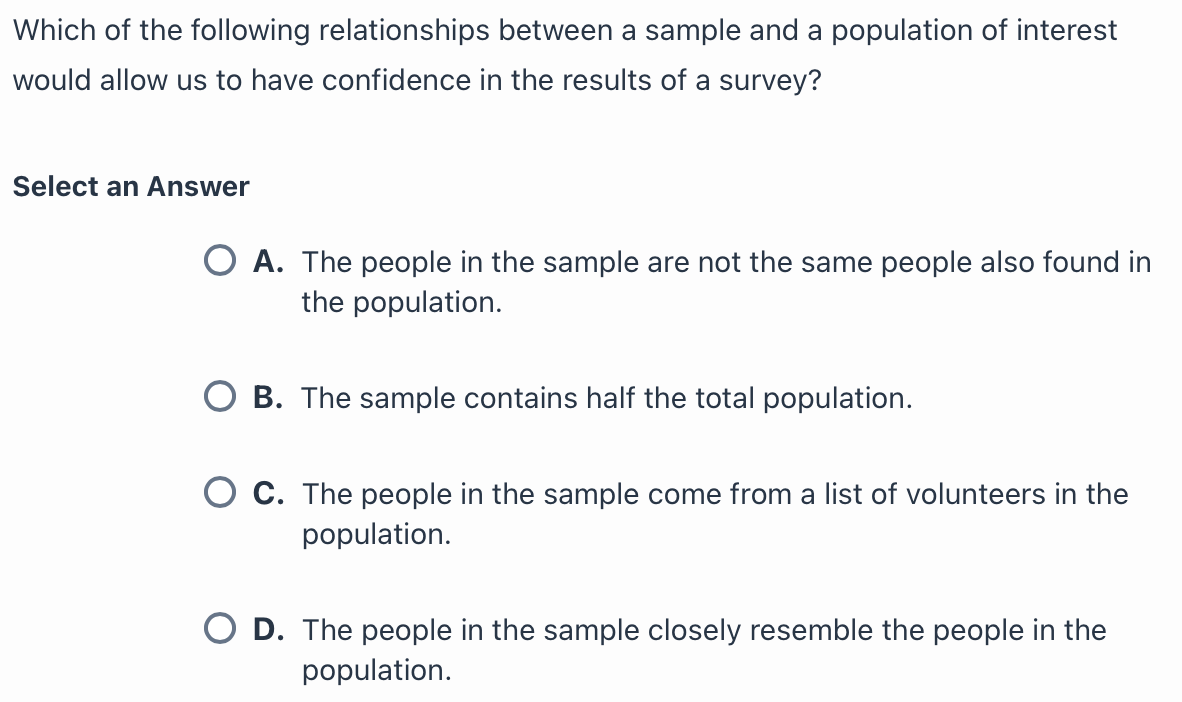
d) The sample should resemble the population as closely as possible
Psychologists observe the behaviour of animals or people in their normal, everyday environments.
What type of observational research method is this? What is the goal of the method?
Naturalistic observation
Goal: To observe without interfering with the usual behaviour of those being observed
E.g. Psychologist observing child from behind one-way mirror
Using technology in observational research
Asking participants to wear an electronically activated recorder device, then coding the data
Case study
observational research method in which researchers study 1 or 2 individuals in-depth, often those with unique conditions
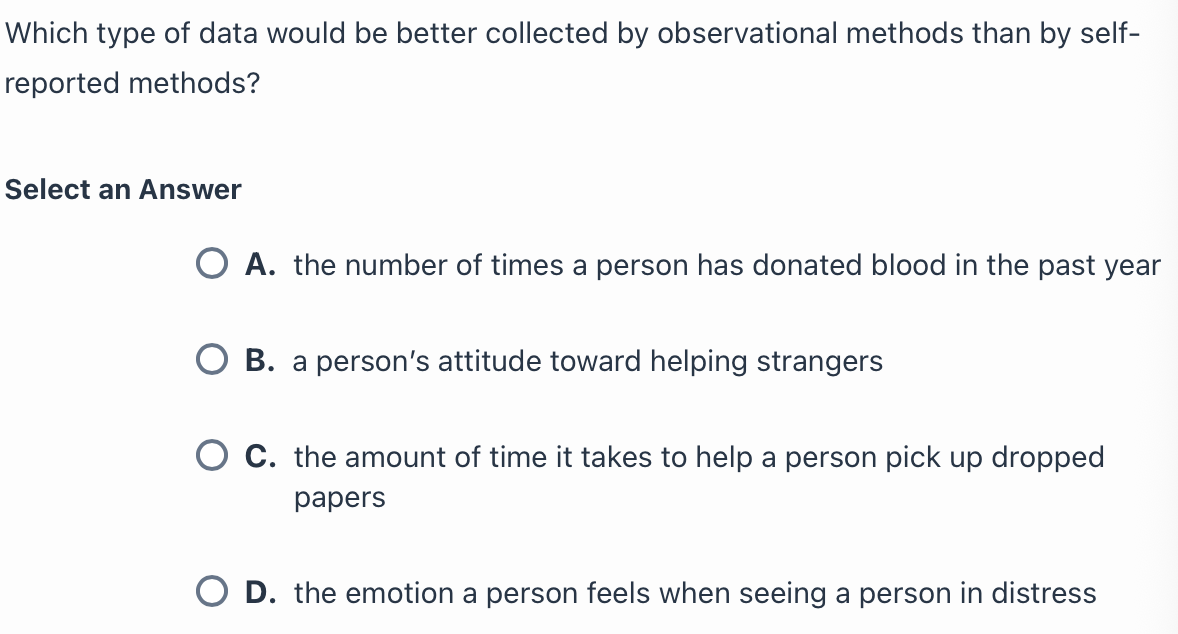
c) the amount of time it takes to help a person pick up dropped papers
Most people probably do not think about their behaviour in terms of time elapsed, making self-reporting difficult. However, it would be easy for a researcher to time a person’s behaviour.
Correlational research
researchers measure 2+ variables in order to understand the relationship between them
e.g.
are wealthy people less generous than poor people
socioeconomic status & generosity are actually negatively correlated
do people in close relationships tend to be happier
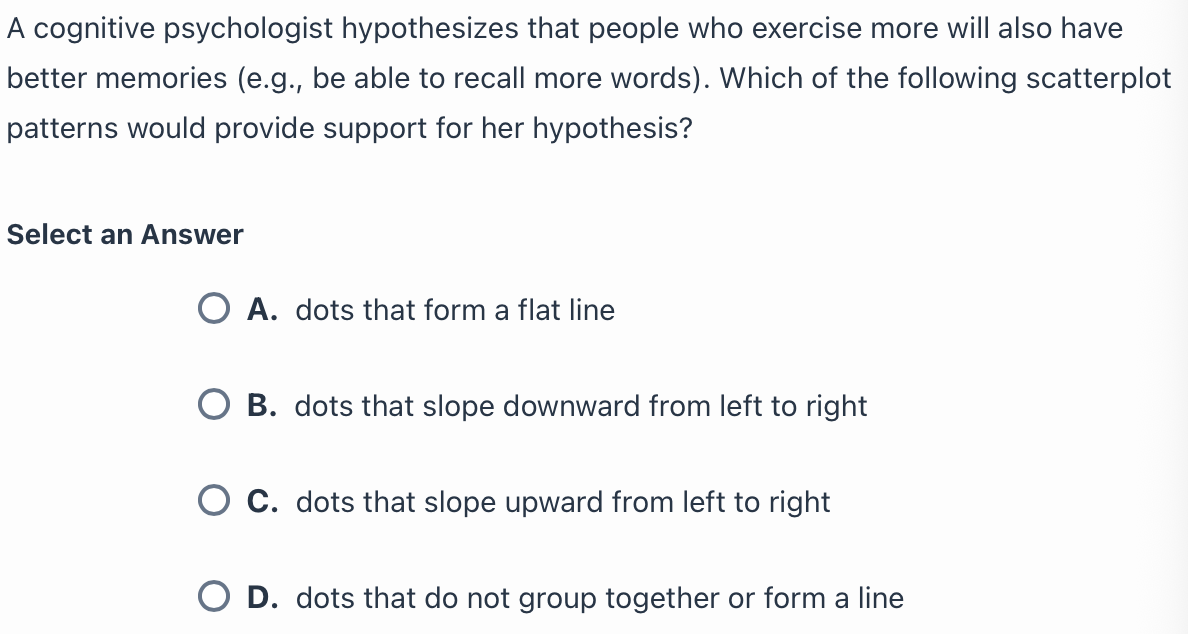
c) Dots that slope up from left to right
A scatterplot with dots that slope upward from left to right indicates a positive correlation, which is the hypothesized relationship between exercise and memory.
Can we still make predictions from moderate & even weak correlations? But . . .
yes, but weaker correlations lead to less accurate predictions
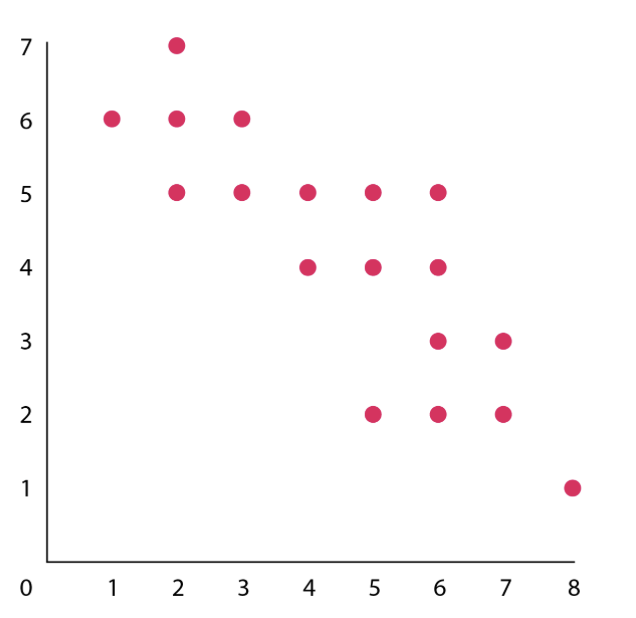
Correlation type and strength
strong negative
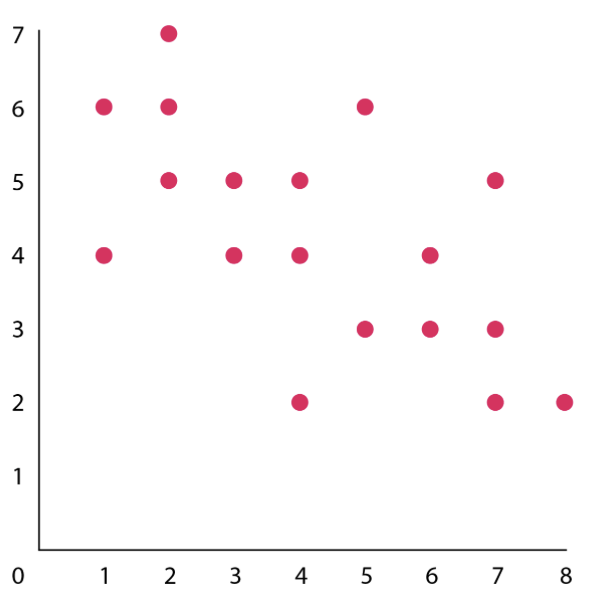
Correlation strength and type
weak negative
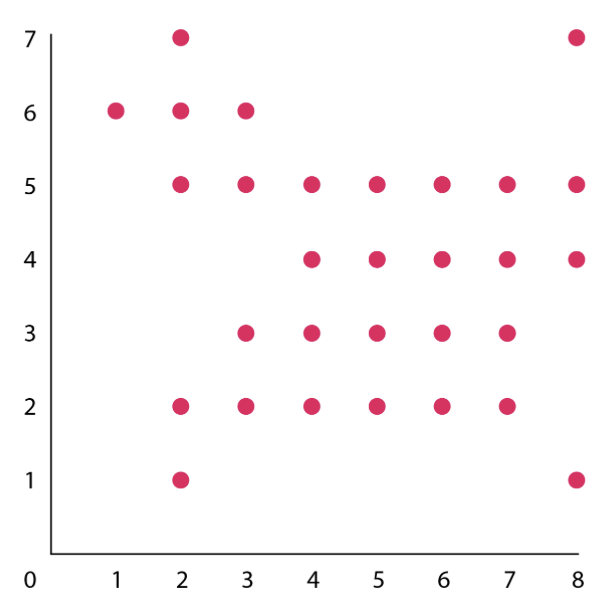
correlation type and strength
none
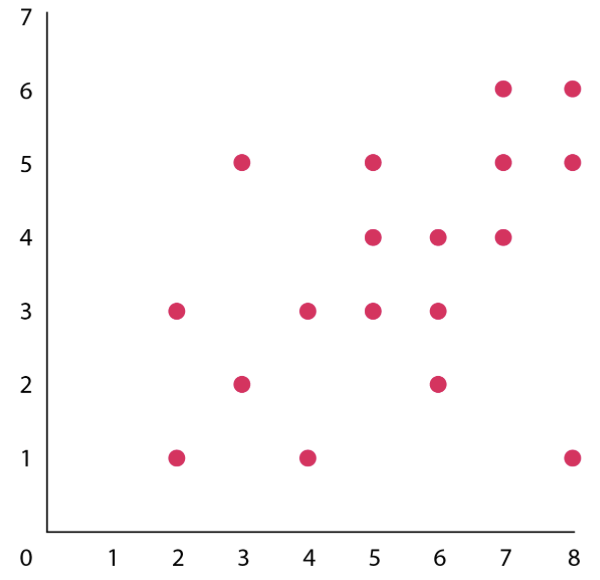
correlation type and strength
weak positive
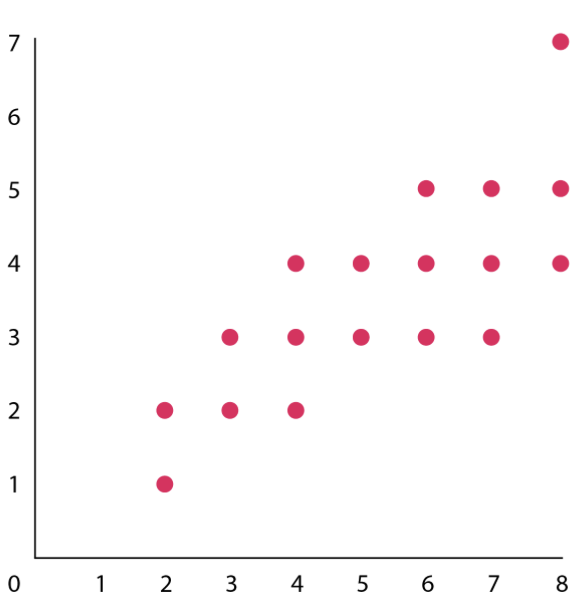
correlation type and strength
strong positive
Example: Someone who is neurotic - those who tend to have a more anxious and negative outlook on the world - have both a lower sense of well being and poorer social relationships. A personality trait like neuroticism could be the true casual variable that predicts both well being and social relationships, creating a correlation between those 2 variables BUT NOT a causal link between them.
This is what type of problem?
Third variable problem
= occurs whenever a correlation observed between 2 variables is actually explained by the influence of a THIRD variable (cannot be a causal claim)
Can correlational studies support causal claims?
No, correlational studies can NEVER support causal claims because they can never rule out all possible third variables
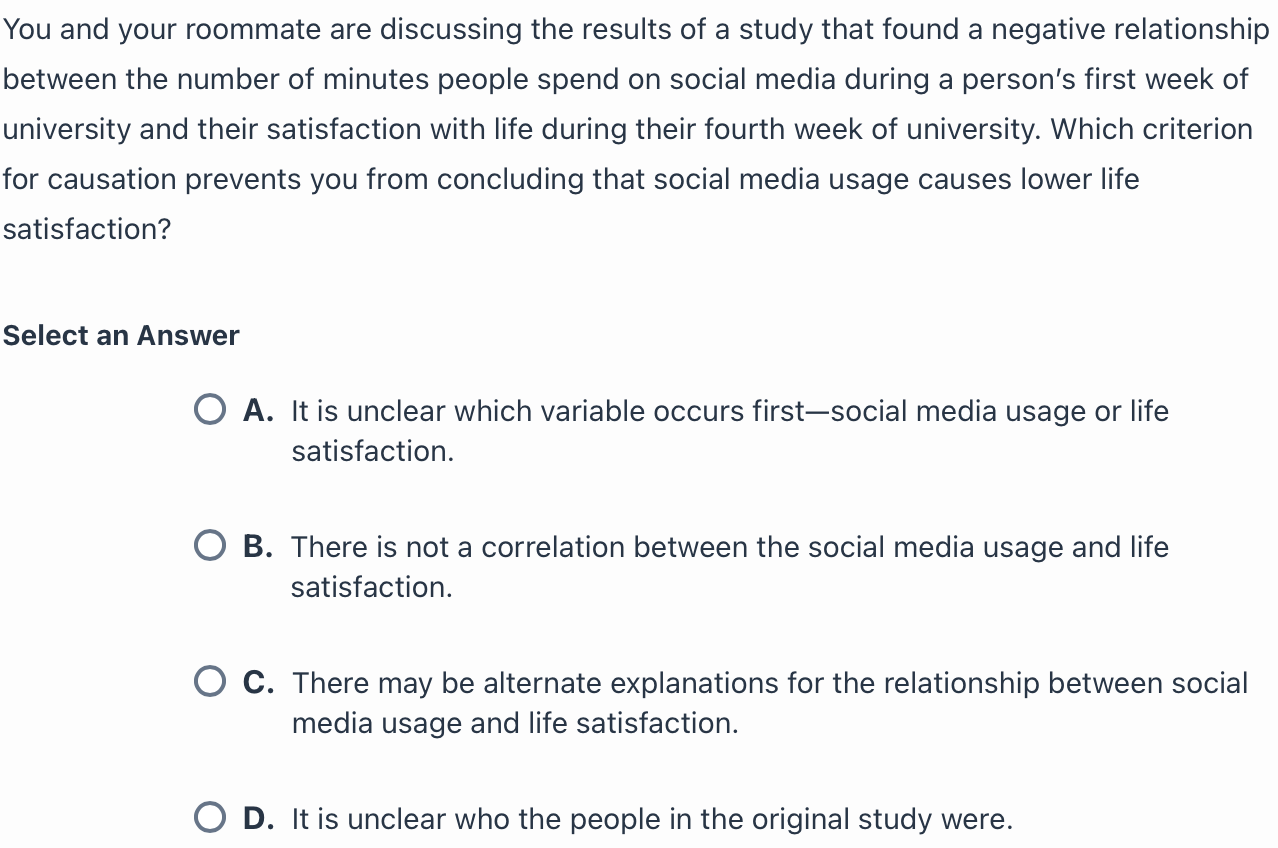
c) May be alternate explanations for the relationship between social media usage and life satisfaction
Although there is a relationship between the two variables and temporal precedence between them has been established, it is possible that other third variables may be responsible for the relationship. (e.g. first week of school vs fourth week of uni)
Research that is conducted in a way that can support causal statements (e.g. alcohol leads to aggression)
experimental research
Correlational study vs experimental research
unlike a correlational study, which simply estimates the degree of association between 2 variables, experimental research is conducted in a way that can support causal statements, such as “alcohol leads to aggression”
Independent variable: is it manipulated or measured?
is the hypothesized cause; manipulated
Dependent variable: is it manipulated or measured?
is the hypothesized effect; measured
placebo condition
group/condition where people expect to receive a treatment but are exposed only to an inert version, such as a sugar pill
Double-blind procedure
participants be blind to their condition assignment and researchers are blind to each participant’s condition (e.g. only one researcher prepares the drink/variable, while the other researcher gives the instructions and records the person’s behaviour - to ensure researcher in charge of interacting with participant could not influence their behaviour)