help
 Call Kai
 Learn
Learn Practice Test
 Spaced Repetition
 Match
Match Flashcards
 Knowt Play
1/8

There's no tags or description
Looks like no tags are added yet.
Name | Mastery | Learn | Test | Matching | Spaced | Call with Kai | Chat |
|---|
No analytics yet
Send a link to your students to track their progress
9 Terms
Lipid Functions
1, Long term Energy/ Insulation (fat/oil)
2. Regulation of Growth/ Developer (sterol, steroid)
Protection and water saving (waxes)
Cellular Membrane (phospholipids)
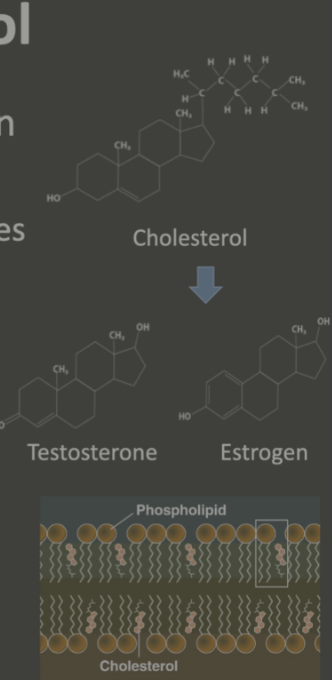
Cholesterol
sterol lipid involved in regulation of growth and development
sterol: type of lipid w/ 4 connected rings
- Found in plasma membrane of animals (aid in maintaining the membrane rigidity and shape)
Phospholipids are Amphipathic: (contain both a hydrophilic and hydrophobic component)
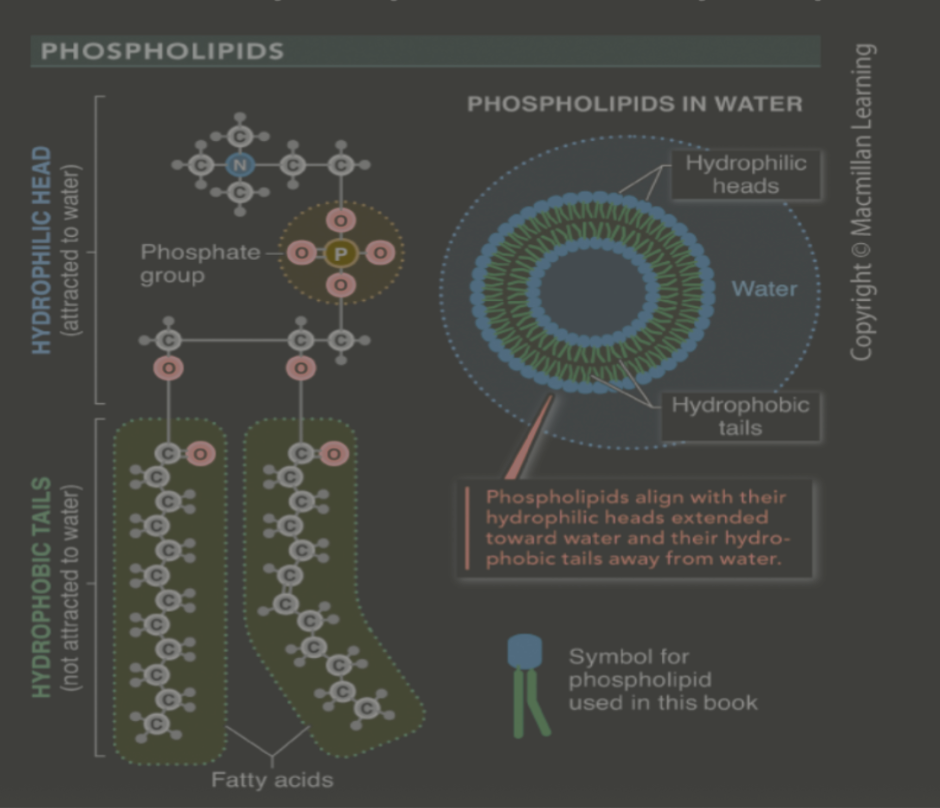
Can form micelles with the heads facing out and tails facing in
Can form membrane bi-layer with heads facing inside and outside the cell with tails interacting with each other.
Phospholipids
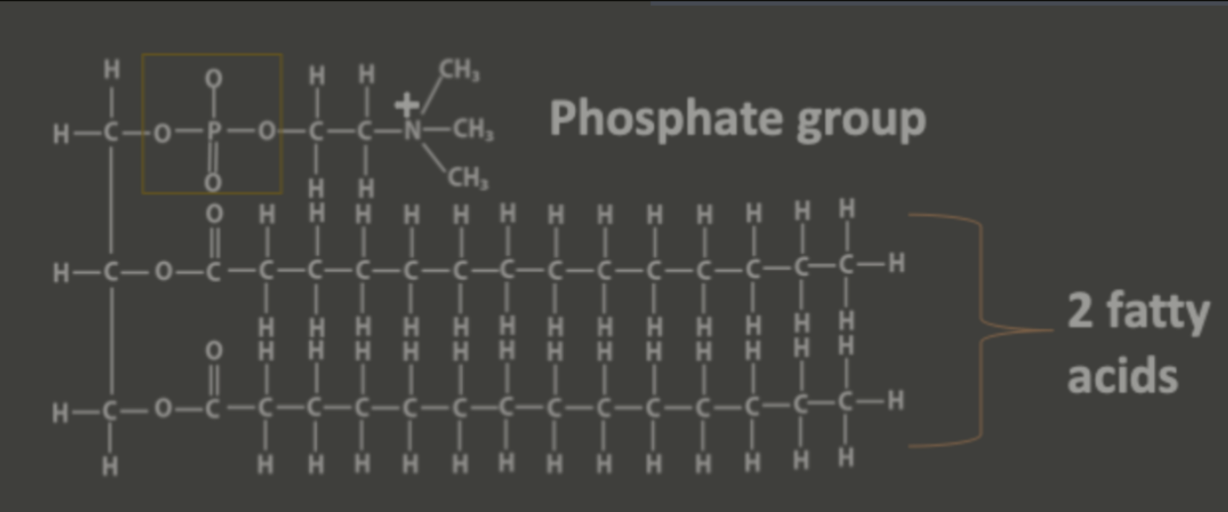
Lipids with a phosphate group in the “head” region
Phosphate group: contains P + O
Main component of cellular membranes like plasma and organelle membranes
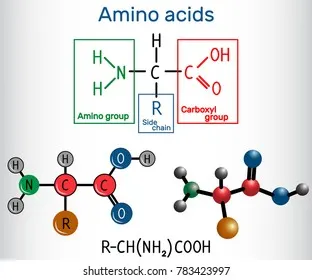
Amino Acid Groups
Amino Groups
Carboxyl Group
R group/side chain (what makes each amino acid unique and gives it it’s properties (ie. acidic, basic, polar neutral)
Structure of Proteins- Secondary Structure
Hydrogen Bonding occur between backbone amino acids components to form alpha helices or beta pleated sheets

Structure of Proteins-Tertiary Structure
Interactions between R-groups and the aqueous environment (like water) occur to form the protein’s 3D shape
Enzyme Regulation
• Chemical and physical factors can effect the reaction rate of an enzyme-catalyzed reaction.
1. Enzyme and substrate concentration
2. Temperature
3. pH
4. Presence of inhibitors or activators
Inhibitors or Activators
• Inhibitors reduce enzyme activity:
• Competitive inhibitors bind directly to the active site blocking substrate
• Non-competitive inhibitors bind somewhere else on enzyme to alter the shape of it preventing the substrate from binding
• Activators increase enzyme activity by altering the enzyme’s shape so it can function.