Consumer Behavior: Perception, Learning, Memory, and Motivation
 Call Kai
 Learn
Learn Practice Test
 Spaced Repetition
 Match
Match Flashcards
 Knowt Play
1/124

Earn XP
Description and Tags
A complete set of 120 vocabulary flashcards covering key consumer behavior topics including value perception, perceptual maps, attention, comprehension, learning theories, memory structures, motivation models, and emotional influences.
Name | Mastery | Learn | Test | Matching | Spaced | Call with Kai | Chat |
|---|
No analytics yet
Send a link to your students to track their progress
125 Terms
Value perception
How a customer weighs a product's price against the convenience, time saved, and personal benefits it provides.
Utilitarian value
Practical, functional value that solves an objective problem, such as getting a person from point A to point B.
Hedonic value
Emotional or sensory value derived from immediate enjoyment, pleasure, or fun.
Dual-value product
An item that offers both practical problem-solving and emotional or status satisfaction, such as a luxury car or a popular water bottle.
Internal influences on value
Personal factors like memory, past experiences, lifestyle, and personality that shape how an individual values a product.
External influences on value
Social and environmental factors, such as culture, peer groups, and surroundings, that shape how a product is valued.
Value creation
The process of reaching consumers in new ways through novel product designs, new distribution networks, and customer collaboration.
Lego value creation model
A system where customers submit and vote on their own product designs on an official brand platform.
Marketing strategy
A company's plan detailing how it will stand out to satisfy unmet customer needs.
Competitor
Any alternative product, service, or action a consumer might choose instead to solve their problem.

Perceptual map
A visual grid displaying where customer needs are currently unmet and where favorable market trends exist.
Perception
A consumer's awareness and interpretation of reality, which is required before any learning can happen.
The perceptual process
The three-step sequence of processing information: exposure, attention, and comprehension.
Exposure
The physical process of a consumer coming into contact with a marketing stimulus in their environment.
Search list ad exposure
The boost in consumer viewings when online advertisements appear near the top of search result lists.
Commercial break ad placement
Positioning advertisements at the very beginning or end of a commercial break to maximize consumer exposure.
Product placement
Featuring a brand or product directly inside media content, such as a movie or television show.
In-store distribution exposure
The principle that carrying a product in a greater number of retail stores directly increases consumer exposure.
Eye-level shelf placement
Positioning products on store shelves at eye level to maximize the probability of customer exposure.
Attention
The allocation of mental processing power toward understanding a specific stimulus.
Exposure vs. attention
Exposure is simply encountering a stimulus, whereas attention is devoting actual mental effort to processing it.
Rules of attention
The core cognitive facts that attention is limited, selective, and capable of being divided.
Contrast
Making important visual or sensory information distinct from its surrounding background so it stands out.
Comprehension
The phase where a consumer assigns meaning, context, or understanding to information they receive.
Just Noticeable Difference (JND)
The smallest change in intensity between two stimuli that a consumer can detect.
Weber's Law
A psychological law stating that the minimum detectable change between two stimuli is a constant percentage of the original stimulus size.
Weber's Law price scale effect
The idea that a $0.50 price increase is easily noticed on a $1.00 item, but goes unnoticed on a $50.00 item.
Message characteristics
Execution factors of an ad—such as visual layout, simplicity, and consistency—that affect comprehension.
Receiver characteristics
Consumer traits—like prior knowledge, involvement, expectations, and physical traits—that shape comprehension.
Environmental characteristics
Contextual factors like noise level, timing, and information volume present when a consumer receives a message.
Physical characteristics of a message
Sensory attributes of an ad, such as sound volume, color choices, and shape designs.
Message intensity
How loud, clear, bright, or bold a marketing message is to ensure it is easily sensed.
Color association
The automatic mental connection people make between specific colors and brand feelings or traits.

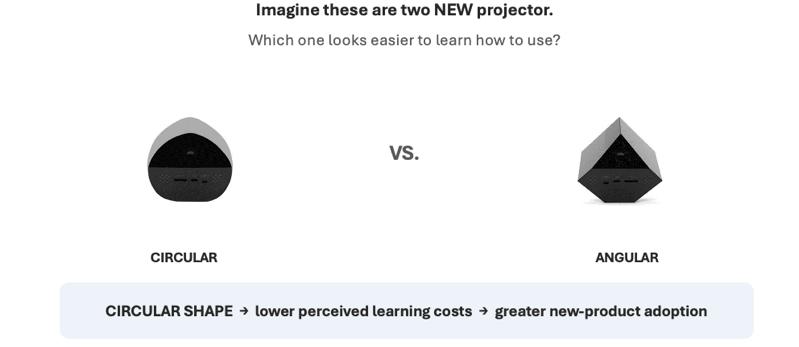
Circular product design adoption
The effect where round product shapes lower perceived learning difficulty, encouraging faster adoption than angular shapes.
Message simplicity
Presenting complex or technical product facts in clear, straightforward terms that are easy to process.
Message congruity
Keeping brand visuals and messages uniform across all advertising channels and platforms.
Message source
The spokesperson, celebrity, or character communicating a brand's message.
Source attractiveness
A communicator's influence based on a combination of similarity, familiarity, and likeability.
Source similarity
How much a spokesperson resembles or shares characteristics with the target audience.
Source familiarity
How well a consumer recognizes a spokesperson due to repeated past exposure.
Source likeability
A consumer's positive feelings toward a spokesperson based on physical appeal or personality.
Prior knowledge
Pre-existing consumer understanding that makes learning new product information faster and easier.
Consumer involvement
The degree of personal relevance a product holds for a consumer, where higher interest leads to stronger focus and recall.
Consumer expectations
Preconceived ideas about what will happen, which color how marketing messages are interpreted.
Physical limitations of consumers
Sensory or physical constraints—such as poor vision or hearing loss—that limit message reception.
Information intensity
The sheer amount of information present in an environment at one time, where excess causes overload.
Environmental timing
The exact moment or situational setting in which a consumer is shown a marketing message.
Learning
A lasting change in behavior brought about by interactions between a person and environmental cues.
Intentional learning
A conscious, purposeful effort by a consumer to gain knowledge about a specific subject.
Unintentional learning
Passive learning where consumers absorb brand names, slogans, or jingles without active effort.
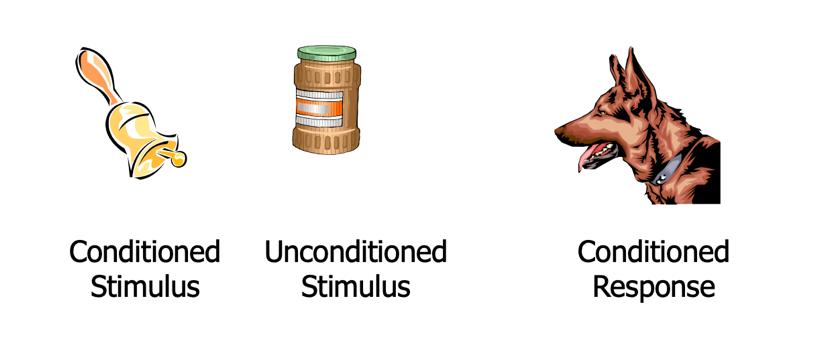
Classical conditioning
A behavioral learning method where pairing an unconditioned stimulus with a neutral cue produces an automatic learned response.
Ivan Pavlov
The psychologist who discovered classical conditioning by training dogs to salivate at the sound of a bell.
Stimulus generalization
The tendency to react to new stimuli that closely resemble the original conditioned cue.
Repetition in conditioning
Repeatedly pairing a cue with an outcome to build and strengthen a learned behavior.
Instrumental conditioning
Learning through rewards and consequences, also known as operant conditioning.
Reinforcement
A favorable reward following a behavior that increases the chance the behavior will be repeated.
Punishment
An unfavorable consequence following a behavior that reduces the likelihood of repeating it.
Memory
The cognitive system for gathering, storing, and later retrieving information when required.
Marketer objectives for memory
Building stronger brand recognition to directly boost customer sales and revenue.
Brand awareness
The degree to which consumers can recognize or recall a brand and link it to correct product categories.
Pioneer brand advantage
The memory advantage enjoyed by first-mover brands, making them easier to recall and associate with key ideas.
Sensory memory
The initial memory store that briefly captures raw sensory inputs before processing.
Sensory memory duration
An extremely fleeting memory window lasting only between \n\frac{1}{4}\n second and 2 seconds.
Echoic memory
A brief, specialized sensory store dedicated specifically to retaining sound inputs.
Echoic memory example
Mentally repeating a spoken question for a brief second right after hearing it.
Iconic memory
A brief, specialized sensory store dedicated specifically to retaining visual images.
Iconic memory example
Briefly seeing a visual image of a dark room immediately after the lights suddenly go out.

Short-term memory
The active working memory space where incoming information is held and given meaning.

Three-stage memory model
The path showing how information travels from Sensory Memory through Attention into Short-Term Memory, and via Encoding into Long-Term Memory.
Capacity of short-term memory
A limited working memory capacity capable of holding 7±2 items at one time.
Duration of short-term memory
The short period unrehearsed thoughts last in mind, lasting roughly 18 to 30 seconds.
Long-term memory
The permanent repository of stored knowledge, featuring a massive storage capacity.
Autobiographical memory
A subset of long-term memory storing specific personal experiences and life events.
Semantic memory
A subset of long-term memory containing general knowledge, facts, and concepts about the world.
Permanence of long-term memory
The principle that long-term memories are stored forever, even if retrieval path obstacles occur.
Elaboration
Deeply processing and connecting new information with existing knowledge to lock it into long-term memory.
Novelty in memory
The unique nature of encountering something unexpected, which captures high attention and aids retention.
Emotional resonance
The boost in memory retention created by intense feelings such as happiness, sadness, or shock.
The Von Restorff effect
The principle that distinct or unusual items that break standard norms stand out and are easier to remember.
Rehearsal
Consciously repeating information in one's mind to keep it in working memory or shift it to long-term storage.
Simple message strategy
Using clear, simple language in marketing so consumers can easily rehearse and remember the message.
Consistent message strategy
Repeating identical core messages across platforms to construct solid long-term brand memory.
Scent imagery
Visual prompts showing product usage to trigger mental images of experiencing a specific smell.
Scent memory impact
The effect where ambient real-world smells boost memory retention for advertised brands and features.
Product narratives
Structuring product features into stories, making them far easier for consumers to process and recall.
Associative network
The mental framework where concepts, feelings, and events are stored in connected memory nodes.
Memory nodes
Individual ideas, brand names, feelings, or facts represented as data points inside a mental network.
Associative links
Mental pathways of varying strength that link different memory nodes together.
Retrieval
The mental action of accessing stored facts from long-term memory when needed.
Spreading activation
The retrieval process where thinking of one memory node automatically triggers connected nodes.
Redundant cues
Pairs of complementary items presented together—like chips and salsa—that strengthen memory recall.
Retrieval cues
Triggers like logos, distinct colors, or jingles that activate specific nodes in memory.
Age factor in retrieval
A demographic element that alters the speed and efficiency of searching memory stores.
Emotional memory
Stored memories where recalling a past event instantly triggers strong feelings like excitement or sadness.
Constructive memory
The ongoing memory process where stored memories naturally reshape, shift, or adapt over time.
Memory accentuation
A memory shift that exaggerates specific positive or striking details of a past event over time.
Memory elimination
A memory shift where unwanted or minor details fade away from memory over time.
Posture impact on recall
Sitting or standing straight up increases blood and oxygen flow to the brain by up to 40%, speeding memory recall.
Exercise and memory
Physical activity enhances the functioning of the hippocampus, the key brain region for memory storage.
Michigan outdoor study
A University of Michigan study showing that spending an hour in nature improves memory and attention by 20%.