Basic Clinical Skills Practical
 Studied by 0 people
 Call Kai
 Learn
Learn Practice Test
 Spaced Repetition
 Match
Match Flashcards
 Knowt Play
1/14

There's no tags or description
Looks like no tags are added yet.
Name | Mastery | Learn | Test | Matching | Spaced |
|---|
No study sessions yet.
15 Terms
Introduction
Introduce yourself (name)
Introduce your role (medical assistant)
initiate a fluid conversation
SAMPLE
Signs and Symptoms
Allergies
“do you have any allergies”
Medications
“what medications are you currently taking?”
Past Medical History
“what medical problems have you been diagnosed with?”
Last Oral Intake
“what was the last thing you ate or drank?”
Events leading up to injury/illness
“what were you doing before or during the injury?”
OPQRST
Onset
“how did your symptoms begin?”
“did it start rapidly or were the symptoms gradual?”
Provocation/Palliation
“does anything make the symptoms better or worse?”
Quality
“can you describe the type of pain you are feeling, for example is it sharp, dull…?”
Region/radiation
“where do you feel your pain, does it radiate anywhere else?”
Severity
“on a scale of 1 -10, 1 being no pain at all and 10 being the worst pain of your life, where would you rate your pain”
Time
“when did the pain first begin and how long did it last?”
Heart Rate and Respiratory rate
ask patient to grab their shoulder
15 seconds for heart rate
15 seconds for respiratory rate
report your results to your patient
Blood pressure
align with brachial artery
make sure stethoscope is on the diaphragm side
report results to patient
Height and Weight
ask patient to take their shoes off and step backwards on the scale
report results to patient
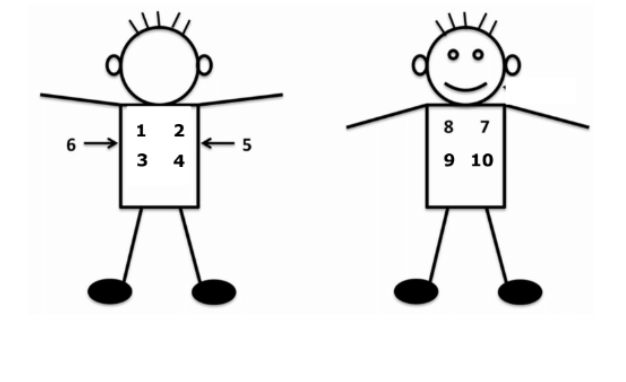
lung sounds
ask patient to take their shirt off
stethoscope switched to diaphragm
report results to patient
“clear and equal bilaterally”
heart sounds
ask patient to take their shirt off
stethoscope switched to bell side
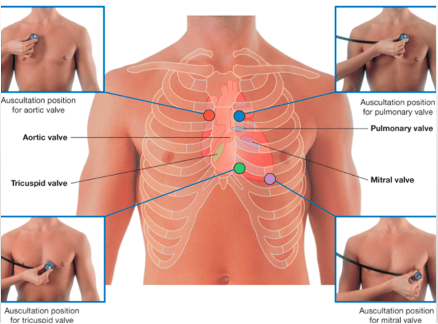
aortic - 2nd intercostal R sternal border
pulmonic - 2nd intercostal L sternal border
tricuspid - 4th/5th intercostal L sternal border
mitral - 5th intercostal midclavicular line
report results to patient
EKG
prep site by cleansing with alcohol
place electrodes at correct locations
limb leads and chest leads
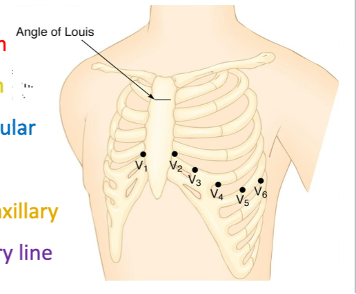
Precordial (chest) leads
V1: 4th intercostal @ R sternum
V2: 4th intercostal @ L sternum
V4: 5th intercostal @ Midclavicular (BEFORE V3)
V3: directly between V2 and V4
V5: 5th intercostal @ anterior axillary
V6: 5th intercostal @ midaxillary line
limb leads
right and left arm
right and left leg
don’t place on bone
O2 administration
Nasal Cannula
1-6 L/min
prongs facing downwards
Partial non-rebreather
10-15 L/min
bag should be filled before placing on patient (hold down middle)
tighten string and metal band
Bag-valve mask
15 L/min
squeeze until you see chest rise and fall
Urine Dip steps
open container and take out strip
open urine sample carefully
dip strip until all tiles are submerged
dab urine on paper towel
close lid on urine sample
do glucometry then come back to analyze
urine dip analysis
leukocytes - white blood cells? infection?
nitrites - uti?
protein - kidney disfunction?
pH - problems with kidney?
Blood - problems with kidney or urinary tract?
Specific gravity - more “stuff” in urine?
Ketones - body burning fat instead of sugar for energy?
Bilirubin - liver problems"?
glucose - diabetes?
report results to patient
Blood glucose steps
prepare supplies
alcohol wipe, gauze, band-aid, lancet, test strip, glucometer)
Explain procedure to patient
“now I will be testing your blood glucose level, which requires me to prick your finger. Which finger do you prefer?”
clean finger
insert strip into glucometer
press CAPPED lancet onto finger
apply pressure with gauze and place band-aid
put lancet and strip into biohazard bin
report results to patient