Applied Anatomy W1 Q1
 Call Kai
 Learn
Learn Practice Test
 Spaced Repetition
 Match
Match Flashcards
 Knowt Play
1/71

There's no tags or description
Looks like no tags are added yet.
Name | Mastery | Learn | Test | Matching | Spaced | Call with Kai | Chat |
|---|
No analytics yet
Send a link to your students to track their progress
72 Terms
Prone position
lying face down on stomach
supine position
lying face up on back
Trendelenburg position
lying on back with body tilted so that the head is lower than the feet (used to treat low bp)
Reverse trendelenburg position
lying on back with body tilted so the feet are lower than the head
Superior
Toward the head or upper part of the structure
Cranial
toward the head or upper part of the structure
Inferior
away from the head; toward the lower part
Caudal
Away from the head; toward the lower part
Anterior
toward the front of the body
Ventral
toward the front of the body
Posterior
toward the back of the body
Dorsal
toward the back of the body
Medial
toward the midline of the body
lateral
away from the midline of the body
Proximal
closer to the point of attachment (trunk or origin)
Distal
Farther from the point of attachment or origin
Superficial
Toward or on the surface of the body
Deep
away from the surface, more internal
Anterolateral
toward the front and side
Anteromedial
toward the front and midline
Posterolateral
toward the back and side
Posteromedial
toward the back and midline
Inferolateral
lower and toward the side
Superomedial
upper and toward the midline
sagittal plane
divides body into left and right
Frontal plane
divides body into front (anterior) and back (posterior) portions
Transverse plane
divides body into inferior and superior portions
Flexion
decreases angle between two body segments

Extension
Increase the angle between two body segments or returns a join from flexion towards anatomical position
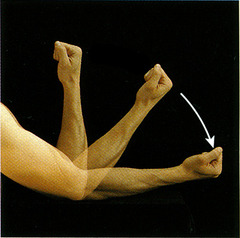
Abduction
movement away from the body's midline

Adduction
movement toward body's midline

Horizontal abduction
movement of the arm or thigh away from the body's midline while the limb is positioned at 90 degrees of flexion (transverse plane)

Horizontal adduction
movement of the arm or thigh across the body's midline while the limb is positioned at 90 degrees of flexion (transverse plane)
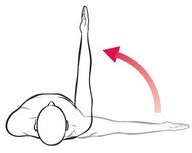
lateral flexion
Side bending of the neck or trunk away from the midline (ear to shoulder)
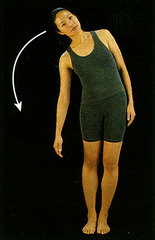
Internal (medial) rotation
rotation of bone toward body's midline
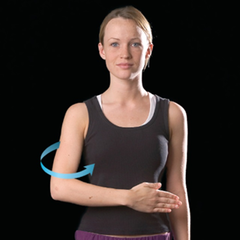
External (lateral) rotation
rotation of a bone away from the body's midline
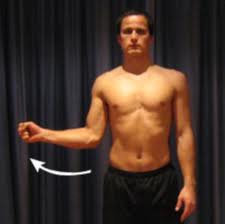
Supination
rotation of the forearm so the palm faces upward or forward in anatomical position
Pronation
rotation of the forearm so the palm faces downward or backward in anatomical position
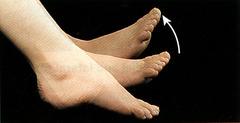
Dorsiflexion
Movement of the foot that points toes up, towards the shin
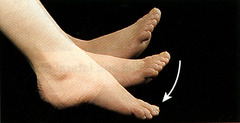
plantarflexion
movement of the foot that points toes downward, away from skin
Elevation
upward movement of a body part (shrugging shoulders, jaw open/close)
Depression
Downward movement of a body part, such as lowering the shoulders/jaw
Inversion
Turning the sole of the foot inward toward midline
Eversion
Turning the sole of the foot outward away from body's midline
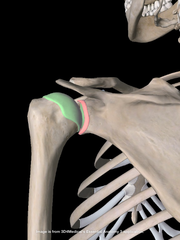
Shoulder (glenohumeral) joint type
ball and socket
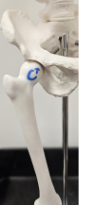
Hip (Acetabulofemoral) joint type
ball and socket
Elbow (humeroulnar) joint type
hinge

Knee (tibiofemoral) joint type
Modified hinge (slight rotation occurs, only in flexion)

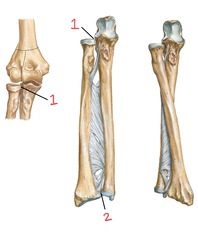
Proximal and distal radioulnar joint type
pivot
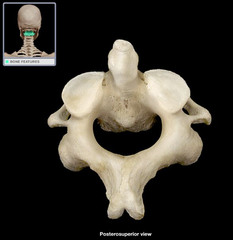
Atlantoaxial (C1-C2) Joint type
pivot
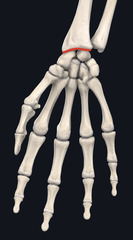
Radiocarpal (wrist) joint type
Condyloid (ellipsoid), 2 axis
Thumb Carpometacarpal (CMC) joint type
Saddle
Intercarpal joint type
plane (gliding)
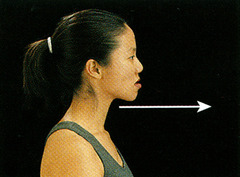
Protraction
moving a part forward (jaw/scapula)
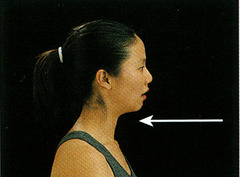
Retraction
moving a part back toward midline(jaw/scapula)
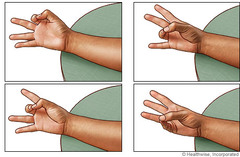
Opposition
Movement of the thumb to touch the fingertips
Joint Capsule
Dense fibrous sleeve around synovial joint, provides stability, contains synovial fluid
Joint capsule passive restraint
Keeps body parts attached
Joint active restraint
muscle tone & contractions keep joint connected
Ligament
connect bone to bone; joint stability

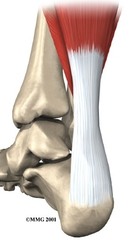
Tendons
connect muscle to bone; transfer force
Close-pack position
maximal contact between articular surfaces; maximal tension on surrounding ligaments (knee in full extension)
Open-pack position
Least surface contact, laxity of surrounding ligaments, increased joint mobility (knee in flexion)
Origin
attachment that moves the least, provides stable base for the muscle to pull against (usually proximal)
Insertion
More moveable attachment, typically moves toward the origin when muscle contracts (usually distal)
Agonist muscle
primary muscle responsible for generating a specific movement (harry potter)
Antagonist muscle
opposes the action of the agonist muscle, providing balance and control (draco)
Synergist muscle
assist the agonist in performing a movement, ensuring it is smooth and effective (ron & hermione)
Isometric muscle contraction
contraction with no change in length (holding a phone steady)
isotonic muscle contraction
contraction with change in muscle length and joint motion (eccentric & concentric)
Concentric muscle contraction
muscle shortens (raising a mug)
Eccentric muscle contraction
muscle lengthening (lowering a mug)