TEST 1 - CSCD612
 Call Kai
 Learn
Learn Practice Test
 Spaced Repetition
 Match
Match Flashcards
 Knowt Play
1/63

There's no tags or description
Looks like no tags are added yet.
Name | Mastery | Learn | Test | Matching | Spaced | Call with Kai | Chat |
|---|
No analytics yet
Send a link to your students to track their progress
64 Terms
mnemonic devices
A Compass SENSed West, MOre Bisons Mysteriously Grazed
Anomic, Conduction, Transcortical Sensory, Wernicke’s, Transcortical Motor, Broca’s, Transcortical Mixed, Global
anomia
word-finding difficulty
“what’s that thing called"?”
circumlocution
description of target word
"you know, that thing you sit on”
agrammatism/telegraphic speech
content words only, function words omitted
“sink on” instead of “the sink is on”
auditory comprehension deficits
impaired understanding of speech
trouble comprehending a spoken story
phonemic paraphasias
<50% of phonemes in target word (additions, substitutions, etc.)
“hak” or “tat” instead of “hat”
semantic paraphasias
substituting similar words
“cap” instead of “hat”
mixed paraphasias
both semantic & phonological errors
“hood” instead of “hat”, similar meaning and both have /h/ initial
neologistic paraphasias
nonwords, 50% < incorrect
jargon = lots of neologisms
“chith” instead of “hat”
perserverations
recurring, previously produced responses
“headphones” for every answer instead of what is actually in the image
stereotypy
frequently used word in place of target
using the word “hat” for answers in varying places
alexia
reading impairment
agraphia
writing impairment
BA 4
primary motor cortex (frontal lobe)
executing motor movements
BA 6 & 8
premotor + supplementary motor cortex (frontal lobe)
complex/coordinated movements
BA 44 & 45
broca’s area, inferior frontal gyrus (frontal lobe)
elements of language, motor planning for speech
BA 1, 2, & 3
primary somatosensory cortex (parietal lobe)
sensory perception, localization, etc.
BA 39 & 40
39 → angular gyrus, 40 → supramarginal gyrus (temporal lobe)
allows you to string words together
BA 22, 41, & 42
primary auditory cortex (temporal lobe)
22 → auditory/language comprehension
41 & 42 → first cortical destination of auditory info from thalamus
BA 9, 10 & 11
prefrontal cortex (frontal lobe)
executive functioning (decision making, memory, multitasking, etc.)
BA 17, 18, & 19
visual cortex, 17 is primary visual cortex (occipital lobe)
visual processing
references to cite for efficacy of aphasia treatment
Robey, R.R. (1994)
Holland, A et al. (1996)
Robey, R.R. (1998)
Brady, M.C. et al. (2016)

what brodmann area(s)
BA 4
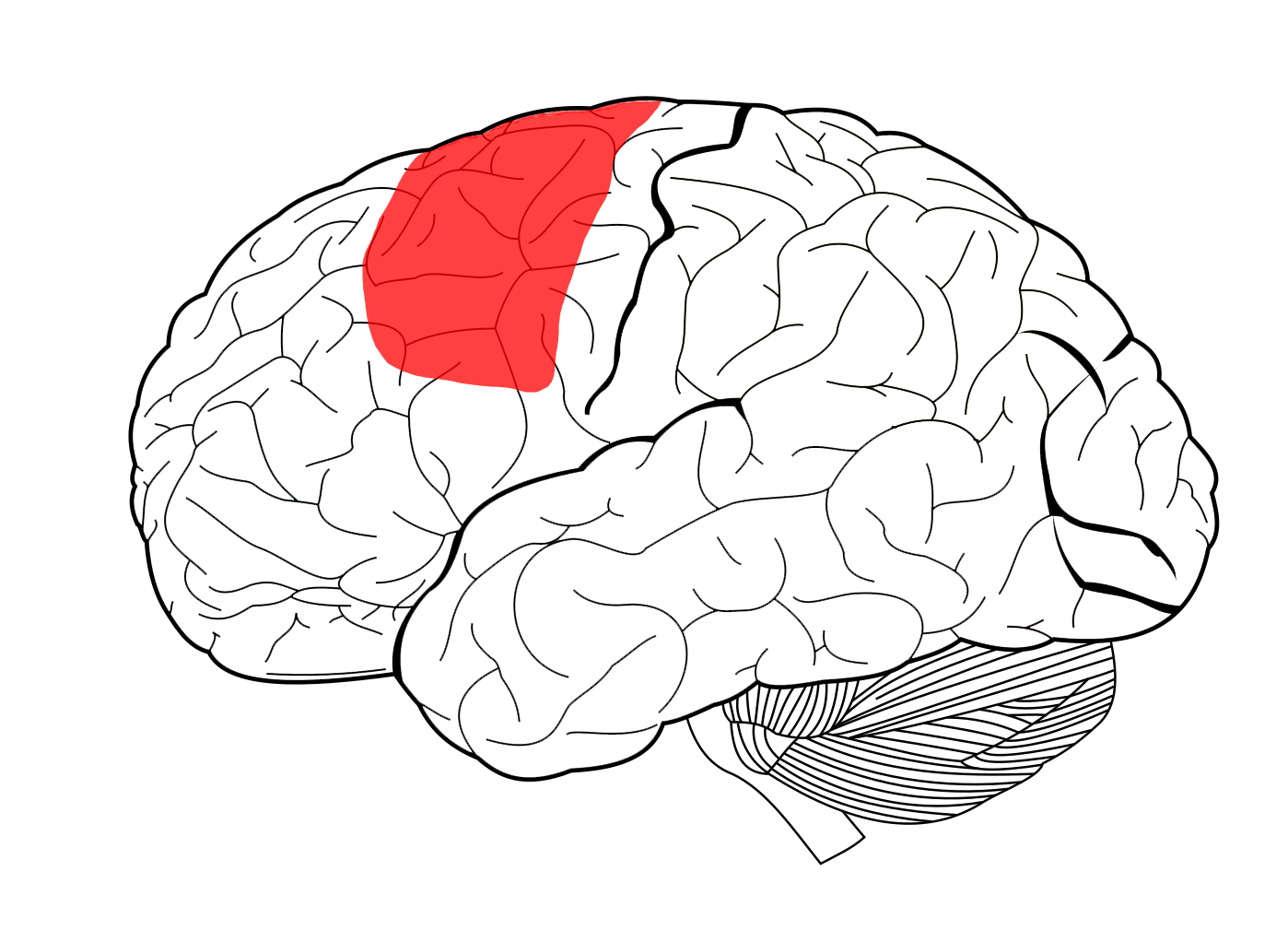
what brodmann area(s)
BA 6 & 8

what brodmann area(s)
BA 44 & 45
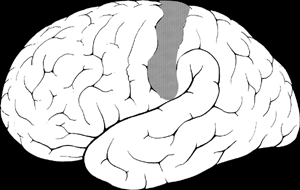
what brodmann area(s)
BA 1, 2, 3

what brodmann area(s)
BA 39
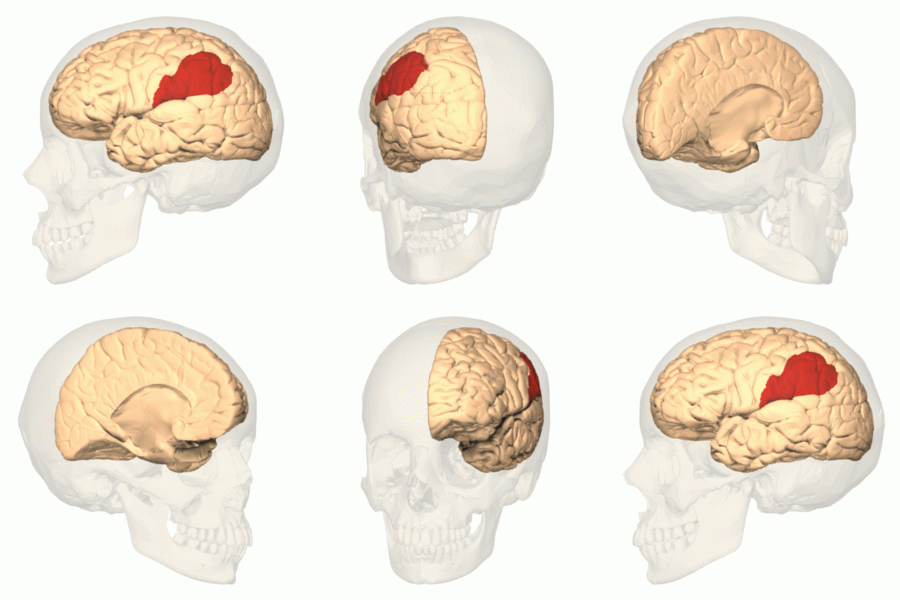
what brodmann area(s)
BA 40

what brodmann area(s)
BA 22

what brodmann area(s)
BA 41, 42
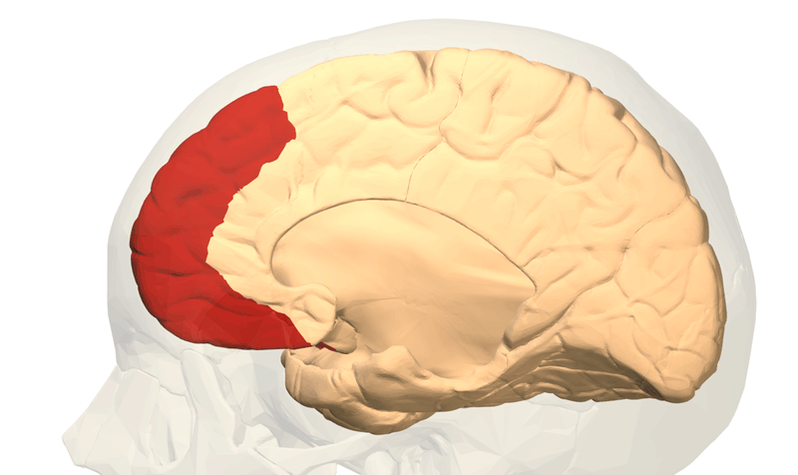
what brodmann area(s)
BA 9, 10, 11

what brodmann area(s)
17, 18, 19
lesions in which locations cause Broca’s aphasia?
inferior frontal gyrus / Broca’s area (BA 44 & 45)
frontoparietal operculum (in insula)
subcortical lesion
lesions in which locations cause Wernicke’s aphasia?
auditory cortex (BA 22)
angular gyrus (BA 39)
supramarginal gyrus (BA 40)
Wernicke’s area (BA 39 & 40)
lesions in which locations cause Conduction aphasia?
arcuate fasciculus (connects Broca’s to Wernicke’s)
supramarginal gyrus (BA 40)
left primary auditory cortices
lesions in which locations cause Global aphasia?
large lesion including Broca’s, Wernicke’s, and possibly more
sometimes Wernicke’s is spared
lesions in which locations cause Anomic aphasia?
NO SPECIFIC LOCATION, can’t say for certain
Broca’s Aphasia (FCR, behaviors, signs)
Fluency: NO, Comprehension: YES, Repetition: NO
short phrase length, agrammatism/telegraphic speech, anomia, phonemic paraphasias
signs: apraxia, hemiparesis/sensory loss
Wernicke’s Aphasia (FCR, behaviors, signs)
Fluency: YES, Comprehension: NO, Repetition: NO
anomia, perseverations, jargon (neologisms), press of speech
signs: possible right hemianopia
Conduction Aphasia (FCR, behaviors, signs)
Fluency: YES, Comprehension: YES, Repetition: NO
anomia, conduite d’approche/d’ecart
signs: right hemiparesis, right hemisensory loss, right hemianopia
Global Aphasia (FCR, behaviors, signs)
Fluency: NO, Comprehension: NO, Repetition: NO
profound anomia, sterotypy, paraphasias, perseverations, echolalia
signs: right hemiparesis, right hemisensory loss, right hemianopia
Anomic Aphasia (FCR, behaviors, signs)
Fluency: YES, Comprehension: YES, Repetition: YES
anomia, circumlocution, word finding
signs: right hemiparesis, right hemisensory loss, right hemianopia
what is aphasia?
“Aphasia is a processing disorder of language, not a disorder of linguistic knowledge, representation, or rule governances. …Aphasia is a linguistic performance disorder”
biopsychosocial approach
therapy should take into account…
the biological impairment-based factors
the psycholinguistic and cognitive processes of language and communication
within the social context of the individual
4 parameters of the Wernicke-Lichtheim model
fluency
auditory comprehension
repetition
naming
what does FRAME stand for?
Familiarize
Reduce rate
Assist with communication
Mix communication modalities
Engage patient first
Familiarize (FRAME)
become familiar with your client’s established communication preferences
modes of communication
is it okay to guess or wait for you to finish
hearing aids/glasses
Reduce rate (FRAME)
talking: slow down slightly, pause between phrases, one idea at a time
listening: increase wait time, maintain eye contact
Assist with communication (FRAME)
simplify speech, restructure/ask questions in different ways, acknowledge what you heard and communication breakdowns, ask clarifying questions
Mix communication modalities (FRAME)
acknowledging preferred modes of communication plus body language, facial expressions, gestures, writing, etc.
Engage the PWA (FRAME)
respect them and have a respectful tone of voice, use “semantics of competence” (avoid “good job”ing)
dimensions of fluency
phrase length, pauses, prosody, speaking rate, effort, intiation and elaboration
apraxia of speech
impairment of articulation and prosody due to an issue with motor planning
co-occurs with aphasia sometimes, especially Broca’s-like
3 NECESSARY CHARACTERISTICS:
sound errors (distortions, distorted substitutions)
slowed rate
prosodic abnormalities (syllable segregation, equalized stress)
vascular distribution of the aphasias
MCA: Broca’s, Global
MCA & PCA: Wernicke’s, Conduction
Variable: Anomic
hemiparesis
hemiplegia
hemisensory loss
hemianopia
hemiparesis: one sided weakness
hemiplegia: one sided paralysis
hemisensory loss: one sided loss or limit of sensation
hemianopia: one sided visual field blindness
transcortical motor aphasia: features
Fluency: NO, Comprehension: YES, Repetition: YES
impaired initiation of speech, less articulatory effort, impaired reading and writing (especially oral reading)
transcortical sensory aphasia: features
Fluency: YES, Comprehension: NO, Repetition: YES
anomia, nonspecific words, semantic paraphasias, perseverations
transcortical mixed aphasia: features
Fluency: NO, Comprehension: NO, Repetition: YES
severe anomia, echolalia, preserved repetition, stereotypy
subcortical aphasias
lesion located in the thalamus, internal capsule putanimal, or basal ganglia
noted feature: hypophonia (reduced speech intensity, weak voice)
frontal lobe lesion features
expressive aphasia
contralateral paralysis, impaired cognition, inappropriate social behavior, etc.
temporal lobe lesion features
receptive aphasia
contralateral homonymous hemianopia, memory disturbances
parietal lobe lesion features
visual spatial deficits
contralateral hemisensory loss, tactile agnosia, inattention, anosagnosia (denial of impaired functioning)
occipital lobe lesion features
receptive aphasia
contralateral homonymous hemianopia, memory disturbances
cerebellar lesion features
reduced limb coordination and balance