permit
 Call Kai
 Learn
Learn Practice Test
 Spaced Repetition
 Match
Match Flashcards
 Knowt Play
1/124

There's no tags or description
Looks like no tags are added yet.
Name | Mastery | Learn | Test | Matching | Spaced | Call with Kai | Chat |
|---|
No analytics yet
Send a link to your students to track their progress
125 Terms

This sign means
U-turns are not allowed on this road.
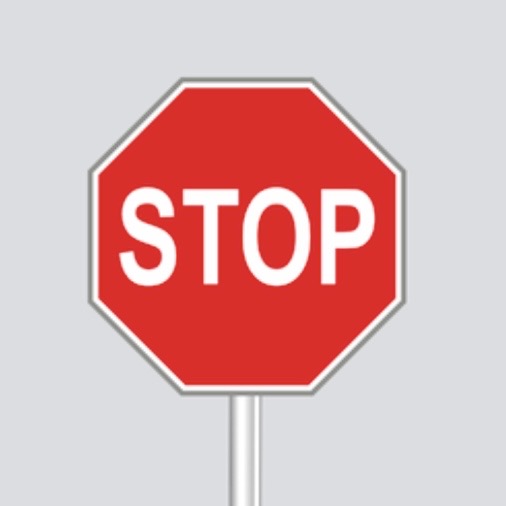
This sign means
Come to a full stop, then go when it is safe to do so.

This sign means
School crossing ahead.
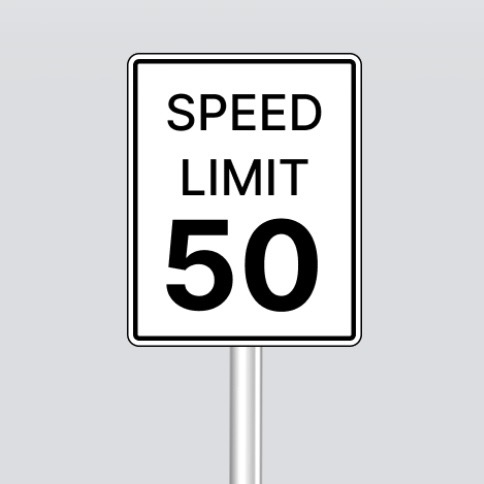
This sign means
The fastest you can leaglly drive is 50 mph in good weather.

This sign means
Slow down and be prepared to stop if necessary.

The car behind you begins to pass you.
You should
Maintain your speed (or slow down slightly) and stay in your lane.

In general, you should pass vehicles going in the same direction:
On the left.

This sign means don't pass:
Other vehicles for any reason

You are driving in the middle lane on a three lane expressway. A car begins to pass you on the right. The actions of that driver are
OK if no signs forbid passing on the right.
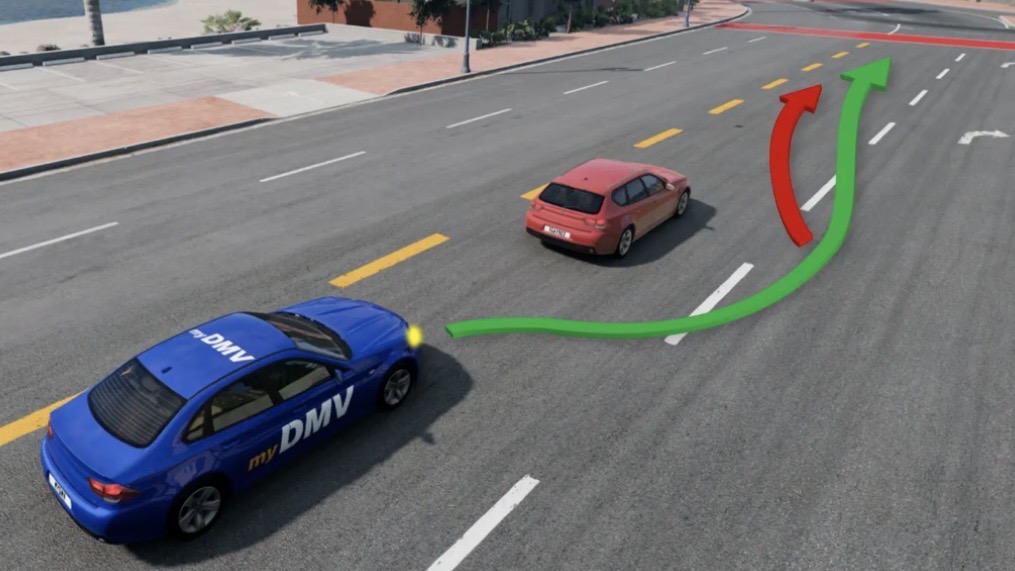
When you want to overtake and pass another vehicle you should
Signal and pass when safe to do so.

This sign means
No left turn.

This sign means:
Max speed 50 mph, minimum speed 30 mph in ideal conditions.
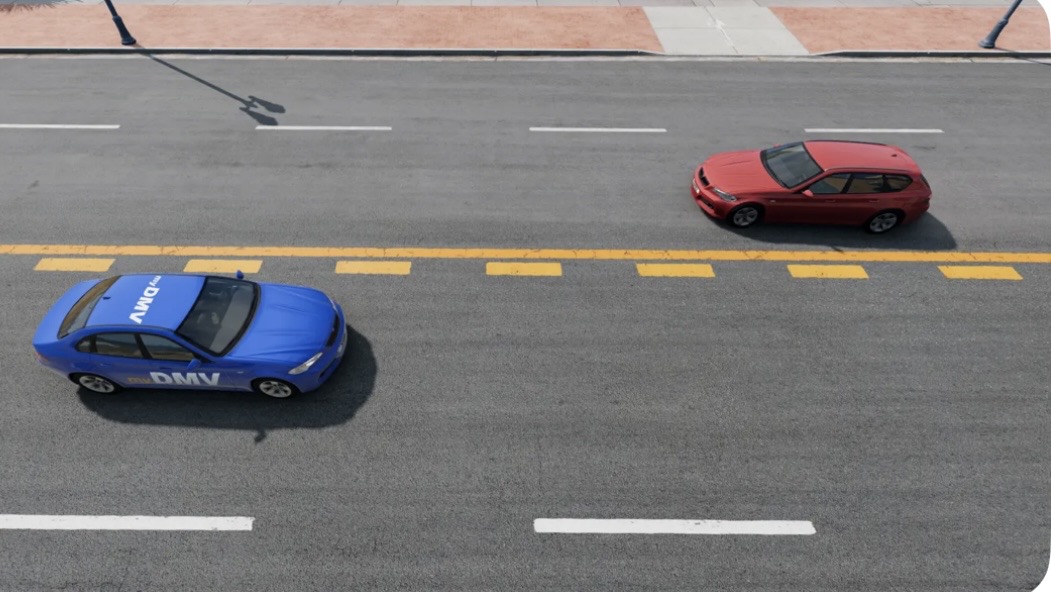
A solid yellow line next to a broken yellow line means that vehicles:
Next to the broken line may pass.

You may cross double yellow lines to pass another vehicle if the:
Yellow line next to your side of the road is broken.

This sign means?
No parking allowed.

This sign means
Do not turn during the red light.

This sign means
Traffic flows only in the direction of the arrow.
A rectangular-shaped sign is
Speed limit sign.
Seat belts must be used by
Everyone in the car
What is the illegal blood alcohol concentration?
0.08% for drivers over 21
A safe speed to drive your car
Depends on the weather and road conditions
Three of the most important times to check traffic behind you are before
Backing, changing lanes or slowing down quickly
What should you do if you have a blowout?
Slow to a stop
You can practice drive with a valid special learner's permit (after 3 months):
Until 10 p.m.

What steps should you take when changing lanes?
Signal, check mirrors, look over shoulders
Flash your brake lights or turn on your emergency flashers if you:
Need to warn other drivers of an accident ahead
How should you park on a hill?
So the car rolls into the curb
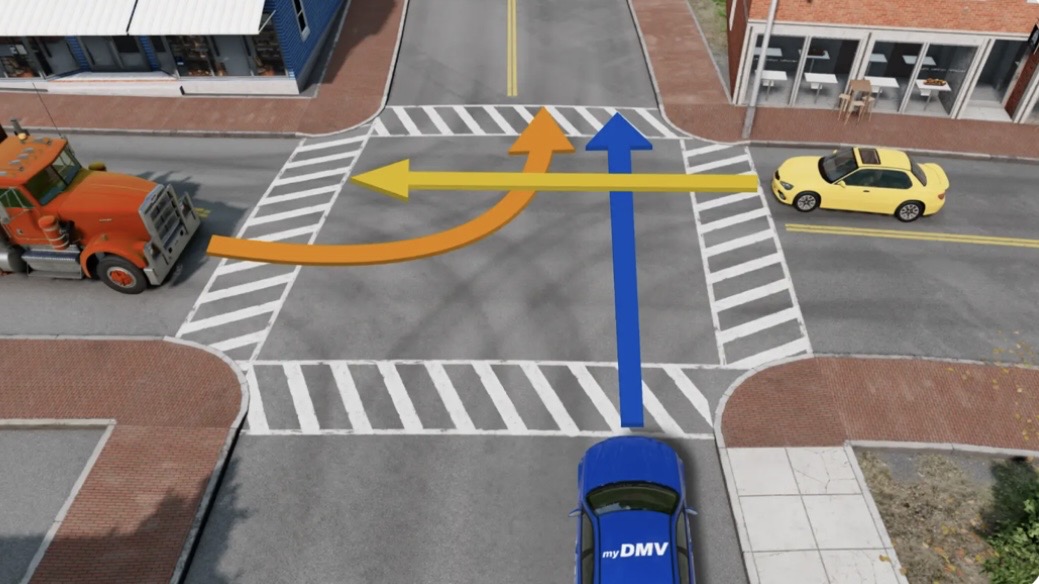
In what order the vehicles may proceed at the intersection below
Yellow - Blue - Orange
When to turn off headlights
until 30 minutes before sunrise
What is the speed limit in school zone?
15 mph
It is prohibited for a vehicle to do the following in a school zone
Make U-turn
If the road is wet from a heavy rain, you should:
Increase the distance between your vehicle and the vehicle ahead
When to turn on headlights
beginning 30 minutes after sunset
What is the hand signal for right turn
arm out of the window, bent upwards at a 90 degree angle
How far should you be from the vehicle in front?
1 car length per 10 mph or 3 minimum seconds of space
When the bus flashes red lights on the opposite lane, you
Must stop
To help avoid skidding on slippery surface you should:
Slow down before entering curves and intersections
You come to an intersection which has a flashing red light. You should
Come to a full stop, then go when safe to do so.
You see a signal person at a road construction site ahead. You should obey his or her instructions:
At all times.
If your turn signals fail, you should use ___ to indicate you are turning.
Hand signals
You see a flashing yellow traffic signal at an upcoming intersection. The flashing yellow light means:
Slow down and cross the intersection carefully.
When making a turn, you must ___ your speed.
Reduce
You are driving on a one-way street. You may turn left onto another one-way street only if:
Traffic on the street moves to the left.

The driver is signaling that she is:
Turning right
A large truck is ahead of you and is turning right onto a street with two lanes in each direction. The truck:
May have to swing wide to complete the right turn.
You may make a left turn on a red light from a:
One-way street onto a one-way street
What is the appropriate action to take when approaching a railroad crossing that does not have signals (such as lights or crossing gates)
Slow down and be prepared to stop.
Before turning, you should:
Use your signal
The correct hand signal for stopping is:
Left hand and arm pointing downward.
What does a flashing yellow light mean
Proceed with caution.
When you are planning to make a turn, you should activate your turn signals:
3 to 4 seconds before you reach the intersection
An intersection has a stop sign, crosswalk, but no stop line. You must stop
Before the crosswalk.
When should you yield your legal right-of-way?
When it helps prevent accidents
The law gives ___ the right of way at intersections.
No one
At a four-way stop, if more than one vehicle arrives at the same time side-by-side, the vehicle on the ___ goes first.
Right
If you see anyone in the roadway with a guide dog or a white cane, stop at least ___ feet away until the person is off the roadway.
10

At an intersection where there are no signs or traffic lights, you (blue car) must yield to the vehicle ___.
Coming from the left.
When yielding to an emergency vehicle pull over the ___ edge of the road or as near to the edge as possible.
Right
At a ___ the driver reaching the intersection first goes first (after coming to a complete stop).
4 way stop
When crossing a sidewalk to enter traffic from an alley or driveway, drivers should:
Stop before driving onto the sidewalk or sidewalk area.
You’ve just arrived at an intersection without STOP or YIELD signs. In which situation are you required to yield?
There is a car already on the intersection.
When faced with one oncoming car to the left and a bicyclist to the right, you should:
Let the car pass and then pass the bike
You must yield the right-of-way to ___ using a siren, air horn or a red or blue flashing light.
Fire trucks and police vehicles
Pedestrians ___ have absolute right-of-way (even if not at an intersection).
Using a guide dog or a white cane
Which of the following is true about a funeral possession?
Has the right-of-way.
Must yield to following vehicles
Law enforcement vehicle, fire engine, ambulance, or other emergency vehicle using a siren and red lights
Assuming that the street is level, what should you do after have finished parallel parking in a space between two other cars.
Straighten your front wheels and leave room between cars.
You may not park your vehicle:
Next to a red painted curb.
If you are parked parallel to the curb, you may get out of the car on the traffic side
When you will not interfere with oncoming vehicles.
A white painted curb means:
Loading zone for passengers or mail only.
A driver may park in a space reserved for people with disabilities if the vehicle displays license plates for the disabled
And is carrying the disabled person named on the registration.
In a parking spot reserved for people with disabilities, a non-disabled driver
May neither park, stop nor stand.
A NO PARKING sign at a certain location means
You may stop temporarily to load or unload passengers.
Before you leave a parking space which is parallel to the curb you should
Look for traffic by turning your head.
When parking your vehicle parallel to the curb on a level street.
Your wheels must be within 18 inches of the curb.
You can park and leave your car
None are correct.
It is illegal to park your vehicle
In an unmarked crosswalk.
You may never park
In a crosswalk.
When you park on the roadway, you should:
Use your four-way flashers.
How should you park on a hill?
So the car rolls into the curb.
Should you always drive slower than other traffic?
No, you can block traffic when you drive too slowly.
When traveling below 40 miles per hour on a limited access highway, you should:
Use your four-way flashers
Expressways have expressway entrance lanes (acceleration lanes) so that drivers can
Reach the proper speed before blending with traffic.
When entering a highway from an entrance ramp, you should generally:
Accelerate to the speed of traffic.
At highway speeds, on a dry road, a safe following distance is at least:
3 or 4 seconds of following distance from the car ahead of you
When driving on a freeway entrance ramp, you should look for a gap in freeway traffic by:
Looking in your mirrors and turning your head to look over your shoulder.
If you want to get off from a freeway, but you missed your exit, you should:
Go to the next exit, and get off the freeway there
You may cross a single solid white line on the highway
If traffic conditions require.
When entering a freeway:
You must yield the right-of-way to vehicles already on the freeway.
When exiting a highway, you should slow down:
Once you have moved into the exit lane.
When your right wheels run onto a soft shoulder, what is the best way to get back on the highway?
Ease your foot off the gas and brake gently
Allow a larger space cushion when stopping:
On an up-hill
Drivers entering a roundabout or traffic circle:
Must yield to drivers already in the roundabout or traffic circle.
When you are merging onto the freeway, you should be driving:
At or near the same speed as the traffic on the freeway.
Why is driving on an expressway different from driving on an ordinary street
You must think faster and handle your vehicle more effectively.
Before changing lanes on a multi-lane highway you should:
Check your mirrors and blind spots
You are driving on a freeway posted for 65 mph. Traffic is heavy and moving at 35 mph. The best speed for you vehicle is most likely:
35 mph
Allowing a space cushion is important because it:
Allows you time to react to unexpected situations.
One of the rules of defensive driving is
Stay alert and keep your eyes moving.
To turn left on multi-lane streets and highways, you should start from:
The left lane