Cells- Important Information
 Call Kai
 Learn
Learn Practice Test
 Spaced Repetition
 Match
Match Flashcards
 Knowt Play
1/70

There's no tags or description
Looks like no tags are added yet.
Name | Mastery | Learn | Test | Matching | Spaced | Call with Kai | Chat |
|---|
No analytics yet
Send a link to your students to track their progress
71 Terms
Cell theory
All organisms are made of cells, cells are the basic units of life, and new cells arise from existing cells.

Unicellular organism
An organism consisting of one cell that performs every process needed for life.

Multicellular organism
An organism containing specialised cells that cooperate to keep it alive.

Eukaryotic cell
A cell containing a nucleus and membrane-bound organelles, found in animals, plants, fungi and protists.

Prokaryotic cell
A smaller cell without a nucleus or membrane-bound organelles, found in bacteria and archaea.
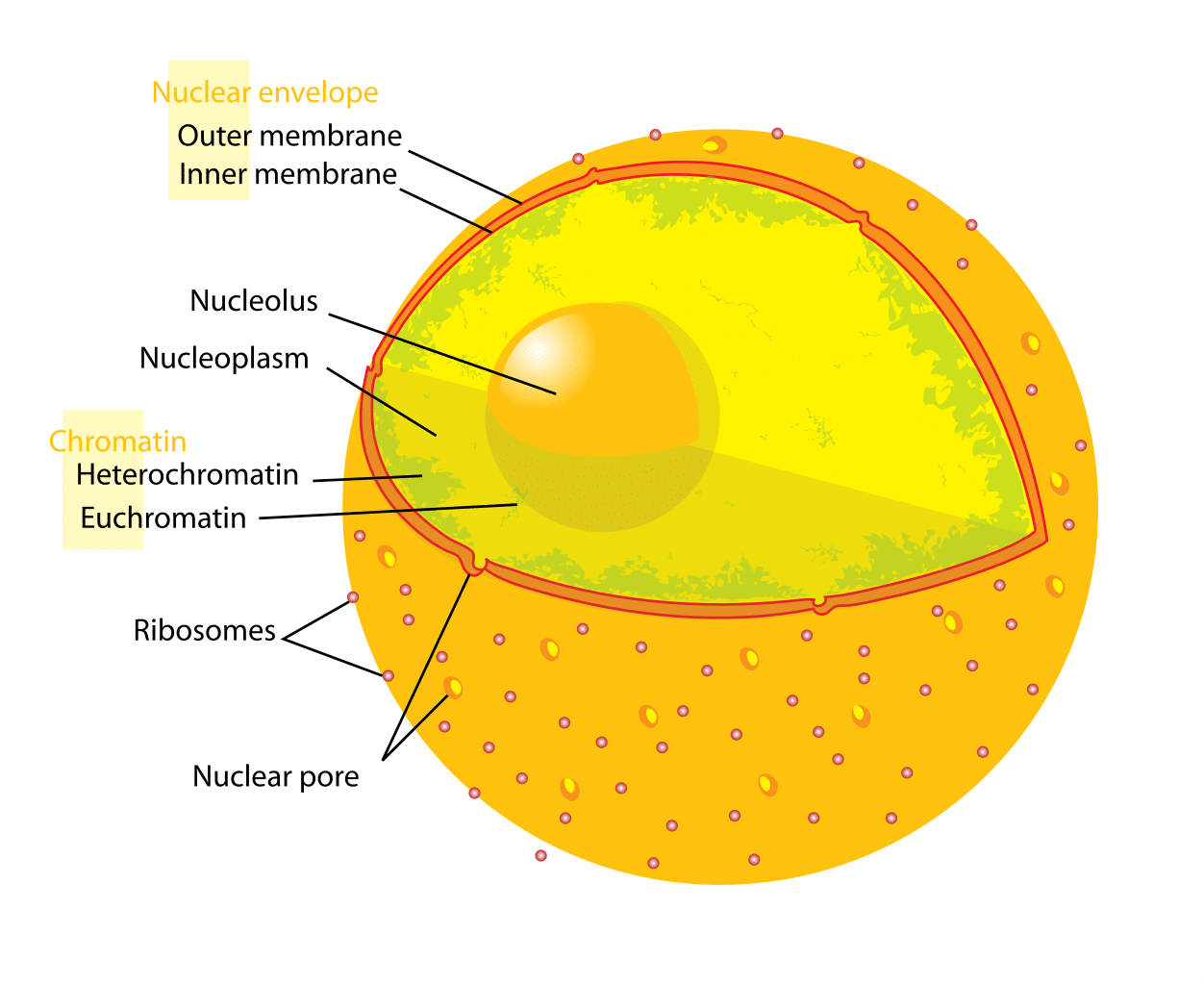
Nucleus
Contains DNA and controls the cell's activities.

Cytoplasm
The jelly-like interior where many chemical reactions occur.

Cell membrane
A selectively permeable barrier controlling movement into and out of the cell.

Mitochondrion
The organelle where aerobic respiration releases energy and produces ATP.

Ribosome
The structure where proteins are assembled from amino acids.

Plant cell wall
A rigid cellulose layer that supports the cell and prevents it from bursting.
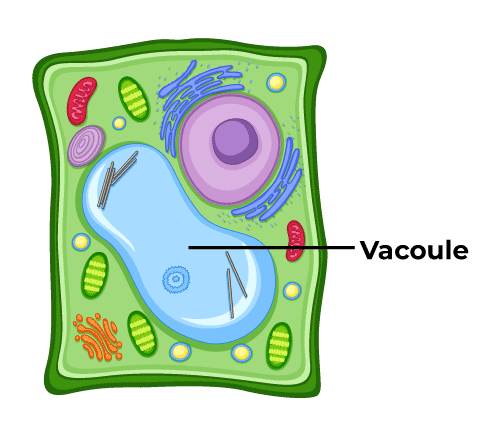
Permanent vacuole
A fluid-filled compartment containing cell sap that helps keep a plant cell firm.
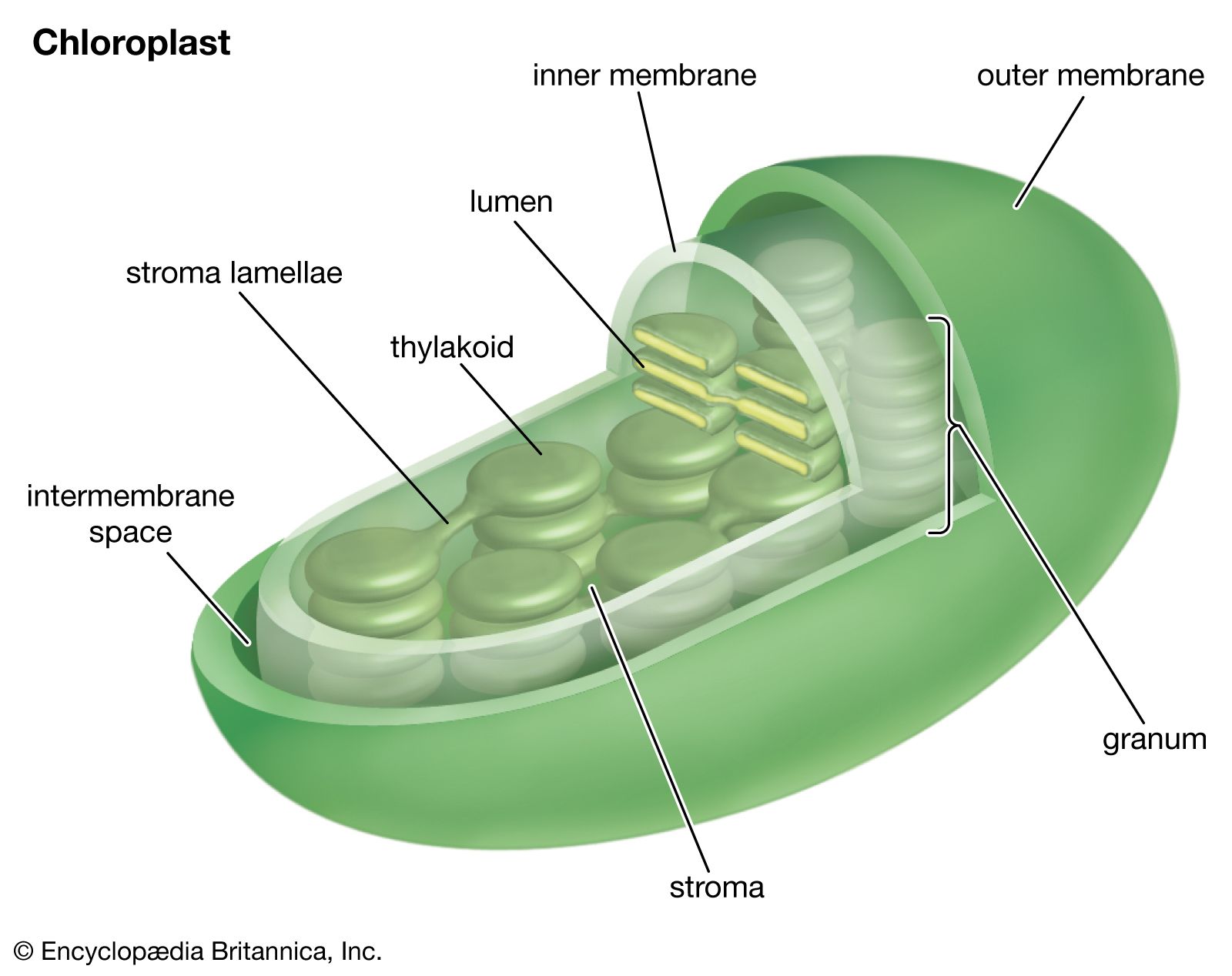
Chloroplast
The organelle containing chlorophyll where photosynthesis occurs.

Animal cell
A eukaryotic cell with a membrane, cytoplasm, nucleus, mitochondria and ribosomes but no cell wall or chloroplasts.

Plant cell
A eukaryotic cell with a cellulose wall, permanent vacuole and often chloroplasts.

Fungal cell
A eukaryotic cell with a cell wall made mainly from chitin but no chloroplasts.
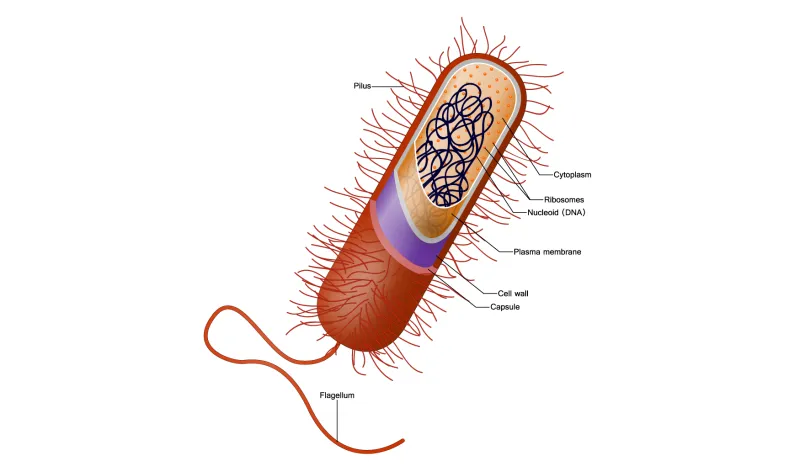
Bacterial cell
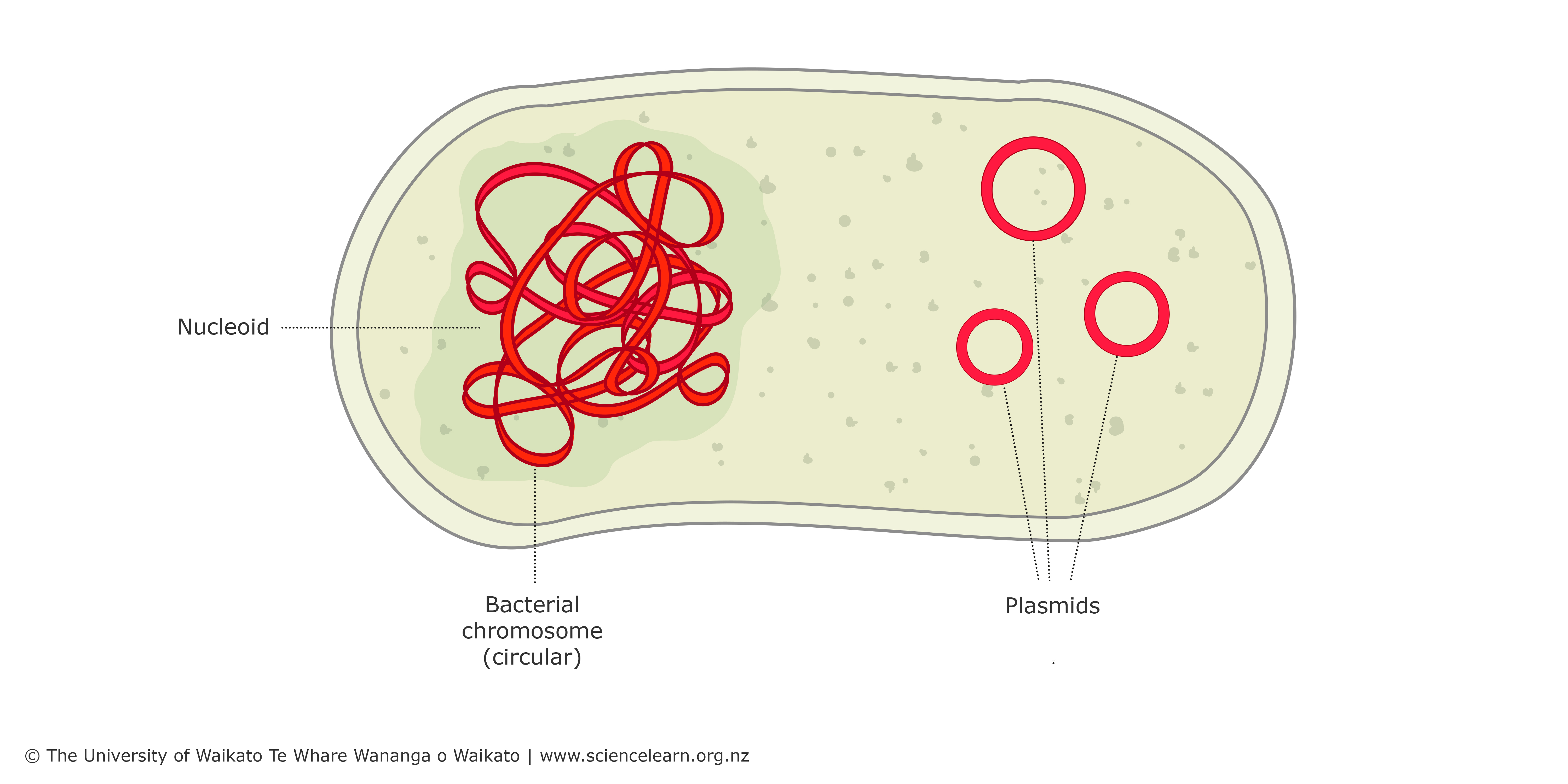
A prokaryotic cell containing cytoplasm, ribosomes, a membrane, a cell wall and circular DNA.
Plasmid
A small circular DNA molecule carrying additional genes in some bacteria.

Virus
A non-cellular infectious particle containing genetic material inside a protein coat.
Viral replication
Viruses reproduce by entering host cells and using their machinery to make new virus particles.

Antibiotic
Medicine that kills bacteria or prevents their growth but does not work against viruses.
Antibiotic resistance
The ability of bacteria with resistance genes to survive and reproduce during antibiotic treatment.
Magnification
How many times larger an image appears than the real object.
Magnification equation
Magnification equals image size divided by actual size. M = I/A
Resolution
The ability to distinguish two close points as separate objects.
Light microscope
A microscope using visible light and lenses to view cells.
Electron microscope
A microscope using electrons to produce images with much greater resolution than a light microscope.
Millimetre
A unit equal to one thousandth of a metre.
Micrometre
A unit equal to one millionth of a metre and commonly used to measure cells.
Nanometre
A unit equal to one billionth of a metre and commonly used to measure viruses and small organelles.
Surface-area-to-volume ratio
The amount of surface area compared with volume; it decreases as an object becomes larger.
Importance of a high surface-area-to-volume ratio
It allows substances to be exchanged quickly enough to meet a cell's needs.
Diffusion
The net movement of particles from an area of higher concentration to an area of lower concentration.
Factors affecting diffusion
A steeper concentration gradient, higher temperature, larger surface area and shorter distance increase diffusion rate.
Osmosis
The net movement of water through a partially permeable membrane from a dilute solution to a more concentrated solution.
Turgid plant cell
A firm plant cell that has gained water and presses against its cell wall.
Flaccid plant cell
A plant cell that has lost water and no longer presses firmly against its cell wall.
Active transport
The movement of substances against their concentration gradient using energy from respiration.
Cell cycle
The sequence in which a cell grows, copies its DNA and divides.
Mitosis
Nuclear division producing two genetically identical daughter cells.
Purpose of mitosis
Mitosis allows growth, tissue repair, cell replacement and asexual reproduction.
Differentiation
The process by which an unspecialised cell develops structures suited to a particular function.
Stem cell
An unspecialised cell capable of dividing and developing into specialised cell types.
Embryonic stem cell
A stem cell capable of developing into almost any type of body cell.
Adult stem cell
A stem cell that can usually form only a limited range of cell types.
Tissue
A group of similar cells working together to perform a function.
Organ
A structure made from different tissues working together.

Sperm cell
A male gamete with a flagellum, many mitochondria and enzymes that help it reach and enter an egg.
Egg cell
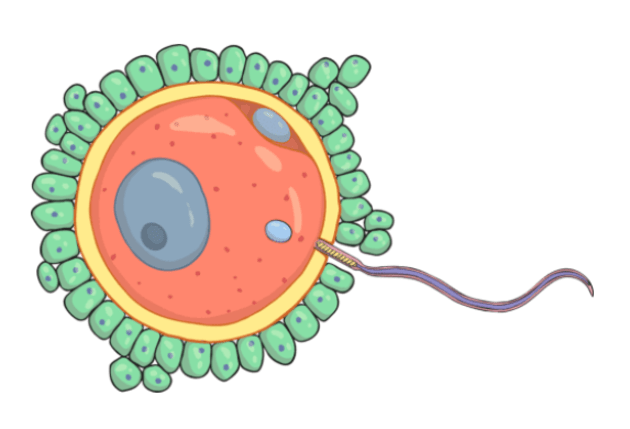
A large female gamete containing nutrients and a haploid nucleus.
Red blood cell
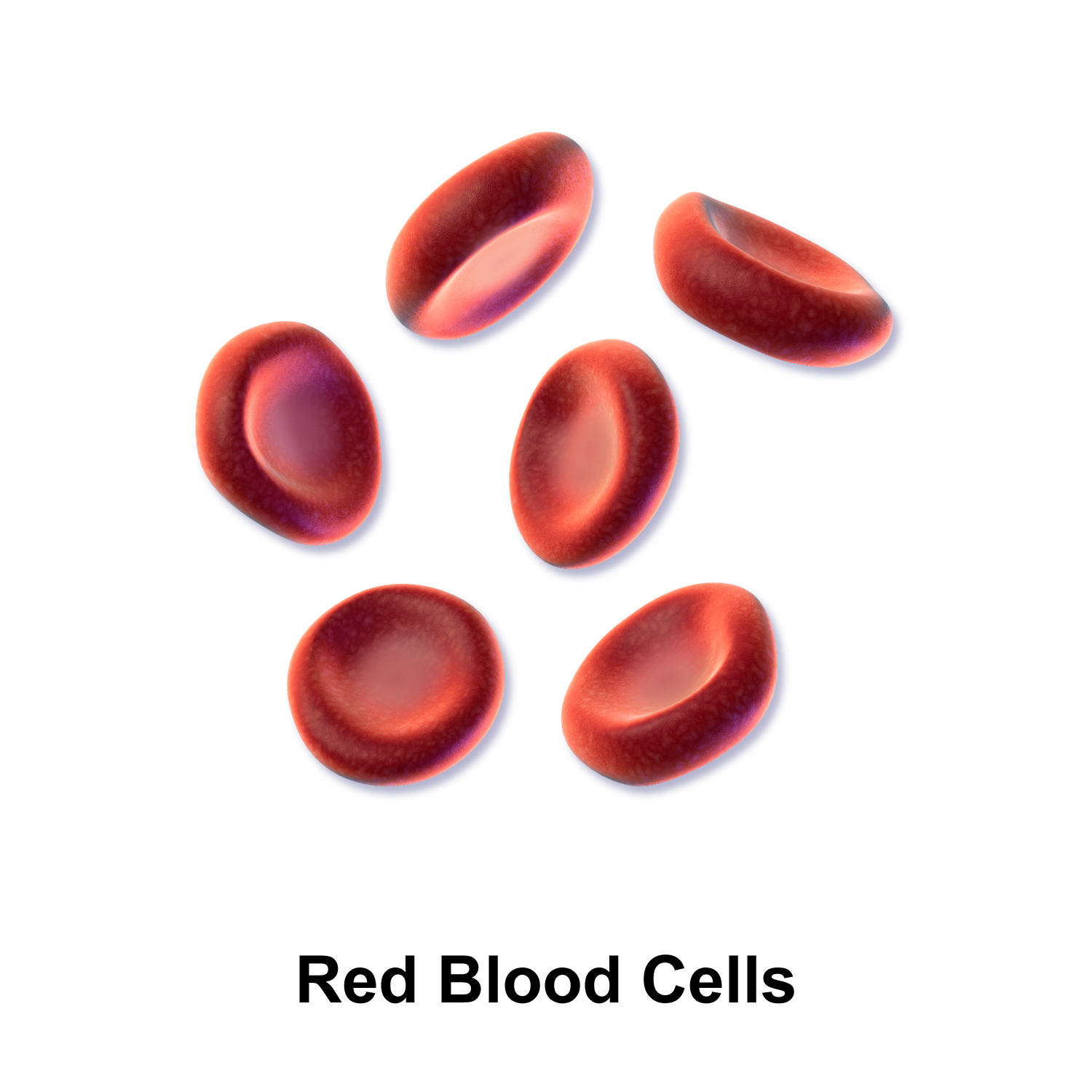
A biconcave cell containing haemoglobin and no nucleus, providing more space and surface area for oxygen transport.

Neurone
A specialised cell with a long axon that rapidly carries electrical impulses around the body.
Ciliated epithelial cell
A cell with moving cilia that carries mucus and trapped particles away from the lungs.
Muscle cell
A specialised cell containing protein fibres that contract and containing many mitochondria for energy.
Root hair cell
A plant cell with a long projection that increases surface area for absorbing water and mineral ions.
Palisade mesophyll cell
A leaf cell packed with chloroplasts near the upper surface for efficient photosynthesis.
Guard cell
A specialised cell that changes shape to open or close a stomatal pore.
Xylem vessel
A hollow tube of dead lignified cells that transports water and supports the plant.
Phloem sieve tube
A living tube that transports dissolved sugars around a plant.
Aerobic respiration
The release of energy from glucose using oxygen, producing carbon dioxide and water.
Aerobic respiration equation
Glucose plus oxygen produces carbon dioxide plus water, releasing energy.
Anaerobic respiration in animals
The incomplete breakdown of glucose without oxygen, producing lactate and less energy.
Anaerobic respiration in yeast
The incomplete breakdown of glucose into ethanol and carbon dioxide.
Photosynthesis
The process in which light energy converts carbon dioxide and water into glucose and oxygen.
Photosynthesis equation
Carbon dioxide plus water produces glucose plus oxygen using light energy.
DNA
The molecule that stores inherited genetic information.
Chromosome
A long, coiled DNA molecule carrying many genes.
Gene
A section of DNA containing instructions for a functional protein or RNA.
Protein synthesis
The process in which ribosomes use genetic instructions to join amino acids into proteins.
Enzyme
A biological catalyst that speeds up cellular reactions without being used up.
Active site
The region of an enzyme with a shape complementary to its substrate.
Denaturation
A permanent change in an enzyme's active-site shape, often caused by high temperature or extreme pH.