Astr Week 2
 Call Kai
 Learn
Learn Practice Test
 Spaced Repetition
 Match
Match Flashcards
 Knowt Play
1/29

There's no tags or description
Looks like no tags are added yet.
Name | Mastery | Learn | Test | Matching | Spaced | Call with Kai | Chat |
|---|
No analytics yet
Send a link to your students to track their progress
30 Terms
What is Newton’s First Law
In the absence of force, a body at rest stays at rest, and a body in motion continues in motion
in a straight line at a constant speed
What is Newton’s Second Law
When force is applied, a body’s speed, or direction of motion, or both, will change. Force
equals mass times acceleration, F = ma, thus a = F/m
What is Newton’s Third Law
or any force, there is always an equal and opposite reaction force
Explain equations of Motion (speed, velocity, acceleration)
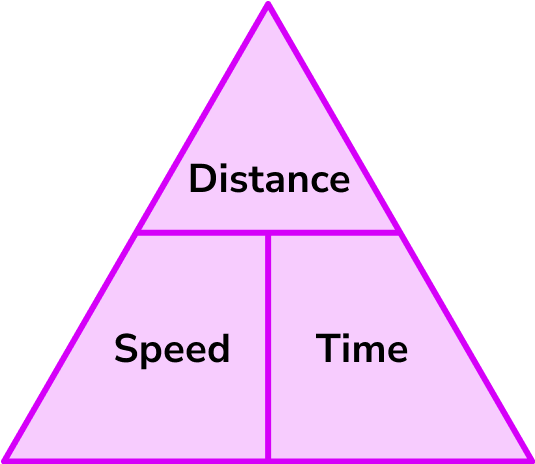
Speed: change in distance / change in time
Velocity: change in distance / change in time (m/s)
Acceleration: change in velocity / change in time (m/s2)
Differentiate between linear moment and angular moment
momentum is basically the force for velocity (how difficult it is to stop a moving object i.e. a truck rolling at a slow speed has massive momentum compared to a fast-flying baseball due to its larger mass)
Linear momentum: mass x velocity = mv
Angular momentum: (m x v) x orbit radius
Force: the means of changing an object’s momentum (like gravity) (momentum over time)
acceleration (change in speed over time) changes an object’s velocity and speed hence its momentum
acceleration due to gravity at earth’s surface is 9.8m/s2
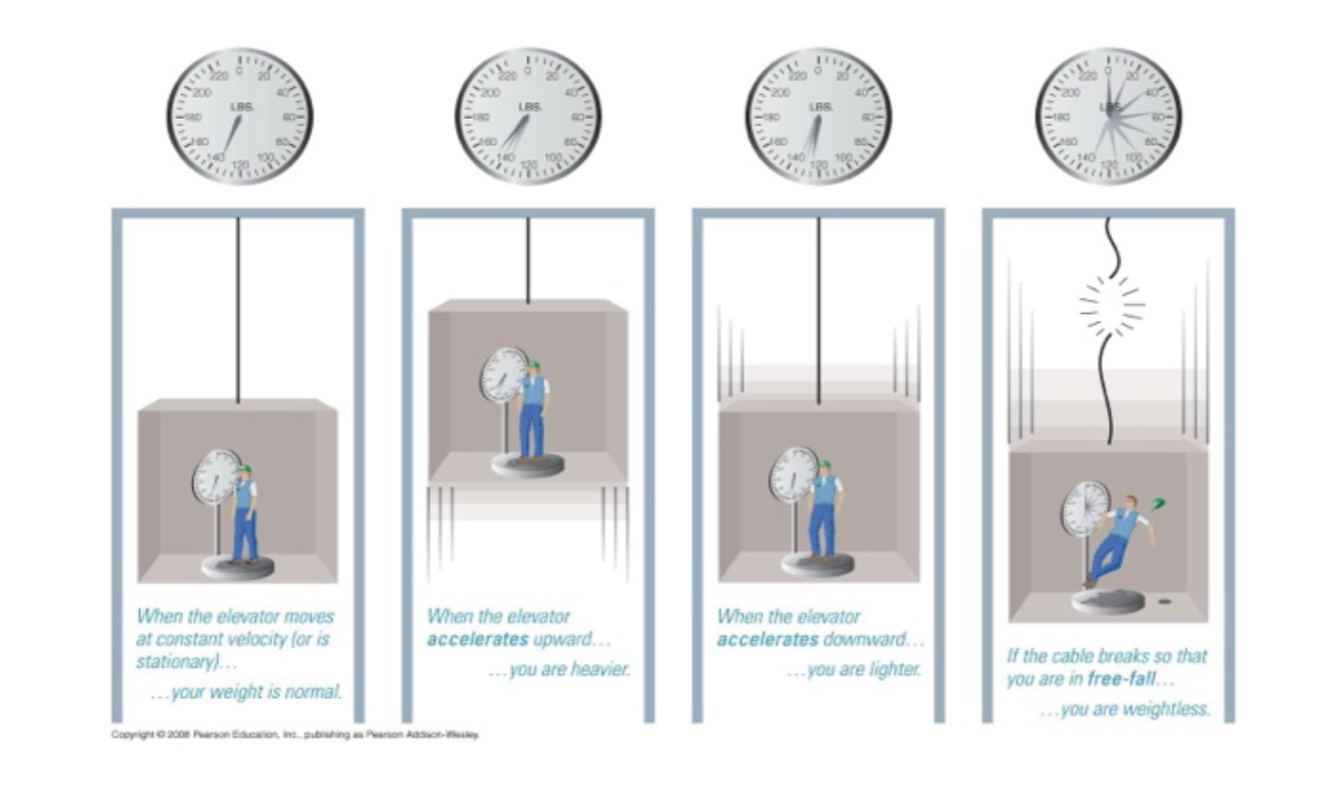
How is mass different from weight
mass: the amount of matter in an object (a measurement of inertia)
weight: the force of gravity acting on this mass
Explain this
What are the conservation laws in the universe
conservation of momentum
conservation of angular momentum
conservation of energy
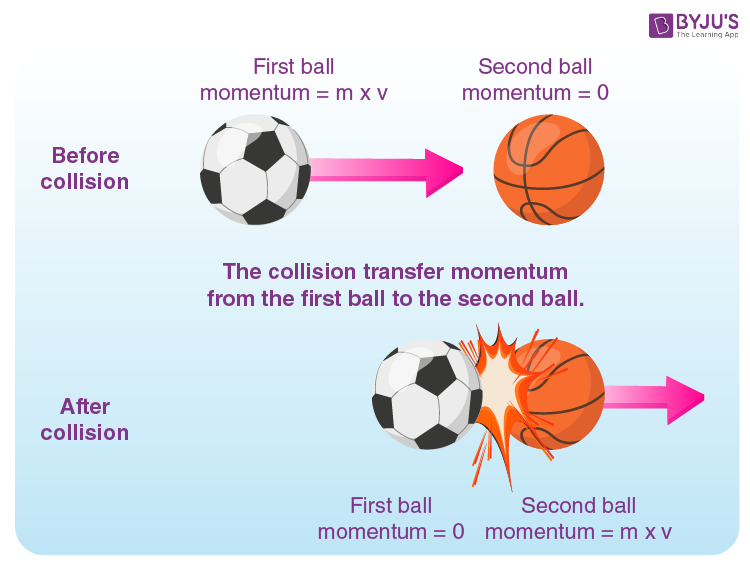
What is conservation of momentum
the total momentum of interacting objects cannot change unless an external force is acting on them
interacting objects exchange momentum through equal and opposite forces
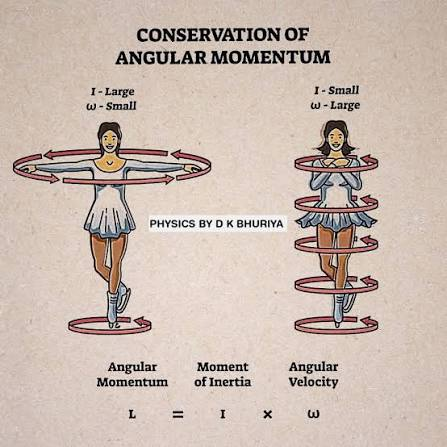
What is conservation of angular momentum ***
the angular momentum of an object cannot change unless an external twisting force (torque) is acting on it
What are the different faces of gravity
downward toward the earth (weight of objects on the planet)
force that keeps planets in orbit (acting toward Sun pulling on the Earth )
Do objects experience a twisting force as they orbit the sun?
No, angular momentum is conserved and rotation and orbit will continue indefinitely
What determines how strong the force of gravity is? — Newton’s Universal law of gravitation
Mass of object (m1)
Mass of object (m2)
distance between them (r)
gravitational constant (G)
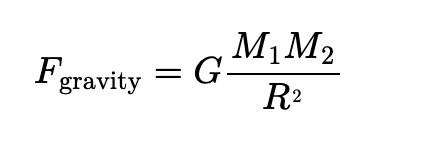
F = G ((m1m2)/r2)
gravitational attraction between two bodies must be proportional to their masses (the more mass an object has, the stronger the pull of its gravitational force)
What are Kepler’s 3 Laws
Law of orbits
all planets move in elliptical orbits, with the Sun located at one of the two foci of the ellipse (distance between planet and the sun changes as it orbits, meaning the speed also changes)
Law of Areas
planet does not travel at a constant speed —- it is faster when it is closest to the sun
Law of Periods
The ratio of the square of a planet’s orbital period to the cube of its average distance from the sun is constant for all planets orbiting the same star
What is an ellipse
a flattened circle, meaning the distance between a planet and the Sun changes as it completes its orbit
What is a planet’s orbital period (P)
the time it takes a planet to travel once around the sun
What is Newton’s version of Kepler’s 3rd Law and what does it mean
P2 = (4pi x a3)/(G(M + m))
if M»m, then we have P2=a3/M (p in years, a in AU, and M in solar masses)
a is the semimajor axis —- the average distance between the orbiting body and the thing it's orbiting
P is orbital period (seconds)
It matters because it allows astronomers to weigh the universe by calculating the exact masses of planets, stars, and even black holes just by observing their orbits
Explain Conservation of Energy
Energy cannot be created nor destroyed, but it can change form or be exchanged between objects
Explain Kinetic Energy and Gravitational Potential Energy near earth
Kinetic energy: ½ mv2 ||| 1 joule = (kg)(m2s2)
Gravitational potential energy near earth: (mg)h ||| 1 Joule = (kg)(m/s2)m
m = mass, g = acceleration due to gravity, h = height above earth’s surface
What is chemical energy
a potential energy associated with chemical bonds
chemical energy is released when a chemical reaction occurs
What is radiative energy and thermal energy
Light(photons) E = hc/λ
h is Planck’s constant, c is the speed of light, λ is wavelength of light
thermal energy is the kinetic energy of many particles
What is the general formula for gravitational potential energy
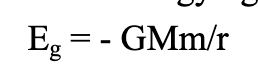
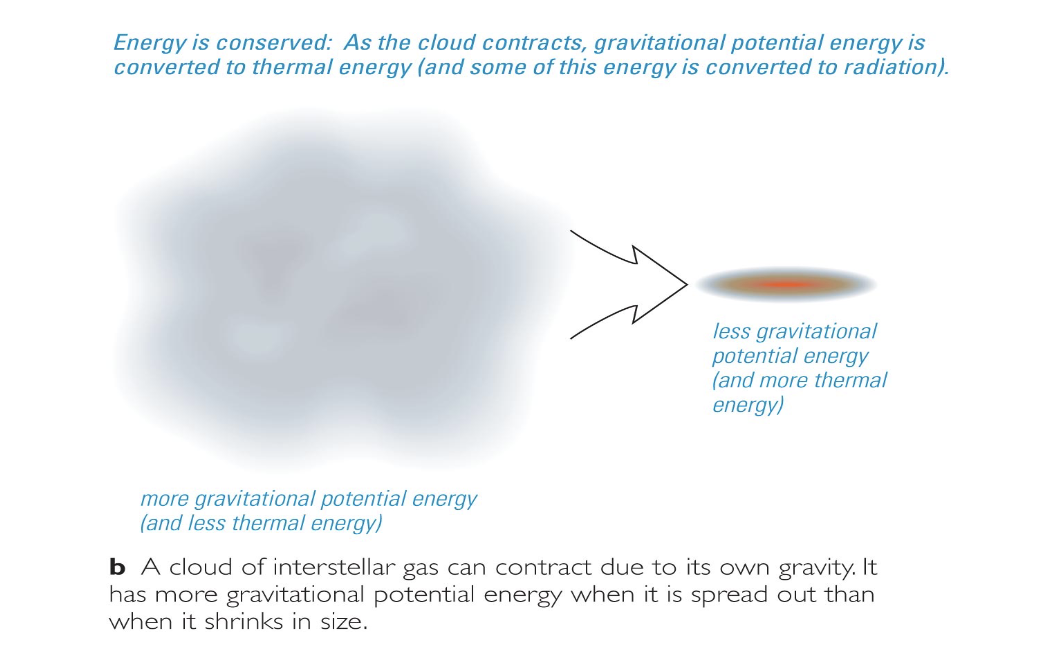
What happened after Earth being formed by the collapse of a large cloud of matter
r decreased, huge amount of gravitational potential energy converted to heat in the process; total amount is earth’s gravitational binding energy
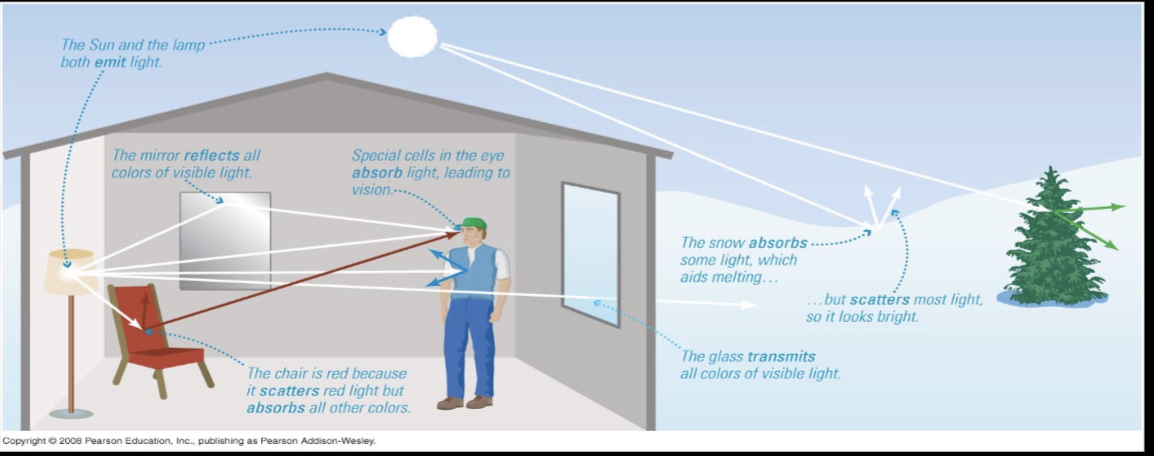
Emission, absorbtion, transmission, and reflection/scattering of light
E = mc2
^^ shows the mass and energy relationship is equal
what units do we use
kg = mass
s = time
m or km = distance
Give an example of how light travels at a finite speed
when close to Jupiter, moons appeared to eclipse too early,
when far from Jupiter, moons appeared to eclipse too late
c = 300,000 km/s = λf (f = frequency)
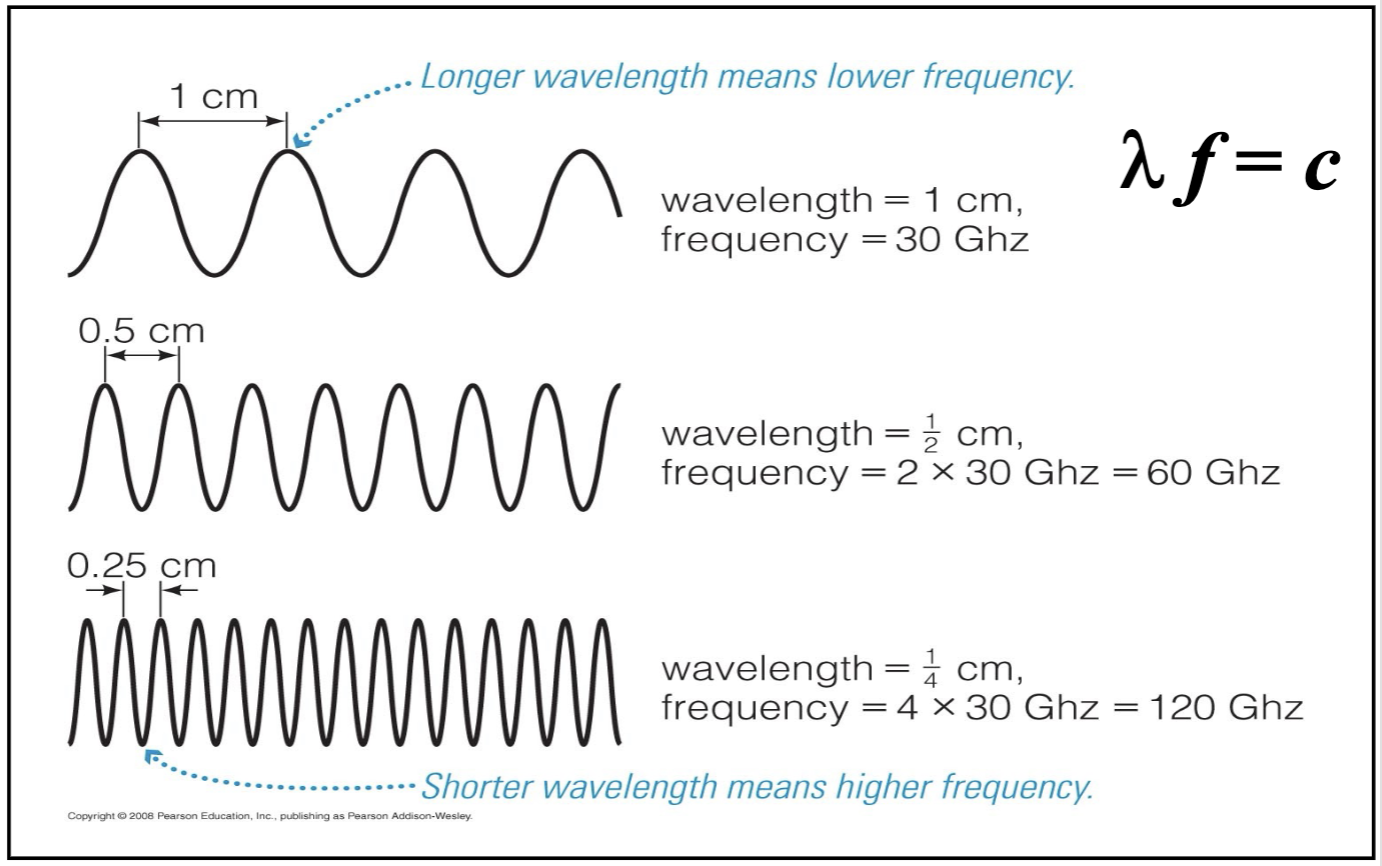
What is Planck’s constant
6.63 × 10⁻³⁴ Joules/sec
Explain photons
light comes in little packets of energy called quanta (now called photons)
Energy per photon E = hf = hc / λ
higher frequency, shorter wavelength = more energy per photon
Is electromagnetic radiation a wave or a particle?
both
What is the inverse square law of light
intensity of a light source decreases in proportion to the square of the distance from the source (if you double the distance between a light source and subject, the light reaching the subject becomes ¼ as bright)