17 and 18. Surgery of the Bladder and Urethra 1 and 2
 Call Kai
 Learn
Learn Practice Test
 Spaced Repetition
 Match
Match Flashcards
 Knowt Play
1/53

There's no tags or description
Looks like no tags are added yet.
Name | Mastery | Learn | Test | Matching | Spaced | Call with Kai | Chat |
|---|
No analytics yet
Send a link to your students to track their progress
54 Terms
surgical incision into urinary bladder
define cystotomy
creation of an opening into the bladder
define cystostomy
removal of portion of urinary bladder
define cystectomy
incision into the urethra
define urethrotomy
urinary bladder calculi
define cystolithiasis
removal of urinary bladder calculi
define cystolithectomy
area of bladder which is a smooth triangular portion of mucous membrane near base of bladder where ureters empty
what is the trigone
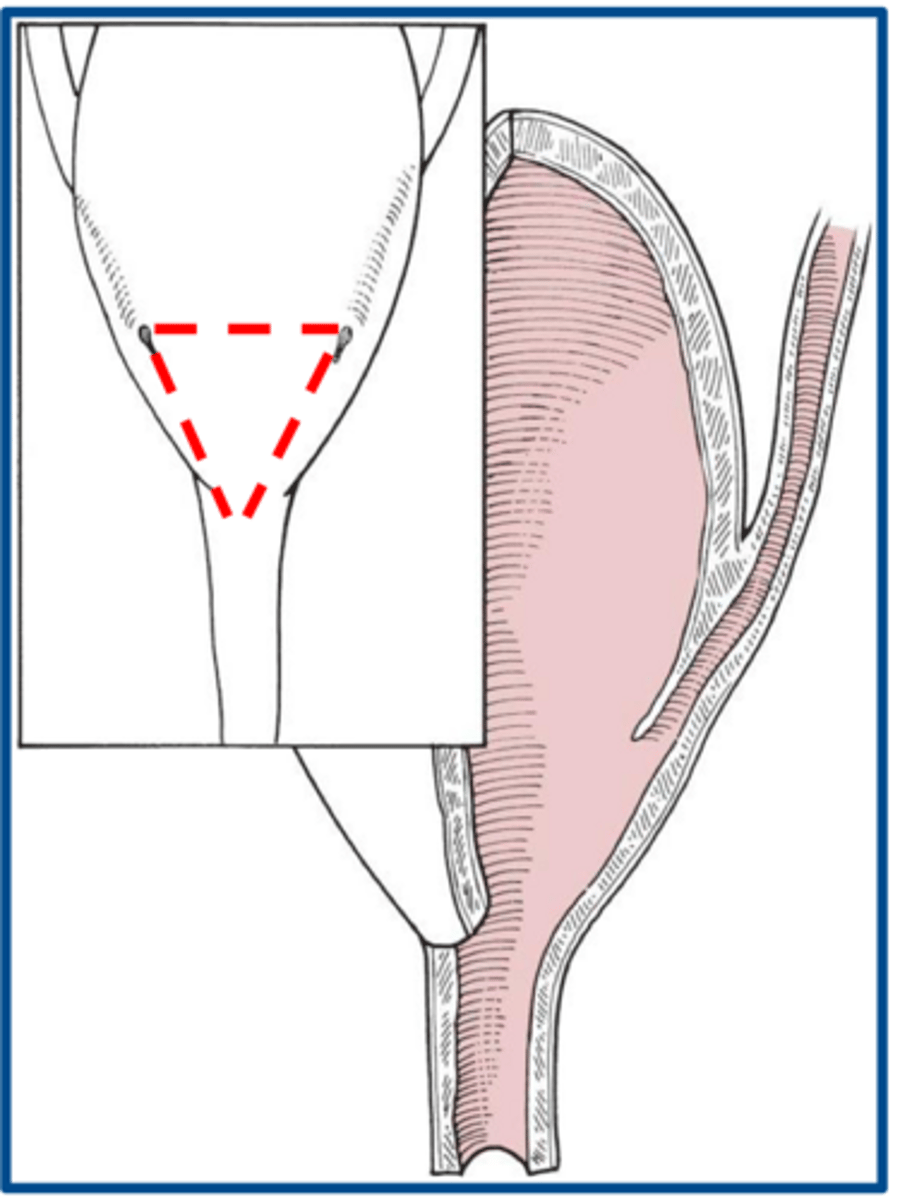
done to provide cutaneous urinary diversion in animals with urethral obstruction or trauma
when might you perform a prepubic catheterization (aka temporary cystotomy, tube cystotomy)
presence of urine in abdominal cavity
what is uroabdomen (uroperitoneum)
creation of permanent fistula into urethra
what is a urethrostomy
for irreparable or recurrent urethral stricture or to prevent repeated obstruction such as in feline idiopathic cystitis (FIC)
when might a urethrostomy be indicated
1. removal of calculi most commonly
2. repair trauma
3. resect or biopsy neoplasms
4. correct congenital abnormalities
5. evaluation of urinary tract infection resistant to tx.
what are some indications for cystotomy
varies depending on urine it contains
the location of the bladder...
urethra
when approaching a cystotomy, you perform a longitudinal incision on the ventral or dorsal aspect of the body of the bladder away from the ____
ease of access and done when ID or catheterization of ureteral openings is needed....also less likely to cut the blood supply
what is a ventral approach for a cystotomy more ideal than dorsal
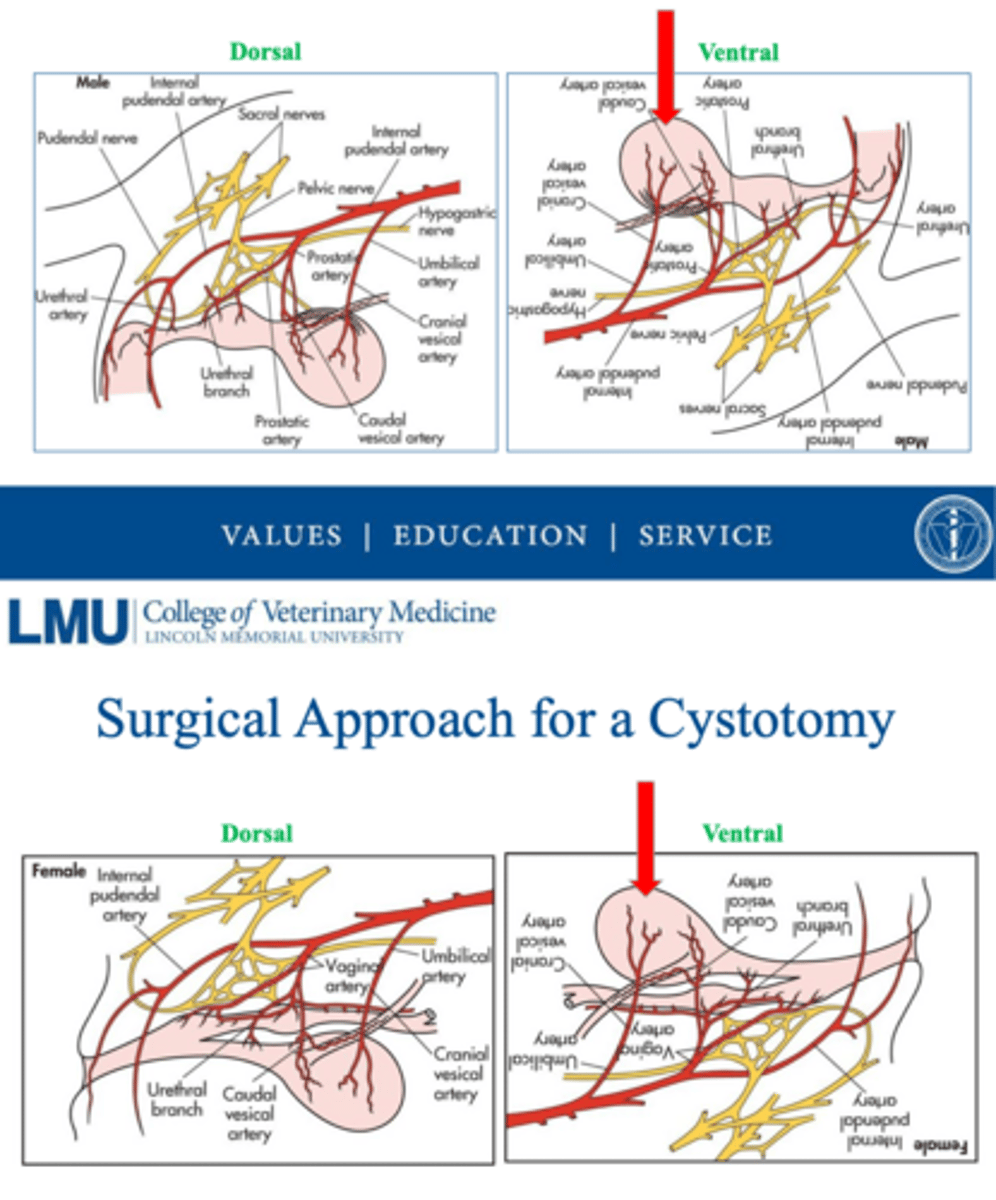
cystotomy incision sites...in caudal abdomen
what is shown here
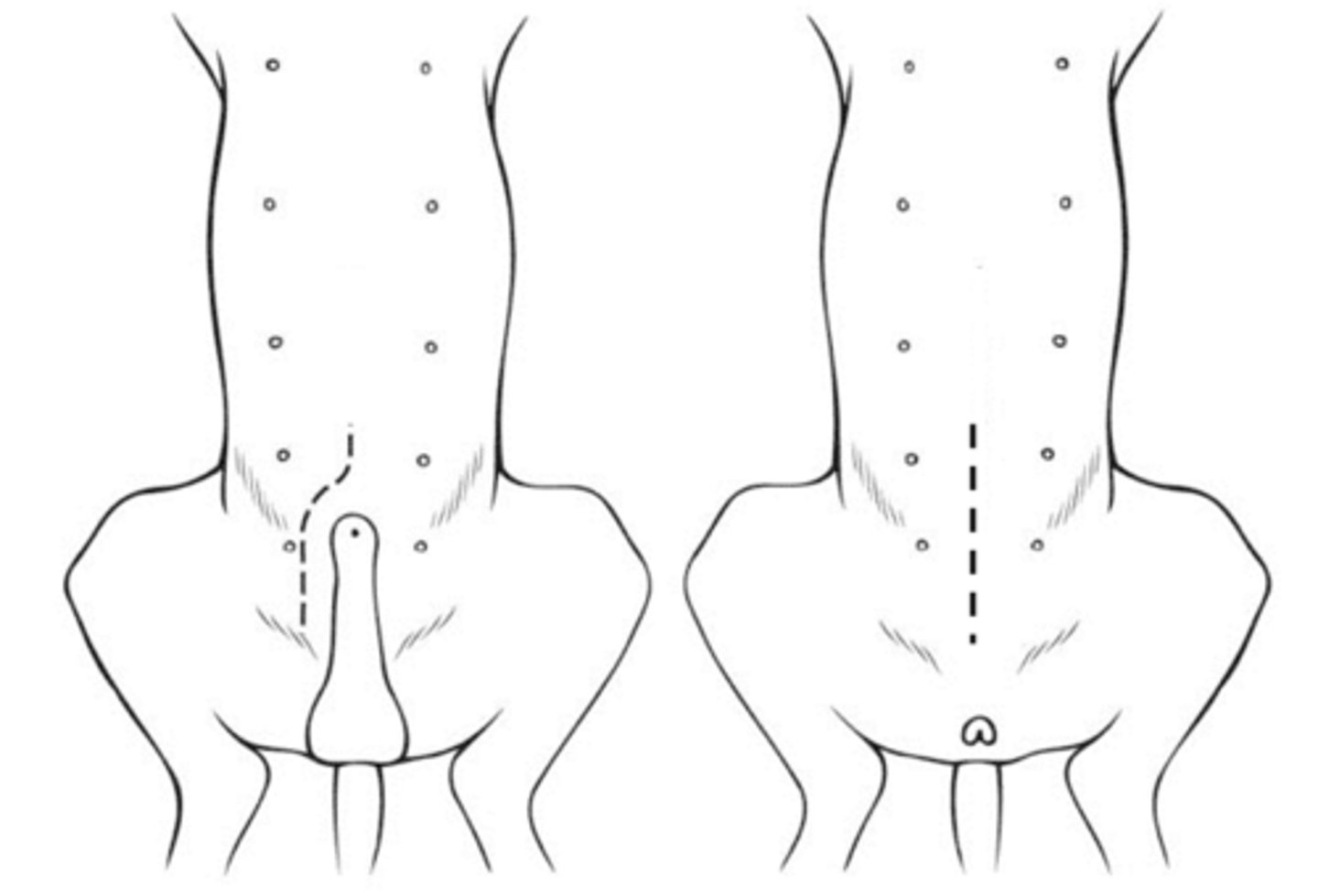
cystotomy
what procedure is shown here
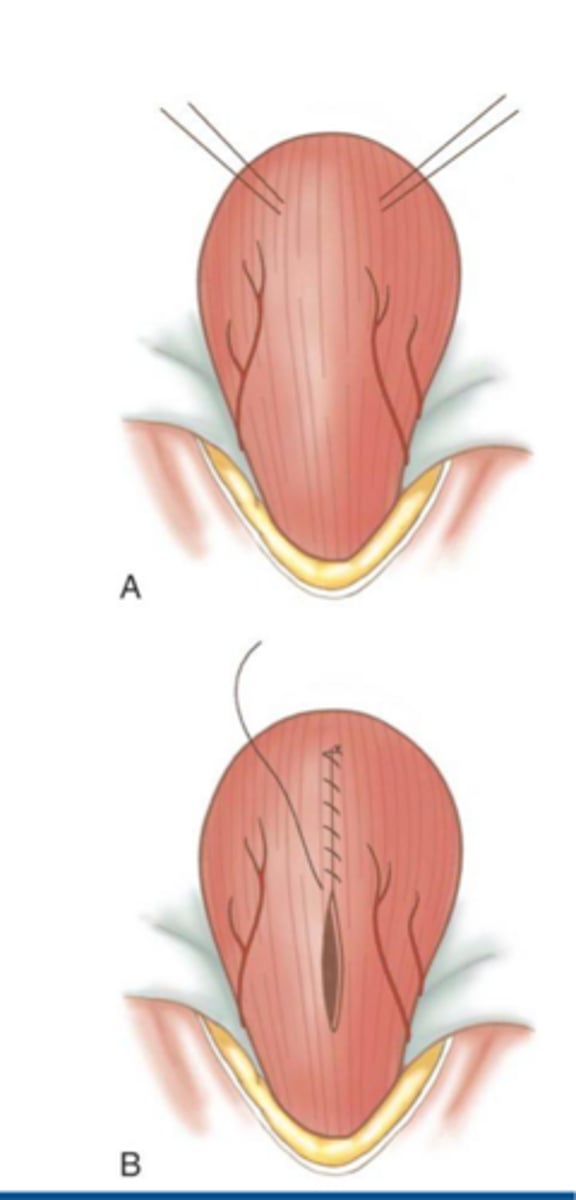
to obtain a watertight seal that will not promote formation of calculi...traditionally done by single or double layer appositional or inverting suture patterns
the goal of a cystotomy closure is....
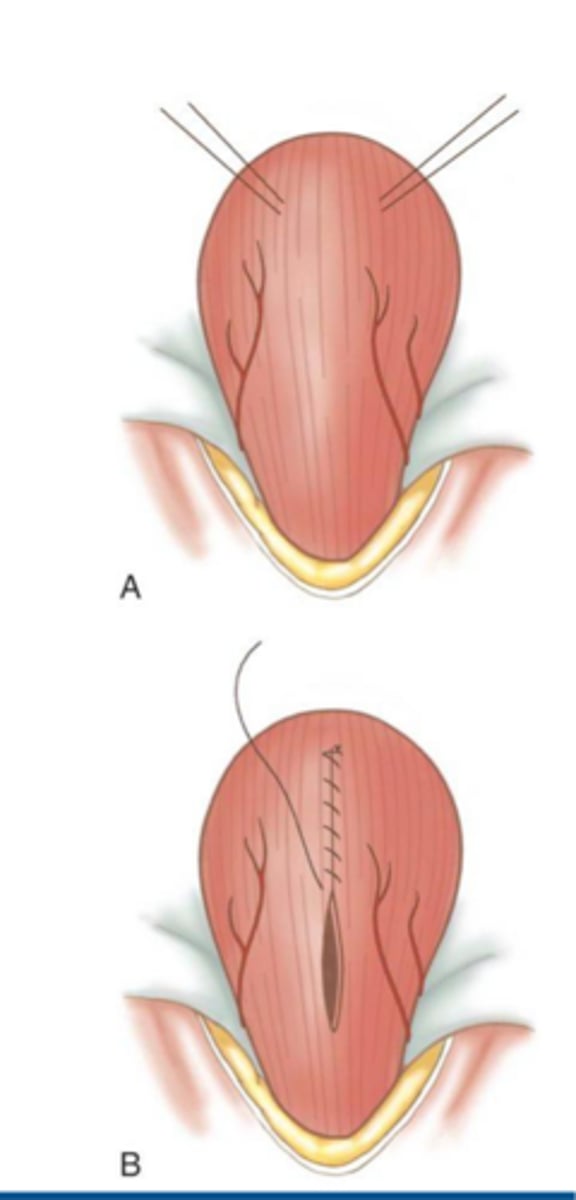
single-layer appositional
what form of cystotomy closure is sufficient if the bladder wall is thick
single-layer appositional
even in normal bladders, a ___ ___ ____ suture pattern (simple continuous or interrupted) is typically adequate
absorbable monofilament suture
luminal penetration is common in thin-walled bladers but it is NOT believed to be associated with formation of calculus if _______ suture is used
suturing bladder mucosa as separate layer in simple continuous
if hemorrhage is expected to be severe when closing a cystotomy incision, what may be considered to reduce postoperative bleeding
NO you cannot
can we dx. the type of stone based on the crystals found in the urine
if stones can be flushed into bladder preoperatively or intraoperatively
when should cystotomy be performed over urethrotomy in the case of bladder stones
cystotomy + scrotal urethrostomy
what may be the most effective Tx. in preventing recurrence of C/s in Dalmations w/ urate calculi
1. cystotomy + incision small piece of bladder for culture + remove the stones
2. use retrohydropulsion in male dogs to be certain no stones remain in urethral lumen....use catheter to add pressure to retropulsed stones back to the bladder
what are key parts of the sx. technique for stone removal
retrohydropropulsion
what technique is shown here to push stones back into the bladder...helps to avoid performing urethrotomy
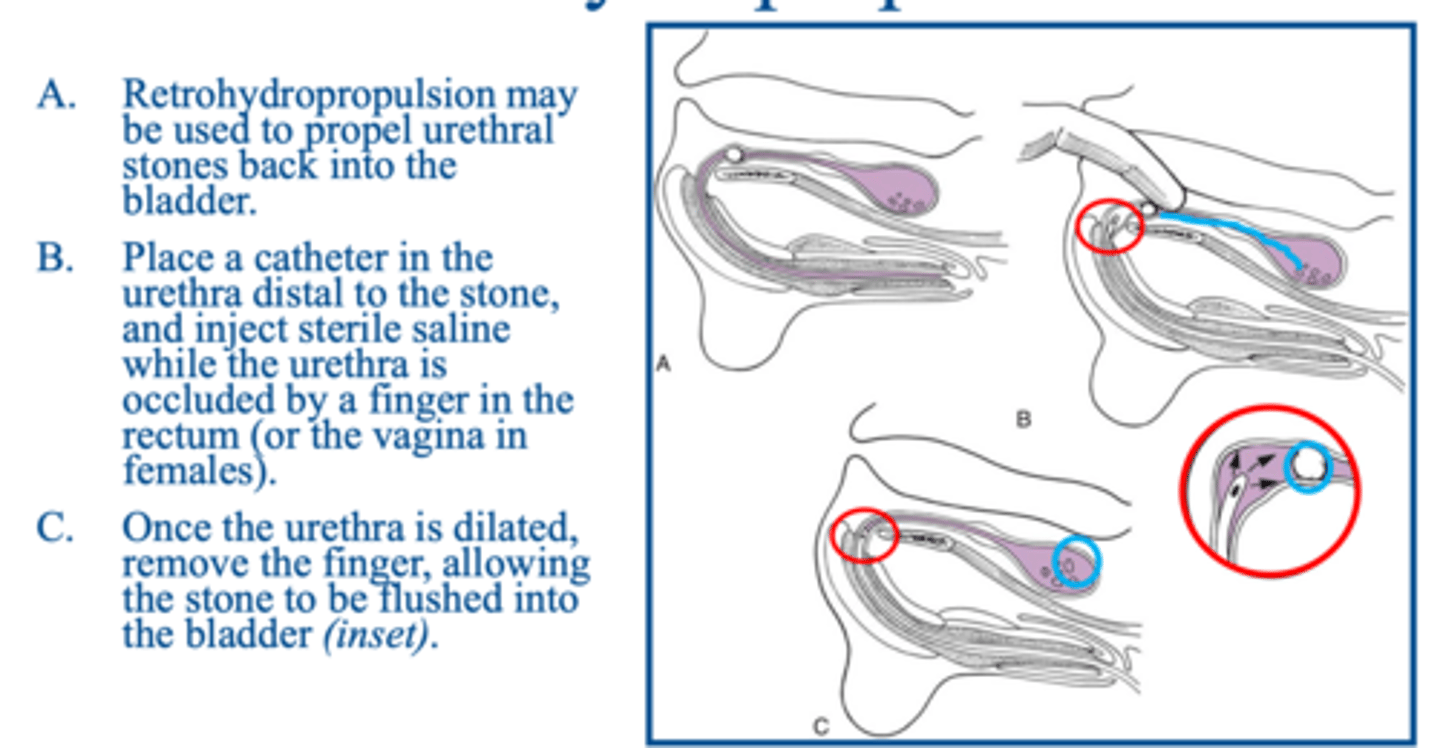
retrohydropropulsion in female dog
what is shown here
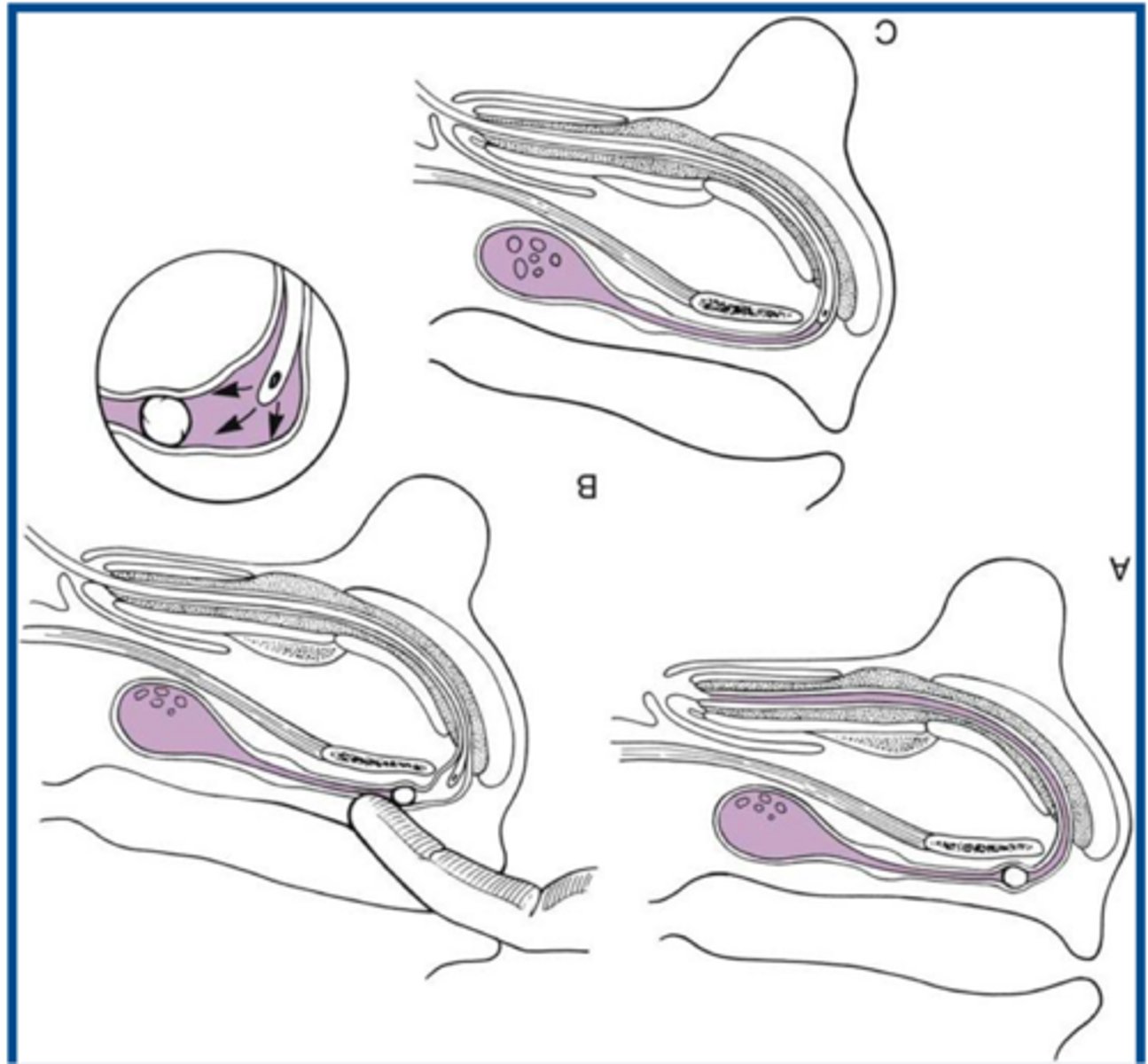
failure to remove all the stones
though cystotomy complications are uncommon, what is the primary complication
hemorrhage
what is the primary complication of urethrotomy
uncommon
urethral stricture in urethrotomy is (common/uncommon)
1. traditional lithotripsy using shock waves to break up stones
2. laser lithotripsy via cystoscopy using Ho:YAG laser
what are some of the nonsurgical removal techniques for bladder stones
bladder spoon
what device is shown here
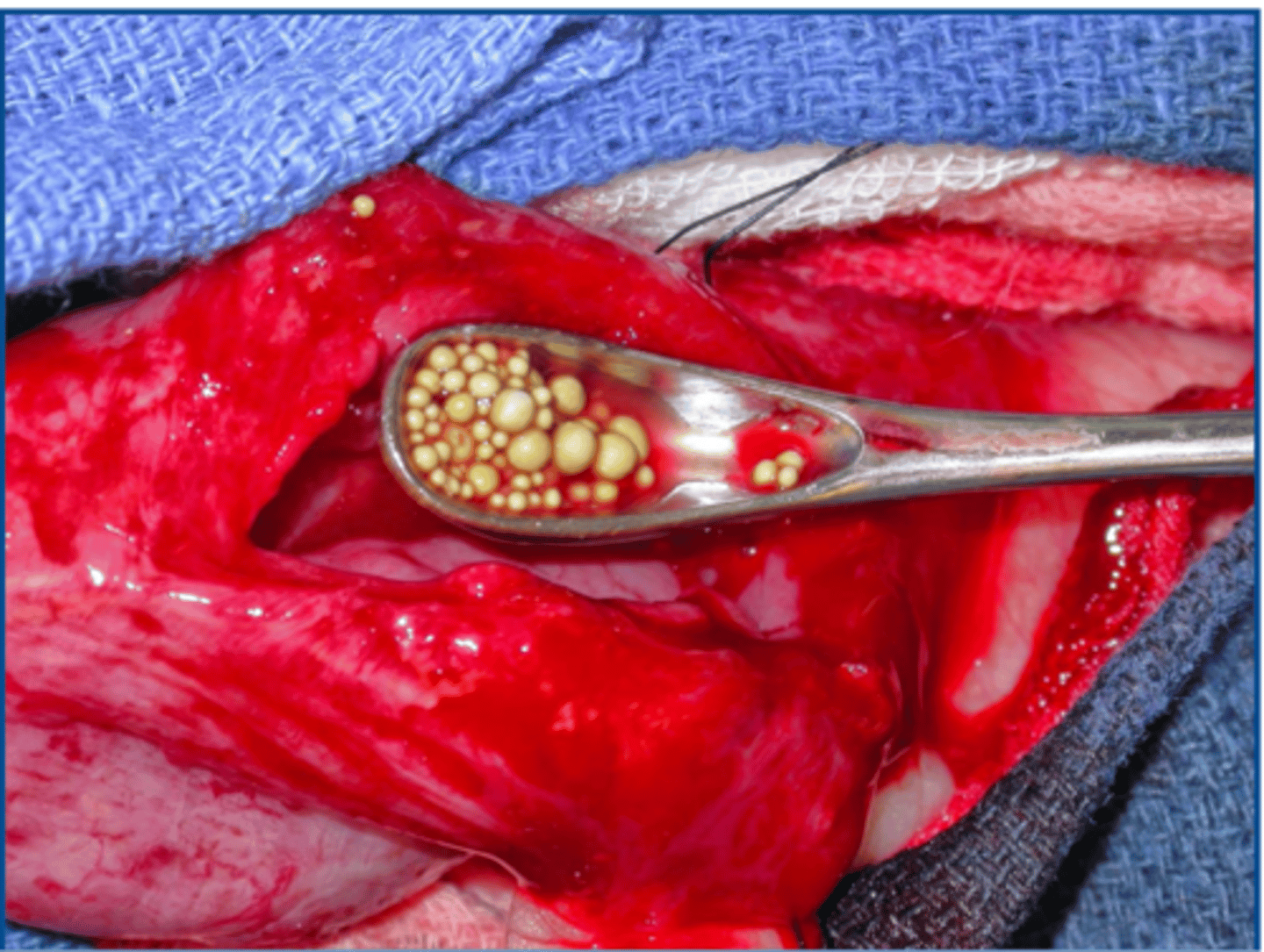
provide cutaneous urinary diversion in animals with urinary obstruction, traumatized urethra, and sx. repairable urethra
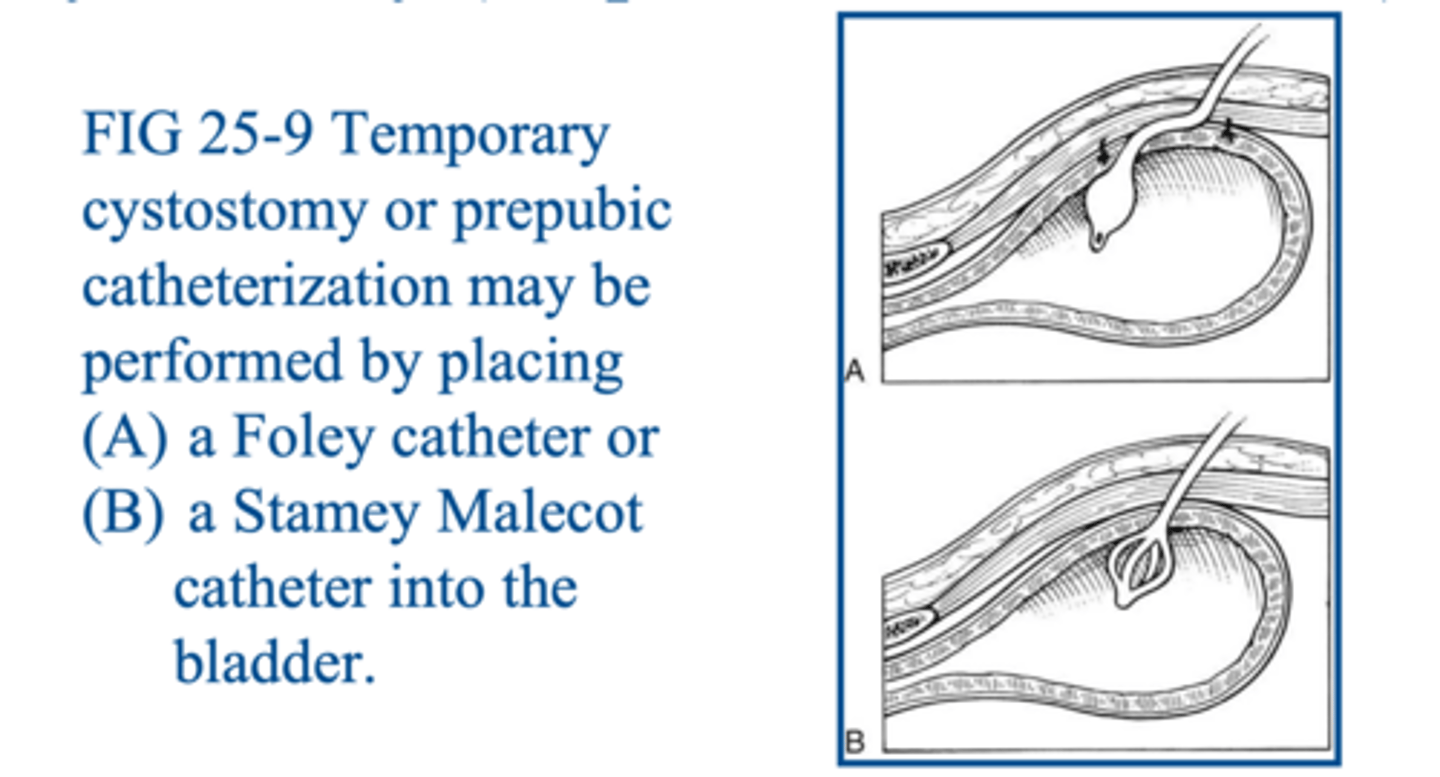
when might prepubic catheterization (cystotomy + placement of long term catheter to help drain) be indicated
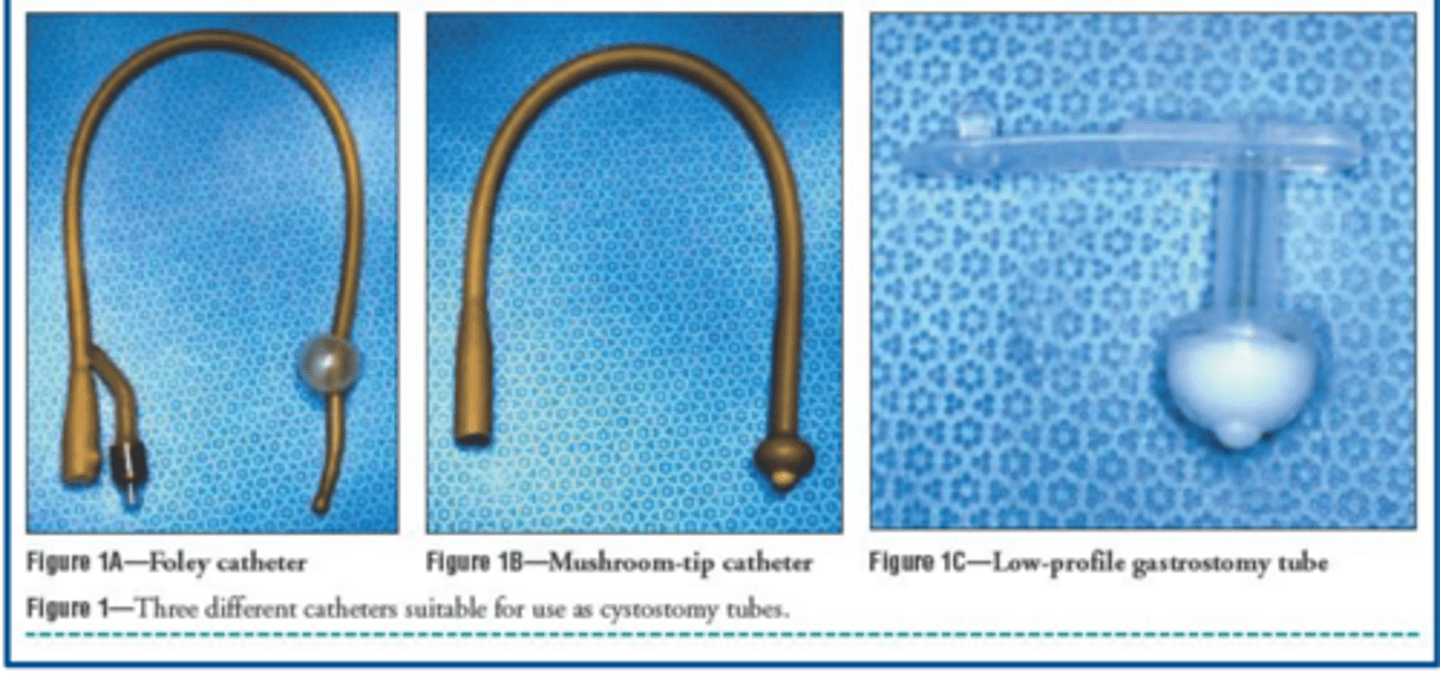
different catheter option for prepubic catheterization....
what is shown here
cystotomy/prepubic catheterization
what procedure is shown here
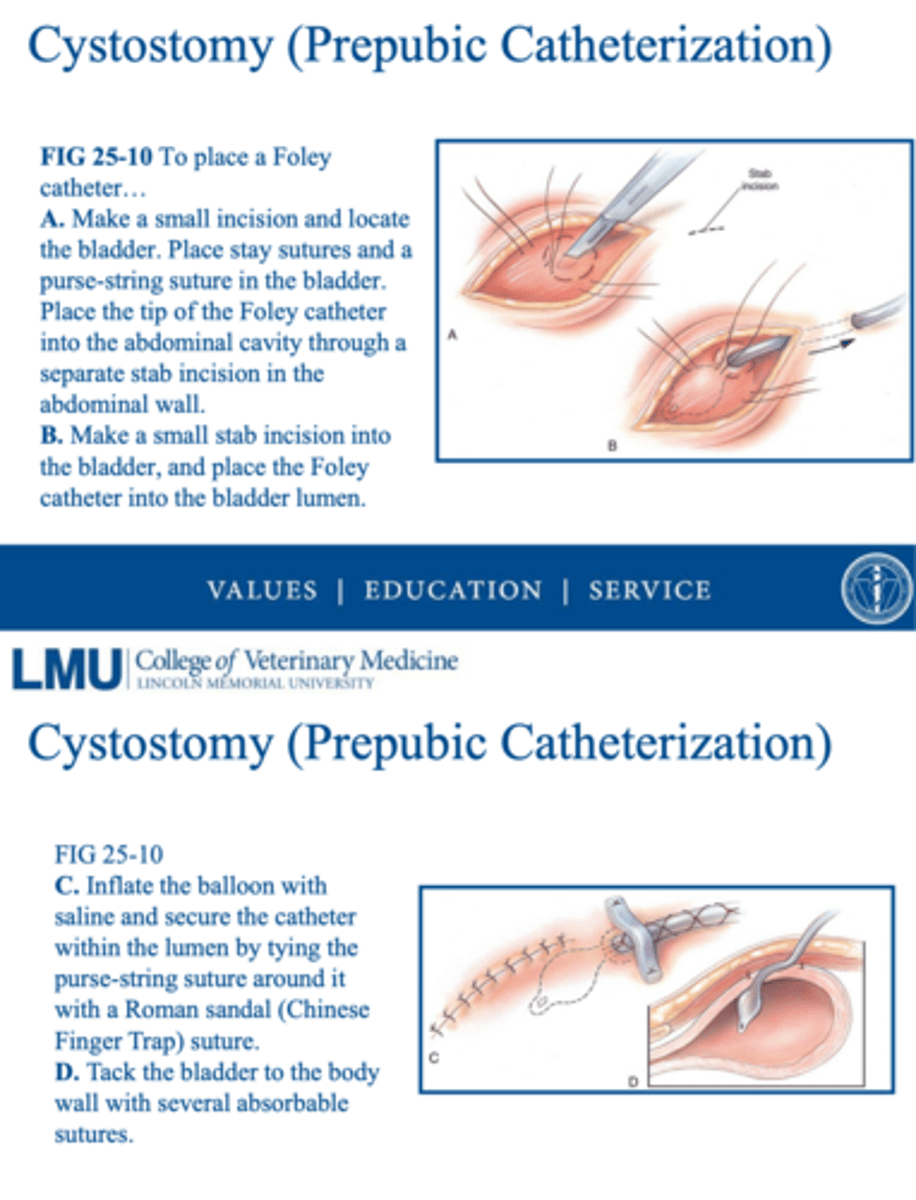
reviewed
review the "how to" for cystotomy aka prepubic catheterization
1. male dogs to remove urethral calculi that cannot be retrohydropropulsed into bladder
2. facilitate placement of catheters into the bladder
3. occasionally for biopsy of obstructive lesions like strictures, scar tissue, and neoplasms
when might urethrotomy (prescrotal or perineal) be indicated
cystotomy is preferred over urethrotomy
to prevent possible postoperative urethral stricture....if calculi can be advanced back into bladder by retrohydropulsion
1. removal of calculi from distal penile urethra
2. placement of foley catheters into urinary bladder if catheter is of sufficient length and if obstruction is distal to proposed urethrotomy incision
indications for prescrotal urethrostomy
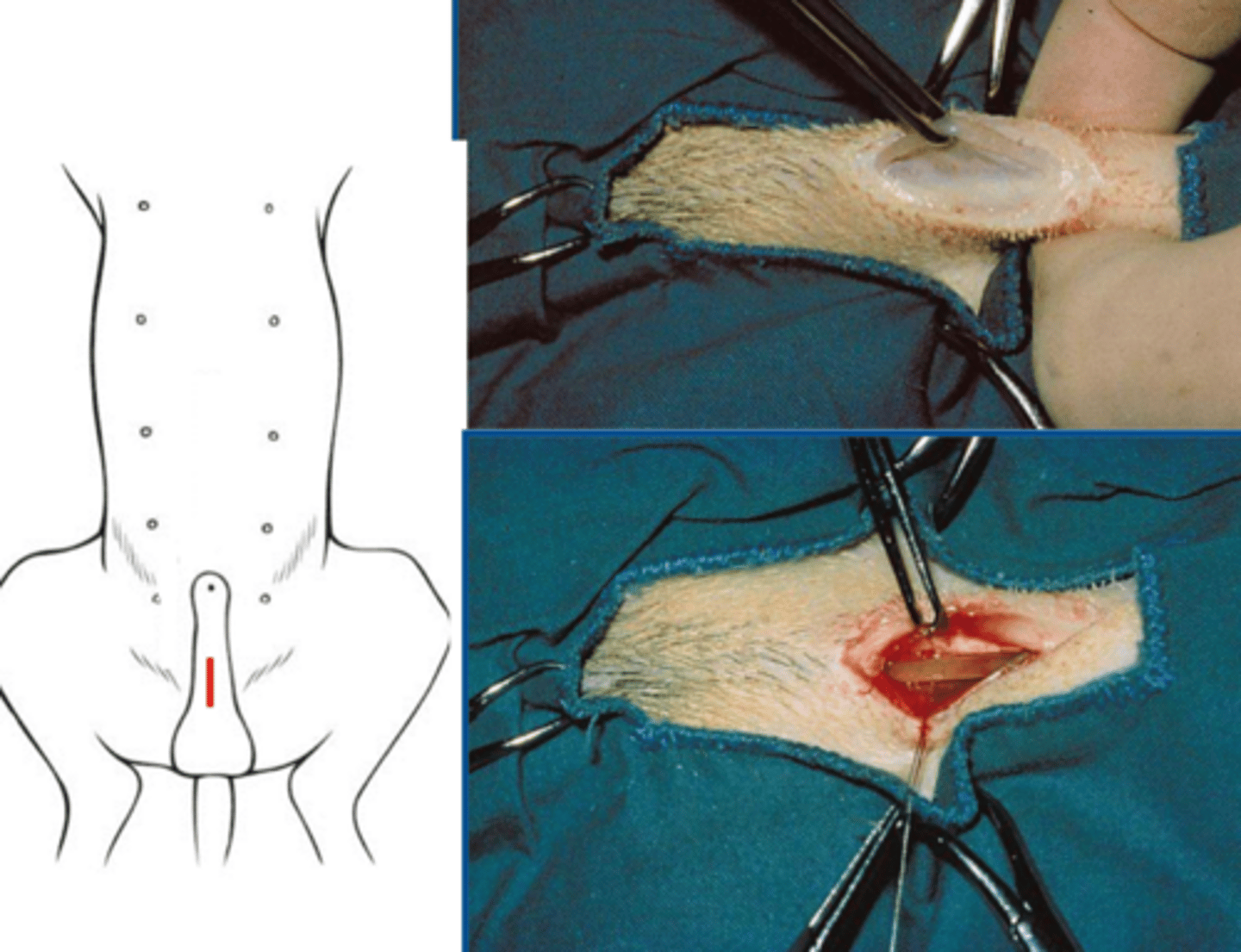
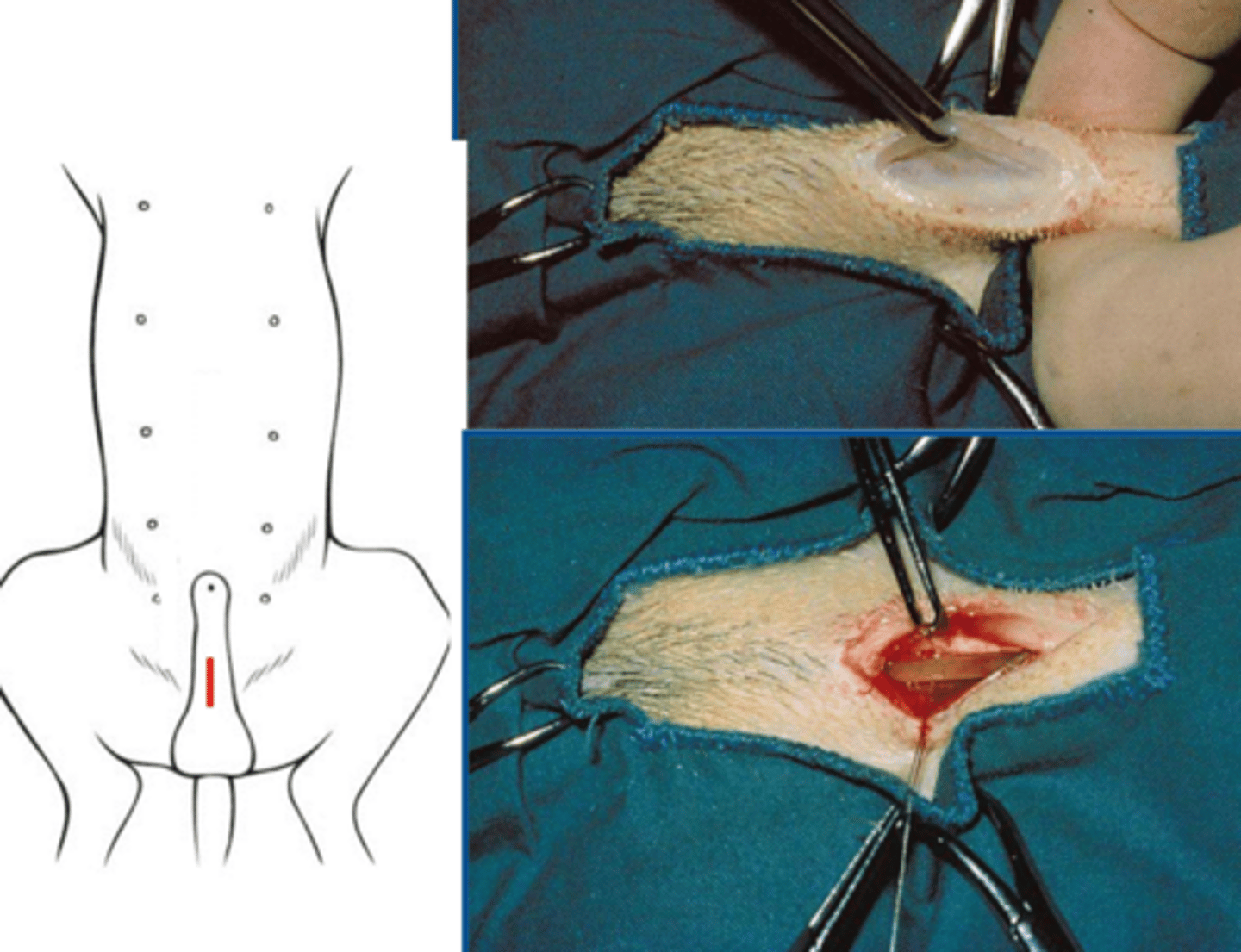
1. performed in distal penile urethra
2. can be left to heal by second intention (hemorrhage for 3-5d) or closed by primary closure if apposition can be achieved
3. ventral midline incision between caudal aspect of os penis and scrotum
4. incision into urethral lumen over a catheter extended w/ iris scissors
general characteristics of prescrotal urethrostomy
1. remove calculi lodged at ischial arch
2. place catheters into bladder of large male dogs
indications for perineal urethrostomy
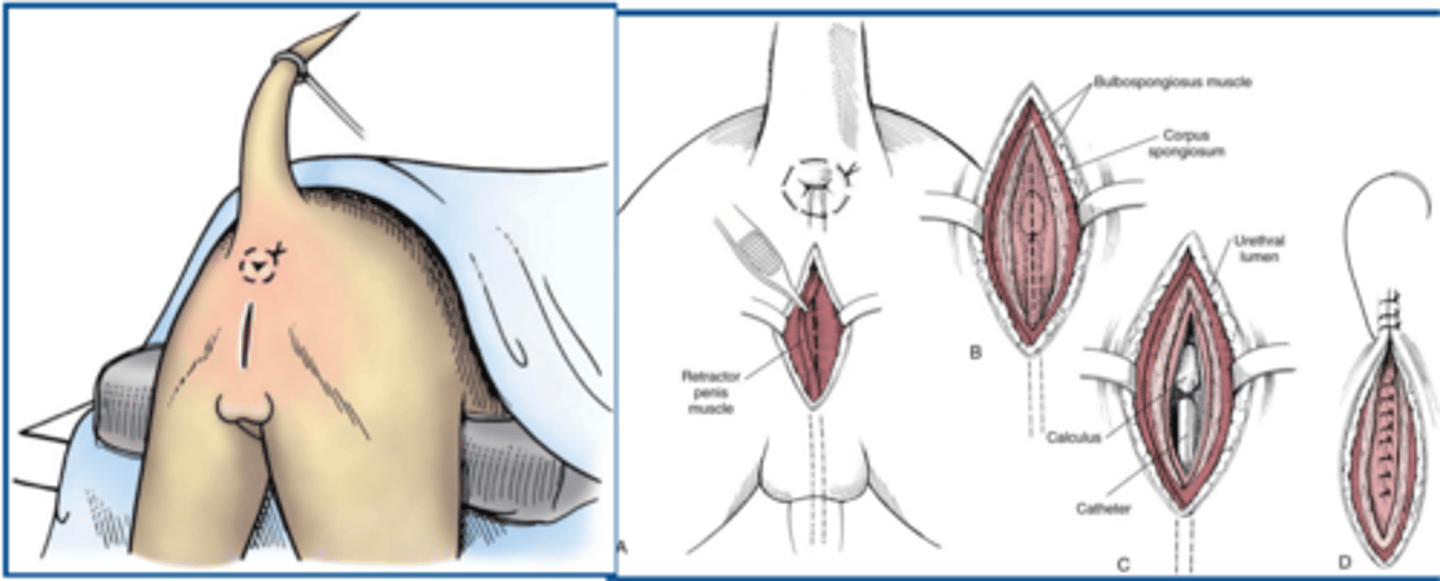
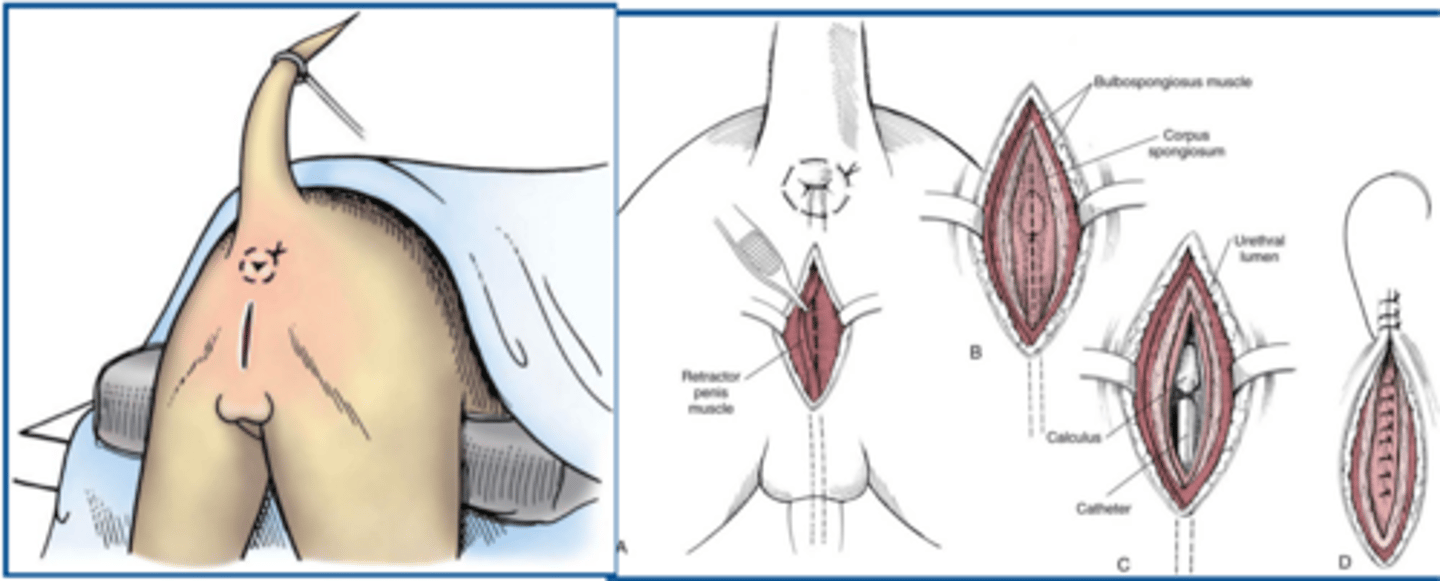
1. less commonly indicated than urethrotomy at other sites
2. should be closed (simple interrupted absorbable) to prevent SQ urine leakage
3. involves purse string at the anus
general characteristics of perineal urethrostomy
1. recurrent obstructive calculi that cannot be managed medically
2. calculi that cannot be removed by retrohydropropulsion or urethrotomy
3. urethral stricture
4. urethral or penile neoplasia or severe trauma
5. preputial neoplasia requiring penile amputation
indications for urethrostomy (prescrotal, scrotal, perineal, prepubic) ...more permanent opening
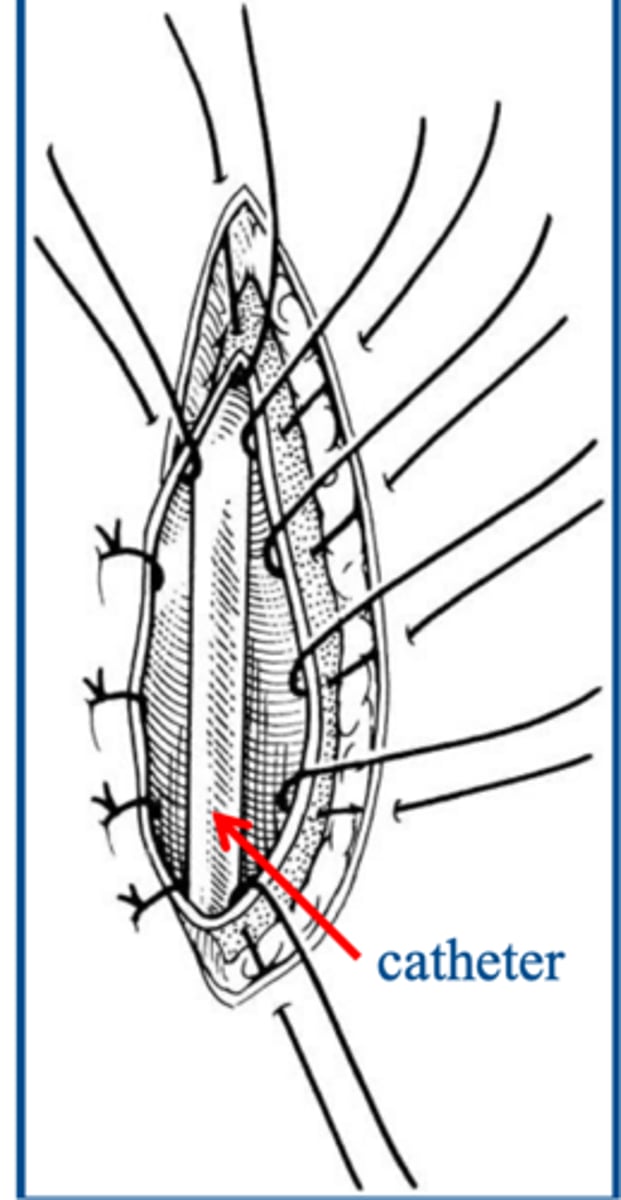
if castration is an option and if the lesion is distal to the scrotum
when is scrotal urethrostomy done
cats
perineal urethrostomy is routinely performed in what species
often causes unacceptable urine scalding so should only be used in dogs when issues cannot be solved by other means
what is notable about canine perineal urethrostomy
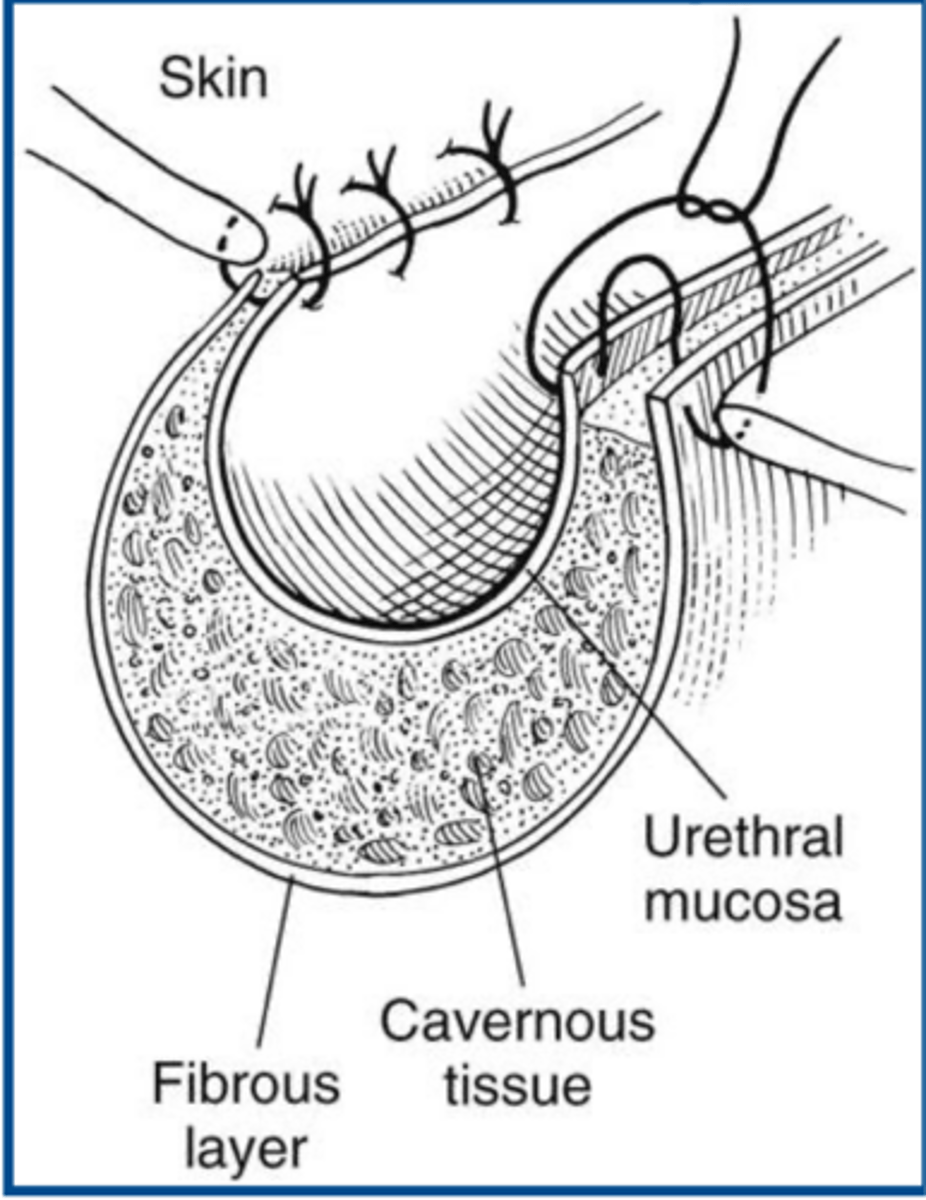
preferred over perineal and prepubic urethrostomy because urethra is wider and more superficial
characteristics of canine scrotal urethrostomy
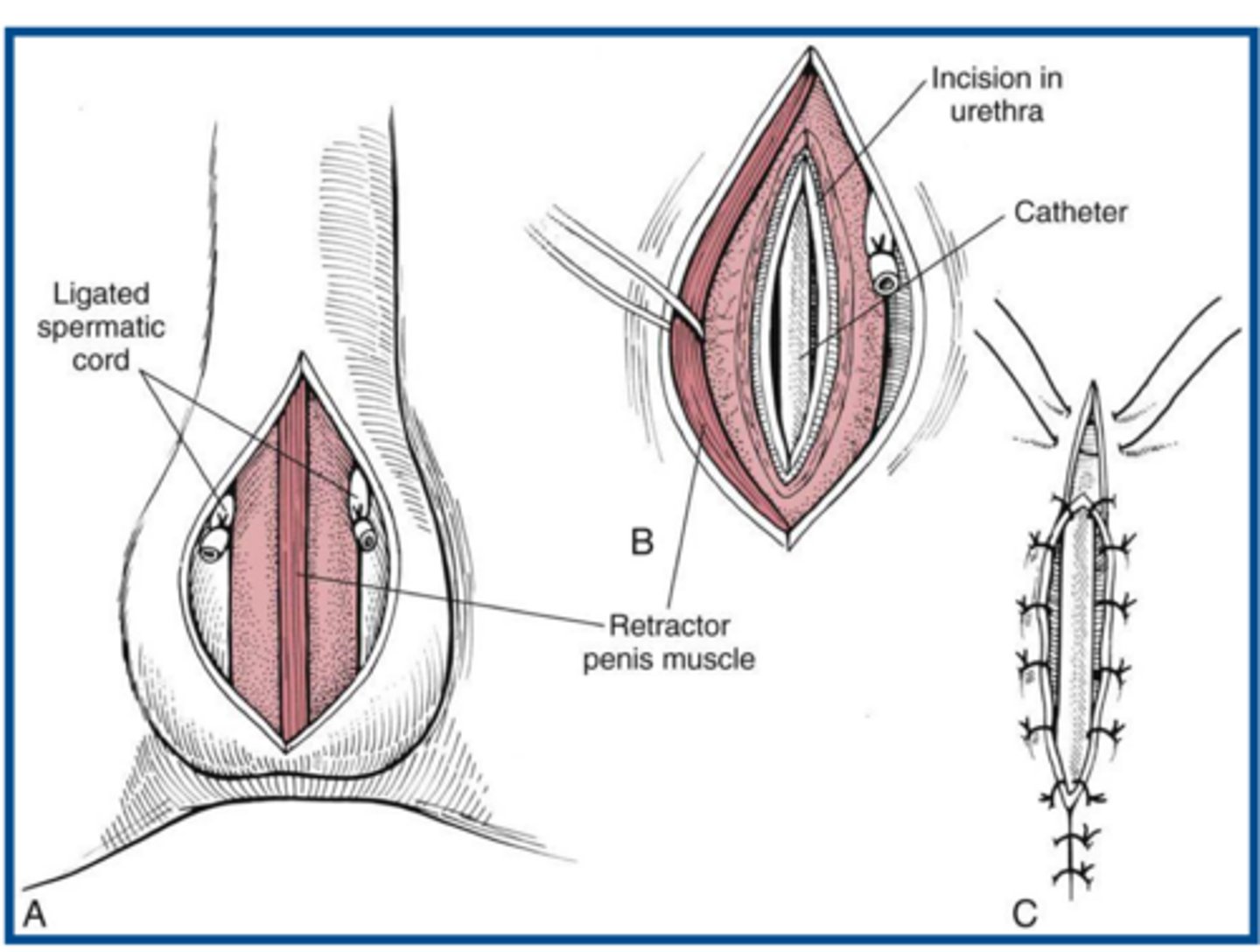
1. prevent recurrence of obstruction in male cats with feline idiopathic cystitis (FIC)
2. tx. obstruction that cannot be eliminated by catheterization
3. tx. strictures secondary to urethral obstruction and catheterization
what are the indications for feline perineal urethrostomy
1. place purse-string suture in the anus and catheterize the penis if possible
2. elliptical incision around the scrotum and prepuce to excise them followed by placing Allis tissue forceps to help manipulate
3. avoid being too aggressive when dorsally dissecting
what is the process like for feline perineal urethrostomy
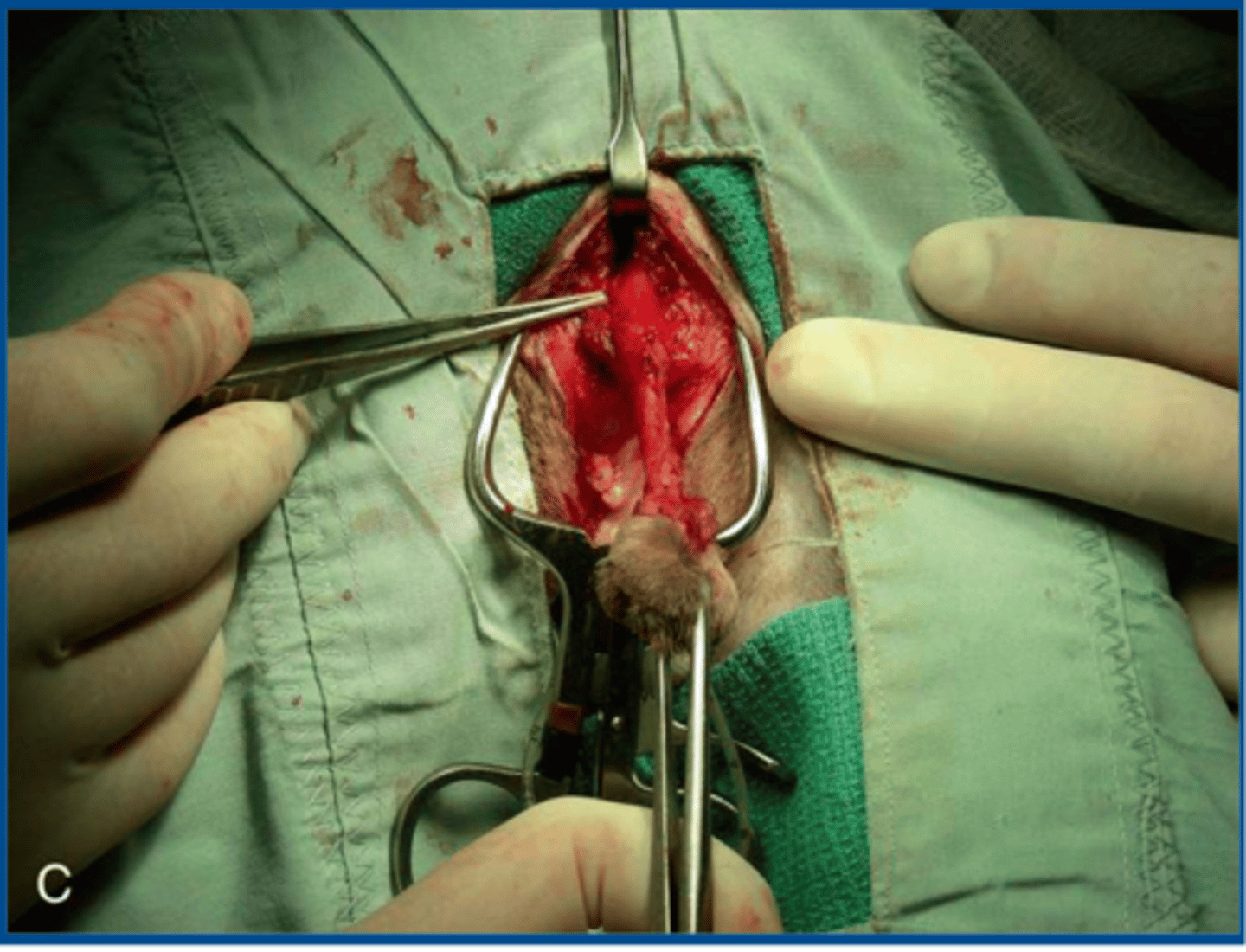
pass closed halsted mosquito hemostat to the level of the boxlocks as they are about 5mm in diameter and should pass without resistance
how do you know when urethral width is adequate (that you have opened it enough) when performing a feline perineal urethrostomy
passing the closed Halstead mosquito hemostats to the level of the box locks up the urethra
failure to perform which step in feline perineal urethrostomy can result in a urethral opening of insufficient diameter and predispose the patient to urinary tract blockage...defeats the whole point of the sx.
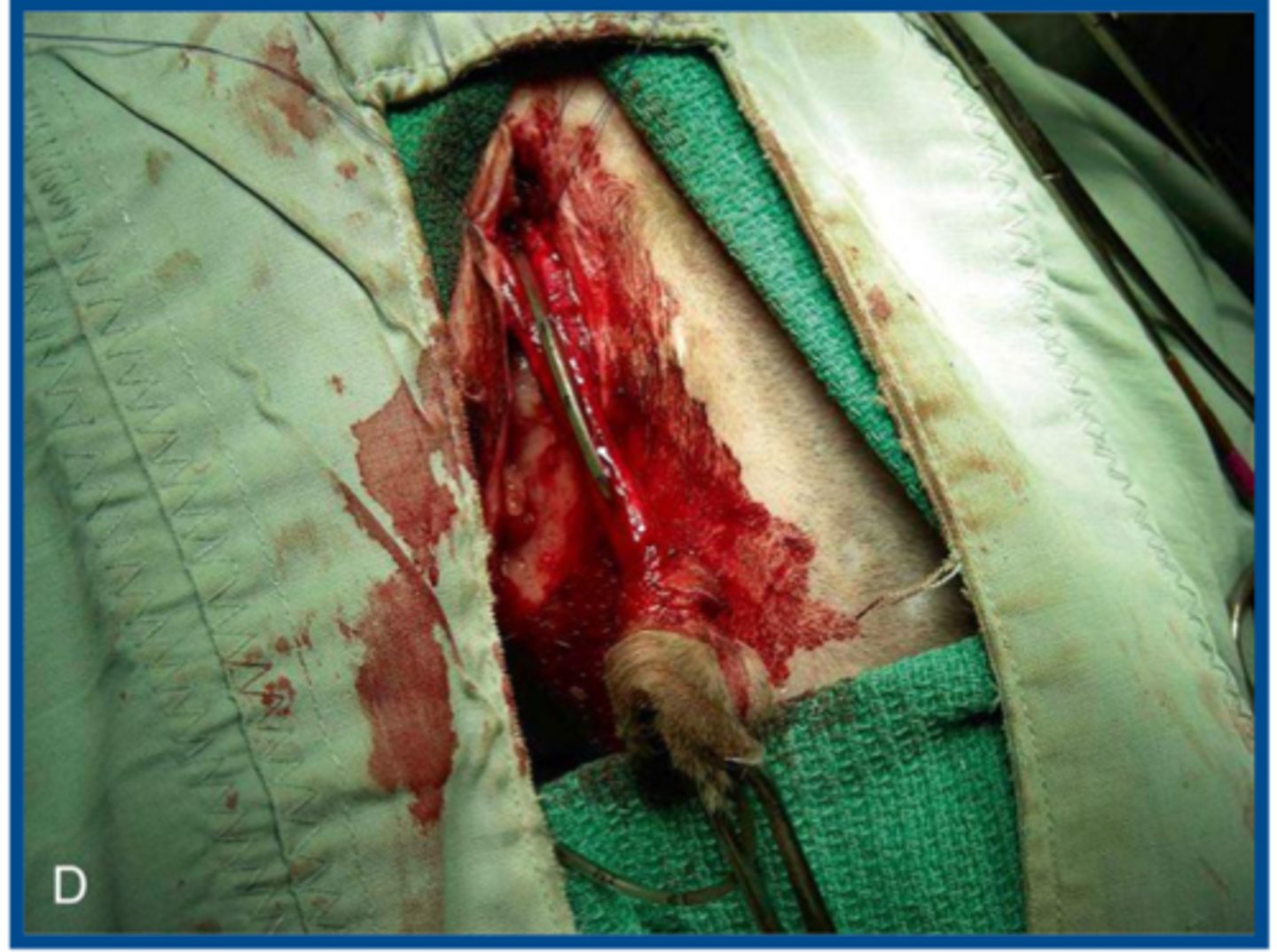
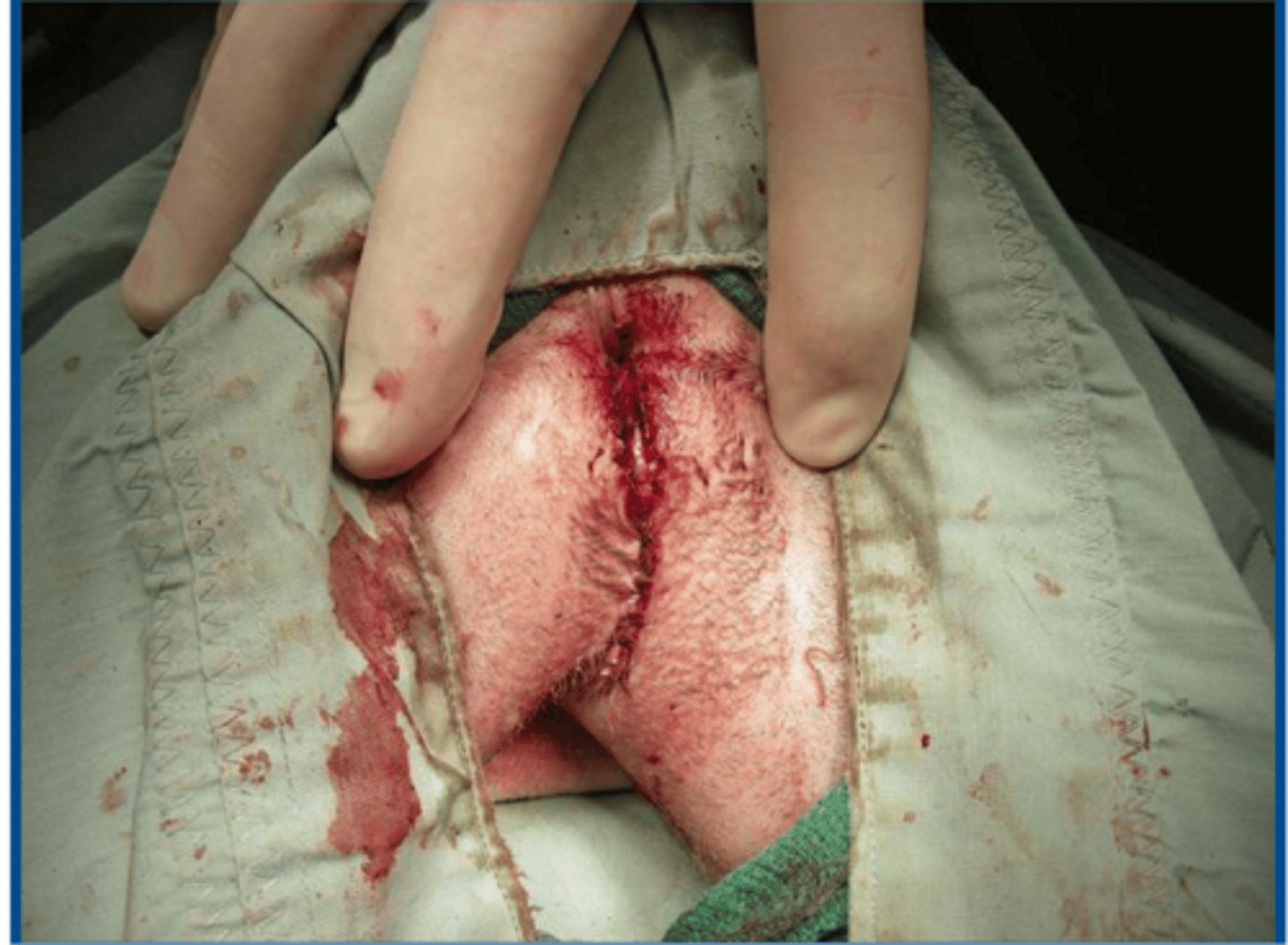
completed perineal urethrostomy in a cat
what is shown here
reviewed
review the steps to closing a feline perineal urethrostomy