TTU Art History Survey III Final Dec 2024
 Studied by 0 people
 Call Kai
 Learn
Learn Practice Test
 Spaced Repetition
 Match
Match Flashcards
 Knowt Play
1/34

There's no tags or description
Looks like no tags are added yet.
Name | Mastery | Learn | Test | Matching | Spaced | Call with Kai |
|---|
No study sessions yet.
35 Terms
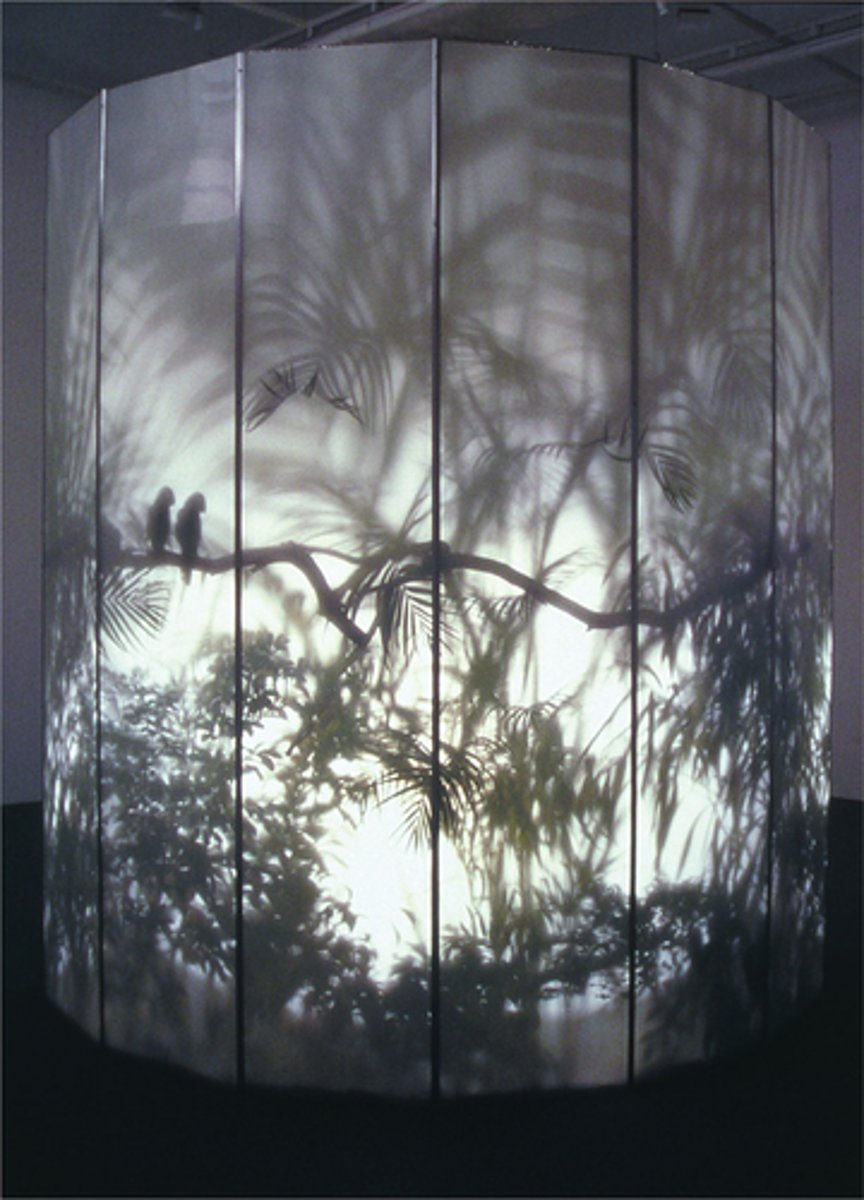
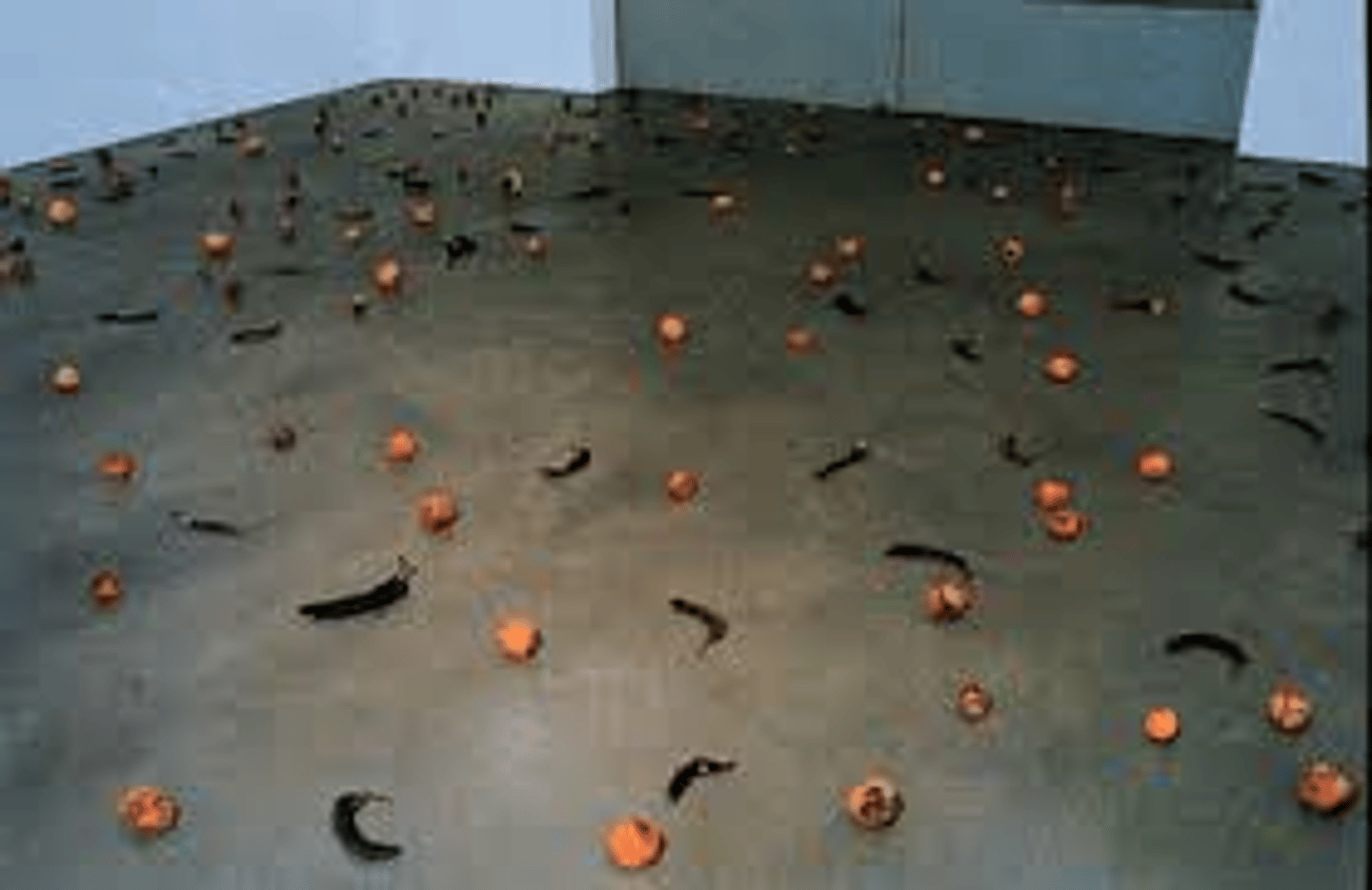
Characterize "Spirituality." Why are contemporary artists interested in this theme?
The ineffable, intangible yearning to belong to something greater than one's self is part of the human condition, and does not require belonging to an organized religion. Artists reflect their interests in death, afterlife, the nature of the universe, and life's greatest mysteries. (Tomaselli, Untitled (Expulsion), 2000. Leaves, pills, insects, acrylic, photo-collage, resin on wood panel.)
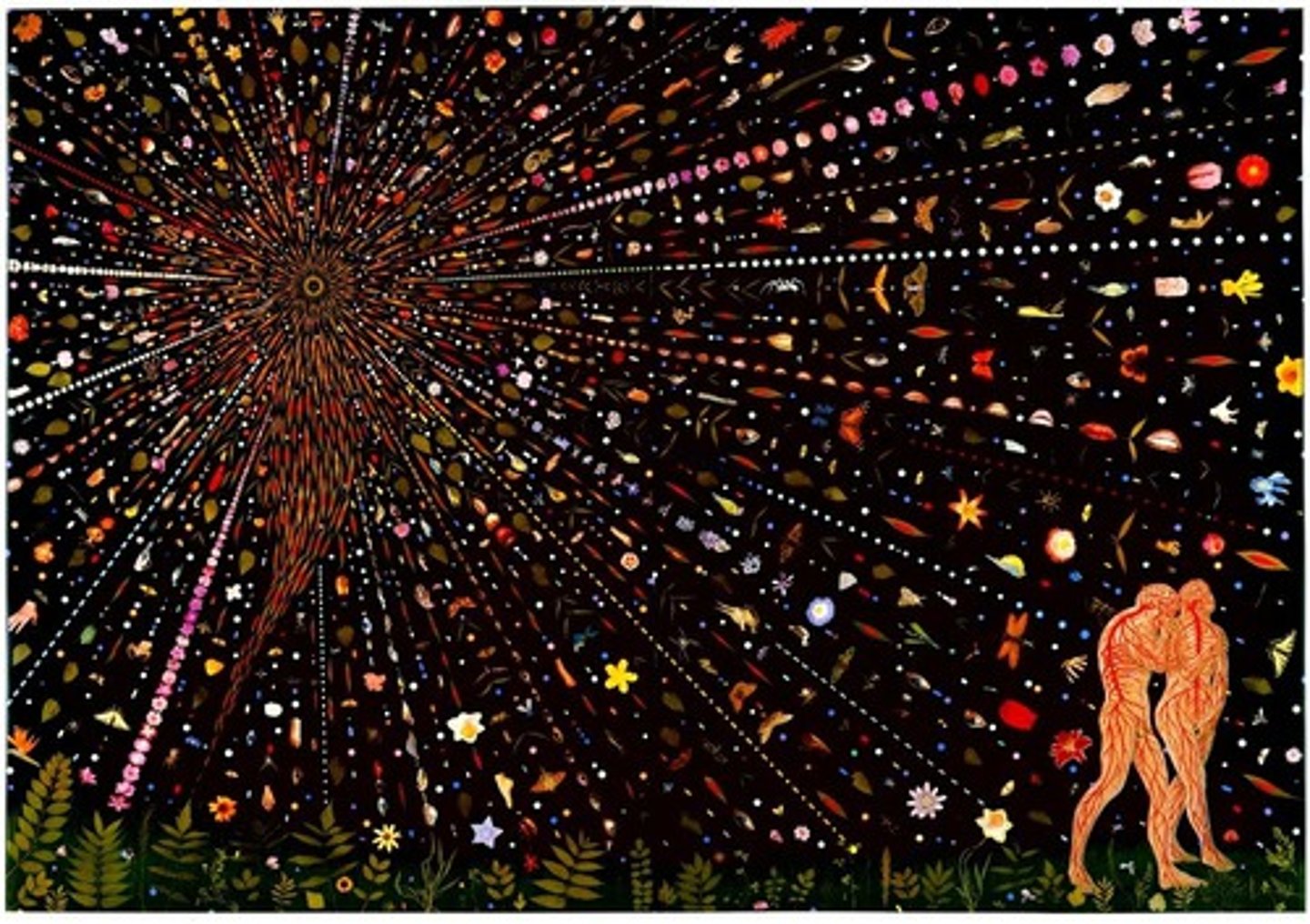
Define "Place." (As opposed to space) Why are contemporary artists interested in this theme?
A place is a location, real or imagined, that is marked by a combination of time, memory, and space and has literal and/or symbolic value. It does not have to be only defined by its geography, but also its economic and political relationships to other places. Space refers to the social and psychological attributes, the potential for new viewpoints on the same area. Artists investigate the emotional and intellectual involvement of viewers with the environment. (Belmore, Ayum-ee-aawach-oomama-mowan: Speaking to their Mother, 1991. Wood, leather, animal skins, microphone, megaphone.)
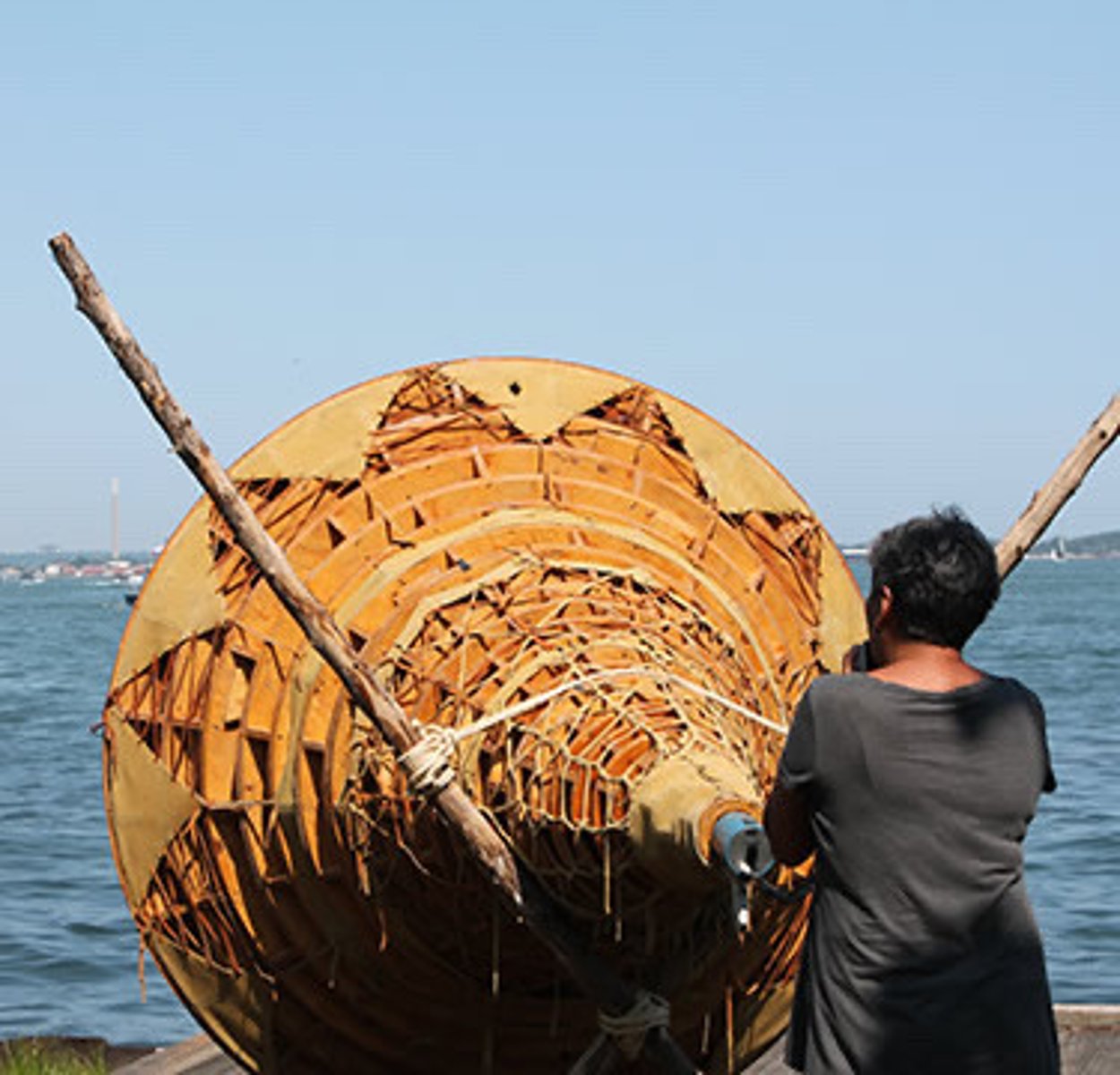
Characterize artists' approach to "Time." Why are contemporary artists interested in this theme?
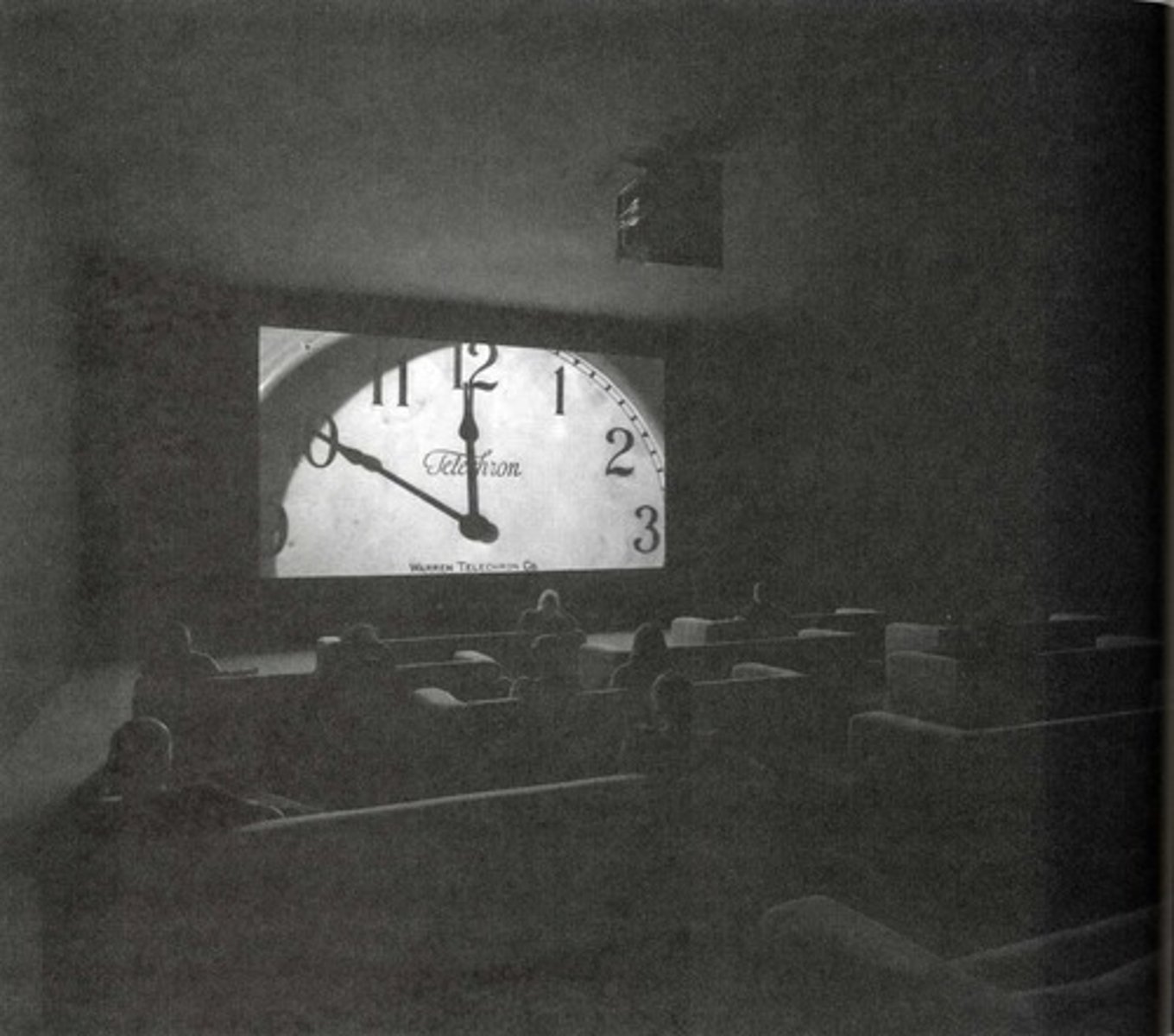
Artists use time as a medium to create work that moves and changes. As a subject and or/theme born out of emotional and practical needs, measuring time (via clocks, calendars, metronomes, etc.) is intertwined with our awareness of body consciousness. An individual's awareness of time passage and its nature differs based on personal experiences, societal concepts, culture, and language. (Marclay, The Clock, 2010. 24-hr single-channel video with sound.)
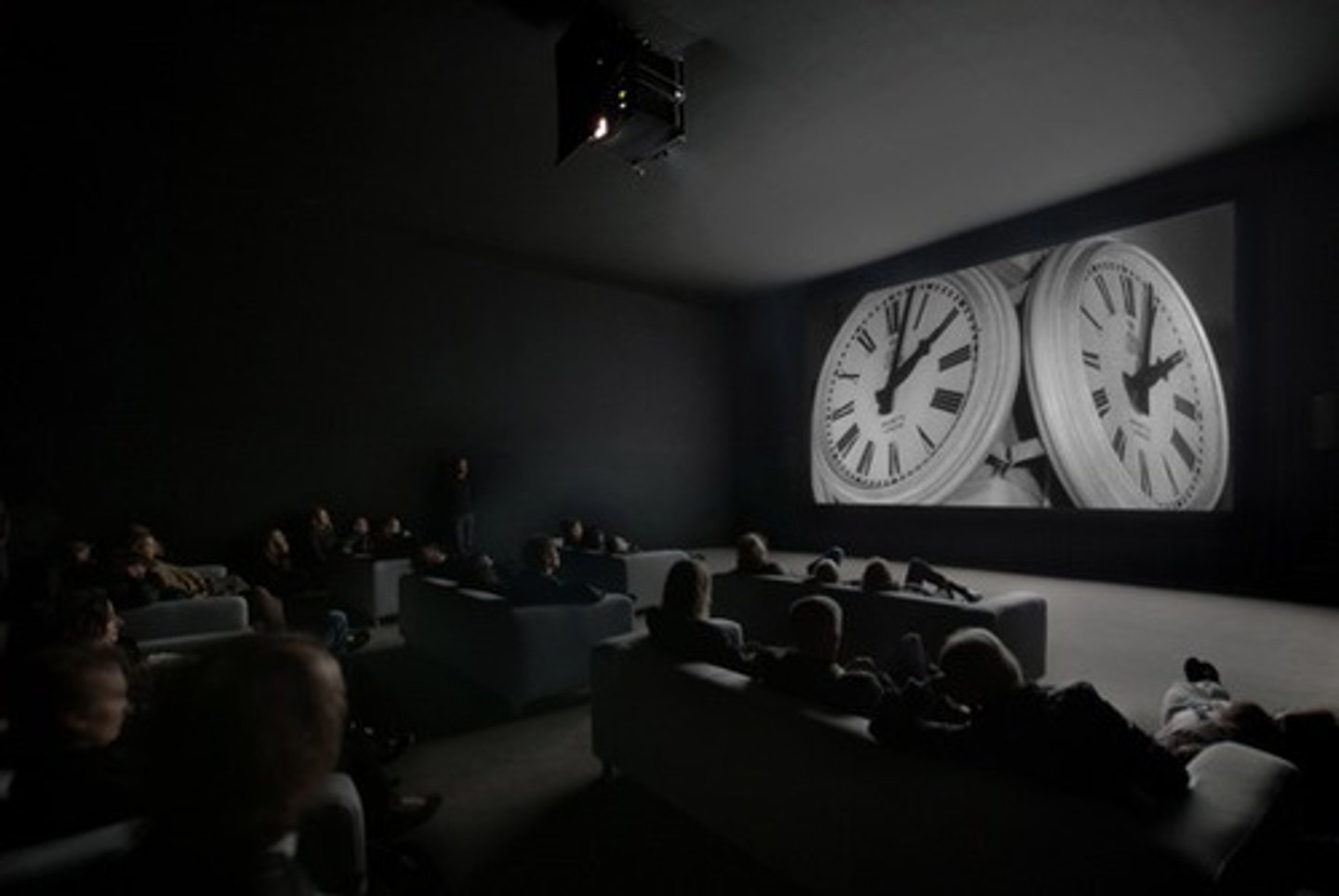
Why are contemporary artists interested in "Memory"? Characterize their approaches to this theme.
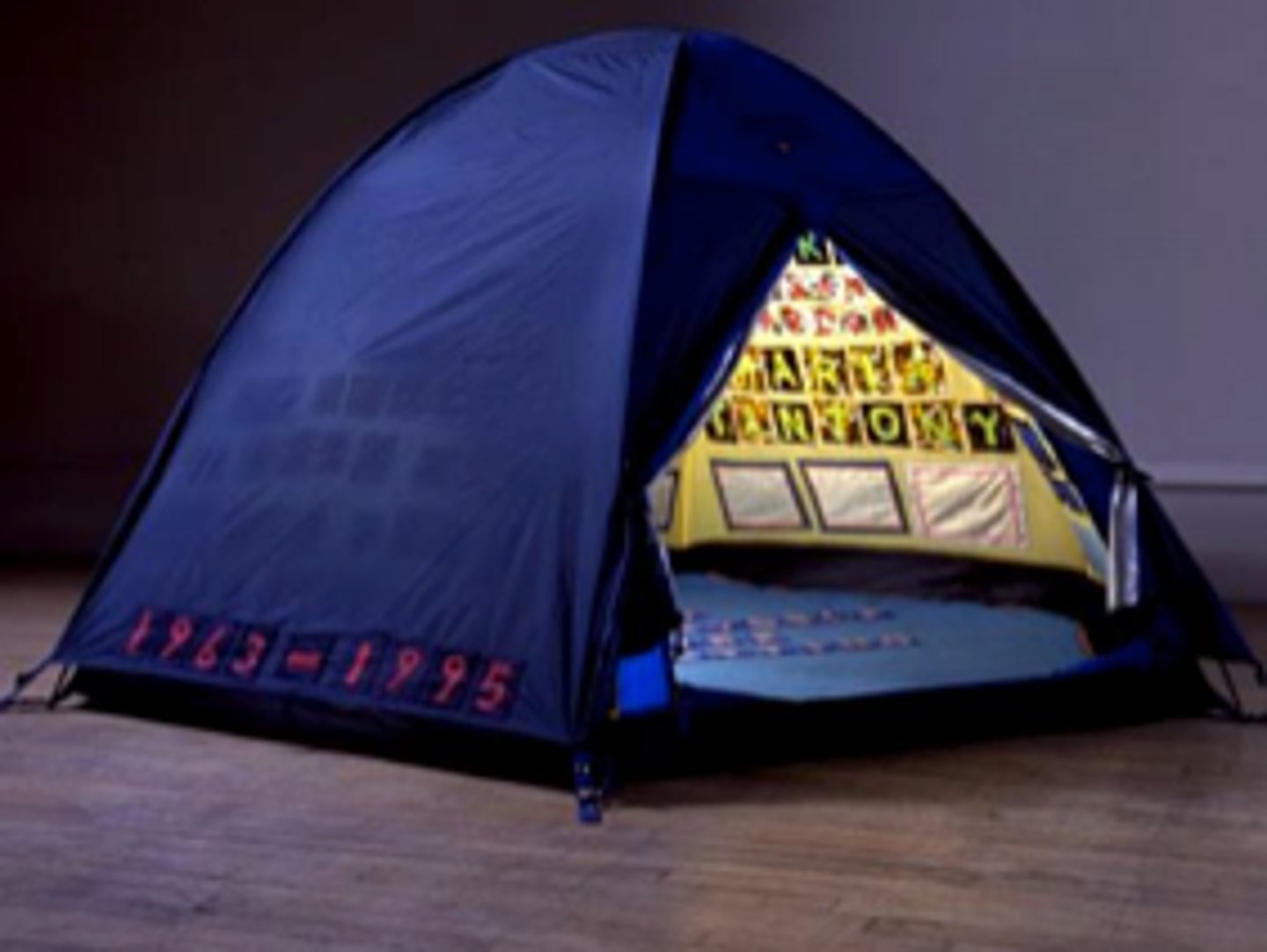
As opposed to time, memory is the synthesis of the past and present - a dialogue between the subjective and the collective. Rather than functioning exclusively as a recall or reconciling for the past, memory constructs and represents the current. Artists recognize that our views of the past are never impersonal, nor is history; there is an emotional process through which it is filtered. (Emin, Everyone I Have Ever Slept With, 1963-1995, 1995. Appliqued tent, mattress, light.)
Characterize contemporary artists' approach to "Identity." Why are contemporary artists interested in this theme?
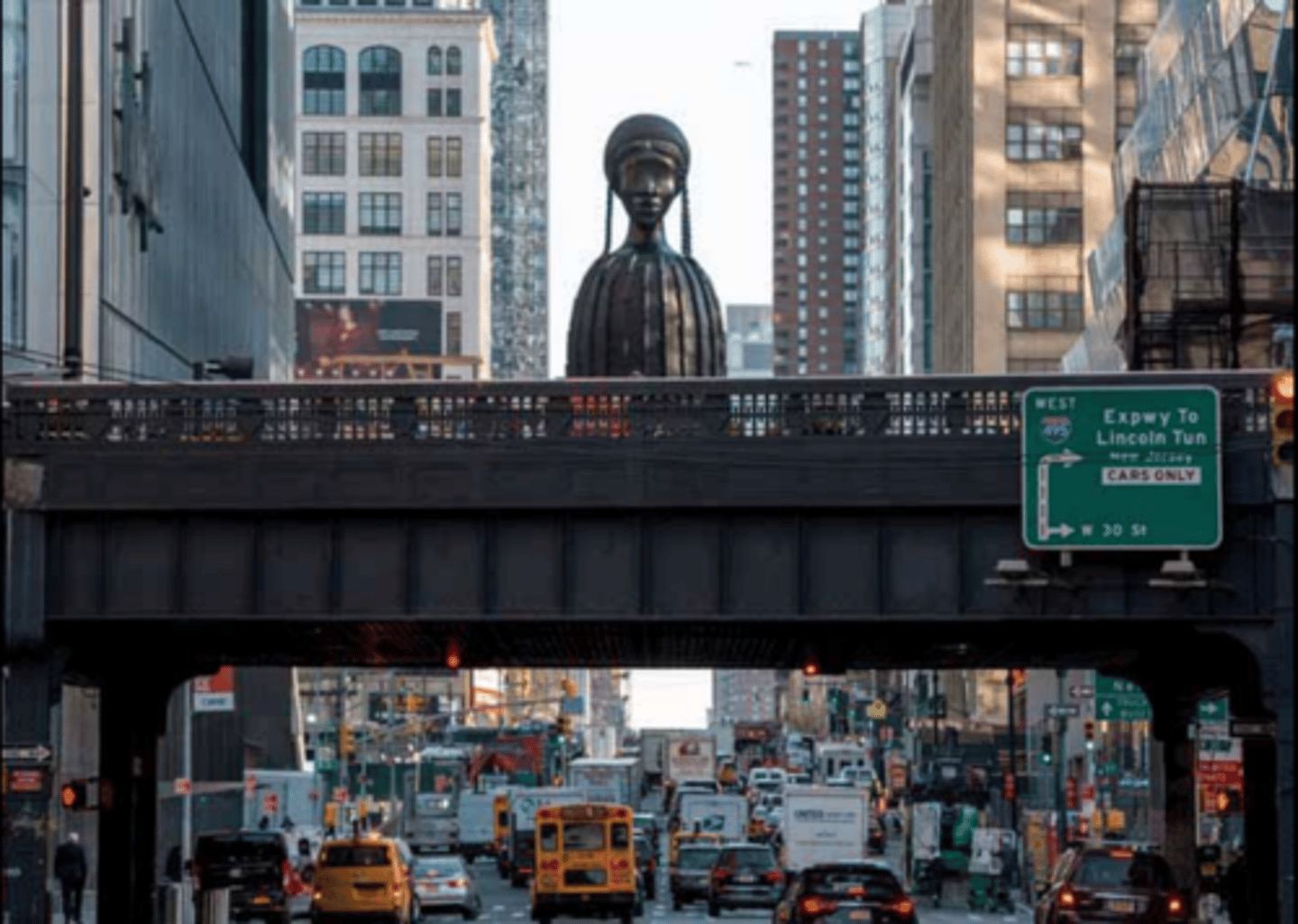
Identity may be defined as radical individuality to one artist and collective labeling within a group to another. It may be biologically essential or imposed on us by society, and we may have much or little power over controlling its performance. Artists have been interested in self-portraiture since the beginning of art history, but the ways that they understand and conceive of themselves are in constant flux. To reflect these changes, they offer alternative interpretations of what it means to be human that connect with modernity. (Leigh, Brickhouse, 2019. Bronze, NYC)
Why are contemporary artists interested in "Science"? Characterize their approaches to this theme.
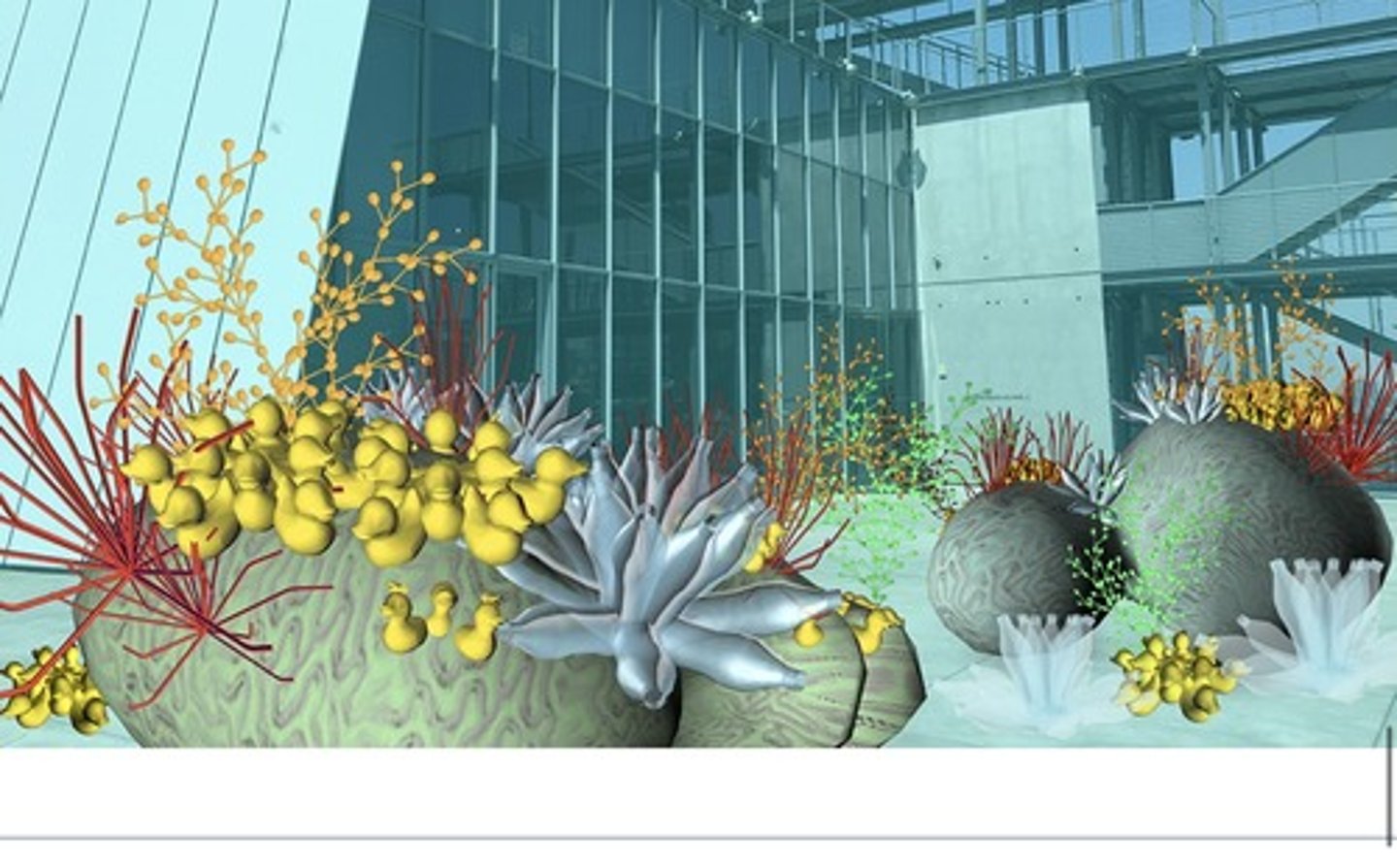
The rapid and seemingly never-ending discovery and applications of new research, along with ethical debates, lead artists to take a variety of approaches. This includes critique and parody of science, raising awareness for underrepresented issues, celebrating the pushing of our knowledge to new frontiers, and reframing observable phenomenons as works of art. Adopting scientific tools and materials, contemporary artists mirror the larger culture's interest in the appealing quality of studying the world and the mechanisms that drive it. Therefore, social/soft and natural/hard science. (Thiel, Unexpected Growth, 2018. Augmented reality, Whitney Museum of Art NY)
Characterize artists' interest in the "body" in the period 1980-2018. Why are contemporary artists interested in this theme?
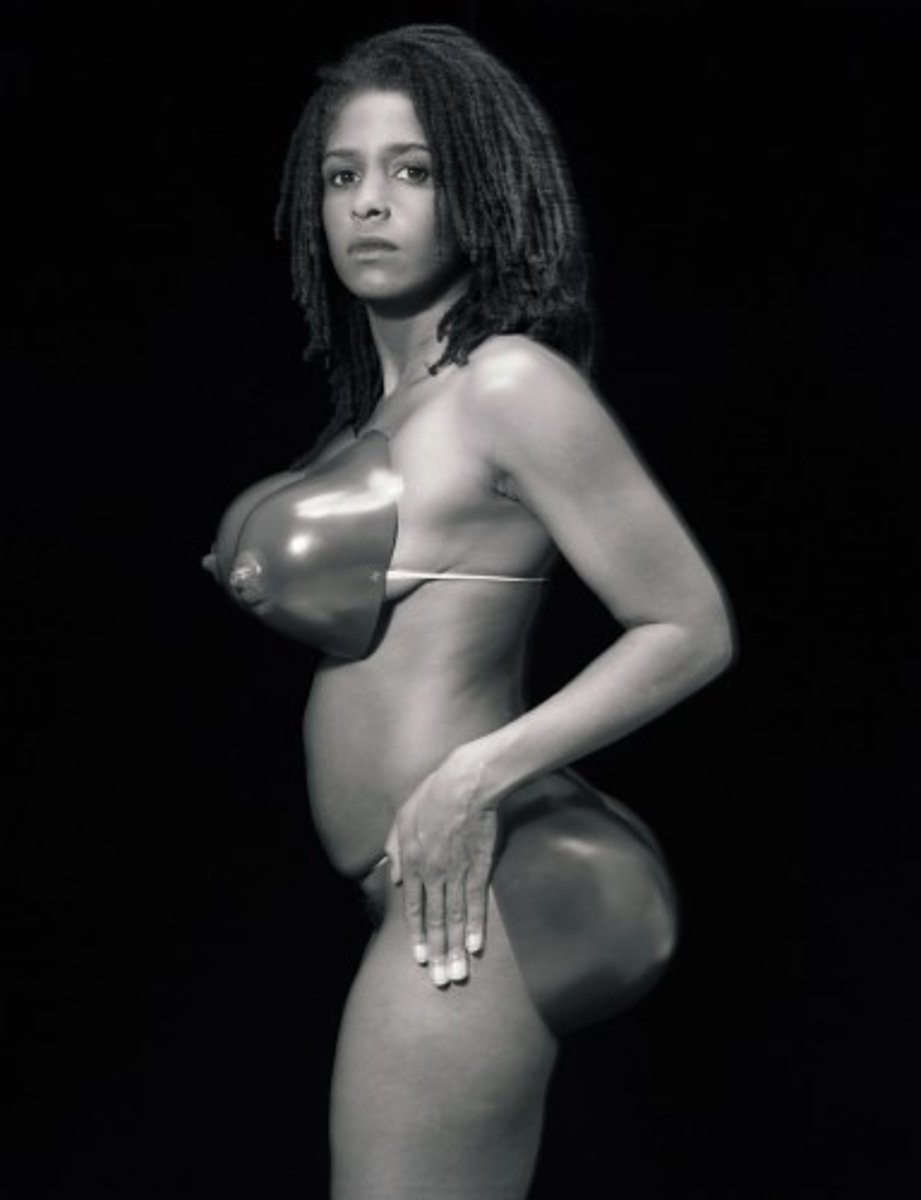
The body, particularly in the period 1980-2018, connects with identity as visual markers of who we are. People see our bodies and interact through theirs, and what it means to live in a body feels differently for each person. Artists may not only depict the human figure, but also metaphorically substitute objects for the body or using body residue (hair, teeth, nails) within the work. In contemporary times, creators look at the body/representations of it as a material entity (biological organism) and a cultural artifact. (Cox, Hott-En-Tott, 1994. Gelatin silver print)
gaze
how categories of people are stereotyped in visual representations by gender, race, sexuality, and other factors; the intertwining of visual control, power structures (Cox, Hott-En-Tott, 1994. Gelatin silver print)
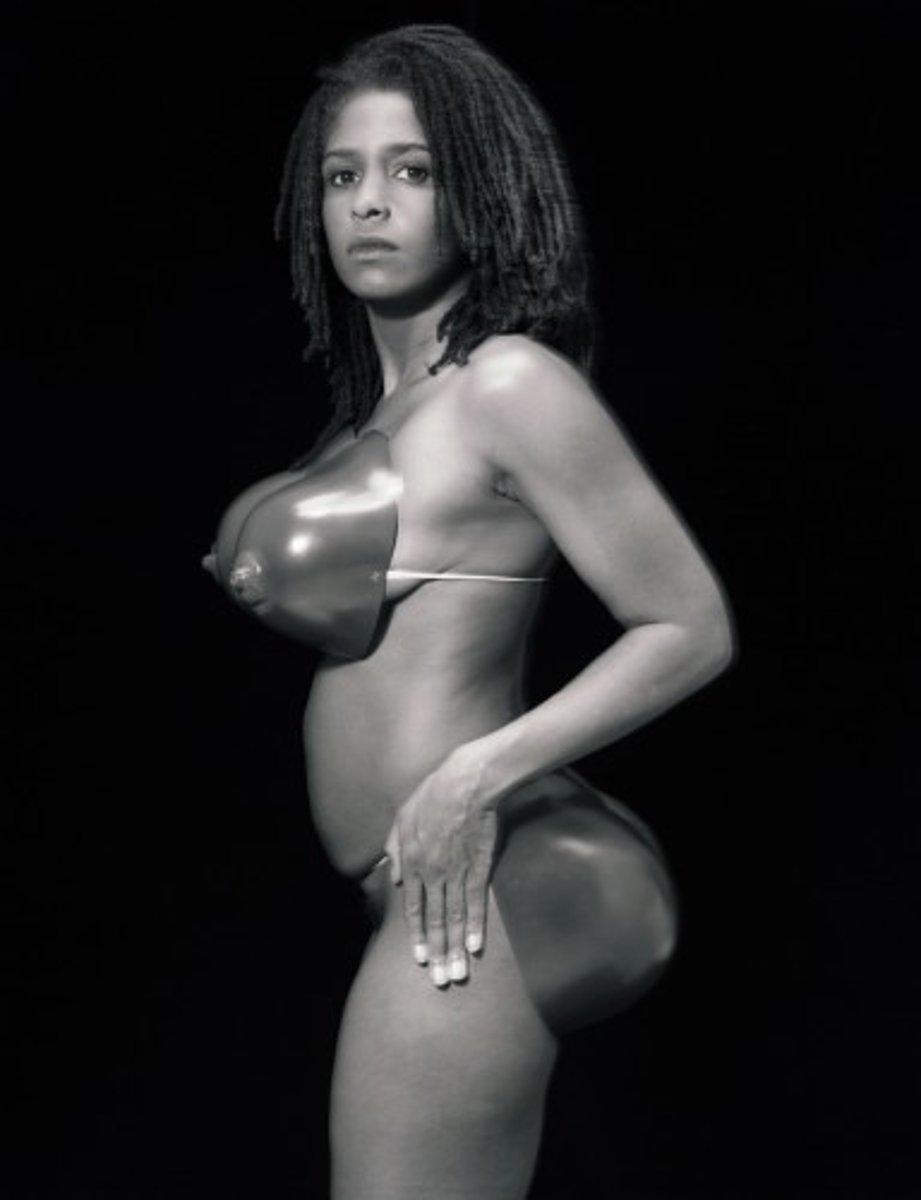
forensic aesthetics
art that borrows from the methods of crime labs and courts of law by systematically providing material evidence that something happened or someone existed; comment on transient nature (Boltanski, No Man's Land, 2010. Heaps of clothing, recorded heartbeats)
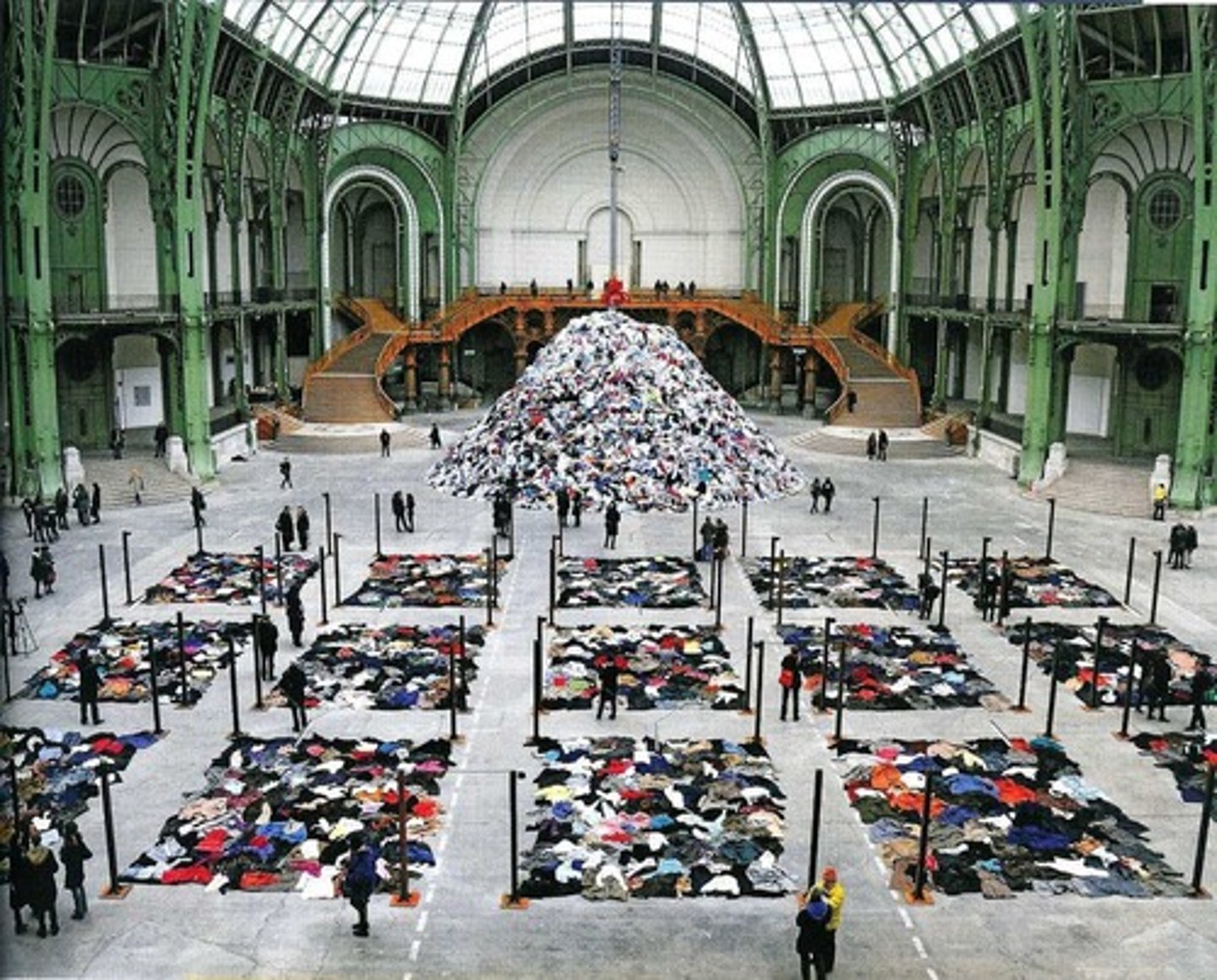
Anthropocene
the modern geological era during which humans have dramatically affected the environment, the dominance of humans is so extensive that it collectively impacts the Earth. consider climate change, greenhouse gas rising, plastic waste pollution in waters, and biodiversity reduction. (Eliasson & Rosing, Watch Ice, 2018. Melting blocks of ice shipped from Greenland to London)
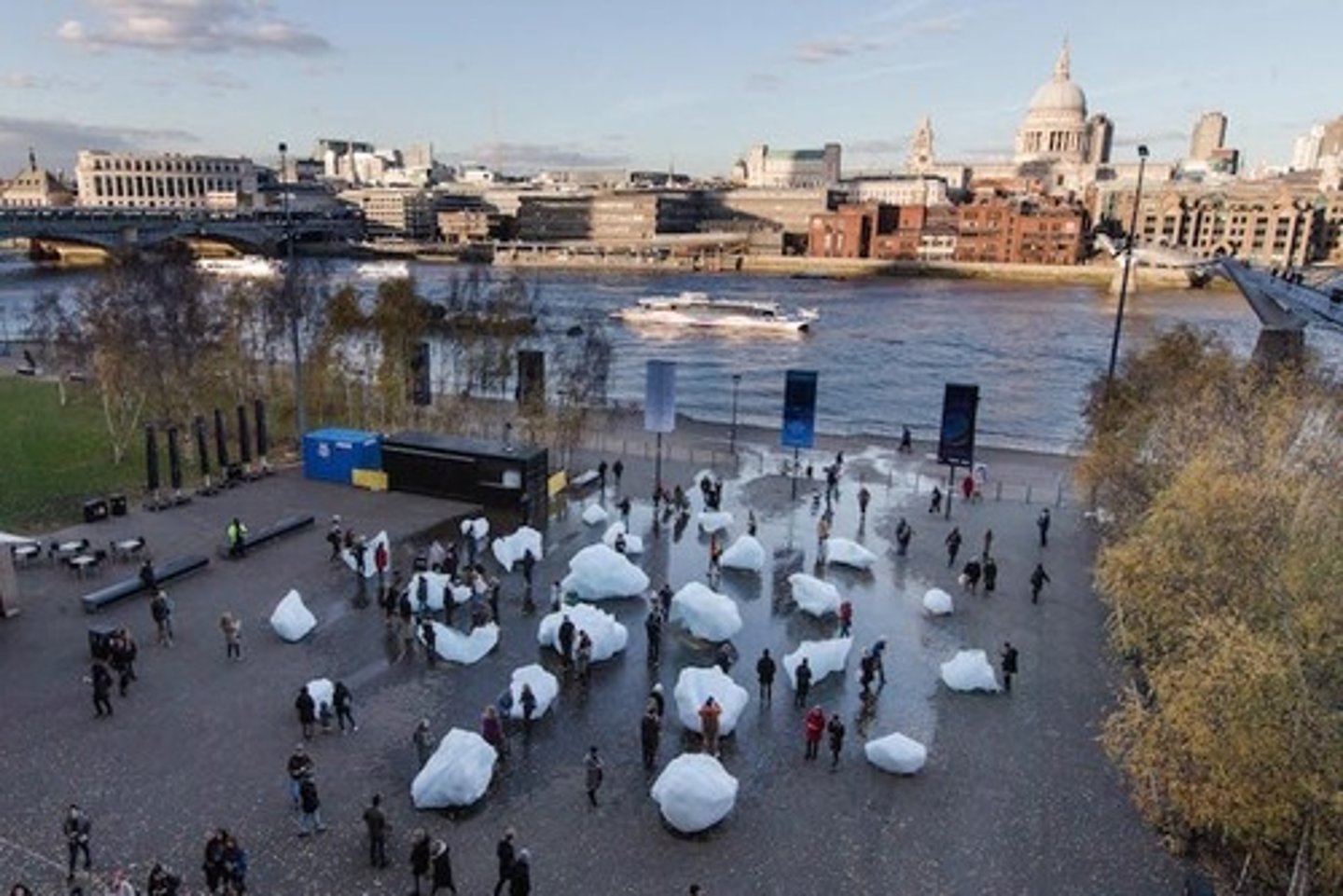
bio art
artists who work with the same living organic materials that scientists do: bacteria, cell lines, molecules, plants, body fluids, tissues, living animals. (Kac, Encryption Stones, 2001. Laser-etched granite. PROCESS: English -> Morse code -> Genetic conversion -> DNA sequence of base pairs -> transgenic bacteria w/ synthetic & natural genes -> English)
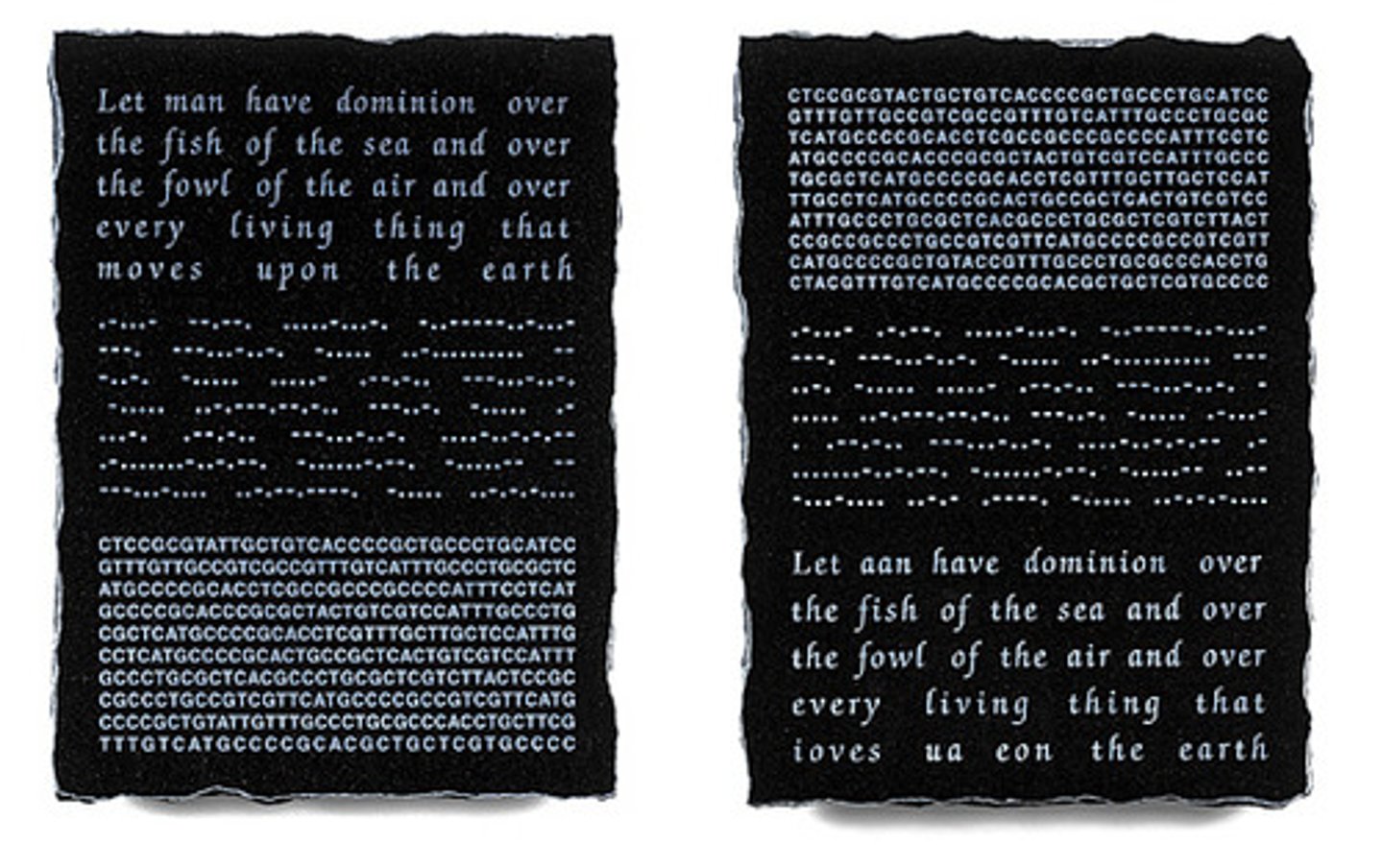
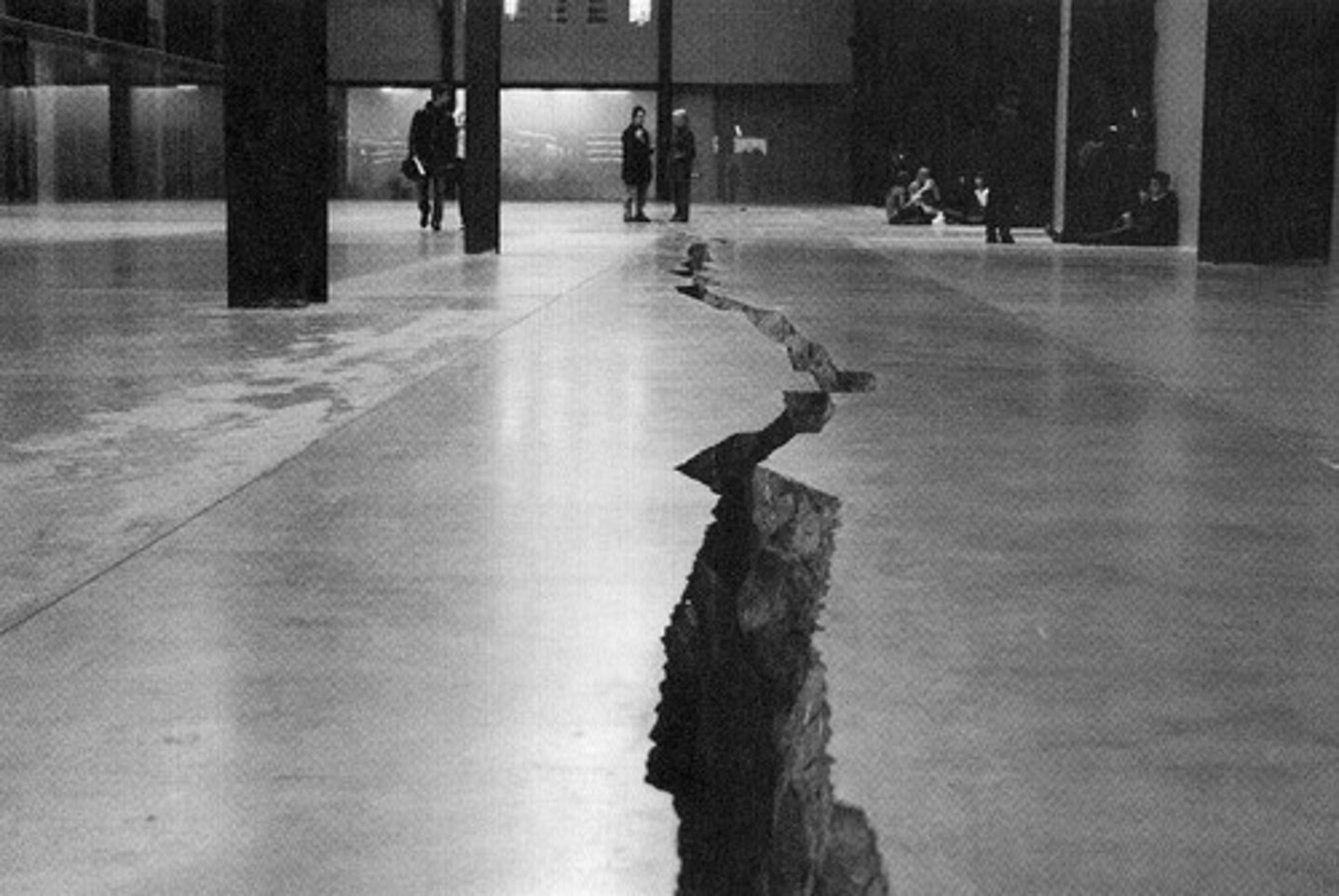
site-specific
any work which cannot be separated or exhibited apart from its intended place without damaging form/meaning (Salcedo, Shibboleth, 2007. Concrete, metal. Tate Modern, London) EX: Shibboleths separate one as a foreigner. The crack in the foundation of the Tate Modern reveals its ugly history of marginalization and racism while exposing the divide between rich and poor.
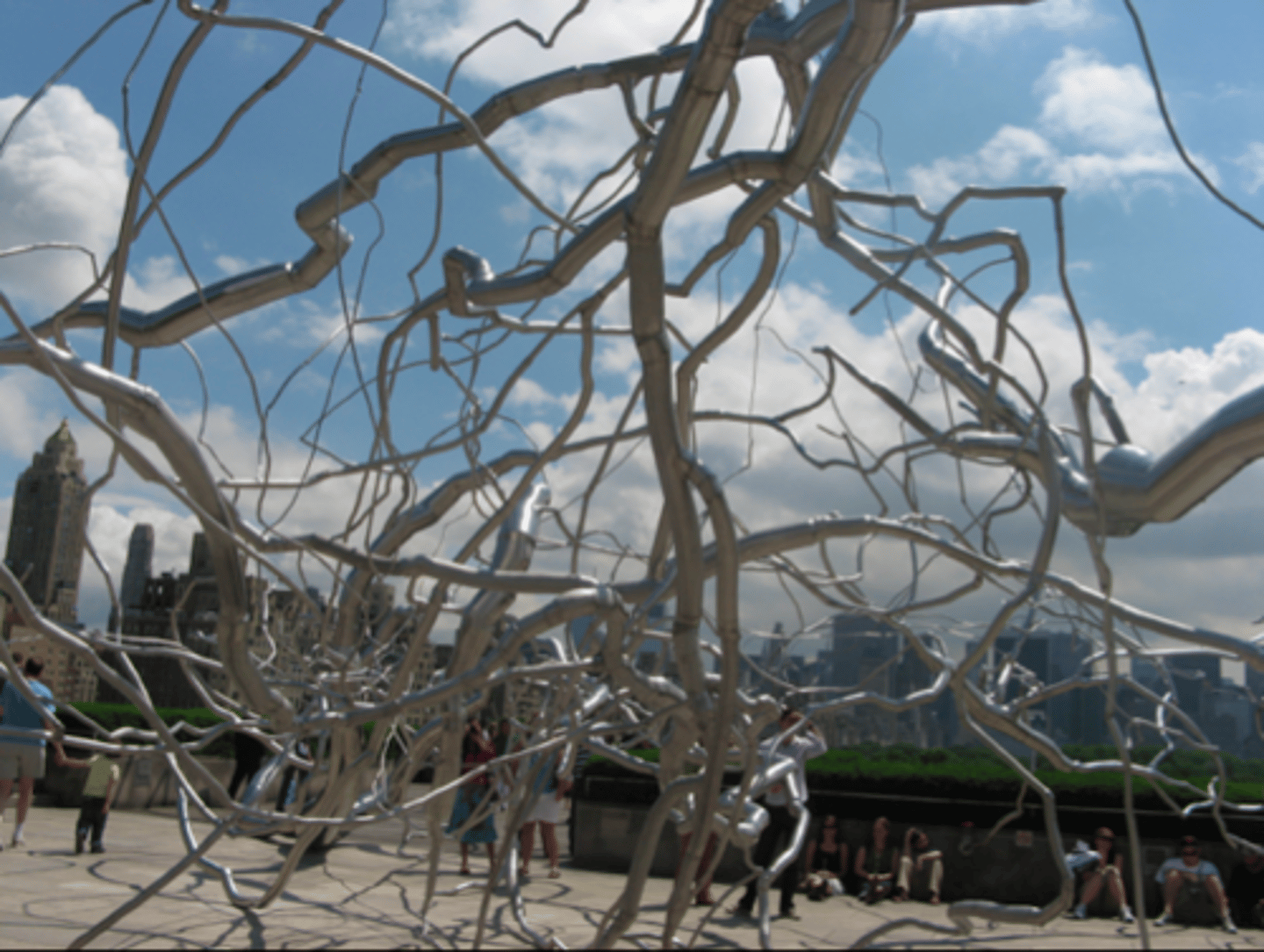
site-responsive
works that engage with the social, poltical, or economic context of a location rather than focusing on its physical attributes - they can be installed elsewhere and enter into a different dialogue with the new area. (Paine, Roxy Paine in the Roof: Maelstrom, 2009. stainless steel. The Met NY)
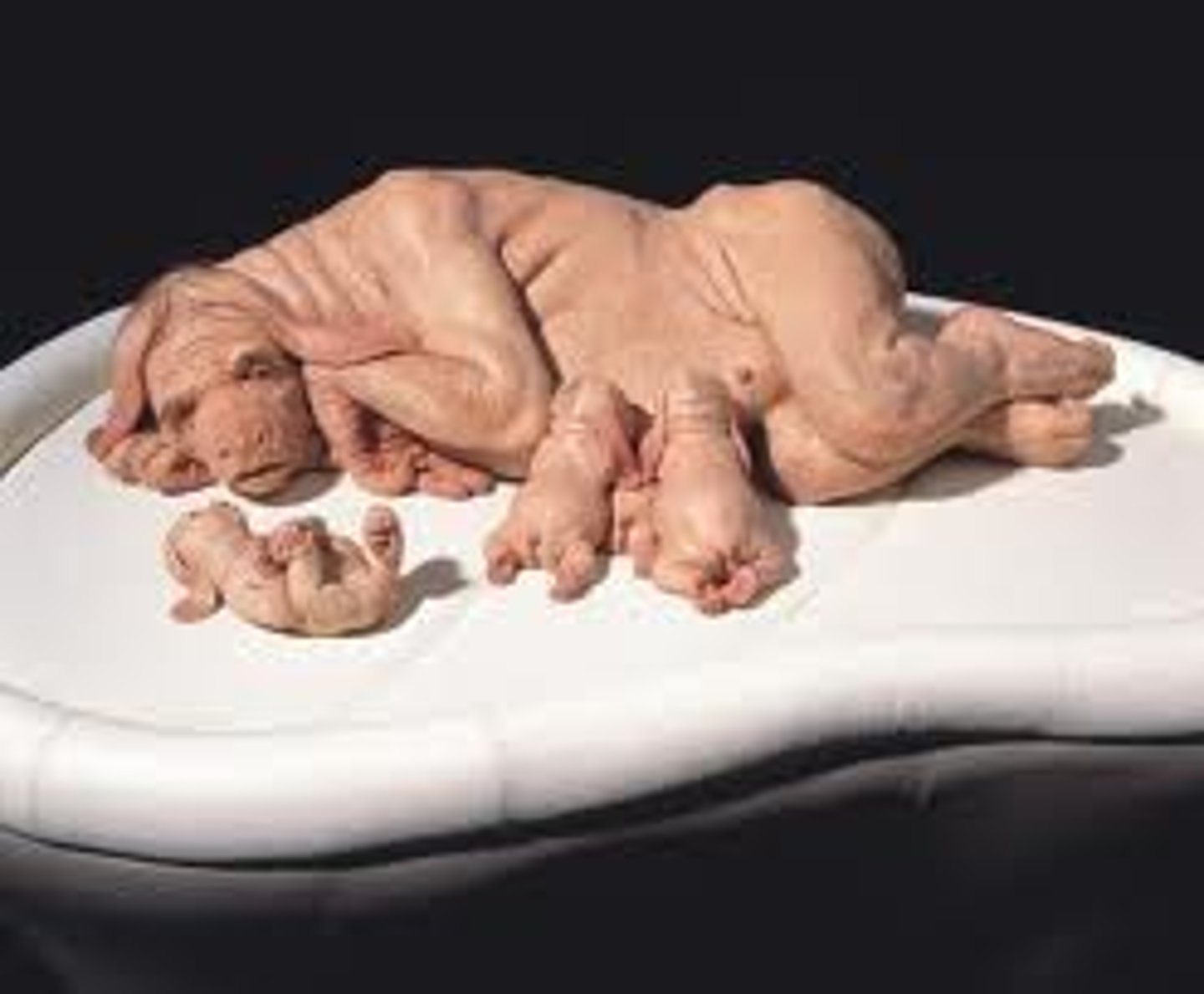
posthuman
theories that see technology and human bodies as increasingly intertwined, thus challenging the boundary between human, animal and machine and potentially also essentialist concepts of gender; a new phase of evolution where humans are able to be reconstructed and extended artificially in ways that surpass biological evolution (Piccini, The Young Family, 2002)
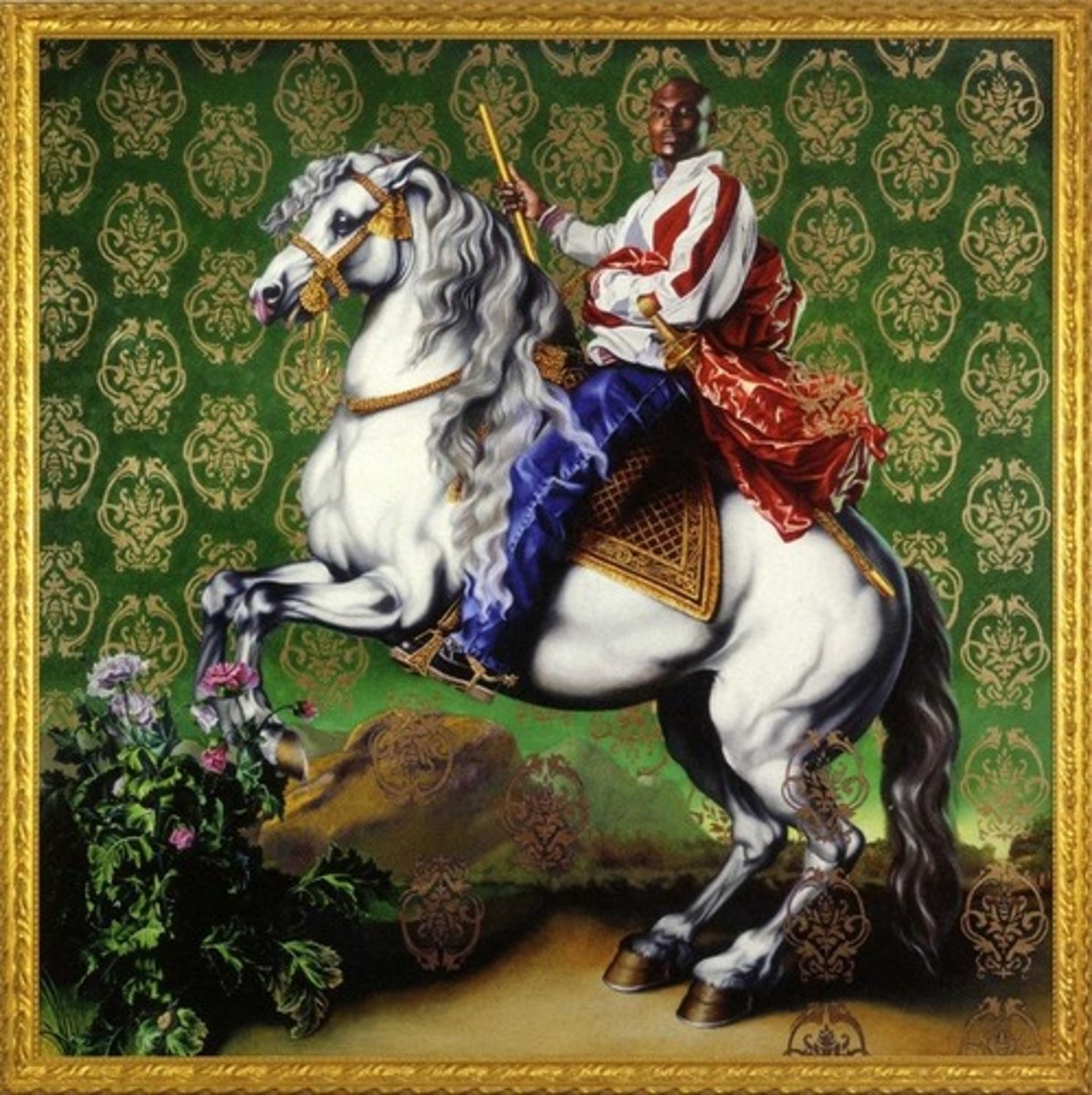
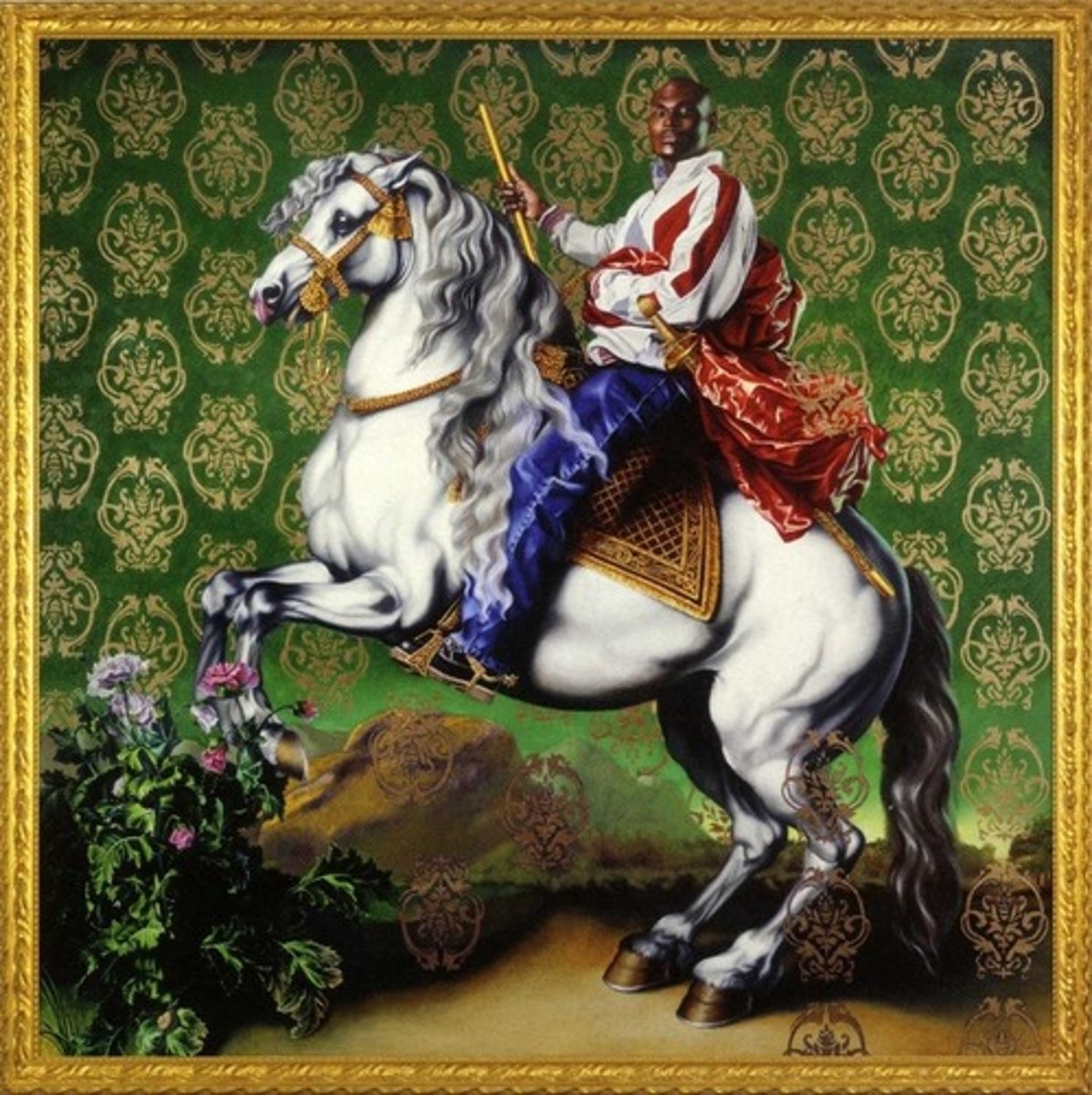
deconstruction
looks at a text or symbolic system in terms of the underlying worldview that gave rise to it, exposing contradictions and hidden biases in order to challenge the validity of the worldview and the text, the meaning of the text is unstable because readers/viewers bring their own worldviews into interpretation, skewing it. no visual/written text has a single correct interpretation, because meanings change with the reader, time, and context. (Wiley, Prince Tommaso Francesco of Savoy-Carignano, 2008. Oil painting.) EX: Wiley deconstructs the mainstream identity of hypermasculinity by recasting contemporary Black men in European Old Master portraits which traditionally displayed the power and authority of white authoritative men.
simulation
manufactured illusions, constructed images without basis in tangible reality - no longer able to distinguish model from copy, we are left with appropriation/quotation (Chang, BOB (Bag of Beliefs), 2018-19. artificial life form, infinite duration, dimensions variable) EX: BOB is a digital animation that operates in real-time without predefined outcomes, composed using human-made and algorithmically generated content. The synthetic life form has an AI identity that feels sentient, and is influenced by people.
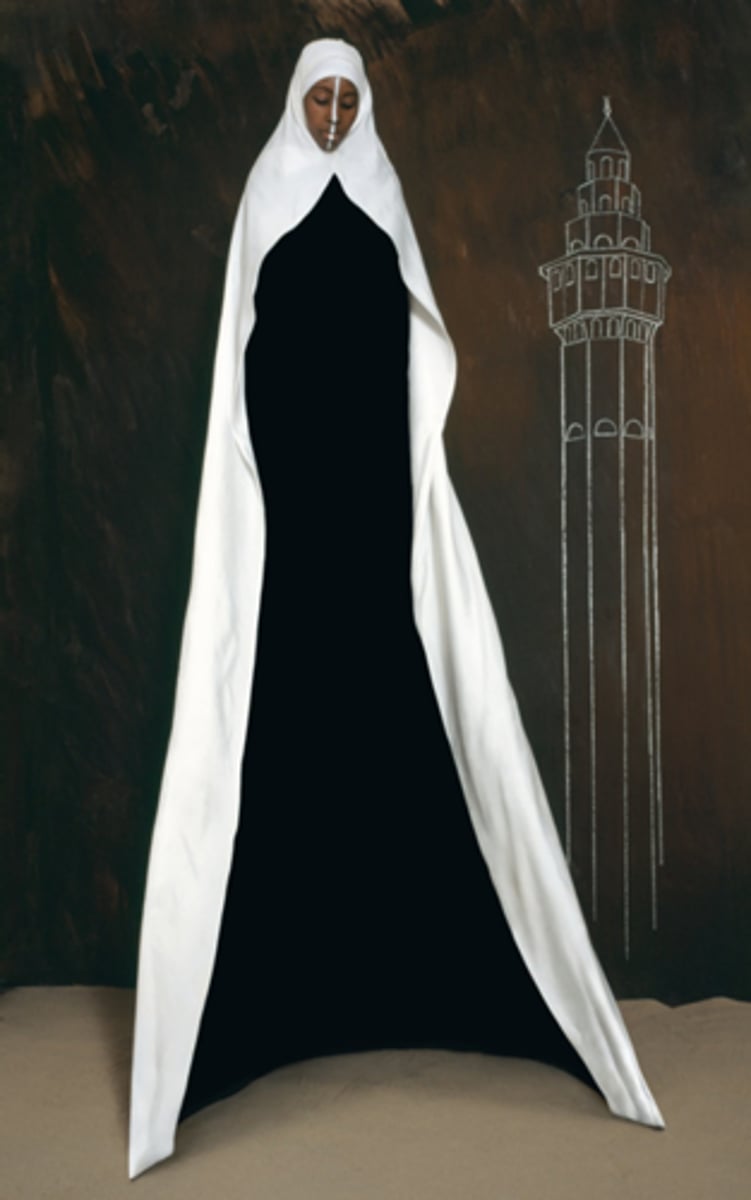
Hybridity
the fact that cultures are neither wholly isolated nor entirely distinct but instead constantly borrow from one another, natural combining of elements. (Guerresi, Mother Minaret, 2018. Lambda print) EX: Guerresi was born Catholic in Italy, then married a Sufi Islamic man from Senegal, and lives in Italy while traveling throughout Africa and Asia. The imagery combines Muslim headscarfs, mosque minarets, Italian Renaissance referencing through the veils, and white paint bisecting the figure's face representing the meeting of life and death, known and unknown, while alluding to milk - the sacrificial, purifying element in Africa and Asia - and light, representing Sufi enlightenment.
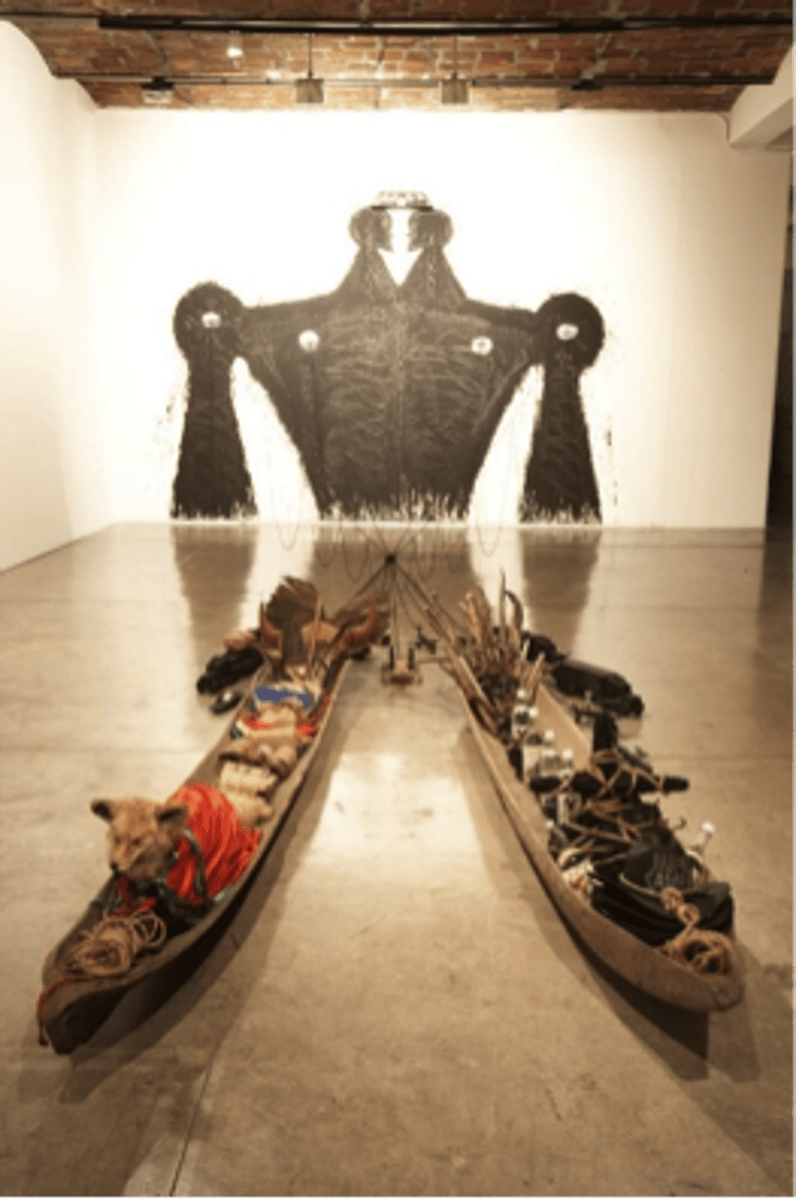
Liminal
the transitional stage of a ritual, particularly a rite of passage, in which one has passed out of an old status but has not yet entered a new one - artists and viewers use ephemeral materials to confront instability and contemplate change. (Bedia, The Things That Drag Me Along, 2008. Wax, crayon, acrylic, found objects.) A collection of talismanic objects leads the viewer through the liminal stage to spirtual enlightenment.
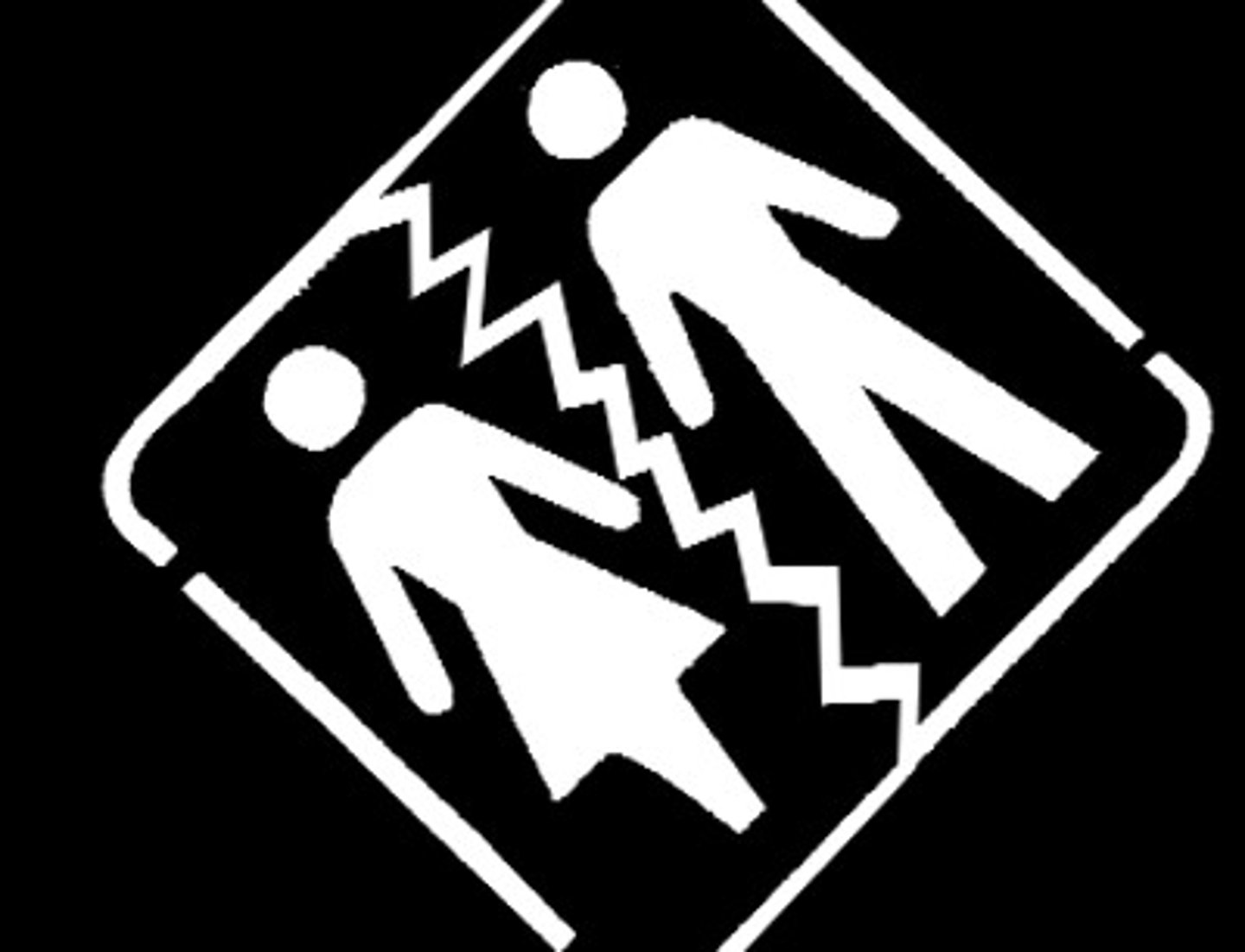
Essentialism
applied to statements and visuals that convey generic or stereotypical notions of identity, regardless of whether they come from someone outside or inside the targeted group. accusations are often made relating to claims about a group's identity based on the idea that shared qualities are biological or natural.
Diversity
instead of looking for visuals and statements that show sameness, multiple affiliations and contingent characteristics exist and these internal differences are displayed within the context of the community.
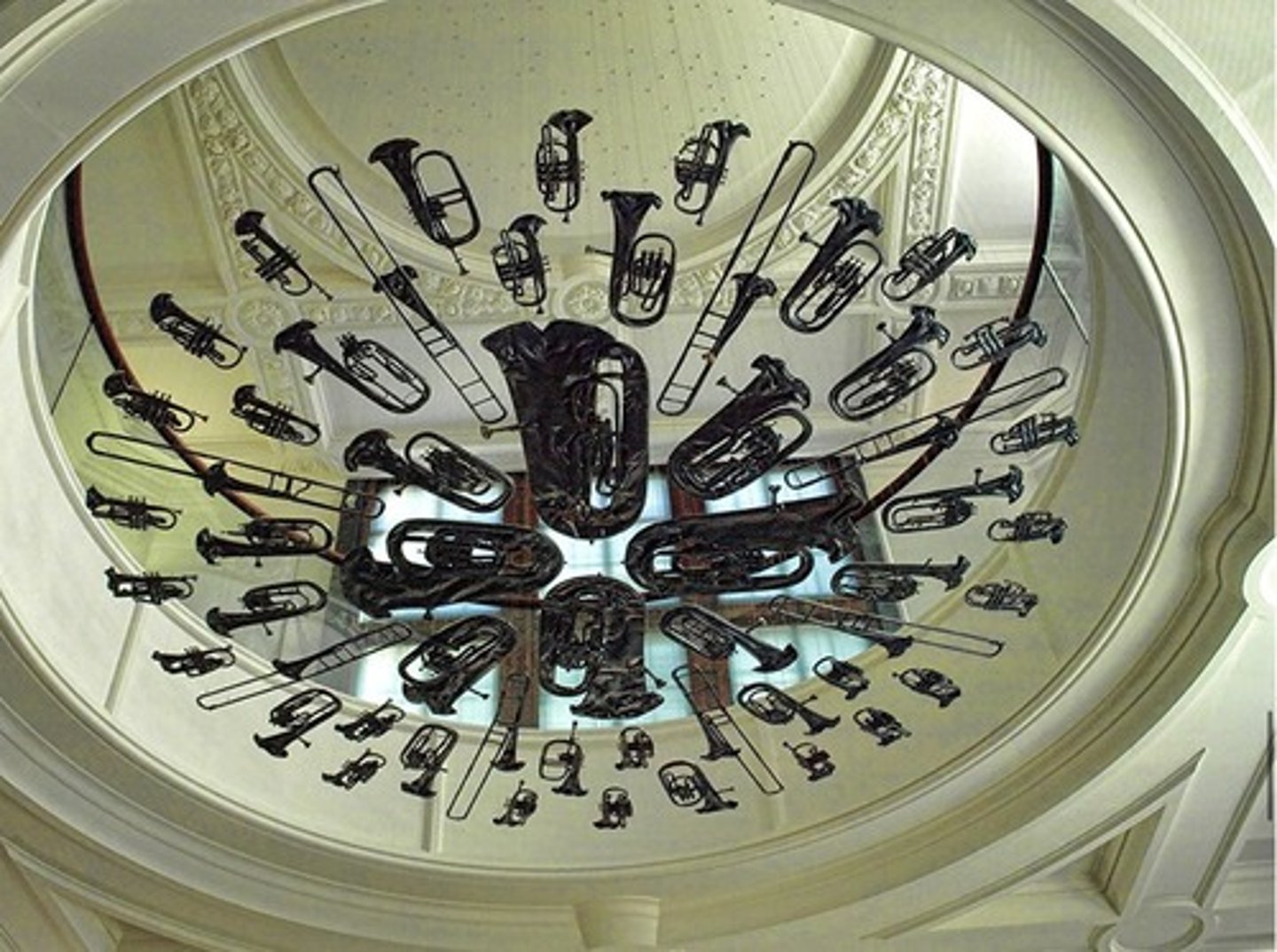
trace, index
emblematic instance of the index - symbol or semiotic sign that captures more than an abstract or arbitrary relationship to what it signifies. material evidence of the past physical existence. EX: Smoke is an index of fire, but the word "Fire" is not an index of a blaze. (Parker, Breathless, 2001. Brass musical linstruments crushed in an industrial press) The working-class bands that were once fixtures of British life have nearly disappeared, the now-crushed instruments being the trace of their once-high relevance.
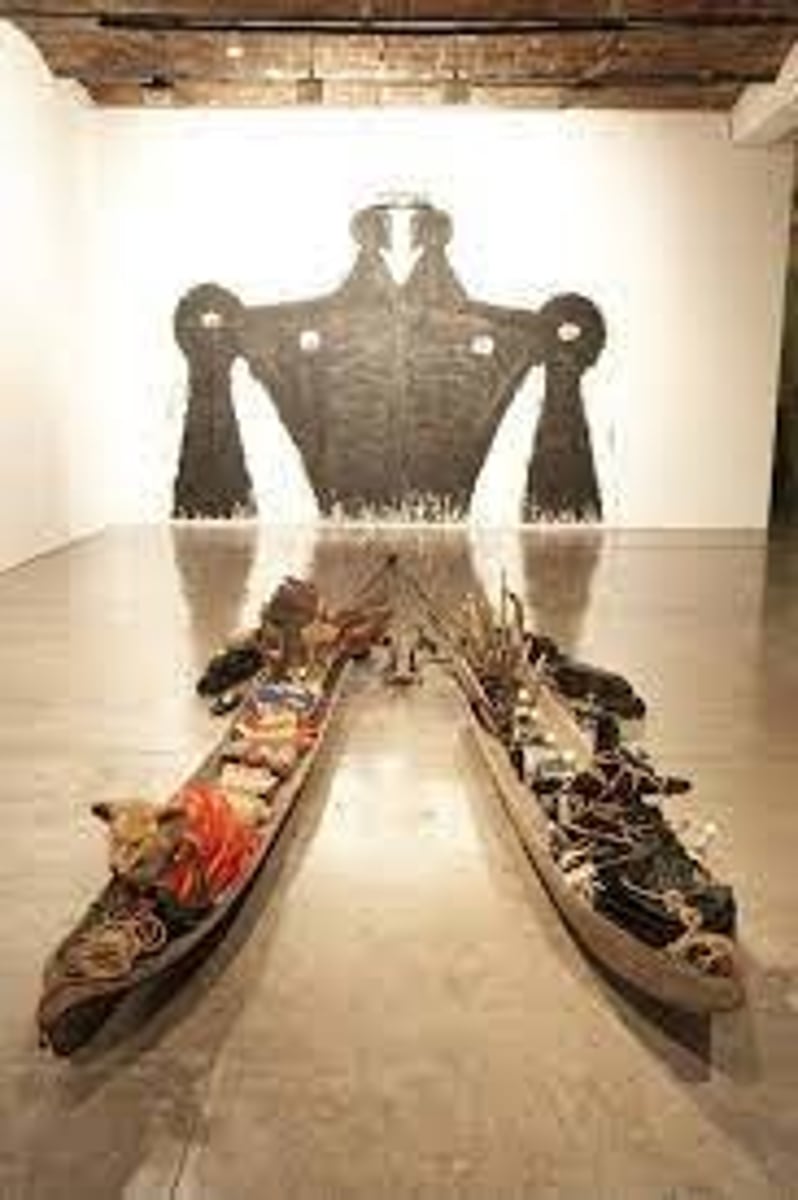
Transcendence
the overcoming of the normal limitations imposed by the human condition, whether temporarily or abidingly - transportation to a state of higher awareness outside of day-to-day experience, a kind of awareness practice. Some artists see art-making itself as an experience of transcendence, such as abstraction for mystical communication. (Bedia, The Things That Drag Me Along, 2008. Wax, crayon, acrylic, found objects.) EX: The objects represent (but are not literally sacred) the range of Bedia's knowledge of rituals, indigenous belief immersion, and his seeking through art of the hidden dimensions beneath everyday life.
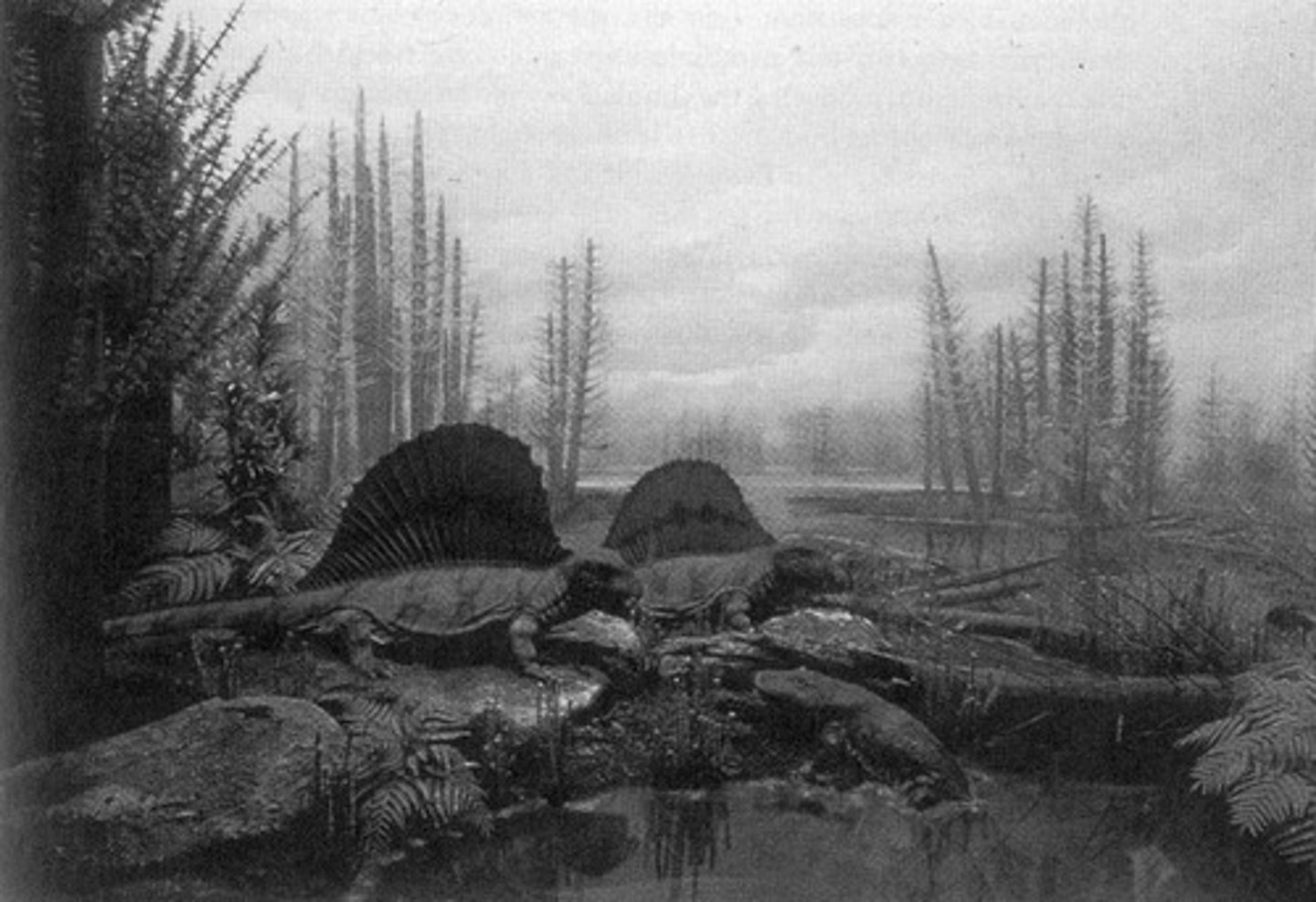
Virtual/Virtuality
synthetic, artificial - an image or space that is not real but appears to be. may mimic the actual world or present fantasy. EX: antiquated technology, diorama: uncannily detailed presentation of an idealized and concentrated view. (Sugimoto, Permian Land, 1992. Gelatin silver print)
Relational aesthetics
analysis of art through focus on interhuman relationships and social spaces rather than emphasizing art objects in private galleries, homes, or museums. includes the lived sensory experiences of viewers within the content as more important than tangible objects or images created or utilized by an artist. (Belmore, Ayum-ee-aawach-oomama-mowan: Speaking to their Mother, 1991. Wood, leather, animal skins, microphone, megaphone.)
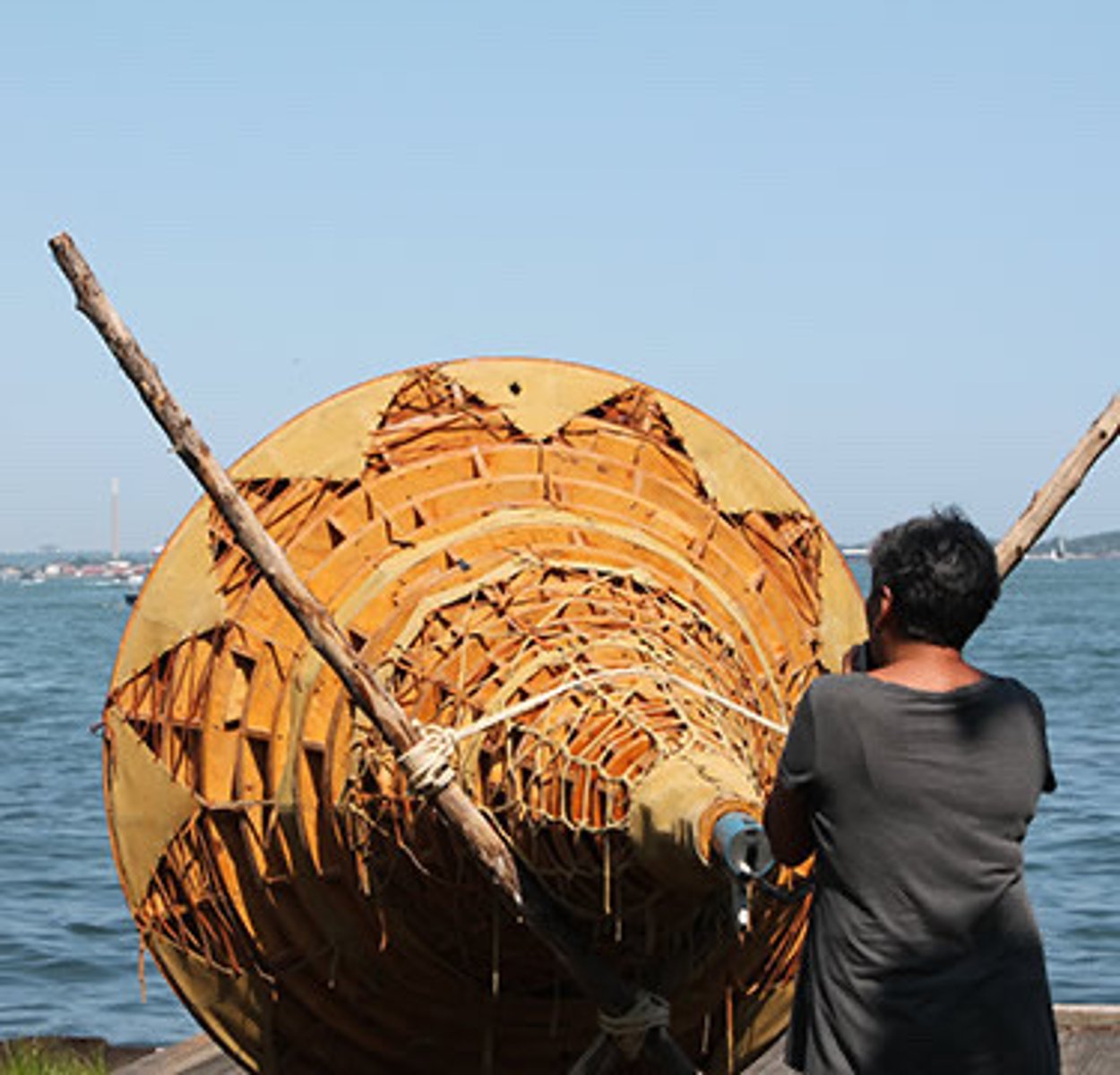
situation-specific
works that engage with social processes and often draw spectators into the activity - contest a literal reading of place being specifically fixed for a destabilizing effect. (Liang, Walker, 2012)
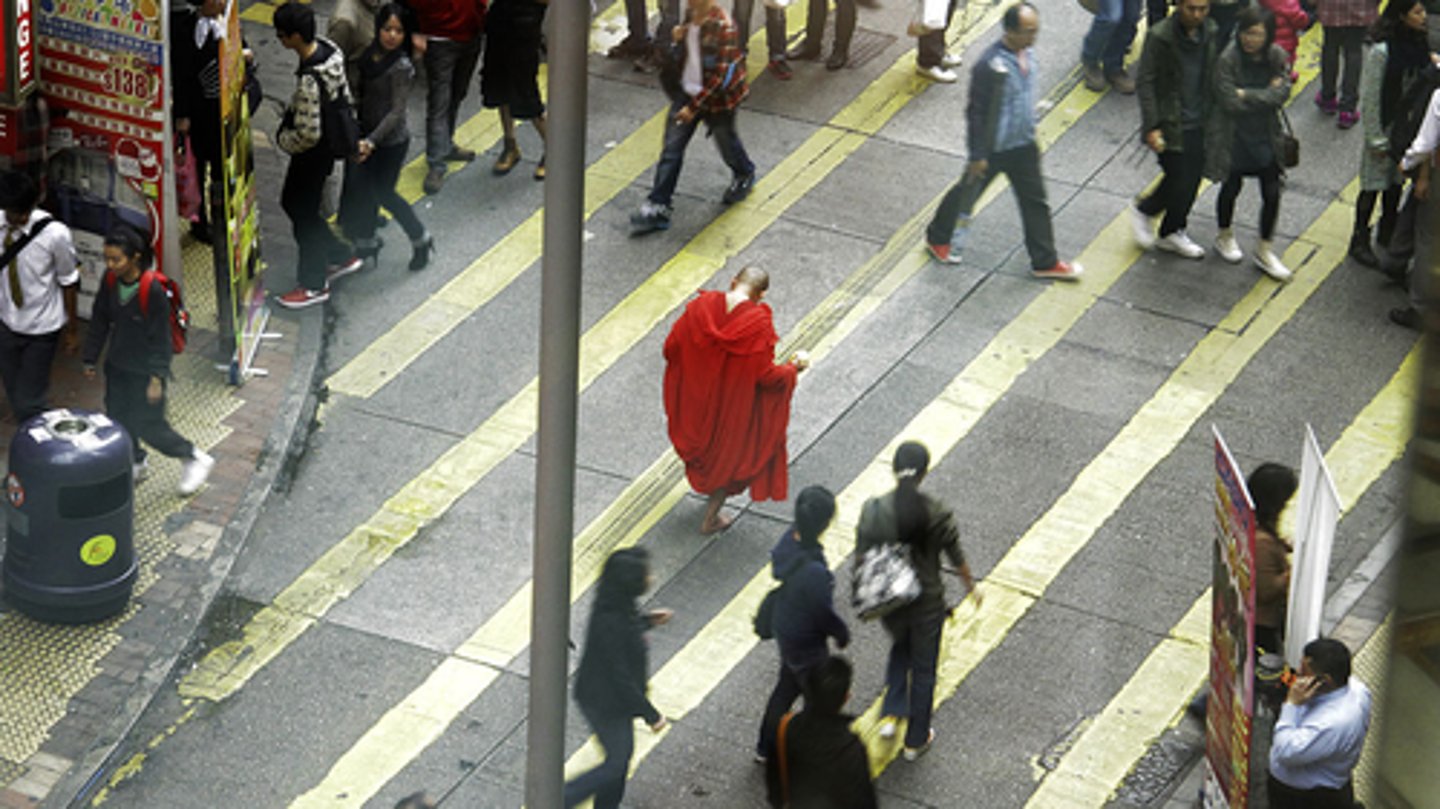
Performativity
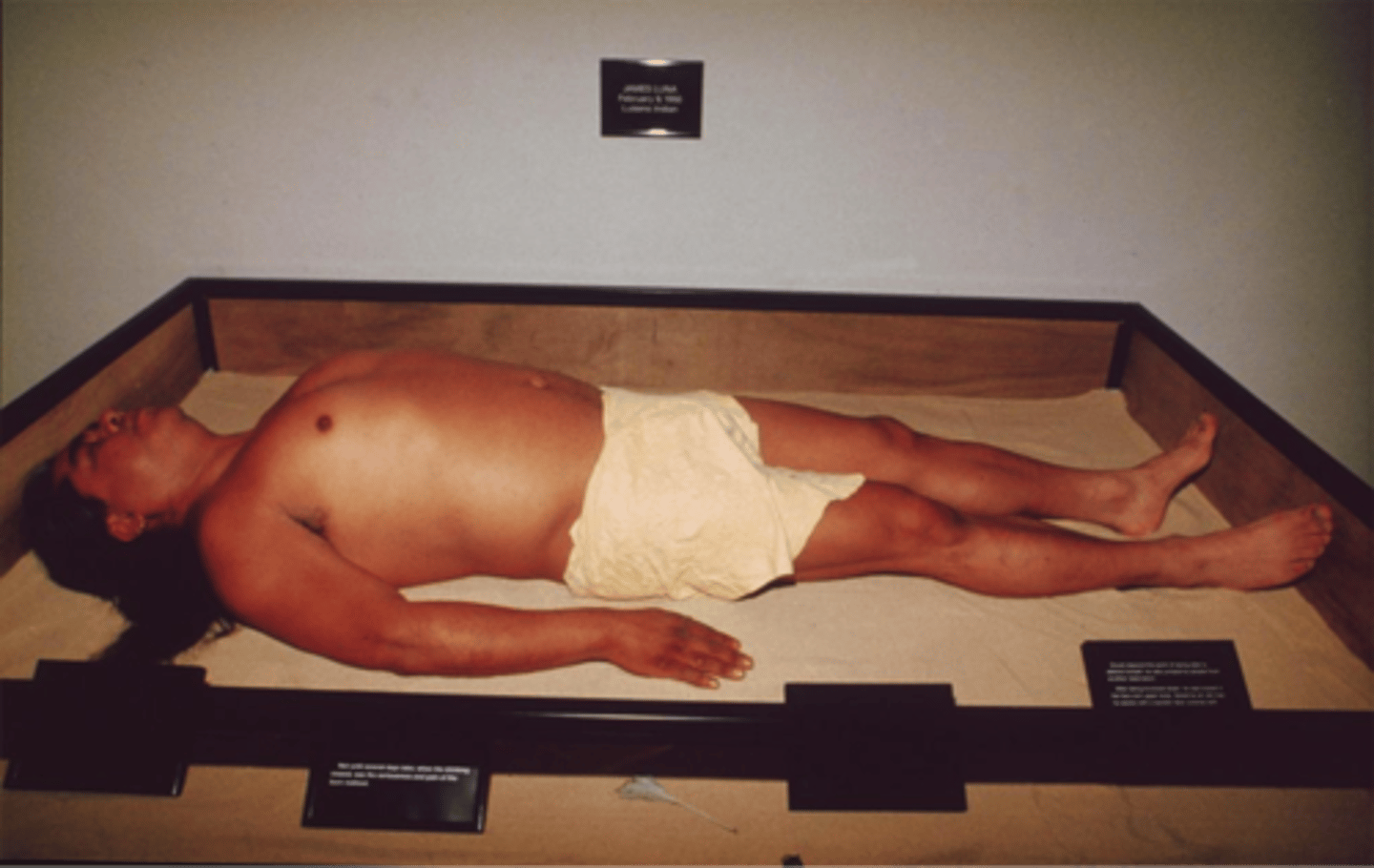
The idea that certain social factors, such as race, are socially constructed and then acted out using words and behaviours that have come to be associated with what it means to be, say, Indian or white - identity as constructed persona, presented in relation within a group through outward appearance and behavior. (Luna, The Artifact Piece, 1987. Dimensions variable, mixed media installation and performance.) EX: Luna explores his performance of his identity as a Native American, drastically shattering the expectations of his people to be understood as revered relics and not living representatives of the past and modern society.
Super-Hybridity
Twenty-first-century remixing practices fueled by globalization, digital technology, the Internet, and capitalism - the circulation of information at rapid speed allowing eclectic and rampant borrowing. May be uncritical and therefore irrelevant, as the heritages of others are cherry-picked in what relates to a colonialist mindset. (Marclay, The Clock, 2010. 24-hr single-channel video with sound.)
Appropriation/Remix/Sampling
Combining aspects of art history, vernacular culture, found objects and other data found through the digital age's tools and networks. Artists recombine details into new, interesting visual collages. (Wiley, Prince Tommaso Francesco of Savoy-Carignano, 2008. Oil painting.)
Kline, Saving Money with Subcontractors (Fed-Ex worker's Head), 2015-2017. Three 3-D printed sculptures in plaster with inkjet ink and cyanoacrylate, cast urethane foam packing peanuts, vinyl cardboard, and medium-density fiberboard.
Theme: The Body - Technique of compositing fragments relates to how companies/governments collect information about people in different databases, and the dehumanizing effect when workers become cheap, replacable parts in the network of capitalism.

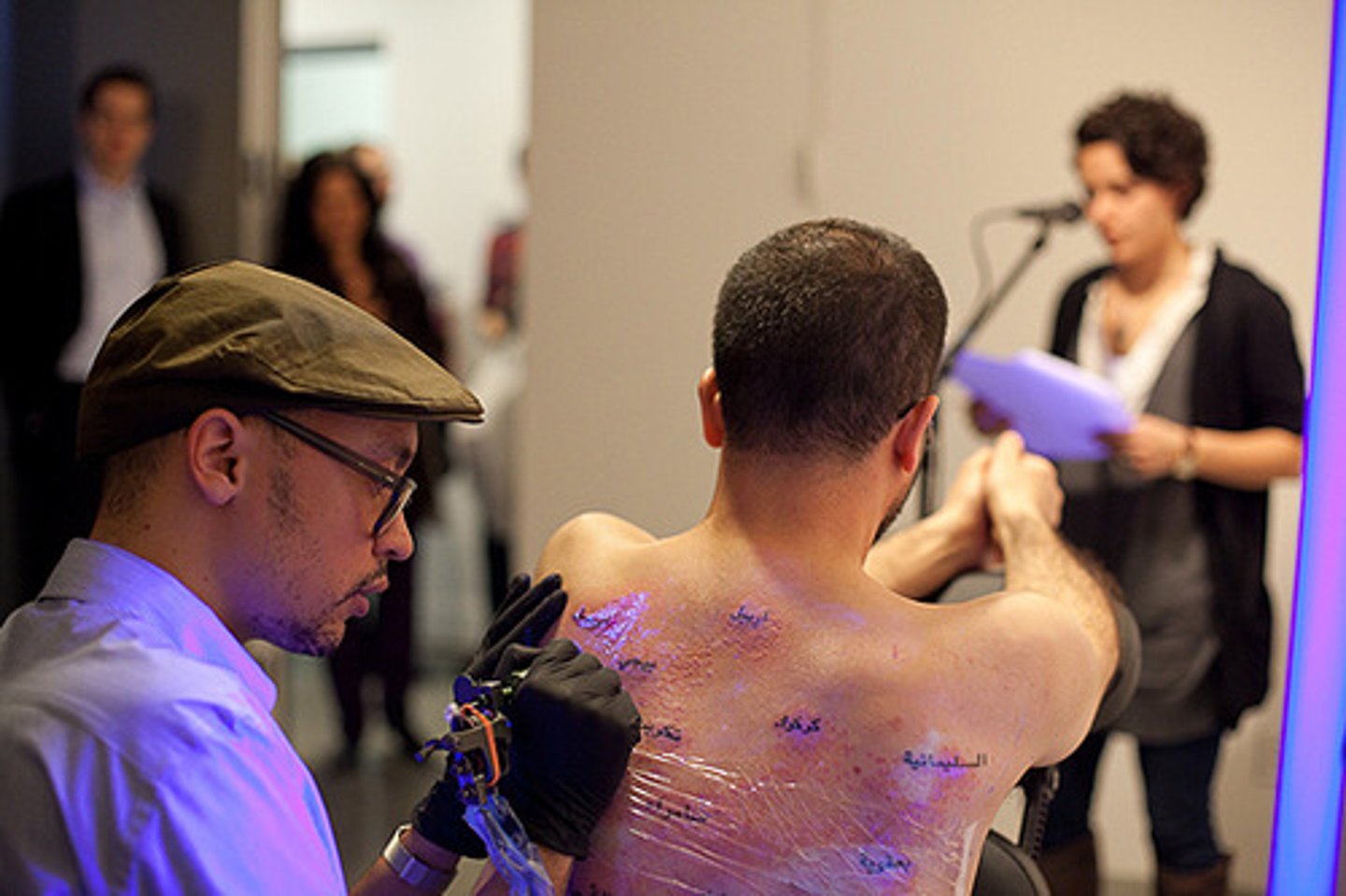
Bilal, And counting..., 2010. 24-hour performance featuring fluorescent tattoos.
Theme: The Body - Bilal pledged to get over one hundred tattoos on his back, five thousand red dots representing Americans and one hundred thousand dots in UV ink representing the death toll for Iraqis that could only be seen under UV light (representing the underreporting of Iraqi deaths in the US). Visitors were encouraged to read the names of the dead, and Bilal's back was covered at twenty five thousand dots.
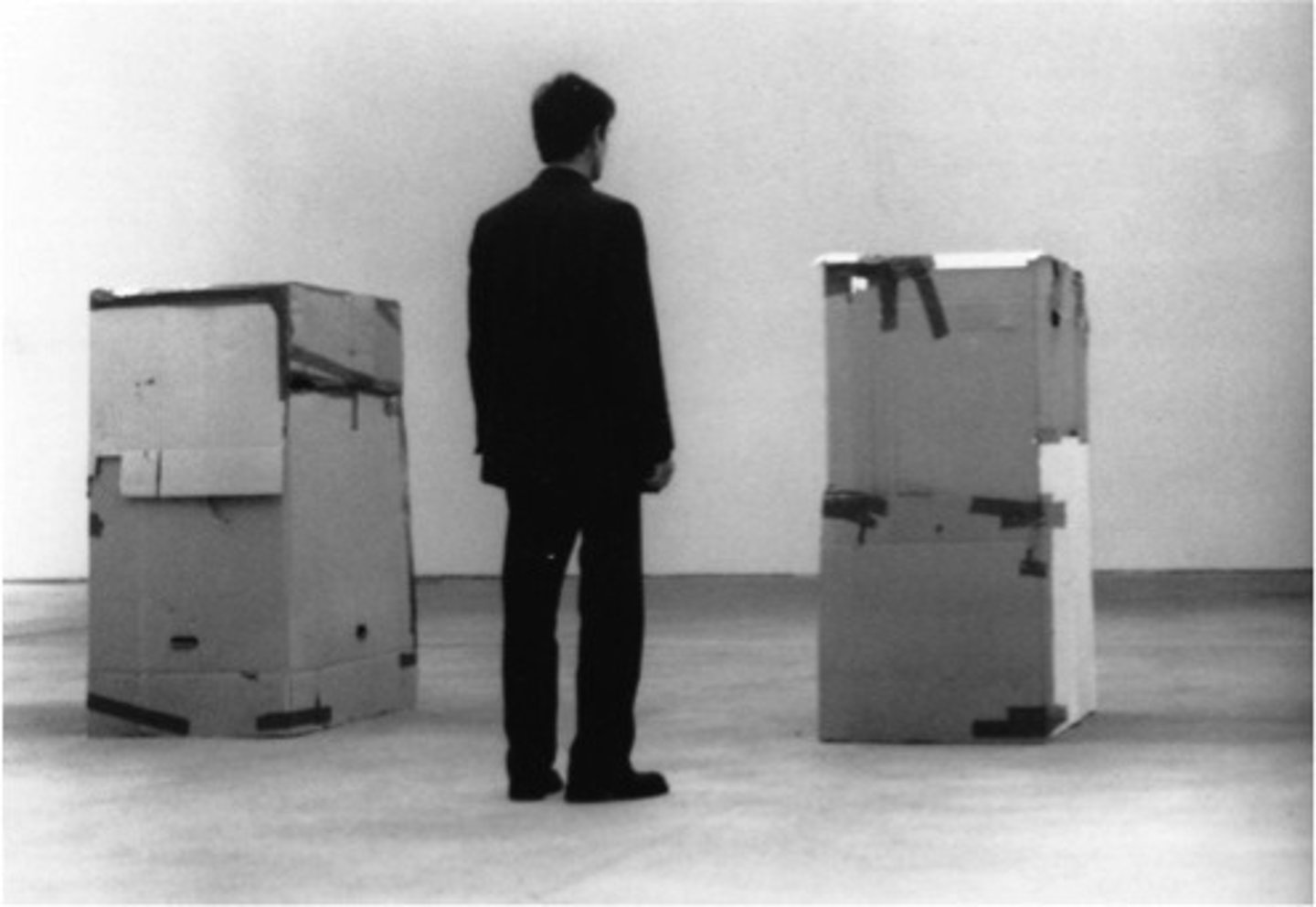
Sierra, Workers who Cannot Be Paid, 2000, Shown in Berlin, hired laborers (political refugees) to earn money by sitting inside small boxes in an art gallery,
Theme: The Body - Sierra is concerned with perpetual unemployment of the worker who is also a refugee, and the art receives its disturbing resonance as the viewer considers the bodily discomfort caused by cramming inside a cardboard box for hours.
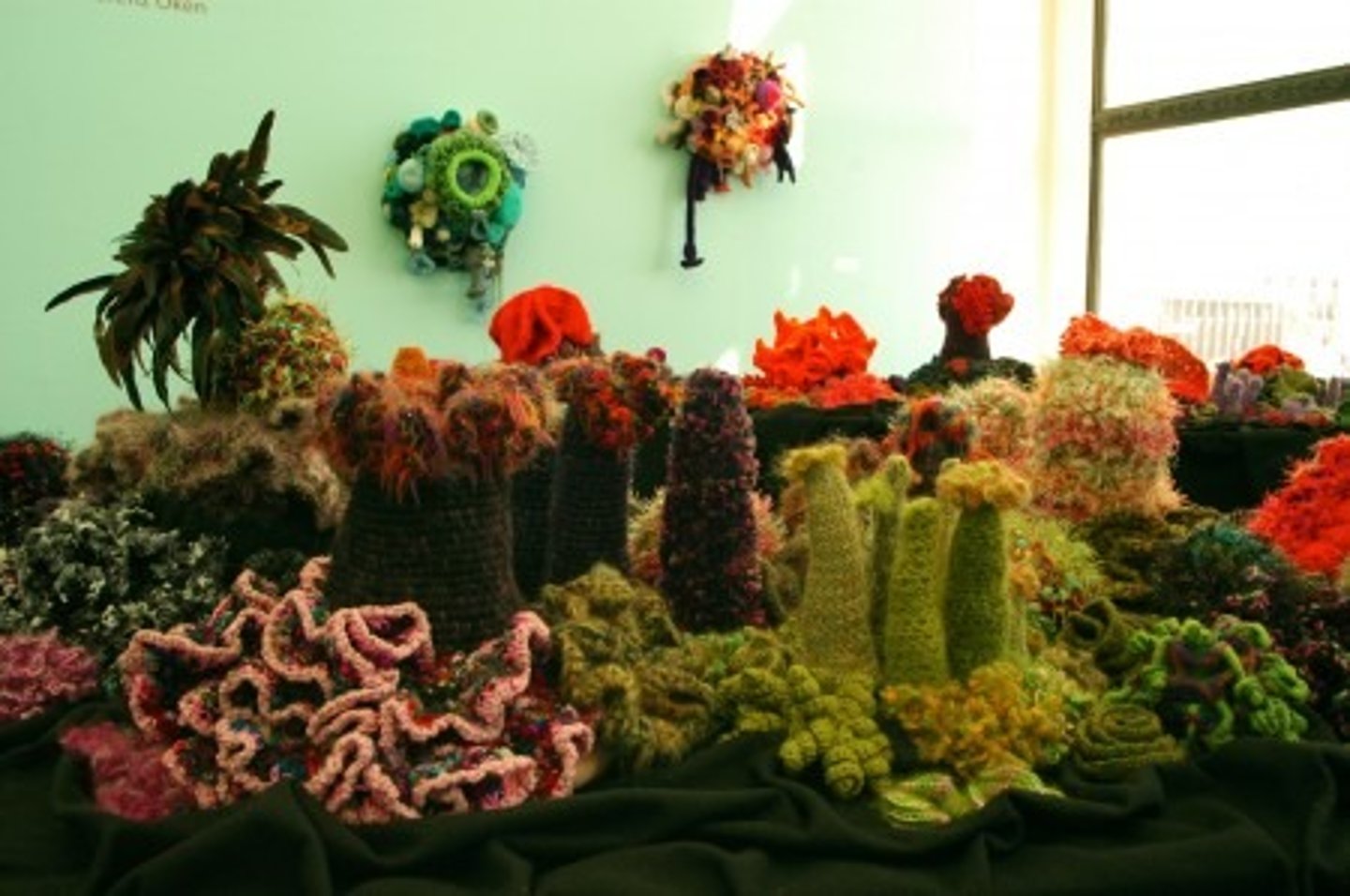
The Institute for Figuring Hyperbolic Crochet, Coral Reef, 2005
Theme: Science - The discovery of a mathematician is used to create three-dimensional models of hyperbolic geometry. Using an algorithmic process, three-dimensional models of coral reefs are generated using instructions for crochet patterns that are arranged together by crocheters for many subreefs.
Leonard, Strange Fruit, 1992-97. Orange, banana, grapefruit, lemon skins, thread, button, needles, zippers, wax, sinew, strings, snaps, hooks.
Theme: The Body - Fruit represents her friend's sexual orientation, the outcry against the lynching of black people, the shriveled skins represent the body's decay, address the viewer as someone with a conscience who can act against the governments that allow people to die of AIDS and is understanding of their body (as in Still Life paintings) as a vessel that must succumb to mortality.
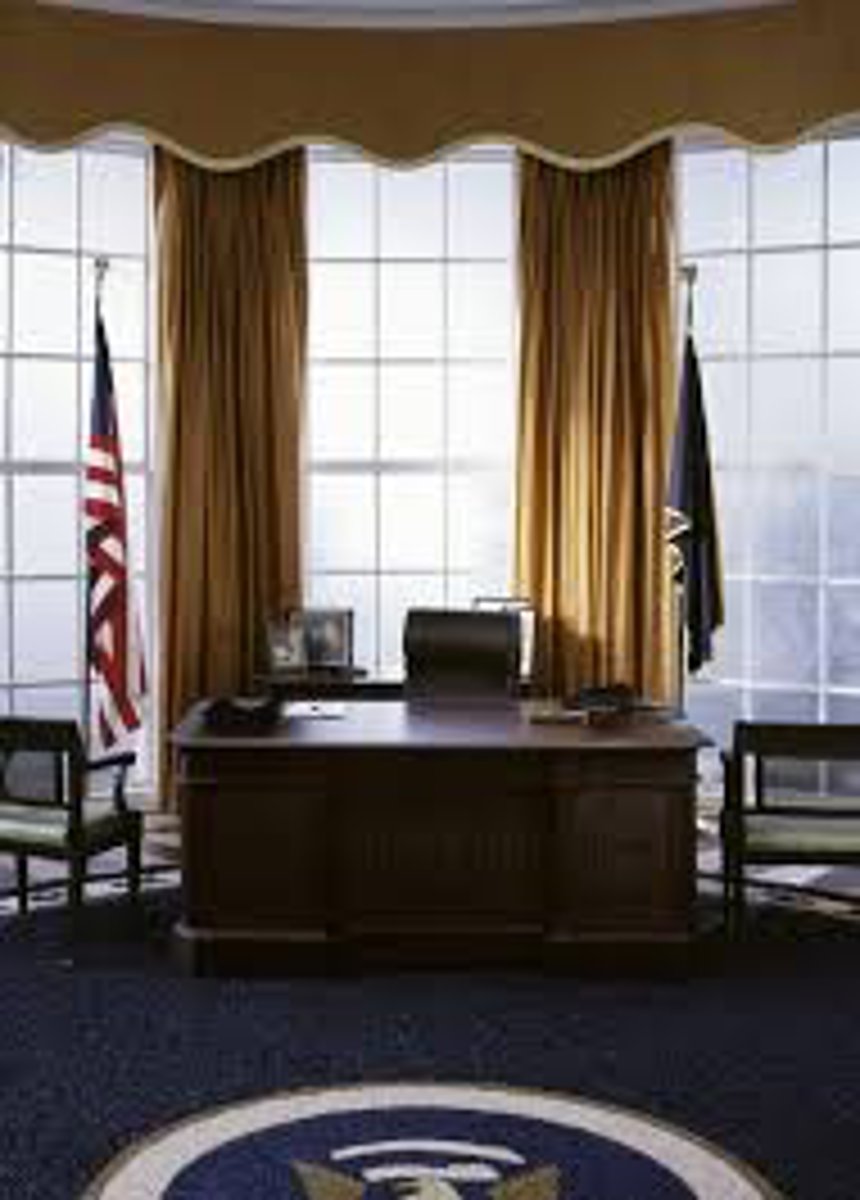
Demand, “Presidency 1,” 2008
Theme: Place
Berwick, “may-por-é” 1996
Theme: Language