Missouri Road Signs
 Call Kai
 Learn
Learn Practice Test
 Spaced Repetition
 Match
Match Flashcards
1/44

There's no tags or description
Looks like no tags are added yet.
Name | Mastery | Learn | Test | Matching | Spaced | Call with Kai | Chat |
|---|
No analytics yet
Send a link to your students to track their progress
45 Terms

Stop Ahead
There is a stop sign ahead on the road you are on. Be prepared to stop.

Pedestrian Crossing
Yield to pedestrians walking in the crosswalk. Slow down.

Signal Ahead
There is a traffic light signal ahead on the road you are on. Be prepared to stop.
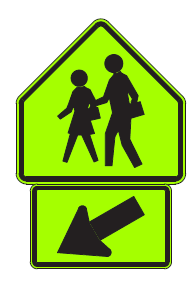
School Crossing
Slow down. Watch for children crossing the road. Note: This sign is being transitioned to yellow green. This transition will take effect within the next ten years.

Exit Speed Advisory
The highway exit ramp has a speed advisory.

Added Lane
Traffic from another road will be entering the road. No merging is necessary because a lane has been added.
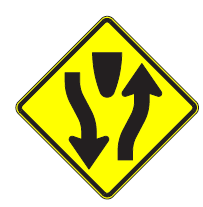
Begin Divided Roadway
The road will soon become two-way traffic divided by a median or barrier.

Merge
Traffic from another road will be entering the road. Be prepared for vehicles to move into your lane.
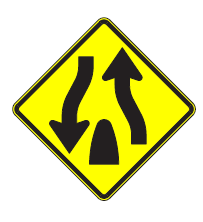
End Divided Roadway
Two-way traffic will no longer be divided by a median or barrier.

Lane Ends/Merge Left
Two lanes of traffic will soon become one lane of traffic. If you are in the right lane you must merge left, yielding to traffic driving in the left lane.

Curve
A curve sign is used to warn of a curve where the recommended speed is less than the posted speed limit for the highway.

Reverse Turn
A reverse turn sign is used to warn of two turns in opposite directions. The second turn may be sharper than the first. Recommended maximum speed is 30mph or less.

Turn
A turn sign is used to warn of a sharp turn or turn where the recommended maximum speed is 30 mph or less.

Speed Advisory
Curve and turn signs have an advisory speed plate that shows the recommended speed for the curve or turn. Although you may feel comfortable driving at a higher speed in fair weather, you should never do so in rain, snow or icy conditions.

Large Arrow
May be seen on the outside of a turn. Slow down for sharp change of direction of travel.
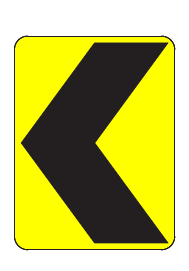
Chevron
May be used at curves and turns to add extra emphasis to slow down.
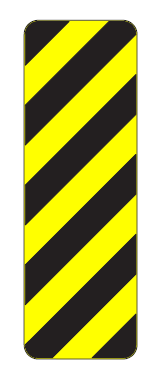
Object Marker
Are used to notify drivers of objects in the roadway or very close to the edge of the roadway. This sign emphasizes the need to not stray outside of the marked travel lane.

Slow Moving Vehicle
A reflective orange triangle on the rear of a vehicle means it is traveling less than 25 mph. You may see this sign on construction equipment or farm vehicles.
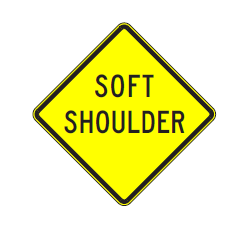
Soft Shoulder
The shoulder on the side of the road ahead is soft. Do not drive off the pavement.

Bicycle - Share the Road
Watch for bicycle riders traveling in the same lane as vehicular traffic.
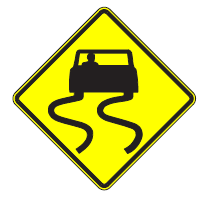
Slippery When Wet
The road ahead becomes unusually slippery in wet weather. Drive carefully in these conditions.

Side Road Railroad Crossing
A warning of a railway crossing very close to the intersection. Use caution when crossing tracks.

Side Road Ahead
Another road enters the road from the direction shown on the sign.

Roundabout Ahead
A roundabout intersection is ahead. Slow down as required by the speed restriction sign and follow the road rules for roundabouts.

Intersection
Another road crosses the road. Watch carefully for traffic crossing your path.
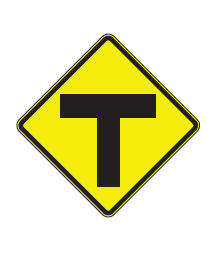
T Intersection Ahead
The road you are traveling does not continue. You must turn either right or left.

No Left Turn

No Right Turn

No U-Turn
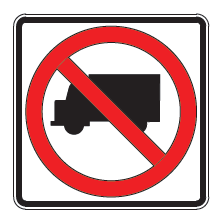
No Trucks

No Bikes

Stop
A stop sign is red with white letters and has eight sides. When you see a stop sign, you must come to a full stop. You must wait until crossing vehicles and pedestrians have cleared the intersection. You must stop at the stop line if one is present even if it is located past the stop sign. If there is no stop line, pull up and stop near the edge of the intersection, look both ways, and then proceed when it is safe.

Yield
A yield sign is triangular. It is red and white with red letters. It means you must slow down and yield the right-of-way to traffic in the intersection you are crossing or roadway you are entering.

Wrong Way
You made a wrong turn and have entered a lane of oncoming traffic. As quickly and safely as possible, pull off the road, turn around and go back.

Do Not Enter
When you see this sign at roadway openings, do not enter this road.

One Way
Traffic on some roadways and ramps is allowed in one direction only.
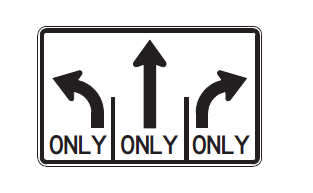
Lane Control
These signs use an arrow symbol to tell you which direction you can go from each lane. The signs are along the road or hanging over the road.

Speed Limit
Speed limit signs indicate the maximum speed allowed by law, and do not mean that all parts of the road can be safely driven at those speeds under all conditions. The speed limit is the maximum allowable speed in ideal conditions. Adjust your speed for hills, curves, slippery roadways, limited sight distance, pedestrians, bicyclists, and slow-moving vehicles. These conditions may make the posted speed limit unsafe. By law, when conditions demand it, you must slow down. Interstate highways also have minimum speed limits. If this minimum speed is too fast for you, then you should use another route. You may not drive slower than 40 mph on interstate highways under normal roadway conditions.

Keep Right
Some roadway locations require traffic to pass only to the right side of a feature or obstruction.

Railroad Crossing
The round advance warning sign tells you that you are nearing a railroad crossing.
A white, X-shaped sign or “crossbuck” is located at the railroad crossing. This sign has the same meaning as a “yield” sign; therefore, you must yield to trains at crossings.
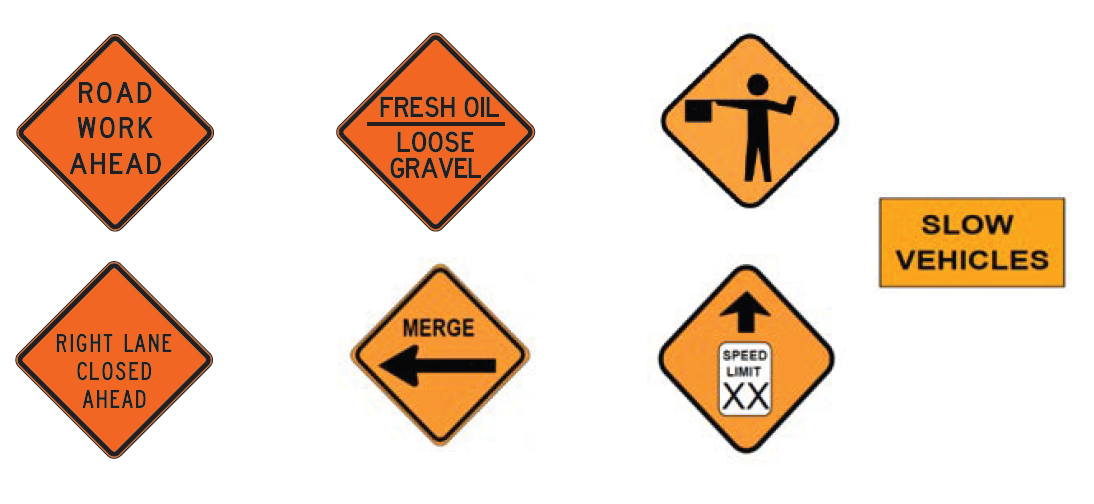
Work Zone Signs
Work zone signs are fluorescent orange and indicate some type of work is being performed on or alongside the roadway. Obey the work zone signs and be extremely careful when you see these signs. There may be other traffic control devices or flag persons to help direct you safely through the work zone.
If you are caught speeding or passing in a construction zone or work zone, you will be fined.
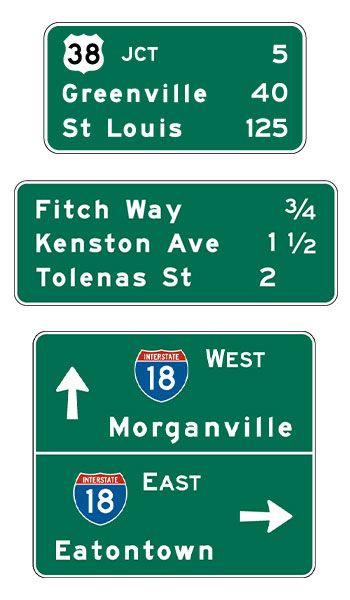
Guide Signs
These signs are square or rectangular, and are green or brown with white lettering. They show direction and distance to various locations such as cities, airports, and state lines, or to special areas such as national parks, historical areas, and museums.

Service Signs
These signs are square or rectangular, and are blue with white letters or symbols. They show the location of various services, such as rest areas and hospitals.

Route Signs
The shape of route signs indicates the type of roadway: interstate, United States, state, or county.

Emergency Reference Markers
Emergency reference markers are mile markers placed along the outside shoulder to mark the edge of the roadway and convey information to drivers about their location on the interstate for navigation and emergency situations. The reference markers are located every two-tenths of a mile, so motorists will always be in sight of a sign. They tell the direction of travel and route number.