Mechanisms for Test 3 (Organic Chemistry)
 Call Kai
 Learn
Learn Practice Test
 Spaced Repetition
 Match
Match Flashcards
 Knowt Play
1/4

There's no tags or description
Looks like no tags are added yet.
Name | Mastery | Learn | Test | Matching | Spaced | Call with Kai | Chat |
|---|
No analytics yet
Send a link to your students to track their progress
5 Terms
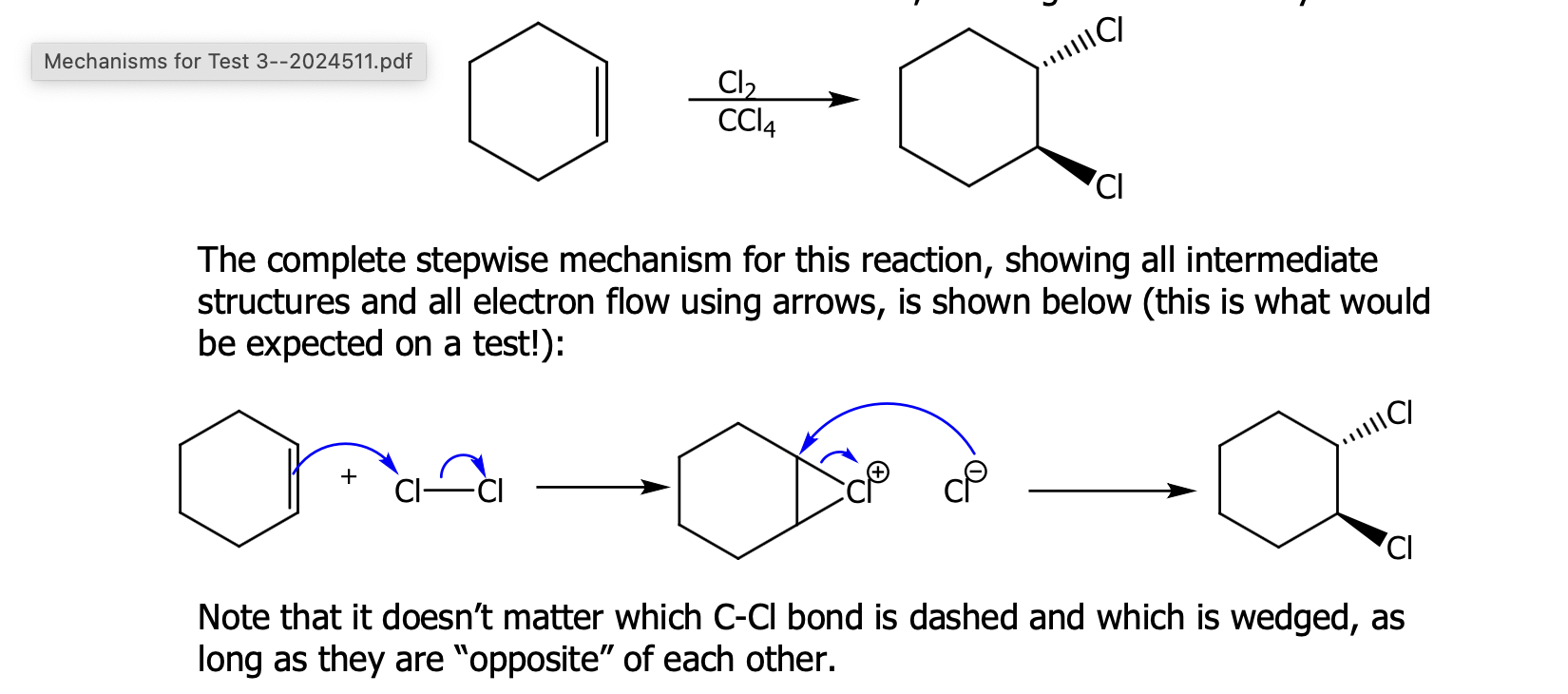
Halogenation
Example: When cyclohexene reacts with chlorine in carbon tetrachloride the
trans-dichloride is formed.
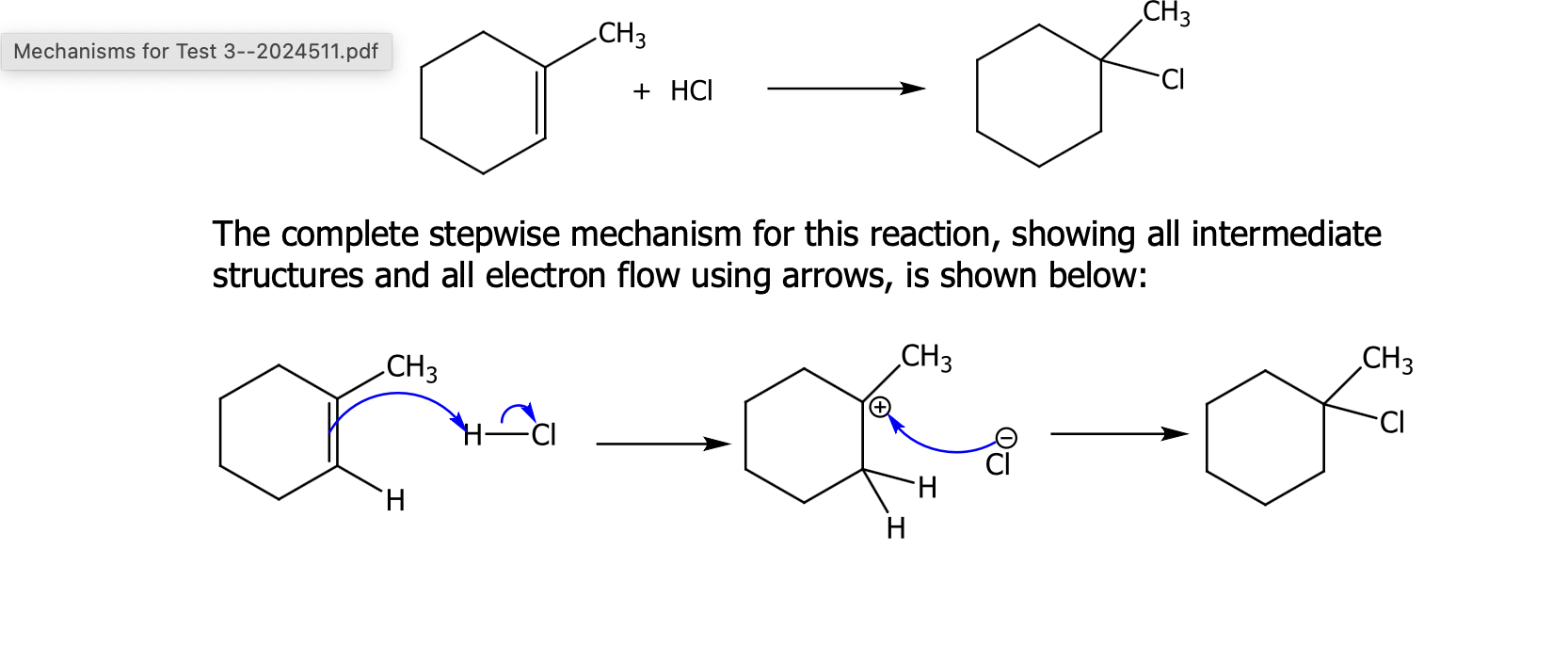
Hydrohalogenation
Example: When methylcyclohexene reacts with HCl, 1-chloro-1-methylcyclohexane
is formed
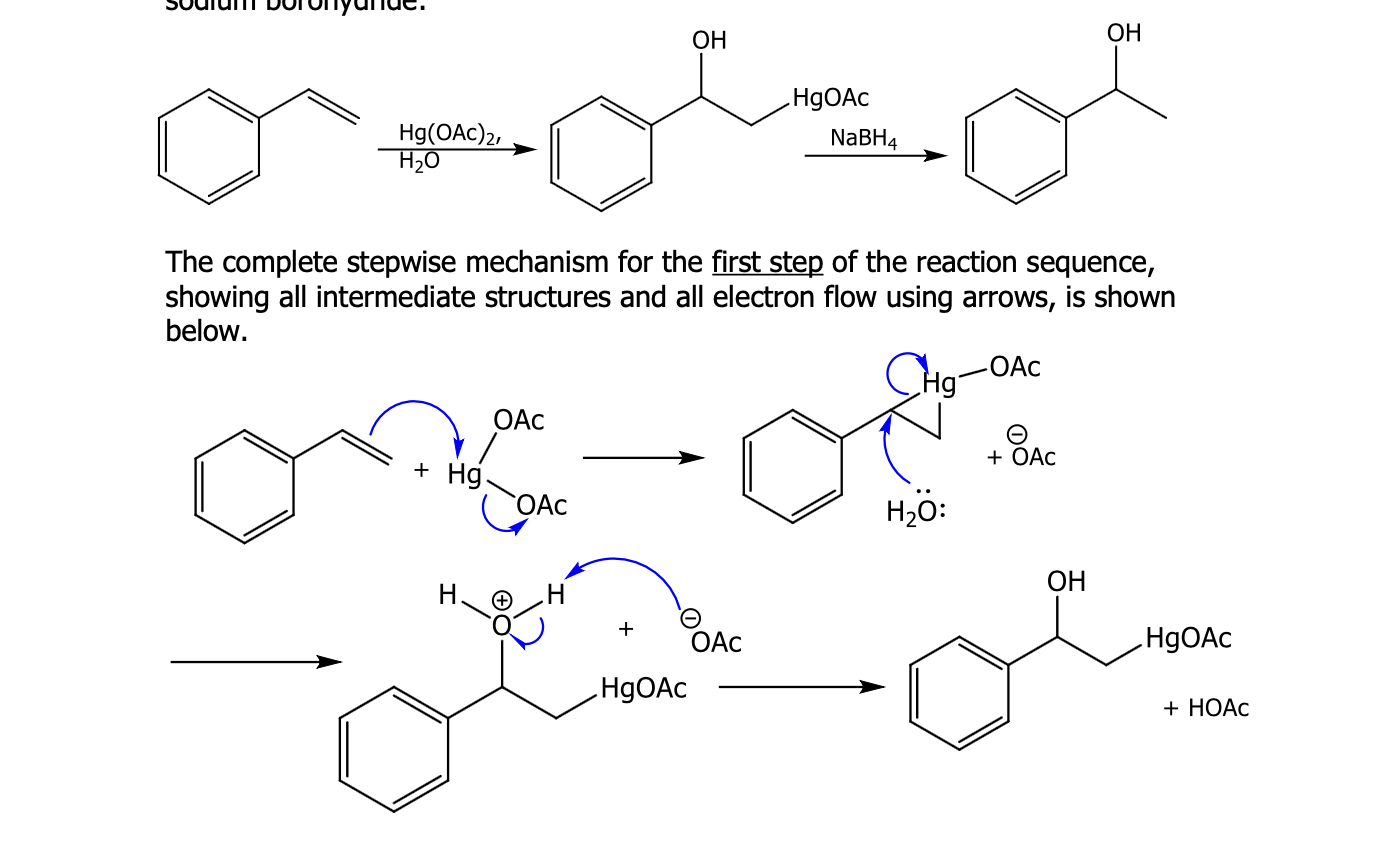
Oxymercuration - Demercuration
Example: The reaction sequence below shows the hydration of an alkene
(including the regiochemistry) using mercuric acetate and water, followed by
sodium borohydride.
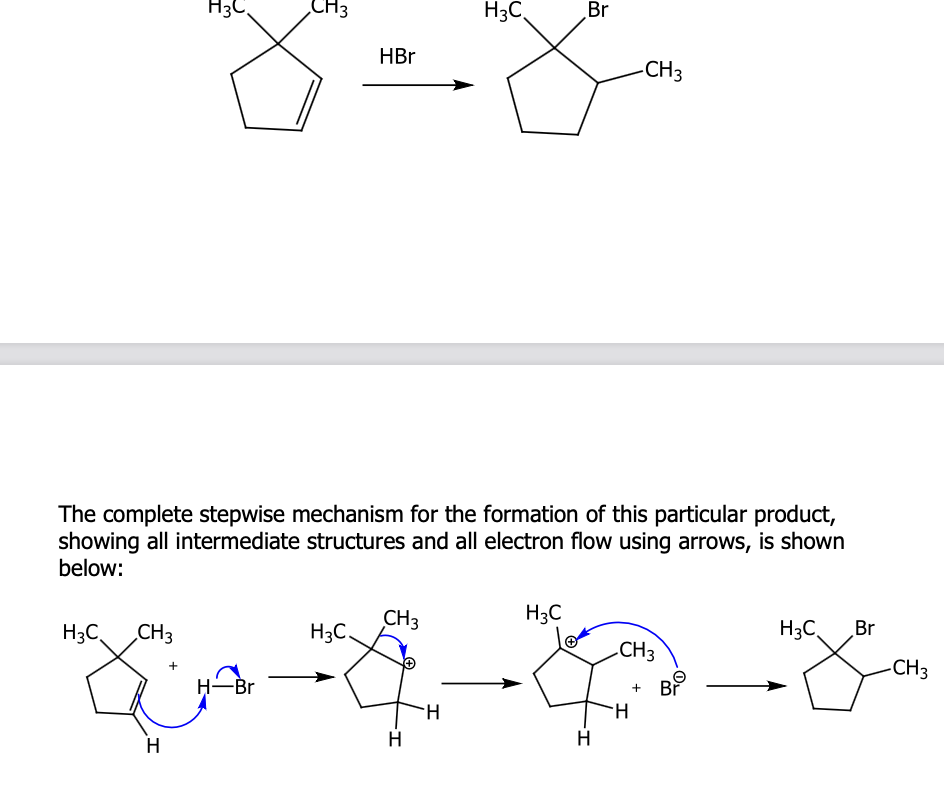
Hydrohalogenation with 1,2 -alkyl shift
Example: The reaction for the hydrobromination of 3,3 dimethylcyclopentane is shown below. While there are two possible products, only the major product — which is the result of a carbocation rearrangement (1,2 methyl shift)
Halodydrin formation
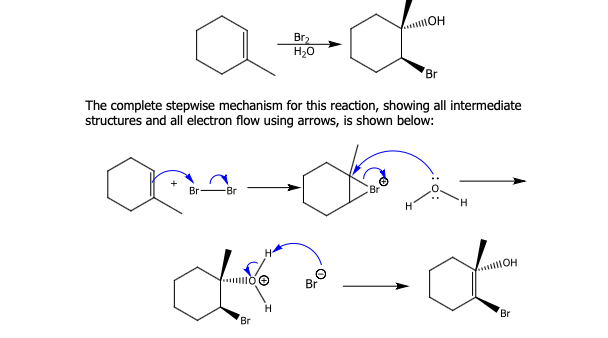
Example: The reaction of bromine in water with methylcyclohexene. It should also be noted that another water molecule could also remove the proton in the third step.