Ch.14 - Social influences
 Studied by 0 people
 Call Kai
 Learn
Learn Practice Test
 Spaced Repetition
 Match
Match Flashcards
 Knowt Play
1/43

There's no tags or description
Looks like no tags are added yet.
Name | Mastery | Learn | Test | Matching | Spaced |
|---|
No study sessions yet.
44 Terms
The family as a system and the biderectional influence and Indigenous Perspectives
Parents and children influence each other reciprocally—families operate as interconnected systems where each member affects all others
Example: Bidirectional Influence
A fussy infant increases parental stress, leading to less responsive caregiving, which may intensify the infant's distress—creating a feedback loop that affects the entire family system
Indigenous Perspectives
Extended family and community play central roles in collectivist child- rearing approaches, with multiple caregivers involve
Parenting Styles Framework
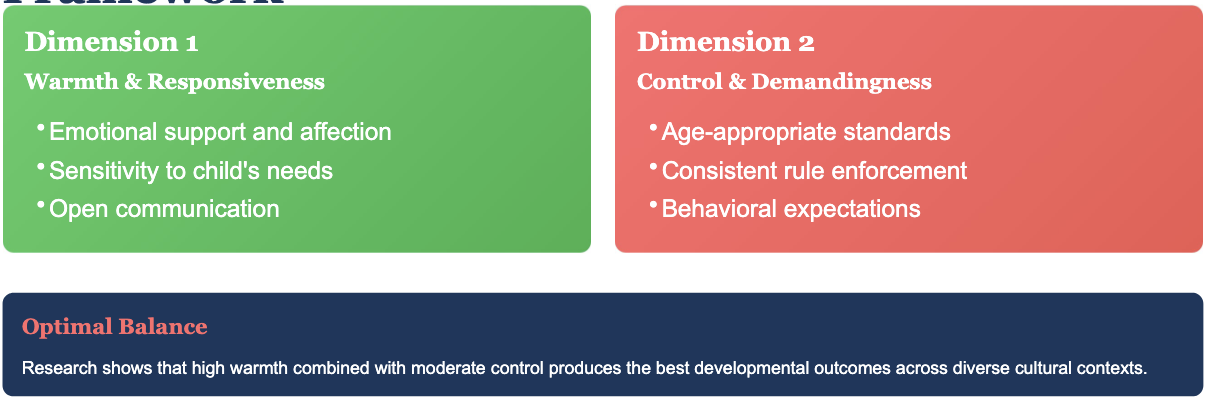
Four Parenting Styles
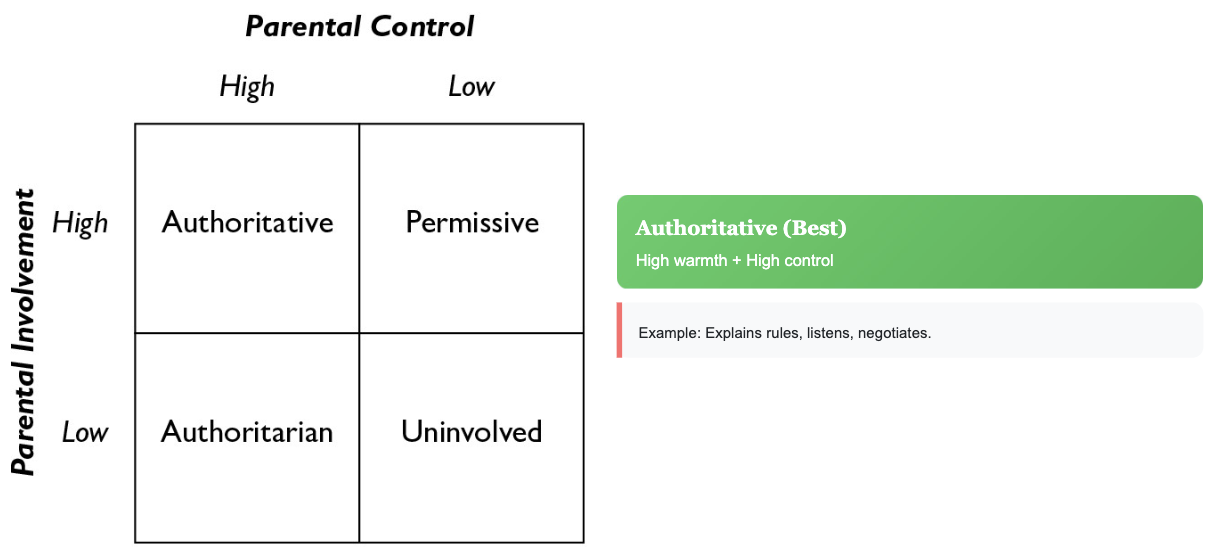
Socioeconomic Impac
Higher-SES parents use more authoritative practices with explanations and
negotiation.
Lower-SES parents may adopt authoritarian approaches due to environmental stressors and safety concerns in high-risk neighborhood
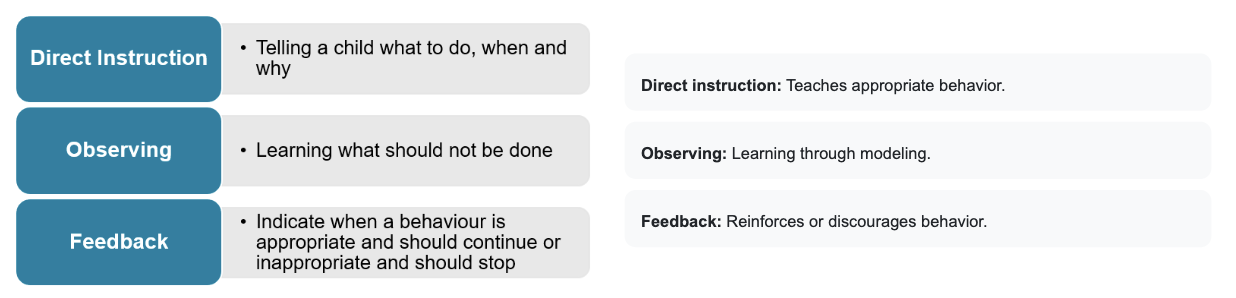
Three Key Parenting Behaviors
Chronic parental conflict harms children through
• Increased stress and anxiety
• Modeling poor conflict resolution
• Disrupted attachment security
• Academic and behavioral problems
Good Co-Parenting Quality involves (3) + what is the positive outcome
Effective co-parenting involves:
coordination,
mutual support,
shared goals for children's development
Positive outcomes: Parents who present a united front and support each other's decisions promote child security and competence
how does Work-related stress affect parenting?
impacts parenting quality. Parents experiencing job stress show reduced warmth and increased harsh discipline
Children's Contributions to Parenting
Age-Related Changes
As children mature, parents adjust control levels and grant more autonomy—
responding to developmental capabilities and growing independence ne
Children's Contributions to Parenting
Temperament Effect
Parents may become less affectionate and more controlling with "difficult" temperament children, creating reciprocal negative patterns
Children's Contributions to Parenting → research evidence and implication?
Bell and Chapman (1986) demonstrated that child behavior influences parenting as much as parenting influences child behavior—a truly reciprocal relationship where causation flows both way
Implication: Interventions should target parent-child interaction patterns, not just parental behavior in isolation
The Impact of Divorce on Children → Short-Term Effect (4)
Academic difficulties and lower grades
Behavioral problems and aggression
Emotional distress and anxiety
Disrupted peer relationship
what are the key factors (3) in the negative effect from divorce?
Parental absence and reduced contact
Economic hardship
Ongoing parental conflict
The Impact of Divorce on Children → Long-Term Effect
While overall risk of problems is higher, the majority of children do not experience long-term negative effects from divorce, especially when conflict is reduced and both parents remain involved
Blended Families → common challenges (4)
Establishing new family roles
Loyalty conflicts for children
Stepparent-stepchild relationships
Managing different parenting style
Blended Families → success factors (4)
Equal treatment of all children
Gradual relationship building
Clear communication about expectations
Strong couple relationship
Blended Families → critical issue
Preferential treatment of biological children over stepchildren almost always leads to family conflict and unhappiness. Successful blended families require effort and commitment to treating all children fairly
The Role of Grandparents → Five Grandparenting Style
Influential: Active guidance and authority
Supportive: Emotional support, occasional help
Authority-oriented: Discipline-focused
Passive: Minimal involvement
Detached: Little to no contact
the role of grandparents for immigrants and indigenous ppl
Immigrants
Grandparents often take on central parenting roles, providing cultural continuity and language transmission
indigenous
First Nations grandmothers are often very closely involved in raising grandchildren and transmitting traditional knowlegde
LGBTQ+ Parents
Research findings: No indication that gay and lesbian parents are less effective than heterosexual parents.
Children develop similarly regardless of parental sexual orientation. Good parenting skills matter most
Adopted Children
Most adopted children develop within the typical range.
Problems most likely when adopted after infancy and when pre-adoption care was poor.
Open adoption increasingly common and beneficial
Indigenous Adoption Consideration
Maintaining cultural connections is critical for adopted Indigenous children. The "Sixties Scoop" demonstrated the harm of removing children from their cultural communities
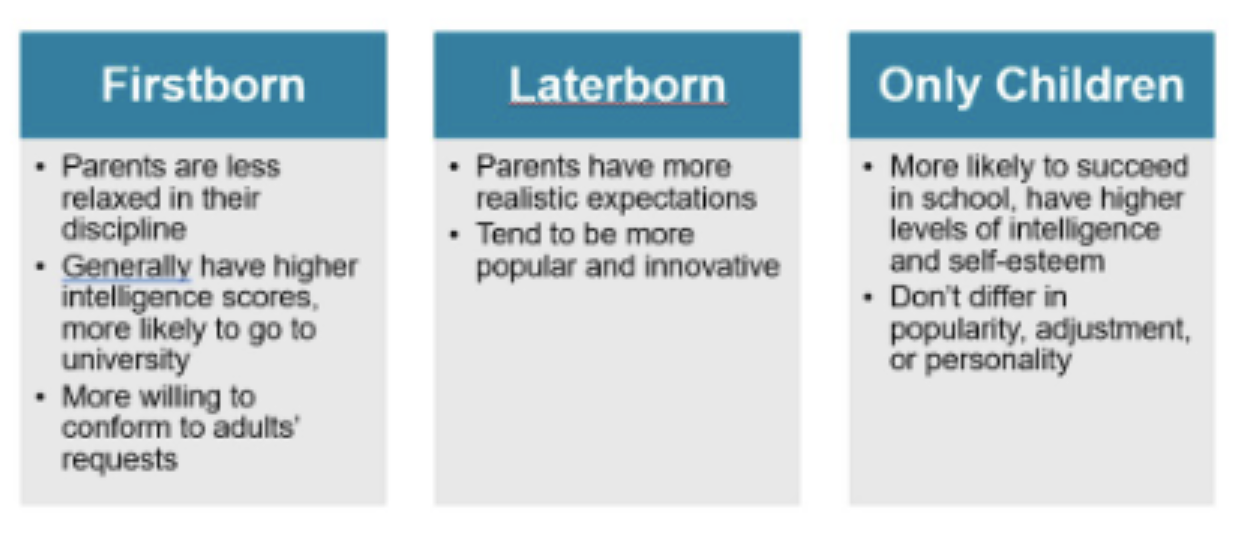
Birth Order and Development
Important Note : These are general trends. Family dynamics and parenting quality matter more than birth order alone
Peer Interaction Development in early childhood (2-5 years)
Parallel play: Playing alongside but not with
Associative play: Similar activities, some interaction
Cooperative play: Coordinated, shared goals
Solitary Play
Solitary play supports cognitive development including divergent thinking and creativity. Not all alone play is problematim
Role of Attachment in peer interaction development
Secure maternal attachment predicts more positive peer relationships. Children with secure attachments show greater social competence and empathy with peers
Friendship Across Development
Early childhood: Based on shared activities and proximity
Middle childhood: Trust and reciprocity emerge
Adolescence: Intimacy, self-disclosure, loyalty
Key shift: From concrete to abstract qualities
Cross-Ethnic Friendship
More common in smaller classes and ethnically diverse schools. Promote positive intergroup attitude
benefits of friendship across development (4)
Higher self-esteem,
better school adjustment,
emotional support during stress
social skills development
potential risks of friendship
Peer pressure toward deviance
Co-rumination (excessive problem discussion)
Exclusion of others
Mutual reinforcement of negative behavior
Co-Rumination
Excessive, repetitive discussion of problems without problem-solving. Common in adolescent girl friendships. Associated with anxiety and depression despite strengthening friendships
Sexual exploration is an important part of romantic relationships in early adolescence. These relationships serve multiple developmental purpose (4):
Identity exploration and self-understanding
Intimacy skills development
Peer status and social acceptance
Sexual identity formation
When Peer Influence Is Strongest (4)
• Youth are younger and more socially anxious
• Peers have higher status in the hierarchy
• Peers are close friends rather than acquaintances
• Standards for appropriate behavior are unclear
Dominance Hierarchie
Most groups have clear status rankings. High-status members have more influence over group norms and activities
Five Peer Status Categories (5)
Popular: Well-liked by many peers
Rejected: Actively disliked by peers
Controversial: Both liked and disliked
Neglected: Neither liked nor disliked; ignored
Average: Moderate acceptance
Consequences of rejection?
Repeated rejection predicts academic problems, delinquency, and mental health issues in adolescence and adulthood
Interventions for popularity and rejection
Teaching social skills (sharing, cooperation, communication) can improve peer acceptance and reduce rejection
Quality Childcare and Development
High-quality childcare has positive effects on cognitive and social-emotional development, especially for children from low-income families.
Quality characteristics include low child-to-staff ratios, educated and trained caregivers, and enriching, age-appropriate activity
After-School Activities
Children and adolescents who participate in structured after-school activities show better adjustment, higher self-esteem, and greater likelihood of pursuing post-secondary education.
Youth who care for themselves after school are at higher risk for behavioral problem
Neighborhood Effects
Children living in economically advantaged and stable neighborhoods tend to perform better academically and have fewer behavioral and emotional problems.
Neighborhood impact is transmitted indirectly through parents, peers, and social institutions like schools and community centers
Effective Schools
Successful schools share key characteristics:
strong academic excellence orientation,
safe and nurturing climate,
active parent involvement,
systematic progress monitoring.
Research shows school quality matters as much as or more than family socioeconomic status.
Teacher Quality Matters
Teacher expertise, warmth, and high expectations are critical factors in student success.
Effective teachers use varied instructional methods, provide frequent constructive feedback, and maintain well-organized classrooms that promote lear
Child Maltreatment
When children are abused or neglected, their social, emotional, and intellectual development is often significantly affected.
Adults who experienced abuse as children show higher rates of mental health problems and may perpetuate the cycle. Contributing factors include cultural attitudes, poverty, parental stress, and child characteristics
Prevention and Intervention (5)
Preventing child maltreatment requires multi-level approaches:
changing societal attitudes toward corporal punishment,
reducing poverty and family stress,
providing comprehensive parenting education,
teaching coping skills,
ensuring accessible social support networks