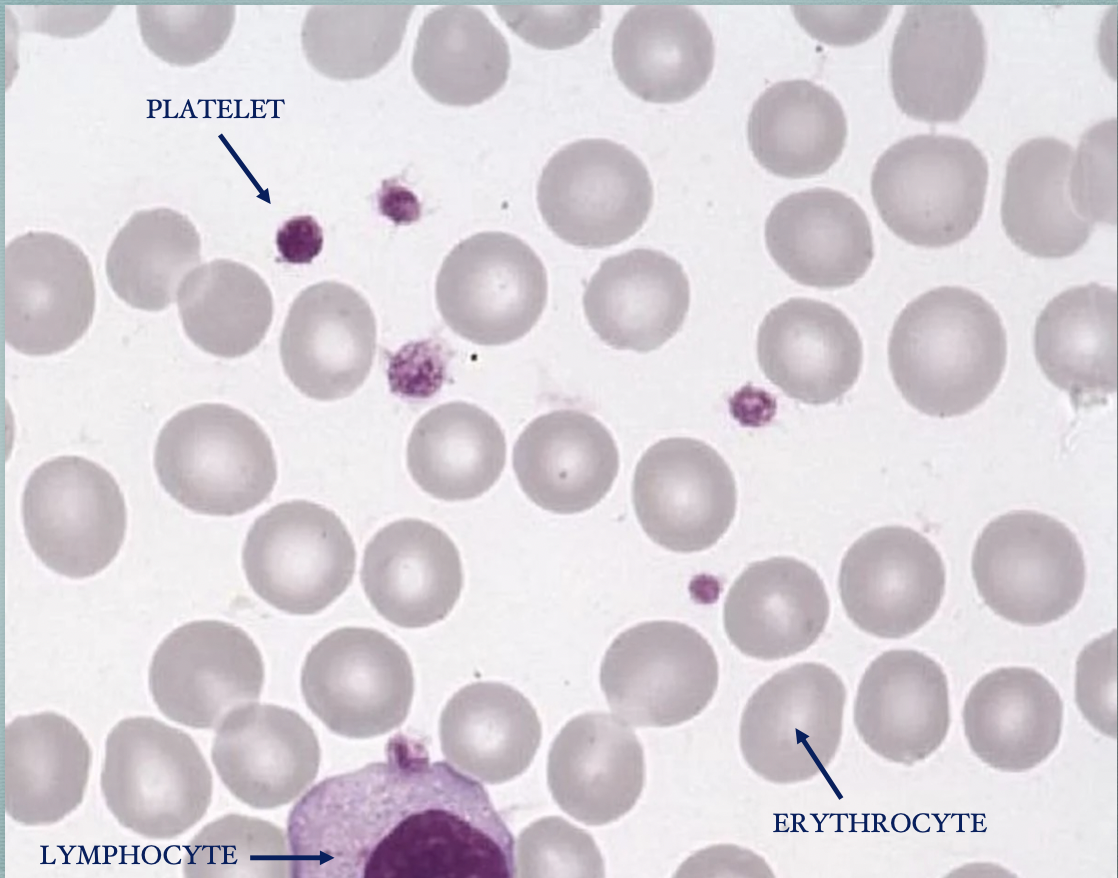
ch 3 - production & formed elements (rbc, wbc, platelets)
 Call Kai
 Learn
Learn Practice Test
 Spaced Repetition
 Match
Match Flashcards
 Knowt Play
1/26

There's no tags or description
Looks like no tags are added yet.
Name | Mastery | Learn | Test | Matching | Spaced | Call with Kai | Chat |
|---|
No analytics yet
Send a link to your students to track their progress
27 Terms
lifespan of erythrocytes, leukocytes, platelets
few hours to a few weeks
component of blood that is replaced the quickest
plasma
hemopoiseis / hematopoiesis
process by which formed elements are replaced
location where formed element production occurs (be specific)
stem cells in red bone marrow - connective tissue located in spongy bone spaces
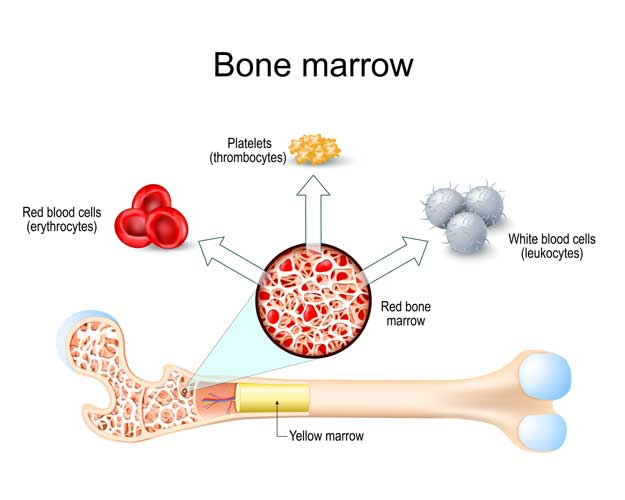
examples of spongy bones
cranial bone
pelvic bone
vertebrae
sternum
proximal epiphyses
describe/draw out the pathway of cell division/specialization for the following:
platelets
erythrocyte
leukocytes
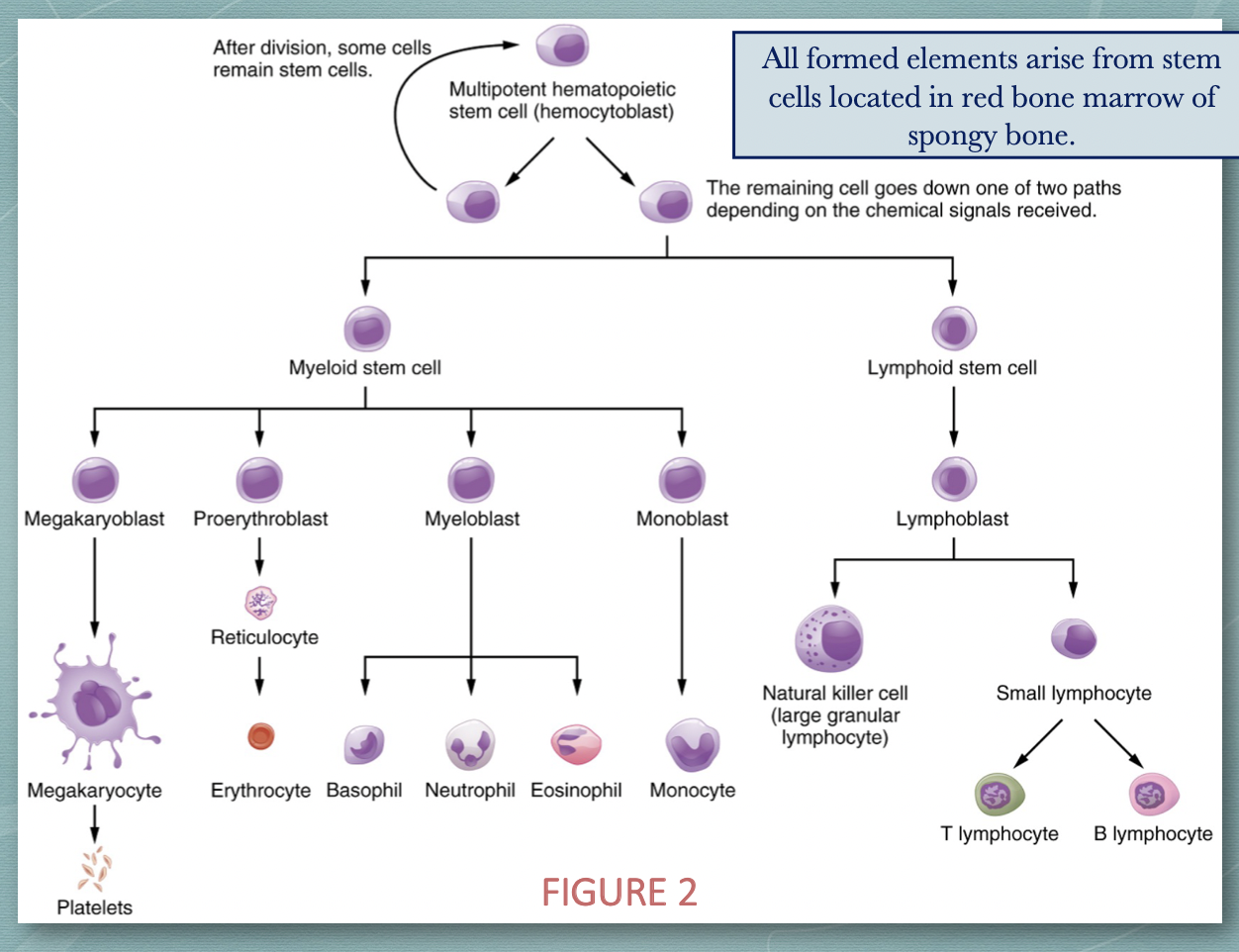
going from a stem cell to a mature cell is initiated by ____ ____
[growth factors]
growth factor producing erythrocytes
erythropoietin (EPO) hormone
erythropoietin (organ secreting it in response to ____, uses)
secreted by kidneys in response to low oxygen levels
uses
performance-enhancing drug
treats anemia (erythrocyte or hemoglobin deficiency)
name of the most common formed element of blood
erythrocytes
erythrocytes:
% of body’s cell makeup
% of hemoglobin that takes up cell’s dry weight
amount present per microliter
lifespan
size (diameter, organelles or no organelles)
main function
25% of all cells in body
95% of cell’s dry weight is from hemoglobin
5.2 million per microliter
120 day lifespan
diameter of 7-8um, no organelles
functions:
picks up oxygen from lungs → transports to body tissues
picks up CO2 produced by tissues → transports to lungs for exhalation
structure of hemoglobin
4 folded protein chains of globin attached together
each globin bound to heme molecule (red pigment mlc)
heme mlc contains an iron cation
reason why hemoglobin has one iron cation on each globin’s heme mlc
iron cation can bind to one oxygen mlc, so hemoglobin binds up to 4 oxygen for transporting from lungs → body tissues
(and one CO2 mlc can bind to each globin chain)
anemia
insufficient numbers of erythrocytes or hemoglobin
polycythemia
overproduction of erythrocytes - blood viscosity increases, therefore increasing blood pressure
leukocytes:
function
amount per uL of blood
size (larger/smaller than erythrocytes, inner cell structure)
lifespan
location once they leave the blood
defense against disease, routinely leaves blood vessels
5,000-10,000 per uL of blood
larger than erythrocytes, full nucleus and organelles
short lifespan
after leaving the blood
some reside in lymphatic tissue, bone marrow, spleen
migrate through tissues (diapedesis)
differential count
blood test measuring percentage of different white blood cell types in one’s body
leukocyte categories & subcategories
granular:
neutrophils
eosinophils
basophils
agranular:
monocytes (matures into macrophages
lympocytes
granular leukocytes (% of total leukocyte count, colour when stained, # of nucleus lobes)
neutrophils
50-70% total leukocyte count
pale purple granules
2-5 nucleus lobes
eosinophils
2-4% of total leukocyte count
red-orange granules
2 nucleus lobes
basophils
less than 1% total leukocyte count
dense dark purple granules
single lobe nucleus
agranular leukocytes (% of total leukocyte count, function)
monocytes:
2-8% of total leukocyte count
leaves blood to become macrophages
phagocytosing debris, pathogens, dead/damaged cells
lympocytes:
20-30% of total leukocyte count
adaptive immune response
types
T cells
B cells
Natural Killer cells
T cells
(leukocyte → agranular type → lymphocyte → T cell)
secrete chemicals communicating/activating cells
destroy pathogen-infected cells
B cells
(leukocyte → agranular type → lymphocyte → B cell)
can become plasma cells producing antibodies
Natural Killer cells
(leukocyte → agranular type → lymphocyte → Natural Killer cell)
part of innate immune response
platelets:
function
location
structure: size
amount per uL of blood
lifespan
limiting blood loss, providing repairing growth factors
fragments of megakaryocytes’ cytoplasms
small, 2-4 uM in diameter
150,000-160,000 per uL of blood
lives only 10 days
thrombocytosis
condition where body produces too many platelets, leading to unwanted blood clots
thrombocytopenia
condition where body does not produce enough platelets → blood does not clot properly
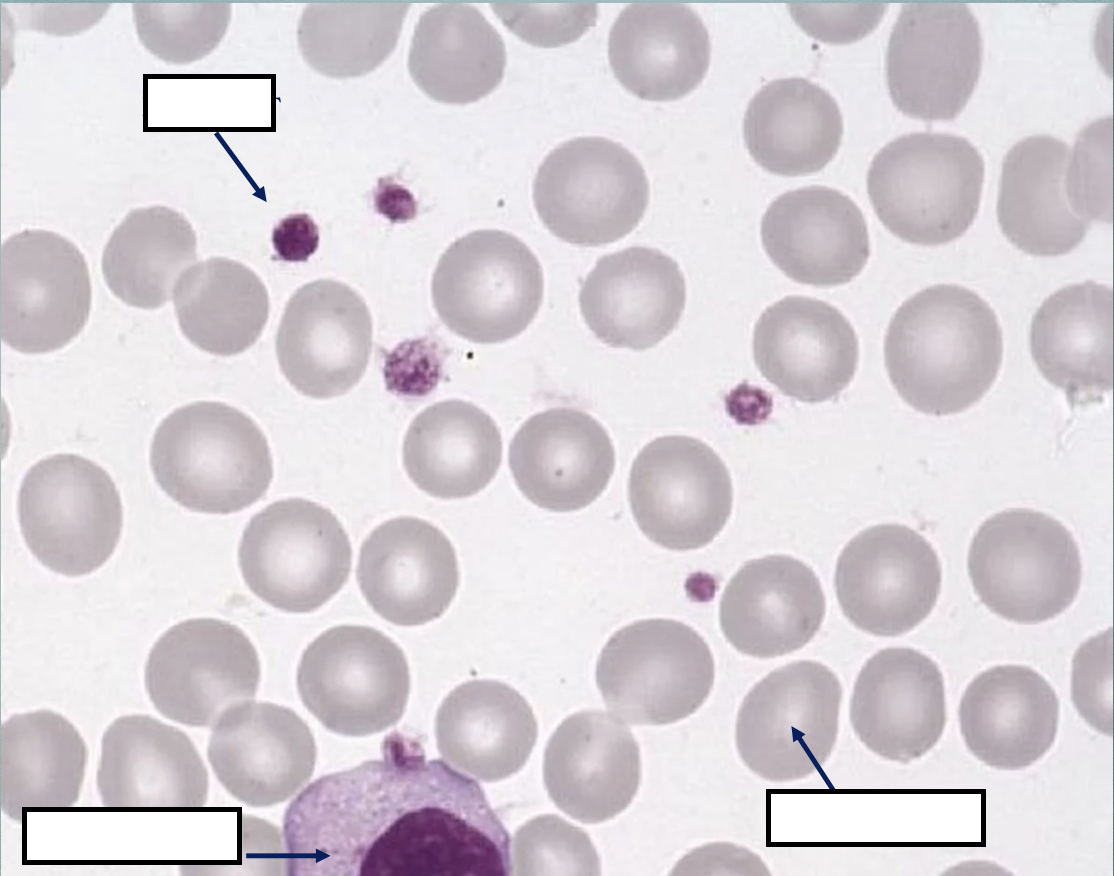
identify the figures in the photo