Principles of Biology: Unit 1, Chapters 1 - 3 (Study Guide)
 Call Kai
 Learn
Learn Practice Test
 Spaced Repetition
 Match
Match Flashcards
 Knowt Play
1/322

There's no tags or description
Looks like no tags are added yet.
Name | Mastery | Learn | Test | Matching | Spaced | Call with Kai | Chat |
|---|
No analytics yet
Send a link to your students to track their progress
323 Terms
Introduction (Ch. 1)
Unifying themes that characterize the biological sciences:
1. Organization
2. Information
3. Energy and Matter
4. Interactions
5. Evolution
Organization
Enables the study of life at different levels
- Small to large
- New Properties emerge

Levels of Biological Organization
1. Biosphere
2. Ecosystems
3. Communities
4. Populations
5. Organisms
6. Organs and Organ Systems
7. Tissues
8. Cells
9. Organelles
10. Molecules
Biosphere
All life on Earth and all places where life exists
NOTE:
- Most regions of land
- Most bodies of water
- The atmosphere to an altitude of several kilometers
- Sediments far below the ocean floor

Ecosystem
Consists of all living things in a particular area, along with all the nonliving components of the environment with which life interacts.
NOTE:
- Example: A meadow, tropical forest, grassland, desert, and coral reefs.
- Example: Soil, water, atmospheric gases, and light.
Communities
The array of organisms inhabiting a particular ecosystem
NOTE:
- Example: Many kinds of plants, various animals, mushrooms, and other fungi, and enormous numbers of diverse microorganisms, such as bacteria.
- Each of these forms of life belong to a species
Species
a group whose members can only reproduce with other members of the group.

Reductionism
reduces complex systems to simpler components that are more manageable to study.
NOTE:
- Incomplete view of life
Emergent properties
New properties that arise due to the arrangement and interactions of parts as complexity increases.
NOTE:
- Complements reductionism
- Example: Although photosynthesis occurs in an intact chloroplast, it will not take place if chlorophyll and other chloroplast molecules are simply mixed in a test tube.
- Isolated components of living systems require specific organisms.
- Example: A box of bicycle parts won't transport you anywhere, but if they are arranged in a certain way, you can pedal to your chosen destination.
Systems biology
Exploration of the network of interactions that underlie the emergent novel properties of a system.
NOTE:
- Due to arrangement & interactions → complexity increases
- Example A single leaf cell can be considered a system, as can a frog, an ant colony, or a desert ecosystem.
- Enable us to pose new kinds of questions.
- Used to study life at all levels.
Correlations of structure and function give us clues about
what a biological structure does and how it works.
NOTE:
- There is often a correlation between structure and function
- Example: The hummingbird's anatomy allows its wings to rotate at the shoulder, so hummingbirds have the ability, unique among birds, to fly backward or hover in place. While hovering, the birds can extend their long slender beaks into flowers and feed on nectar.

The cell is
the smallest unit of organization that can perform all activities required for life
NOTE:
- Actions of an organism are based on the activities of its cells
- Example: The movement of your eyes as you read this sentence results from the activities of muscle and nerve cells.
Two main forms of cells:
1. Prokaryotic
2. Eukaryotic
Prokaryotic
Lacks a nucleus and membrane-enclosed organelles
NOTE:
- Bacteria and archaea
- Smaller than eukaryotic cells

Eukaryotic
Contains membrane-enclosed organelles and has DNA containing a nucleus.
NOTE:
- Plants and animals
- Large

Populations
Consists of all the individuals of a species living within the bounds of a specific area.
NOTE:
- Example: Meadows include a population of lupines and a population of mule deer.
- A community is therefore the set of populations that inhabit a particular area.

Organisms
Livings things
NOTE:
- Each plant in the meadow is an organism, and so is each animal, fungus, and bacterium

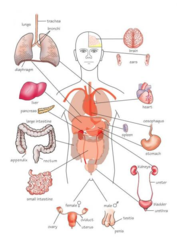
Organs
A body part that is made up of multiple tissues and has specific functions in the body.
NOTE:
- Leaves, stems, and roots are the major organs of plants
- Within an organ each tissue has a distinct arrangement and contributes particular properties to organ function
Cells
Life's fundamental units of structure and function
NOTE:
- Some organisms consists of a single cell.
- Others are multicellular and feature a division of labor among specialized cells.
Tissues
A group of cells that work together, performing a specialized function.
NOTE:
- Example: The honeycomb issue in the interior of the leaf is the main location of photosynthesis, the process that converts light energy to the chemical energy of sugar. The jigsaw puzzle-like "skin" on the surface of the leaf is a tissue called epiderms. The pores through the epidermis allow entry of the gas CO2, a raw material for sugar production.

Organelles
The various functional components present in cells.
NOTE:
- Example: Chloroplasts
Molecules
A chemical structure consisting of two or more units called atoms.
NOTE:
- Example: Chlorophyll is the pigment that makes a leaf green, and it absorbs sun-light during photo-synthesis. Within each chloroplast, millions of chlorophyll molecules are organized into system that convert light energy to chemical energy of food.
Information
- Genetic information → Encoded within nucleotide sequences in DNA
- DNA program cell's production
• Transcribed into mRNA (intermediary)
• Translated into specific proteins = gene expression
• Meiosis and mitosis
- DNA contains 2 long strands
• 4 types of nucleotides: Adenine (A), thymine (T), guanine (G), and cytosine (C)
• Specific sequences determine code
- Genome → entire genetic instructions organisms obtain
• Atual genome sequencing catalogs
• Technology → bioinformatics

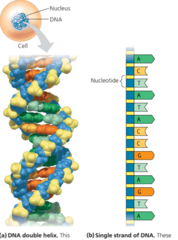
DNA (deoxyribnucleic acid)
Chromosomes contain genetic material that organisms inherit from their parents
NOTE:
- Provides directions for own replication
- Directs synthesis of mRNA → controls protein synthesis aka gene expression
- Each chromomere contains one DNA molecule
- Made up of two long chains arranged in a double helix
- The chain is made up of Adenine (A), thymine (T), guanine (G), and cytosine (C) (AT-AT)
- Molecules are copied and passed each generation
- It is not directly involved in running the operations of the cell
- Proteins are required to implement genetic programs
- The molecular hardware of the cell consists mostly of proteins
- DNA → RNA → protein
- Have two strands that form a double helix
- They are very long and include many genes
- Adenine (A) - Thymine (T); Guanine (G) = Cytosine (C)
- AT-AT
- Consists of four unique nucleotide sequences
- Nucleotides (monomer): Sugar + phosphate + nitrogenous base
- Double helix
- Held together by hydrogen bnods

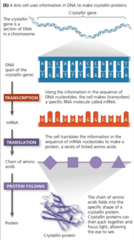
Genetic Expression:
(DNA → RNA → Protein)
1. A gene along a DNA molecule can direct synthesis of messenger RNA
2. The mRNA molecule interacts with the cell's protein-synthesizing machinery to direct production of a polypeptide
3. The polypeptide folds into all or part of a protein

Genes
A section of the DNA of the chromosome.
NOTE:
- Transmitted from parents to offspring
- Units of inheritance
- They encode the information necessary to build all of the molecules synthesized within a cell
- Establish a cell's identity and function
- Specific sequences of Adenine (A), thymine (T), guanine (G), and cytosine (C) encode the information.
- Provides a blueprint for making protein
-
Gene expression
Information in gene directs the production of a cellular product
NOTE:
- Protein-encoded genes control protein production using mRNA
- Nucleotides are transcribed into mRNA and then into a chain of amino acids
- Once completed they form protein
Genome
"Library" of genetic instructions that an organism inherits
NOTE:
- Genome sequence entire sequence of nucleotides for a representative member of a species
- A human cell has two similar sets of chromosomes
Genomics
Study whole sets of genes in one or more species
Proteomics
The study of sets of proteins and their properties
Proteome
The entire set of proteins expressed by a given cell, tissue, or organism
Three Important Research Developments
1. "High-throughput" technology (tools that can analyze many biological samples very rapidly)
2. Bioinformatic
3. Formation of interdisciplinary research teams
Bioinformatic
Use of computational tools to store, organize, and analyze the huge volume of data that results from high-throughput methods
NOTE:
- Formation of interdisciplinary research teams
Energy and Matter
The input of energy and the transformation of energy from one form to another makes life possible
NOTE:
- Producers convert energy from sunlight to chemical
- Chemicals will cycle between organism and the environment
- Consumers obtain energy feeding on others
- Chemical energy in food molecules is passed from plants and other photosynthetic organisms (producers) to consumers.
- Consumer is an organism that obtains energy by feeding on other organism or their remains.
- Energy flow through an ecosystem in one direction,
- Energy enters as light and exits as heat.
- Chemicals cycle within an ecosystem, where they are used and then recycled.
- Cellular activities require energy

Interactions
- Every organism interacts with other organisms
- Example: A flowering plant interacts with soil microorganisms associated with its roots, insects that pollinate its flowers, and animals that eat its leaves and petals.
- Interactions can be mutually beneficial or harmful.
- Example: Fish eat small parasites on a turtle (beneficial / mutualism)
- Example: A lion kills and eats a zebra (harmful)
- Example: Two plants compete for a soil resource that is in short supply (harmful to both)
- Organisms interact continuously with physical factors
- Example: Leaves of a flowering plant absorb light from the sun, take in carbon dioxide from the air, and release oxygen into the air.
- The environment is affected by the organisms living there.
- Example: A plant takes up water and minerals from the soil through its roots, and its roots break up rocks, thereby contributing to the formation of soil.

Competition & Predation (+,-)
Two major types of interactions among organisms
Example: Involves, wolves hunting moose, owls hunting mice, or shrews hunting worms and insects.
Commensalism (+,0)
interactions in which one species benefits at no cost to the other
Example: Tree frogs use plants as protection. Golden jackals, once they have been expelled from a pack, will trail a tiger to feed on the remains of its kills. Goby fish live on other sea animals, changing color to blend in with the host, thus gaining protection from predators.
Parasitism (+,-)
A relationship in which one organism lives on or in a host and harms it.
NOTE:
- The helminths (worms) in the intestines of the host, lice (Pediculus humanus capitis) in human head, Plasmodium species transmitted by anopheline mosquito and causing malaria in humans.
Mutualism (+,+)
A relationship between two species in which both species benefit
Example: When clown fish reside within sea anemones. The sea anemone provides it protection from preditors, and in return the clownfish helps keep the sea anemone free from parasites.
Amensalism (-,+)
a relationship in which one organism is harmed and the other is unaffected
Example: When cattle trample on grass, the grass is crushed. However, the cattle do not benefit from this action nor is harmed in the process.
Climate change
A directional change to the global climate that lasts for three decades or more
NOTE:
- Caused by human interaction with the environment leading to dire consequences
- Global warming
- Shifts in the wind and precipitation patterns
- Extreme weather events
- Extinction is the permanent loss of a species
Evolution
A process of biological change in which species accumulate differences from their ancestors as they adapt to different environments over time
NOTE:
- Process of biological change
- Species accumulate differences from their ancestors as they adapt to different over time
- Heritable changes occur after two species diverge from their common ancestor (diversity)
- Two species share certain traits (unity)

Three Kingdoms/Domains of Life:
1. Bacteria
2. Archaea
3. Eukarya
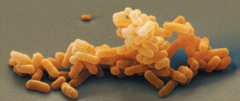
Bacteria
The most diverse and widespread prokaryotes and are classified into multiple kingdoms.
NOTE:
- Prokaryotes
- Consists of single-celled, prokaryotic organisms
- Grouped in domain Eukarya
Archaea
Includes multiple kingdoms.
NOTE:
- Prokaryotes
- Consists of single-celled, prokaryotic organisms
-Some live in Earth's extreme environments.
- Grouped in domain Eukarya

Eukarya
Organisms with eukaryotic cells
NOTE:
- Three Kingdoms of multicellular eukaryotes:
1. Plantae
2. Fungi
3. Animalia
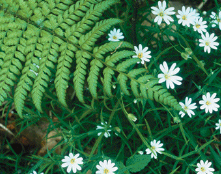
Kingdom Plantae (plants)
Consists of multicellular eukaryotes that carry out photosynthesis, the conversion of light energy to the chemical energy of food.
NOTE:
- Most plant species live on land
- Produce their own sugars and other food molecules by photosynthesis
- Contains eukaryotic cells
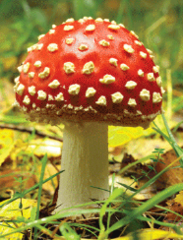
Kingdom Fungi
Characterized in part by the nutritional mode of its members, which absorb nutrients from outside their bodies
NOTE:
- Such as mushrooms
- Absorb dissolved nutrients from their surroundings
- Contains eukaryotic cells
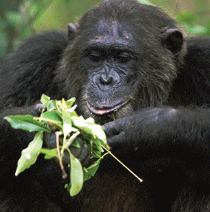
Kingdom Animalia
Consists of multicellular eukaryotes that ingest other organisms.
NOTE:
- Obtain food by eating and digesting other organisms
- Contains eukaryotic cells
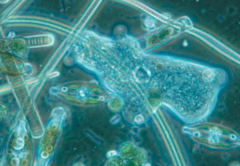
Protists
Unicellular eukaryotes and some relatively simple multicellular relatives.
NOTE:
- Most numerous and diverse eukaryote
Charles Darwin's Origin of Species Main Points:
1. Species accumulate differences from their ancestors as they adapt to different environments over time ("descent with modification").
2. "Natural selection" is a primary cause of descent with modifications
Natural Selection
Over many generations, a higher and higher proportion of individuals in a population will have the advantageous traits.
NOTE:
- Occurs when a population is exposed to environmental factors that consistently cause individuals with certain heritable traits to have greater reproductive success than do individuals with other heritable traits
- Life is connected through evolutionary history
- Causes ancestral species to give rise to more descendant species
- One species could gradually radiate into multiple species

Darwin's Three Observations:
1. Individuals in a population vary in their traits
2. A population can produce far more offspring than can survive to produce offspring of their own
3. Species generally are suited to their environment
NOTE:
- Individuals with inherited traits that are better suited to the local environment are more likely to survive and reproduce than less well-suite individuals
Explain how to conduct a scientific inquiry (scientific method): formulating and testing hypotheses, predictions, controlled experiments, independent and dependent variables, inductive and deductive reasoning.
Scientific Method
1. Ask a question
2. State a hypothesis
3. Conduct the experiment
4. Analyze the results
5. Make a conclusion

Gathering/Analyzing Data
Induction:
- Starts with known knowledge to generate a hypothesis
- Generalizations are drawn from a large number of observations
- Specific to General
Deduction:
- Use knowledge to predict/determine what factors may affect your hypothesis
- General - Specific
Observation:
- Run experiment as designed and collect data
- Note down each and every detail
Verification:
- Repeat experiments to prove that they are not by chance or experimental error
- Confirm results
Primary Literature
- A large component of critical thinking is reading, understanding, and evaluating scientific publications
- Primary literature- Scientific paper, report, letter, original research article which contains original findings published for the first time
- Must be in a peer-reviewed scientific journal
- Describes one research project or study
- Includes - introduction, methods, results, discussion/conclusion
- Abstract - overview of article

Secondary Literature
- Utilize primary articles as source material
• Review articles, Systematic reviews, and meta-analyses
• Practice guidelines and expert topic summaries
- Comments on & discusses evidence provided by primary sources
- Written under specific guidelines
• Includes methods sections and abstracts
- Published in peer-reviewed journals

Science
an approach to understanding the natural world
NOTE:
- Developed out of curiosity
The heart of science is
inquiry
Inquiry
the search for information and explanations of natural phenomena.
Elements of science
1. Elements of challenge
2. Adventure
3. Luck
4. Careful planning
5. Reasoning
6. Creativity
7. Patience
8. Persistence to overcome setbacks
Process of inquiry
Making observations, forming logical explanations (hypotheses)
NOTE:
- The process is repetitive
Biology begins with
observation
NOTE:
- Reveals valuable information about the natural world
- Example: A series of detailed observations have shaped our understanding of cell structure.
- Scientist make use of tools (that extended their senses or facilitate careful measurement) and scientific literature (build on the foundation of existing knowledge, focusing their investigations on observations that are original and on the hypotheses that are consistent with the previous finding)
Qualitative data
Descriptions of what is observed
NOTE:
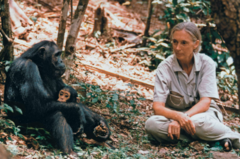
- Example: Jane Goodall spent decades recording her observations of chimpanzee behavior during field research in a Tanzanian jungle. She also documented her observations with photographs and movies.
Quantitative data
Expressed as numerical measurements and often organized into tables or graphs.
NOTE:
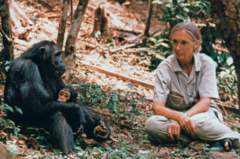
- Example: Goodall gathered and recorded the frequency and duration of specific behaviors for different members of a group of chimpanzees in a variety of situations.
Statistics
Numerical data
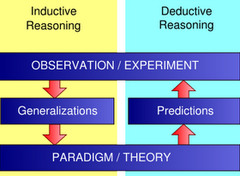
Inductive Reasoning
A type of logic derived from a larger number of specific observations
NOTE:
- Specific / Fact → General
- Small → large
- Occurs through collecting and analyzing observations
- Example: The generalization "All organisms are made of cells" was based on two centuries of microscopic observations made by biologists examining cells in diverse biological specimens.
- Example: It is snowing, most snowstorms come from the north, this snowstorm must be coming from the north
- Example: My lips swell when I eat strawberries, I ate them again and my throat got itchy, itchy throat and swelling lips is a sign of allergy, I must be allergic to strawberries

Deductive reasoning
reasoning in which a conclusion is reached by stating a general principle and then applying that principle to a specific case (The sun rises every morning; therefore, the sun will rise on Tuesday morning)
NOTE:
- Deductive general → specific
- Large → small
- Example: All racing cars go over 100MPH, the dodge charger is a racing car, so it must go over 100MPH
- Example: All birds lay eggs, chickens are birds, chickens must lay eggs
Hypothesis (Plr. Hypotheses)
An explanation, based on observations and assumptions that leads to a testable prediction.
NOTE:
- It is an explanation on trial
- Must lead to predictions that can be tested with additional observations or an experiment
- A rational accounting for a set of observations
- Based on the available data
- Guided by inductive reasoning
Formulating and testing hypotheses
Predictions
Controlled experiments
Experiment
A scientific test, often carried out under controlled conditions
NOTE:
- Example: Your desk lamp is plugged in and turned on but the bulb isn't lit. That's an observation. The question is obvious: Why doesn't the lamp work? Two reasonable hypotheses based on your experience are that (1) the bulb is burnt out or (2) the lamp is broken. Each of these hypotheses leads to predictions you can test with experiments. For example, the burnt-out bulb hypothesis predicts that replacing the bulb will fix the problem. Figuring things out in this way by performing a series of tests is a hypothesis-based approach.
Independent variables
A factor whose value is manipulated or changed during an experiment to reveal possible effects on another factor (the dependent variable).
Dependent variables
A factor whose value is measured in an experiment to see whether it is influenced by changes in another factor (the independent variable).
Inductive reasoning
A type of logic in which generalizations are based on a large number of specific observations.
NOTE:
-
Data: I see fireflies in my backyard every summer.
Hypothesis: This summer, I will probably see fireflies in my backyard.
-
Data: Every dog I meet is friendly.
Hypothesis: Most dogs are usually friendly.

Deductive reasoning
Involves logic that flows in the opposite direction, from the general to the specific
NOTE:
- From general premises, we extrapolate to the specific results we should expect if the premises are true.
- Takes the form of predictions of results that will be found if a particular hypothesis (premise) is correct
- "If... then" logic
- Example: If the burnt-out bulb hypothesis is correct, then the lamp should work when you replace the bulb with a new one.
- Data: All spiders have eight legs.
Hypothesis: A tarantula is a spider. Therefore, tarantulas have eight legs
-
Hypotheses in Science
1. One can always devise additional hypotheses to explain a set of observations
2. We can never prove that a hypothesis is true.
Data
Recorder observations
NOTE:
- Items of information on which scientific inquiry is based
- Qualitative Data & Quantitative Data
Recognize that observations and experiments must be repeatable, and hypotheses must be testable.
Hypotheses must be
testable and falsifiable
NOTE:
- Example: The hypothesis that a burnt-out bulb is the sole reason the lamp doesn't work would not be supported if replacing the bulb with a new one didn't fix the lamp.
- Not all hypotheses meet the criteria of science
- Science only deals with natural, testable explanations
- Example: You wouldn't be able to test the hypothesis that invisible ghosts are fooling with your desk lamp!
- Supernatural explanations and religious matters are outside the bounds of science
Observations and experiments must be
repeatable
NOTE:
- Science is continuously vetted
- If it cannot be repeated, this failure may reflect an underlying weakness in the original claim, which will then have to be revised
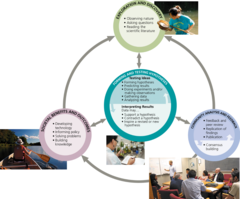
The scientific process is
shaped by exploration and discovery and influenced by interactions with other scientists and with society more generally (lower circles).
Controlled experiment
An experiment in which only one variable is manipulated at a time.
NOTE:
- Example: The mouse camouflage experiment
- Designed to compare an experimental group (the non-camouflaged models, in this case) with a control group (the camouflaged models).
- Research "control" unwanted variables by canceling out their effects using control groups

Variables
The factors that is manipulated and the factor that is subsequently measured
NOTE;
- A feature or quantity that varies in an experiment
Intendependent variable
The factor manipulated by the researchers
NOTE:
- Example: The color of the mouse model
- Experimental and control groups differ only in this.
Dependent variable
The factor being measured that is predicted to be affected by the independent variable
NOTE:
- Example; The researchers measured the amount of predation in response to variation in color of the mouse model.
Define a scientific theory
Scientific theory
NOTE:
- Broader than a hypothesis
- Hypothesis: "Coat coloration that is well matched to habitat is an adaptation that protects mice from predators."
- Theory: "Evolutionary adaptations arise by natural selection."
- It is general enough to spin off many new, testable hypotheses
- Supported by a much greater body of evidence
- Scientists will modify or even reject a previously supported theory if new research consistently reproduce results that don't fit
The goal of technology is to
apply scientific knowledge for some specific purpose
NOTE:
- Biologists use tools that extend their sense or facilitate careful measurement
- The goal of science is to understand natural phenomena
- The goal of technology is to apply scientific knowledge for some specific purpose
- Biology is marked by "discoveries"
- Technology is marked by "inventions"
(Chapter 2)
(Chapter 2)
Describe matter, atoms, their subatomic particles, and ions
Matter
Anything that takes up space and has mass
NOTE:
- Organisms are composed of matter
- Exists in many forms (rocks, metals, oils, gases, and living organisms)
- Made up of elements
Element
A substance that cannot be broken down to other substances by chemical reactions
NOTE:
- 92 kinds
- Each element has a symbol
- Example: Na (Natrium)
- Each element consists of a certain type of atom, different from the atoms of any other element
Compound
a substance consisting of two or more different elements combined in a fixed ratio.
NOTE:
- Example: NaCl (Sodium chloride), a compound composed of the elements sodium (NA) and chloride (Cl) in a 1:1 ratio
- Water (H2O), another compound, consists of the elements hydrogen (H) and oxygen (O) in a 2:1 ratio

Emergent properties
A compound has chemical and physical characteristics different from those of its constituent elements

Essential elements
Elements an organisms needs to live a healthy life and reproduce and maintain health
NOTE:
- 20-25% of elements
- Humans need 25 elements
- Plants need 17
What are the four major elements of living matter.