5A- Rate equation
 Call Kai
 Learn
Learn Practice Test
 Spaced Repetition
 Match
Match Flashcards
 Knowt Play
1/45

There's no tags or description
Looks like no tags are added yet.
Name | Mastery | Learn | Test | Matching | Spaced | Call with Kai | Chat |
|---|
No analytics yet
Send a link to your students to track their progress
46 Terms
what is the order of reaction
the power to which the concentration of a reactant is raised in the rate equation
what is the overall order
the sum of the individual orders of reactants in the rate equation
what is the rate equation
for mA + nB → products, rate= k [A]m [B]n
what is the rate constant
k, the constant that links rate of reaction with the concentrations of the reactants raised to the powers of their orders in the rate equation
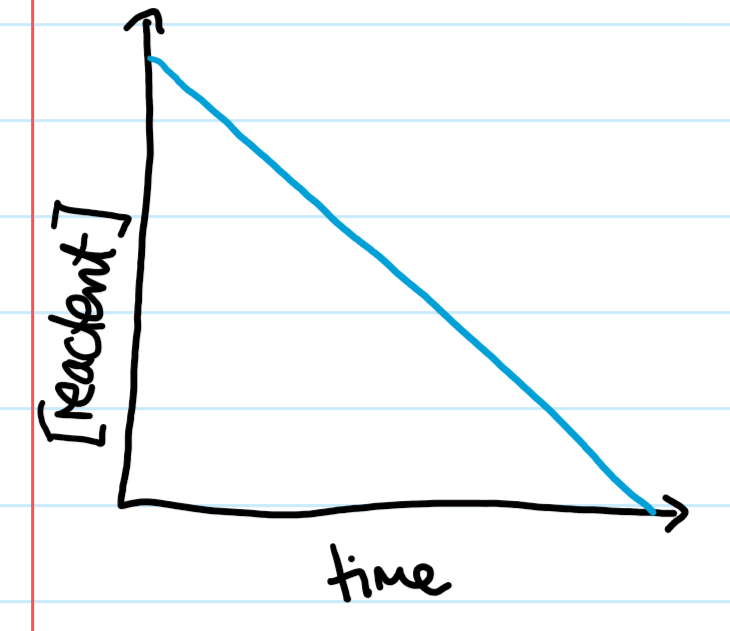
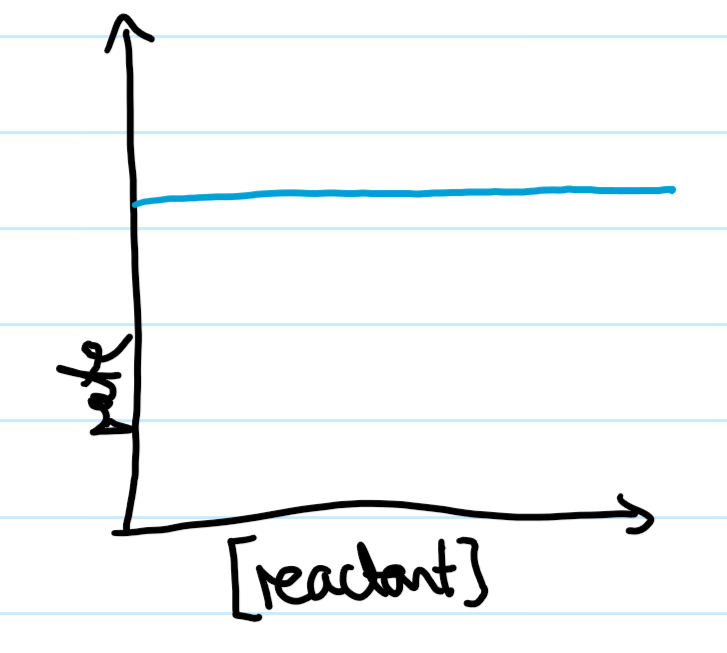
when order is 0…
concentration of reactant changing doesn’t effect rate of reaction
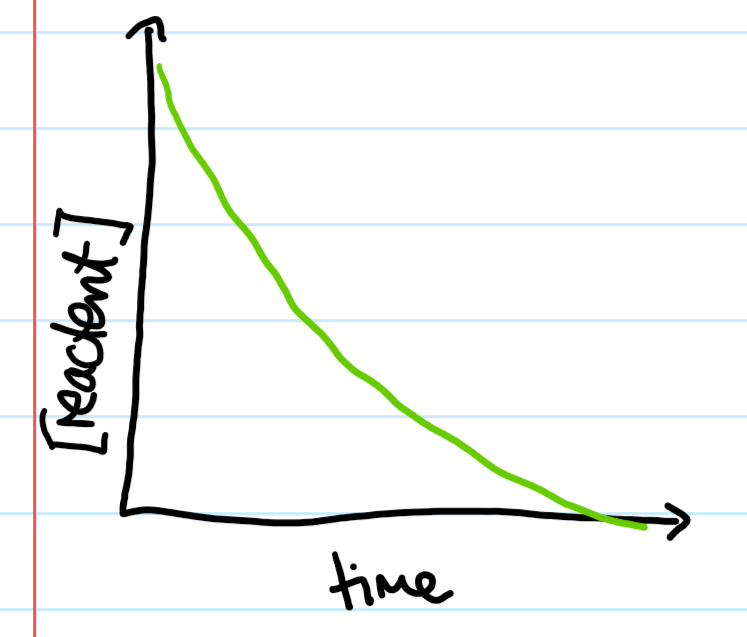
when order is 1 (1st order)…
rate is directly proportional to concentration, doubling concentration doubles rates
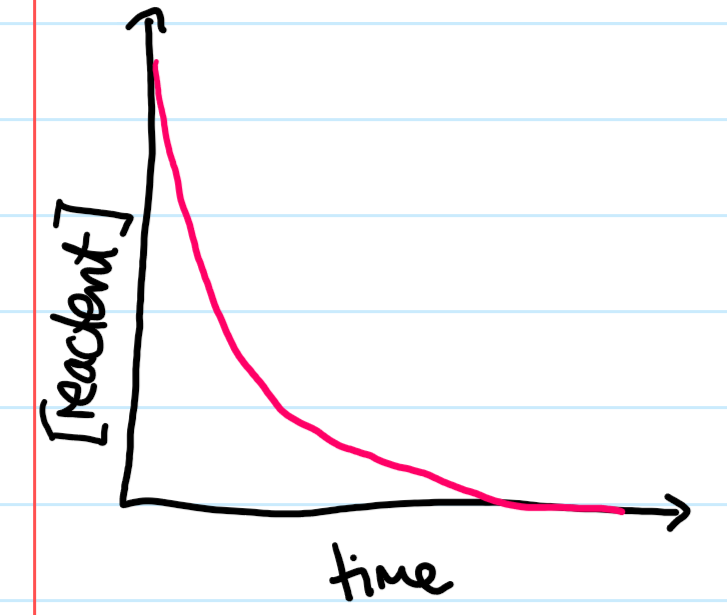
when order is 2 (2nd order)
if concentration triples then rate of reaction increases by factor 32
what is the time concentration graph of a zero order reactant
what is the time concentration graph of a first order reactant
what is the time concentration graph of a second order reactant
what is the concentration rate graph of a zero order reactant
what is the concentration rate graph of a first order reactant
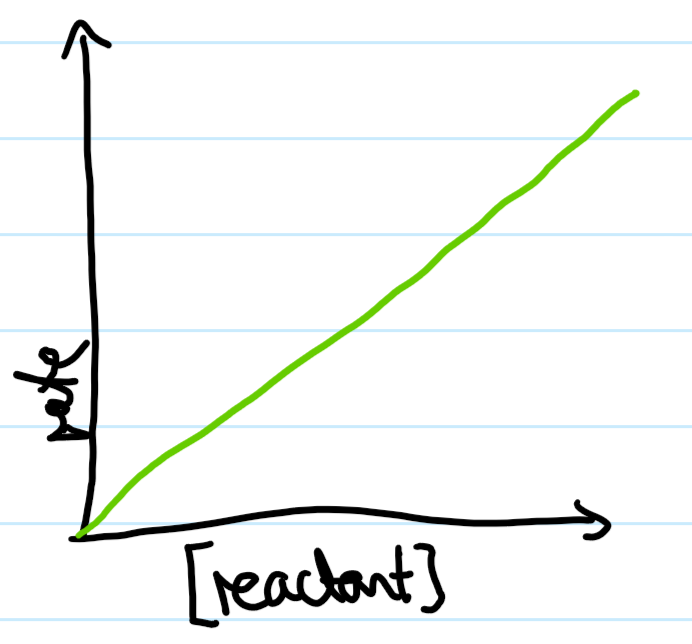
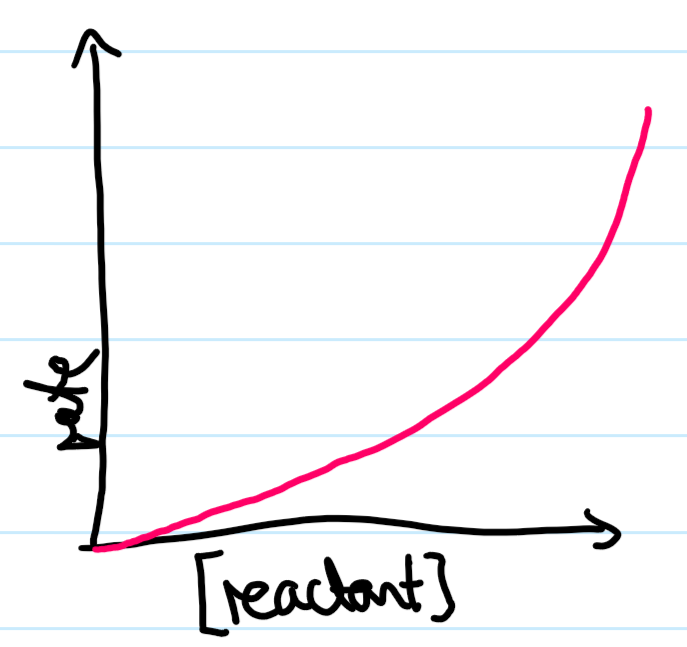
what is the concentration rate graph of a second order reactant
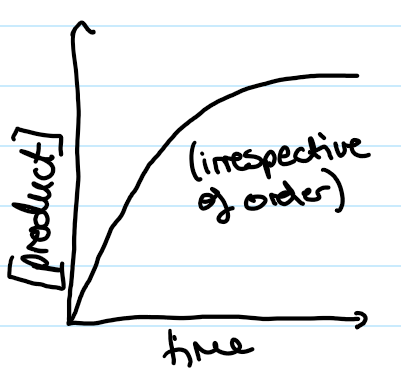
what is the graph of a time concentration of product graph
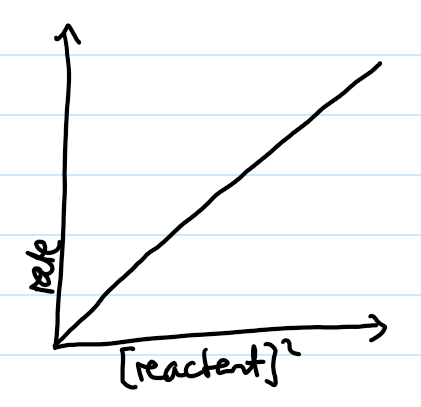
what order is this graph
second order (reactant concentration is squared)
define initial rate
the instantaneous rate at the start of the reaction
when writing exam answers on finding order from initial rates how should it be structured
say which experiments you are comparing
how concentration of each reactant changes
how rate changes
hence determine order of reaction wrt to the reactant
why when order of reaction for a reactant is investigated using the initial rates method do the concentrations of the other reactants not need to be in large excess
as the rate is only being measured over a very short period of time the change in concentration of the other reactants will not have a significant impact on rate
why are initial rates used to measure rate
concentration of all reactants are known
how can you determine order when you have the concentration of a reactant in time intervals
plot graph of conc. vs time
find rate at different concentrations by finding gradients of tangents
plot graph of rate vs conc.
observe the shape
define half life
the time taken for the concentration of a reactant to decrease by half
what happens to the half life of a zero order reaction as reactant concentration falls
it decreases
what happens to the half life of a first order reaction as reactant concentration falls
it remains constant
what happens to the half life of a second order reaction as reactant concentration falls
it increases
what is the equation for 1st order reactions with half life
half life= ln2/k
what happens to rate constant when temperature increases
rate constant increases
what equation describes how value of rate constant changes with temperature
arrhenius equation
how can k be found using half lives
k= ln2/half life
how can rate constant be found from a zero order rate vs conc. graph
y-intercept
how can rate constant be found from a first order rate vs conc. graph
gradient of line
how can rate constant be found from a second order rate vs conc. graph
it can’t be directly found, you could rearrange rate equation or plot rate against conc.2
how can you find k in a second order reaction with a conc. vs time graph
find rate at particular concentration using a tangent, substitute values into rate equation
what are ways of monitoring changes in concentration
colorimeter, gas syringe, balance, conductivity probe (continuous monitoring methods)
how do you monitor changes in concentration where there are ions in a re action being used up/produced
use a conductivity probe
what equation is initial rate proportional to
1/time
what is the clock method of monitoring rates
when a significant change is suddenly detected after a little delay, the only variable being measured is time
what are example of clock reactions
sulfur disappearing cross, iodine clock
what is the iodine clock reaction
add a fixed amount of an extra reactant, thiosulfate, to allow the reaction to be monitored as a clock. once reaction begins the additional thiosulfate reacts away any iodine produced leaving a colourless solution, when thiosulfate runs out the iodine build up and the starch indicator turns blue-black,
what are the issues with clock reactions
1/time is not the same as initial rate, initial rate is instantaneous rate at t=0s, in a clock reaction 1/time is just the average rate over the time needed to form a specific amount of product
quantities need to be chosen carefully
what are the pros of clock methods
quick and simple to carry out, easy to process results
what are the pros of the continuous monitoring methods
more accurate
what are the cons of the continuous monitoring methods
more work to monitor several reactions over time, processing of results takes longer
when is using a balance not suitable for monitoring rates
when the gas has a low Mr e.g. H2
define rate determining step
the slowest step in the reaction mechanism of a multi-step reaction
how does the rate determining step link to the rate equation
the rate equation tells us which species react together in the rate determining step (or reactants that make intermediates used in the rate determining step) and in what numbers
how can you tell if a reaction has multiple steps
in a single step it is highly unlikely that more than 2 particles can collide together to react