Respiratory System Review
 Call Kai
 Learn
Learn Practice Test
 Spaced Repetition
 Match
Match Flashcards
 Knowt Play
 Podcast
1/46

There's no tags or description
Looks like no tags are added yet.
Name | Mastery | Learn | Test | Matching | Spaced | Call with Kai | Chat |
|---|
No analytics yet
Send a link to your students to track their progress
47 Terms
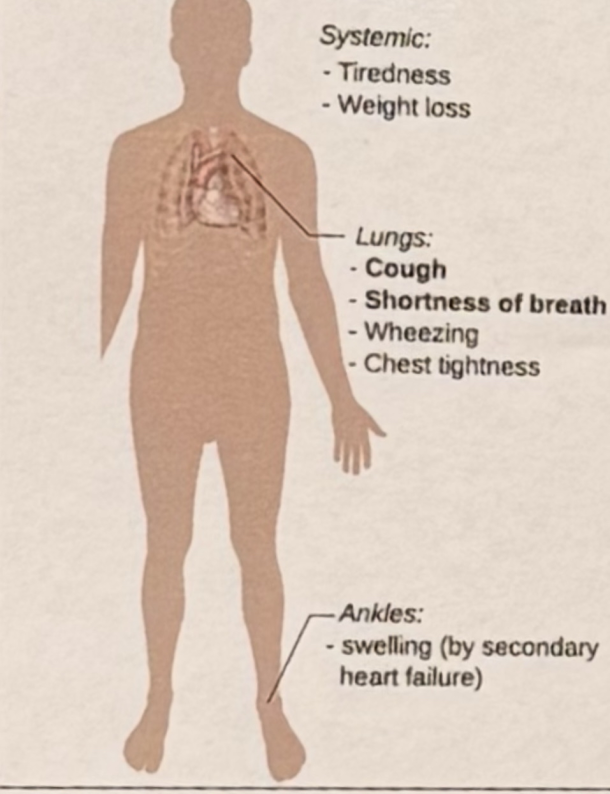
What is COPD?
A group of diseases that restrict airflow and make breathing difficult
(Match the lung disease) Inflammation of the bronchial tubes
Bronchitis
(Match the lung disease) Lung infection in which alveoli fill with fluid or puss
Pneumonia
(Match the lung disease) An inherited disease that affects mucus production in the lungs and other areas
Cystic Fibrosis (CF)
(Match the lung disease) Loss of elasticity in alveoli and leads to shortness of breath
Emphysema
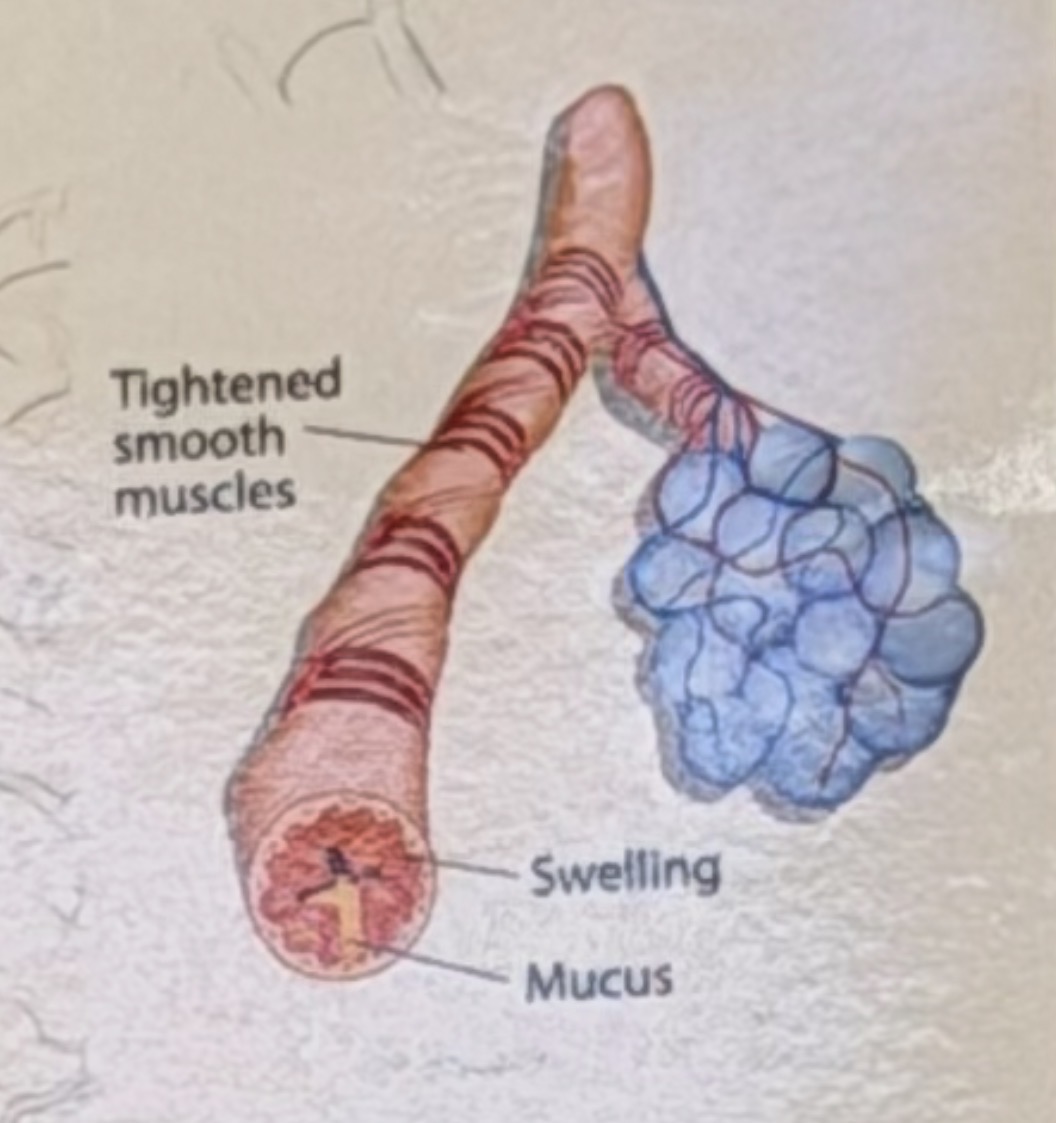
_______ is a chronic lung disease characterized by inflammation and constriction of the airways
Asthma
The most important factor controlling respiration is increased levels of ______ _______ in the blood
Carbon Dioxide
Where are the control centers for respiration located?
brainstem, medulla oblongata, pons
What is the primary respiratory concern for premature babies?
They develop infant respiratory distress syndrome due to a lack of surfactant
The nose is divided into two nostrils by the ______ _______
Nasal Septum
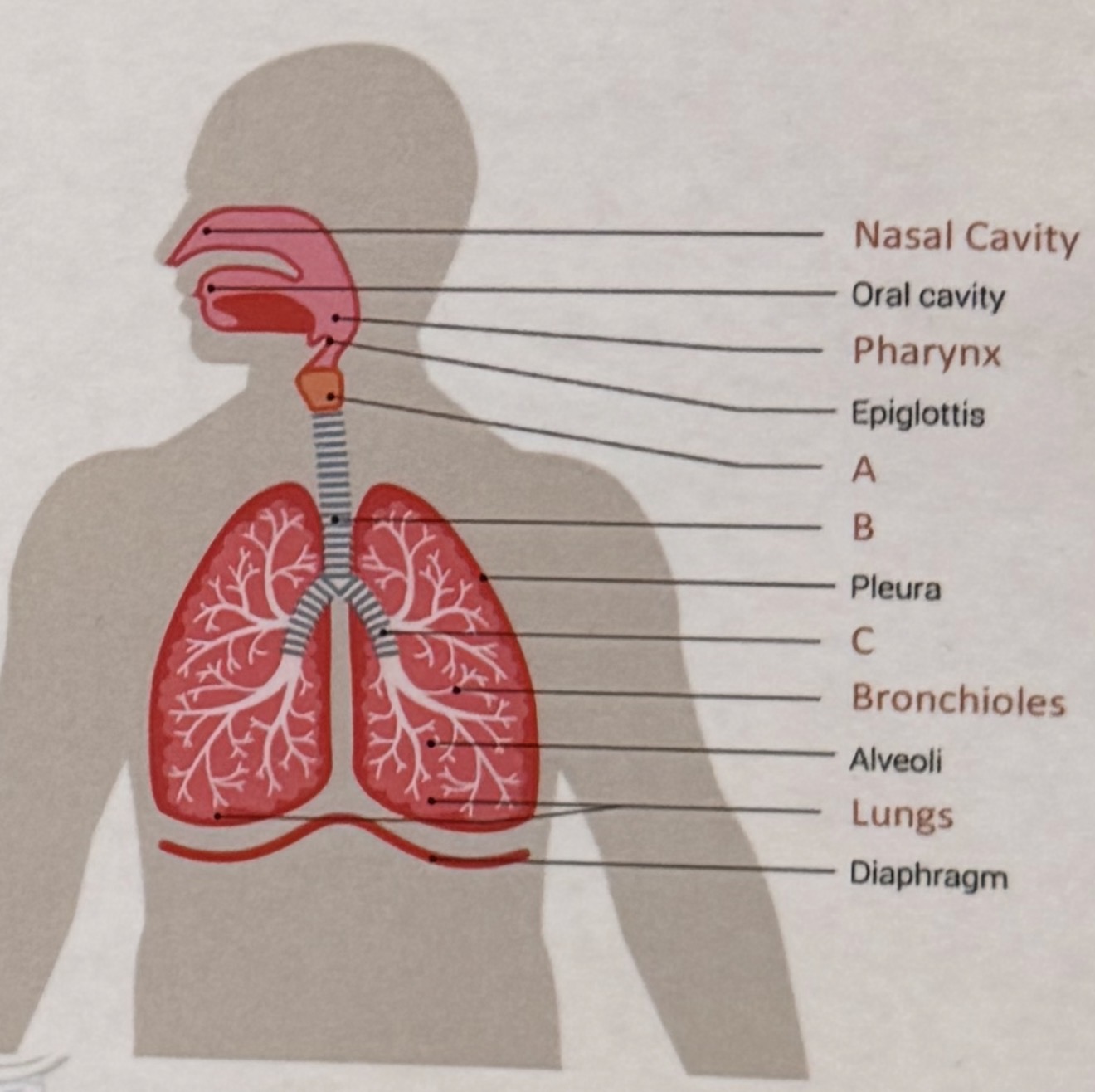
What structures are labeled on A, B, C
larynx, trachea, bronchus
What happens to air as it passes through the nasal cavity?
It gets warmed, moistened, and filtered
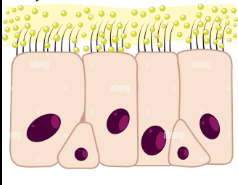
What is the function of mucus
Traps dust, mold, and other contaminants
Which of the following is NOT caused by smoking
Cystic Fibrosis (CF)
Briefly describe pulmonary circulation
The body’s pathway to oxygenate blood, moving de-oxygenated blood from the right side of the heart to the lungs via the pulmonary artery, where it releases carbon dioxide and picks up oxygen, then returns the newly oxygenated blood to the left side of the heart through pulmonary veins to be pumped to the rest of the body
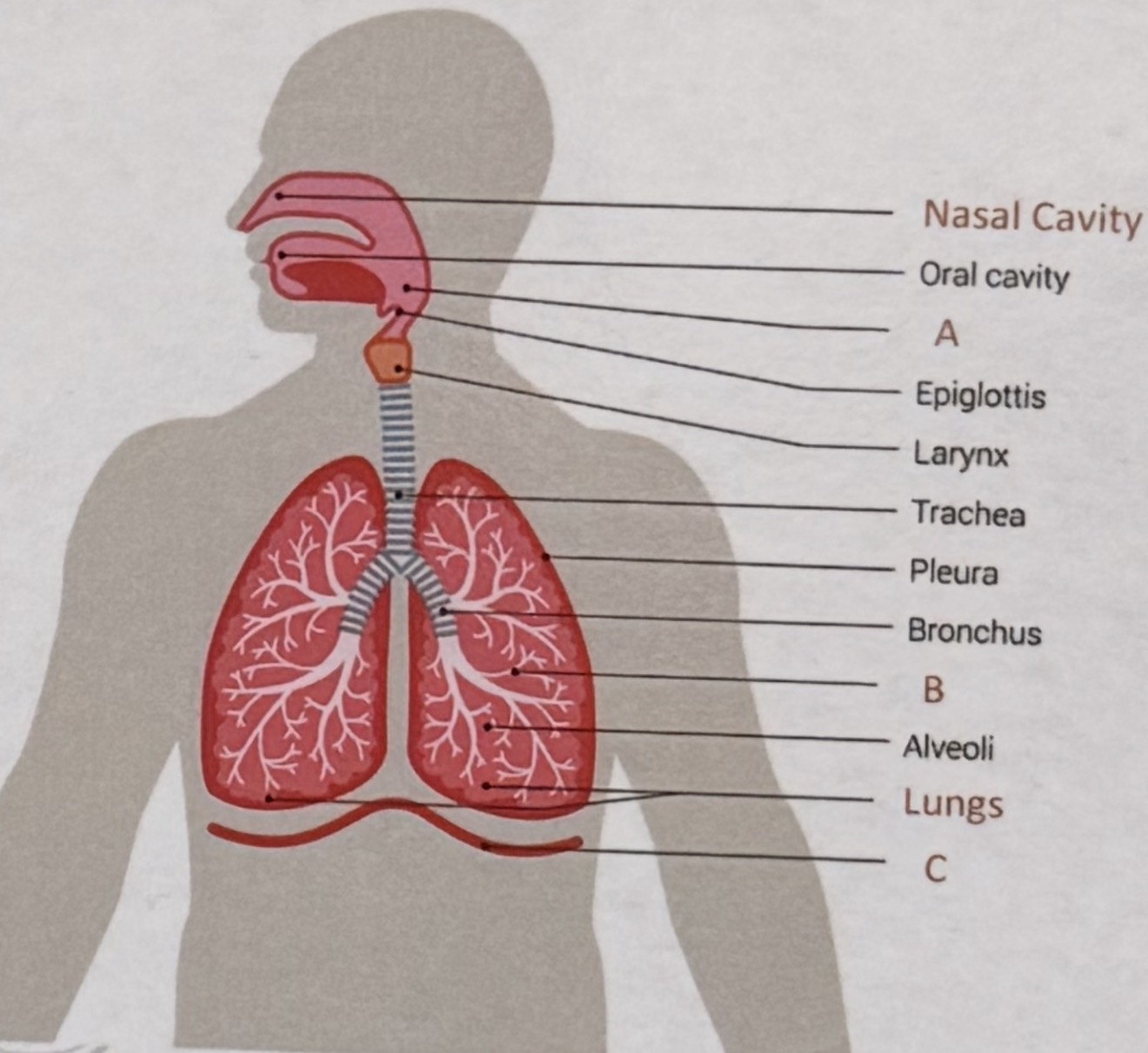
What structures are labeled on A, B, C
pharynx, bronchioles, diaphragm
Food and liquids are diverted away from the trachea by the _______
Epiglottis
The larynx is also called the ____ ______
voice box
The larynx is located ______ to the pharynx
below
The larynx is composed of 8 rigid pieces of what?
cartilage
The larynx houses the _____ ______
voice box and vocal cords
Air travels through the ________ or windpipe, which divides into primary _____
Trachea, primary bronchi
Each bronchus divides into smaller and smaller branches called _______ that carry air throughout the lungs
bronchioles
This branching structure is sometimes referred is sometimes referred to as the bronchial _______
Bronchial tree
The lungs are divided into sections or ______
lobes
The left lung has ____ sections
2
The right lung has ___ sections
3
Which of the following is NOT part of the upper respiratory tract?
Primary bronchi
The trachea is also called the _____
Windpipe
The trachea is located _____ to the esophagus
Anterior
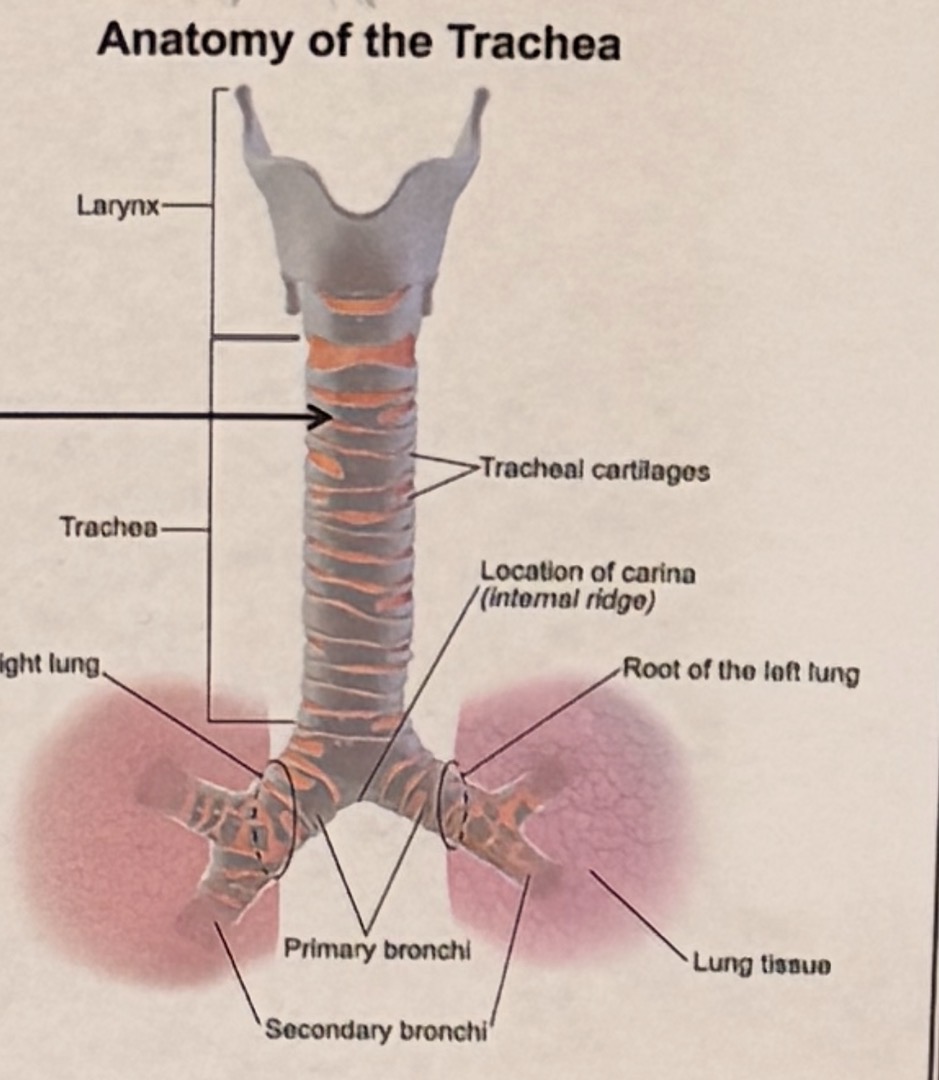
briefly describe these rings
C shape, provide rigidity to prevent the trachea from collapsing during inhalation, strong, flexible cartilage
Put these structures in the order through which air passes (bronchi, bronchiole, trachea, alveoli)
trachea, bronchi, bronchioles, alveoli
Terminal bronchioles end in clusters of air sacs called ______
Alveoli
The alveoli is the site of ____ __________
gas exchange
The exchange of oxygen and carbon dioxide occurs in alveoli by the process of ______
diffusion
The walls of the alveoli and capillaries make up the ___ ______
respiratory membrane
Internal respiration
exchanging gasses between blood and tissue cells
Pulmonary ventilation
Air moving into and out of the lungs
External respiration
Exchanging gasses between alveoli and blood
Respiratory gas transport
O2 and CO2 are carried by the bloodstream
Volume changes in the lungs leads to ____ ___ which causes the movement of gases
pressure changes
Inspiration =
inhaling
Expiration =
exhaling
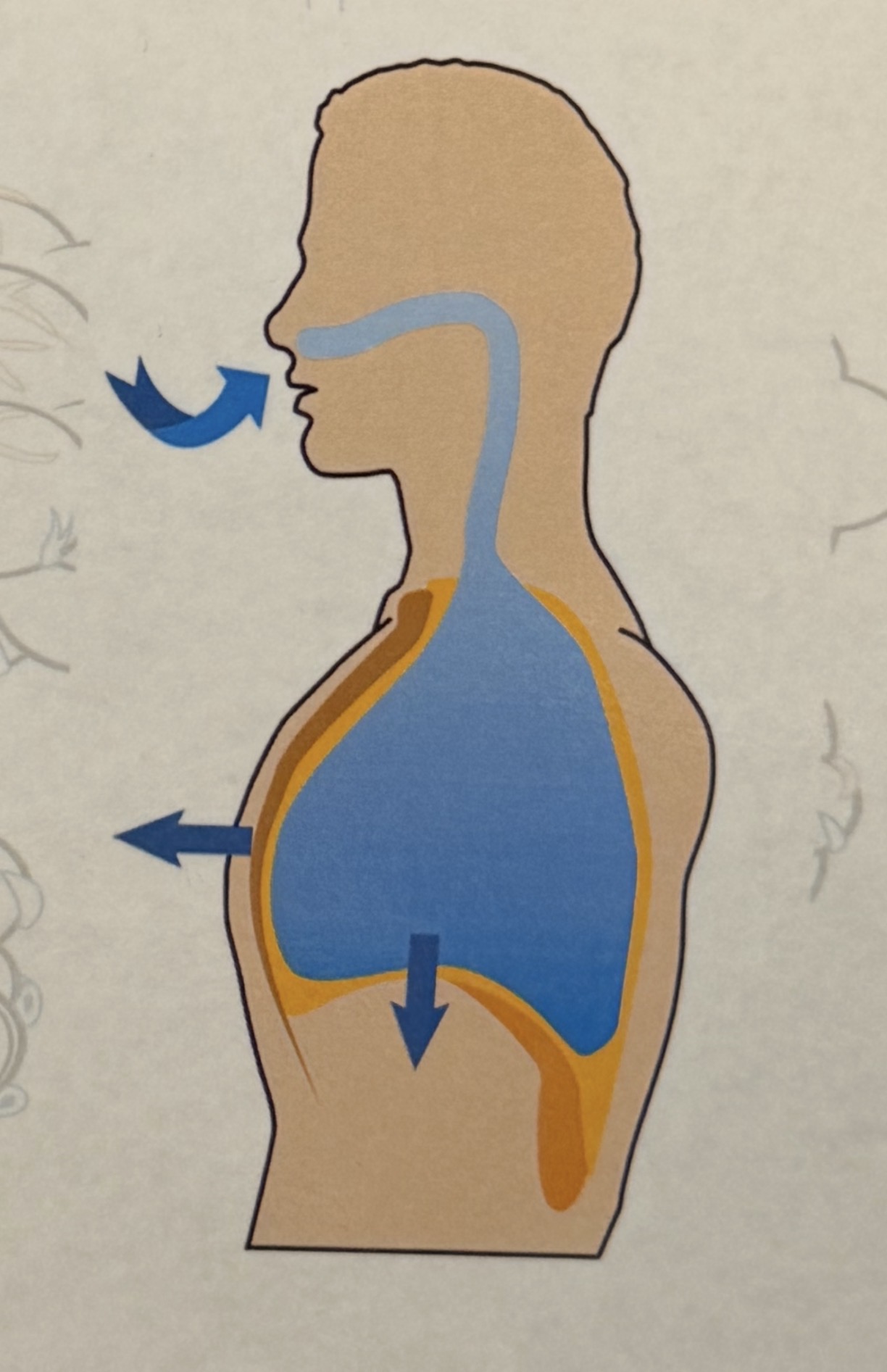
Identify the inspiratory muscles
diaphragm, external intercostal muscles
Air always flows from an area of _____ pressure to an area of ____ pressure
high, low
Which of the following is NOT an event of expiration
Intrapulmonary pressure is decreased
What are 3 examples of nonrespiratory air movements
Coughing, sneezing, yawning