BUS last AOS
 Call Kai
 Learn
Learn Practice Test
 Spaced Repetition
 Match
Match Flashcards
 Knowt Play
1/11

There's no tags or description
Looks like no tags are added yet.
Name | Mastery | Learn | Test | Matching | Spaced | Call with Kai | Chat |
|---|
No analytics yet
Send a link to your students to track their progress
12 Terms
Change management
The process of implementing strategies that prepare an organisation to undergo a transformation.
Leadership is vitally important during periods of change.
Without it, a business is like a ship without a captain, prone to hit icebergs, other ships, or even run aground.
A leader must...
Assess the present situation and conditions in which they are travelling.
Have in their heads a clear vision of where they are heading.
Organise all the resources necessary to achieve the change in direction.
Clearly communicate that vision to everyone involved, so that they are aware, comfortable, and confident in the captain's decision.
Inspire the employees to work towards the new objective.
Be alert to any obstacles that may occur along the way, and take corrective action for them.
Check to make sure the information that comes back to them is indicating that they are still heading in the right direction.
Qualities for leading through change
Motivating
Inspiring
Responding to feedback
Guiding and training staff
Supporting, mentoring, coaching
Decisiveness
Acts as a role model
Maintaining relationships with all key stakeholders in the change process (employees, shareholders, suppliers, etc)
Clearly communicating business intentions, vision, and objectives



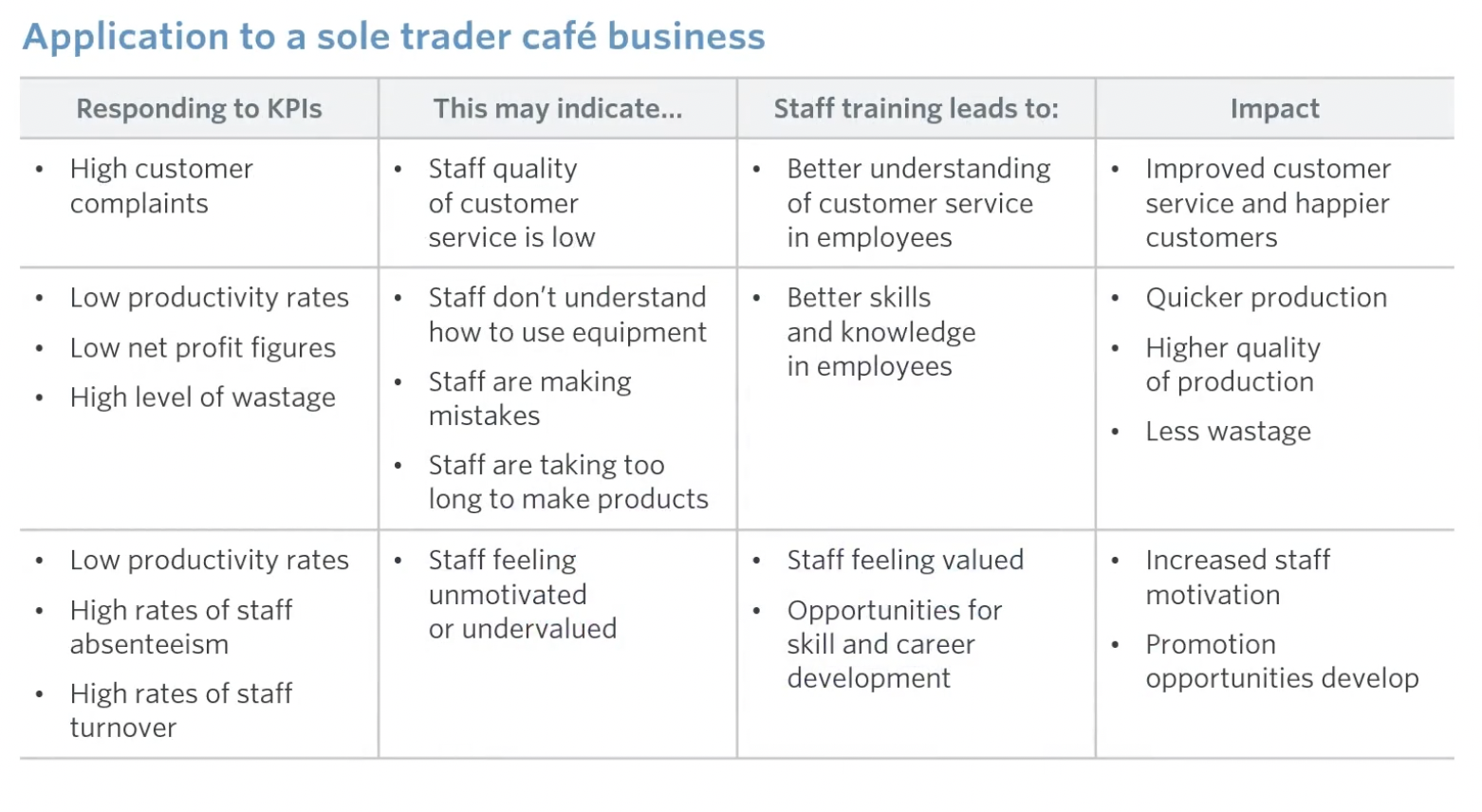
Staff training
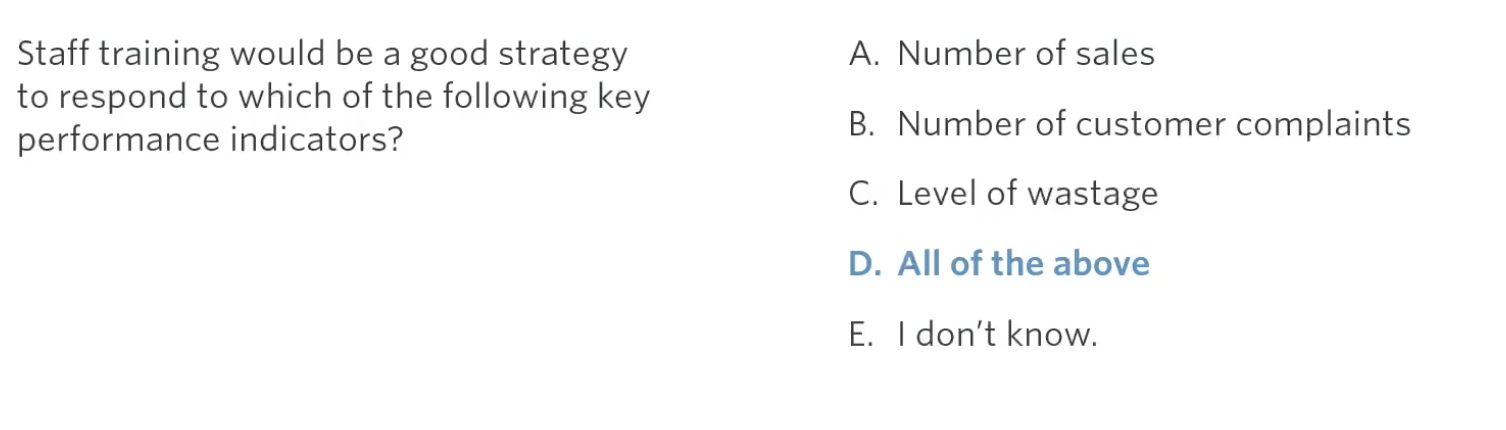
Can help respond to a number of key performance indicators.
It is focused on an employee's current job, and is aimed at improving their skills, knowledge, attitudes, and behaviour, in order to allow them to do their job more efficiently and effectively than before.
It can be undertaken either on-the-job or off-the-job.
Staff Motivation
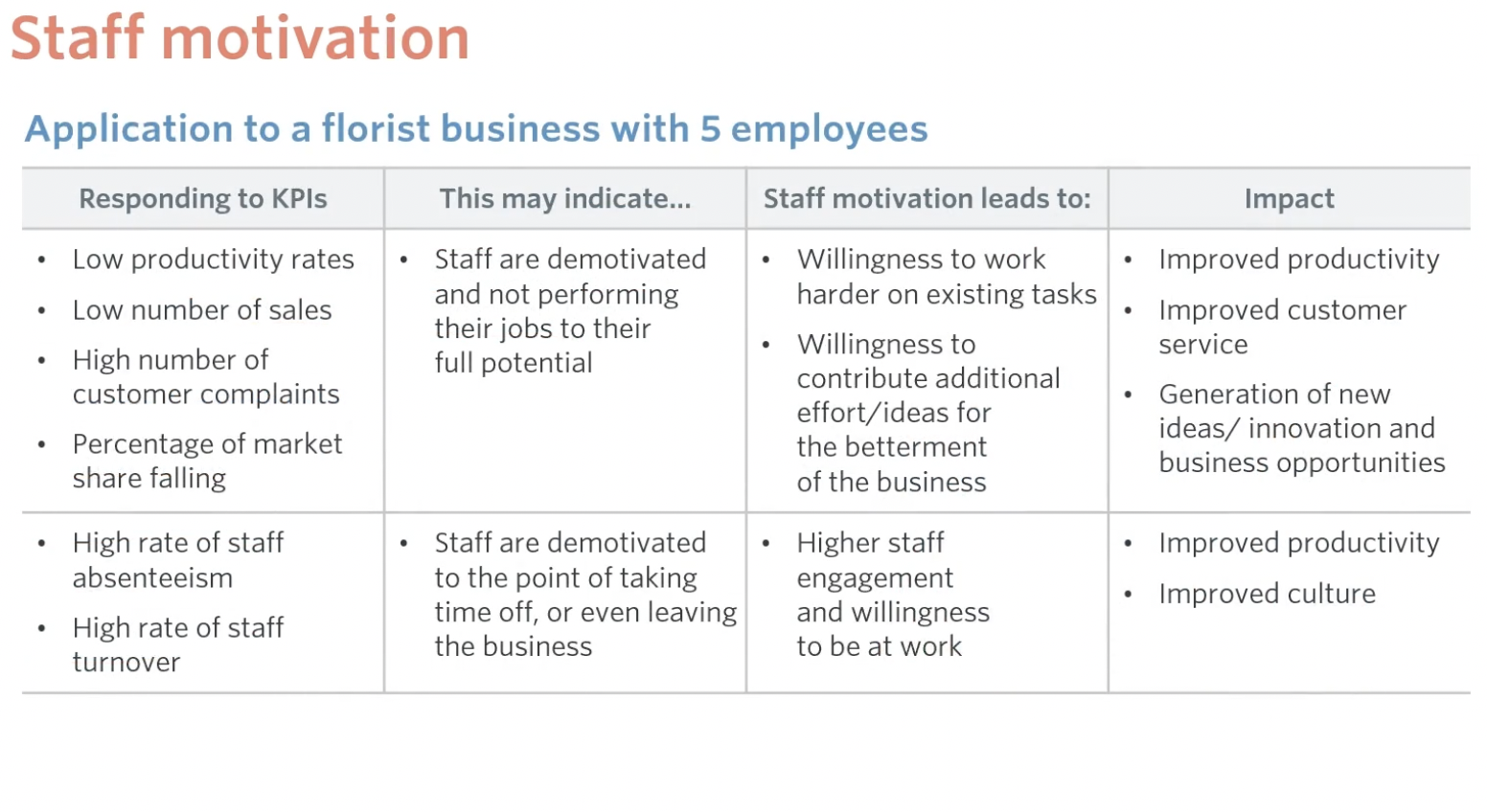
Motivation- the desire to do things.
A manager wants their employees to be motivated to do the things that will achieve the business objectives.
Recap of motivation strategies:
Performance related pay
Career advancement
Investment in training
Support
Sanction
Changing the management style or management skills
Can have a positive impact on employee motivation and performance, improving a business's ability to meet its objectives.
Management styles:
Autocratic, persuasive, consultative, participative, laissez-faire
It's important to consider the appropriateness of styles in relation to the nature of the task, the time allowed, the experience level of employees, and manager preference.
Management skills:
Communicating
Delegating
Planning
Leading
Decision-making
Interpersonal