Ver.A - Chapter 3: Biological molecules
 Call Kai
 Learn
Learn Practice Test
 Spaced Repetition
 Match
Match Flashcards
 Knowt Play
1/158

Earn XP
Description and Tags
3.1-3.5
Name | Mastery | Learn | Test | Matching | Spaced | Call with Kai | Chat |
|---|
No analytics yet
Send a link to your students to track their progress
159 Terms
What is hypothesized to be the origin of the first cells?
The first cells developed in the ocean.
What allows chemical reactions to occur in cells?
Water in a liquid state allows molecules to move and interact.
What type of bonds exist between hydrogen and oxygen in water molecules?
Polar covalent bonds.
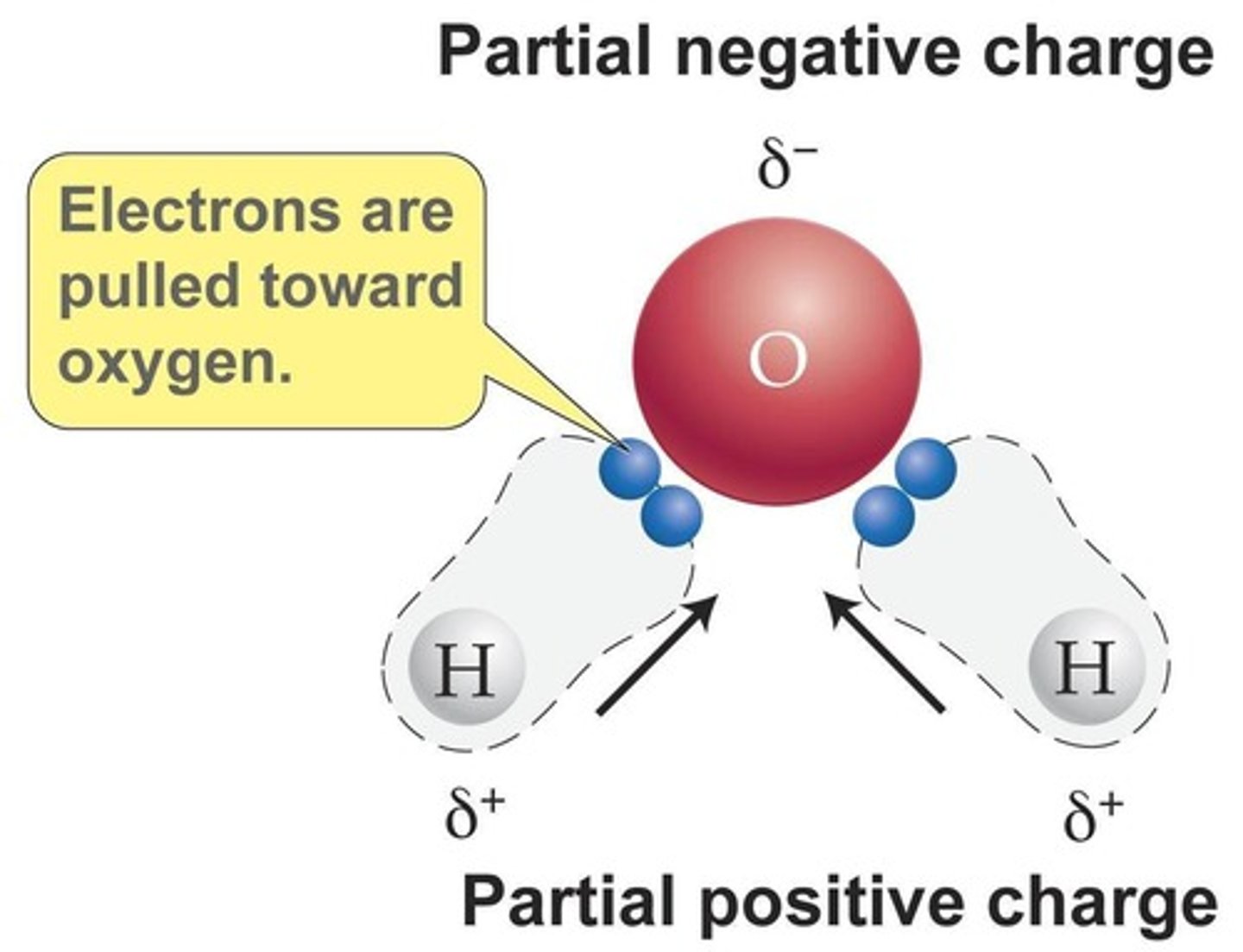
What is the result of unequal sharing of electrons in water?
It gives hydrogen atoms a partial positive charge and the oxygen atom a partial negative charge.
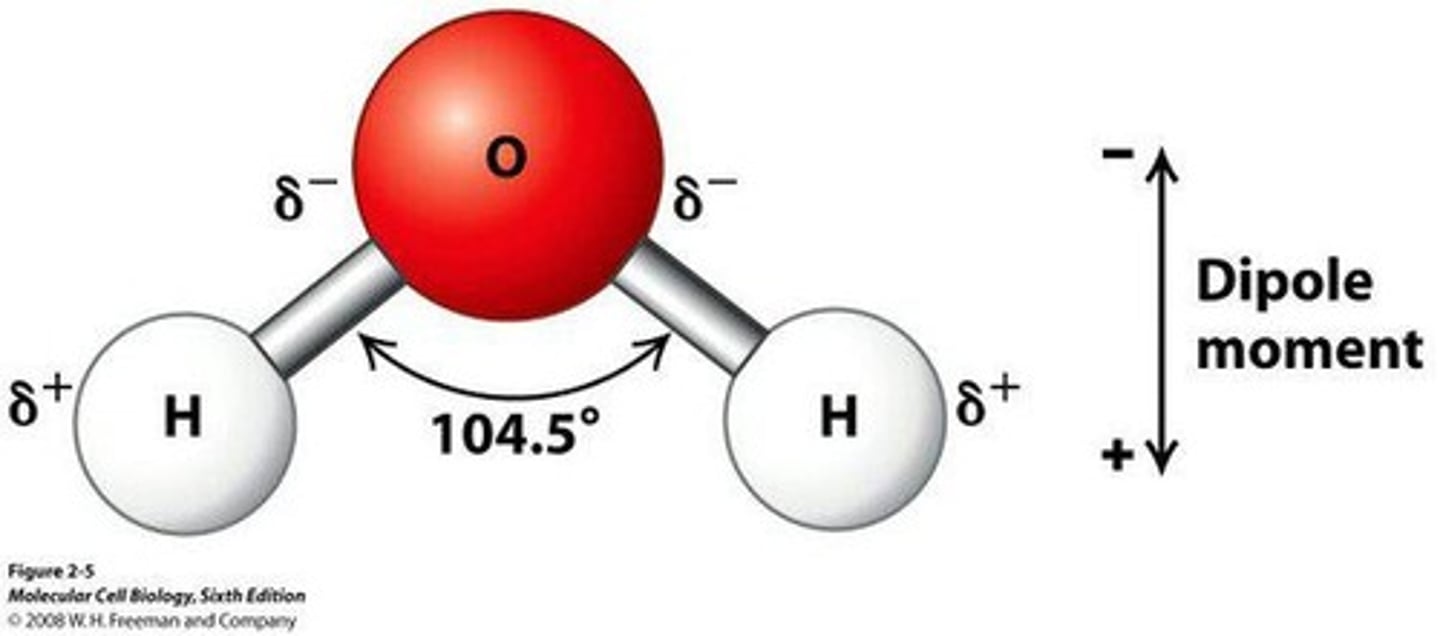
What is a hydrogen bond?
A weak intermolecular force formed when a slightly positive hydrogen atom in one polar molecule is attracted to a slightly negative atom in another polar molecule.
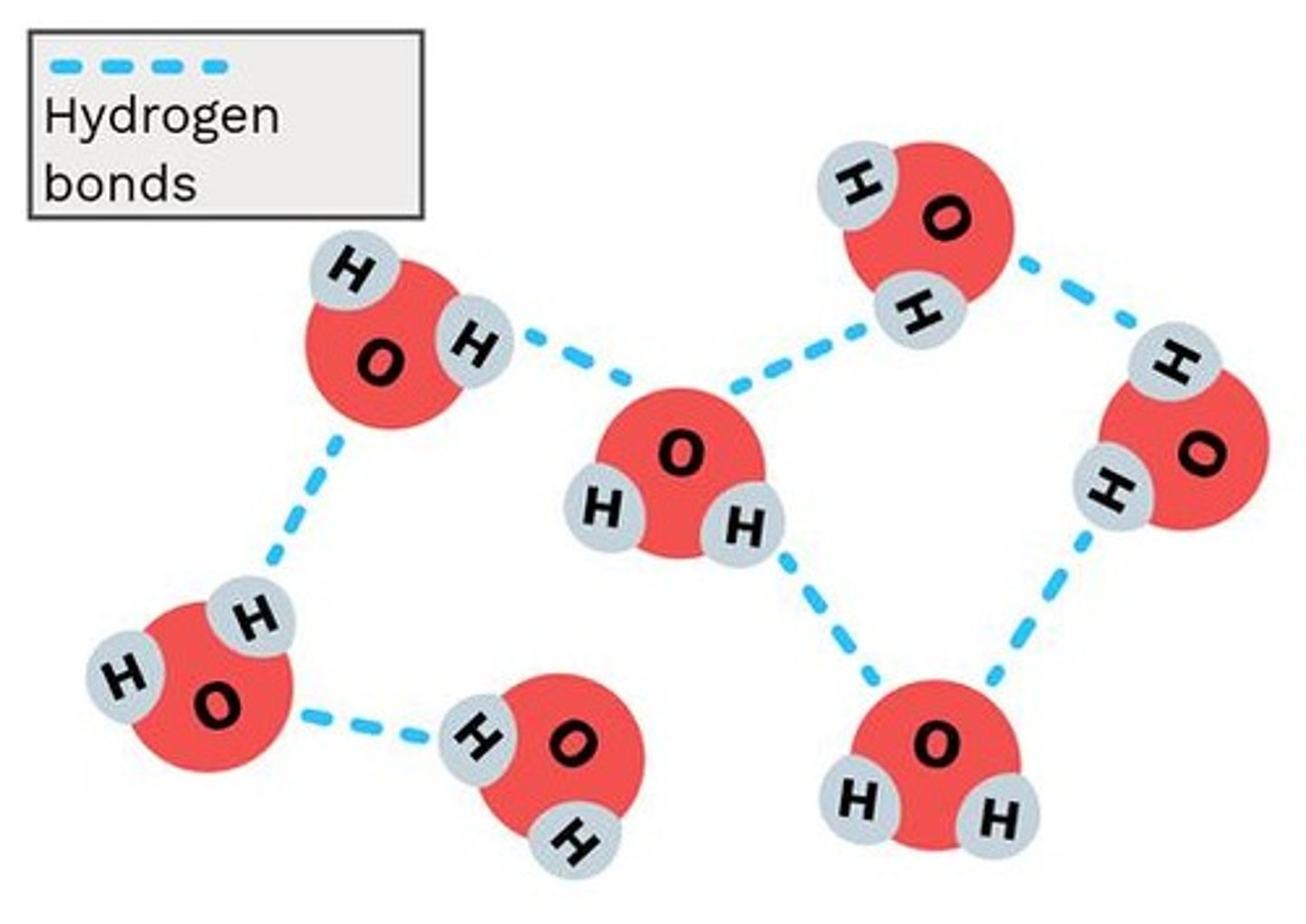
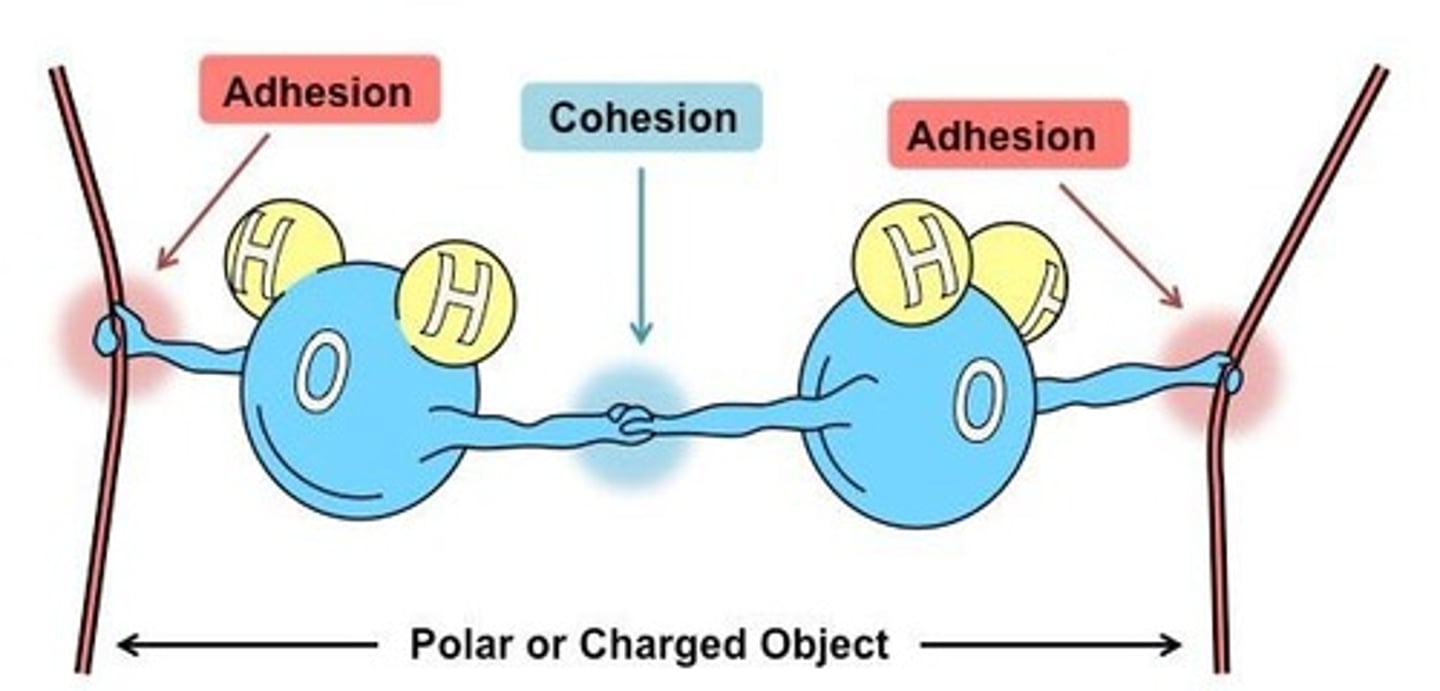
What is cohesion in the context of water molecules?
The mutual attraction between water molecules causing them to stick together.
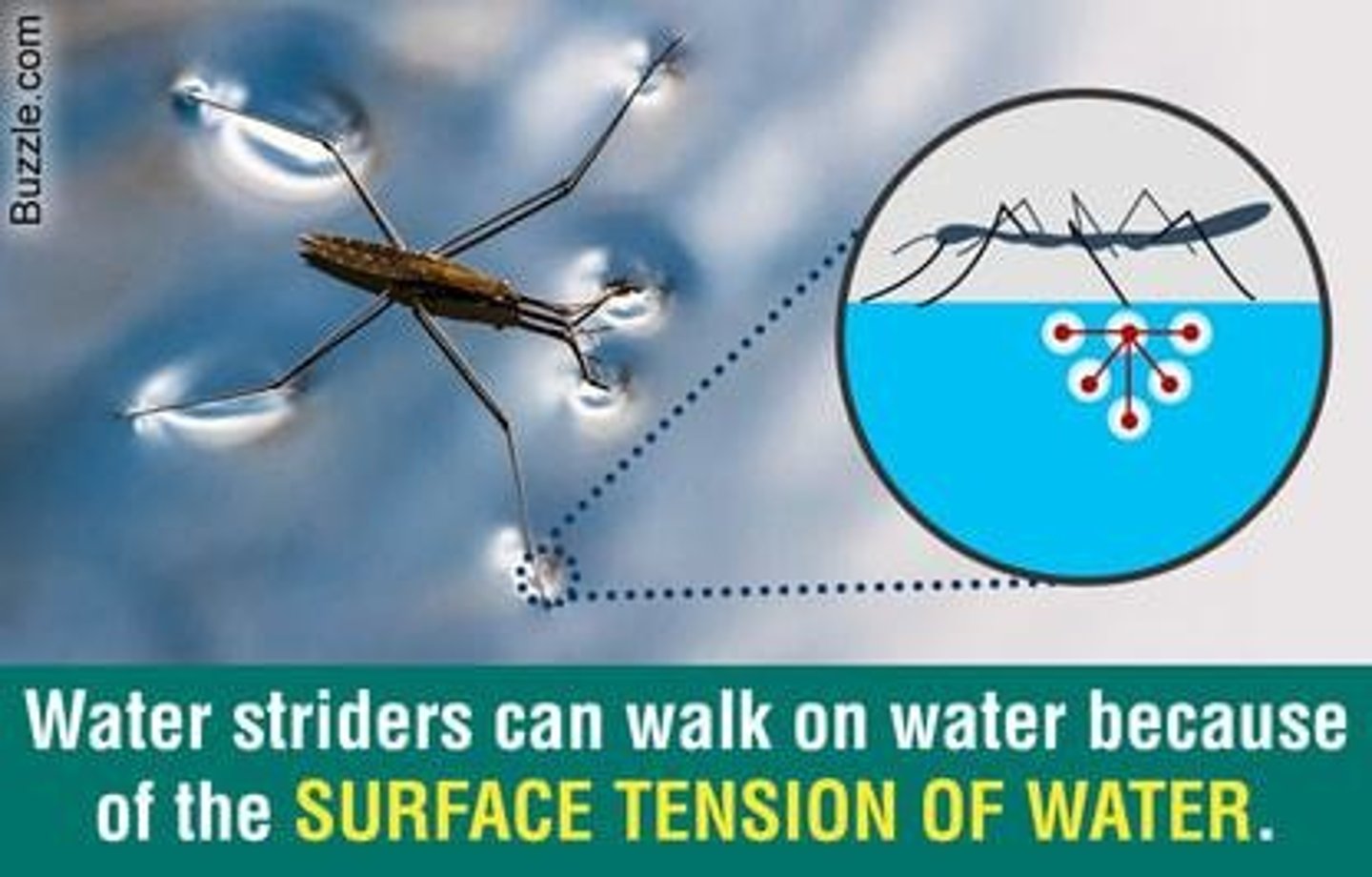
How does cohesion affect water transport in plants?
It allows water to be conducted under tension in xylem, enabling trees to grow tall.
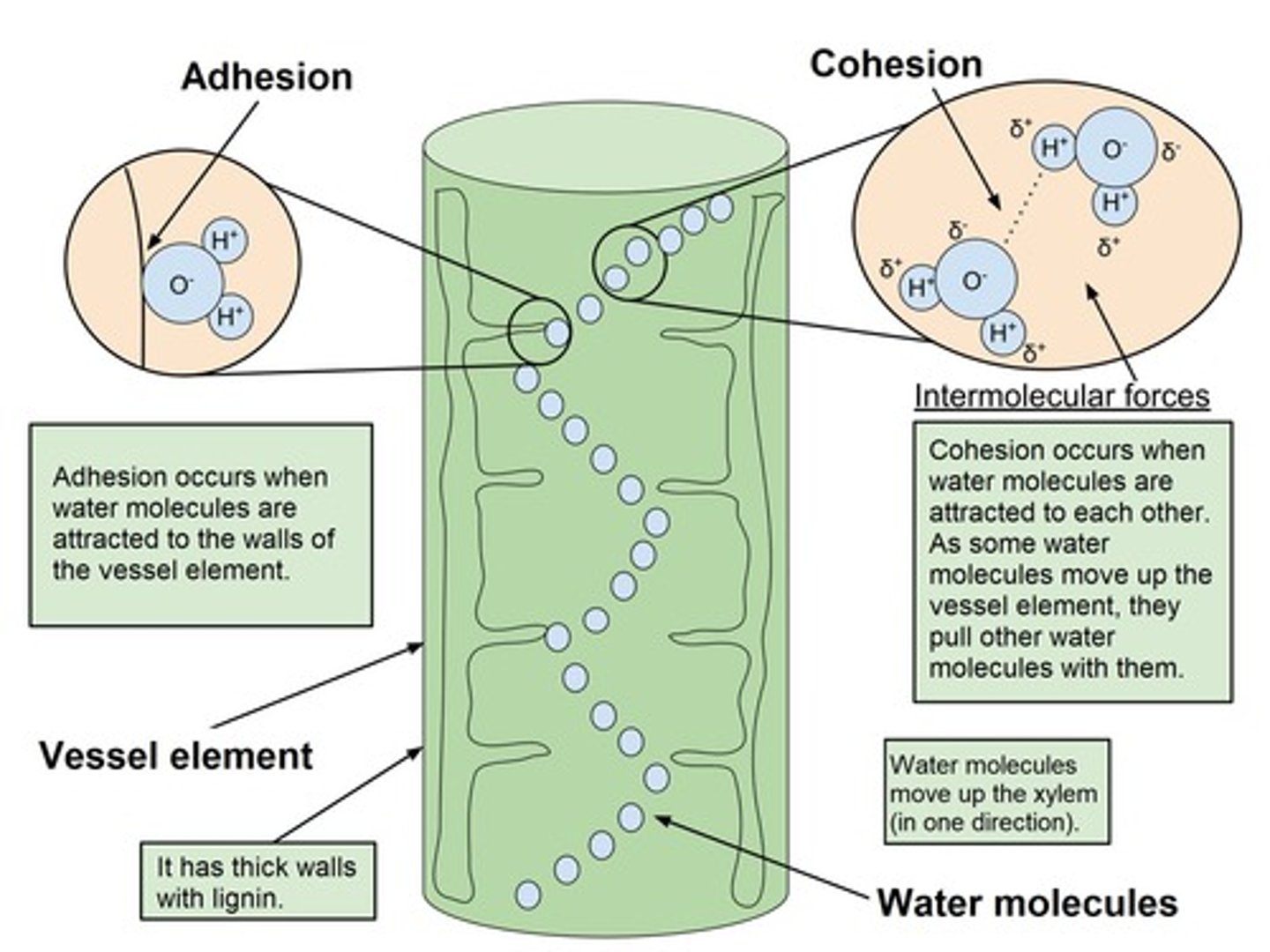
What is adhesion in relation to water?
The ability of water to stick to the surface of polar or charged materials.
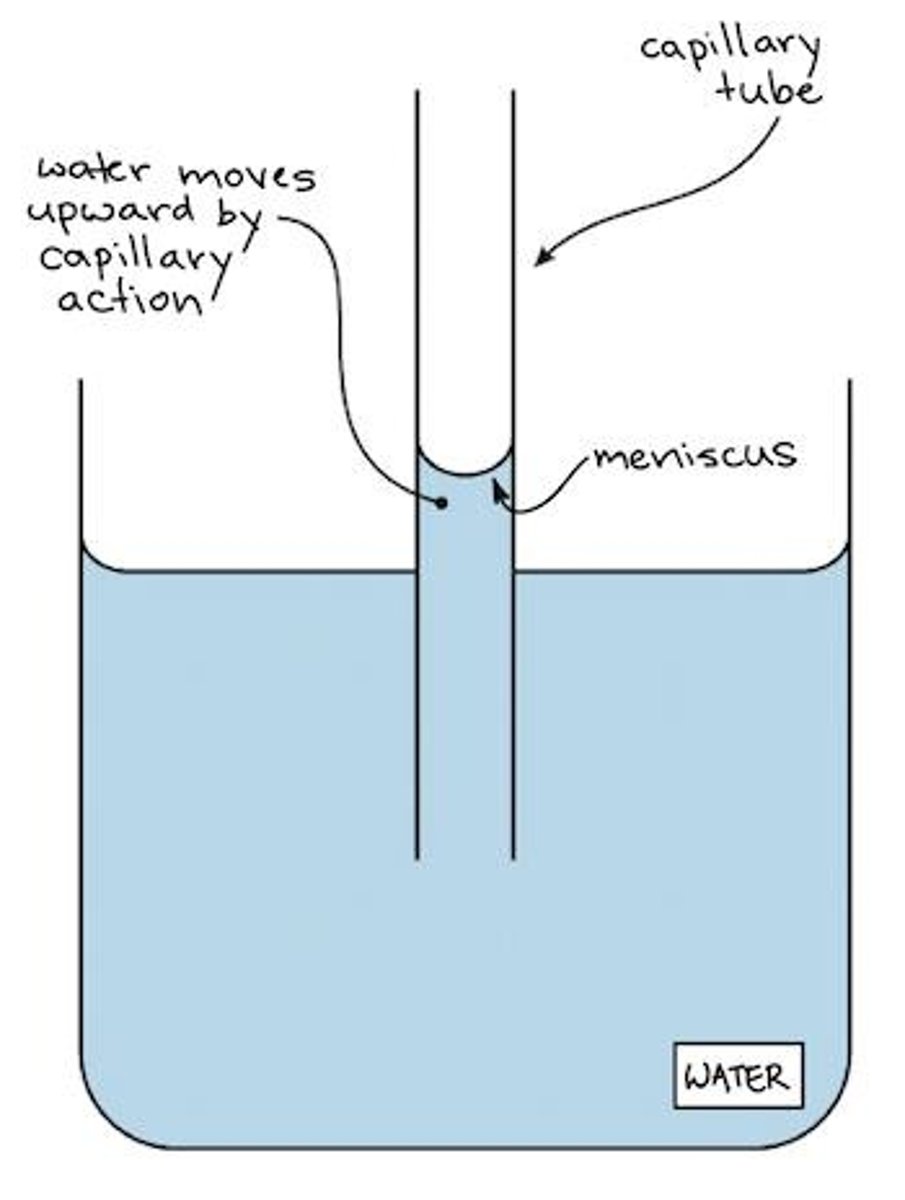
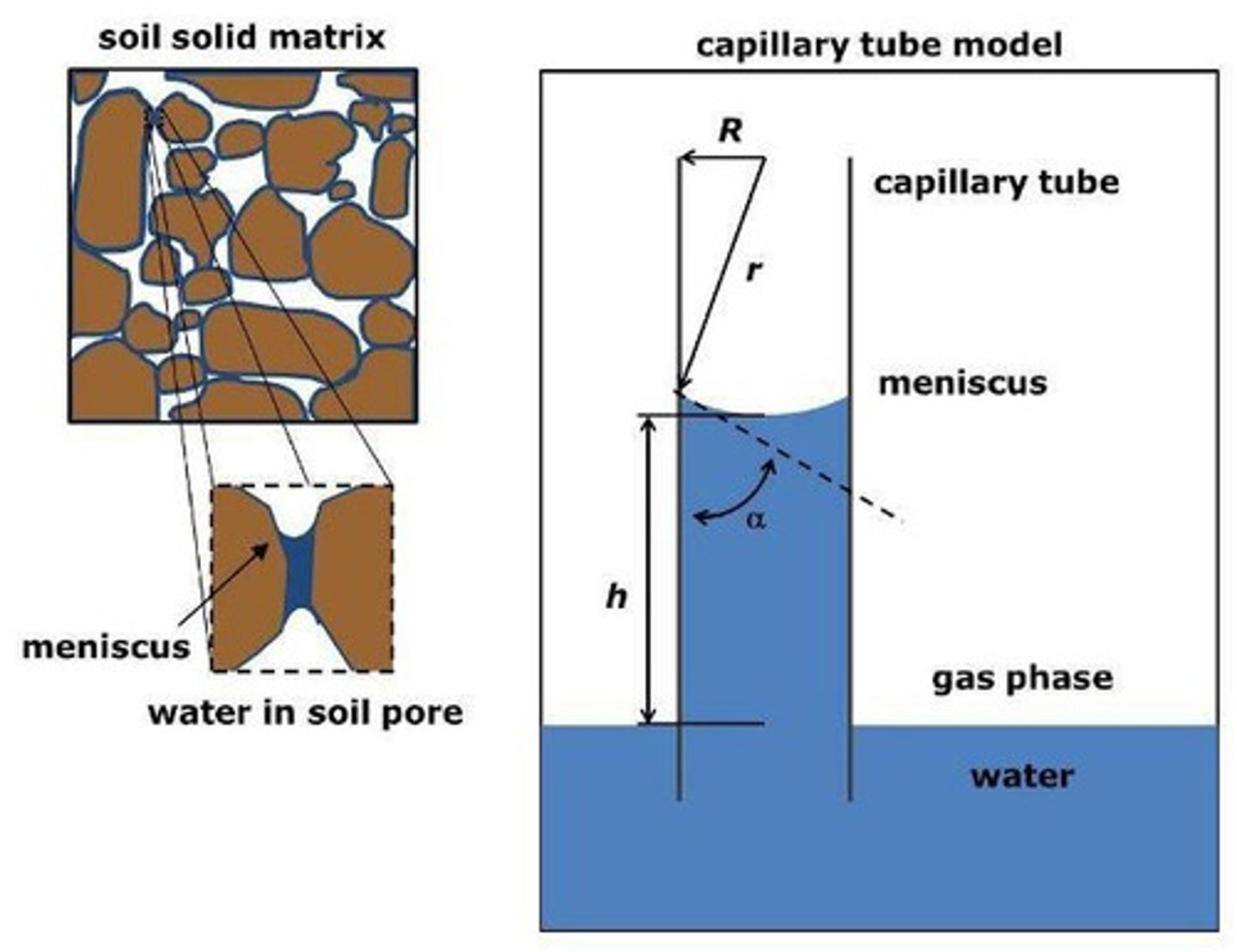
What phenomenon allows water to travel through narrow tubes?
Capillary action due to adhesion.
What are hydrophilic substances?
Substances that are chemically attracted to water and can dissolve in it.
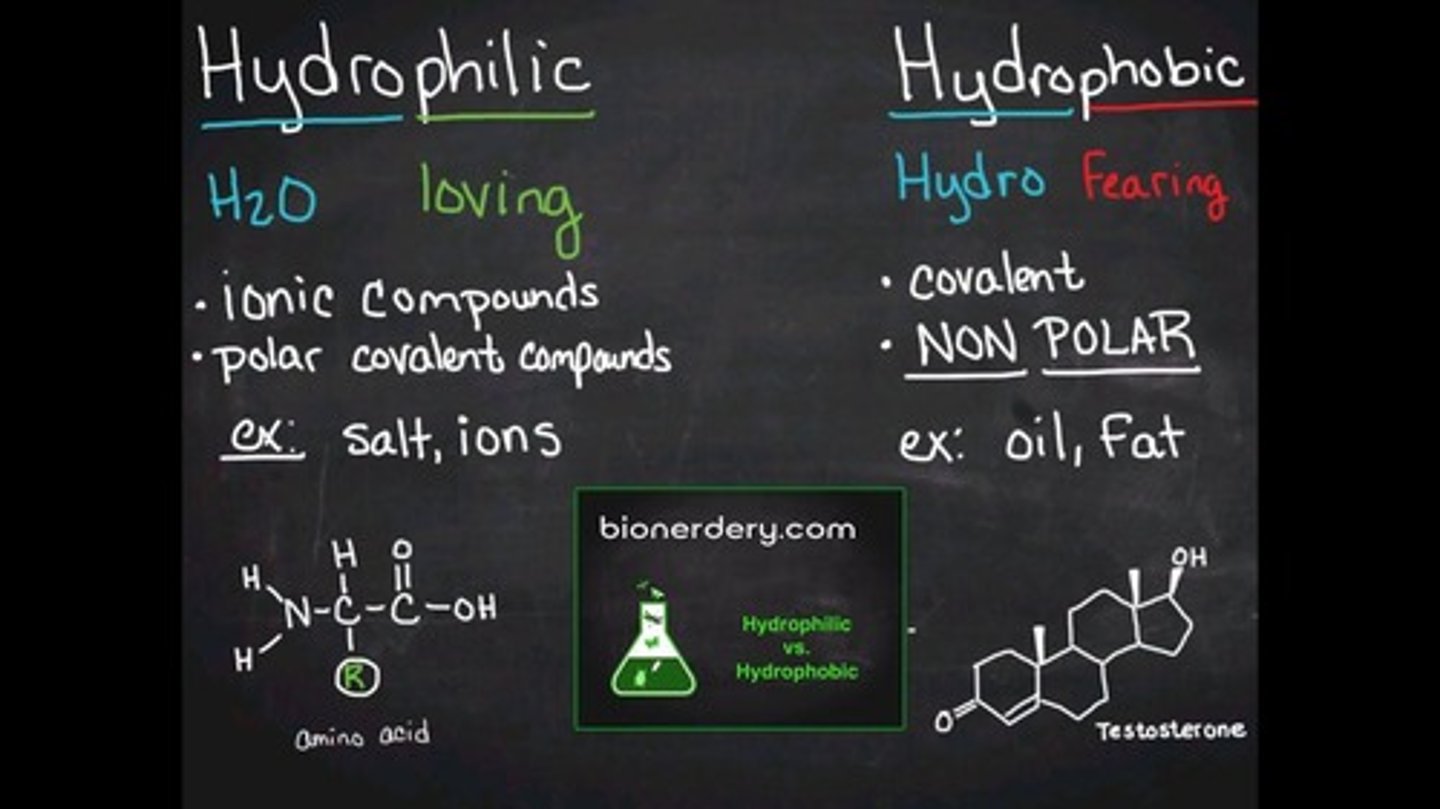
What are hydrophobic substances?
Substances that are not attracted to water and do not dissolve in it.
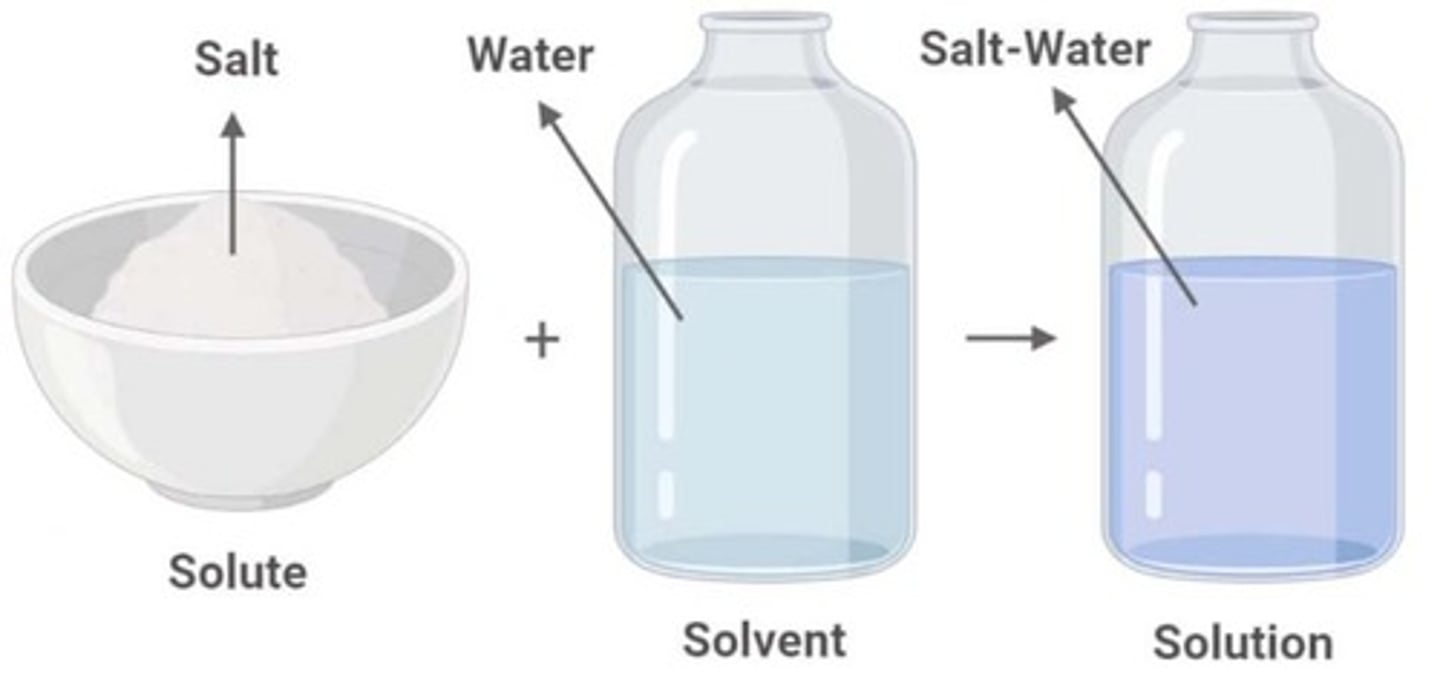
What is the role of water as a solvent in biological systems?
Water dissolves many substances, allowing for metabolism and transport in organisms.
What is the specific heat capacity of water?
4.18 J/g·K.
Why does water have a high specific heat?
Due to the hydrogen bonds that require a large input of energy to break.
What is buoyancy?
The upward force exerted by a fluid on an object immersed in it.
What determines whether an object will float or sink in water?
If the density of the object is lower than that of the fluid, it will float; if higher, it will sink.
What is viscosity?
The stickiness of a fluid, which determines how easily it can flow.
How does temperature affect the viscosity of water?
Viscosity decreases as temperature increases.
What is thermal conductivity?
The rate at which heat travels through a material.
How does water's thermal conductivity compare to that of fats and air?
Water has relatively high thermal conductivity compared to fats and air.
What is the significance of water's solvent properties for metabolism?
Water allows solutes to move and interact, facilitating metabolic processes.
What percentage of Earth's water is in a liquid state?
98.3% of Earth's water is in a liquid state.
What is the role of cytoplasm in cells?
Cytoplasm is an aqueous solution where dissolved substances interact, crucial for cellular functions.
What happens to water molecules when they come into contact with porous materials like paper?
Hydrogen bonds break, allowing water to adhere to the solid's polar molecules.
What is the impact of adhesion on water movement in soil?
Adhesion allows water to travel through dry soil and replace evaporated water.
What is the relationship between water and the transport of oxygen in the blood?
Oxygen is a non-polar molecule that dissolves in water in low concentrations, necessitating hemoglobin for transport.
What is the total volume of water on Earth?
About 1.4 billion cubic kilometers.
What is the most widely accepted hypothesis for the origin of water on Earth?
Water was delivered to Earth by asteroids.
What two factors allow Earth to retain liquid water?
Distance from the sun and Earth's size.
What is the Goldilocks Zone?
The habitable zone of a star where conditions are just right for liquid water to exist.
How does the size of a planet affect the presence of water?
A planet's size affects its gravity, which helps retain water in liquid form.
What is the significance of the Goldilocks Zone in the search for extraterrestrial life?
More planets in the Goldilocks Zone increase the likelihood of extraterrestrial life evolving.
What are the three main components of a nucleotide?
A pentose sugar, a phosphate group, and a nitrogenous base.
What is the role of hydrogen bonds in DNA?
Hydrogen bonds link complementary base pairs, holding the two strands of DNA together.
What is the structure of DNA?
DNA is a double helix made of two antiparallel strands of nucleotides.
What are the four bases found in DNA?
Adenine (A), Cytosine (C), Guanine (G), and Thymine (T).
What is complementary base pairing?
The specific pairing of adenine with thymine and guanine with cytosine in DNA.
What is the process of making an RNA copy of DNA called?
Transcription.
What is the difference between DNA and RNA?
DNA is double-stranded and contains thymine, while RNA is single-stranded and contains uracil.
What is semi-conservative replication?
The process where each new DNA strand contains one original strand and one new strand.
How many possible sequences can be formed with n bases in DNA?
There are 4^n possible sequences.
What is the significance of codons in genetic code?
Codons are groups of three bases that specify amino acids or signal the start/stop of protein synthesis.
What is the diameter of DNA?
2 nanometers.
What is the role of gravity in retaining water on Earth?
Gravity holds water in liquid form and prevents water vapor from escaping into space.
What happens to water on Mars?
Mars lost its water quickly due to hydration reactions with minerals in Martian rock.
What is the template strand in RNA synthesis?
The strand of DNA used to make RNA during transcription.
What are the two terminals of a DNA strand?
The 3' terminal (unlinked pentose sugar) and the 5' terminal (unlinked phosphate group).
What is the significance of the number of Earth-sized planets in the Goldilocks zone?
It suggests a higher chance of finding extraterrestrial life.
What is the function of the phosphate group in nucleotides?
It is the acidic and negatively charged part of nucleic acids.
What is the relationship between the size of a star and the Goldilocks zone?
The size of the star and the energy it emits determine the location of the Goldilocks zone.
What is the role of the hydroxyl groups in the condensation reaction of nucleotides?
They combine to form water and create covalent bonds between nucleotides.
What is the primary genetic material in all living organisms?
DNA (Deoxyribonucleic acid).
What is the role of RNA in protein synthesis?
RNA serves as a template for synthesizing proteins based on the genetic code.
What is the directionality of DNA and RNA strands important for?
It affects processes carried out by enzymes or ribosomes.
In which direction are DNA and RNA nucleotides added during replication and transcription?
To the 3' end.
What is the assembly direction of DNA and RNA replication?
5' to 3' direction.
How do the two strands of DNA behave during replication?
Both strands are used as templates; they are antiparallel.
What is the role of RNA polymerase?
It makes an RNA copy of a DNA base sequence during transcription.
What is the structure of a nucleosome?
A nucleosome consists of a core of eight histone proteins with DNA wound around it.
What is the function of the H1 histone protein?
It reinforces the binding of DNA to the nucleosome core and aids in chromosome packaging.
What was the main goal of the Hershey-Chase experiment?
To identify whether DNA or protein was the genetic material.
What unique feature of DNA did Hershey and Chase exploit in their experiment?
DNA contains phosphorus but not sulfur, while proteins contain sulfur but not phosphorus.
What did Chargaff's data reveal about the composition of DNA?
It showed that the amounts of purine and pyrimidine bases are not equal, falsifying the tetranucleotide hypothesis.
What are purines and pyrimidines in the context of DNA?
Purines (adenine and guanine) have two rings, while pyrimidines (cytosine and thymine) have one ring.
What is the significance of purine-to-pyrimidine bonding in DNA?
It contributes to the stability of the DNA helix structure.
What is a macromolecule?
A molecule composed of a very large number of atoms, typically with a mass above 10,000 atomic mass units.
What is a condensation reaction?
A reaction that links monomers to form a polymer, releasing a smaller molecule, usually water.
What types of macromolecules are formed through condensation reactions?
Polysaccharides, polypeptides, and nucleic acids.
What is the chemical property of carbon that allows for the formation of diverse compounds?
Carbon can form four covalent bonds with other atoms.
What is the tetrahedral shape in carbon compounds due to?
The arrangement of covalent bonds that spread apart as much as possible.
What is the significance of the zig-zag shape of carbon chains?
It results from the rotation allowed by single covalent bonds.
What is the role of the linker DNA in nucleosomes?
It connects adjacent nucleosomes in the chromatin structure.
Why was protein initially considered the genetic material over DNA?
Because proteins have 20 different amino acids, allowing for more variety and specificity.
What is the outcome of the Hershey-Chase experiment?
It confirmed that DNA is the genetic material, not protein.
What is the role of ribosomes in translation?
They use RNA sequences to determine the amino acid sequence of polypeptides.
What is the significance of the antiparallel nature of DNA strands?
It ensures proper base pairing and stability of the DNA double helix.
What is the general structure of a polypeptide?
A chain of amino acids linked by peptide bonds.
What is the importance of the 5' to 3' direction in ribosome movement?
It ensures the correct reading of the RNA sequence during translation.
What does the term 'naked DNA' refer to?
DNA that is not associated with histones, as seen in bacteria.
What is the relationship between DNA base pairs and the distance between sugar-phosphate backbones?
Each base pair consists of one purine and one pyrimidine, maintaining equal width and consistent distance.
What is a disaccharide?
A disaccharide is two monosaccharides linked together.
What is a polysaccharide?
A polysaccharide is a chain of monosaccharides.
What monosaccharide is used to make glycogen, starch, and cellulose?
Glucose.
What type of bond links glucose molecules in polysaccharides?
Glycosidic bonds.
What is the structure of α-glucose compared to β-glucose?
In α-glucose, the -OH group on C1 is downward; in β-glucose, it is upward.
What is the role of condensation reactions in forming macromolecules?
Condensation reactions require energy and link monomers to form macromolecules.
What is hydrolysis?
Hydrolysis is the process of breaking down polymers into monomers using water.
What are the two types of starch molecules?
Amylose (unbranched) and amylopectin (branched).
How does glycogen differ from starch?
Glycogen is used in animals, while starch is used in plants.
What is the significance of the branched structure of glycogen?
It allows for compact storage of glucose without increasing osmotic pressure.
What is cellulose made of?
Cellulose is a polymer of β-glucose.
How do the properties of cellulose contribute to its function in plants?
Cellulose forms strong microfibrils that provide structural support to plant cell walls.
What are glycoproteins?
Glycoproteins are polypeptides with carbohydrate chains attached, important for cell recognition.
What is the function of glycoproteins in cell recognition?
They allow cells to recognize each other, aiding in tissue organization and immune response.
What are the characteristics of lipids?
Lipids are hydrophobic, dissolve in non-polar solvents, and include fats, oils, waxes, and steroids.
What is a triglyceride?
A triglyceride is formed by combining three fatty acids with one glycerol through condensation reactions.
What differentiates fats from oils?
Fats are solid at room temperature, while oils are liquid.
What is the melting point of waxes?
Waxes have a melting point above 37°C.
What is the structure of steroids?
Steroids have a characteristic four-ring structure.
What happens during a hydrolysis reaction?
Water molecules are split to provide hydroxyl and hydrogen groups for bond formation.