COSI 305 Exam 2: Blood Supply
 Call Kai
 Learn
Learn Practice Test
 Spaced Repetition
 Match
Match Flashcards
 Knowt Play
1/51

There's no tags or description
Looks like no tags are added yet.
Name | Mastery | Learn | Test | Matching | Spaced | Call with Kai | Chat |
|---|
No analytics yet
Send a link to your students to track their progress
52 Terms
What do the vertebral arteries go on to create?
The right and left vertebral arteries unite at the pontomedullary junction to form the basilar artery
main pairs of arteries that are for our posterior system
supplies about 20% of the blood supply to the circle of Willis
What are the three things the basilar artery branches off into?
Anterior Inferior Cerebral arteries
Pontine Arteries
Larbarynthine Arteries
Discuss the Anterior Inferior Cerebellar Arteries (AICA)
• Right and Left branches
• Deliver blood to the ANTERIOR INFERIOR CEREBELLUM
Discuss the pontine arteries.
• Right and Left branches inferior to the pons
• Deliver blood to the PONS
What is the largest artery that the basilar artery branches off into?
Basilar artery breaks into two bigger branches –
Superior Cerebellar Artery (paired)
Discuss the labyrinthine arteries.
• Right and Left branches
• Deliver blood to the INNER EAR
Discuss the superior cerebellar artery
Arises from the distal part of the basilar artery
Delivers blood to the superior cerebellum and the midbrain
Discuss the posterior cerebral artery.
Terminal branch of the basilar artery
Supplies the posterior cerebrum
midbrain, occipital lobe, temporal lobe, thalamus
Can be broken into two segments
a) P1 segment
Part of the Circle of Willis
b) P2 segment
Discuss the posterior communicating arteries.
From the posterior cerebral artery
Connects the internal carotid artery and posterior cerebral artery
NOT delivering blood directly to any structures
Discuss the middle cerebral artery
Lateral terminal branch of the internal carotid found at the point of connection between the anterior cerebral and internal carotid arteries
Delivers blood to PRIMARY MOTOR CORTEX, BROCA AND WERNICKE’S AREAS
Discuss the anterior cerebral arteries
Branches of the internal carotid artery
Discuss the anterior communicating artery.
No left and right
A short vessel which connects the two anterior cerebral arteries
what does the external carotid supply?
muscles of the face and head
What comes off the left common carotid?
External Carotid Artery
superior thyroid artery
lingual artery
maxillary artery
facial artery
occipital artery
superficial temporal artery
Internal Carotid Artery
middle cerebral artery
anterior cerebral artery
posterior communicating artery
ophthalmic artery
What arises from the ascending aorta?
aortic arch (left subclavian system)
what two things are created from the aortic arch?
left common carotid artery and the brachiocephalic artery
what does the left common carotid create?
external and internal carotid arteries
what two arteries arise from the brachiocephalic artery?
right common carotid
right subclavian artery
What arises from the right subclavian artery?
vertebral branches
basilar artery
posterior communicating artery
circle of willis
What would a lesion to the Anterior Spinal Artery lead to?
medial medullary syndrome
CN XII ipsilateral palsy
same side of lesion will have tongue palsy
Cortico Spinal Tract
contralateral hemiplegia → loss of control of voluntary motor movement on opposite side
Medial Lemniscus → contralateral loss of touch pressure and proprioception
What would a lesion to posterior spinal artery lead to?
supplies the posterior spinal cord
CVA would result in issues of proprioception and vibration below the lesion
Can result in a positive romberg sign
they dont have adequate balance
What would a lesion to PICA lead to?
PICA supplies the cerebellum
CVA here can cause ataxia
cerebellum gives feedback to our cortex to know if movement are correct
stroke prevents cerebellum from giving that feedback
Ataxia looks like someone is drunk → stumbling, slurring of speech → lack of coordination
balance and coordination problems
CN X Palsy can also occur
results in dysphagia (swallowing disorder)
negative gag reflex
Horners Syndrome
sympathetic fibers of the eye are not working as they should
pupil constriction, no sweating (no body temp regulation), ptosis (drooping of eyelid)
What would a lesion to AICA lead to?
lateral pontine syndrome
issue with the lateral pons
impacts CN VII → cranial nerve VII palsy (paralysis of facial muscles)
vertigo and dizziness → bc the AICA is still close to the cerebellum so if there is involvement and an infarct that impacts the cerebellum and its connection to some of the CNs, you can see symptoms like this
ataxia
deafness bc of cerebellar and vestibular involvement
What would a stroke to the basilar artery lead to?
CVA can result in locked in syndrome
quadriplegia (all four limbs paralyzed)
preserved vertical eye movement (can look up)
these people are alert and conscious → know what they want to do but cant do it
aware of what is going on around them but can not talk or move
basilar artery is the connection between anterior and posterior systems
What would a stroke to the labyrinthine artery lead to?
supplies inner ear → vestibular system
CVA would result in a hearing deficit, vertigo, tinitus
What would a stroke to the pontine arteries lead to?
affects the pons and the CNs associated with the pons
a pontine stroke can result in dyspahgia
What would a stroke to the superior cerebellar artery lead to?
supplies the superior portion of the cerebellum and midbrain
CVA can result in ataxia, dysarthria
cerebellar cognitive affective syndrome (person appears like they have a cognitive deficit bc they are not receiving feedback from cerebellum → damage impacting feedback to frontal lobe)
double vision → CNs impacts in this artery
difficulty regulating breathing and heart rate
What would a stroke to the posterior cerebral artery lead to?
supplies the occipital lobe
results in the loss of temporal and nasal field
What would a stroke to the lenticulostriate arteries lead to?
tiny branches that come off middle cerebral artery
responsible for sending blood supply to basal ganglia and internal capsule
problems here result in motor initiation difficulty
What does the posterior communicating artery do?
connects the anterior and posterior systems
What would a stroke to the anterior choroidal artery lead to?
feed blood to limbic system and choroid plexus
CVA can result in CSF not being produced in the way it should be
What would a stroke to the ophthalmic artery lead to?
vision and eye movement
CVA results in problems with vision and eye movement
What would a stroke to the middle cerebral artery lead to?
most important for speech therapy and aphasia!!!!
there are a couple divisions of the MCA
Ophthalmic, choroidal, lenticulostriate
supplies the lateral surface of the frontal and parietal lobes
impacts sensory and motor of face, hand, and arm
supplies parts of the temporal love
includes wernickes
Supplies some of the basal ganglia
bc of the lenticulostriate arteries → motor control
CVA → aphasias, contralateral motor and sensory of face, arm, and hand
lesion to the artery in right hemisphere can lead to neglect
very common → do not recognize left side of visual field → perception is off → might only wheel one wheel, only eat one side of their plate, only clothe one side → do not pay attention to left side
What would a stroke to the anterior cerebral artery lead to?
the medial and superior parts of the frontal and parietal lobes
CVA leads to motor and sensory deficits on contralateral lower extremities
Urinary Incontinance → area in the median frontal lobe that is responsible for control of bladder → if impacted it can result in this
Cognitive and Personality Changes → apathy, lack of initiative, changes in personality, probs with executive function
If bilateral ACA stroke, alien hand syndrome may occur → no voluntary control of hand movement
Produce Aconnetic Mutism
lack the initiative to talk → can talk but no initiative to do so
What would a stroke to the anterior communicating artery lead to?
Berry Aneurysms → caused by chronic hypertension
happen 40% of the time in this artery → MCA makes up 34%
can also be caused by connective tissue disorders → break down vessel walls and cause them to balloon out into aneurysms
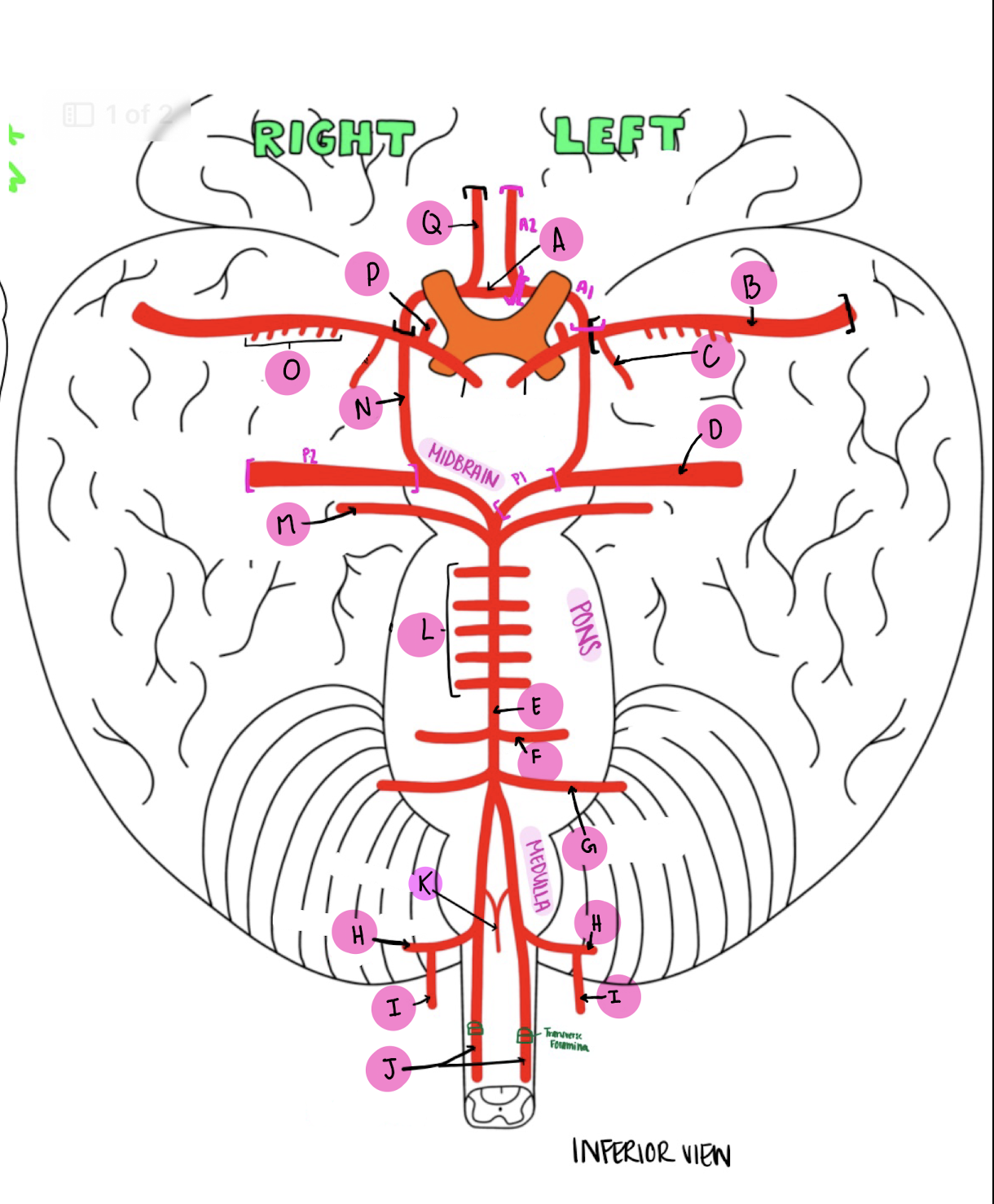
What artery is labeled A?
Anterior Communicating Artery
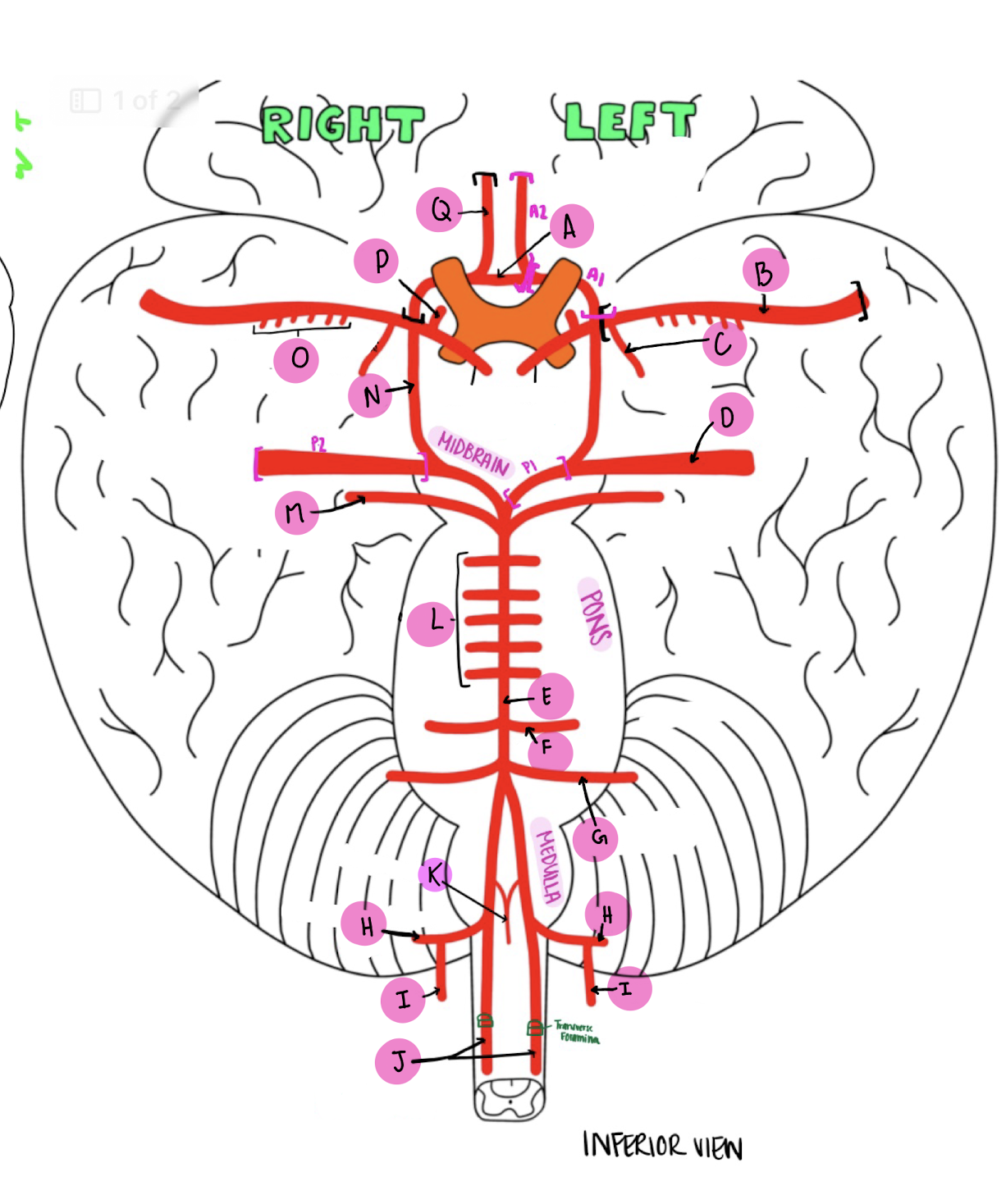
What artery is labeled B?
Middle Cerebral Artery
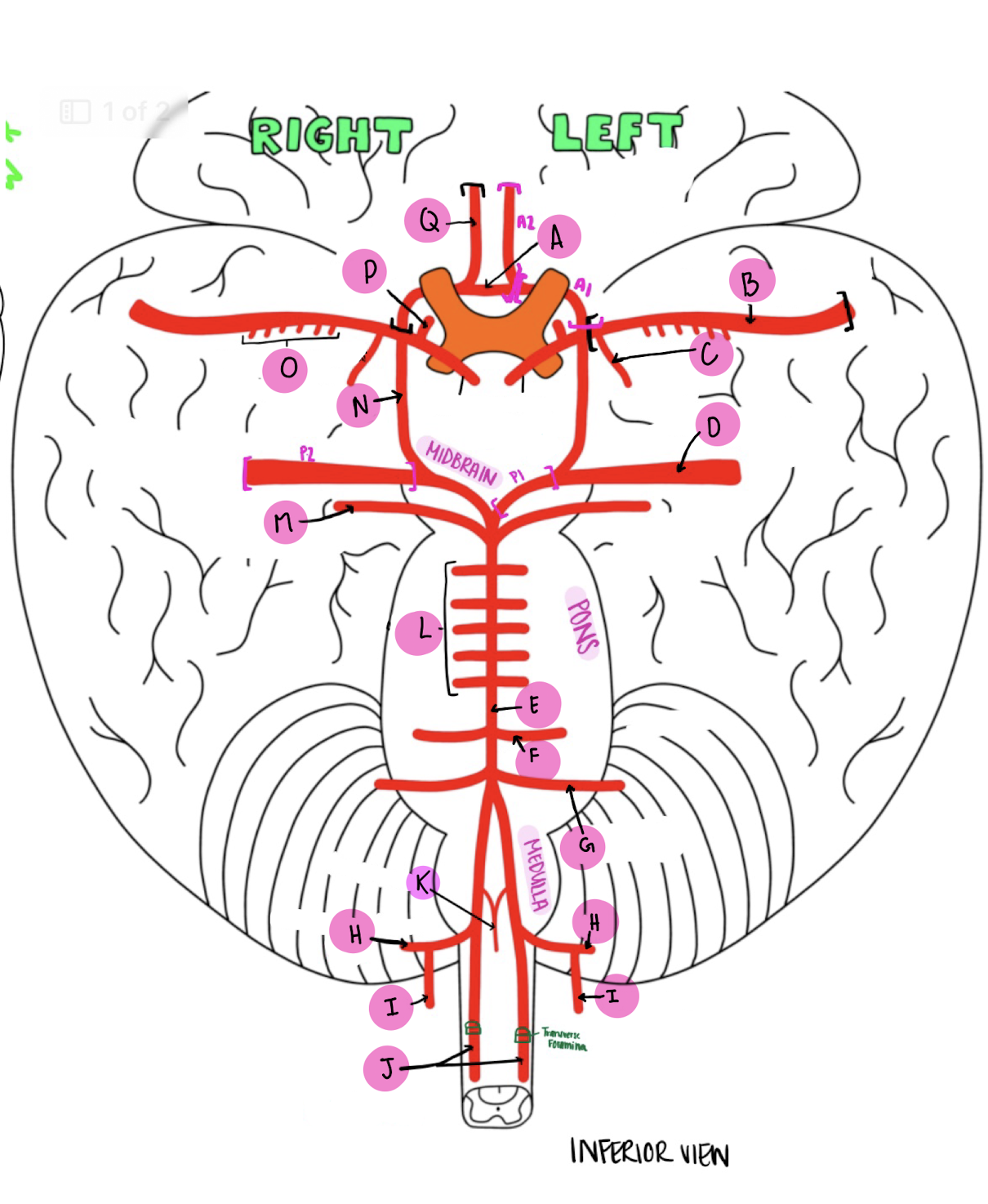
What artery is labeled C?
Anterior Choroidal Artery
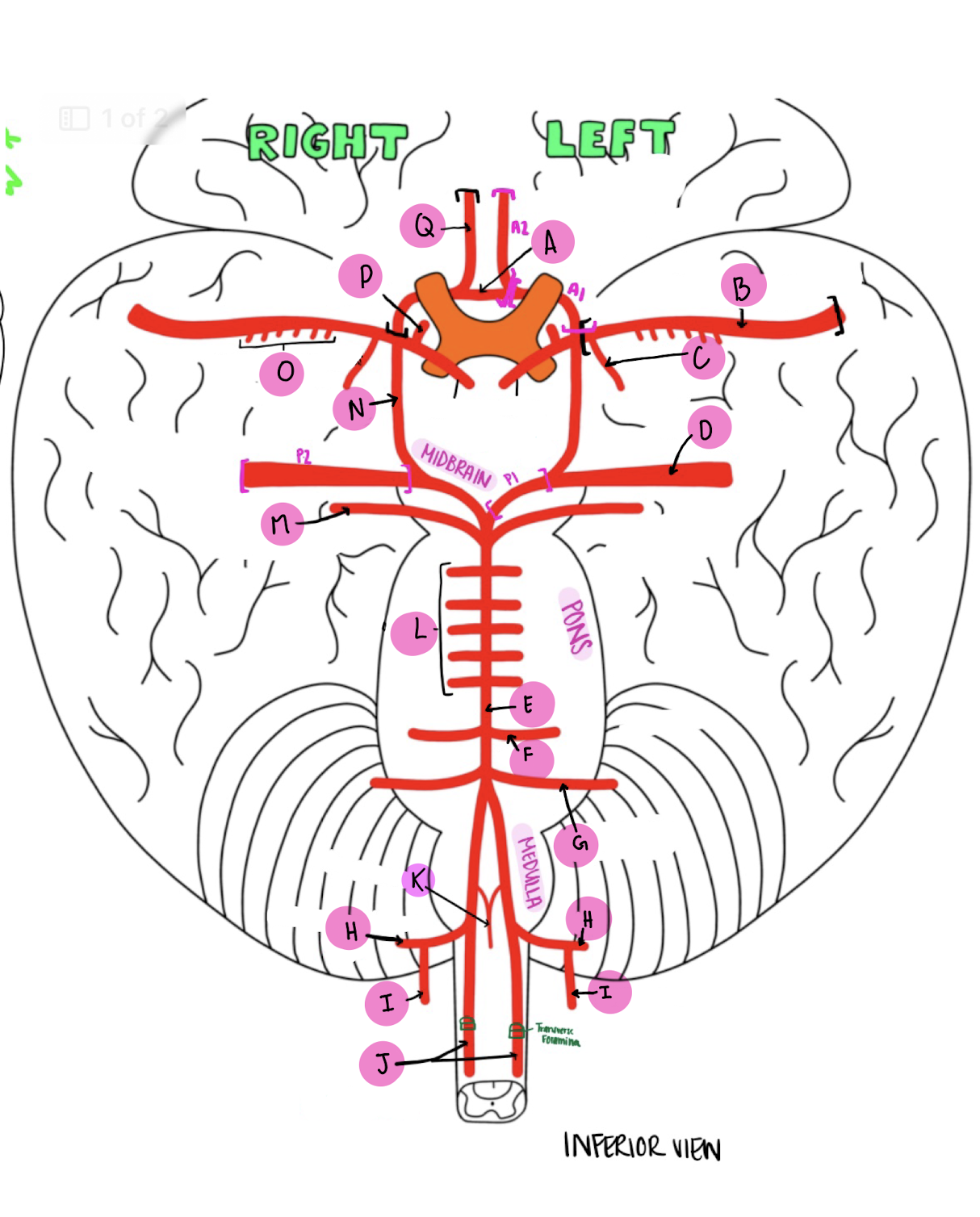
What artery is labeled D?
Posterior Cerebral Artery
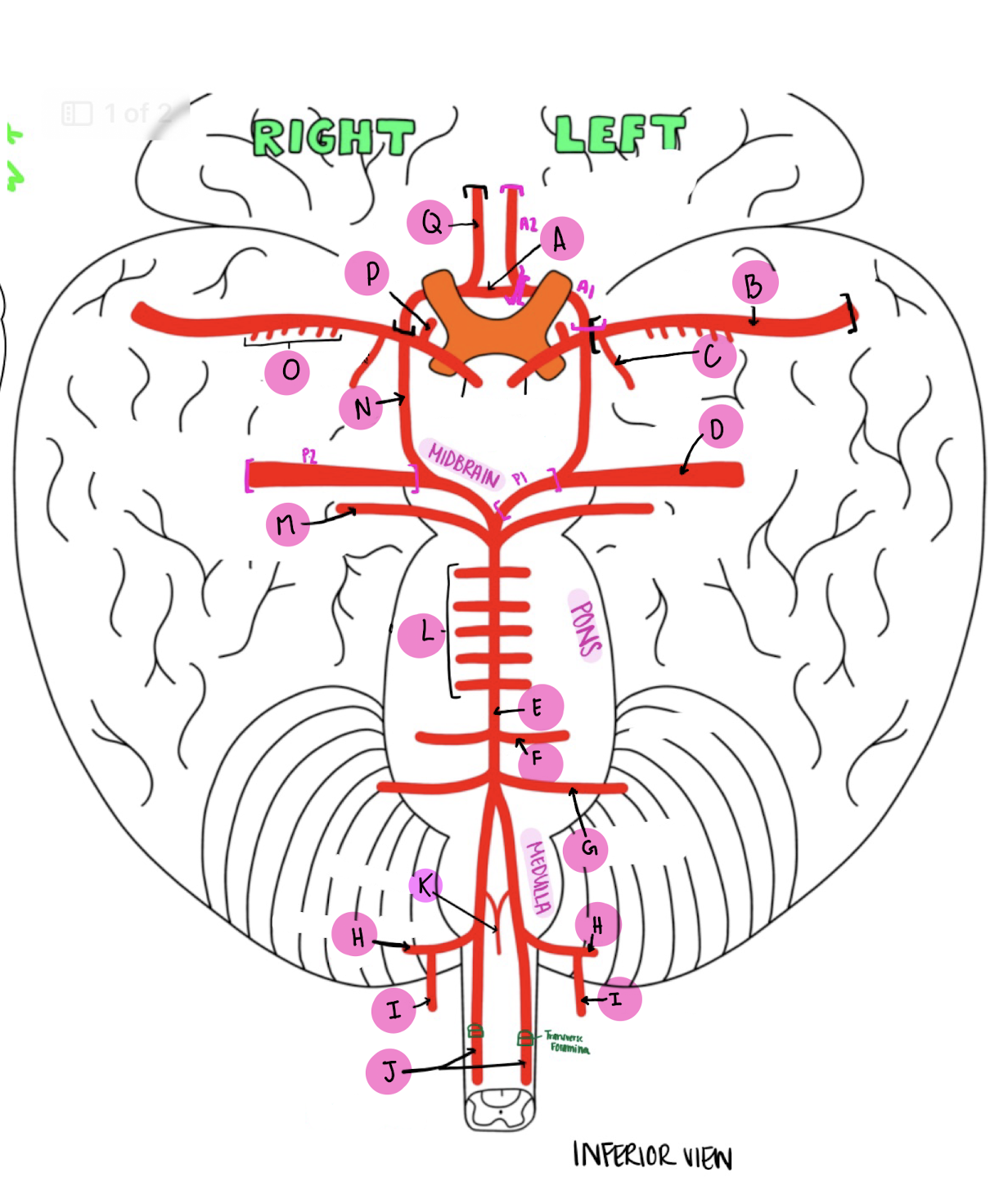
What artery is labeled E?
Basilar Artery
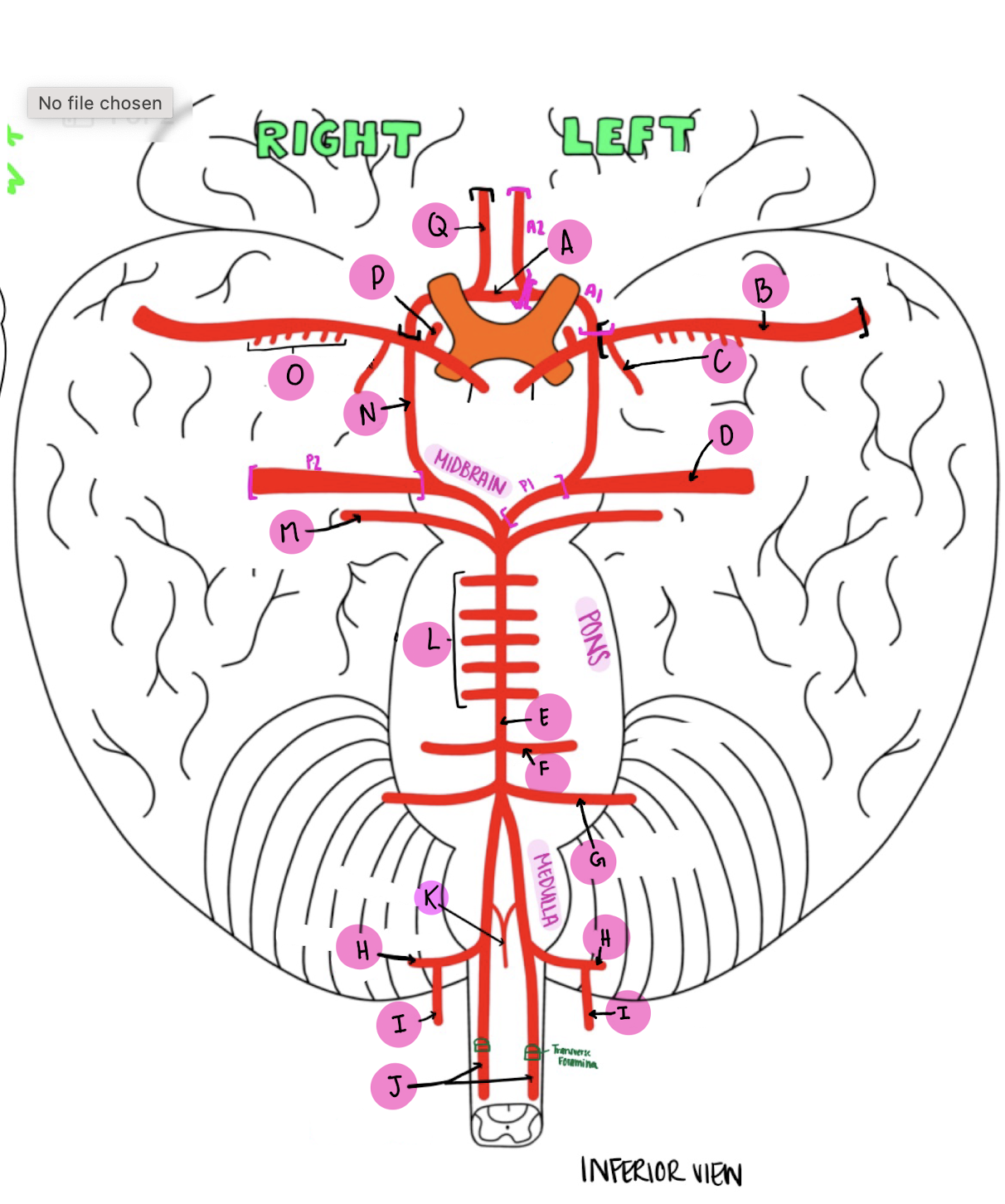
What artery is labeled F?
Labyrinthine Artery
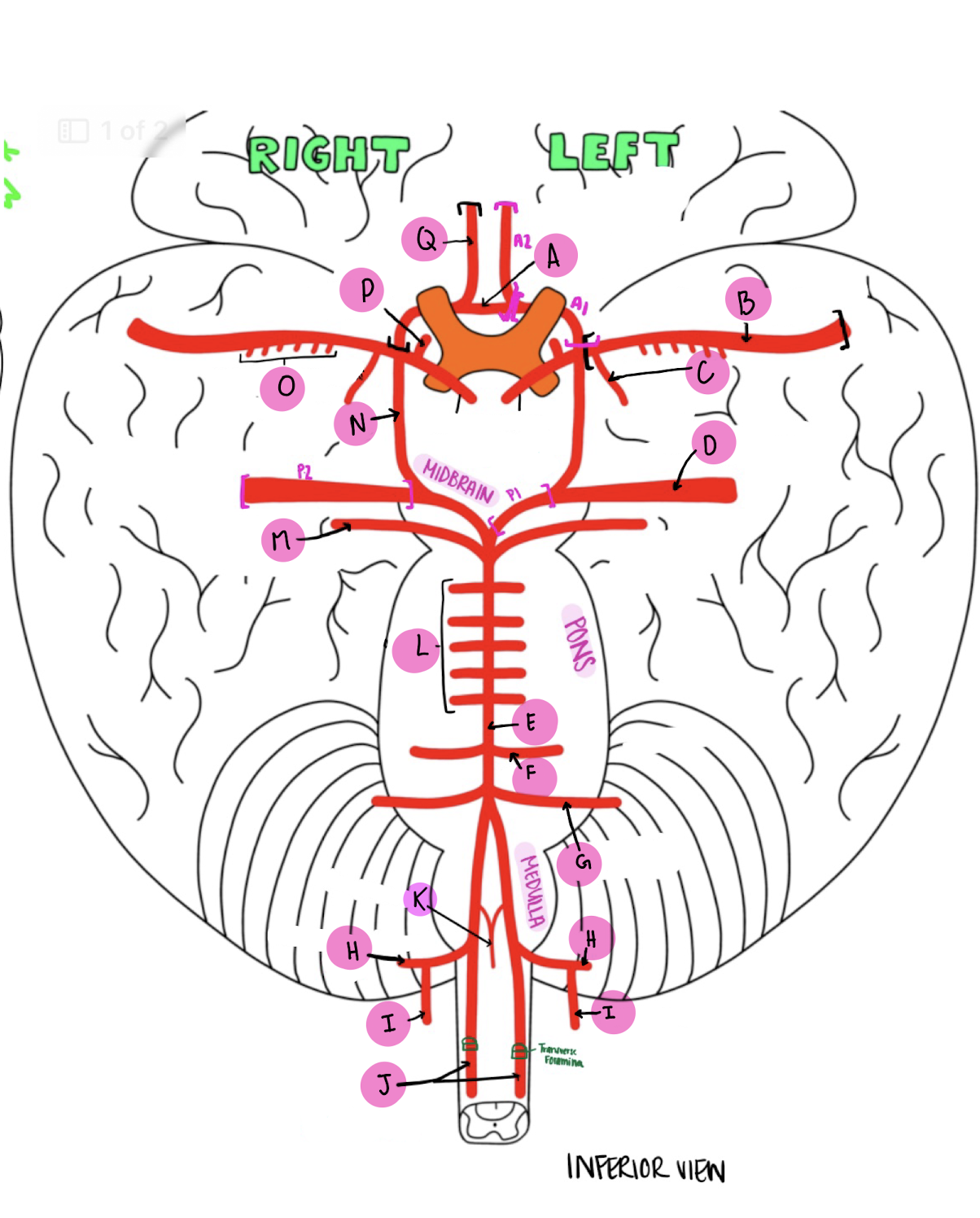
What artery is labeled G?
Anterior Inferior Cerebellar Artery (AICA)
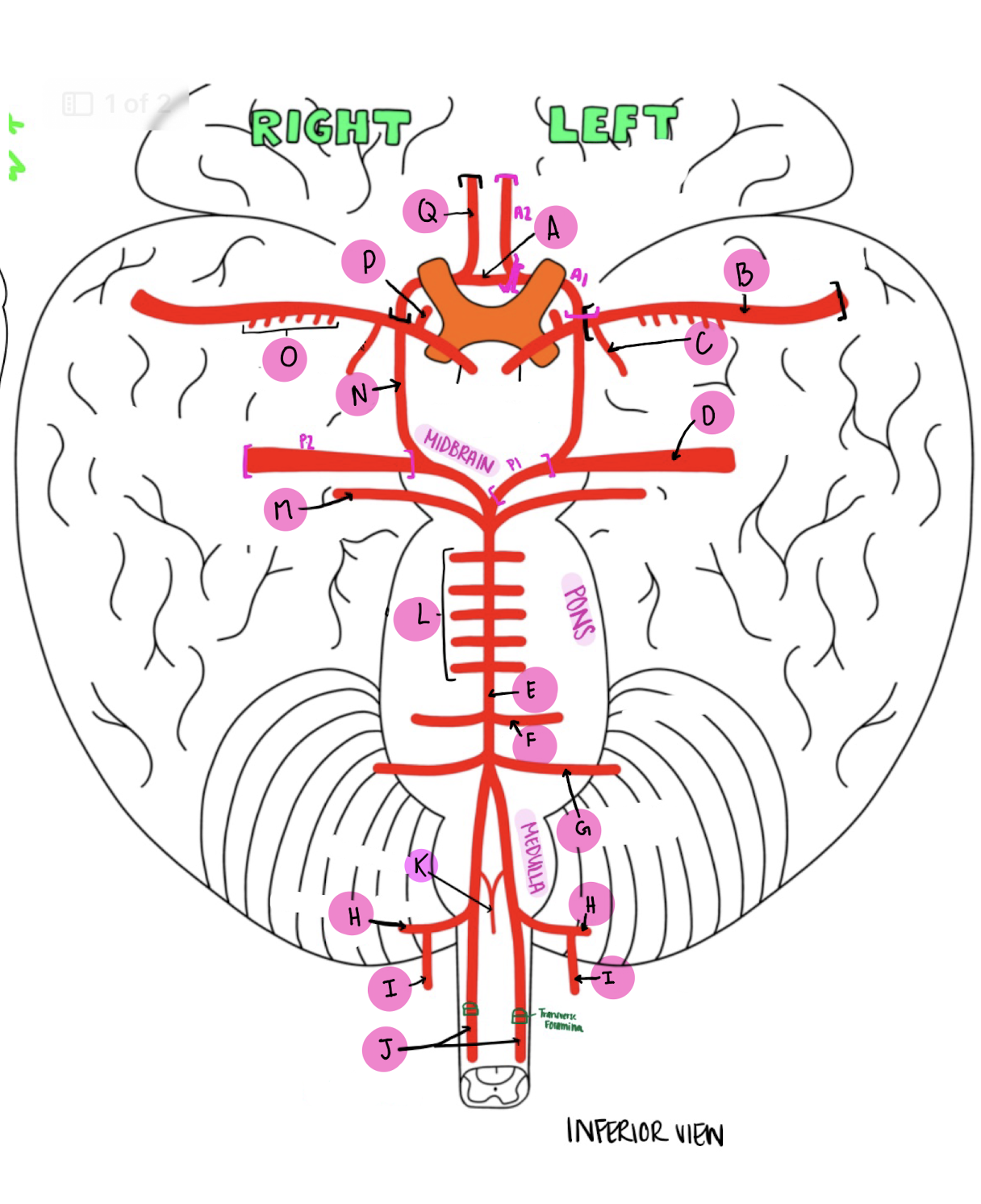
What artery is labeled H?
Posterior Inferior Cerebellar Artery (PICA)
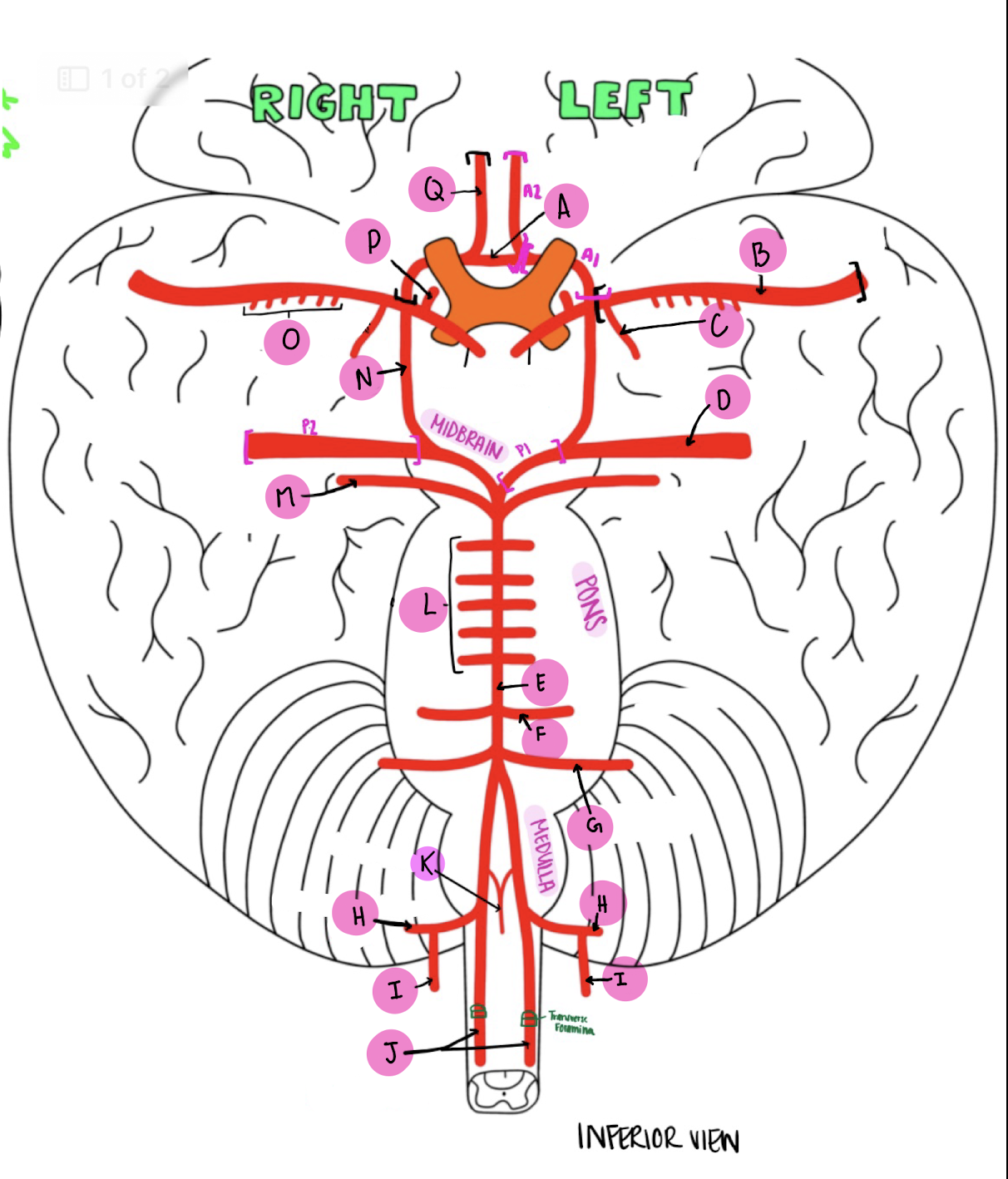
What artery is labeled I?
Posterior Spinal Artery
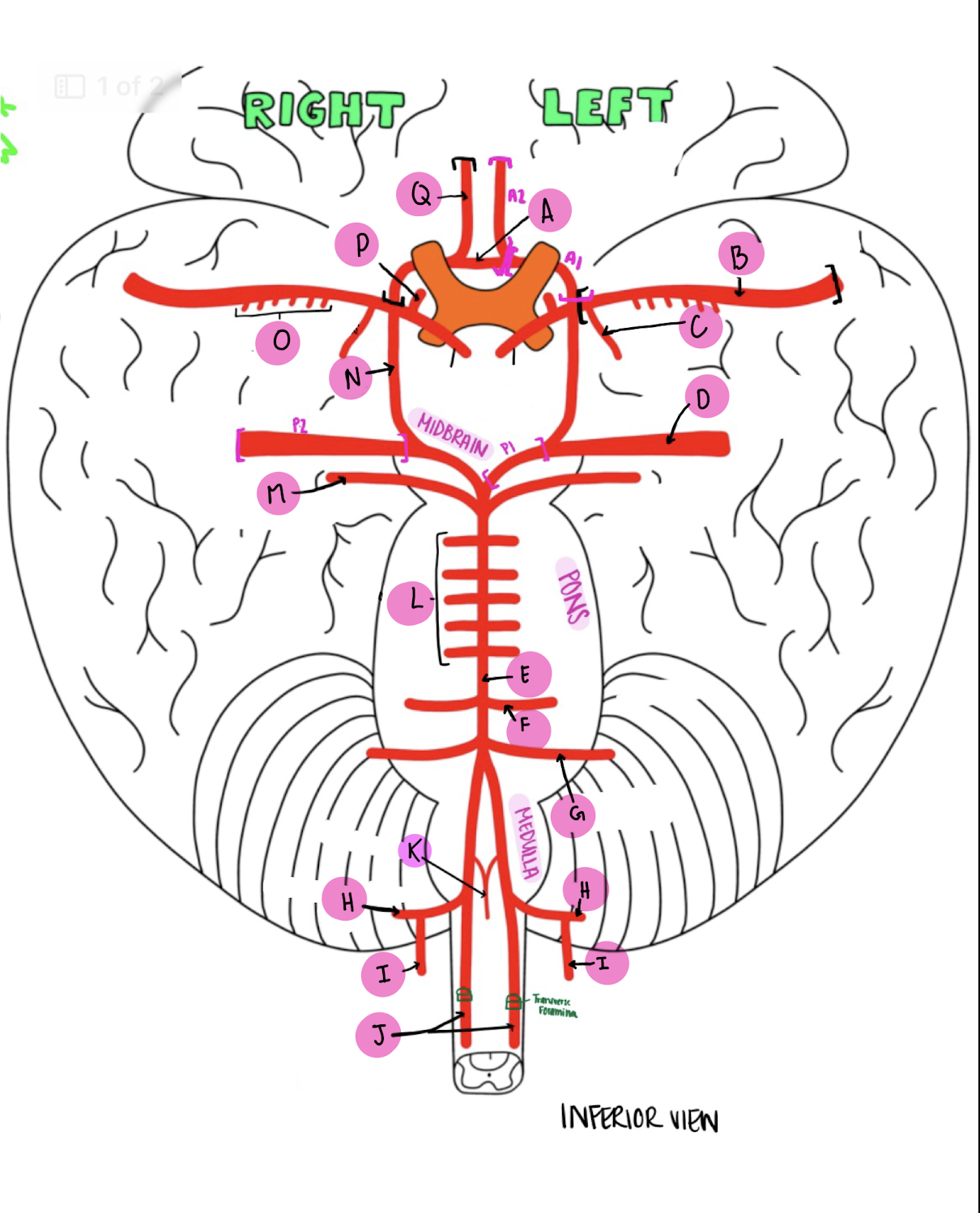
What artery is labeled J?
Vertebral Arteries
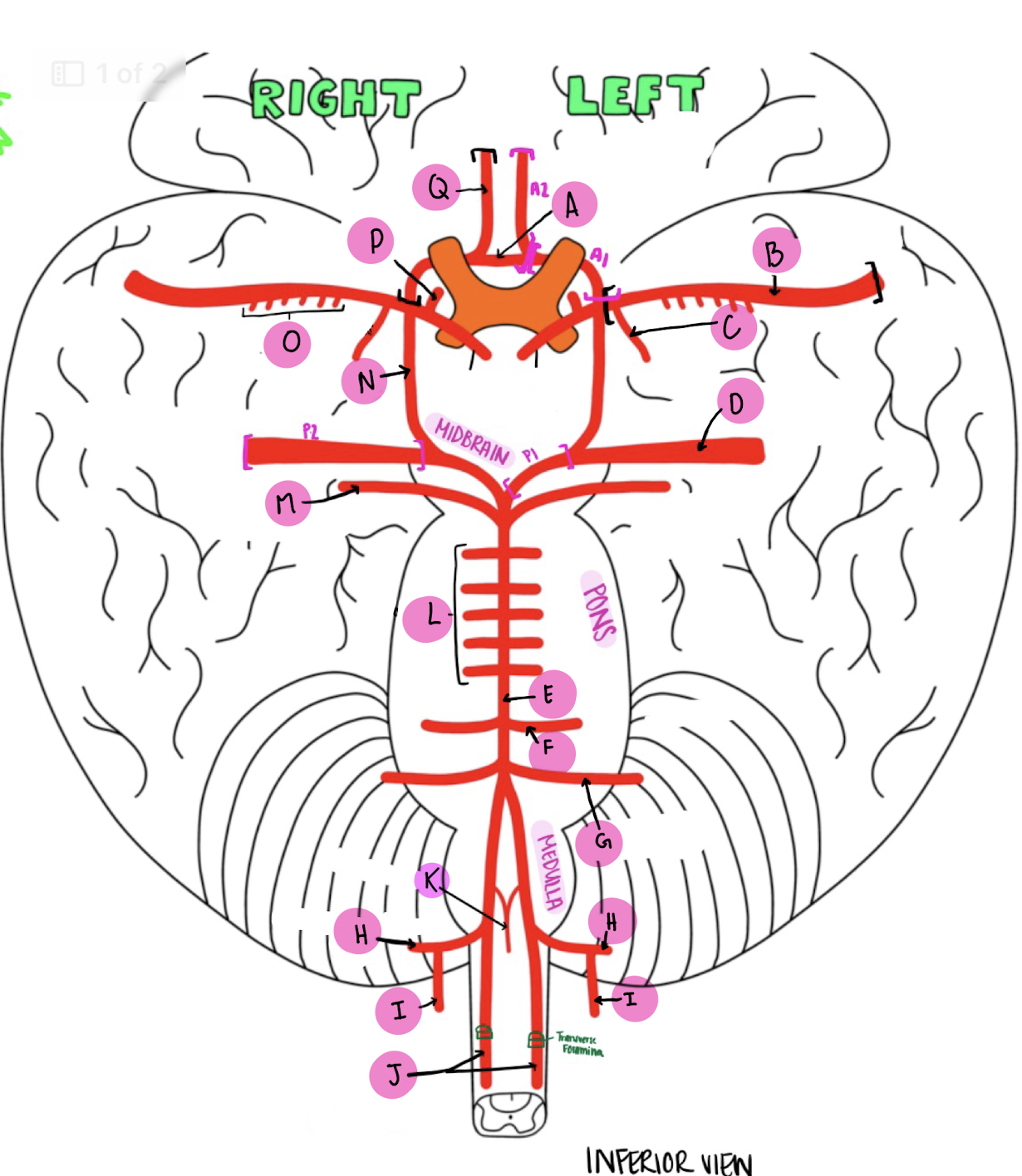
What artery is labeled K?
Anterior Spinal Artery
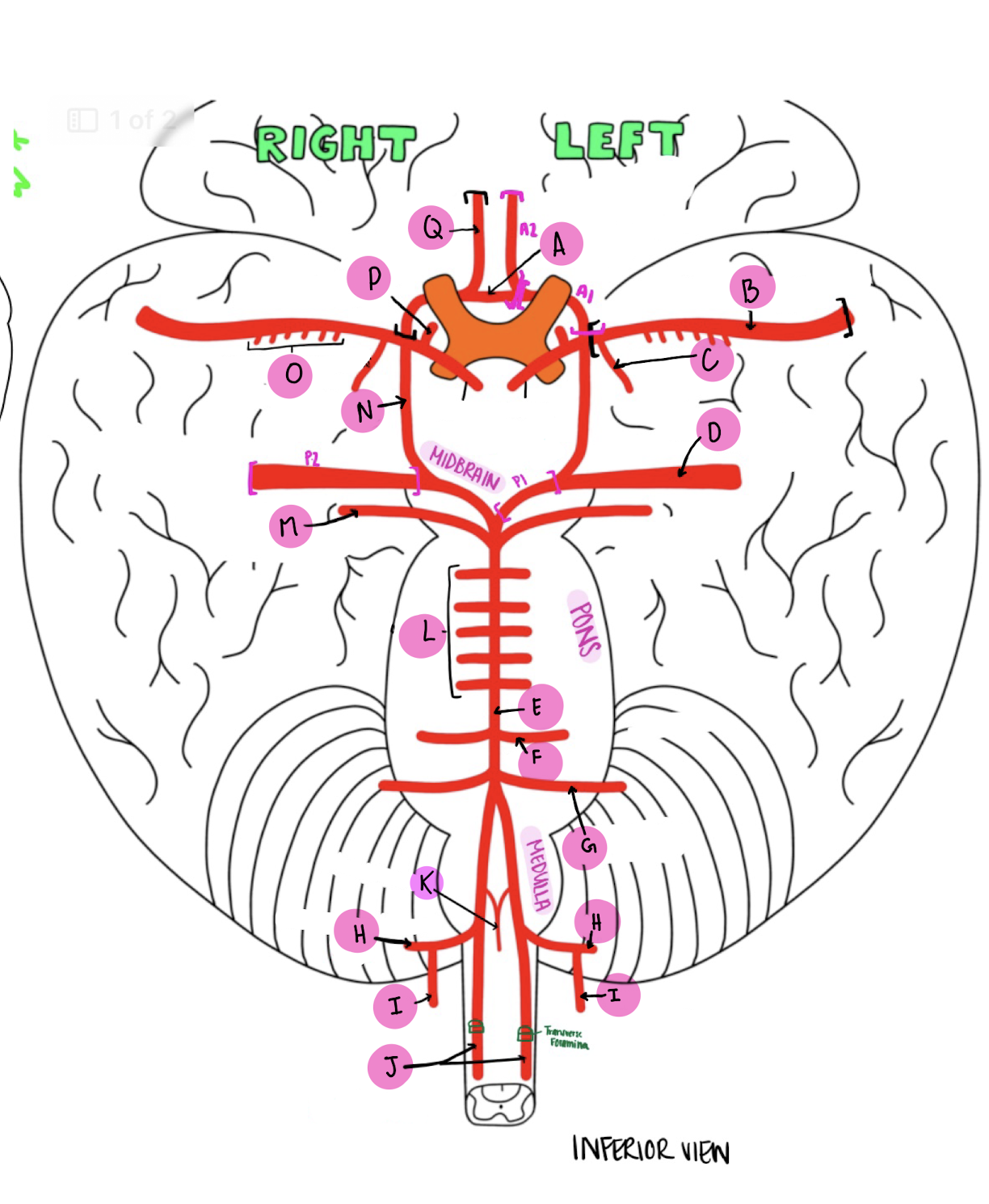
What artery is labeled L?
Pontine Arteries
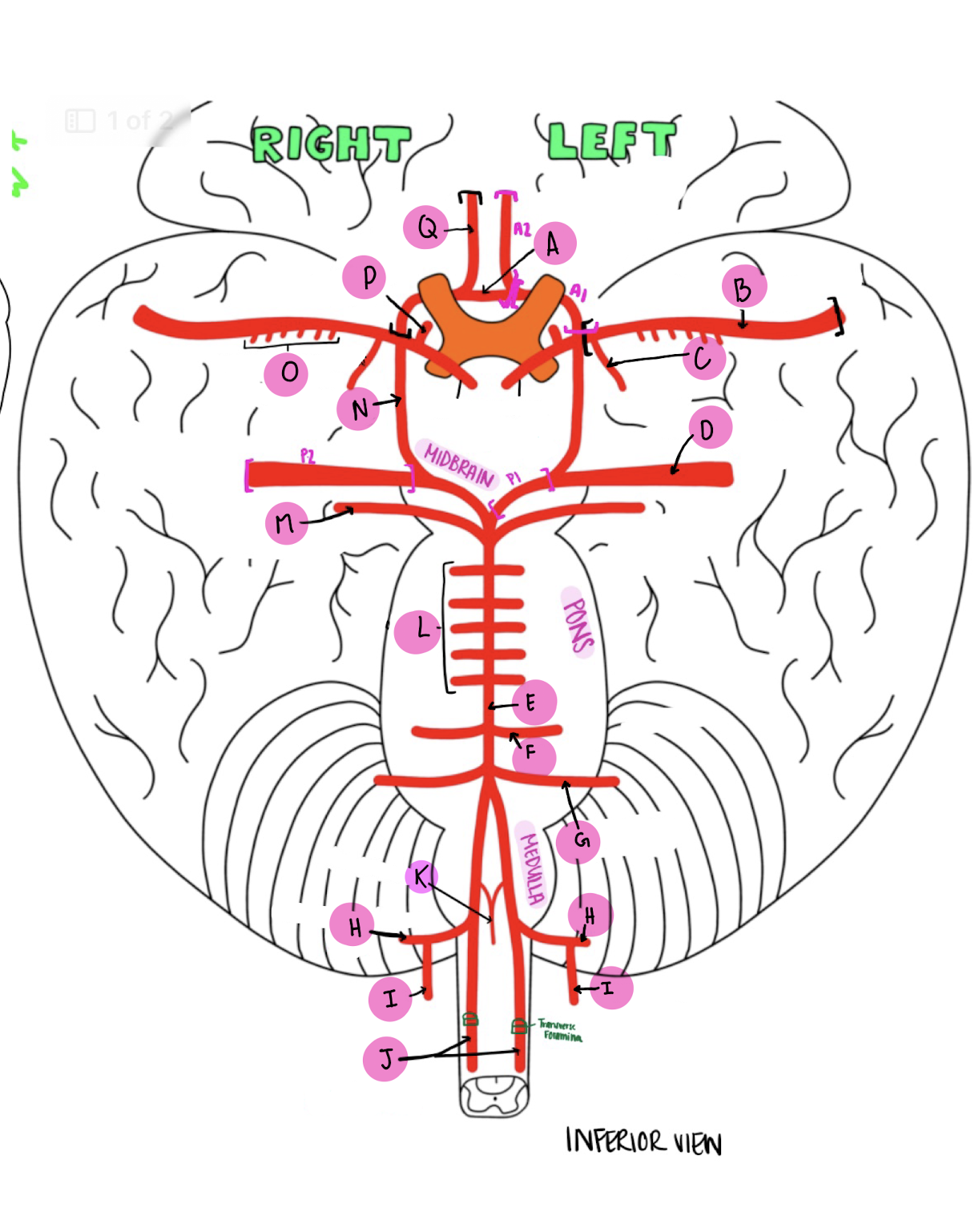
What artery is labeled M?
Superior Cerebellar Arteries
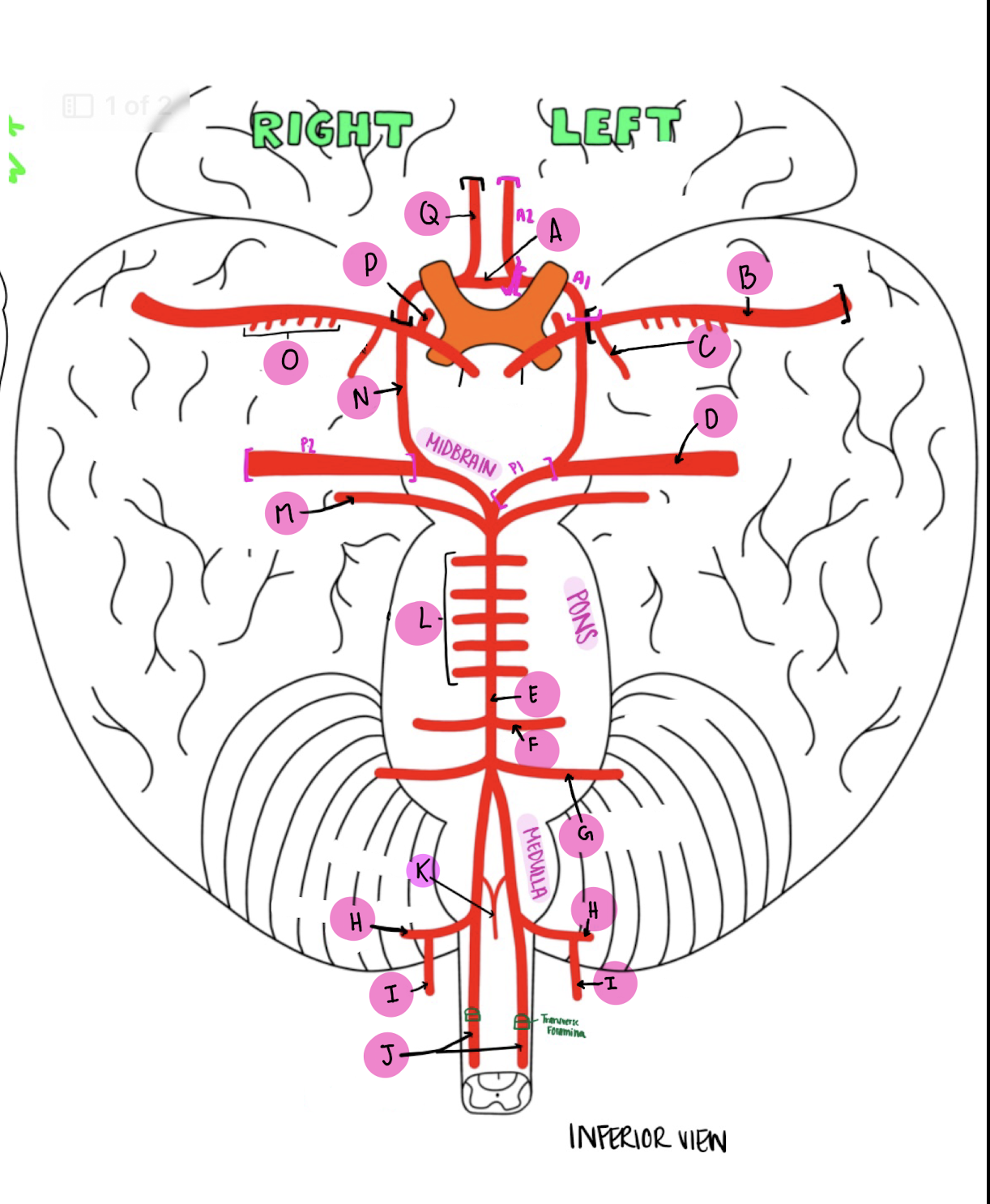
What artery is labeled N?
Posterior Communicating Arteries
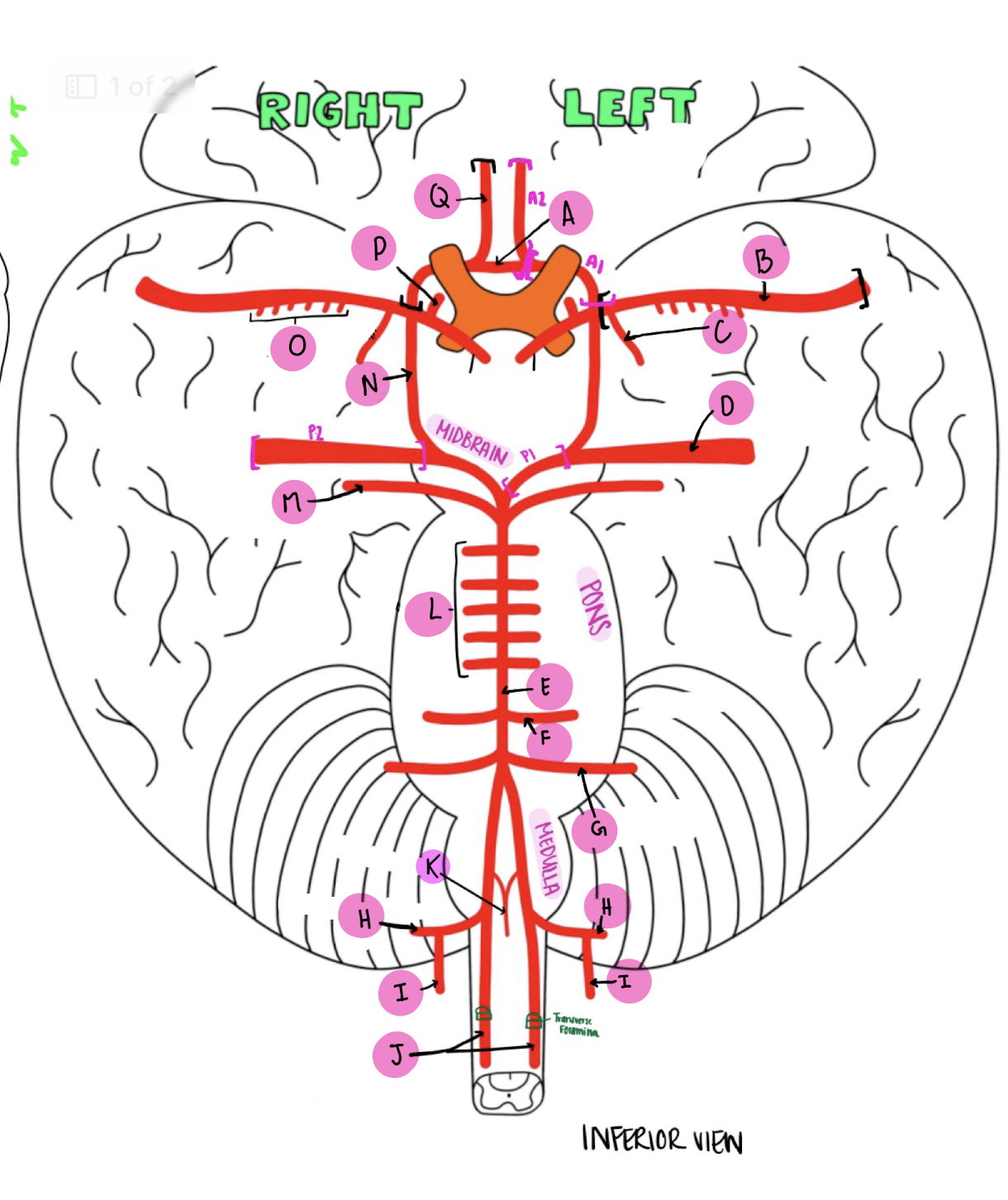
What artery is labeled O?
Lenticulo-striate arteries
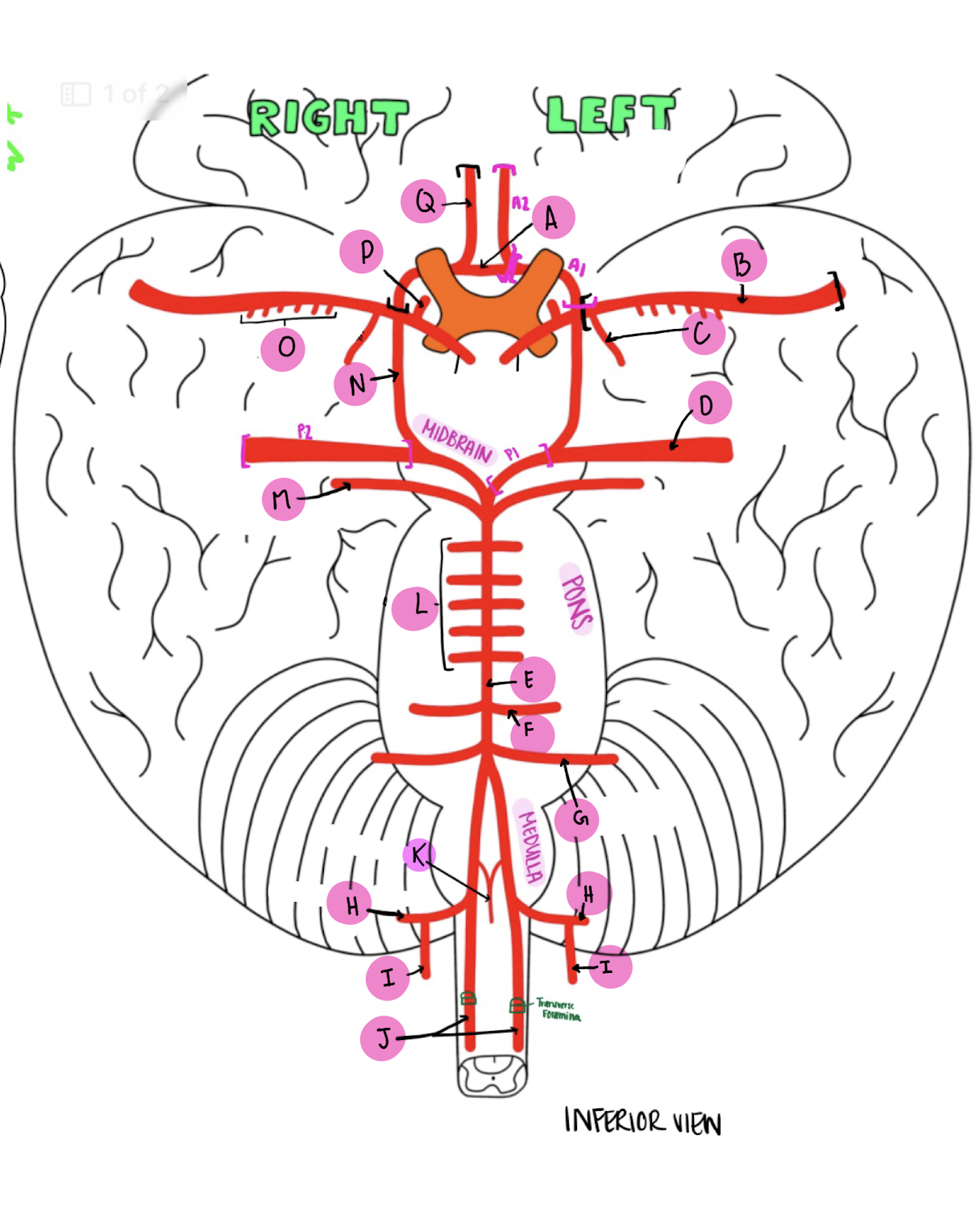
What artery is labeled P?
Ophthalmic Artery
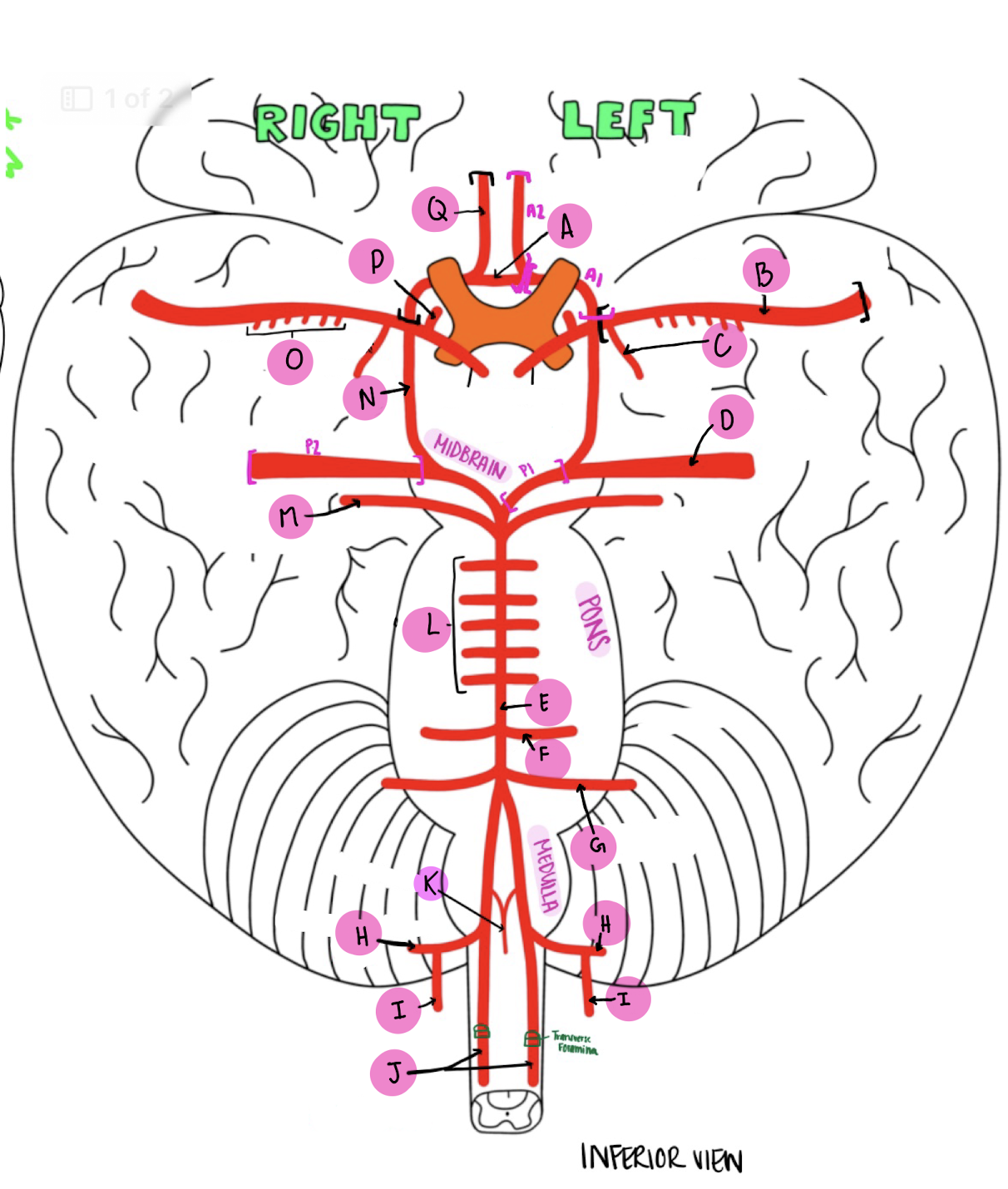
What artery is labeled Q?
Anterior Cerebral Artery