ch13 - neurones and action potential
 Call Kai
 Learn
Learn Practice Test
 Spaced Repetition
 Match
Match Flashcards
 Knowt Play
1/56

There's no tags or description
Looks like no tags are added yet.
Name | Mastery | Learn | Test | Matching | Spaced | Call with Kai |
|---|
No analytics yet
Send a link to your students to track their progress
57 Terms
what two systems is homeostasis monitored and controlled by?
Nervous and Hormonal system
what is a stimulus
a change in the internal or external environment
what are the 5 components of the nervous pathway which an electrical impulse is carried through
receptor > sensory neurone > central nervous system > motor neurone > effector
what is the role of the receptor
to detect and receive stimuli
what is the role of the sensory neurone
to carry electrical impulse from receptor to CNS
what is the role of the CNS
contains relay neurones that carry electrical impulse from sensory to motor neurone
what is another name for relay neurone
interneuron
what is the role of motor neurone
to carry electrical impulse from CNS to effector
what is the role of the effector
muscle or gland which will carry out a response
what are the typical components of a neurone
dendron/ dendrites
axon
cell body
nodes of ranvier
myelin sheath
what is the function of the dendron/ dendrites
to receive signal and carry impulse towards cell body
what is the difference between dendrons and dendrites
dendrites are shorter and highly branched
what is the function of the axon
to carry impulse away from cell body
what is the function of the cell body
it controls the cells activities and releases neurotransmitters according to the impulse it receives
what is the function of the nodes of Ranvier
gaps between the myelin sheath
what is the myelin sheath made of and why is it important
its made of layers of plasma membrane which provides electrical insulation allowing for saltatory conduction
what is saltatory conduction and why is it important
electrical impulses will jump between the nodes of Ranvier which speeds up rate of nerve transmission
what forms the myelin sheath
myelin sheath contains Schwann cells which forms it
image of the 3 types of neurones
what is a sensory receptor
specialised cells that detect stimuli
why are sensory receptors called transducers
because they convert one form of energy (e.g. thermal, light) into another (always electrical)
what are the 4 types of sensory receptors
mechanoreceptors
chemoreceptors
thermoreceptors
photoreceptors
what do mechanoreceptors detect and where are they found
detect = pressure and movement
located = skin, muscle
what do chemoreceptors detect and where are they found
detect = changes in the chemical composition of blood
located = nose, tongue, blood vessels e.g. carotid arteries and aorta
what do thermoreceptors detect and where are they found
detect = temperature changes
located = skin (detects external temp) & hypothalamus (internal temp)
what do photoreceptors detect and where are they found
detect = light
located = retina - by the cones and rods
how do photoreceptors work
light rays enter the eye
lens focuses the light rays onto the retina
photoreceptors in retina detect the light and convert light energy into electrical impulse carried via optic nerve to the brain
what is an example of a mechanoreceptor
Pacinian corpuscle
what are the stages when a Pacinian corpuscle is stimulated (add picture)
at resting state the stretch-mediated sodium ion (Na+) channels are too narrow for Na+ to enter maintaining a resting potential -70mV
when pressure is applied - corpuscle is stimulated - corpuscle deforms causing the membrane to stretch, which widens the Na+ channels allowing Na+ to diffuse in down the electrochemical gradient
membrane depolarises becoming less -ve which initiates a generator potential
if the generator potential reaches the threshold an action potential is triggered
when a cell is at resting potential what state is it in
it is polarised/charged and in state in which it can be stimulated
why is the resting potential of all our cells -70mV
due to the uneven distribution of charge, it is more -ve inside than outside due to there being a higher concentration of +ve ions outside
what does potential difference mean
when there is a difference in charge between two areas - this is caused by the uneven distrubution of charge
what does generator potential mean
a change in the potential difference due to a stimulus
what are the 6 stages for generating an action potential
1.resting potential
2.stimulation and passing threshold level
3.depolarisation
4.repolarisation
5.hyperpolarisation
6.refractory period
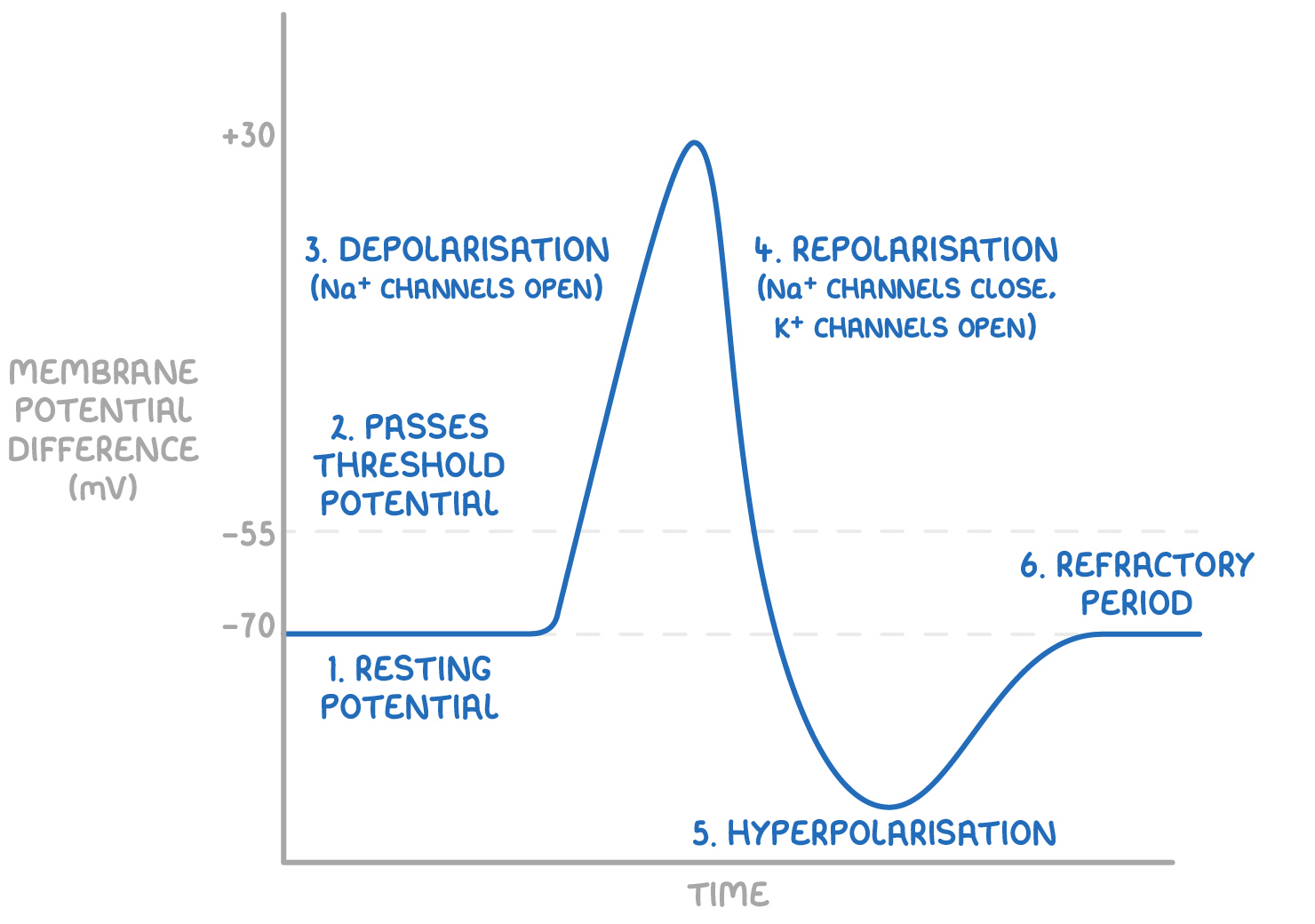
how is resting potential maintained
-Sodium-potassium ion pump = it is a carrier protein, uses ATP energy to actively transport 3Na+ out and 2K+ in neurone
-non VG Potassium ion (K+) channel = allows K+ to leave neurone by facilitated diffusion down its concentration gradient
-VG Sodium ion (Na+) channel = channels are closed preventing Na+ entering neurone
-permanent -ve ions
when an action potential occurs what state is the cell in
state in which membrane is being stimulated
what happens when a receptor detects and receives a stimulus
first few VG sodium ion channels (Na+) will open allowing sodium to enter axon by facilitated diffusion causing membrane to become less negative
if a stimulus is strong enough what happens
the adjacent VG sodium ion channels along will open causing Na+ conc. to increase reaching threshold potential of -55mV
what does depolarisation mean
when the membrane becomes less -ve, the inside is more positive relative to the outside
what happens in depolarisation
once threshold potential -55mV is reached the membrane becomes depolarised, so more VG sodium ion channels will open = BIG INFLUX of Na+
what is the maximum potential difference
depolarisation will continue until +40mV is reached
why must cells repolarise after an action potential
if the action potential occurs across the whole neuron membrane at once it can lead to seizures
what occurs during repolarisation
the membrane will start becoming more -ve because VG sodium channels close and VG potassium channels open allowing potassium to diffuse out the axon by facilitated diffusion
during repolarisation why is it important that the VG sodium channels close
to prevent depolarisation again
what occurs during hyperpolarisation
an excess of potassium ions leave the axon causing the membrane to become so negative it drops below the -70 mV resting potential
what occurs during refractory period
Sodium potassium ion (Na+ and K+) pumps reopen and reaches refractory period to restore the membrane back to -70mV resting potential
what are the 2 reasons why the refractory period important
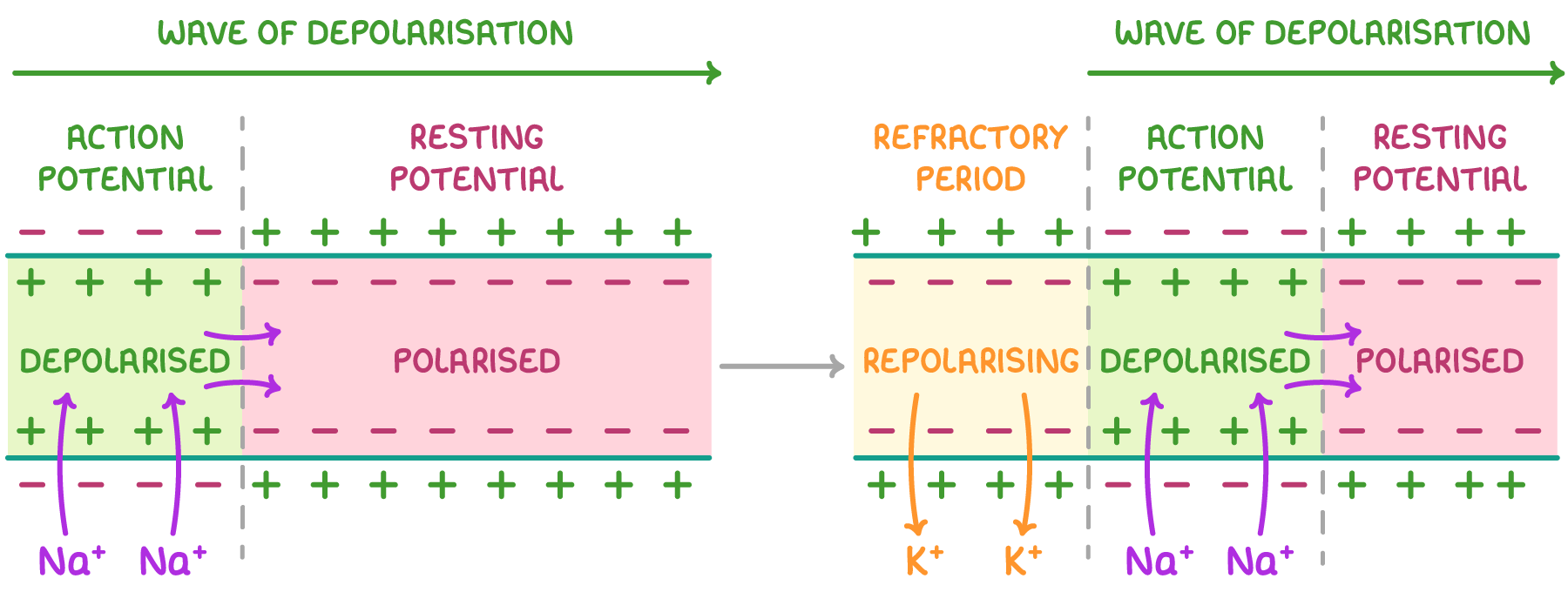
-cant generate another AP due to Na+ being closed (depolarisation cant occur) ensuring AP dont overlap
-ensure that impulses only travel in one direction preventing backflow
why is the regeneration of an action potential an example of positive feedback mechanism
the initial sodium ion influx depolarises the axon membrane causing more Na+ channels to open, leading to greater influx of Na+ so further depolarising the membrane
why are action potentials referred to as ‘all or nothing principle’
once threshold potential -55mV is reached an action potential will ALWAYS be triggered regardless of stimulus strength, if threshold potential is not reached then an AP will not be triggered
what is the misconception and the truth about a stronger stimulus
misconception = stronger stimulus will increase the size AP > this is wrong all AP are the same size
truth = stronger stimulus will increase FREQUENCE of AP generated
why is the propagation of an AP known as a ‘wave of depolarisation’
as each new section of the neurone membrane depolarises the next adjacent polarized section a ‘wave’ is formed, with the previous part entering refractory period
what are the three factors that affect speed of transmission of an AP
-myelination
-axon diameter/width
-temperature
how does myelination affect speed of transmission
Myelin sheath provide electrical insulation allowing for saltatory conduction = electrical impulses jump between the nodes of Ranvier = faster nerve impulse transmission
what is the disadvantage of unmyelinated neurones
they have slower nerve impulse transmission due to AP having to depolarise the whole neurone membrane
how does axon diameter/width affect speed of transmission
A larger axon diameter means there is less resistance to ion flow, so the wave of depolarisation travels faster along the axon.
Therefore, broader axons transmit impulses faster.
wider axon diameter = less resistance to the flow of ions (due to there being more space for ions to travel) = faster nerve impulse transmission
how does temperature affect speed of transmission
Higher temperature = faster diffusion of ions = faster depolarisation = faster nerve impulse transmission
what is the issue if temperature is too high
causes proteins to denature which results in slower impulse transmission due to membrane damage

