Ch 6: Fluid, Electrolyte, Acid-Base Homeostasis Pt 1
 Call Kai
 Learn
Learn Practice Test
 Spaced Repetition
 Match
Match Flashcards
 Knowt Play
1/68

There's no tags or description
Looks like no tags are added yet.
Name | Mastery | Learn | Test | Matching | Spaced | Call with Kai | Chat |
|---|
No analytics yet
Send a link to your students to track their progress
69 Terms
Intracellular Fluid (ICF)
fluid inside cells
Approximately 40% of total body weight
Total space within cells primarily defined as cytoplasm of cells
Extracellular Fluid
fluid outside the cell
Interstitial fluid (ISF)
between the cells
Intravascular fluid
inside the blood vessels
Transcellular fluid (TSF)
(i.e., CSF; pleural & pericardial cavities; joint spaces)
Osmolarity
a measure of the concentration of particles of a solute in a liter of the liquid in which they are dissolved (solvent).
Tonicity
the capability of a solution to modify the volume of cells by altering their water content. The effect of a solution on cell volume
osmotic pressure of two solutions separated by a semipermeable membrane
Osmosis
Movement of water across a semipermeable membrane (from an area of low solute concentration to an area of high solute concentration).
Diffusion
Water moves from an area of higher water concentration to an area of lower concentration. Movement depends on hydrostatic (push) and osmotic (pull) pressures.
Isotonic solutions
Equal solute concentrations, causes no fluid shifts
Hypotonic solutions
Lower solute concentrations, causing fluids to shift out of the intravascular compartment > intracellular space
Hypertonic solutions
Higher solute concentrations, causing fluids to shift from the intracellular compartment > the intravascular space
Fluid Balance Pressures
Because water moves freely across cell membranes, equilibrium is usually easy to achieve
Movement of water depends on hydrostatic (push) and osmotic (pull) pressures
Osmotic pressure
The "pulling" force on water due to the presence of solutes in solution. Regulated by the plasma protein, Albumin
Hydrostatic pressure
forces fluid out of the capillary, osmotic pressure draws fluid back in
Blood Pressure
Fluid sources
Oral intake, intravenous solutions (iso-, hypo-, or hypertonic)
Fluid lossess
sensible (urine, feces); insensible (sweat, respirations
Thirst mechanism in hypothalamus
triggered by decreased blood volume and increased osmolarity
Antidiuretic Hormone (ADH)
released from pituitary gland and promotes reabsorption of water in the kidneys
Aldosterone
increases reabsorption of sodium and water in the kidneys (renal tubules)
Atrial natriuretic peptide (ANP)
stimulates renal vasodilation and suppresses aldosterone, increasing urinary output
Edema
■Excess fluid in the interstitial space
■Issue with distribution, not always fluid overload
Anasarca
generalized edema
Hypervolemia/Fluid volume excess
■Excess fluid in the intravascular space
■Excessive sodium or water intake & insufficient losses
Water Intoxication
■Excess fluid in the intracellular space
■May lead to rupture (lysis) of the cells with cerebral cells being most sensitive
Excessive Sodium or Water intake Causes
■High-sodium diet
■Psychogenic polydipsia (excessive thirst)
■Hypertonic fluid administration (where is the fluid going?)
■Free water
■Enteral feedings
Inadequate sodium or water elimination Causes
■Hyperaldosteronism
■Cushing's syndrome
■Syndrome of inappropriate antidiuretic hormone
■Renal failure
■Liver failure
■Heart failure
Excess Fluid Manifestations
Peripheral edema
Periorbital edema
Anasarca (general swelling in the entire body)
Cerebral edema
Rapid weight gain
Dyspnea, crackles
Bounding pulse, tachycardia, hypertension
Jugular vein distension
Polyuria
Bulging fontanelles (in babies)
Fluid Deficient
total body fluid levels insufficient to meet body's needs
Dehydration
body loses more fluid than what is taken in
Hypovolemia or fluid volume deficit
Decreased fluid in the intravascular space
can occur independently without electrolyte defects
Decrease in fluid level
leads to increase in level of blood solutes, cell shrinkage, and hypotension
Inadequate Fluid Intake Causes
■Poor oral intake
■Inadequate IV fluid replacement
Excessive fluid or sodium losses causes
■Gastrointestinal losses
■Excessive diaphoresis
■Prolonged hyperventilation
■Hemorrhage
■Nephrosis
■Diabetes mellitus
■Diabetes insipidus
■Burns
■Open wounds
■Ascites
■Effusions
■Excessive use of diuretics
Osmotic diuresis
Fluid Deficit Manifestations
thirst
dry mucous membranes
decreased skin turgor (hydrostatic pressure)
weight loss
altered level of consciousness
hypotension, tachycardia, weak and thready pulse, flat jugular veins
oliguria
sunken fontanelles (in babes)
Electrolyte Balance
■Crucial role in homeostasis
■Muscle and neural activity
■Acid-base and fluid balance
Cations
positively charged electrolytes
Anions
negatively charged electrolytes
Electrolytes
Sodium+, Potassium+, Calcium+, Magnesium+, Chloride-
Sodium+
■Extracellular fluid (ECF): neurological function; regulates fluid volume
■Kidney reabsorbs
Potassium
■Intracellular fluid (ICF): muscle contraction; cardiac conduction
■Kidneys eliminate
Calcium +
■Bone health; neuromuscular function; cardiac function
■Insufficiency leads to osteoporosis
Magnesium
■ICF; bone; many cellular functions
■Alcoholism leads to low levels
Chloride
■ECF; bound to other ions
■Essential for HCL production
Sodium
⚬Plays a role in acid-base balance
⚬Facilitates muscles and nerve impulses through the sodium-potassium pump
⚬Main source is dietary intake
Normal Sodium Range
135-145 mEq/L
Hypernatremia Causes
SODIUM >145 mEq/L)
Excessive sodium (dietary sodium, hypertonic IV saline, Cushing's syndrome, corticosteroid use)
Deficient water (insufficient intake, third spacing, excessive output, prolonged hyperventilation, diuretic use, diabetes insipidus)
Hypernatremia Manifestations
symptoms of dehydration (increased temperature, warm and flushed skin, dry and sticky mucous membranes,) increased thirst, irritability, agitation, weakness, headache, seizures, lethargy, coma, blood pressure changes, tachycardia, weak and thready pulse, edema, decreased urine output
FRIED SALT (Hypernatremia acronym)
F-Fever, flushed skin
R- Restlessness, irritability
I- Increased fluid retention and blood
pressure
E- Edema (peripheral and pitting)
D- Decreased urine output, dry mouth
S- Skin flushed
A- Agitation
L- Low-grade fever
T- Thirst
Hyponatremia causes
SODIUM
Hyponatremia Manifestations
anorexia, gastrointestinal upset, dry mucous membranes, blood pressure changes, pulse changes, edema, headache, lethargy, confusion, diminished deep tendon reflexes, muscle weakness, seizures, and coma
SALT LOSS (Hyponatremia Acronym)
S- Seizures
A- Abdominal cramping
L- Lethargy
T- Tendon reflexes diminished
L- Loss of urine and appetite
O- Orthostatic Hypotension
S- Shallow respirations
S- Spasms of muscles
Potassium
The primary intracellular cation
Excreted through the kidneys and gastrointestinal tract
Plays a role in electrical conduction (nervous, musculoskeletal, cardiovascular), acid-base balance, and metabolism
Main source is dietary intake
Serum potassium cannot fluctuate much without causing serious issue!
NORMAL RANGE:
3.5-5 mEq/L
Hyperkalemia manifestations
POTASSIUM >5 mEq/L)
paresthesia, muscle weakness, flaccid paralysis, bradycardia, dysrhythmias, EKG changes, cardiac arrest, respiratory depression, abdominal cramping, nausea, and diarrhea
Hyperkalemia causes
Excretion- renal failure, Addison's disease, certain medications, and Gordon's syndrome,
Intake- oral potassium supplements, salt substitutes, and rapid intravenous administration of diluted potassium Increased release from cells: acidosis, blood transfusions, and burns or any other cellular injuries
MURDER (Hyperkalemia Acronym)
M- muscle weakness
U- urine (oliguria/ anuria)
R- respiratory distress
D- decreased cardiac contractility
E- ECG changes
R- reflexes
Hypokalemia Causes
POTASSIUM
Hypokalemia Manifestations
muscle weakness, paresthesia, hyporeflexia, leg cramps, weak and irregular pulse, hypotension, dysrhythmias, electrocardiogram changes, decreased bowel sounds, abdominal distension, constipation, ileus, and cardiac arrest
SIC WALT (Hypokalemia acronym)
S- Stomach issues (constipation, distension)
I- irritability
C- confusion
W- weakness
A- arrhythmias
L- light reflexes (hyporeflexia)
T- thready pulse
Calcium
Mostly found in the bone and teeth
Has synergistic relationship with magnesium
Plays a role in blood clotting, hormone secretion, receptor functions, nerve transmission, and muscular contraction
Main source is dietary intake (vitamin D aids absorption)
Has inverse relationship with phosphorus
Regulated by vitamin K, parathyroid hormone, and calcitonin
Calcium normal range
4-5 mEq/L
Hypercalcemia Causes
Increased intake or release: calcium antacids, calcium supplements, cancer, immobilization, corticosteroids, vitamin D deficiency, and hypophosphatemia
Calcium >5 mEq/L
Hypercalcemia Manifestations
GI symptoms (pain, N/V), bone pain, kidney stones, fatigue, malaise, constipation, polyuria, polydipsia, lethargy, confusion, depression, memory loss
Hypocalcemia Causes
Calcium
Hypocalcemia Manifestations
seizures, tetany (involuntary muscle contractions), paresthesias (burning, prickling sensation), anxiety, depression, ventricular tachycardia that could be fatal, positive Trousseau's and Chvostek's signs
Trousseau sign
Occlusion of arterial blood flow elicits carpal spasm

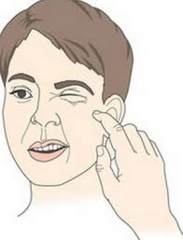
Chvostek sign
Tapping patient's facial nerve prompts brief facial spasm
Hypercalcemia Manifestations Acronym
Stones: kidney stones
Bones: bone pain
Groans: GI symptoms/pain, constipation
Moans: lethargy, fatigue, confusion, memory loss, depression
Thrones: polyuria, polydipsia
Hypocalcemia Manifestations Acronym
P- parasthias, positive truseaus/chvosteks
A- arrhythmias, anxiety
T- tetany
S- seizures, convulsions