Pt Care 3: Module 5 - 7: Anticoagulation, Acute Coronary Syndrome, Heart Failure, Anticoagulation, and Arrhythmias
 Call Kai
 Learn
Learn Practice Test
 Spaced Repetition
 Match
Match Flashcards
 Knowt Play
1/239

There's no tags or description
Looks like no tags are added yet.
Name | Mastery | Learn | Test | Matching | Spaced | Call with Kai | Chat |
|---|
No analytics yet
Send a link to your students to track their progress
240 Terms
Module 5: Anticoagaulation and ACS
Module 5: Anticoagaulation and ACS
Plaque Rupture and Clot Formation
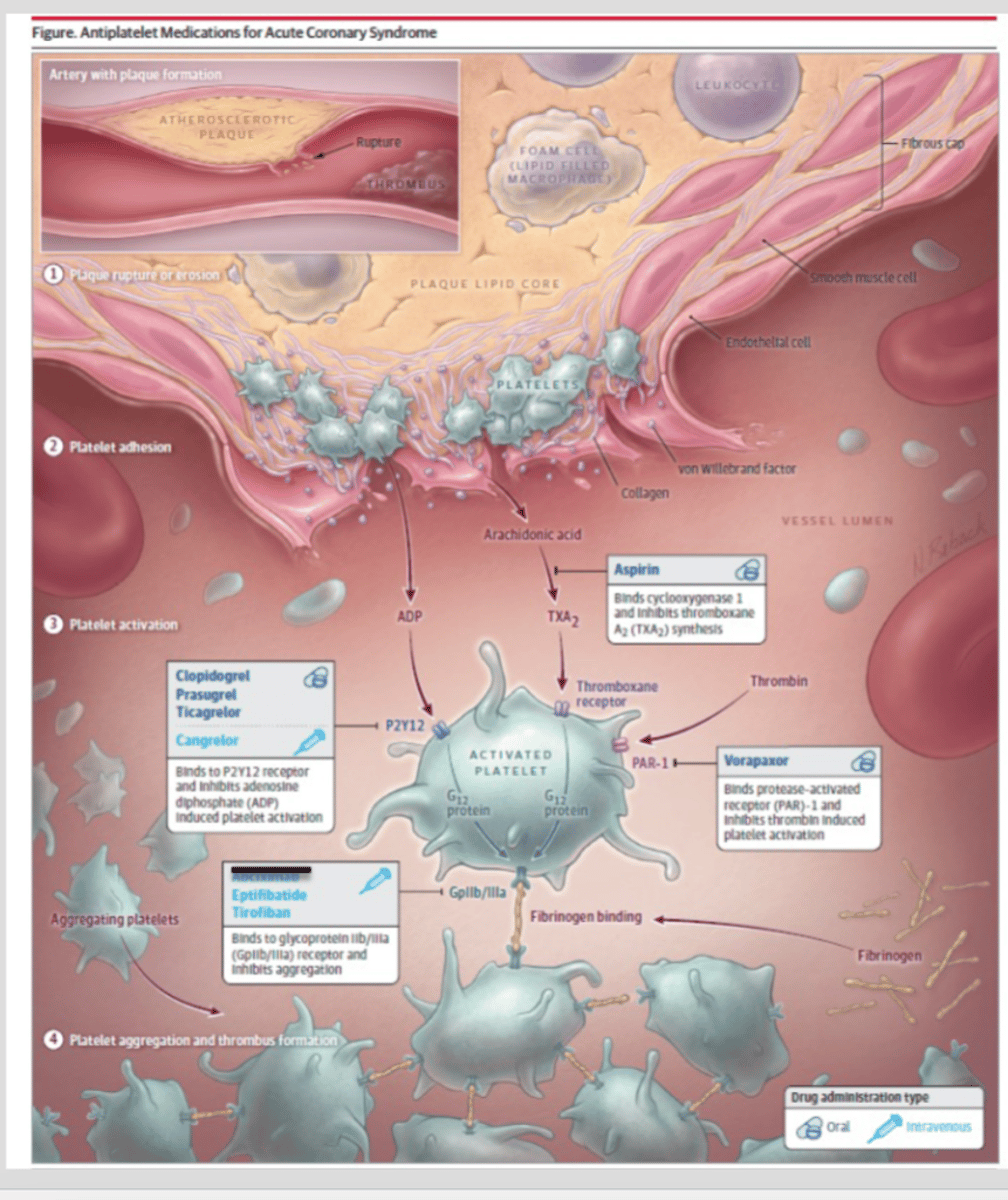
Following plaque rupture, a clot (a partially or completely occlusive thrombus) forms on top of the ruptured plaque.
The thrombogenic contents of the plaque are exposed to blood elements. Exposure of collagen and tissue factor induces platelet adhesion and activation, which promote the release of platelet-derived vasoactive substances including adenosine diphosphate (ADP) and thromboxane A2 (TXA2).
These produce vasoconstriction and potentiate platelet activation. Furthermore, during platelet activation, a change in the conformation in the glycoprotein (GP) IIb/IIIa surface receptors of platelets occurs that cross-links platelets to each other through fibrinogen bridges. This is considered the final common pathway of platelet aggregation.
The inclusion of platelets gives the clot a white appearance.
Simultaneously, the extrinsic coagulation cascade pathway is activated as a result of exposure of blood components to the thrombogenic lipid core and disrupted endothelium, which are rich in tissue factor. This leads to the production of thrombin (factor IIa), which converts fibrinogen to fibrin through enzymatic activity. Fibrin stabilizes the clot and traps red blood cells, which gives the clot a red appearance. Therefore, the clot is composed of cross-linked platelets and fibrin strands.”
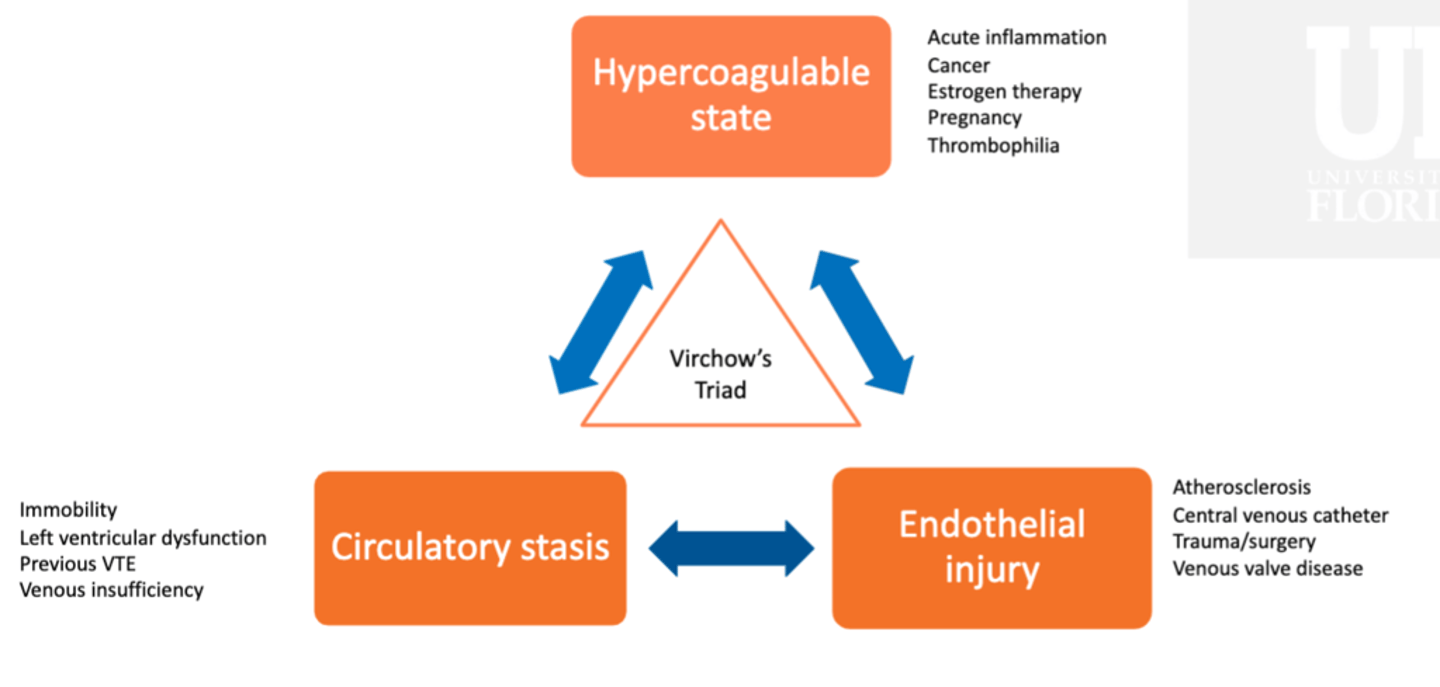
Virchow's Triad
1. Circulating factors/Hypercoagulable state
2. Blood Flow/ Circulatory Stasis
3. Vessel integrity/Endothelial Injury
Hemostasis a balance between these three
What converts fibrinogen to fibrin?
Thrombin (IIa)
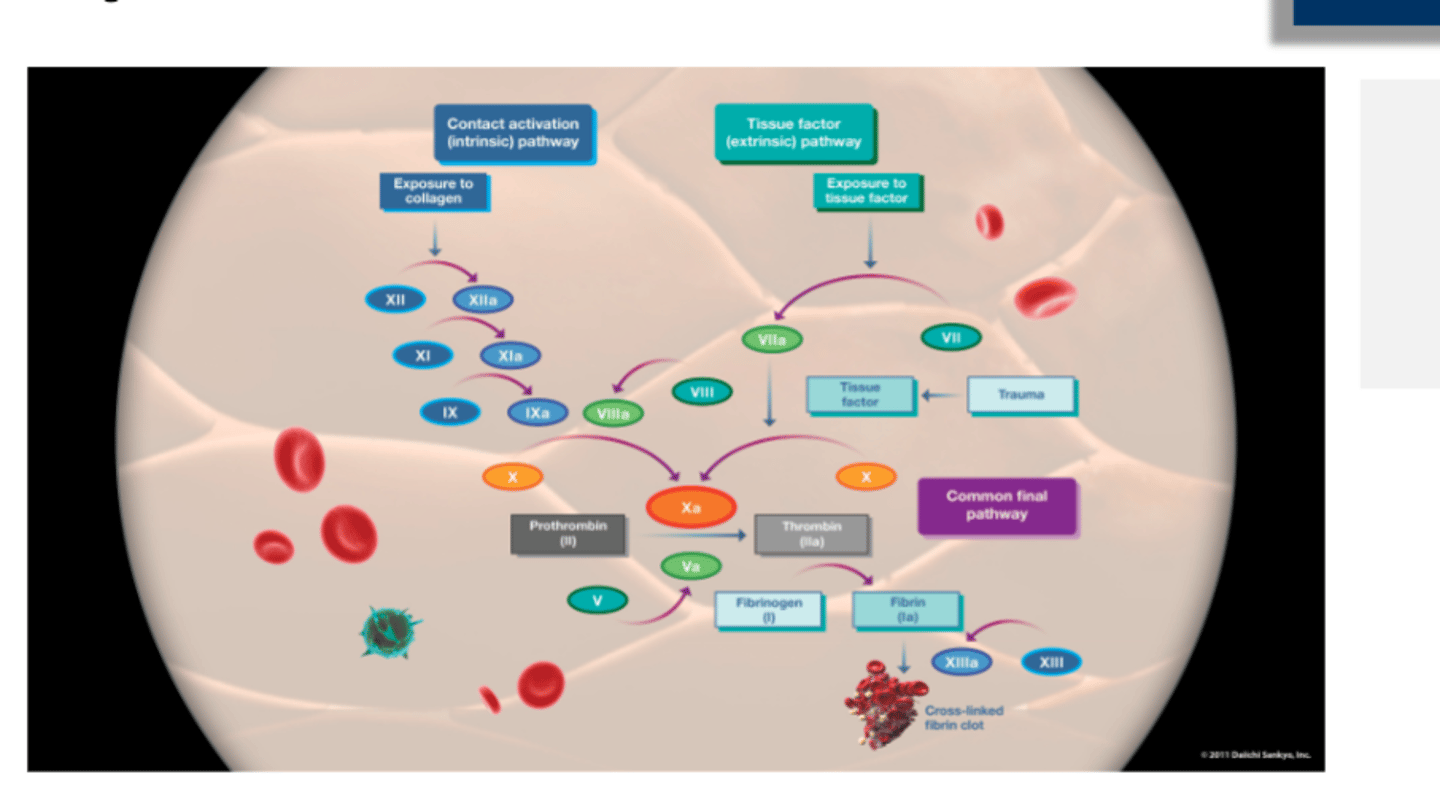
What converts prothrombin to thrombin?
Factor Xa and Factor Va
Are VTE and ACS the same thing?
No, they are not.
Venous Thromboembolism
Long periods of immobility or venous insufficiency can inappropriately activate clotting factors and a clot forms in the lungs or upper/lower extremity
What are the GPIIb/IIIa antagonists?
Eptifibatide. tirofiban
Formation of a Platelet Plug
1. Artery with plaque ruptured
2. Collagen exposed, which initially activates platelets
3. Other factors like thromboxane, thrombin, ADP, epinephrine, and serotonin are also released. All these activate platelets further.
4. Once these bind to their specific sites on platelets, Ca2+ is released inside the platelet. This causes the platelet to change from disk to a different shape (sphere w/ arms). This increases the SA to expose more places for platelet activators to bind.
5. Platelets themselves also release granules of TXA, ADP and serotonin to further activate platelets that are near the injury but aren't stuck on the injury.
6. Where you see overlap w/ the coagulation cascade, thrombin also activates platelets through thrombin receptors
7. Platelet activation causes increased expression of GP IIb/IIIa receptors
8. When GIIb/IIIa receptors are activated on platelets, they change shape to expose the binding area for fibrinogen (which helps link other platelets together by also converting into fibrin)
END PRODUCT: fibrin-platelet clot
Aspirin
• Antiplatelet
• MOA: Inhibits COX-1 via acetylation of serine 529 to, in turn, inhibit the production of thromboxane
• Absorption: Oral; In ACS patients, can take ASA either 1 prior to NSAID or after 8 hours after taking the NSAID since they both bind to COX-1
• Metabolism: Hydrolyzed to salicylic acid; salicylic acid is metabolized
• Excretion: Metabolites excreted in urine
• T1/2: 14 - 20 minutes, platelet inhibition is 7 to 10 days (if pt has surgery, hold ASA for 5 - 7 days)
• Monitoring: No laboratory monitoring; s/sx of bleeding especially GI bleeding
• Indication: Primary and secondary prevention of ACS
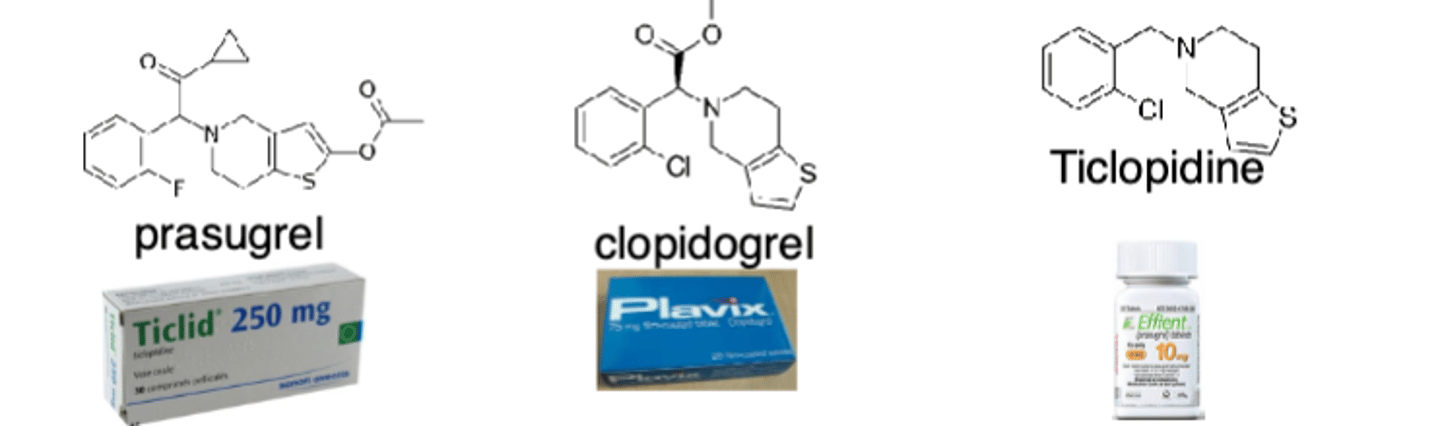
Clopidogrel (Plavix)
• Antiplatelet
• MOA: Prevents binding of ADP to the P2Y12 receptor to prevent ADP-mediated platelet aggregation; irreversible by forming a disulfide bridge with P2Y12 with a thiol and locking in an "inactive state"
• Absorption: Oral, 50% bioavailability
- Loading doses used in setting of ACS
• Metabolism: Prodrug: Requires hepatic activation via CYP; two-step process Hydrolysis
• Excretion: Metabolites excreted in urine and feces
• T1/2: 6 hours; platelet inhibition is 5 - 7 days so hold for 7 days if in need of surgery
• Monitoring: No laboratory monitoring; s/sx of bleeding
• Indication: ACS; secondary prevention of ACS (use for patients with an ASA allergy)
Prasugrel (Effient)
• Antiplatelet
• MOA: Prevents binding of ADP to the P2Y12 receptor to prevent ADP-mediated platelet aggregation; irreversible by forming a disulfide bridge with P2Y12 with a thiol and locking in an "inactive state"
• Absorption: Oral, ~80% bioavailability; Loading doses used in setting of ACS
• Metabolism: Prodrug: Requires hepatic activation via CYP; one step processHydrolysis
• Excretion: Metabolites excreted in urine and feces
• T1/2: 7 hours; inhibition is 5 - 9 days; hold for 9 days if they need surgery
• Monitoring: No laboratory monitoring; s/sx of bleeding
• Indication: ACS; secondary prevention of ACS
• CONTRAINDICATED in pts with TIA and stroke
If a pt has lung issues, what drugs to avoid or monitor?
Ticragrelor (can cause SOB), amiodarone (can cause pulmonary deposits), BBs (can cause SOB)
What is prasugrel CI in?
Pts with TIA and stroke history
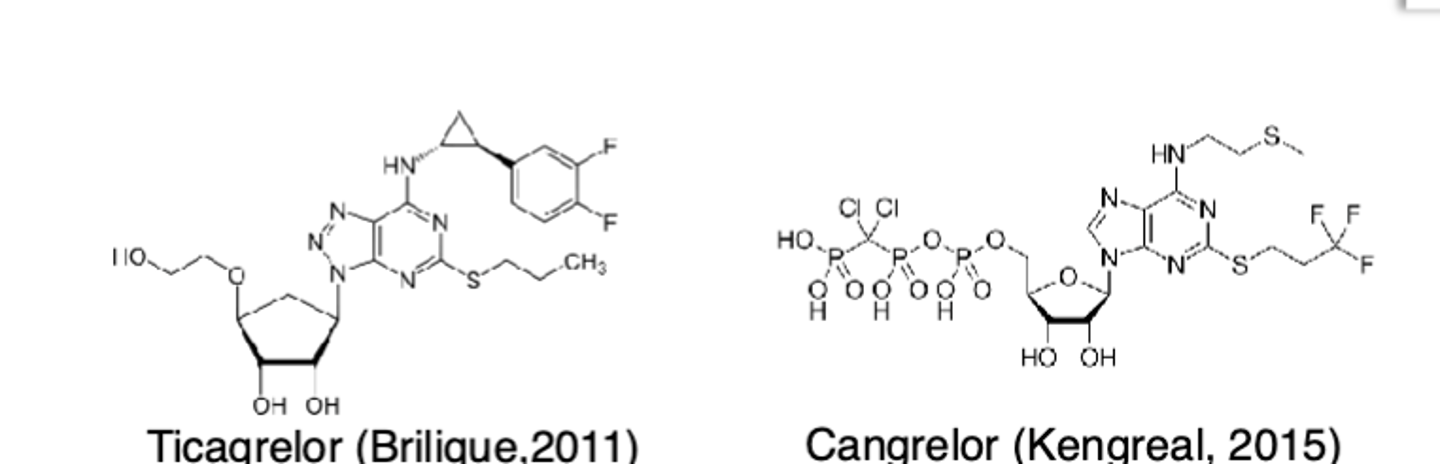
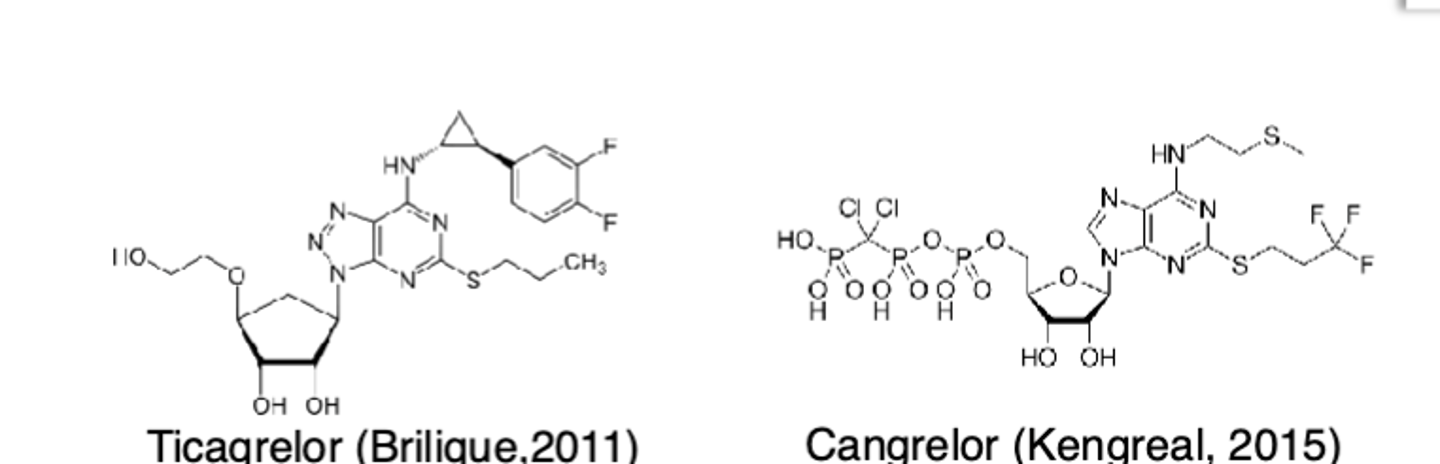
Ticagrelor (Brilinta)
• Antiplatelet
• MOA: Prevents binding of ADP to the P2Y12 receptor to prevent ADP-mediated platelet aggregation; reversible binds to a site distinct from the ADP-binding site and inhibits ADP signaling and receptor conformational change by “locking” the receptor in an inactive state; ADP can still bind at its binding site.
• Absorption: Oral, 42% bioavailabilityLoading doses used in the setting of ACS
• Metabolism: (Not prodrug) Both parent and metabolite are active; Hepatic metabolism via CYP
• Excretion: Feces and urine
• T1/2: 7 hours for parent, 9 hours for metabolite. Platelet inhibition is 5 days; hold for 5 days
• Monitoring: No laboratory monitoring; s/sx of bleeding
• Indication: ACS; secondary prevention of ACS
• CANNOT exceed 81 mg of ASA when taking Ticagrelor!!
• Can cause dyspnea (SOB)
If having surgery, hold
• Aspirin for 5-7 days
• Clopidogrel for 7 days
• Prasugrel for 9 days
• Ticagrelor for 5 days
Cangrelor (Kengreal)
• Antiplatelet
• MOA: Prevents binding of ADP to the P2Y12 receptor to prevent ADP-mediated platelet aggregation
• Absorption: IV administration
• Metabolism: Dephosphorylation
• Excretion: Urine
• T1/2: 3 - 6 minutes; platelet inhibition during infusion
• Monitoring: No laboratory monitoring; s/sx of bleeding
• Indication: Acute ACS only (need to give prasugrel or plavix after infusion is stopped)
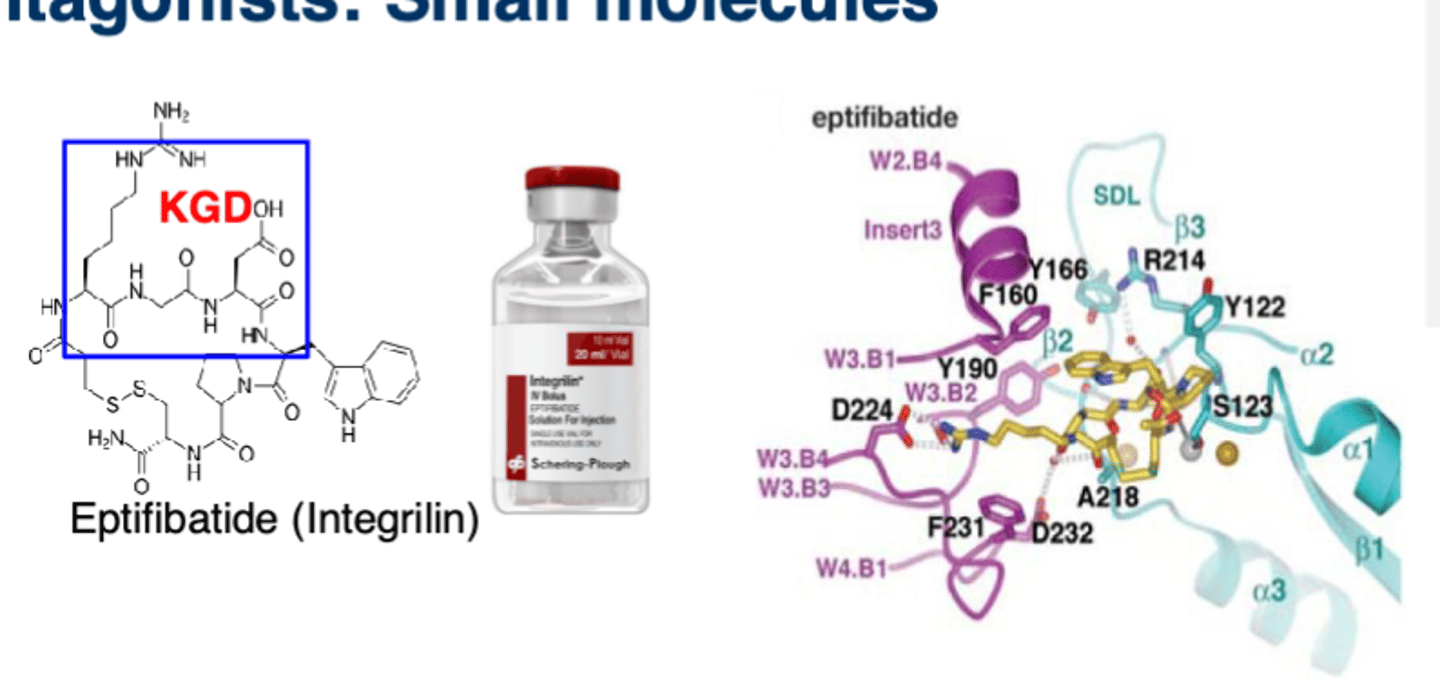
Eptifibatide (Integrillin)
• Antiplatelet
• MOA: Prevents the binding of binding and von Willebrand factor to the GPIIb/IIIa receptor to, in turn, prevent platelet aggregation; contains a KGD motif (prevents fibrinogen's RGD from binding) and is a cyclic heptapeptide composed of 7 AAs (reversible)
• Absorption: IV bolus, continuous infusion
• Metabolism: No metabolites
• Excretion: Urine and renal clearance; d; Decrease dose is CrCL < 50 mL/min **needs renal dose adjustment**
• T1/2: 2.5 hrs
• Monitoring: aPTT, activated clotting tie, platelets, SCr, signs/symptoms of bleeding
• Indication: ACS
Tirofiban (Aggrastat)
• Antiplatelet
• MOA: Prevents the binding of binding and von Willebrand factor to the GPIIb/IIIa receptor to, in turn, prevent platelet aggregation; it is a nonpeptide and is part of a class called "fibrans" and prevents the RGD loop from binding (reversible)
• Absorption: V bolus, continuous infusio
• Metabolism: Negligible
• Excretion: 65% excreted unchanged in urine; Decrease dose is CrCL < 60 mL/min
• T1/2:2 hours
• Monitoring: aPTT, activated clotting tie, platelets, SCr, signs and symptoms of bleeding
• Indication: ACS
What are the CrCl cutoffs for the GPIIb/IIIa receptor antagonists to require renal adjustment?
• Eftifibatide - 50 mL/min
• Tirofiban - 60 mL/min
Unfrationated heparin
• Anticoagulant
• MOA: Binds antithrombin III (ATIII) to cause a conformational change that enhances its ability to inactivate thrombin and Factor Xa
• Absorption:
IV – complete/Immediate
SC – unpredictable
• Metabolism: Reticuloendothelial system (uptaken by monocyte/macrophage system to be inactivated )
• Excretion: Non-renal;
• T1/2: Dose-dependent (1 to 5 hours)
• Monitoring: Anti-Xa, aPTT, ACT, platelets
• Indication: ACS, VTE
Enoxaparin (Lovenox)
• Anticoagulant
• MOA: Binds antithrombin III (ATIII) to inactivate Factor Xa; minor inhibitor of thrombin
• Absorption: IV or SC, 85 - 100% BA
• Metabolism: Desulfation, depolymerization (minor)
• Excretion: Renal (major) - Needs to be renally adjusted to 1 mg/kg q 24 if CrCl < 30 mg/mL for VTE
• T1/2: 4 - 7 hours
• Monitoring: Anti Xa, SCr, platelets (thrombocytopenia) (always)
- Only monitor coagulation (anti-Xa) in
1. Pregnancy
2. Renal Dysfunction
3. Obesity
• Indication: ACS, VTE
Why do you need to monitor for antiXa in only select populations for LMWH rather than all populations?
Since they have a more predictable t1/2 and onset of action compared to unfractionated heparin
Dalteparin (Fragmin)
• Anticoagulant
• MOA: Binds antithrombin III (ATIII) to inactivate Factor Xa; minor inhibitor of thrombin
• Absorption: SC administration, 85% bioavailability
• Metabolism: N/A
• Excretion: Renal (major) - Needs to be renally adjusted
• T1/2: 3-5 hours
• Monitoring: Anti Xa, SCr, platelets (thrombocytopenia) (always)
- Only monitor coagulation (anti-Xa) in
1. Pregnancy
2. Renal Dysfunction
3. Obesity
• Indication: ACS, VTE
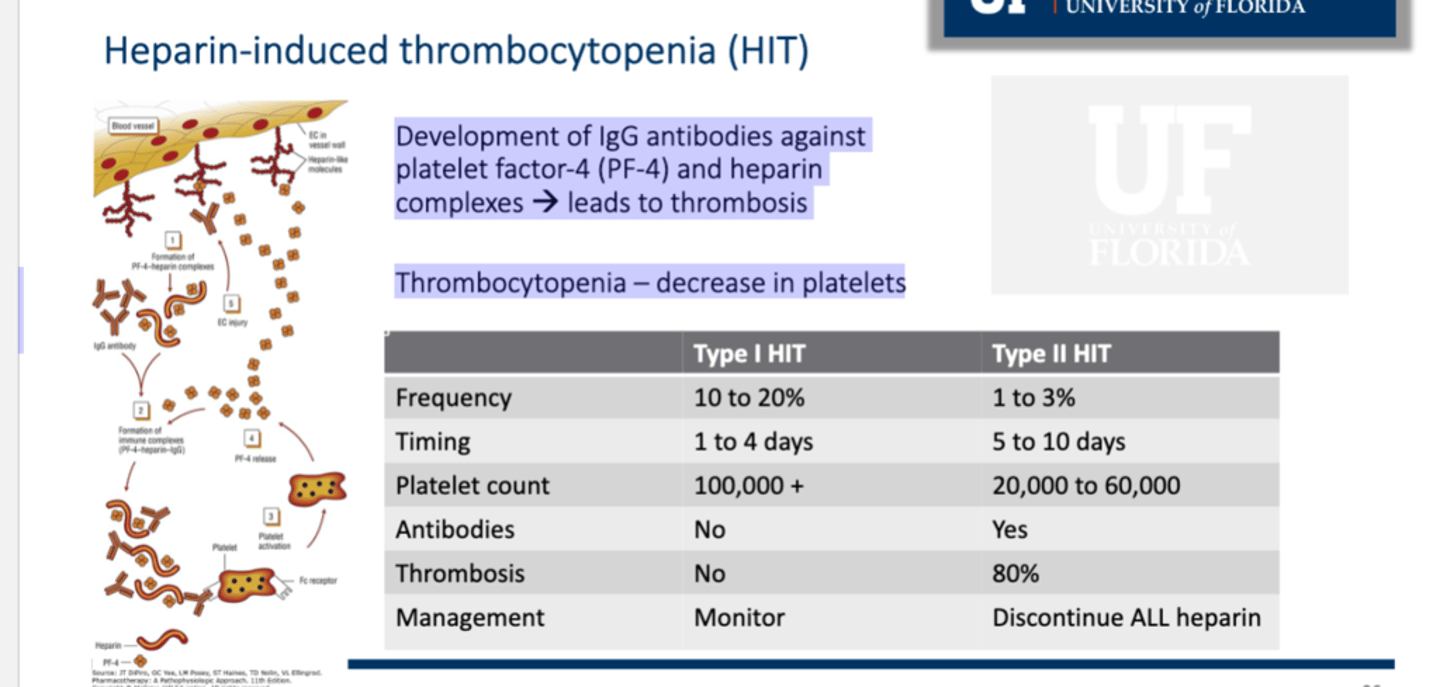
Heparin-induced thrombocytopenia (HIT)
• Development of IgG antibodies against platelet factor-4 (PF-4) and heparin complexes → leads to thrombosis
• Thrombocytopenia – decrease in platelets (but still causes a hypercoagulable state)
• Type II HIT is worse than Type I and requires discontinuing ALL heparin
• Can use fondaparinux and DTI (argatroban is the drug of choice)
Fondaparinux (Arixtra)
• Anticoagulant - not good for mono-therapy
• MOA: Binds antithrombin III (ATIII) to inactivate Factor Xa
• Absorption: SC, 100% bioavailability
• Metabolism: Negligible
• Excretion: Renal (major) - Needs to be renally adjusted if CrCl 30 - 50, if less than 30, Do NOT USE
• T1/2:
• Monitoring: Anti Xa, SCr, platelets (always due to risk of thrombocytopenia)
- Only monitor coagulation (anti Xa) in
1. Pregnancy
2. Renal Dysfunction
3. Obesity
• Indication: ACS, VTE
• CI: Do not use is CrCl < 30 mg/mL
Argatroban
• Anticoagulant - Direct Thrombin Inhibitor
• MOA: Binds to free and clot-bound thrombin, thereby inactivating thrombin
• Absorption: IV administration
• Metabolism: Hydroxylation, aromatization
• Excretion: Biliary, Renal (20%) and feces (60%)
• T1/2: Needs to be hepatically adjusted
• Monitoring: aPTT, activate clotting time - use to optimize dosing
• Indication: ACS, VTE, HIT
• Drug of choice for HIT
What is the drug of choce for HIT?
Argatroban
Bivalirudin (Angiomax)
• Anticoagulant - Direct Thrombin Inhibitor
• MOA: Binds to free and clot-bound thrombin, thereby inactivating thrombin
• Absorption: IV administration
• Metabolism: Proteolytic cleave
• Excretion: 20% unchanged in the urine; Needs to be renally adjusted
• T1/2: 24 minutes; CrlCl 10 - 29 mL/min - 57 minutes
• Monitoring: aPTT, activated clotting time
• Indication: ACS, HIT
Warfarin (Coumadin)
• Anticoagulant
• MOA: Inhibits the synthesis of vitamin-K dependent clotting factors II, VII, IX, and X, and Proteins C and S by inhibiting the VKORC1 enzyme (1972)
• Absorption: S isomer is more potent
• Metabolism: CYP2C9
• Excretion: Metabolites are renally excreted
• T1/2: 20 - 50 hours
• Monitoring: INR
• Indication: VTE, AF (not ACS)
Dabigatran (Pradaxa)
• Anticoagulant - DOAC
• MOA: Direct thrombin inhibitor (Free and clot-bound thrombin)
• Absorption: Oral, 3-7% BA
• Metabolism: Prodrug; hydrolyzed to active moiety; active drug is then conjugated
• Excretion: Renal (major) - Needs to be renally adjusted
• T1/2: 12 - 17 hours given BID or 35 hours in renal adjustment
• Monitoring: SCr
• Indication: ACS, VTE
Apixaban (Eliquis)
• Anticoagulant
• MOA: Selectively inhibits Factor Xa (free and clot-bound)
• Metabolism: CYP3A4, PgP substrate
• Excretion: Needs to be renally adjusted for Afib patients ONLY; P-gp substrate
• T1/2: 12 hours; take BID
• Monitoring: SCr
• Indication: VTE, AF (not ACS)
Edoxaban (Savaysa)
• Anticoagulant
• MOA: Selectively inhibits free Factor Xa
• Metabolism: 50% hydrolyzed, conjugated, metabolized by CYP3A4
• Excretion: Needs to be renally adjusted; P-gp substrate
• T1/2: 10 - 14 hours
• Monitoring: SCr
• Indication: VTE, AF (cannot be used if CrCl > 95 mL/min for Afib and dose is 30 mg QD if CrCl 15-50 for AFib, or if CrCl < 15 mL/min, cannot be used for VTE)
• If CrCl is too low, it needs to be adjusted, if CrCl is too high, it cannot be used for AF
• CI in VTE if CrCl < 15 mL/min
Rivaroxaban (Xarelto)
• Anticoagulant
• MOA: Selectively inhibits free Factor Xa
• Absorption: GIVE WITH FOOD since BA increased except for 10 mg dose
• Metabolism: CYP3A4; hydrolysis
• Excretion: Needs to be renally adjusted but cannot be used if CrCl < 15 mL/min for VTE or if CrCl < 50, dose is 15 mg QD for Afib
• T1/2: 5-9 hours
• Monitoring: SCr
• Indication: Secondary prevention of ACS, VTE, AF
Fibrinolytic drugs are only for...
...STEMI!
Alteplase (Activase)
• Fibrinolytic Drugs
• MOA: Catalyzes the conversion of plasminogen to plasmin which degrades fibrous clot; fibrin selective (needs the presence of fibrin); t-PA mimics
• Absorption: IV administration (given as bolus then infusion)
• Metabolism: Hepatic
• Excretion: 50% of the drug is cleared when IV infusion is stopped
• T1/2: 5-46 minutes
• Monitoring: aPTT, thrombin time, can also increase risk for angioedema
• Indication: ACS (STEMI)
Tenecteplase (TNKase)
• Fibrinolytic Drugs
• MOA: Catalyzes the conversion of plasminogen to plasmin which degrades fibrous clot; less fibrin selective (needs the presence of fibrin); t-PA mimics
• Absorption: IV administration (given as bolus)
• Distribution: Biphasic
• Metabolism: Hepatic
• Excretion: Plasma clearance
• T1/2: 20-24 minutes; 90-130 minutes
• Monitoring: aPTT, thrombin time, can also increase risk for angioedema
• Indication: ACS (STEMI)
Reteplase (Retavase)
• Fibrinolytic Drugs
• MOA: Catalyzes the conversion of plasminogen to plasmin which degrades fibrous clot; fibrin selective (needs the presence of fibrin); t-PA mimics
• Absorption: IV administration (given as bolus then infusion)
• Distribution: Unknown
• Metabolism: Hepatic
• Excretion: Renal feces
• T1/2: 13-16 minutes
• Monitoring: NONE
• Indication: ACS (STEMI)
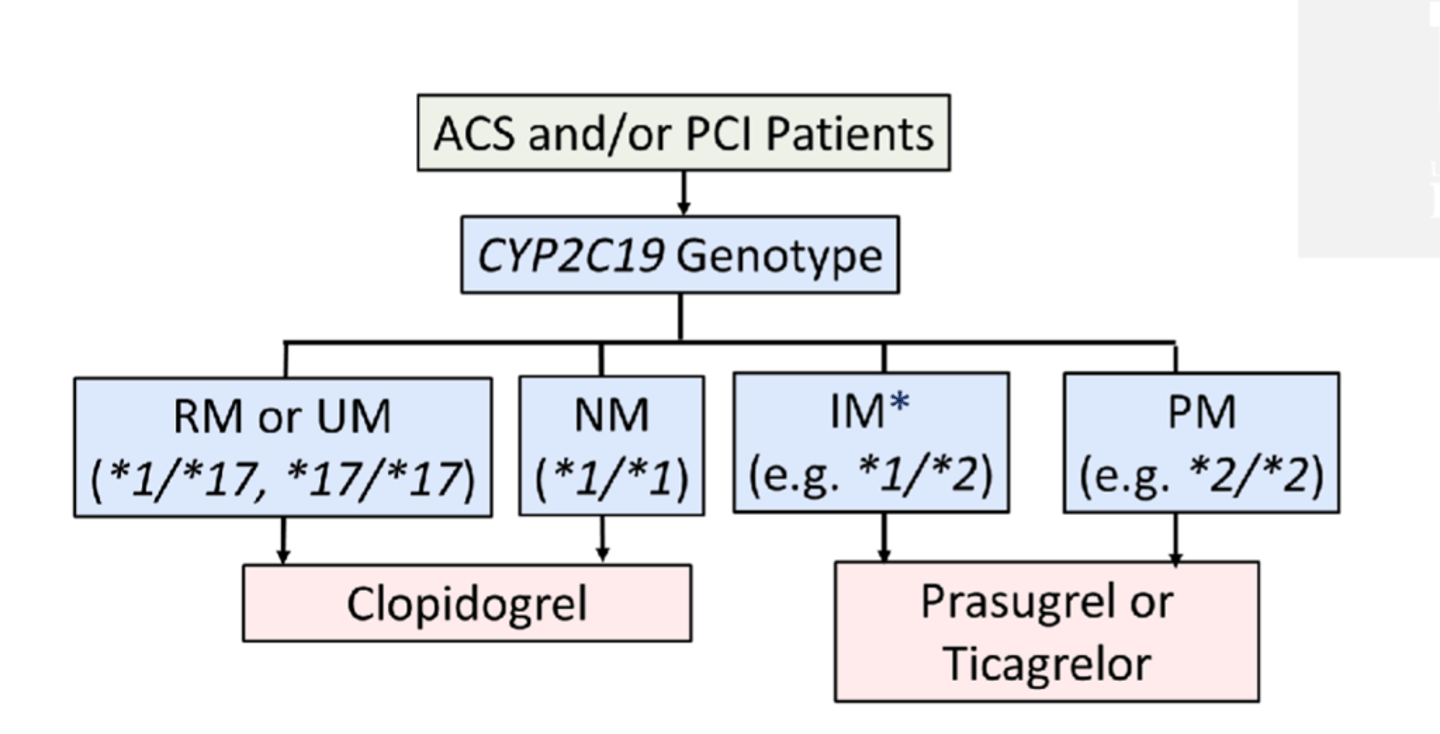
CYPC219
• Since Plavix is a prodrug and requires CYP2C19 activation, genotyping is helpful to determine is Plavix will work
• *2 - *8 is associated with no function proteins (*3 is worse than *2)
• *17 is increased function
Which P2Y12 inhibitor has the highest risk of bleeding?
Prasugrel, especially in pts 75+ or <60 kg, so usually ticagrelor is preferred for precaution
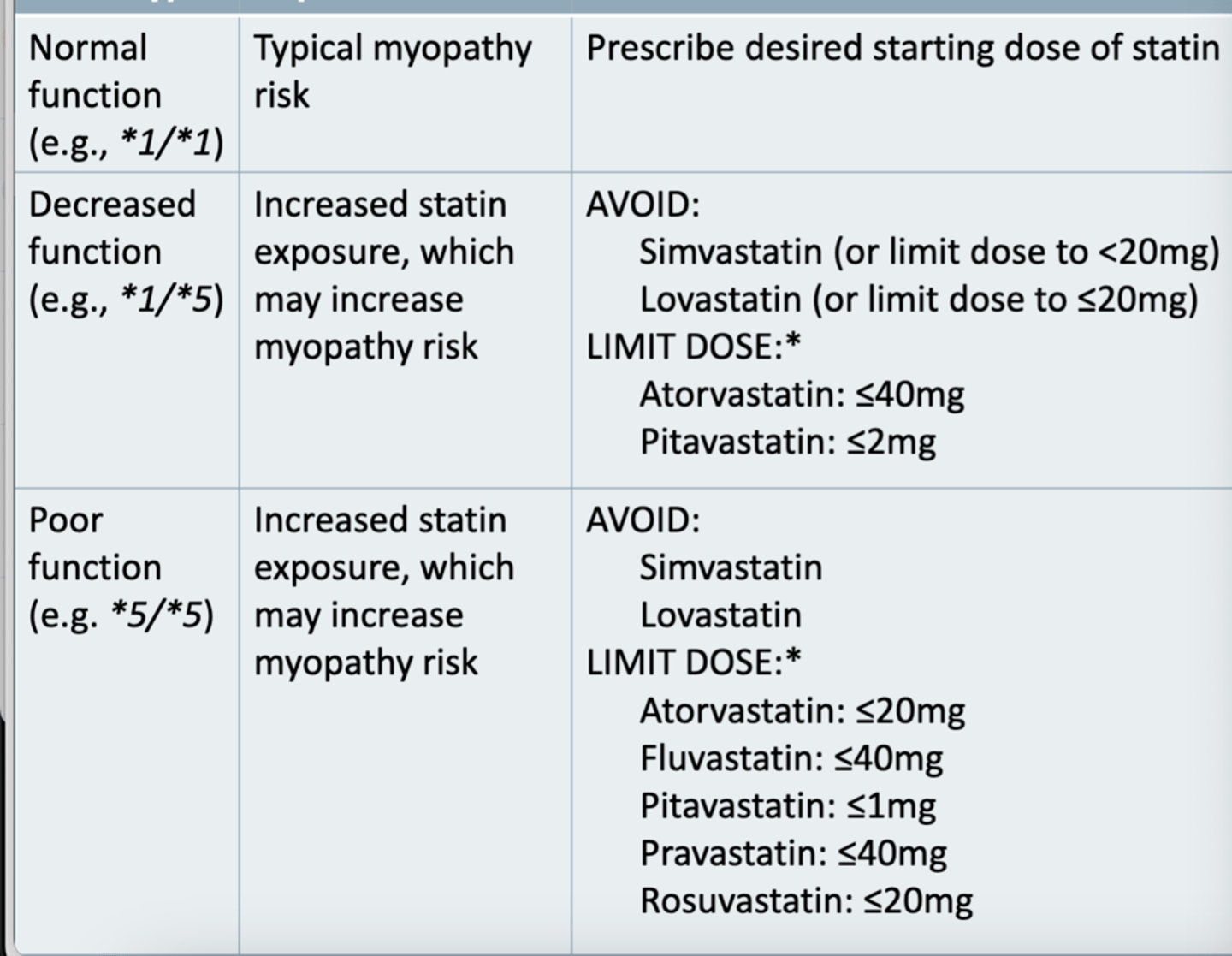
SLCO1B1
• *5 and *15 (T > C) is associated with with decreased statin clearance and increased statin exposure
• Affects: Atorvastatin, Fluvastatin, Lovastatin, Pivastatin, Pravastatin, Rosuvastatin and Simvastatin
ABCG2
• c.421 C > A (rs2231142) associated with reduced transporter activity and increased rosuvastatin plasma levels
• Affects: Rosuvastatin
• Limit to ≤20 mg Rosuvastatin if poor metabolizer (A/A)
CYP2C9 (Statin)
• *Reduced function alleles (e.g., *2, *3,*8) increase exposure to fluvastatin
• Affects: Fluvastatin
• Limit to ≤ 40 mg Fluvastatin if intermediate metabolizer (*1/*3 or *2)
• Limit to ≤ 20 mg Fluvastatin if poor metabolizer (*3/*3 or *2/*2 or *2/*3)
Two Pathways that lead to coagulation:
(1) Contact activation pathway (intrinsic; used for maintenance of homeostasis); its initiation involves the sequential activation of factors FXII, FXI, and FIX
(2) Tissue factor (TF) pathway (extrinsic; caused by trauma); TF glycoprotein is a major initiating factor of arterial thrombogenesis
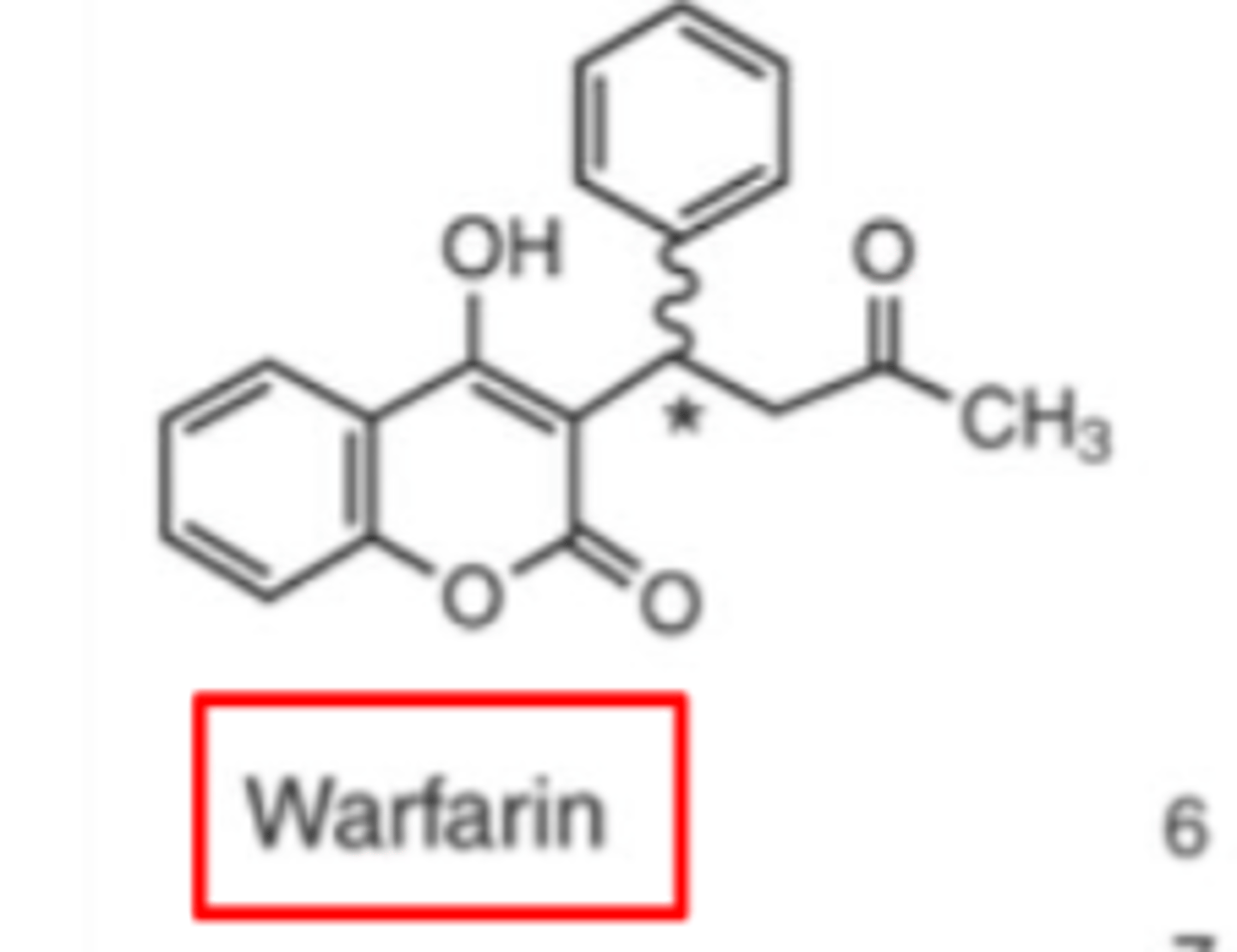
Medicinal Chemistry: Coumarins
• Warfarin is derived from dicoumarol (a fungal natural product aka bishydroxycoumarin)
• Coumarin derivatives inhibit VKOR and act as Vitamin K antagonists
1. γ-Glutamyl carboxylase (GGCX) converts glutamic acid (Glu) of Factors II, VII, IX and X to Gla (γ-carboxyglutamic acid), which chelates Ca2+ to activate these factors.
2. KH2 is an essential cofactor of GGCX and is oxidized to vitamin K epoxide (KO).
3. VKOR (vitamin K epoxide reductase) converts KO to vitamin K and further to KH2.
• Are all water-insoluble lactones
• Have substitutions in positions 3 and 4, 4-OH makes drug weekly acidic, allowing the formation of water-soluble sodium salts
• (S)-warfarin is more potent and (R)-acenocoumarol is more potent
Medicinal Chemistry: Heparin-Based Anticoagulants
• Composed of a heterogeneous mixture of straight-chain, sulfated, and negatively charged polysaccharides of a molecular weight range of 5 to 30 kd
• Under physiologic pH conditions, heparin exists primarily as polysulfate anions and, therefore, usually is administered as a salt.
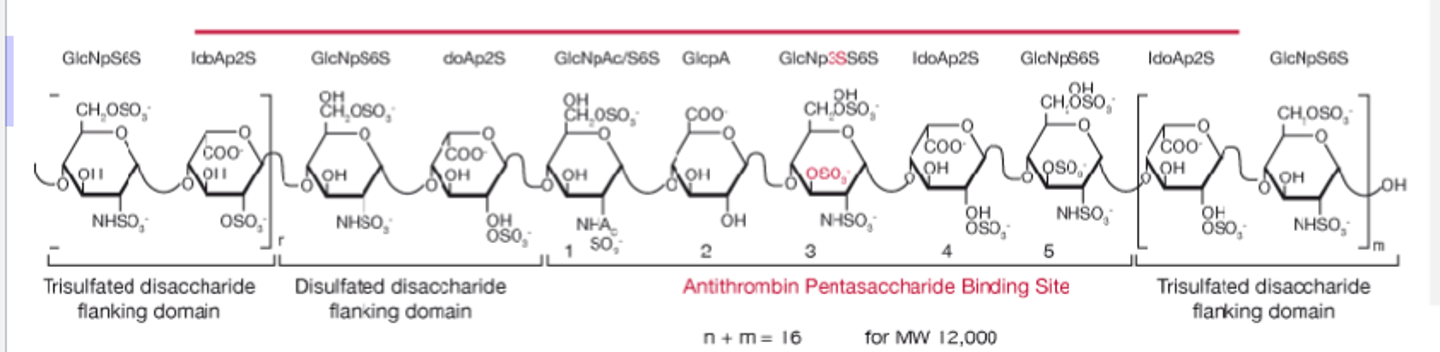
Medicinal Chemistry: Direct Thrombin Inhibitors (DTIs)
• Thrombin contains three binding sites: exosite I (E1) for fibrin binding, exosite II (E2) for the heparin-binding site, and active sit
• The univalent DTIs bind the active site, while bivalent (binds tighter) DTIs bind both E1 and the active site
• Univalent: Argatroban and Dabigatran
• Bivalent: Bivalirudin, Lepirudin, desirudin
• Don't need to bind and form a complex antithrombin III
Medicinal Chemistry: Hirudin
1. Hirudin is a small protein (65 amino acids) that was originally isolated from the salivary glands of the medicinal leech, Hirudo medicinalis.
2. Hirudin forms a 1:1 complex with the thrombin and inhibits its activity; the binding is ionic interaction at its highly anionic C-terminus (Black circle)
.3. Hirudin and its derivatives bind and inactivate both free thrombin and thrombin bound to fibrin.
4. Unlike heparin, DTIs bind directly and reversibly to the active site of thrombin (do not require an activated antithrombin III as a cofactor for their anticoagulant activity).
5. Furthermore, these agents inhibit only the activity of thrombin, whereas heparin indirectly inhibits factors IIa (thrombin), IXa, Xa, XIa, and XIIa
Medicinal Chemistry: Argatroban
• Peptidomimetic that binds reversibly univalent to both free an clot-bound thrombin
• Agrobatran has a guanidine moiety (to mimic fibrinogen's Arg) that will bind to S1 and a hydrophobic moiety (to mimic Val) that will bind to S2 of thrombin at its active site (univalent)
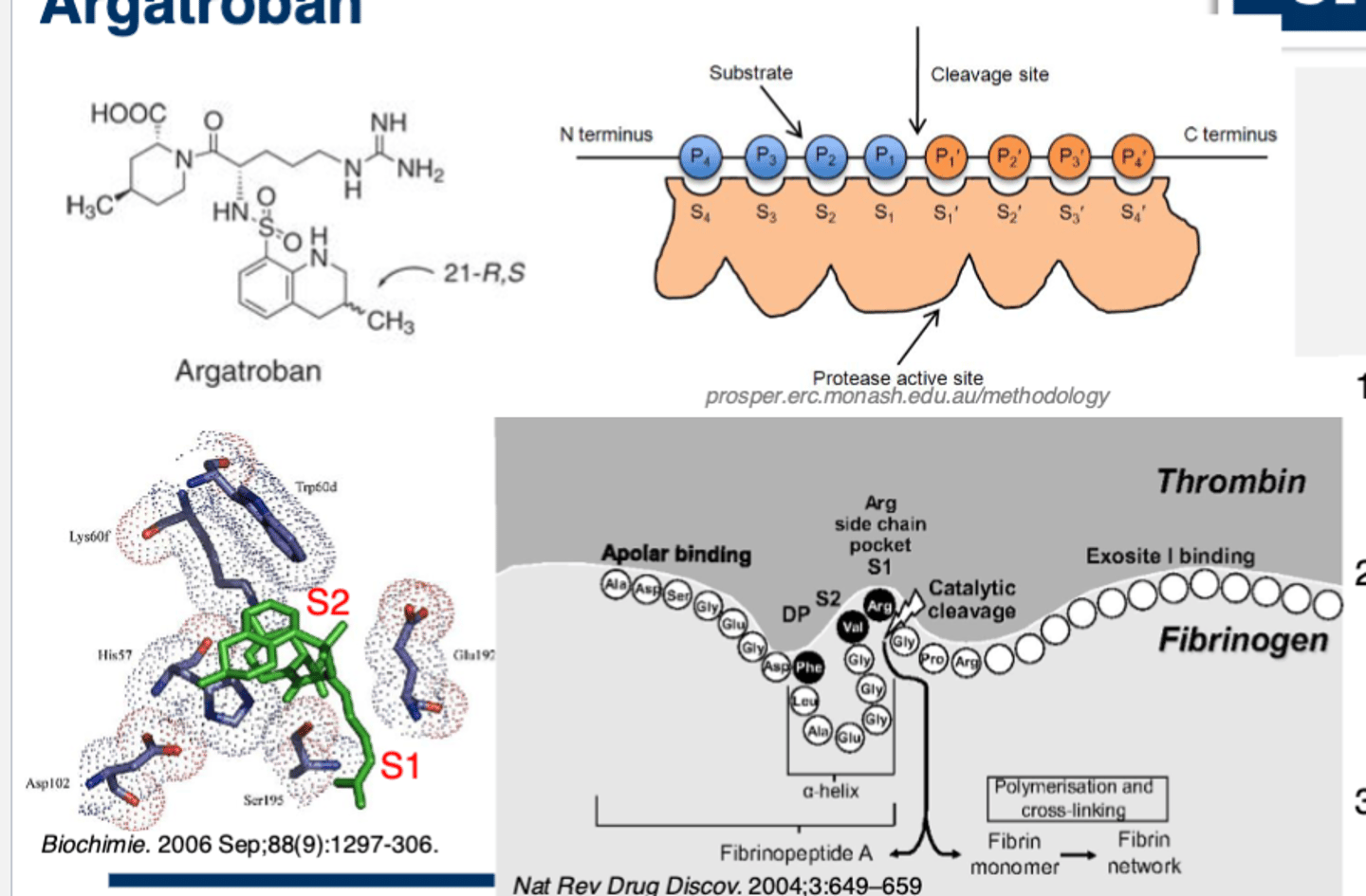
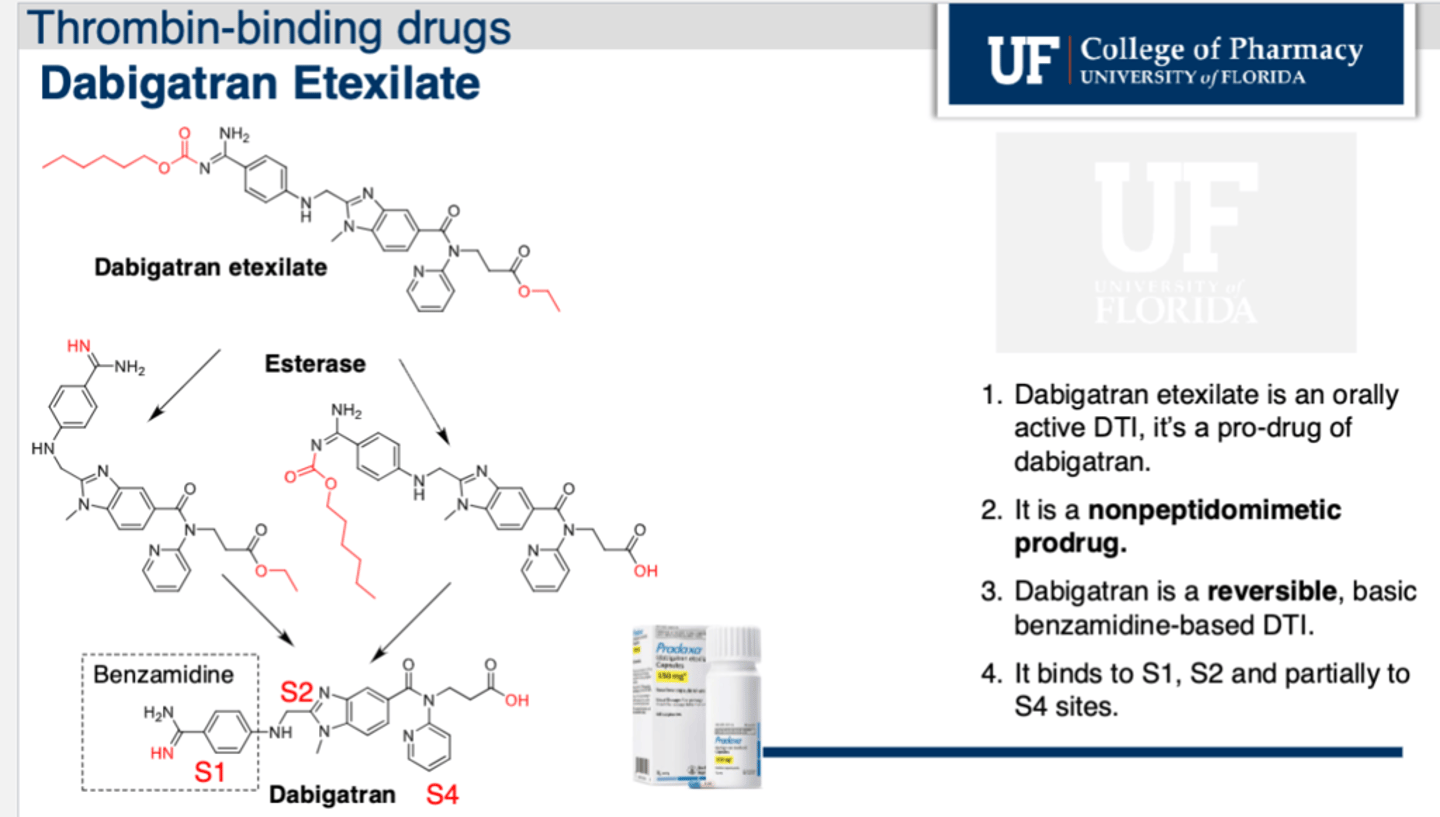
Medicinal Chemistry: Dabigatran Etexilate
• Nonpeptidomimetic that binds reversibly univalent to thrombin and is a prodrug (dabigatran is)
• It binds to S1, S2 and partially to S4 sites
Medicinal Chemistry: Cilostazol
1. Phosphodiesterase-3 (PDE3) degrades cAMP to AMP inplatelets and blood vessels
.2. Selective PDE3 inhibitors inhibit the degradation of cAMP, thereby increasing cellular concentration of cAMP and leading to inhibition of platelet aggregation and vasodilation.
3. Cilostazol is a quinolinone derivative that selectively inhibits PDE3A and does not affect the other PDEs (PDEs 1, 2, or 4).
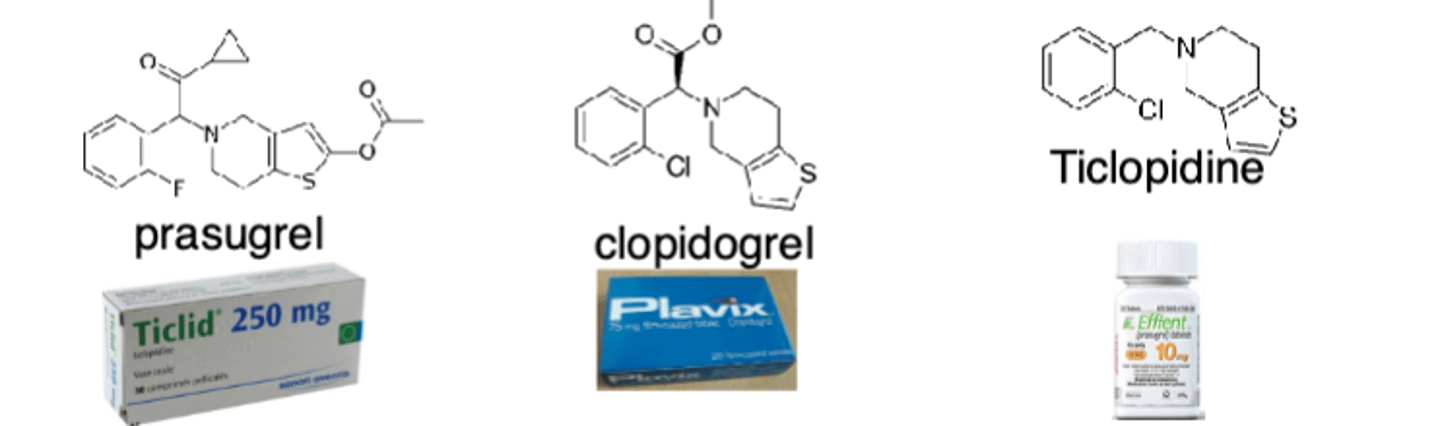
What drugs are thienopyridines?
Ticlopidine, clopidogrel, and prasugrel; they bind irreversibly to P2Y12 and are all prodrugs
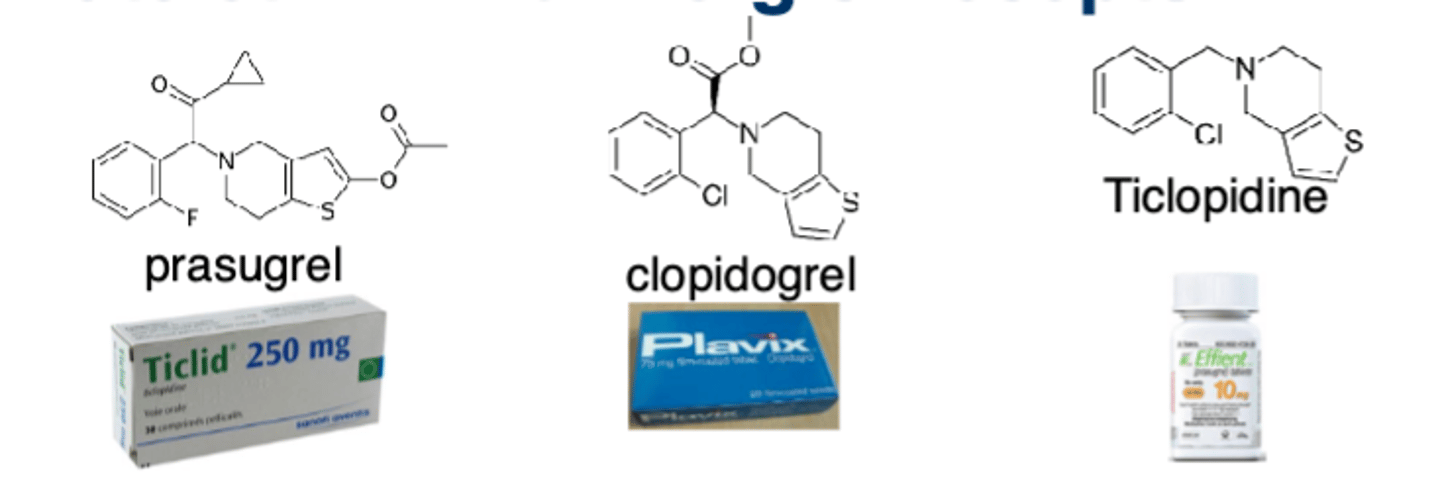
Medicinal Chemistry: GPIIb/IIa Inhibitors
• The natural binding ligands contain the Arg-Gly-Asp (RGD) sequence.
• Included in this list of antagonists are monoclonal antibodies against the natural GPIIb/IIIa receptor, naturally occurring peptides that contain the Arg-Gly-Asp (RGD) sequence, synthetic peptides containing either theRGD or Lys-Gly-Asp (KGD) sequences, and peptidomimetic and nonpeptide RGD mimetic
• First product was abciximab
• Eptifibatide - 6 amino-acids that has a KGD motif that reversibly prevents the binding of RGD loop of fibrinogen
• Tirofiban - peptidomimetic (nonpeptide) and a member of a new class of reversible antithrombotic agents known as the “fibans”. Its binding prevents the binding of RGD loop of fibrinogen
What protease do thrombolytic drugs mimic?
Tissue-type plasminogen activator (t-PA)
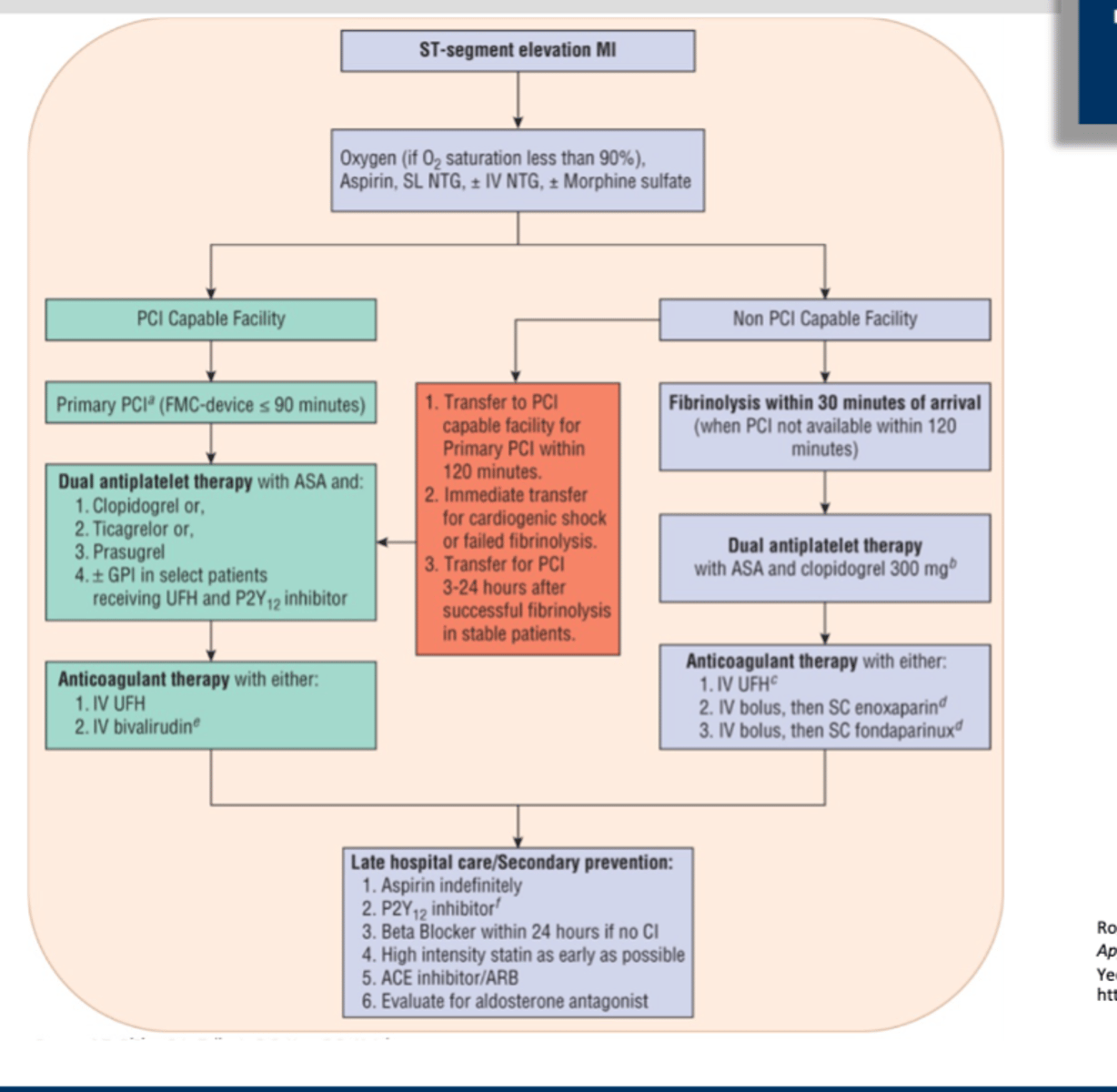
ACS Managment
(See Image)
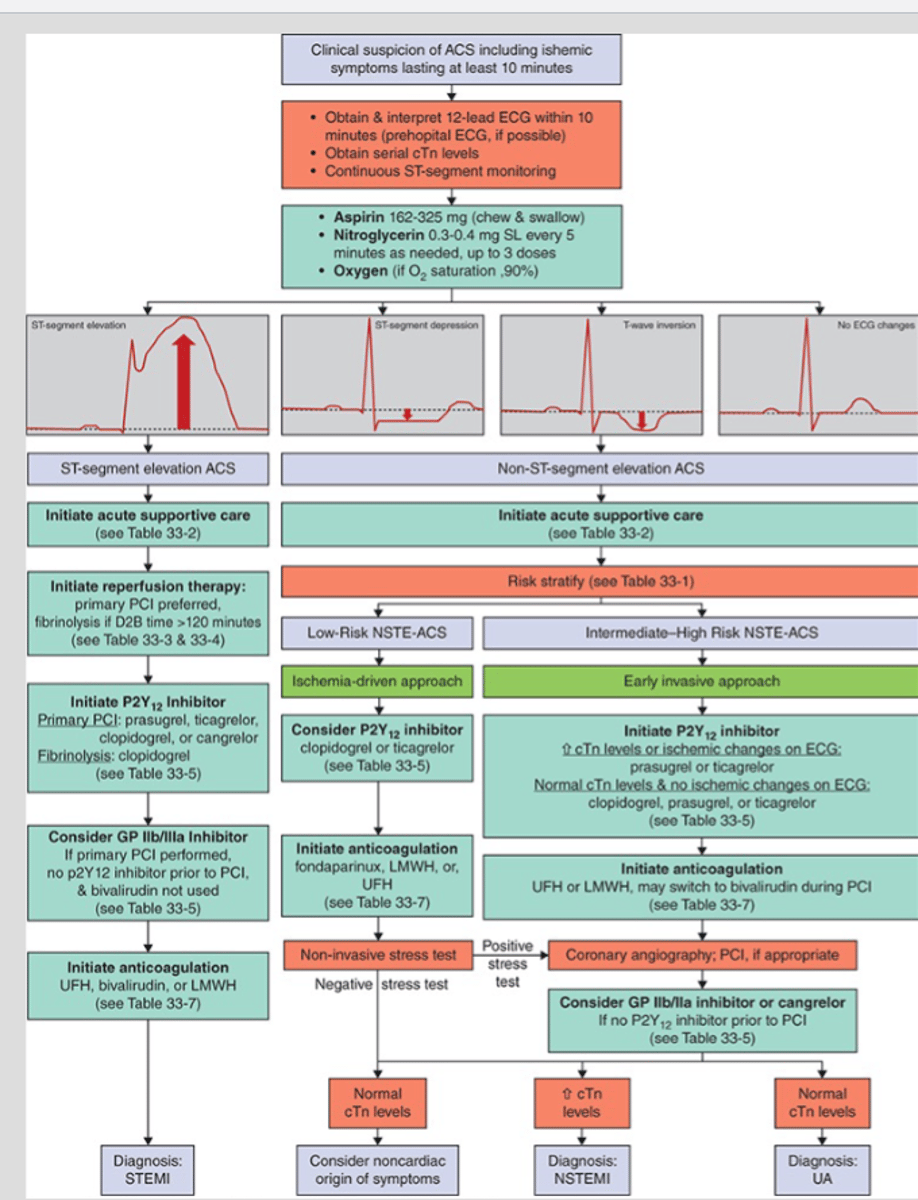
"MONA"
– Morphine for pain not relieved by nitroglycerin: 2 to 4 mg IV bolus; repeat every 5 to 15 minutes
– Oxygen: O2 saturation less than 90%
– Nitroglycerin for chest pain: 0.4mg SL every 5 minutes x 3 doses; 5 to 10 micrograms/minute IV infusion
– Aspirin: 325mg ASAP
Door-to-balloon inflation goal
90 minutes (120 if can get to hospital w/ a cath lab)
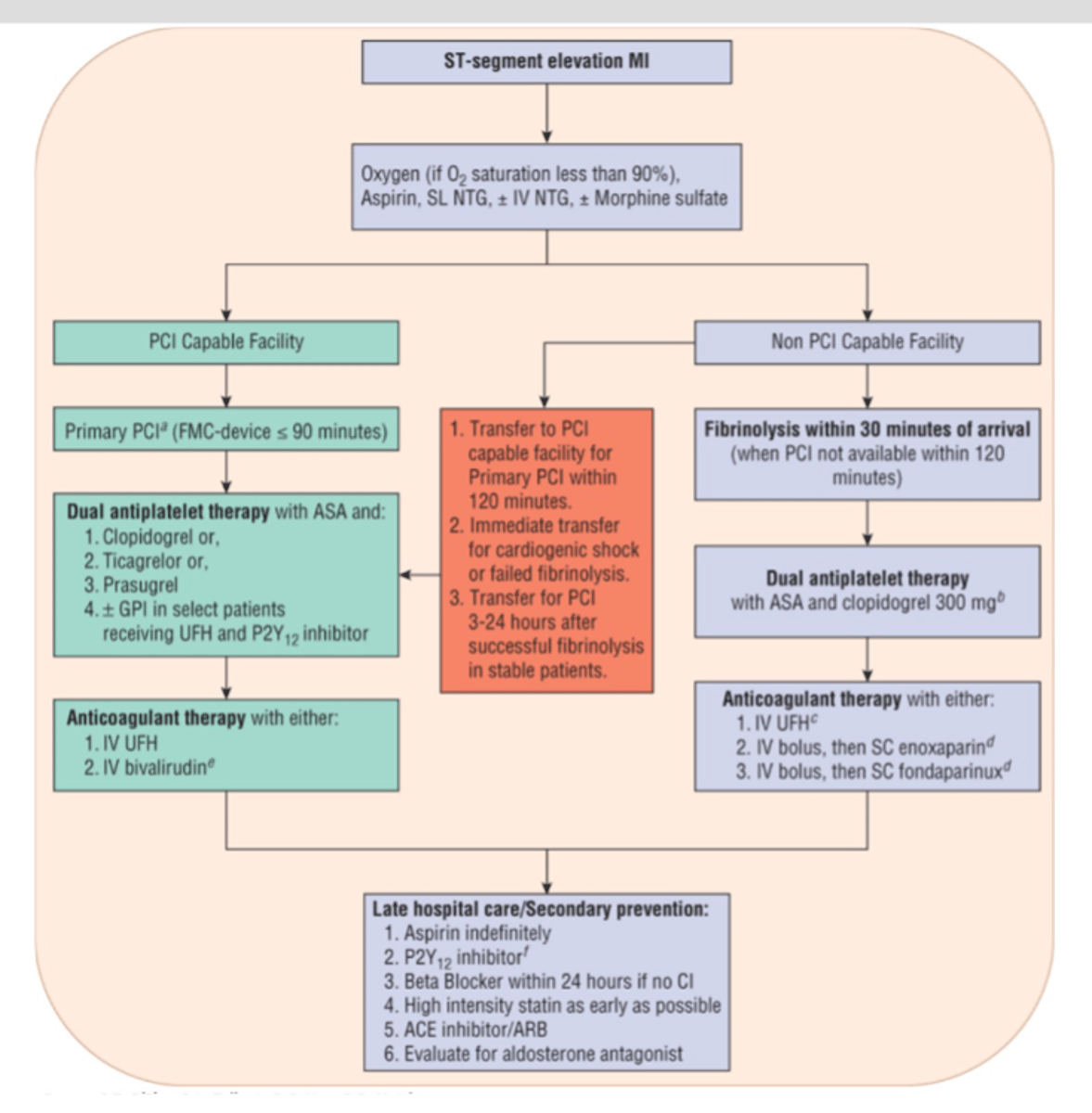
Door to needle goal
30 minutes (no cath lab)
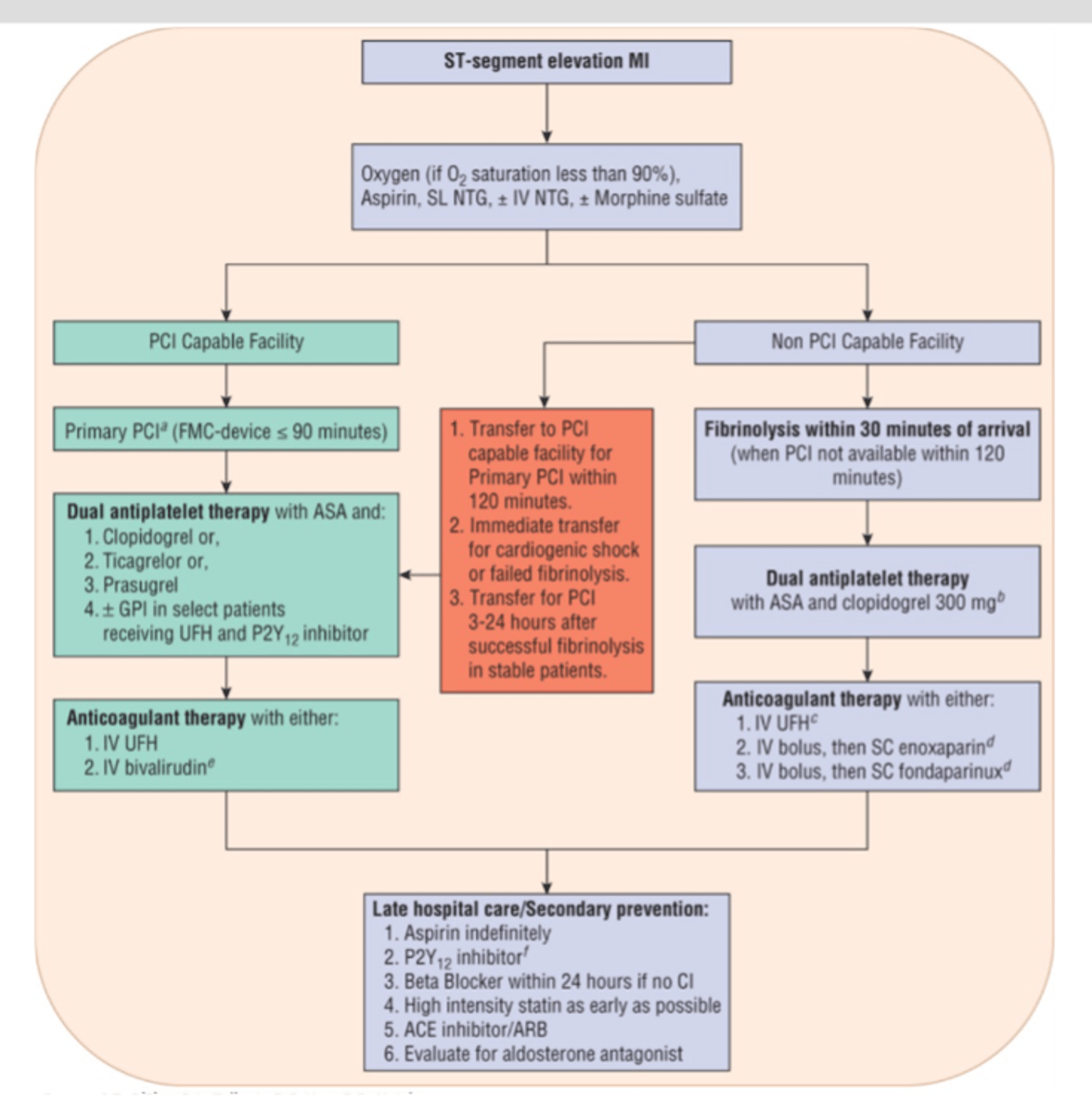
STEMI Treatment (PCI Facility)
• PCI within 90 minutes (can stretch to 120 if can transport to PCI capable hospital)
• DAPT x 1 year
• ASA: 325 mg load + 81 mg maintenance indefinitely
+
• Clopidogrel: 300 or 600 mg load + 75 mg maintenance
OR
• Prasugrel: 60 mg load + 10 mg maintenance (5 mg maintenance if < 60 kg OR ≥ 75 YO)
OR
• Ticagrelor 180 mg load + 90 mg BID (cannot exceed 81 mg ASA) maintenance
• Can add GP IIb/IIIA (know cutoffs) if large thrombus burden or as “rescue” or “bailout” therapy in patients with PCI complications
- Tirofiban - CrCl < 60 mL/min, reduce by 50%
- Eptifibatide - CrCl < 50 mL/min, reduce by 50%
• Give UFH OR bivalirudin (preferred if patient has increased risk of bleeding since it only inhibits thrombin) OR enoxaparin (as an alternative)
- Enoxaparin: 0.5 - 0.75 mg/kg IV bolus
- Don't use fondaparinux as monotherapy
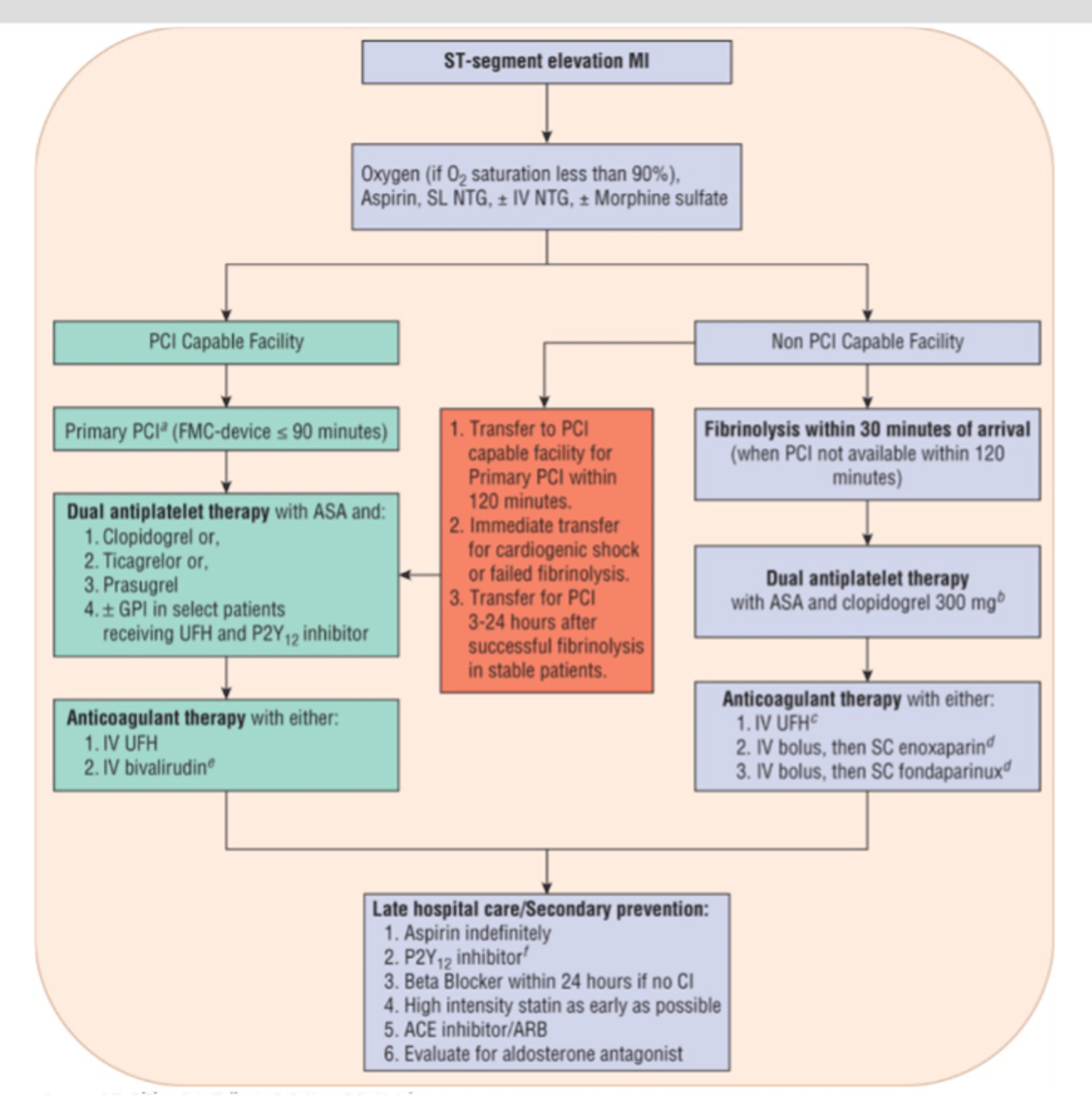
STEMI Treatment (Non-PCI facility)
• Fibronylysis within 30 minutes
• DAPT for at least 14 days to up to 1 year (ASA forever tho)
- ASA: 325 mg load + 81 mg maintenance indefinitely
- Clopidogrel: 300 mg load (≤ 75 years old) and NO Loading dose if > 75 years old + 75 mg maintenance
- None of the other P2Y12 inhibits
• Give anticoagulant therapy (Enoxaparin or alternative of fondaparinux; give UFH if early invasive approach approach of PCI is expected)
- Enoxaparin dosing:
➢ If age < 75, 30 mg IV bolus followed in 15 minute by 1 mg/kg q 12 h
➢ If age ≥ 75, no bolus, 0.75 mg/kg sq 12 h
➢ CrCl < 30 mL/min: 1 mg/kg q 24 h (regardless of age)
- Fondaparinux
➢ CI if CrCl < 30 mL/min
So if someone is 75+ with a STEMI at a non-PCI facility, what is the clopidogrel and enoxparin dose?
Clopidogrel, NO LOADING Dose with 75 mg maintenance + enoxaparin also NO LOADING 0.75 mg/kg q 12 h (unless CrCl < 30, where dose is 1 mg/kg q 24h)
75+ = NO LOADING DOSE for STEMI with no PCI
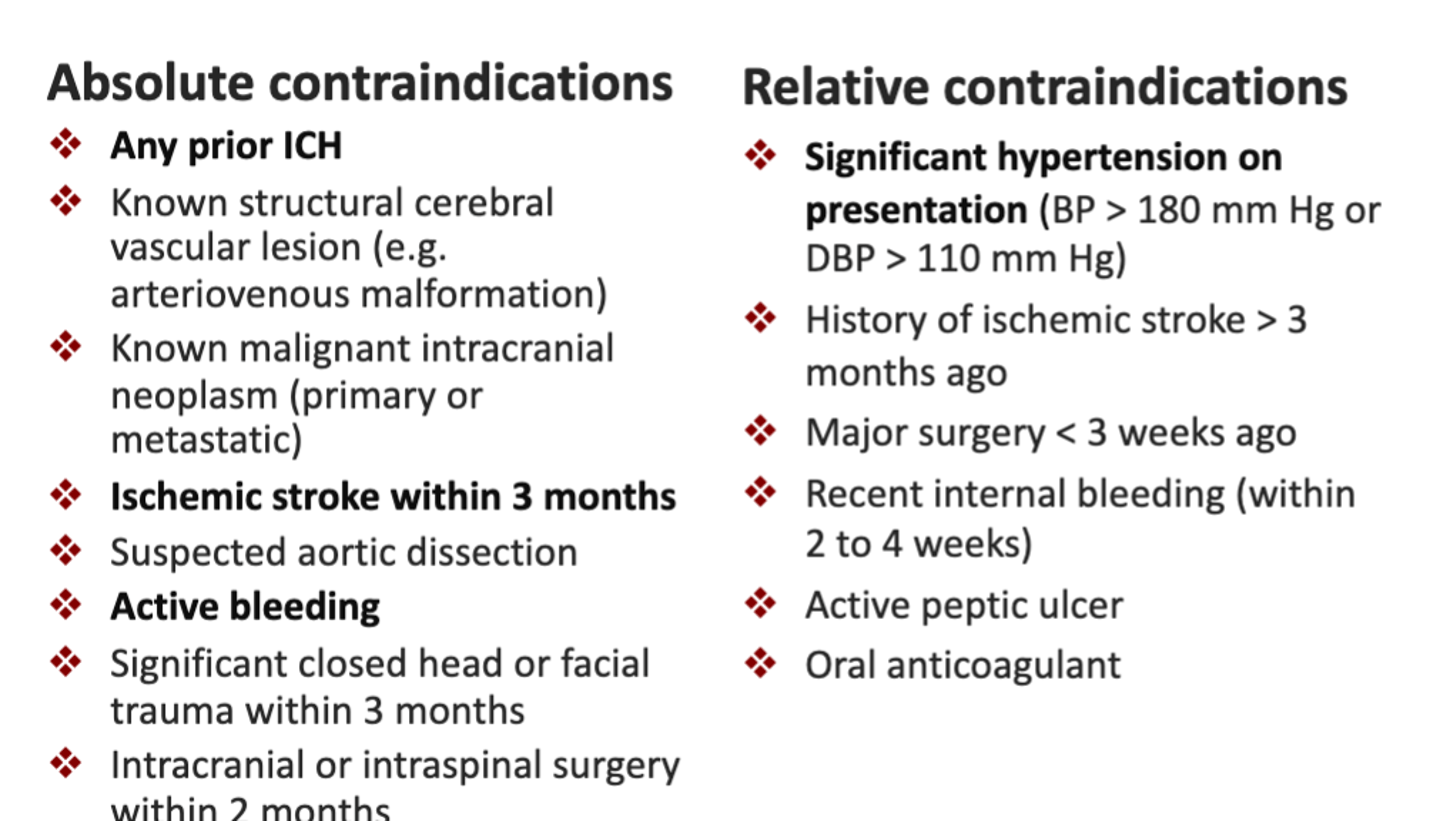
Contraindications to fibrinolytics
Absolute CI
• Any prior ICH
• Ischemic stroke within 3 months
• Active bleeding
Relative CI
• Significant HTN
• History of ischemic stroke > 3 months ago
• Major surgery < 3 weeks ago
• Active peptic ulcer
• Oral coagulant use
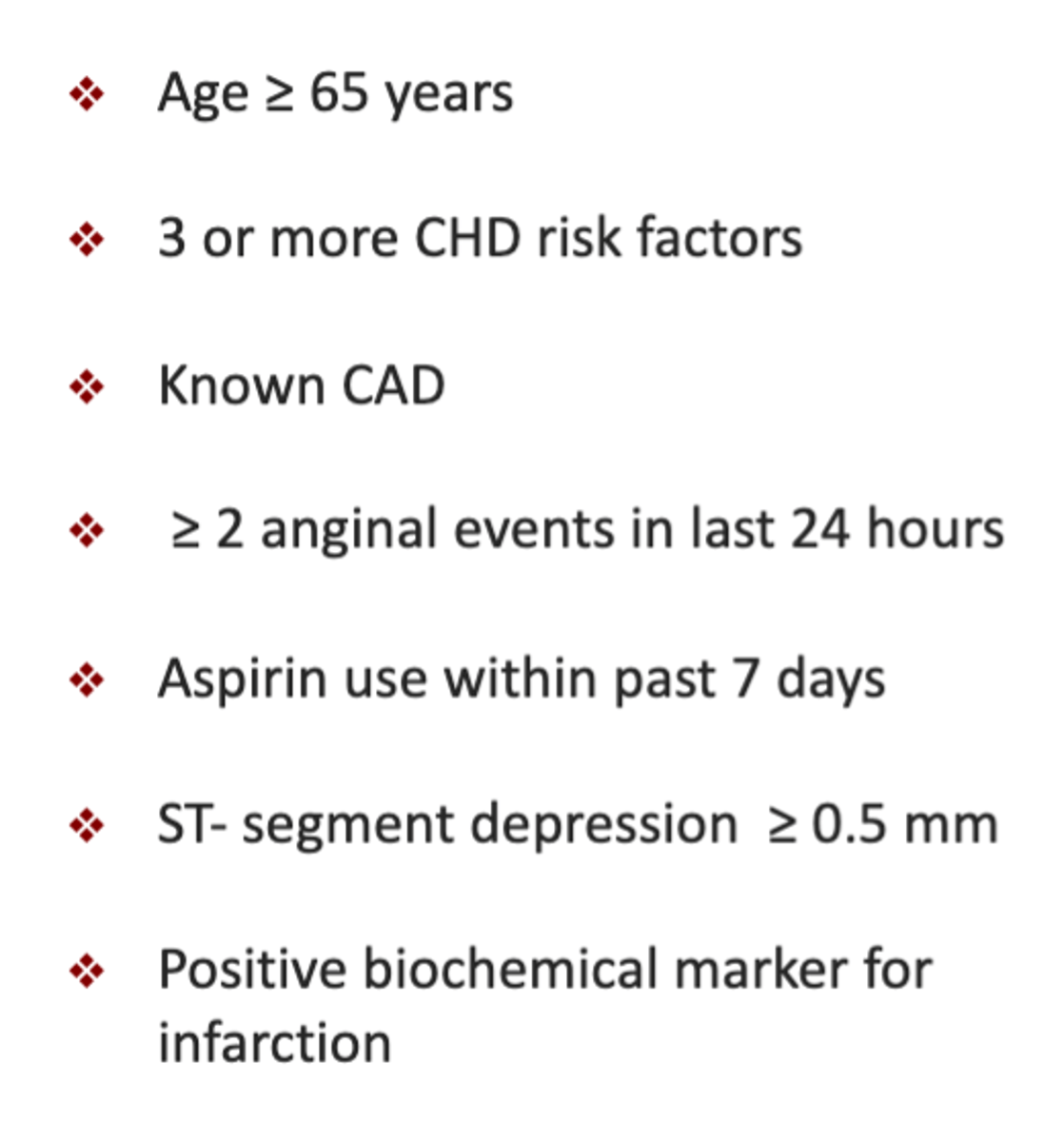
TIMI Score
• 1 point for each risk factor
• Score ranges from 0-7
• Low risk : 0-2 points (ISCHEMIA GUIDED)
• Intermediate risk: 3-4 points
• High risk: ≥ 5 points (EARLY INVASIVE)
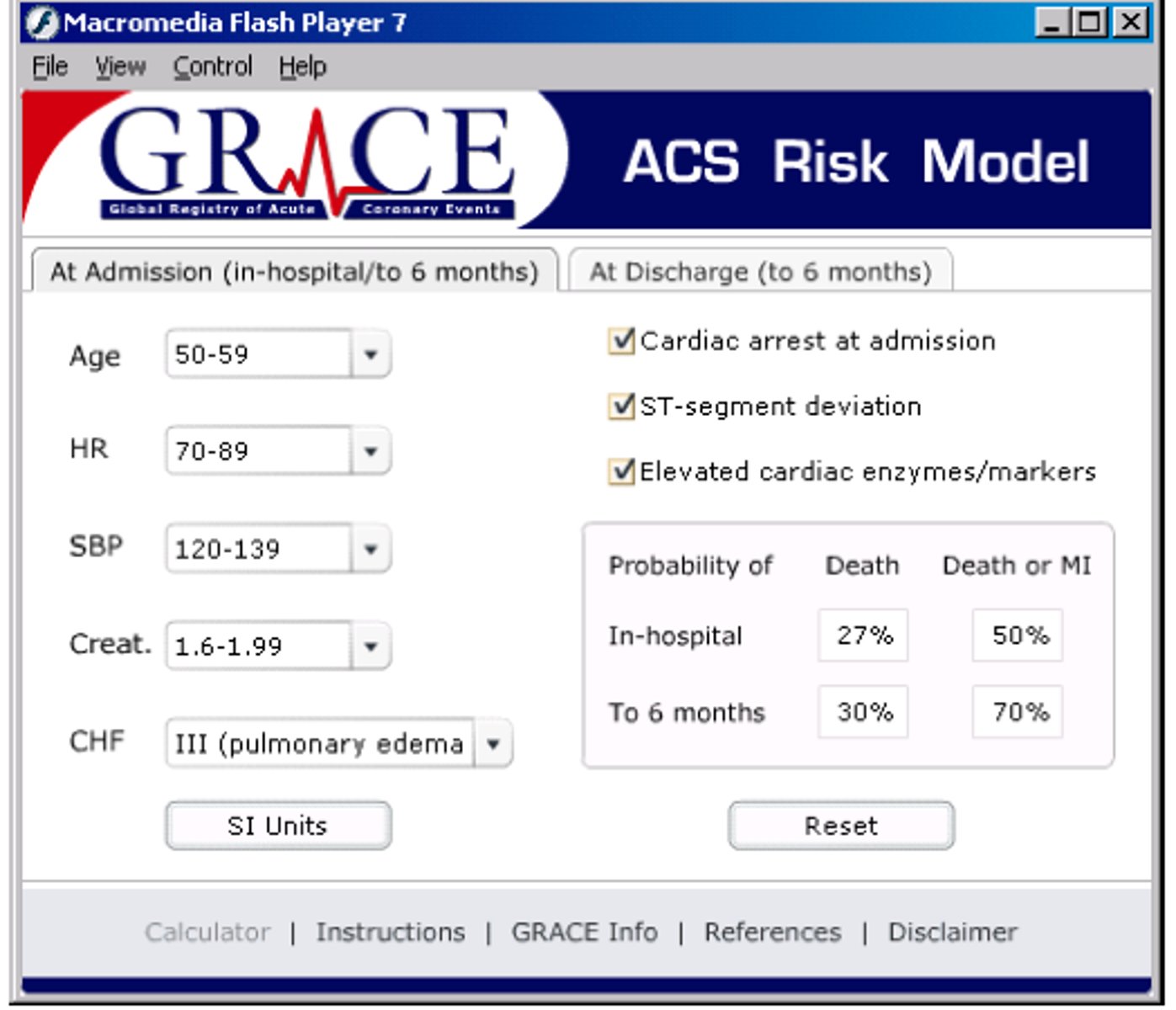
Grace Score
Risk of dying within 6 months after MI, used to determine whether need coronary angiogram straight away
Scores greater than 140 points =greater than 140 points = high risk
CABG
Only clopidogrel used for DAPT
NSTEMI Treatment (Early Invasive Strategy)
• Used for intermediate-high risk NTE-ACS
- Involves routine coronary angiography (visualizes blockage) within 24–72 hours, with subsequent PCI or CABG if applicable
• DAPT x 1 year
• ASA: 325 mg load + 81 mg maintenance indefinitely
+
• Clopidogrel: 300 or 600 mg load + 75 mg maintenance
OR
• Ticagrelor 180 mg load + 90 mg BID (cannot exceed 81 mg ASA)
- Missing Prasugrel, only if pt gets PCI then 60 mg and 10 mg
• Can add GP IIb/IIIA (know cutoffs)
- Tirofiban - CrCl < 60 mL/min, reduce by 50%
- Eptifibatide - CrCl < 50 mL/min, reduce by 50
• Give anticoagulant therapy (UFH, enoxaparin or fondaparinux; bivalirudin if there is a PCI)
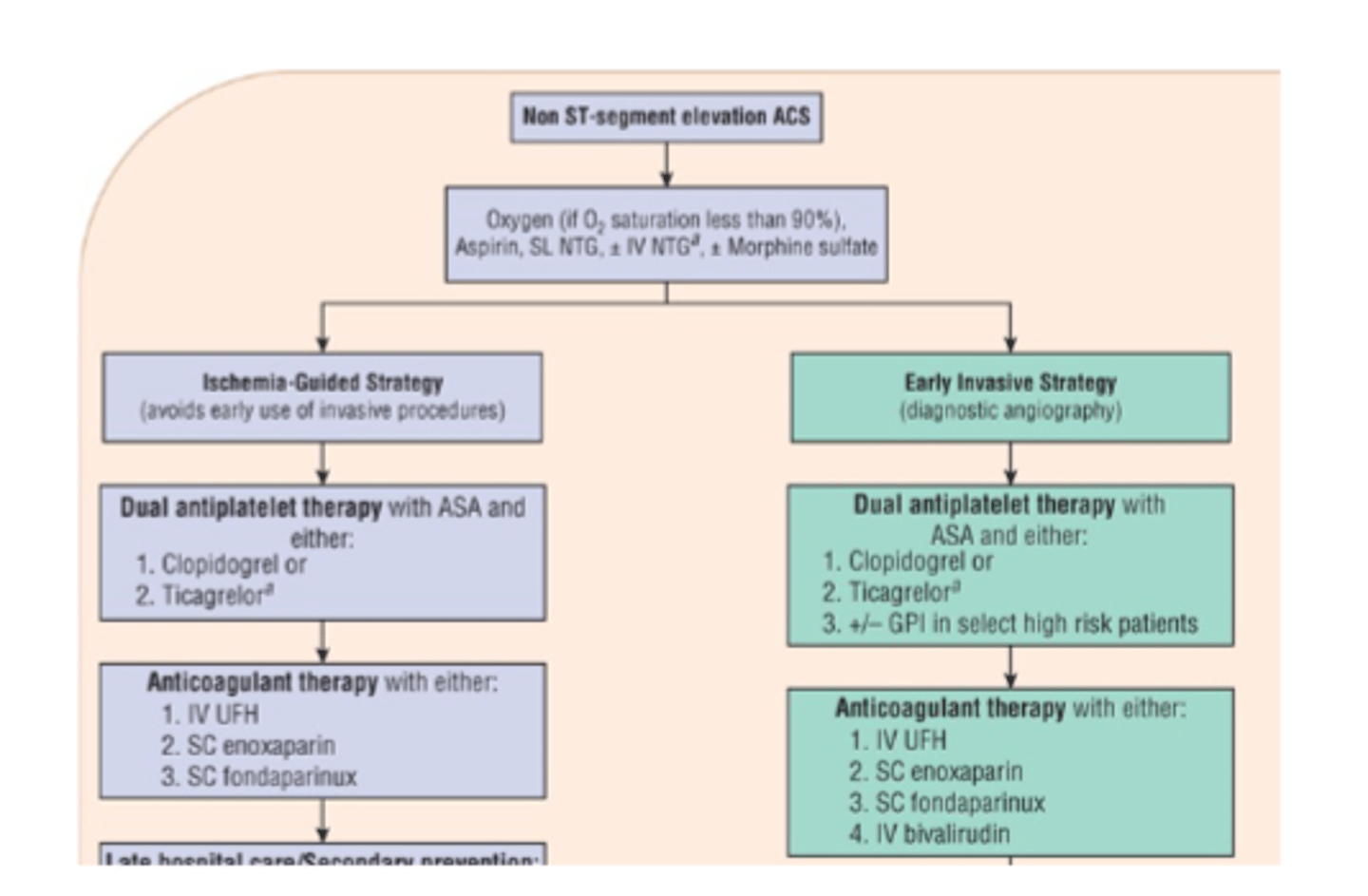
NSTEMI Treatment (Ischemia-Guided Therapy)
• Used for low risk NTE-ACS
- Patients receive intensive medical therapy (e.g., dual antiplatelet therapy, anticoagulation) and only undergo angiography if they develop recurrent symptoms or test positive on noninvasive stress tests.
• DAPT x 1 year
• ASA: 325 mg load + 81 mg maintenance indefinitely
+
• Clopidogrel: 300 or 600 mg load + 75 mg maintenance
OR
• Ticagrelor 180 mg load + 90 mg BID (cannot exceed 81 mg ASA)
• Give anticoagulant therapy (UFH, enoxaparin or fondaparinux; bivalirudin if there is a PCI)
Discharge Planning for ACS
1. Aspirin 81 mg indefinitely
2. P2Y12 inhibitor (Clopidogrel 75mg daily; prasugrel 10 mg (>60Kg) or 5mg (<60Kg) daily; ticagrelor 90mg twice daily)
3. Beta blocker within 24 h if no CI
4. High-intensity statin ASAP
5. ACE inhibitor/ARB
6. Aldosterone antagonist if their EF is low < = 40
7. NTG prn for chest
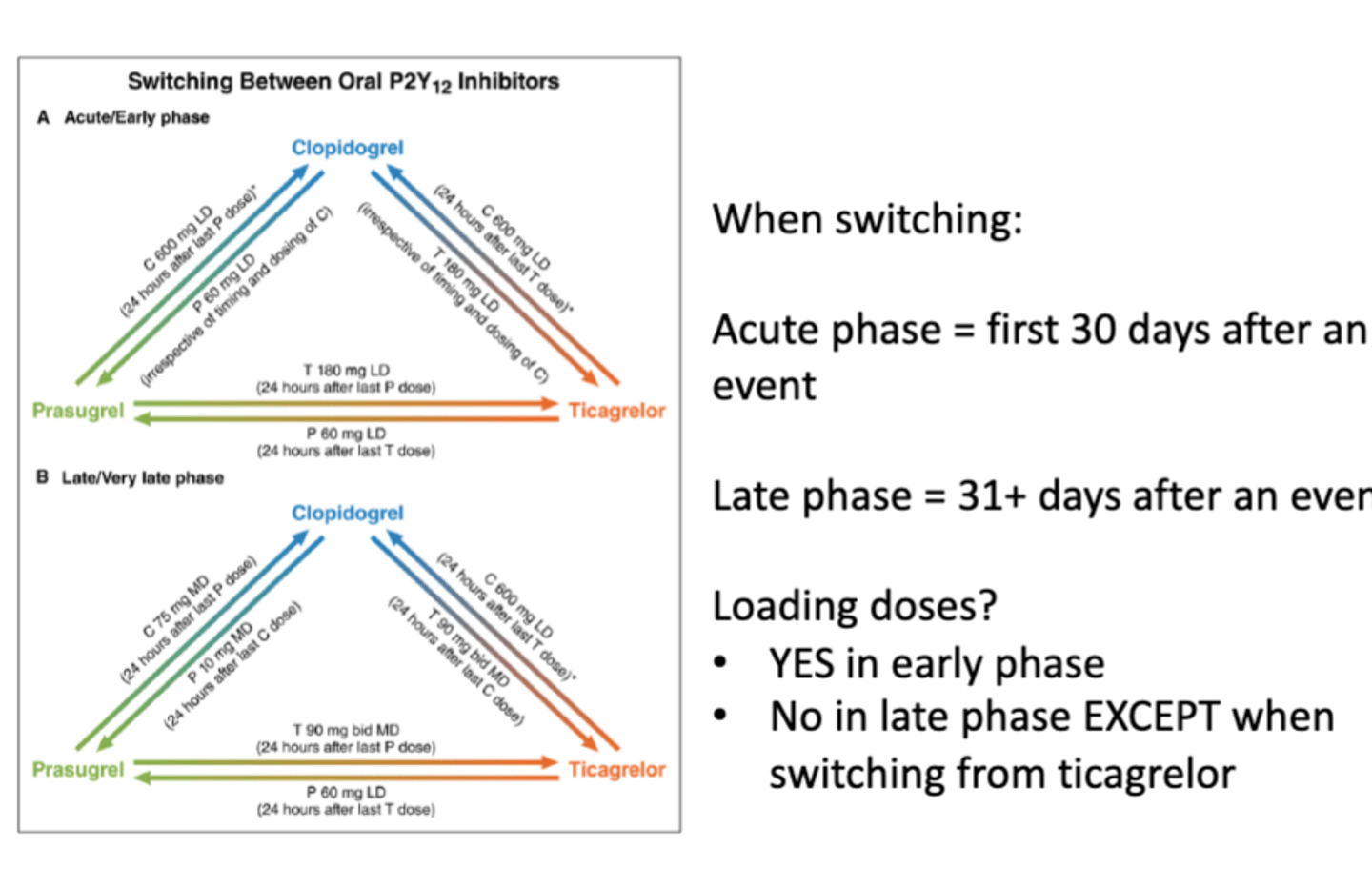
Switching P2Y12 Inhibitors
• When switching:
• Acute phase = first 30 days after an event
• Late phase = 31+ days after an event
• Loading doses?
- YES in the early phase
- No in late phase EXCEPT when switching from ticagrelor
Module 6: Heart Failure
Module 6: Heart Failure
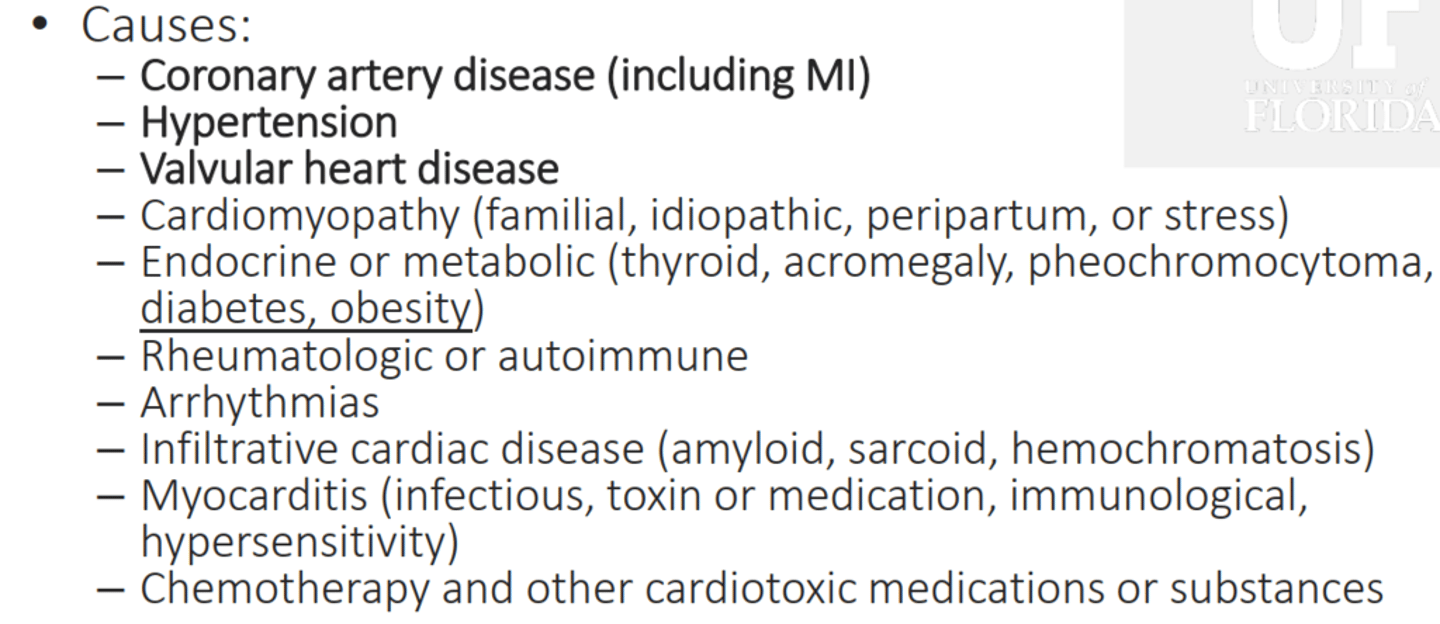
Causes of HF:
1. Coronary artery disease (Including MI)
2. HTN
3. Valvular heart disease
Heart Failure Staging
Stage A: At high risk for HF but without structural heart disease of symptoms of HF
Stage B: Structural heart disease but without signs or symptoms of HF
Stage C: Structural heart disease with prior or current symptoms of HF
- I: No limitations
- II: Slight limitation - with rigorous activity
- III: Marked limitation - with day-to-day activities
- IV: Symptoms at rest
Stage D: Refractory HF requiring specialized interventions
HF Subtypes
• HFrEF - ≤ 40% (eccentric hypertrophy due to volume overload)
• HFmrEF - 41 - 49%
• HFpEF - ≥ 50% (concentric hypertrophy from pressure overload)
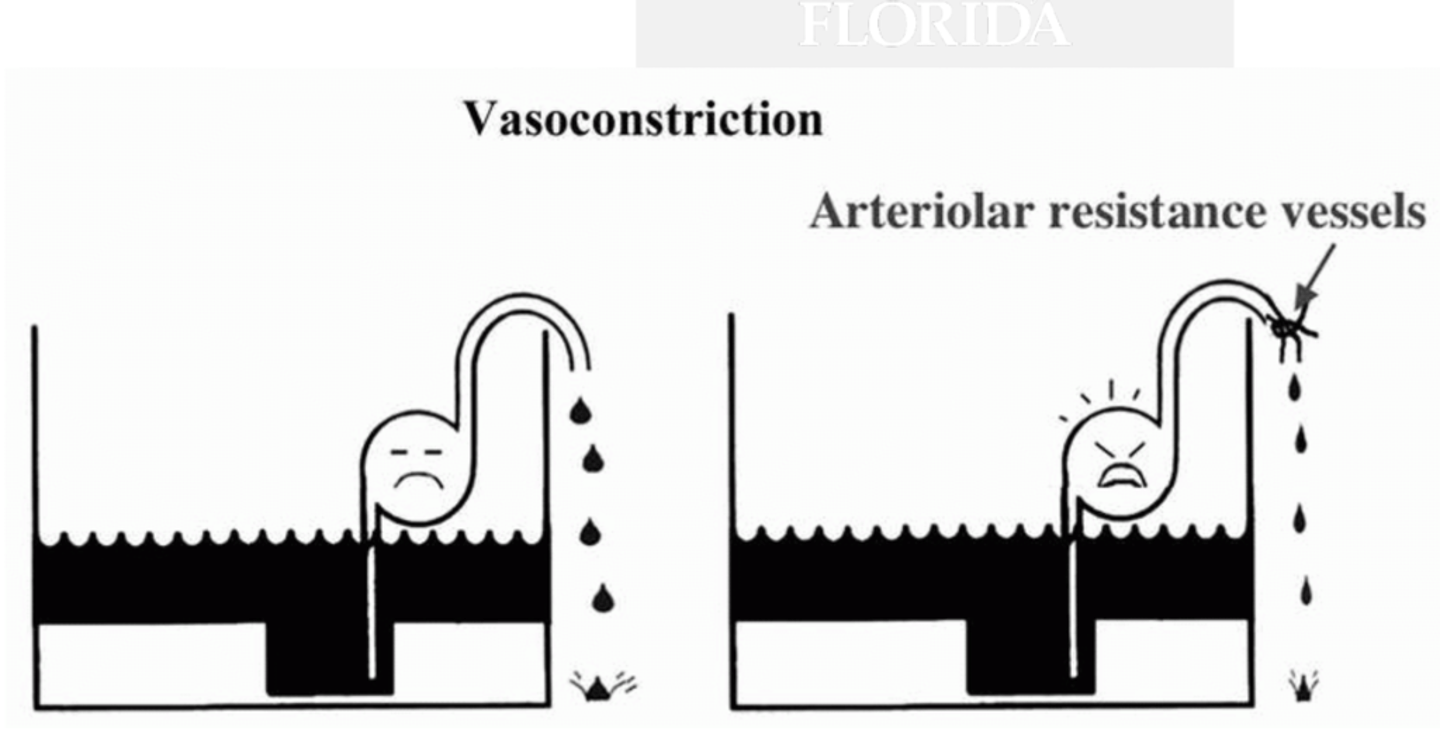
Systemic vascular resistance (SVR) or peripheral vascular resistnace
– Resistance faced by LV due to systemic circulation
– Adjusted by arteriole vasoconstriction or vasodilation
– Directly correlated with BP: MAP = CO x SVR
Which hormone produces interstitial cardiac fibrosis via collagen deposition?
Aldosterone; this can also cause arrhythmias
Frank Starling Law
• The greater the stretch, the stronger is the heart's contraction. This increased contractility results in an increased volume of blood ejected (Increased SV)
• In patients with HF, this principle is not followed (less efficient)
Why is there an increase in systemic vascular resistance (SVR) in HF?
Since there is a shunting of blood to vital organs (due to Ang II, NE, EPI, and vasopressin release) causes more resistance, so the heart has to work even harder
Elevated BNP
• BNP > 100 pg/mL (>29 pmol/L)
• NT-proBNP > 300 pg/mL (>35
pmol/L)
• Inactivation of BNP by
neprilysin limits ability to
counteract RAAS
Cellular changes in HF
• Inflammation can lead to cardiac cell death
– Pro-inflammatory cytokines are expressed much higher in diseased myocardial cells
– Proliferative cytokines can cause hypertrophy and fibrosis
• Systemic inflammatory response can contribute to cachexia seen in advanced disease
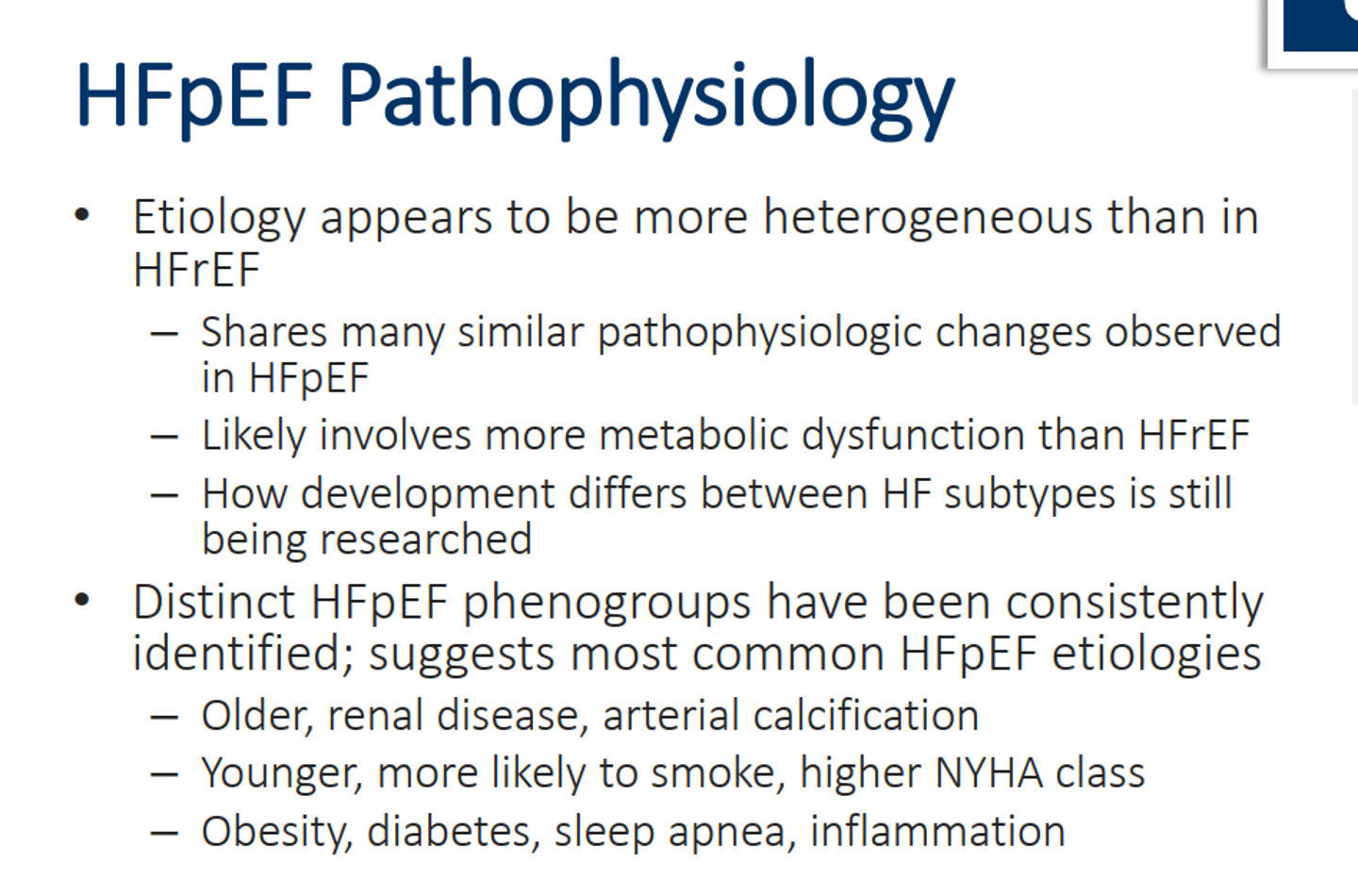
HFpEF Pathophysiology
• Etiology appears to be more heterogeneous than in HFrEF
– Shares many similar pathophysiologic changes observed in HFpEF
– Likely involves more metabolic dysfunction than HFrEF
– How development differs between HF subtypes is still
being researched
• Distinct HFpEF phenogroups have been consistently
identified; suggests most common HFpEF etiologies
1. Older, renal disease, arterial calcification
2. Younger, more likely to smoke, higher NYHA class
3. Obesity, diabetes, sleep apnea, inflammation
SGLT1 Inhibitors (Farxiga)
• Good for diabetes,HF and renal dysfunction (nephroprotective)!
• Starting/target dose: 10 mg daily
• Potential adverse effects:
– Diuresis (hypotension/dehydration)
– Worsening renal function (often transitory)
– UTIs and genital fungal infections (more often in
women)
– Hypoglycemia (with insulin or insulin secretago
• Monitoring:
– Renal function
• ≥ 30 mL/min/1.73m2 for dapagliflozin
• ≥ 20 mL/min/1.73m2 for empagliflozin
– BP
– Blood glucose
Vericiguat
• Stimulates soluble guanylate cyclase (sGC), which is physiologically stimulated by NO to produce cyclic
guanosine monophosphate (cGMP)
• Increased cGMP orduces:
- Vasodilation
- Cardiac contractility/remodeling
- Antiproliferative effects
• Approved for HF! Tiociguat is approved for PAH
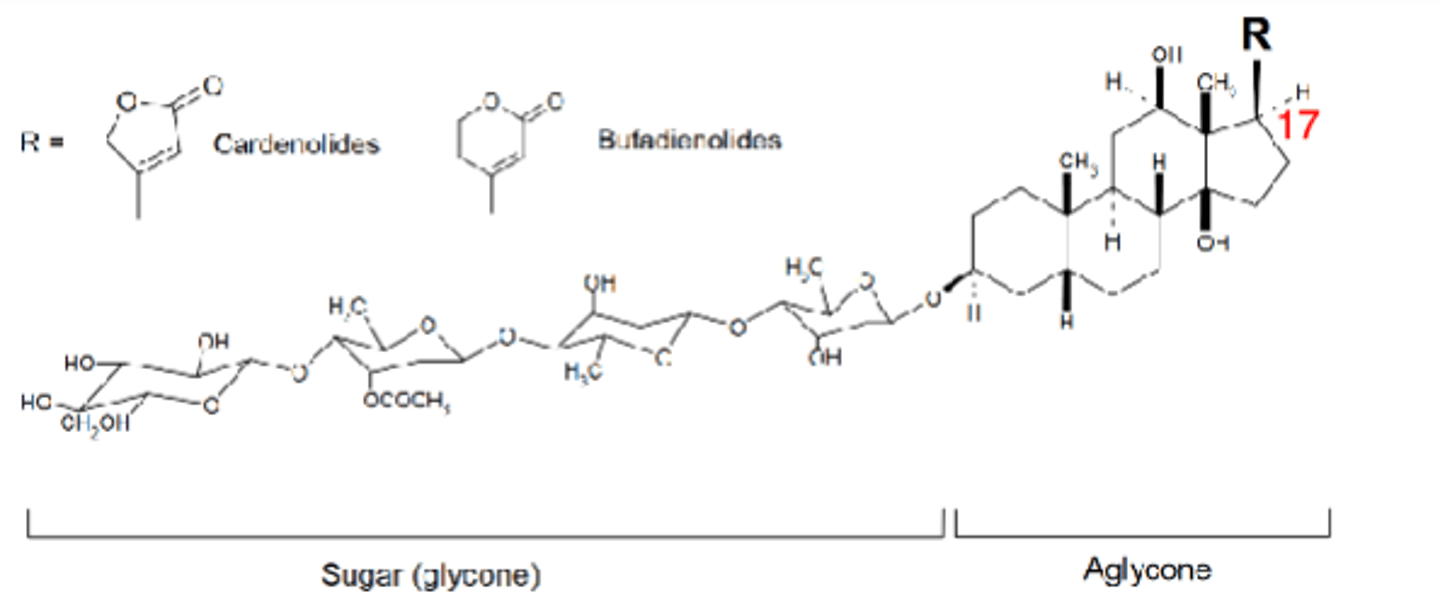
Cardiac Glycosides: Digoxin
• Low doses = counteracts excessive SNS
• Higher doses = increases contractibility
• Has two parts: Sugar (glycone) + Steroid
• Cardenolides: from plant and are five-membered a,b unsaturated lactone ring
• Bufadienolides: are from animals, are six-membered lactone ring with two conjugated double bond
• R-group in the 17-position defines the class of cardiac glycosides and is what binds to the Na/K ATPase and interacts with the Mg 2+
• A-B and C-D are cis fused and B-C have trans configuration; giving it a U-shape that provide critical hydrophobic and hydrophilic interactions
• Hydroxyl group at C-3 is for sugar attachment (β-1,4-glucosidic linkages) and additional -OH can be found C-12 and C-14 and rarely tat C-16
- C-12 and C-14 determine the partitioning and PK for each glycoside
• The sugar can be in an acetylated form which affects the lipophilic character and PK
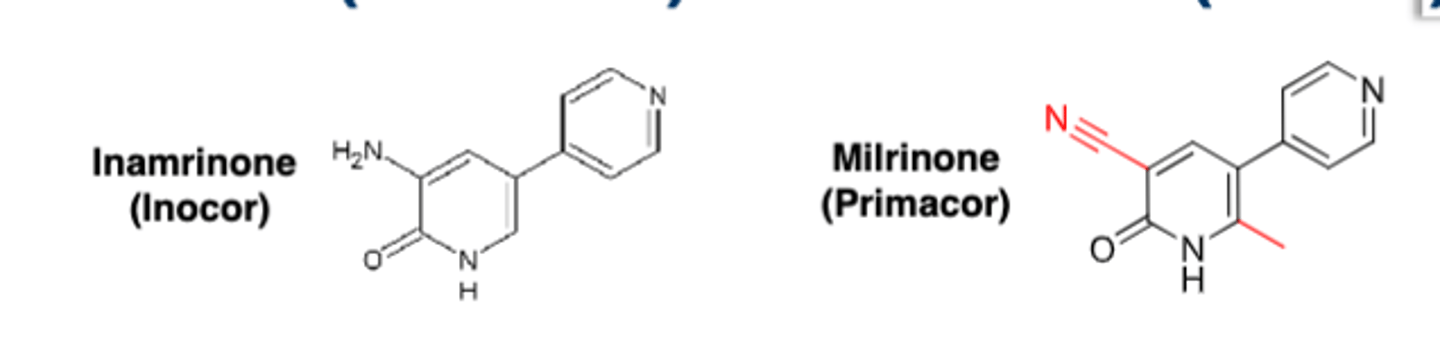
Milrinone and Inamrinone
• PDE3 inhibitor
• Increases cAMP concentrations which facilitates Ca2+ uptake in SR which can increase muscle contraction through G protein signal transduction pathways
• Its nitrile group binds to the Zn2+ and competes with cAMP.for PDE3 reaction
• Milrinone has a MOA similar to inamrinone but is 10 fold more potent
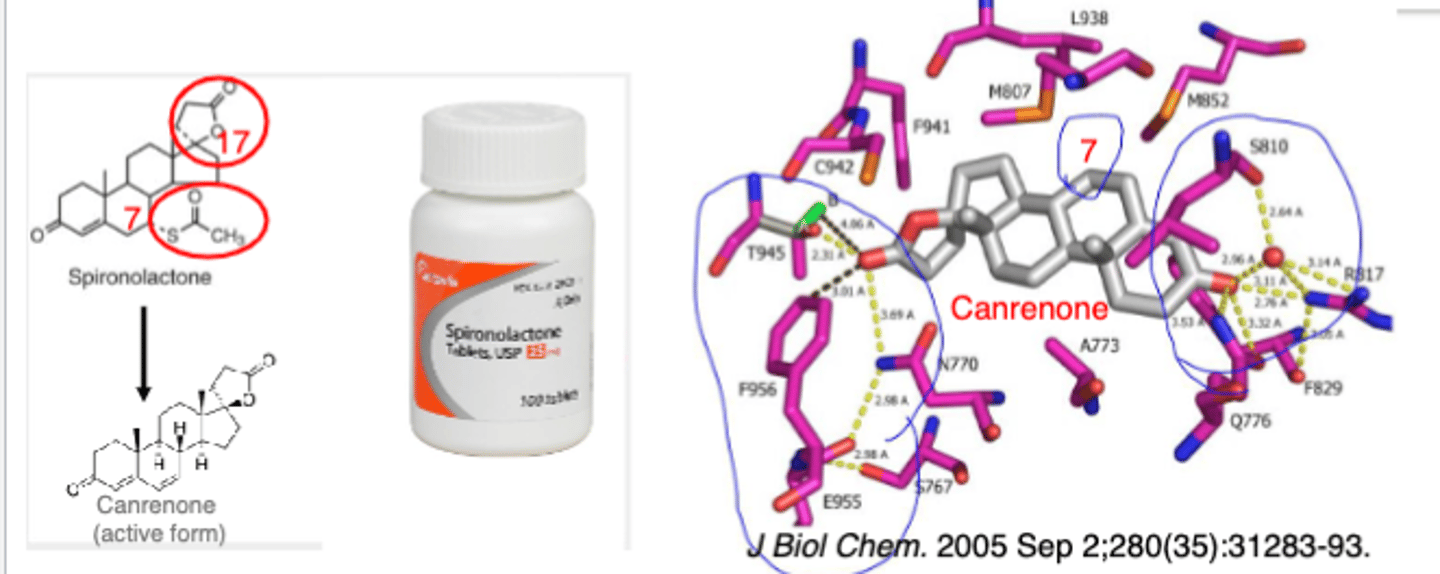
Med Chem: Spironolactone
• Metabolized into a major active metabolite, canrenone which is more potent
• Its MR antagonist activity depends on the presence of a γ-lactone ring on C-17 and the cyclohexanone (blue circles)
• Can cause hyperkalemia
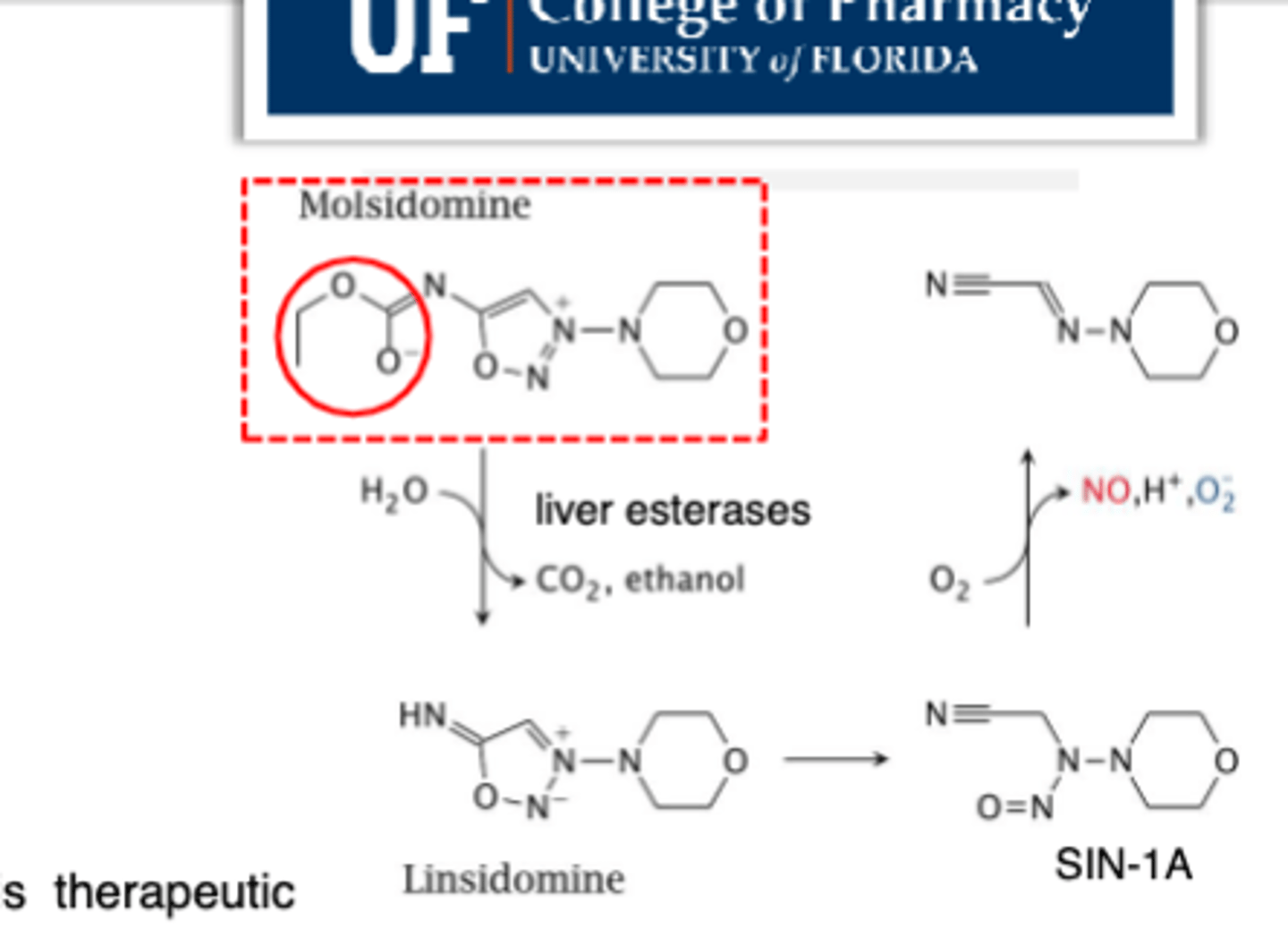
Molsidomine
• It is a nitrovasodilator
• The drug is metabolized by liver esterases to linsodimine, which is spontaneously converted into its nitroso metabolite SIN-1A
• Molecular oxygen is required to release NO from SIN-1A
Cardiac Beta Blockers (Used for HF)
• Carvedilol
• Bisoprolol
• Metoprolol succinate
HF Signs and Symptoms
• Patients often present with signs of
congestion:
– SOB/dyspnea
– Pulmonary crackles
– JVD
– LE edema
• Fatigue
• Lightheadedness
HF Treatment: Angiotensin Receptor/ Neprilysin Inhibitor (ARNI)
• Recommend in patients with Stage C
– NYHA FC II-III patients to reduce morbidity and
mortality
– Patients already on ACEIs or ARBs should be
switched to ARNIs
• Dosing
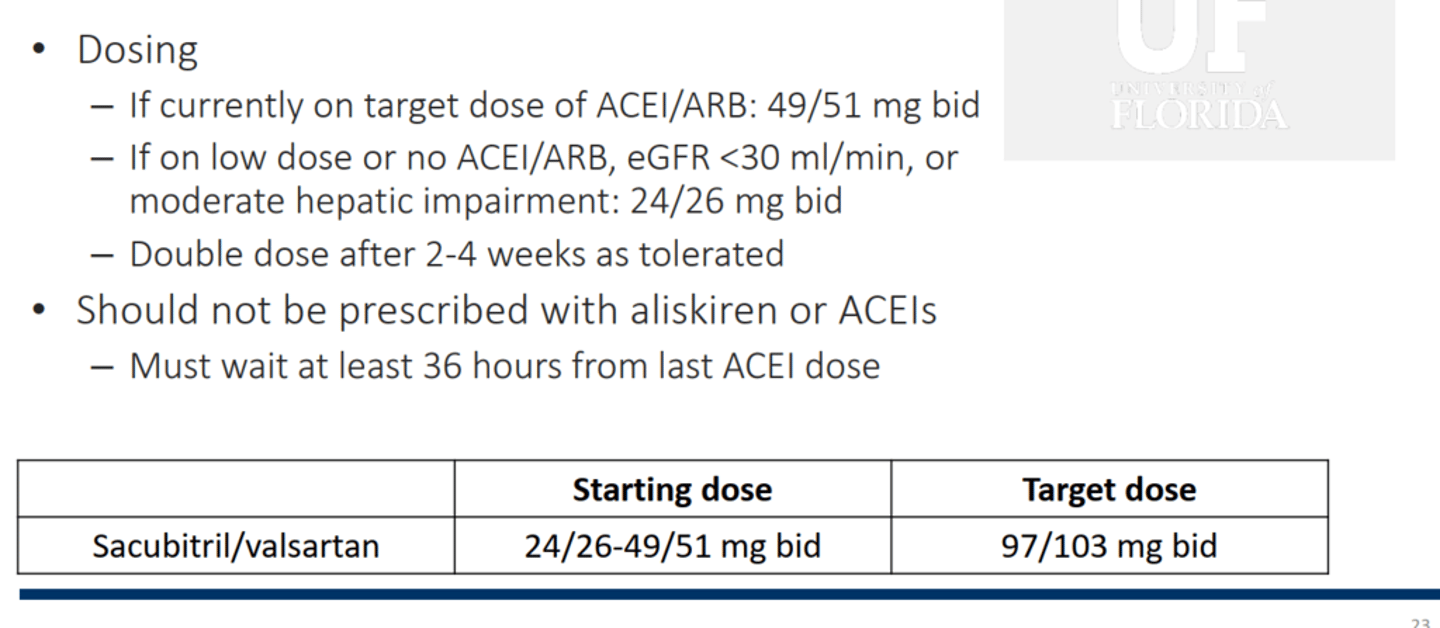
– If currently on target dose of ACEI/ARB: 49/51 mg bid
– If on low dose or no ACEI/ARB, eGFR <30 ml/min, or moderate hepatic impairment: 24/26 mg bid
– Double dose after 2-4 weeks as tolerated
• Potential adverse effects include:
– Hypotension
– Hyperkalemia
• Do not give if K+ ≥ 5.2
– Renal insufficiency
• Use in caution if GFR <30ml/min
– Angioedema
• Avoid in patients with history of angioedema
• Monitoring
– K+ and SCr 2 weeks after initiation or dose titration,
then every 4-6 months
– BP
HF Treatment: ACEIs
• Can be used in Stage C-D HFrEF when using ARNI is not feasible
• Also recommended for Stage B and high-risk Stage A patients
– History of MI, ACS, or LVEF< 40%
• Dosing: Start with a low dose and titrate to target doses used in clinical trials
– Avoid abrupt discontinuation with high doses (titrate down)
HF Treatment: ARBs
• For patients in Stages C-D where using ARNI is not feasible and who are ACE-I intolerant due to cough or angioedema
• Can be combined with ACEi if a patient cannot take an ARA?? (very weird, I thought you didn't combine the two?)
• Dosing: Start with low dose and titrate to target doses used in clinical trials
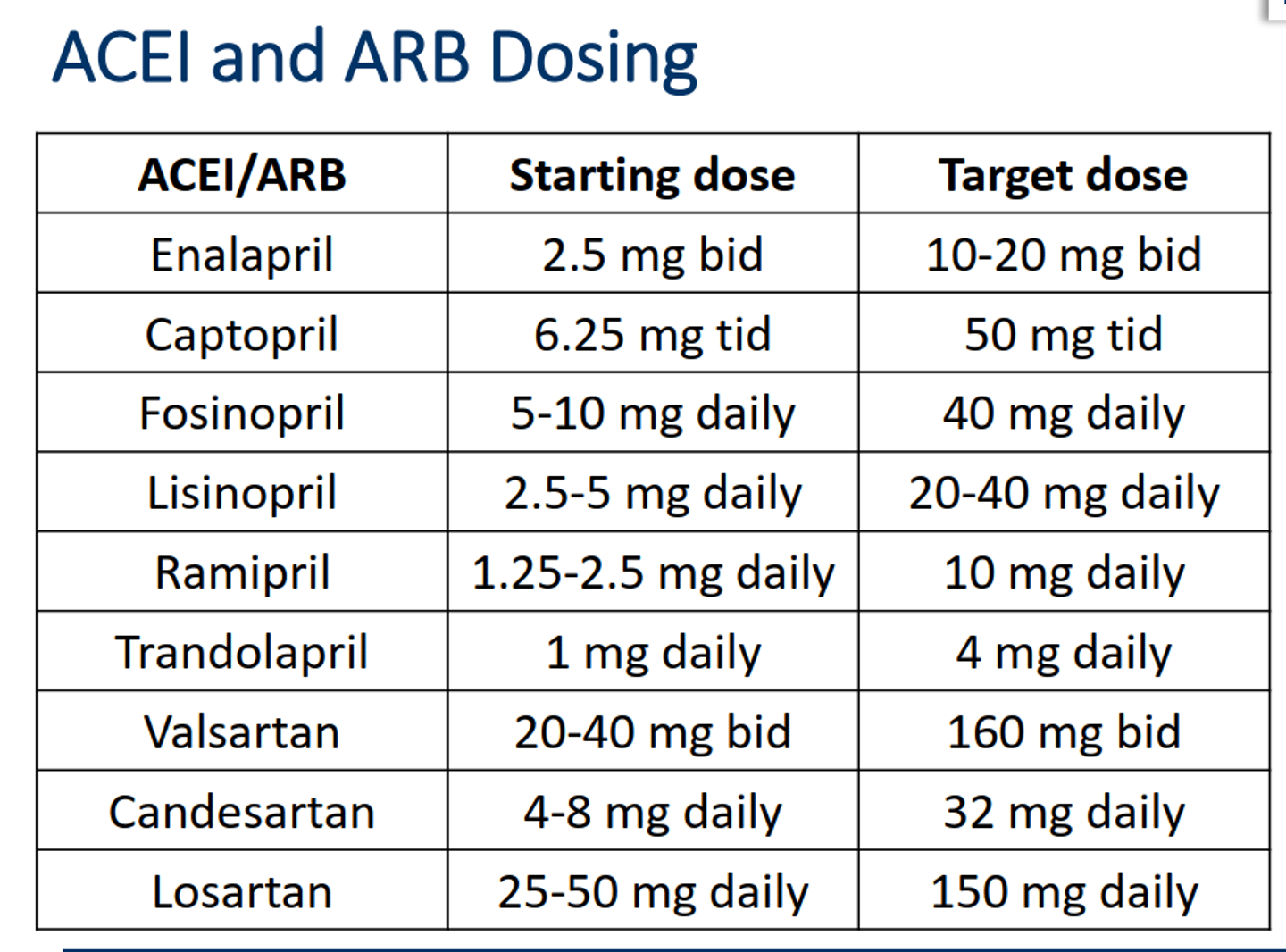
ACEi and ARB Dosing
(See Image)
Adjusting ACE/ARB Therapy
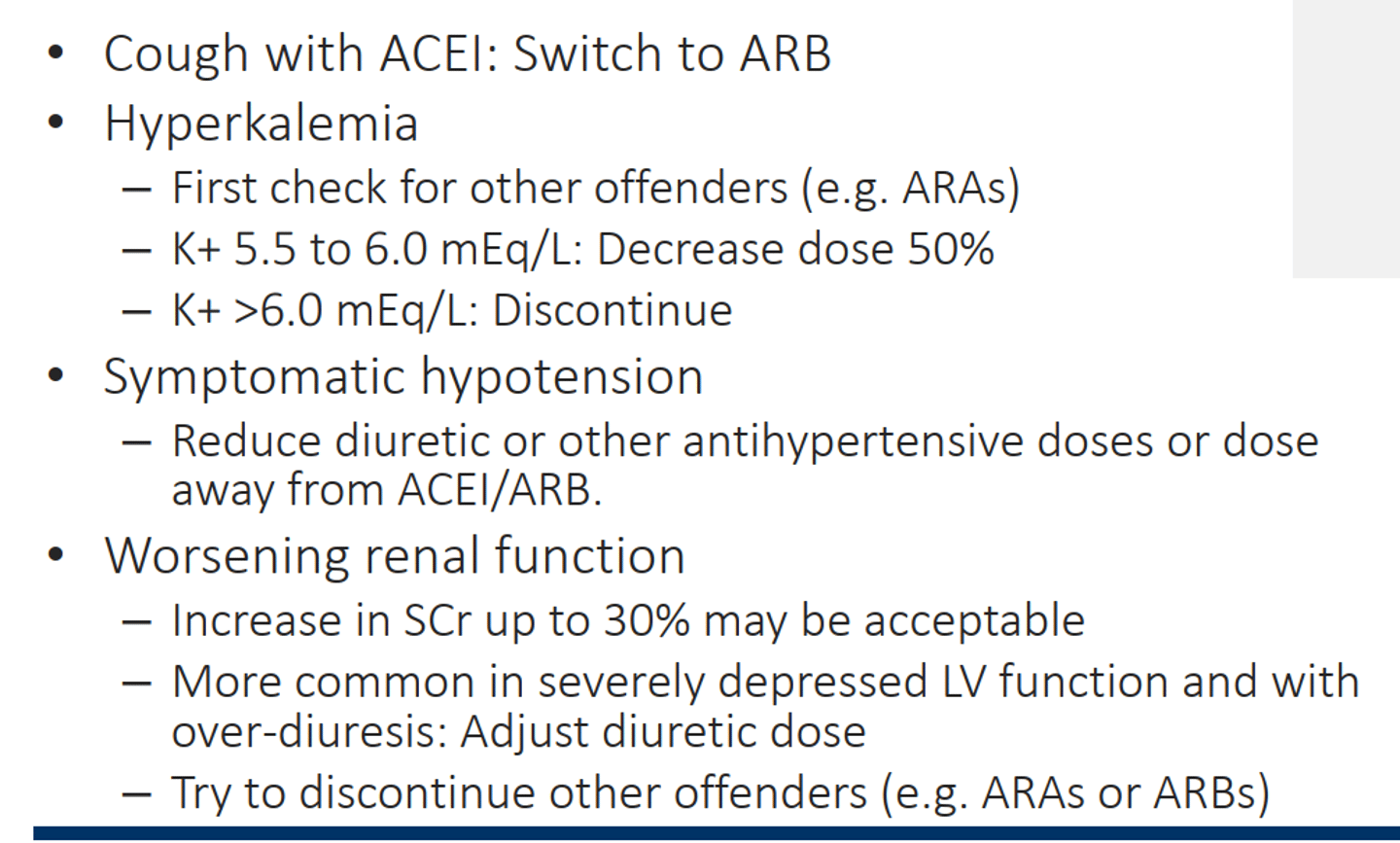
• Cough with ACEI: Switch to ARB
• Hyperkalemia
– First check for other offenders (e.g. ARAs)
– K+ 5.5 to 6.0 mEq/L: Decrease dose 50%
– K+ >6.0 mEq/L: Discontinue
• Symptomatic hypotension
– Reduce diuretic or other antihypertensive doses or dose
away from ACEI/ARB.
• Worsening renal function
– Increase in SCr up to 30% may be acceptable
– More common in severely depressed LV function and with
over-diuresis: Adjust diuretic dose
– Try to discontinue other offenders (e.g. ARAs or ARBs), don't want to stop ARNI, ACEi, or BBs
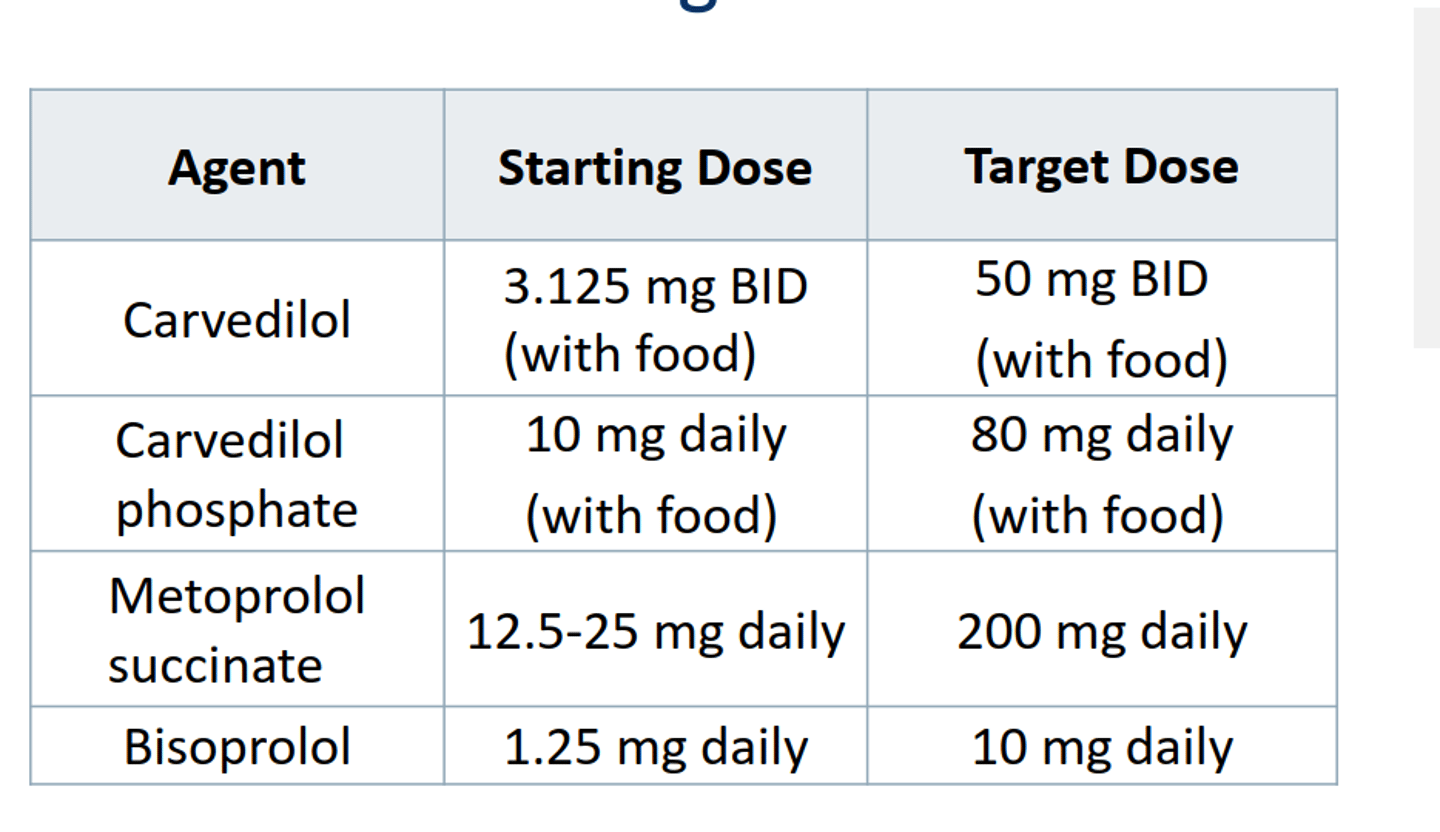
HF Treatment: Beta-blockers
• Should be started in all patients with stable HF (Stage C and D) unless contraindicated or not tolerated
– Also recommended in Stage B HFrEF in patients with history of MI or ACS and LVEF ≤ 40%
– Reduces sympathetic nervous system effects;
attenuates cardiac remodeling and disease progression
– Reduces mortality, and hospitalizations, and improves QOL
– Reduces risk of arrhythmias
• Three BBs shown to reduce HF mortality (use these):
– Metoprolol succinate (sustained release)
– Carvedilol
– Bisoprolol
• Start with a very low dose and titrate up slowly to target doses used in clinical trials
– Do not need to wait until ARNI/ACEI/ARB is at target dose
– More important to titrate BB to target dose than ACEI/ARBs
– If hypotension, bradycardia, or worsening symptoms,
wait until the patient stabilizes
HF Treatment: Aldosterone Recepor Antagonists
• Recommended for Class C patients with NYHA FC II - IV HF (like Entresto) and eGFR >30 mL/min and K + <5 mEq/L to
reduce morbidity and mortality
• Available as:
– Spironolactone
• Less AR-specific binding
– Eplerenone
• More AR-specific binding
• Potential adverse effects include:
– Hyperkalemia (2-36%)
• Avoid if baseline K+ > 5.0 mEq/L
• Stop (or decrease) any potassium supplements before starting
• Discontinue if K > 5.5 mEq/L
– Worsening renal function
• Avoid if SCr > 2.5 mg/dl in men or > 2.0 mg/dl in women
– Gynecomastia (mostly spironolactone)

HF Treatment: Hydralazine/Nitrates
• Recommended for African Americans with NYHA FC III-IV already receiving optimal medical therapy (on BB, RAASi + SGLT2i) to improve symptoms and reduce morbidity and mortality
– Not enough data to guide how to use with ARNI
• Might also be considered for symptomatic patients who cannot tolerate ARNI, ACEI, or ARB
to reduce morbidity and mortality
• Avoid in patients with:
– Symptomatic hypotension; SLE; no prior history of RAAS inhibitor use
• Monitoring:
– Hypotension, headaches, dizziness, GI disturbances
• Hydralazine/Isosorbide
Dinitrate (BiDil®)
- Starting Dose: 37.5/20 mg TID
- Target Dose: 75/40 mg TID

HF Treatment: If Current Inhibitors (Ivabradine)
• Recommended to reduce HF hospitalizations and CV death in a specific patient population:
– Symptomatic NYHA FC II-III patients
– With EF ≤ 35%
– Receiving GDMT; especially max titrated on BBs
– In sinus rhythm with resting HR ≥ 70bpm
• Dosing:
– Initial: 5mg bid with meals
– Target: 7.5 mg bid with meals
– Titrate after ≥ 2 weeks if HR ≥60bpm
• Decrease dose or stop if HR < 50bpm
• Contraindications/Precautions
– Arrhythmias (including pacemaker use)
– Acute Decompensated HF
– Bradycardia or heart block
– Concomitant CYP3A4 strong inhibitors
• Potential adverse effects:
– Bradycardia
– New onset Afib
– Phosphenes
Heart Failure Treatment: Soluble Guanylate Cyclase
Stimulators (Vericiguat)
• Available as Vericiguat (Verquvo®)
• May be considered in high-risk HFrEF patients already on GDMT with recent worsening to reduce hospitalization and CV death
• Dosing:
– Initial: 5mg daily with food
– Target: 10 mg daily with food
• Contraindicated in pregnancy
• Avoid coadministration with PDE-5Is due to risk of extreme hypotension
– Likely nitrates as well since they were excluded from
clinical trial
• Potential adverse reactions:
– Symptomatic hypotension
– Headache
– Syncope
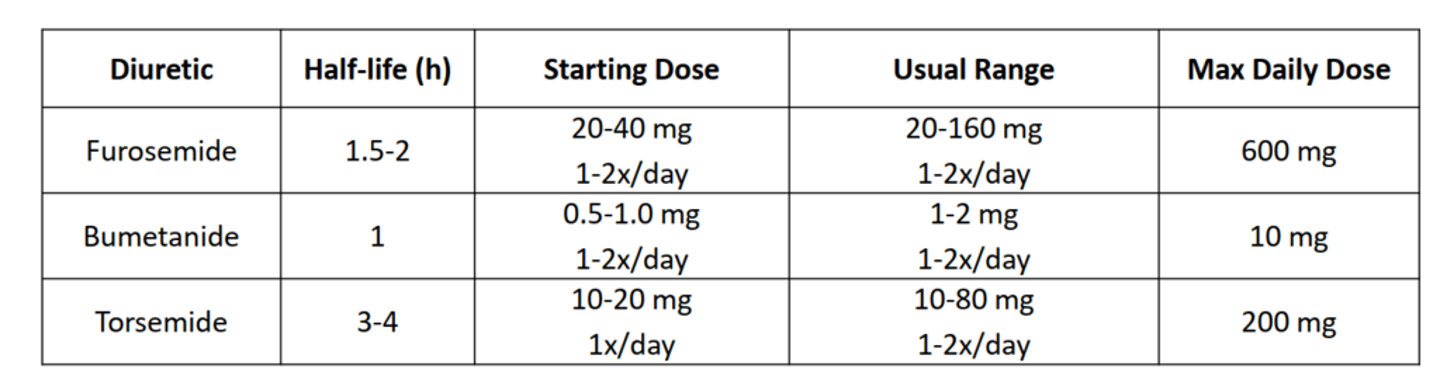
Treating HFrEF Symptoms
• 1st Line Treatment: Loops diuretics (use in all Class C and D patients with edema) and can add thiazides or metolazone or acetazolamide (CA inhibitor)
- Goal is to reduce fluid overload 1 - 2 lbs/day
- Ceiling effect
- Can increase furosemide and bumetanide dosing up to TID
• Digoxin - improves symptoms but no effect on mortaility (Mostly only used in symptomatic HFrEF patients with
Afib and low BP)
- Interacts with amiodarone, dronedarone, and verapamil
Medications to Avoid in HFrEF
• No benefit:
– DHP calcium channel blockers
– Vitamins, nutritional supplements, or hormonal
therapy
• Potential harm:
– NSAIDs (increased morbidity and mortality risk)
– Non-DHP CCBs (may worsen symptoms)
– Class 1C antiarrhythmics and dronedarone (increase mortality risk)
– Thiazolidinediones (may worsen symptoms)
– dipeptidyl peptidase-4 inhibitors (increase hospitalization risk)